



Zanthoxylum simulans Hance
-
Zanthoxylum simulans Hance (4)

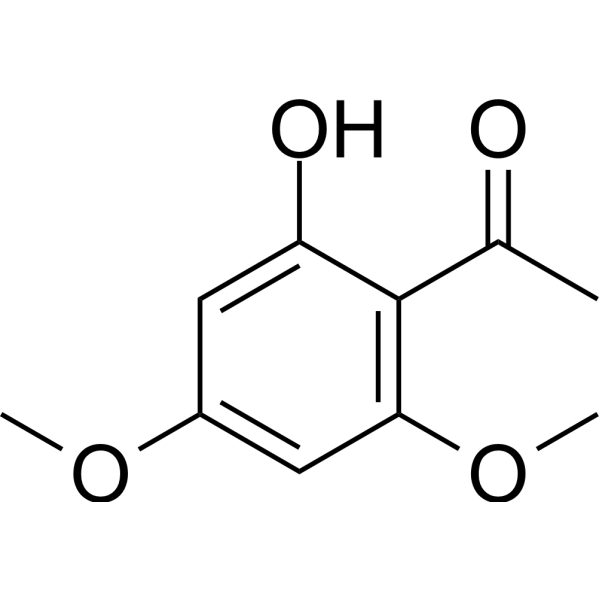
- Formula: C10H12O4
- Molecular Weight: 196.20
Xanthoxylin (Xanthoxyline) can be isolated from Zanthoxylum simulans. Xanthoxylin has antifungal and antioxidant effects. The MIC of Xanthoxylin against Toxoplasma neonatorum and Aspergillus fumigatus were 50 µg/mL and 75 µg/mL, respectively. Xanthoxylin can be used in the study of anti-epileptic diseases.

- Formula: C19H15NO3
- Molecular Weight: 305.33
N-Acetyldehydroanonaine is an alkaloid that acts as a ligand for AKT1 and MAPK1. N-Acetyldehydroanonaine can be isolated from plants of the Zanthoxylum genus. N-Acetyldehydroanonaine is applicable to the research of diseases such as gastric cancer.

- Formula: C10H12O4
- Molecular Weight: 196.20
Xanthoxylin (Xanthoxyline) can be isolated from Zanthoxylum simulans. Xanthoxylin has antifungal and antioxidant effects. The MIC of Xanthoxylin against Toxoplasma neonatorum and Aspergillus fumigatus were 50 µg/mL and 75 µg/mL, respectively. Xanthoxylin can be used in the study of anti-epileptic diseases.
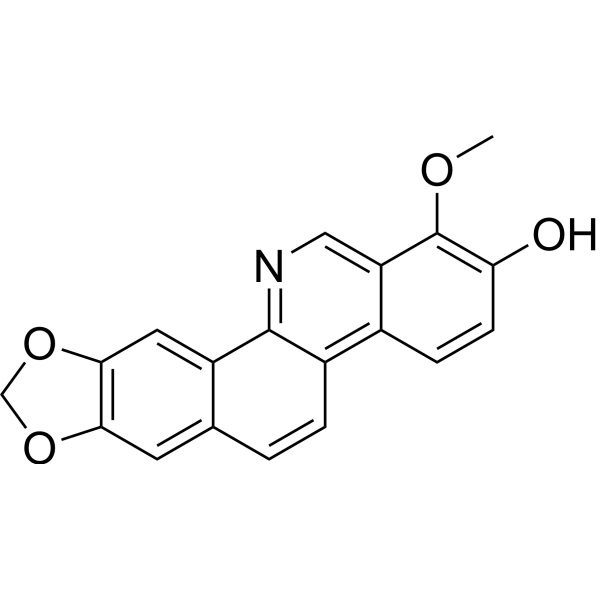
- Formula: C19H13NO4
- Molecular Weight: 319.31
Decarine (Rutaceline) is a benzophenanthridine alkaloid found in Zanthoxylum species. Decarinewith shows anti-inflammatory, antimycobacterial, and anti-HIV activity. Decarine inhibits NO, TNF-α, IL-1β, IL-6, and IL-8 production in inflammatory cell models. Decarine inhibits growth of Mycobacterium tuberculosis strains, reduces intracellular Mycobacterium tuberculosis survival, and shows low cytotoxicity toward human macrophages. Decarine inhibits HIV replication in acutely infected lymphocytes. Decarine can be used for the researches of inflammation, tuberculosis, and HIV infection.



