14 Results for "

hypoxic tissue

" in MedChemExpress (MCE) Product Catalog:
Products (14)

14 Results for "hypoxic tissue" in MCE Product Catalog:

1
1 Cited Publications
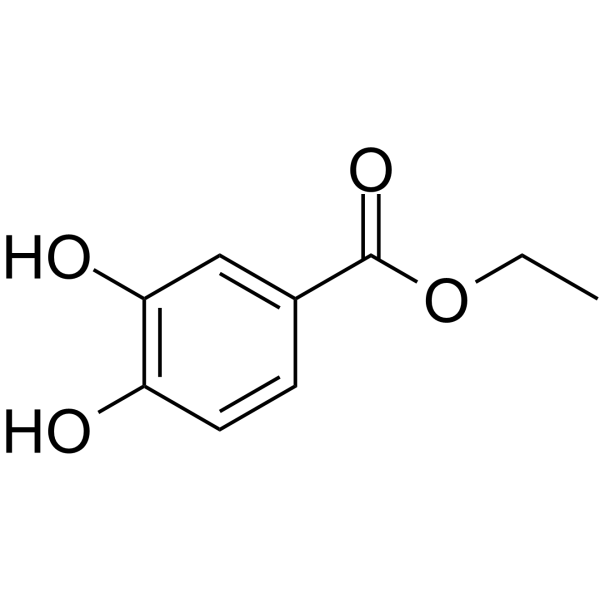
Cat. No.: HY-W016409
CAS No.: 3943-89-3
Synonyms: Protocatechuic acid ethyl ester
Ethyl 3,4-dihydroxybenzoate (Protocatechuic acid ethyl ester) is an orally effective, blood-brain barrier-permeable, competitive prolyl hydroxylase (PHD) inhibitor that inhibits the hydroxylation modification of hypoxia-inducible factor (HIF) by PHD. Ethyl 3,4-dihydroxybenzoate stabilizes HIF-1α by inhibiting PHD, activates downstream pathways to induce autophagy and apoptosis of tumor cells, and regulates inflammatory responses, inhibits the NF-κB pathway, improves vascular permeability, and promotes osteoblast differentiation. Ethyl 3,4-dihydroxybenzoate has anti-tumor, anti-hypoxic injury, and bone metabolism regulation effects. It can also be used in the research of cardiovascular protection (such as reducing myocardial ischemic damage), bone tissue engineering (promoting osteogenesis/inhibiting osteoclast differentiation), and prevention and treatment of high-altitude cerebral edema .
loading...
    loading...
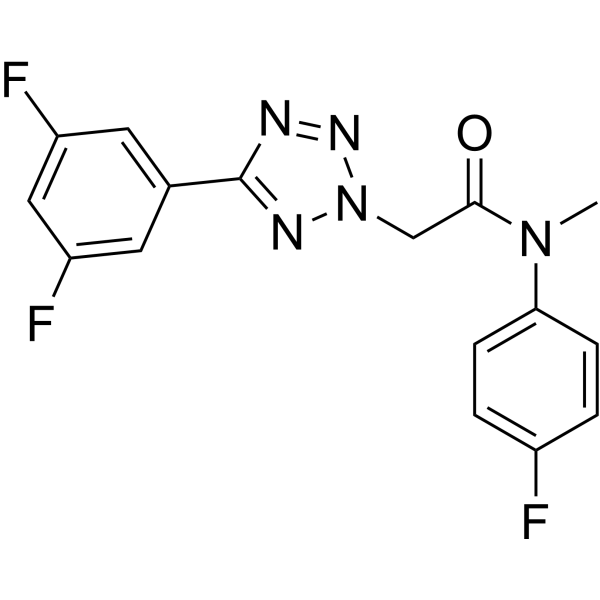
Cat. No.: HY-149662
CAS No.: 2681302-83-8
Purity:  99.92%
Research Areas:  

Cardiovascular Disease

TMDJ-035 is a high-affinity, selective RyR2 inhibitor with an EC50 of 0.0130 μM. TMDJ-035 reduces RyR2 protein expression without affecting action potential-induced Ca 2+ transients. TMDJ-035 decreases ATP content and intracellular Ca 2+ levels. TMDJ-035 inhibits arrhythmias in a CPVT mouse model carrying mutant RyR2s. TMDJ-035 has no effect on electrocardiogram parameters or cardiac systolic function. TMDJ-035 exacerbates heart failure in mouse myocardial infarction models and hypoxic cardiomyocytes by altering cardiac function, causing tissue damage, promoting inflammatory infiltration, collagen deposition, and changes in Myosin heavy chain/actin expression. TMDJ-035 can be used in studies related to heart failure, catecholaminergic polymorphic ventricular tachycardia, and arrhythmias .
loading...
    loading...
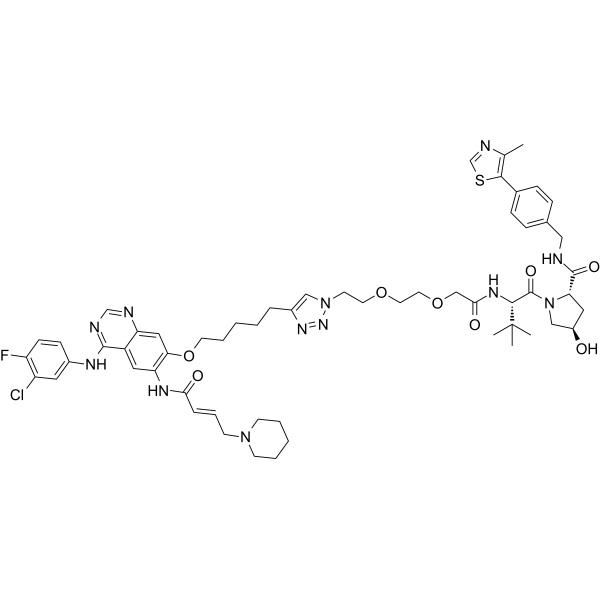
Cat. No.: HY-144304
CAS No.: 3031336-58-7
Purity:  95.61%
Target:  

PROTACs EGFR

Research Areas:  

Cancer

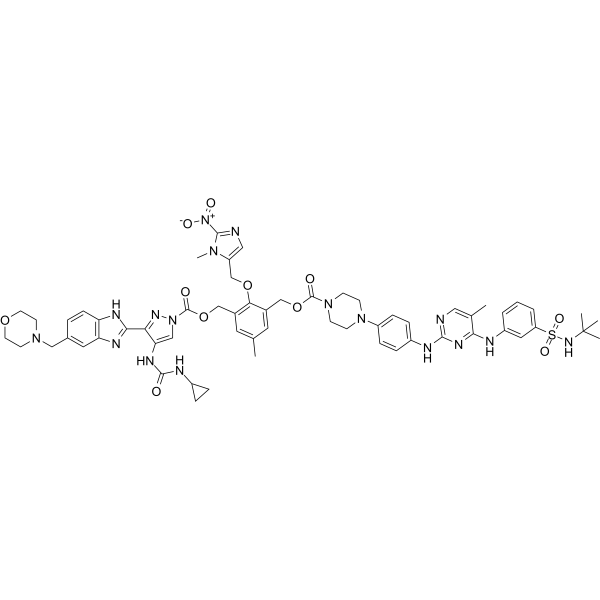
PROTAC EGFR degrader 2 is an EGFR-targeting PROTAC and antitumor agent. PROTAC EGFR degrader 2 induces degradation of EGFR protein via the ubiquitin-proteasome system, requiring binding to both EGFR and the VHL E3 ubiquitin ligase. PROTAC EGFR degrader 2 exerts antitumor efficacy following EGFR degradation. PROTAC EGFR degrader 2 is released from the NTR-responsive caged-PROTAC 17-1 upon activation by nitroreductase in hypoxic tumor tissues. PROTAC EGFR degrader 2 can be used for the research of non-small cell lung cancer .
loading...
    loading...
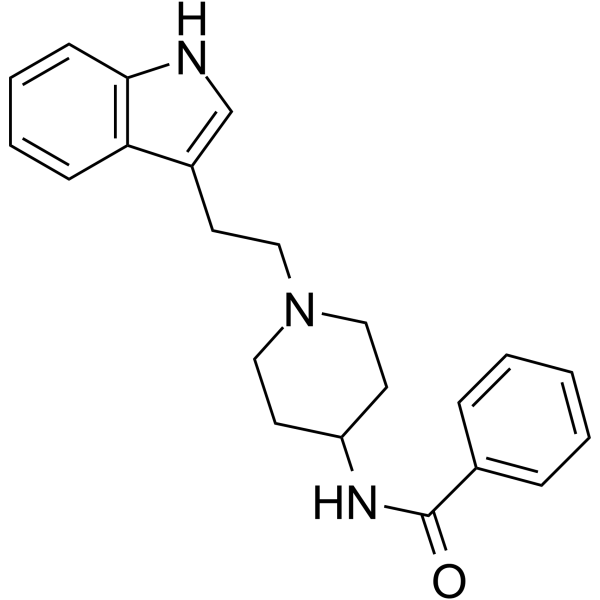
Cat. No.: HY-12760
CAS No.: 26844-12-2
Purity:  99.80%
Synonyms: Indoramine; Wy 21901
Indoramin (Wy 21901) is a competitive and selective α1-adrenoceptor antagonist. Indoramin reduces peripheral vascular resistance, blood pressure, heart rate and myocardial contractility in experimental animals. Under hypoxic conditions, Indoramin increases ATP synthesis in brain tissue, maintains cerebral ATP levels, and alleviates hypoxia-related swelling of synaptosomes, cerebral microvessels and the whole brain. Indoramin can be used in studies related to hypertension, cardiovascular regulation and cerebral hypoxia .
loading...
    loading...
Cat. No.: HY-W112090
CAS No.: 72076-09-6
Synonyms: PdTFPP; 5,10,15,20-Tetrakis(pentafluorophenyl)-21H,23H-porphine palladium(II)
Target:  

Fluorescent Dye

Research Areas:  

Others

Palladium meso-tetra(pentafluorophenyl)porphyrin (PdTFPP) derives from palladium(II), acting as a fluorescence-quenched optical probe and high-performance oxygen concentration sensor with outstanding photostability and antioxidant capacity. Palladium meso-tetra(pentafluorophenyl)porphyrin exhibits reduced luminescence intensity as dissolved oxygen concentration rises. Palladium meso-tetra(pentafluorophenyl)porphyrin can be applied for real-time monitoring of live-cell respiration, hypoxic tissue imaging, and nanofibrous organic semiconductors in photodetectors for ambient oxygen detection .
loading...
    loading...
Cat. No.: HY-169100
Research Areas:  

Cancer

Antiproliferative agent-57 (compound M2) is a tumor angiogenesis inhibitor. Antiproliferative agent-57 inhibits the secretion of VEGF in SiHa cells under hypoxic conditions (IC50=0.68 μM) without inducing cytotoxicity. Antiproliferative agent-57 can modulate the PI3K/AKT/mTOR and MAPK signaling pathways in tumor cells to inhibit the expression of HIF-1α and VEGF in tumor tissues .
loading...
    loading...
Cat. No.: HY-106110
CAS No.: 101758-79-6
Research Areas:  

Metabolic Disease

OP-2507 is a prostacyclin analog. OP-2507 can increase brain glucose levels in mice, suppress the breakdown of energy metabolism under hypoxic conditions, and has a protective effect against changes in cyclic nucleotides in hypoxic brain tissue (specifically, an increase in cyclic AMP and a decrease in cyclic GMP). OP-2507 provides protective effects against brain hypoxia and edema .
loading...
    loading...
Cat. No.: HY-149257
CAS No.: 2973282-50-5
Target:  

JAK STAT

Research Areas:  

Cancer

HAT-SIL-TG-1&AT is a Janus tyrosine kinase (JAK) inhibitor with antitumor effects. HAT-SIL-TG-1&AT is the hypoxia-activated prodrug, witch inhibits JAK-STAT signaling in tumor tissue. And HAT-SIL-TG-1&AT inhibits HEL cells proliferation and downregulated phosphorylated STAT3/5 under hypoxic conditions .
loading...
    loading...
Cat. No.: HY-W016409R
CAS No.: 3943-89-3
Synonyms: Protocatechuic acid ethyl ester (Standard)
Ethyl 3,4-dihydroxybenzoate (Standard) (Protocatechuic acid ethyl ester (Standard)) is the analytical standard of Ethyl 3,4-dihydroxybenzoate (HY-W016409). This product is intended for research and analytical applications. Ethyl 3,4-dihydroxybenzoate (Protocatechuic acid ethyl ester) is an orally effective, blood-brain barrier-permeable, competitive prolyl hydroxylase (PHD) inhibitor that inhibits the hydroxylation modification of hypoxia-inducible factor (HIF) by PHD. Ethyl 3,4-dihydroxybenzoate stabilizes HIF-1α by inhibiting PHD, activates downstream pathways to induce autophagy and apoptosis of tumor cells, and regulates inflammatory responses, inhibits the NF-κB pathway, improves vascular permeability, and promotes osteoblast differentiation. Ethyl 3,4-dihydroxybenzoate has anti-tumor, anti-hypoxic injury, and bone metabolism regulation effects. It can also be used in the research of cardiovascular protection (such as reducing myocardial ischemic damage), bone tissue engineering (promoting osteogenesis/inhibiting osteoclast differentiation), and prevention and treatment of high-altitude cerebral edema .
loading...
    loading...
Cat. No.: HY-W778057
CAS No.: 1330195-40-8
Synonyms: Protocatechuic acid ethyl ester-13C3
Ethyl 3,4-Dihydroxybenzoate- 13C3 (Protocatechuic acid ethyl ester- 13C3) is the 13C-labeled Ethyl 3,4-dihydroxybenzoate (HY-W016409). Ethyl 3,4-dihydroxybenzoate (Protocatechuic acid ethyl ester) is an orally effective, blood-brain barrier-permeable, competitive prolyl hydroxylase (PHD) inhibitor that inhibits the hydroxylation modification of hypoxia-inducible factor (HIF) by PHD. Ethyl 3,4-dihydroxybenzoate stabilizes HIF-1α by inhibiting PHD, activates downstream pathways to induce autophagy and apoptosis of tumor cells, and regulates inflammatory responses, inhibits the NF-κB pathway, improves vascular permeability, and promotes osteoblast differentiation. Ethyl 3,4-dihydroxybenzoate has anti-tumor, anti-hypoxic injury, and bone metabolism regulation effects. It can also be used in the research of cardiovascular protection (such as reducing myocardial ischemic damage), bone tissue engineering (promoting osteogenesis/inhibiting osteoclast differentiation), and prevention and treatment of high-altitude cerebral edema .
loading...
    loading...
Cat. No.: HY-113837
CAS No.: 1070878-63-5
Flortanidazole is a derivative of 2-Nitroimidazole (HY-N0195). Under hypoxic conditions, Flortanidazole accumulates in hypoxic tissues through the reduction of 2-nitroimidazole and the retention of reactive intermediates by viable hypoxic cells. Flortanidazole binds to intracellular macromolecules under hypoxic conditions, thereby enabling quantification of tumor hypoxia. [ 18F]Flortanidazole, formed after labeling Flortanidazole with 18F, is a hypoxic PET imaging tracer and prognostic imaging biomarker. Flortanidazole can be used in the study of non-small cell lung cancer and colorectal cancer .
loading...
    loading...
Cat. No.: HY-P2862B
Research Areas:  

Others

α-Enolase, Human is one of three enolase isoenzymes and a glycolytic enzyme expressed in most tissues. This protein plays a key role in anaerobic metabolism under hypoxic conditions and may act as a cell surface plasminogen receptor during tissue invasion.
loading...
    loading...
Cat. No.: HY-186248
CAS No.: 329719-71-3
BCS12 is a CAIX inhibitor. BCS12 inhibits the viability of cancer cells under hypoxic conditions. BCS12 elevates ROS levels and suppresses the expression of HIF-1α and CA9. BCS12 downregulates Bcl-2, activates caspase-9, caspase-3, caspase-7 and Bax, and induces PARP cleavage and apoptosis. BCS12 reduces tumor burden, increases the number of apoptotic nuclei and restores tissue structure in rats bearing breast tumors. BCS12 can be used in research related to triple-negative breast cancer .
loading...
    loading...
Cat. No.: HY-N18667
CAS No.: 84696-21-9
Centella asiatica extract is an orally active herbal extract. Centella asiatica extract scavenges free radicals, increases stratum corneum hydration, improves epidermal barrier function, and reduces skin redness and skin pH. Centella asiatica extract inhibits pro-inflammatory cytokines, suppresses p38 MAPK phosphorylation, reduces mast cell infiltration, and decreases the expression of TNF-α, IL-4, IL-5, IL-6, IL-17, CXCL9, iNOS and COX-2. Centella asiatica extract upregulates the expression of BDNF and downregulates the expression of VGLUT1, and exhibits neuroprotective effects under hypoxic conditions. Centella asiatica extract inhibits pro-inflammatory M1 macrophage polarization and prevents adipose tissue senescence. Centella asiatica extract can be used in studies related to hypoxia-induced neurological dysfunction, atopic dermatitis, and obesity-induced insulin resistance .
loading...
    loading...
  • 1

