

1. Search Result
Search Result
Results for "

interleukin-6 receptor

" in MedChemExpress (MCE) Product Catalog:

14

Inhibitors & Agonists

2

Peptides

2

Inhibitory Antibodies

3

Natural
Products

22

Recombinant Proteins

2

Antibodies

2

Oligonucleotides

Cat. No. Product Name Target Research Areas Chemical Structure
  • HY-P9917
    Tocilizumab
    40+ Cited Publications

    Anti-Human IL6R, Humanized Antibody; RG-1569; rhPM-1

    Interleukin Related Inflammation/Immunology Cancer
    Tocilizumab (Anti-Human IL6R, Humanized Antibody) is an anti-human interleukin-6 receptor (IL-6R) neutralizing antibody, prevents binding of IL-6 to the IL-6R, thereby inhibiting both classic and trans-signaling. Tocilizumab (Anti-Human IL6R, Humanized Antibody) can be used for the treatment of rheumatoid arthritis . Tocilizumab is remarkablely effective for the study of severe COVID-19 (coronavirus disease) .
    Tocilizumab
  • HY-113066A
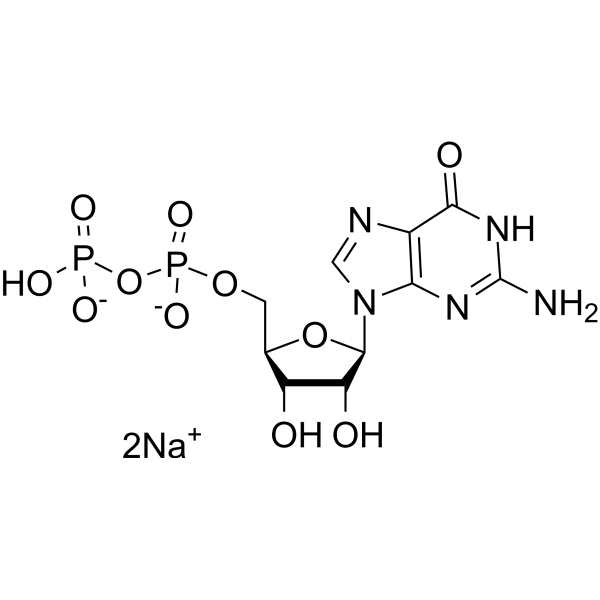
    Guanosine 5'-diphosphate disodium salt
    2 Publications Verification

    GDP disodium salt

    Hepcidin Potassium Channel Endogenous Metabolite Neurological Disease Inflammation/Immunology Cancer
    Guanosine 5'-diphosphate (GDP) disodium salt, a purine nucleoside diphosphate, is interconverted to guanosine by the action of exonucleotidase and phosphorylation of nucleoside to guanine. Guanosine 5'-diphosphate disodium salt activates adenosine 5'-triphosphate-sensitive K + channel and is used to study the kinetics and characteristics of GTPases such as those associated with G-protein coupled receptors (GPCR). Guanosine 5'-diphosphate disodium salt is a potential iron mobilizer, which prevents the Hepcidin (HY-P70400)-ferroportin interaction and modulates the interleukin-6 (IL-6)/stat-3 pathway. Elevated levels of guanosine 5’-diphosphate are associated with the pathogenesis of neurological diseases. Guanosine 5'-diphosphate disodium salt is promising for the research of inflammation, such as anemia of inflammation (AI) .
    Guanosine 5'-diphosphate disodium salt
  • HY-76711

    Opioid Receptor Neurological Disease Metabolic Disease Inflammation/Immunology Cancer
    Naltrexone is an orally active, long-acting opioid receptor (opioid receptor) antagonist. Naltrexone blocks the euphoric effects of exogenous opioids and reduces alcohol craving by blocking opioid receptors (μ, κ, and δ) as well as opioid growth factor receptors. Low doses of Naltrexone are used to relieve chronic pain, treat inflammatory diseases and inhibit tumor growth, while high doses or continuous administration exert pro-inflammatory or pro-proliferative effects. Naltrexone relieves intractable pruritus caused by psoriasis, atopic dermatitis and other conditions, and its combination with Bupropion (HY-B0403) inhibits food craving, thereby reducing body weight .
    Naltrexone
  • HY-N0712
    Typhaneoside
    3 Publications Verification

    mTOR Akt FXR PI3K Autophagy Ferroptosis Apoptosis Reactive Oxygen Species (ROS) Calcium Channel Cardiovascular Disease Neurological Disease Metabolic Disease Cancer
    Typhaneoside is an orally active activator of PI3K/Akt/mTOR and farnesoid X receptor. Typhaneoside promotes the activation of AMPK and Caspase-3, induces apoptosis, ferroptosis, autophagy, ROS accumulation, cell cycle arrest at the G2/M phase, and reduces cancer cell viability. Typhaneoside improves glucose and lipid metabolism, alleviates inflammatory responses, oxidative stress and hepatic lipid accumulation, and exerts hepatoprotective effects. Typhaneoside can be used in research related to heart failure after myocardial infarction, acute myeloid leukemia, non-alcoholic fatty liver disease and neurological disorders .
    Typhaneoside
  • HY-P0317

    Interleukin Related Others
    Interleukin (IL)-6 Receptor is a peptide, derived from interleukin-6 receptor.
    Interleukin (IL)-6 Receptor
  • HY-P10284

    Interleukin Related VEGFR Apoptosis Cardiovascular Disease Cancer
    S7 is an inhibitory polypeptide targeting IL-6R, which specifically binds to IL-6R and its A chain (gp80/IL-6RA) to block its signal transduction. S7 inhibits IL-6-mediated anti-apoptosis (apoptosis), angiogenesis and the expression of VEGF-A, blocks related survival signaling pathways, and enhances the sensitivity of cancer cells to chemotherapeutic drugs. S7 can be applied to the research of related diseases such as cervical cancer, multiple myeloma, Kaposi's sarcoma, prostate cancer and basal cell carcinoma .
    S7
  • HY-117694

    CGRP Receptor Neurological Disease Inflammation/Immunology
    MK-8825 is an orally active, selective CGRP receptor antagonist with a Ki value of 47 pM for human CGRP receptors and 17 nM for rat CGRP receptors. MK-8825 blocks CGRP-stimulated cAMP responses and exhibits competitive-like antagonism. MK-8825 can be used in the research of migraine and temporomandibular joint disorders .
    MK-8825
  • HY-113066AR

    GDP disodium salt (Standard)

    Hepcidin Endogenous Metabolite Potassium Channel Reference Standards Neurological Disease Inflammation/Immunology Cancer
    Guanosine 5'-diphosphate (disodium salt) (Standard) is the analytical standard of Guanosine 5'-diphosphate (disodium salt). This product is intended for research and analytical applications. Guanosine 5'-diphosphate (GDP) disodium salt, a purine nucleoside diphosphate, is interconverted to guanosine by the action of exonucleotidase and phosphorylation of nucleoside to guanine. Guanosine 5'-diphosphate disodium salt activates adenosine 5'-triphosphate-sensitive K+ channel and is used to study the kinetics and characteristics of GTPases such as those associated with G-protein coupled receptors (GPCR). Guanosine 5'-diphosphate disodium salt is a potential iron mobilizer, which prevents the Hepcidin (HY-P70400)-ferroportin interaction and modulates the interleukin-6 (IL-6)/stat-3 pathway. Elevated levels of guanosine 5’-diphosphate are associated with the pathogenesis of neurological diseases. Guanosine 5'-diphosphate disodium salt is promising for the research of inflammation, such as anemia of inflammation (AI) .
    Guanosine 5'-diphosphate disodium salt (Standard)
  • HY-P99702

    BCD-089

    Interleukin Related Inflammation/Immunology
    Levilimab (BCD-089) is a fully humanized anti-interleukin-6 receptor (IL-6R) monoclonal antibody. Levilimab is an inflammation-alleviating antibody. Levilimab can be used for the research of rheumatoid .
    Levilimab
  • HY-161520

    Glucocorticoid Receptor NF-κB Inflammation/Immunology
    Glucocorticoid receptor/NF-κB modulator-1 (Compound 20) is a derivative of ocotillol. Glucocorticoid receptor/NF-κB modulator-1 suppresses the degradation of glucocorticoid receptor (GR) mRNA and GR protein, inhibits the activation of NF-κB signaling pathway. Glucocorticoid receptor/NF-κB modulator-1 downregulates levels of NO, interleukin-6 and tumor necrosis factor-alpha (TNF-α). Glucocorticoid receptor/NF-κB modulator-1 ameliorates sepsis in mouse model .
    Glucocorticoid receptor/NF-κB modulator-1
  • HY-176466

    Platelet-activating Factor Receptor (PAFR) TNF Receptor Inflammation/Immunology
    ST-899 is a novel platelet-activating factor (PAF) receptor antagonist. ST-899 can significantly reduce the mortality of mice with endotoxin (LPS)-induced shock. ST-899 can significantly inhibit the increase in serum tumor necrosis factor (TNF) levels induced by LPS, but has no effect on interleukin-6 (IL-6). The regulatory mechanism of ST-899 is to block the positive feedback loop between PAF and TNF, thereby reducing the inflammatory response. ST-899 can be used to study inflammatory diseases such as septic shock .
    ST-899
  • HY-174599

    mRNA Inflammation/Immunology
    Human IL6R mRNA encodes the human interleukin 6 receptor (IL6R) protein, a subunit of the interleukin 6 (IL6) receptor complex. Interleukin 6 is a potent pleiotropic cytokine that regulates cell growth and differentiation and plays an important role in the immune response.
    Human IL6R mRNA
  • HY-181155

    NO Synthase COX TNF Receptor Interleukin Related Inflammation/Immunology
    Anti-inflammatory agent 111 is a potent anti-inflammatory agent. Anti-inflammatory agent 111 reduces Lipopolysaccharides (LPS) (HY-D1056)-induced i-NOS and COX-2 protein expression, decreases nitric oxide, IL-6, and TNF-α production. Anti-inflammatory agent 111 maintains normal cell viability at bioactive concentrations.Anti-inflammatory agent 111 can be used for the research of inflammation-related disorders .
    Anti-inflammatory agent 111
  • HY-165521

    RAR/RXR Interleukin Related Cancer
    AGN-190121 is a selective RARβ/γ retinoid agonist that inhibits IL-6 expression and cell proliferation in cancer cells by antagonizing NF-IL6. AGN-190121 can be used for the research of Kaposi's sarcoma .
    AGN-190121

Inquiry Online

Your information is safe with us. * Required Fields.

Salutation


Country or Region *

Applicant Name *


Organization Name *

Department *


Email Address *


Product Name *

Cat. No.


Requested quantity *

Phone Number *


Remarks

Inquiry Online

Inquiry Information

Product Name:
Cat. No.:
Quantity:
MCE Japan Authorized Agent:

