248 Results for "

intrinsic

" in MedChemExpress (MCE) Product Catalog:
Products (248)

248 Results for "intrinsic" in MCE Product Catalog:

71
71 Publications Verification
Cat. No.: HY-50907
CAS No.: 852808-04-9
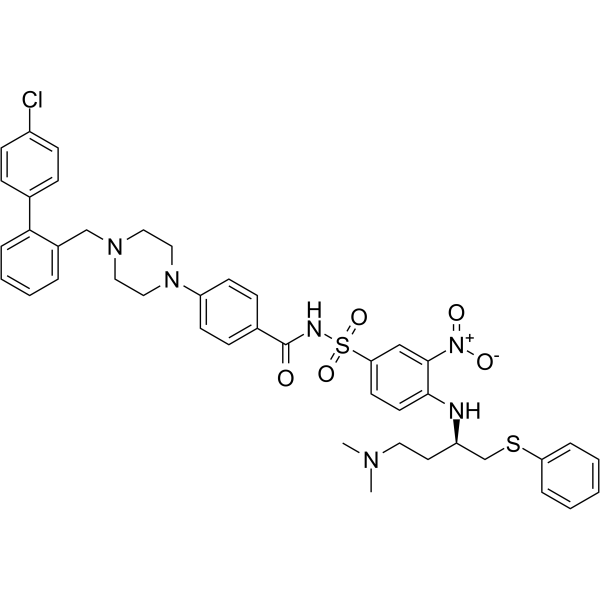
ABT-737, a BH3 mimetic, is a potent Bcl-2, Bcl-xL and Bcl-w inhibitor with EC50s of 30.3 nM, 78.7 nM, and 197.8 nM, respectively. ABT-737 induces the disruption of the BCL-2/BAX complex and BAK-dependent but BIM-independent activation of the intrinsic apoptotic pathway. ABT-737 induces autophagy and has the potential for acute myeloid leukemia (AML) research .
loading...
    loading...
28
28 Cited Publications
Cat. No.: HY-16637D
CAS No.: 29704-76-5
Synonyms: Vitamin B9 disodium; Vitamin M disodium
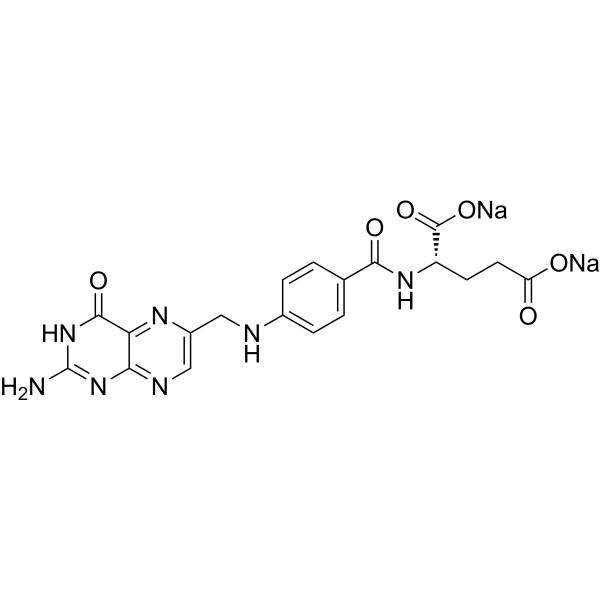
Folic acid disodium (Vitamin B9 disodium; Vitamin M disodium) is an orally active disodium salt form of Folic acid (HY-16637) with an intrinsic dissolution rate (IDR) of 4.96·10 5 g/s . Folic acid disodium serves as cofactor in single-carbon transfer reactions and exhibits protective effects against neural tube defects, ischemic events, and cancer. Folate acid disodium overload leads to impaired brain development in embryogenesis and promotes growth of precancerous altered cells. Folic acid deficiency leads to megaloblastic anemia .
loading...
    loading...
18
18 Cited Publications
Cat. No.: HY-125746
CAS No.: 878557-19-8
Purity:  99.77%
Target:  

Fluorescent Dye

Research Areas:  

Metabolic Disease

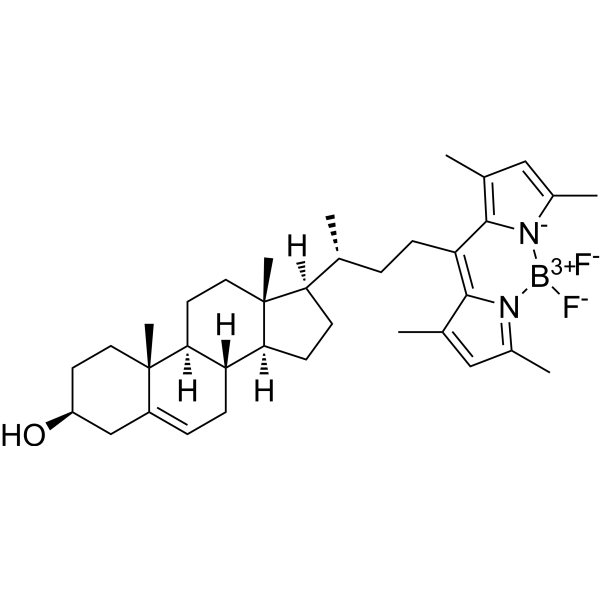
BODIPY-cholesterol is an intrinsically lipophilic, and cell-permeable analog of cholesterol with a fluorescent BODIPY group. BODIPY-cholesterol can be used to monitor sterol uptake and inter-organelle sterol flux in cells. (Excitation/Emission: 505/515 nm) .
loading...
    loading...
14
14 Cited Publications
Cat. No.: HY-50868
CAS No.: 859212-16-1
Synonyms: INNO-406; NS-187
Target:  

Bcr-Abl Src Apoptosis

Research Areas:  

Cancer

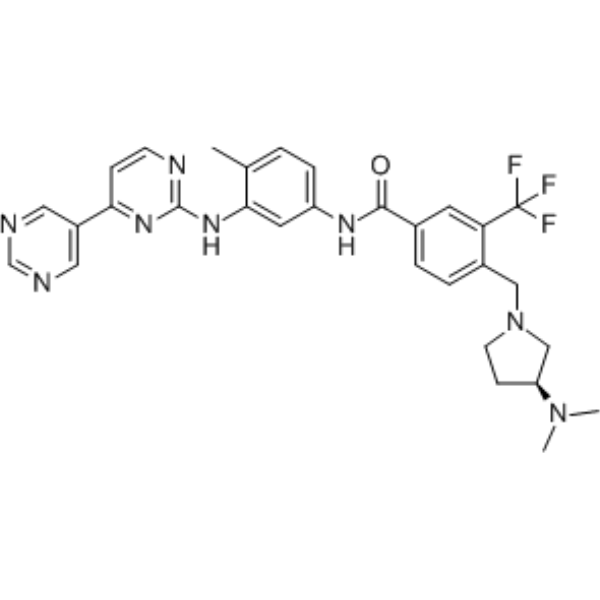
Bafetinib is an orally active Lyn/Bcr-Abl tyrosine kinase inhibitor. Bafetinib enhances the activity of several pro-apoptotic Bcl-2 homology (BH) 3-pure proteins (Bim, Bad, Bmf, and Bik) through intrinsic apoptotic pathways regulated by the Bcl-2 family, and induces apoptosis of Ph + leukemia cells. Bafetinib has antitumor activity .
loading...
    loading...
10
10 Cited Publications
Cat. No.: HY-121320
CAS No.: 1176-09-6
Purity:  ≥98.0%
Target:  

Caspase Apoptosis

Research Areas:  

Cancer

Raptinal, a agent that directly activates caspase-3, initiates intrinsic pathway caspase-dependent apoptosis. Raptinal is able to rapidly induce cancer cell death by directly activating the effector caspase-3, bypassing the activation of initiator caspase-8 and caspase-9 .
loading...
    loading...
10
10 Cited Publications
Cat. No.: HY-101761
CAS No.: 1190221-43-2
Purity:  99.08%
Target:  

PAI-1 Apoptosis

Research Areas:  

Cardiovascular Disease Cancer

TM5441 is an orally bioavailable inhibitor of plasminogen activator inhibitor-1 (PAI-1), has IC50 values between 13.9 and 51.1 μM and induces intrinsic apoptosis in several human cancer cell lines. TM5441 attenuates Nω-nitro-l-arginine methyl ester-induced cardiac hypertension and vascular senescence .
loading...
    loading...
9
9 Cited Publications
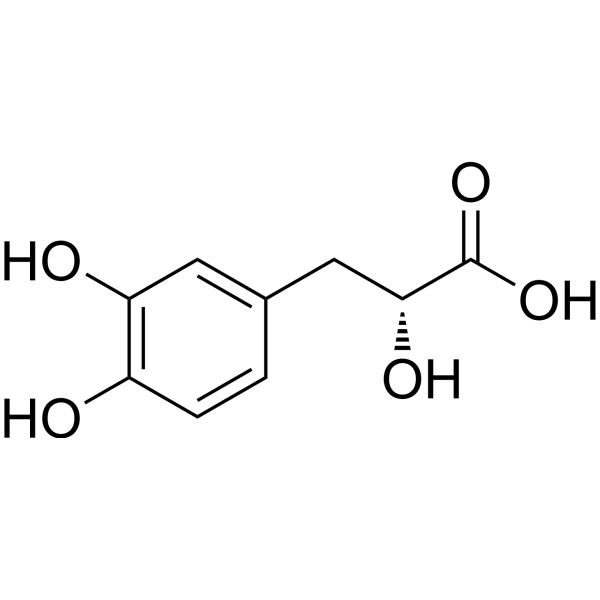
Cat. No.: HY-N1913
CAS No.: 76822-21-4
Synonyms: Dan shen suan A; Salvianic acid A
Danshensu (Dan shen suan A), an orally active phenolic compound, can induce Nrf2/HO-1 activation and inhibition of NF-κB pathway. Danshensu reduces reactive oxygen species (ROS) production, upregulates antioxidant defense mechanism and inhibits intrinsic apoptotic pathway. Danshensu displays a potent antiviral activity against SARS-CoV-2 with EC50 of 0.97 μM. Danshensu has anti-oxidation, anti-apoptosis, anti-lung inflammatory and has the potential for COVID-19, cardiovascular and cerebrovascular diseases research .
loading...
    loading...
9
9 Cited Publications
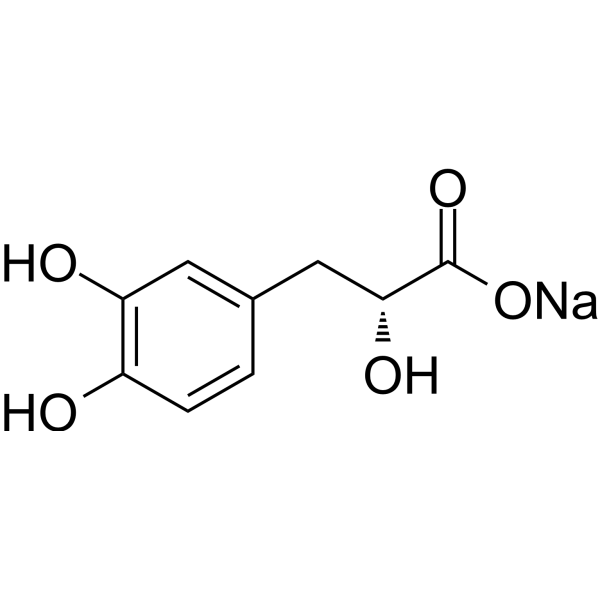
Cat. No.: HY-N1913A
CAS No.: 81075-52-7
Synonyms: Dan shen suan A sodium; Salvianic acid A sodium
Danshensu (Dan shen suan A) sodium, an orally active phenolic compound, can induce Nrf2/HO-1 activation and inhibition of NF-κB pathway. Danshensu sodium reduces reactive oxygen species (ROS) production, upregulates antioxidant defense mechanism and inhibits intrinsic apoptotic pathway. Danshensu sodium displays a potent antiviral activity against SARS-CoV-2 with EC50 of 0.97 μM. Danshensu sodium has anti-oxidation, anti-apoptosis, anti-lung inflammatory and has the potential for COVID-19, cardiovascular and cerebrovascular diseases research .
loading...
    loading...
8
8 Cited Publications
Cat. No.: HY-N0213
CAS No.: 18059-10-4
Synonyms: Verticinone; Raddeanine
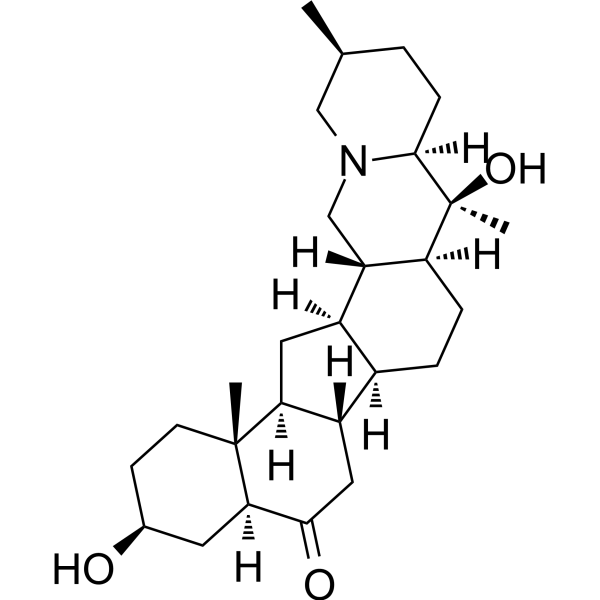
Peiminine is a compound that can be isolated from Bolbostemma paniculatum (Maxim) Franquet (Cucurbitaceae family). Peiminine can induce apoptosis in human hepatocellular carcinoma HepG2 cells through both extrinsic and intrinsic apoptotic pathways. Peiminine has anti-inflammatory, anticancer, anti-osteoporosis, cardioprotective and other activities in many animal models .
loading...
    loading...
6
6 Cited Publications
Cat. No.: HY-N0636
CAS No.: 13463-28-0
Synonyms: Eriodictyol 7-rutinoside; Eriodictyol 7-O-rutinoside
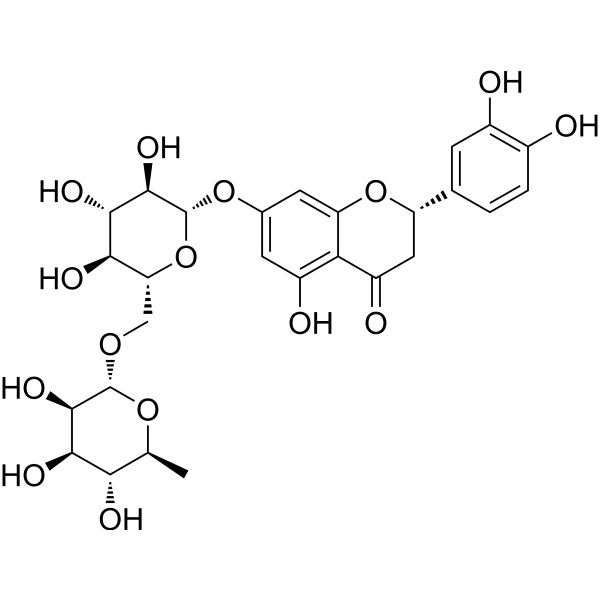
Eriocitrin is a flavonoid isolated from lemons that is a powerful antioxidant. Eriocitrin inhibits the proliferation of liver cancer cells by arresting the cell cycle in the S phase by upregulating p53, cyclin A, cyclin D3 and CDK6. Eriocitrin triggers apoptosis by activating intrinsic signaling pathways involving mitochondria .
loading...
    loading...
6
6 Cited Publications
Cat. No.: HY-147214
CAS No.: 2648450-42-2
Purity:  99.54%
Target:  

YAP

Research Areas:  

Cancer

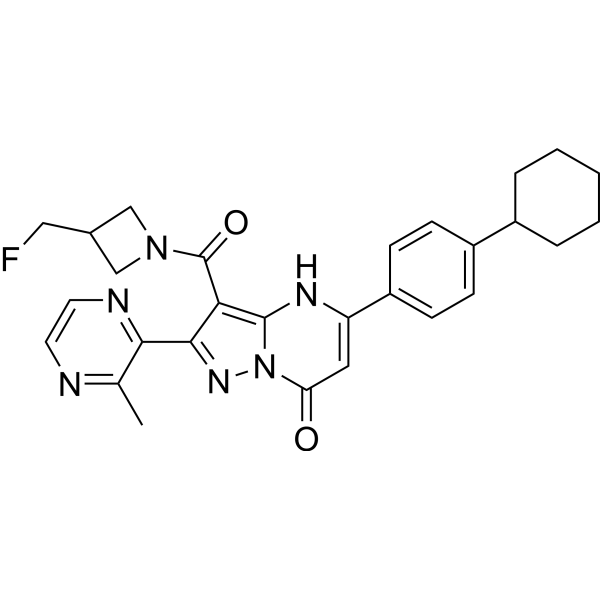
GNE-7883 is a pan-TEAD inhibitor that blocks the association of YAP/TAZ with TEAD. GNE-7883 effectively reduces chromatin accessibility at TEAD motifs, inhibits cell proliferation in multiple cell line models, and achieves strong anti-tumor efficacy in vivo. In addition, GNE-7883 effectively overcomes intrinsic and acquired resistance to KRAS (Kirsten rat sarcoma viral oncogene homolog) G12C inhibitors in multiple preclinical models by inhibiting YAP/TAZ activation .
loading...
    loading...
5
5 Cited Publications
Cat. No.: HY-100432
CAS No.: 877963-94-5
Purity:  ≥98.0%
Target:  

PDI

LOC14 is a potent Protein disulfide isomerase (PDI) inhibitor with EC50 and Kd values of 500 nM and 62 nM, respectively. LOC14 exhibits high stability in mouse liver microsomes and blood plasma, low intrinsic microsome clearance, and low plasma-protein binding . LOC14 inhibits PDIA3 activity, decreases intramolecular disulfide bonds and subsequent oligomerization (maturation) of HA in lung epithelial cells .
loading...
    loading...
4
4 Cited Publications
Cat. No.: HY-N0941
CAS No.: 20931-37-7
Synonyms: β-Mangostin
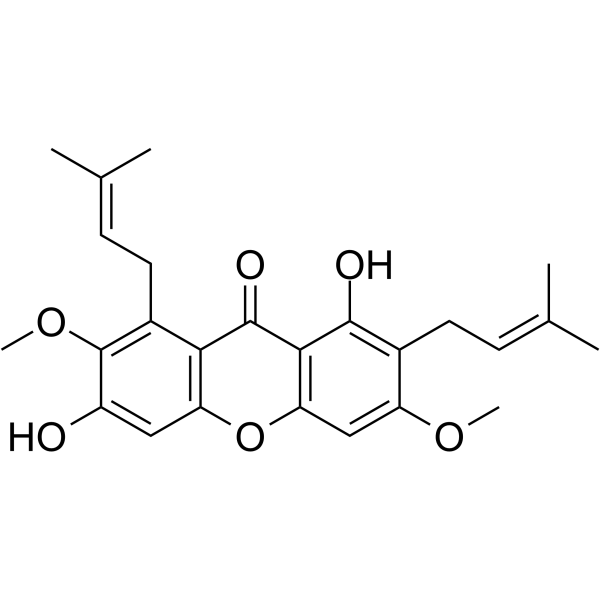
beta-Mangostin (β-Mangostin) is a xanthone compound present in Cratoxylum arborescens, with antibacterial and antimalarial activities. beta-Mangostin exhibits antimycobacterial activity against Mycobacterium tuberculosis with an MIC of 6.25 μg/mL. beta-Mangostin possesses in vitro antimalarial activity against Plasmodium falciparum, with an IC50 of 3.00 μg/mL. beta-Mangostin has potent anticancer activity against various cancers (such as hepatocellular carcinoma, leukaemic) .
loading...
    loading...
4
4 Cited Publications
Cat. No.: HY-15435
CAS No.: 75621-03-3
Purity:  99.91%
Research Areas:  

Others

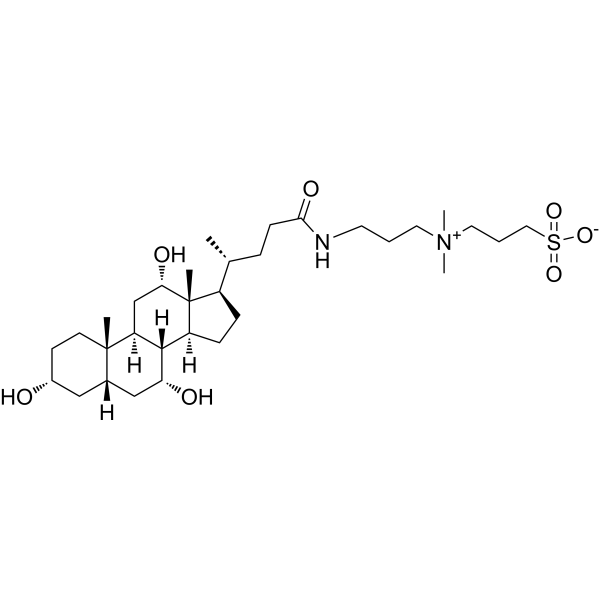
CHAPS is a cholic acid-derived, sulfobetaine-type zwitterionic detergent and micelle-forming agent. CHAPS exhibits properties of weak cationic or nonionic surfactants in different solution systems, undergoes micellization, and forms small, loose hydrophilic aggregates that are temperature-dependent. CHAPS stabilizes mononucleosomes under different ionic strengths, reduces nucleosome sequence specificity, promotes sliding of histone cores along DNA, solubilizes Tamm-Horsfall protein to reduce its interference with urinary exosome isolation, and maintains vesicle structure and the activity of related proteins at the same time. CHAPS is used to recover native folded fusion proteins, enhance the binding capacity of GST fusion proteins, and restore GST enzyme activity. However, CHAPS cannot refold proteins denatured by urea, guanidine hydrochloride or heat, nor can it construct the structure of intrinsically disordered proteins. CHAPS is commonly used in research on the separation and purification of membrane proteins .
loading...
    loading...
4
4 Cited Publications
Cat. No.: HY-15435A
CAS No.: 331717-45-4
Purity:  ≥98.0%
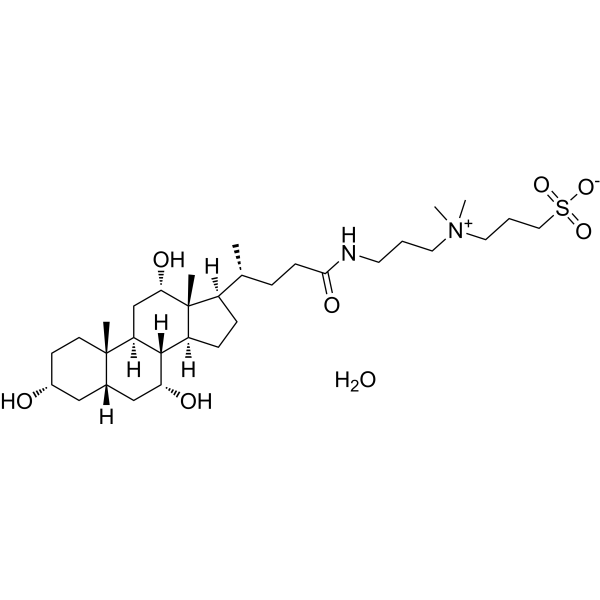
CHAPS hydrate is a cholic acid-derived, sulfobetaine-type zwitterionic detergent and micelle-forming agent. CHAPS hydrate exhibits properties of weak cationic or nonionic surfactants in different solution systems, undergoes micellization, and forms small, loose hydrophilic aggregates that are temperature-dependent. CHAPS hydrate stabilizes mononucleosomes under different ionic strengths, reduces nucleosome sequence specificity, promotes sliding of histone cores along DNA, solubilizes Tamm‑Horsfall protein to reduce its interference with urinary exosome isolation, and maintains vesicle structure and the activity of related proteins at the same time. CHAPS hydrate is used to recover native folded fusion proteins, enhance the binding capacity of GST fusion proteins, and restore GST enzyme activity. However, CHAPS hydrate cannot refold proteins denatured by urea, guanidine hydrochloride or heat, nor can it construct the structure of intrinsically disordered proteins. CHAPS hydrate is commonly used in research on the separation and purification of membrane proteins .
loading...
    loading...
3
3 Cited Publications
Cat. No.: HY-15345A
CAS No.: 18771-50-1
Purity:  99.89%
Synonyms: THU; NSC-112907
Target:  

DNA/RNA Synthesis

Research Areas:  

Cancer

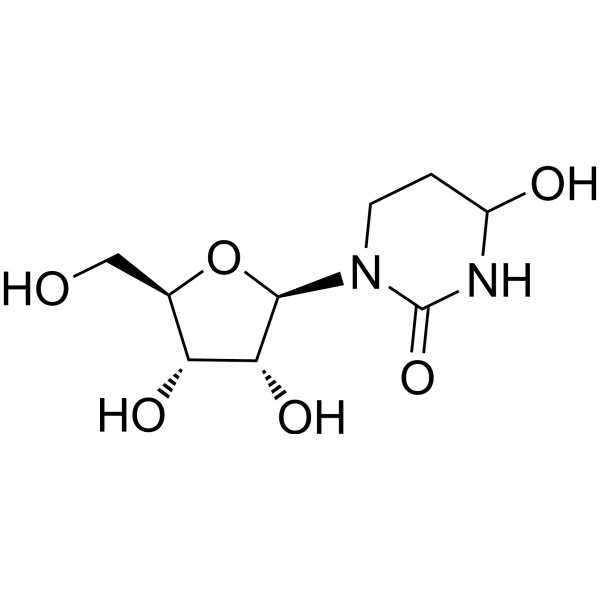
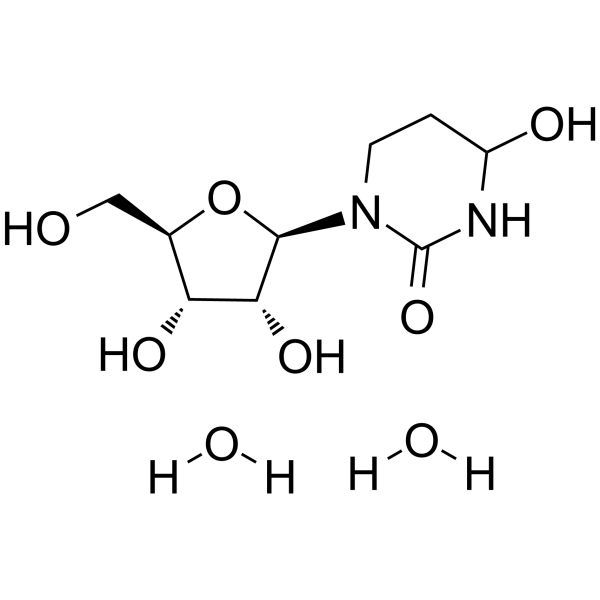
Tetrahydrouridine dihydrate is potent inhibitor of cytidine deaminase (CDA), which competitively blocks the enzyme's active site more effectively than intrinsic cytidine .
loading...
    loading...
3
3 Cited Publications
Cat. No.: HY-114712
CAS No.: 19970-45-7
Purity:  98.92%
Synonyms: SJ403
Target:  

CDK

Research Areas:  

Others

SJ572403 (SJ403) is a p27 Kip1 inhibitor. SJ572403 has high specificity for specific regions within the D2 subdomain of p27-KID with a Kd value of 2.2 mM. SJ572403 can be used for the research of diseases associated with intrinsically disordered proteins (IDPs) .
loading...
    loading...
3
3 Cited Publications
Cat. No.: HY-15345
Purity:  99.79%
Synonyms: THU dihydrate; NSC-112907 dihydrate
Target:  

DNA/RNA Synthesis

Research Areas:  

Cancer

Tetrahydrouridine dihydrate (THU dihydrate) is potent inhibitor of cytidine deaminase (CDA), which competitively blocks the enzyme's active site more effectively than intrinsic cytidine.
loading...
    loading...
3
3 Cited Publications
Cat. No.: HY-N4185
CAS No.: 61153-77-3
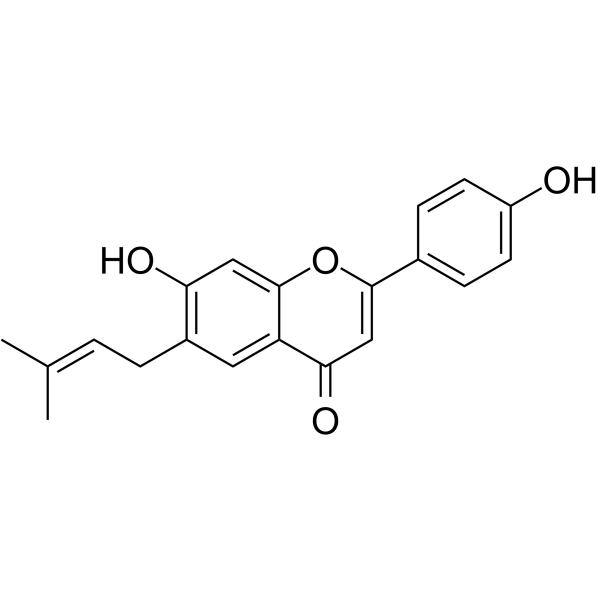
Licoflavone A is an orally active PTP1B/VEGFR-2 inhibitor, with an IC50 of 54.5 μM against PTP1B, an IC50 of 14.36 μM and a Kd of 142.38 nM against human VEGFR-2. Licoflavone A blocks the PI3K/AKT and MEK/ERK signaling pathways. Licoflavone A induces G1 phase cell cycle arrest, apoptosis via the intrinsic mitochondrial pathway (apoptosis), and inhibits migration, invasion and epithelial-mesenchymal transition (EMT) of gastric cancer cells. Licoflavone A inhibits the proliferation of gastric cancer cells in vitro and in xenograft models. Licoflavone A reduces the expression levels of HIF-1α, GLUT1, LDHA, PKM2 and HK2 in hypoxic gastric cancer cells, decreases glucose uptake and suppresses glycolysis. Licoflavone A can be used in research related to gastric cancer, type 2 diabetes and obesity .
loading...
    loading...
2
2 Cited Publications
Cat. No.: HY-125857
CAS No.: 9007-43-6
Purity:  99.9%
Cytochrome C is a multi-functional enzyme involving in life and death decisions of the cell. Cytochrome C is essential in mitochondrial electron transport and intrinsic type II apoptosis .
loading...
    loading...

