9 Results for "

lipid mobilization

" in MedChemExpress (MCE) Product Catalog:
Products (9)

9 Results for "lipid mobilization" in MCE Product Catalog:

23
23 Cited Publications
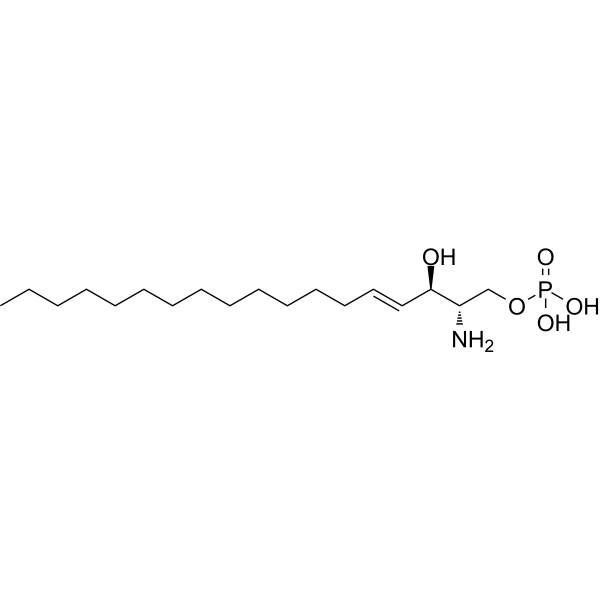
Cat. No.: HY-108496
CAS No.: 26993-30-6
Purity:  ≥99.0%
Synonyms: S1P
Sphingosine-1-phosphate (S1P) is an agonist of S1P1-5 receptors and a ligand of GPR3, GPR6 and GPR12. Sphingosine-1-phosphate is an intracellular second messenger and mobilizes Ca 2+ as an extracellular ligand for G protein-coupled receptors . Sphingosine-1-phosphate is an important lipid mediator generated from Sphingomyelin (HY-113498) or other membrane phospholipids . Sphingosine-1-phosphate stimulates the DNA synthesis, cell proliferation and migration .
loading...
    loading...
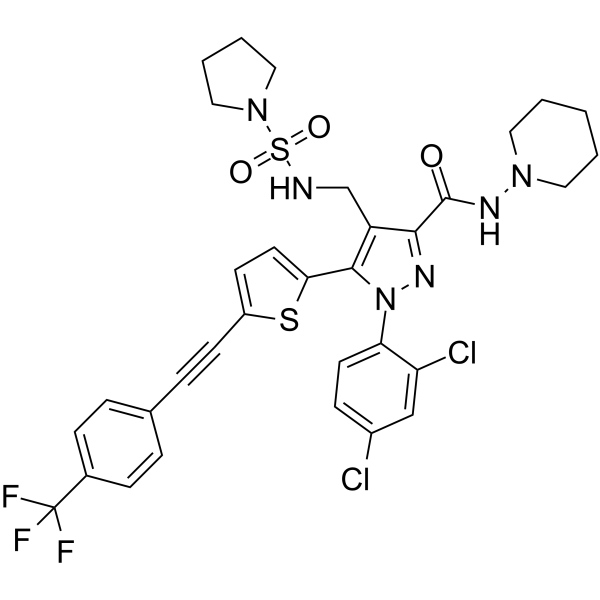
Cat. No.: HY-12790
CAS No.: 1429239-98-4
Purity:  99.83%
Synonyms: CB1-IN-1
Target:  

Cannabinoid Receptor

Research Areas:  

Metabolic Disease

BPRCB1184 is a peripherally restricted 1-type cannabinoid receptor (CB1) antagonist, whose activity is associated with the regulation of obesity-related endocannabinoid system. BPRCB1184 regulates the activity of the endocannabinoid system, promotes lipid mobilization, reduces triglyceride storage, improves glucose metabolism, decreases food intake and body weight, while enhances insulin resistance and improves blood lipid levels. BPRCB1184 can be used in obesity-related research .
loading...
    loading...
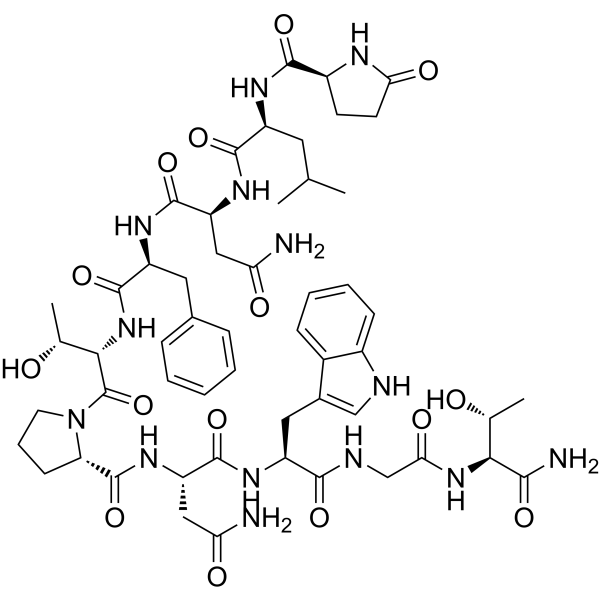
Cat. No.: HY-P3570
CAS No.: 98968-94-6
Synonyms: Lom-AKH-II
Target:  

Endogenous Metabolite

Research Areas:  

Metabolic Disease

Adipokinetic hormone II (Locusta migratoria) (Lom-AKH-II) is a insect adipokinetic hormone (AKH), enhances fat body cAMP levels in vitro. Insect adipokinetic hormones (AKHs) controls flight-directed mobilization of carbohydrate and lipid from fat body stores, which depends on AKH receptor(s) coupling to cAMP formation and glycogen phosphorylase activation via the stimulatory guanine nucleotide-binding protein (Gs) .
loading...
    loading...
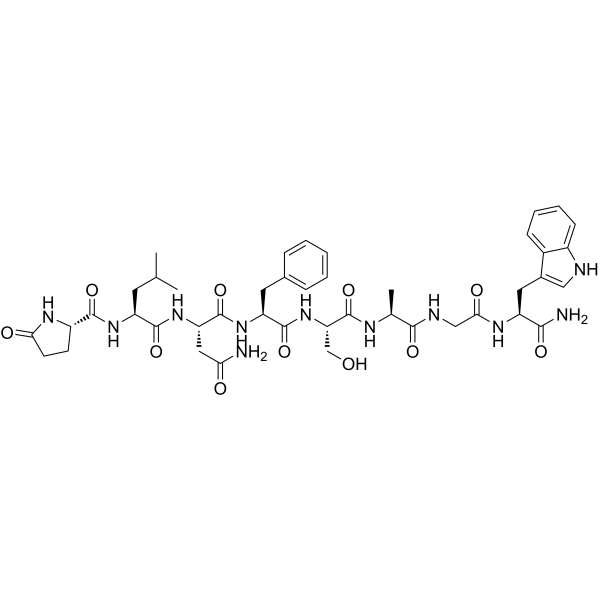
Cat. No.: HY-P3572
CAS No.: 61627-67-6
Synonyms: Lom-AKH-I
Target:  

Endogenous Metabolite

Research Areas:  

Endocrinology

Adipokinetic hormone I (Locusta migratoria) (Lom-AKH-I) is a insect adipokinetic hormone (AKH), enhances fat body cAMP levels in vitro. Insect adipokinetic hormones (AKHs) controls flight-directed mobilization of carbohydrate and lipid from fat body stores, which depends on AKH receptor(s) coupling to cAMP formation and glycogen phosphorylase activation via the stimulatory guanine nucleotide-binding protein (Gs) .
loading...
    loading...
Cat. No.: HY-107614G
CAS No.: 325465-93-8
Synonyms: 1-Oleoyl-sn-glycero-3-phosphate sodium (GMP); 1-Oleoyl-LPA sodium (GMP)
1-Oleoyl lysophosphatidic acid sodium (GMP) is the GMP-grade form of 1-Oleoyl lysophosphatidic acid sodium (HY-107614). GMP-grade small molecules serve as auxiliary reagents in cell therapy. 1-Oleoyl lysophosphatidic acid sodium is a bioactive lipid signaling molecule. 1-Oleoyl lysophosphatidic acid sodium inhibits lysoPLD-catalyzed hydrolysis of lysophosphatidylcholine and FS-3. 1-Oleoyl lysophosphatidic acid sodium activates LPA1 and LPA2, thereby triggering calcium mobilization, NFATc1 translocation, Rho/ROCK activation, Smad2/3 phosphorylation and c-Fos expression. 1-Oleoyl lysophosphatidic acid sodium induces anxiety-like, depression-like and hypoactivity phenotypes, regulates osteoclast cytoskeleton and viability, reduces osteoclast bone resorptive activity, and drives mesenchymal stem cell differentiation into myofibroblast-like cells. 1-Oleoyl lysophosphatidic acid sodium stimulates the secretion of transforming growth factor-β1 and stromal cell-derived factor-1. 1-Oleoyl lysophosphatidic acid sodium is applicable to research related to anxiety, depression and ovarian cancer .
loading...
    loading...
Cat. No.: HY-A0231
CAS No.: 3459-20-9
Synonyms: Gondafon; Glycodiazine
Target:  

Insulin Receptor

Research Areas:  

Metabolic Disease

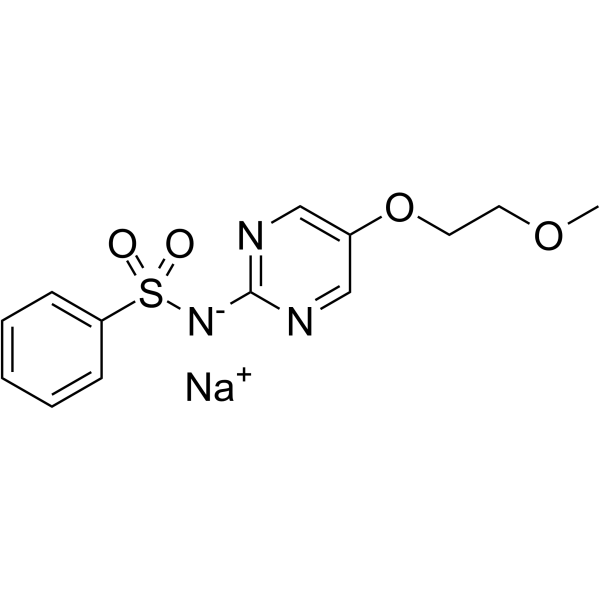
Glymidine sodium is an oral active antidiabetic. Glymidine sodium is the inhibitor of hepatic lipolysis. Glymidine sodium inhibits the glucose formation and supresses the elevated pyruvate oxidation which results from the inhibition of endogenous lipid mobilization .
loading...
    loading...
Cat. No.: HY-181709
Synonyms: TG062
TPM003 (TG062) is a triple agonist of GLP-1R, GIPR and GCGR, with EC50 values of 33.9, 12.5 and 92.9 pM, respectively. TPM003 suppresses appetite, regulates blood glucose, enhances insulin sensitivity, reduces gastrointestinal intolerance, promotes hepatic lipid mobilization and increases energy expenditure. TPM003 induces weight loss, improves metabolic parameters, reverses hepatic steatosis and optimizes liver function markers. TPM003 is applicable for research on obesity and non-alcoholic steatohepatitis .
loading...
    loading...
Cat. No.: HY-N22000
CAS No.: 14379-32-9
N-Stearoyl valine is an N-acyl derivative of valine. N-Stearoyl valine antagonizes intracellular calcium mobilization by binding to the TRPV3 channel as a bioactive endogenous ligand of transient receptor potential (TRP) channels. N-Stearoyl valine participates in physiological processes such as lipid metabolism and cell signal transduction as an endogenous metabolite. N-Stearoyl valine is also a flavor compound. N-Stearoyl valine can be used in research on biomarker detection, animal nutrition and amino acid metabolism, and the development of the food and beverage industry .
loading...
    loading...
Cat. No.: HY-171722
CAS No.: 1355681-08-1
Synonyms: Asc-C9
Target:  

Insecticide PGC-1α

Research Areas:  

Infection Cancer

Ascr#10 (Asc-C9) is an orally active thermogenesis inducer and insecticide that can be obtained from Monochamus alternatus. Ascr#10 binds to the insect adipokinetic hormone (AKH) receptor (Ka=272 µM) and stimulates mitochondrial biogenesis via the PGC1α-UCP4 axis. Consequently, Ascr#10 induces UCP4-mediated uncoupled respiration, reduces the ATP/ADP ratio and accelerates lipid mobilization, thereby driving the thermogenesis process. Ascr#10 delays pupation and exerts specific chemotaxis toward dispersive fourth-stage pinewood nematode LIV larvae. Ascr#10 promotes cold acclimation of Monochamus alternatus larvae through metabolic inhibition and cryoprotectant accumulation, enhancing their survival rate under cold stress. Ascr#10 also induces browning of white adipose tissue and activates brown adipose tissue in mice, thereby helping the body resist cold and tumor growth. Ascr#10 can be widely applied to research related to pine wilt disease, lung tumors and cold stress .
loading...
    loading...

