

1. Search Result
Search Result
Results for "

metabolisms

" in MedChemExpress (MCE) Product Catalog:

2090

Inhibitors & Agonists

47

Screening Libraries

25

Fluorescent Dyes

94

Biochemical Assay Reagents

83

Peptides

8

Inhibitory Antibodies

534

Natural
Products

295

Isotope-Labeled Compounds

14

Click Chemistry

106

Oligonucleotides

3

GMP Molecules

Cat. No. Product Name Target Research Areas Chemical Structure
  • HY-B0389
    D-Glucose
    50+ Cited Publications

    Glucose; D-(+)-Glucose; Dextrose

    Environmental Pollutants Endogenous Metabolite Cardiovascular Disease Others Metabolic Disease Endocrinology Cancer
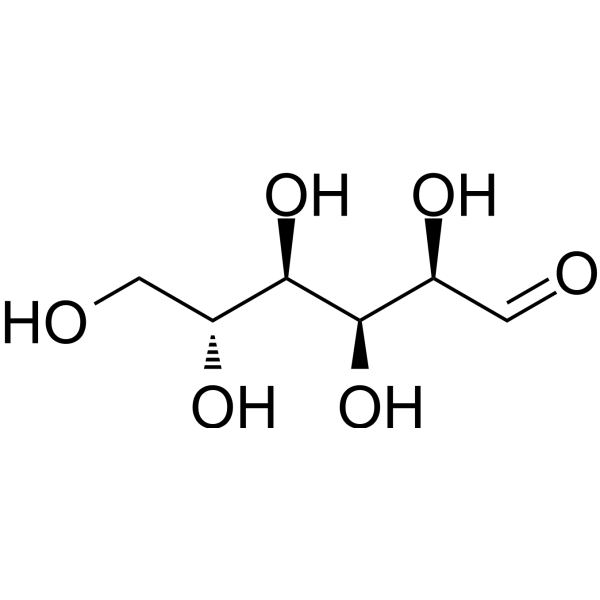
    D-Glucose is the naturally occurring form of glucose and the most abundant monosaccharide. D-Glucose is a critical components of the general metabolism, and serve as critical signaling molecules in relation to both cellular metabolic status and biotic or abiotic stress response .
    D-Glucose
  • HY-128851
    Coenzyme A
    2 Publications Verification

    Endogenous Metabolite Fatty Acid Synthase (FASN) Metabolic Disease Cancer
    Coenzyme A (CoASH) is a ubiquitous and essential cofactor, which is an acyl group carrier and carbonyl-activating group for the citric acid cycle and fatty acid metabolism. Coenzyme A plays a central role in the oxidation of pyruvate in the citric acid cycle and the metabolism of carboxylic acids, including short- and long-chain fatty acids .
    Coenzyme A
  • HY-N8461
    Reuterin
    3 Publications Verification

    3-Hydroxypropionaldehyde; 3-Hydroxypropanal

    Bacterial Infection
    Reuterin is a broad-spectrum antimicrobial agent active against Gram positive and Gram negative bacteria, as well as yeasts, moulds and protozoa. Reuterin is produced by specific strains of Lactobacillus reuteri during anaerobic metabolism of glycerol. Reuterin also demonstrates potent antimicrobial activity against a broad panel of human and poultry meat campylobacter spp. Isolates .
    Reuterin
  • HY-F0002
    NADP sodium salt
    5+ Cited Publications

    Sodium NADP

    Endogenous Metabolite Metabolic Disease Inflammation/Immunology Cancer
    NADP sodium salt is the sodium salt form of NADP (HY-113325). NADP is a coenzyme involved in cellular electron transfer reactions in biological metabolism, which is alternately oxidized (NADP+) and reduced (NADPH), and can maintain cellular redox homeostasis and regulate many biological events, including cellular metabolism. NADPH is a universal electron donor that provides reducing ability for synthetic metabolic reactions and redox balance. NADPH plays a multifunctional role in regulating inflammation, redox homeostasis, and synthetic metabolism processes .
    NADP sodium salt
  • HY-B0172B

    3β-Hydroxy-5β-cholanic acid; 3-Epilithocholic acid; β-Lithocholic acid

    Endogenous Metabolite Endocrinology
    Isolithocholic acid (β-Lithocholic acid) is an isomer of Lithocholic acid. Isolithocholic acid, a bile acid, is formed by microbial metabolism of Lithocholic acid or Lithocholic acid 3α-sulfate .
    Isolithocholic acid
  • HY-F0002A
    NADP disodium salt
    5+ Cited Publications

    Disodium NADP

    Endogenous Metabolite Metabolic Disease Inflammation/Immunology Cancer
    NADP disodium salt is the disodium salt form of NADP (HY-113325). NADP is a coenzyme involved in cellular electron transfer reactions in biological metabolism, which is alternately oxidized (NADP+) and reduced (NADPH), and can maintain cellular redox homeostasis and regulate many biological events, including cellular metabolism. NADPH is a universal electron donor that provides reducing ability for synthetic metabolic reactions and redox balance. NADPH plays a multifunctional role in regulating inflammation, redox homeostasis, and synthetic metabolism processes .
    NADP disodium salt
  • HY-128851B
    Coenzyme A sodium
    2 Publications Verification

    Endogenous Metabolite Fatty Acid Synthase (FASN) Metabolic Disease Cancer
    Coenzyme A (CoASH) sodium is a ubiquitous and essential cofactor, which is an acyl group carrier and carbonyl-activating group for the citric acid cycle and fatty acid metabolism. Coenzyme A plays a central role in the oxidation of pyruvate in the citric acid cycle and the metabolism of carboxylic acids, including short- and long-chain fatty acids .
    Coenzyme A sodium
  • HY-113325
    NADP
    5+ Cited Publications

    Endogenous Metabolite Metabolic Disease Inflammation/Immunology Cancer
    NADP is a coenzyme involved in cellular electron transfer reactions in biological metabolism, which is alternately oxidized (NADP+) and reduced (NADPH), and can maintain cellular redox homeostasis and regulate many biological events, including cellular metabolism. NADPH is a universal electron donor that provides reducing ability for synthetic metabolic reactions and redox balance. NADPH plays a multifunctional role in regulating inflammation, redox homeostasis, and synthetic metabolism processes .
    NADP
  • HY-113524
    N-Acetyl-L-aspartic acid
    1 Publications Verification

    Endogenous Metabolite Neurological Disease
    N-Acetyl-L-aspartic acid is a derivative of Aspartic acid (HY-N0666) and endogenous compound. N-Acetyl-L-aspartic acid acts as an acetyl donor. N-Acetyl-L-aspartic acid is involved in brain metabolism. N-Acetyl-L-aspartic acid is used in the research of neurodegenerative diseases (such as Canavan disease) .
    N-Acetyl-L-aspartic acid
  • HY-154918

    Drug Metabolite Metabolic Disease
    LysoPE (18:2/0:0) is a lysophosphatidylethanolamine implicated in phospholipid metabolism. LysoPE (18:2/0:0) shows significantly altered serum levels in mice exposed to a combination of DEHP (HY-B1945) and Aroclor 1254, which is associated with disturbed phospholipid metabolism. LysoPE (18:2/0:0) can be used for the research of endocrine-disrupting compound-induced metabolic disorders and lipid metabolism disturbance. LysoPE (18:2/0:0) is identified as a potential biomarker for the combined toxicity of DEHP and Aroclor 1254 .
    LysoPE(18:2/0:0)
  • HY-114295A

    Geranyl pyrophosphate triammonium

    Endogenous Metabolite Metabolic Disease
    Geranyl diphosphate triammonium is a key intermediate in the isoprenoid biosynthesis pathway (IBP). Geranyl diphosphate triammonium plays key roles in cellular metabolism and is responsible for the production of both sterol and non-sterol isoprenoids .
    Geranyl diphosphate triammonium
  • HY-113325A
    NADP sodium hydrate
    5+ Cited Publications

    Endogenous Metabolite Metabolic Disease Inflammation/Immunology Cancer
    NADP sodium hydrate is the sodium salt hydrate form of NADP (HY-113325). NADP is a coenzyme involved in cellular electron transfer reactions in biological metabolism, which is alternately oxidized (NADP+) and reduced (NADPH), and can maintain cellular redox homeostasis and regulate many biological events, including cellular metabolism. NADPH is a universal electron donor that provides reducing ability for synthetic metabolic reactions and redox balance. NADPH plays a multifunctional role in regulating inflammation, redox homeostasis, and synthetic metabolism processes .
    NADP sodium hydrate
  • HY-133890
    Tauro-α-muricholic acid
    2 Publications Verification

    T-α-MCA

    Endogenous Metabolite FXR Neurological Disease Metabolic Disease
    Tauro-α-muricholic acid (T-α-MCA) is a Taurine (HY-B0351)-conjugated primary Bile acid. Tauro-α-muricholic acid is a FXR antagonist with an IC50 of  28 µM. Tauro-α-muricholic acid attenuates other bile acid-activated FXR signaling. Tauro-α-muricholic acid can be used in the research of Alzheimer's disease, glucose metabolism, and lipid metabolism .
    Tauro-α-muricholic acid
  • HY-128851A
    Coenzyme A trilithium
    2 Publications Verification

    Endogenous Metabolite Fatty Acid Synthase (FASN) Metabolic Disease Cancer
    Coenzyme A (CoASH) is a ubiquitous and essential cofactor, which is an acyl group carrier and carbonyl-activating group for the citric acid cycle and fatty acid metabolism. Coenzyme A plays a central role in the oxidation of pyruvate in the citric acid cycle and the metabolism of carboxylic acids, including short- and long-chain fatty acids .
    Coenzyme A trilithium
  • HY-B1429
    Chlorpropamide
    4 Publications Verification

    Na+/K+ ATPase Metabolic Disease Endocrinology
    Chlorpropamide is an oral hypoglycemic agent that can influence acetaldehyde metabolism in mice and has a potentiating effect on antidiuretic hormone .
    Chlorpropamide
  • HY-W018499
    (S)-2-Hydroxybutanoic acid
    1 Publications Verification

    Endogenous Metabolite Others
    (S)-2-Hydroxybutanoic acid is the S-enantiomer of 2-Hydroxybutanoic acid. 2-Hydroxybutanoic acid, a coproduct of protein metabolism, is an insulin resistance (IR) biomarker .
    (S)-2-Hydroxybutanoic acid
  • HY-W011012

    Adenosine Receptor Metabolic Disease
    Adenosine 5'-monophosphate disodium is an orally active purine nucleotide, and participates in ATP metabolism. Adenosine 5'-monophosphate disodium is also a ligand for adenosine 2B receptor. Adenosine 5'-monophosphate disodium can activate AMPK in skeletal muscle, and ameliorates insulin resistance and impaired glucose metabolism. Adenosine 5'-monophosphate disodium can be used for research of diabetes .
    Adenosine 5'-monophosphate disodium
  • HY-134424

    Endogenous Metabolite Metabolic Disease
    Propionyl coenzyme A lithium, a coenzyme A derivative of propionic acid, is an important metabolic intermediate formed by the thioester bond between coenzyme A and propionic acid. The breakdown and production of Propionyl coenzyme A lithim is important for the metabolism of organisms .
    Propionyl coenzyme A lithium
  • HY-114295

    Geranyl pyrophosphate

    Endogenous Metabolite Metabolic Disease
    Geranyl diphosphate is a key intermediate in the isoprenoid biosynthesis pathway (IBP). HY-114295 plays key roles in cellular metabolism and is responsible for the production of both sterol and non-sterol isoprenoids .
    Geranyl diphosphate
  • HY-B1514
    Allantoic acid
    1 Publications Verification

    Endogenous Metabolite Others
    Allantoic acid is a degradative product of uric acid and associated with purine metabolism .
    Allantoic acid
  • HY-P4588

    GLUT Metabolic Disease
    (Glu17,21,24)-Osteocalcin (1-49) (human) is a bone-specific protein involved in bone formation and glucose metabolism .
    (Glu17,21,24)-Osteocalcin (1-49) (human)
  • HY-136336
    Tofacitinib metabolite-1
    1 Publications Verification

    Drug Metabolite Others
    Tofacitinib metabolite-1 is a metabolite of Tofacitinib, a JAK inhibitor. Tofacitinib metabolite-1 can be used in the pharmacokinetics and metabolism studies of tofacitinib .
    Tofacitinib metabolite-1
  • HY-W019847

    Cytochrome P450 Infection Metabolic Disease
    Azamulin is an irreversible, highly selective inhibitior of human CYP3Aa. Azamulin has CYP3A inhibition activity with IC50 values range from 0.03-0.24 μM. Azamulin can be used for the research of metabolism and antiinfection .
    Azamulin
  • HY-147379

    Ferroportin Metabolic Disease
    Hepcidin antagonist-1 (example 104) is a potent hepcidin (hepcidine) antagonist with an IC50<50 μM. Hepcidin antagonist-1 can be used for researching iron metabolism disorders, such as anemias .
    Hepcidin antagonist-1
  • HY-138825

    Pyk2 Metabolic Disease
    NCGC00188636 is a novel covalent pyruvate kinase (PYK) inhibitor. NCGC00188636 blocks nucleotide binding to the active site of pyruvate kinase. NCGC00188636 can be used for the research of the metabolism of many organisms and cell types.
    NCGC00188636
  • HY-133890A
    Tauro-α-muricholic acid sodium
    2 Publications Verification

    T-α-MCA sodium

    Endogenous Metabolite FXR Neurological Disease Metabolic Disease
    Tauro-α-muricholic acid sodium (T-α-MCA sodium) is a Taurine (HY-B0351)-conjugated primary Bile acid. Tauro-α-muricholic acid sodium is a FXR antagonist with an IC50 of  28 µM. Tauro-α-muricholic acid sodium attenuates other bile acid-activated FXR signaling. Tauro-α-muricholic acid sodium can be used in the research of Alzheimer's disease, glucose metabolism, and lipid metabolism .
    Tauro-α-muricholic acid sodium
  • HY-156354

    Orphan GPCR Metabolic Disease
    GPR61 Inverse agonist 1 (Compound 1) is a GPR61 inverse agonist (IC50: 11 nM). GPR61 Inverse agonist 1 can be used for research of disorders of metabolism and body weight, such as obesity and cachexia .
    GPR61 Inverse agonist 1
  • HY-100935

    CL 263780; (±)-2-Amino-5-[1-hydroxy-2-[(1-methylethyl)amino]ethyl]benzonitrile

    Adrenergic Receptor Metabolic Disease
    Cimaterol (CL 263780) is a β-adrenergic agonist on energy metabolism in ob/ob mice . The Kd for Cimaterol binding to the L6 β-receptor is 26 nM which is compatible with its EC50 for the stimulation of protein synthesis (approx 5 nM) .
    Cimaterol
  • HY-N9516

    TDHC

    Endogenous Metabolite Metabolic Disease
    Taurodehydrocholic acid is a biliary cholesterol secretion activator. Taurodehydrocholic acid significantly increases the expression of Abcg5 and decreases the expression of abc8. Taurodehydrocholic acid can be used in the study of cholesterol metabolism .
    Taurodehydrocholic acid
  • HY-76199

    Bacterial PROTAC Linkers Metabolic Disease
    trans-4-Hydroxycyclohexanecarboxylic acid is a substrate for cyclohexanecarboxylic acid production. trans-4-Hydroxycyclohexanecarboxylic acid is the by-product of intestinal bacterial metabolism via urinary excretion .
    trans-4-Hydroxycyclohexanecarboxylic acid
  • HY-122753

    MDM-2/p53 Cancer
    SLMP53-1 is a wild-type and mutant p53 reactivator with promising antitumor activity. SLMP53-1 mediates the reprograming of glucose metabolism in cancer cells. SLMP53-1 depletes angiogenesis, decreasing endothelial cell tube formation and vascular endothelial growth factor (VEGF) expression levels .
    SLMP53-1
  • HY-110260

    Endogenous Metabolite Metabolic Disease
    LDN-193188 is a Phosphatidylcholine transfer protein (PC-TP) inhibitor. LDN-193188 regulates hepatic glucose metabolism, and can be used for study of glucose metabolism .
    LDN-193188
  • HY-W101299

    Amino Acid Derivatives Metabolic Disease
    N-Acetyl-D-allo-isoleucine is an amino acid derivative. N-Acetyl-D-allo-isoleucine is promising for research of amino acid metabolism, such as abnormal isoleucine metabolism .
    N-Acetyl-D-allo-isoleucine
  • HY-113069

    Endogenous Metabolite Metabolic Disease
    Decanoylcarnitine is a fatty ester lipid and an acylcarnitine derivative, which is a metabolite associated with impaired fatty acid metabolism in the elderly population .
    Decanoylcarnitine
  • HY-100907

    Acetyl dl-carnitine chloride

    Cholinesterase (ChE) Neurological Disease
    (±)-Acetylcarnitine chloride (Acetyl dl-carnitine chloride) is a weak cholinergic agonist with cholinergic properties. (±)-Acetylcarnitine chloride is an important intermediate in lipid metabolism .
    (±)-Acetylcarnitine chloride
  • HY-131303

    Heptadecanoyl-CoA

    Biochemical Assay Reagents Metabolic Disease
    Heptadecanoyl Coenzyme A (Heptadecanoyl-CoA), long-chain acyl-coenzymes A (acyl-CoAs) (LCACoA), is an intermediate in lipid metabolism. Heptadecanoyl Coenzyme A can be used for the research of glucose metabolism .
    Heptadecanoyl Coenzyme A
  • HY-148324

    Pyruvate Kinase Cancer
    PKM2 activator 5 (compound 8) is a PKM2 activator with an AC50 value of 0.316 µM. PKM2 activator 5 has the potential to alter the aberrant metabolism of cancer cells .
    PKM2 activator 5
  • HY-128851R

    Reference Standards Fatty Acid Synthase (FASN) Endogenous Metabolite Metabolic Disease Cancer
    Coenzyme A (Standard) is the analytical standard of Coenzyme A. This product is intended for research and analytical applications. Coenzyme A (CoASH) is a ubiquitous and essential cofactor, which is an acyl group carrier and carbonyl-activating group for the citric acid cycle and fatty acid metabolism. Coenzyme A plays a central role in the oxidation of pyruvate in the citric acid cycle and the metabolism of carboxylic acids, including short- and long-chain fatty acids[1].
    Coenzyme A (Standard)
  • HY-124073

    TRP Channel Metabolic Disease
    Dihydrocapsiate, as a compound of capsinoid family, is an orally active TRPV1 agonist. Dihydrocapsiate can be used for the research of metabolism disease .
    Dihydrocapsiate
  • HY-F0002R

    Sodium NADP (Standard)

    Endogenous Metabolite Reference Standards Metabolic Disease Inflammation/Immunology Cancer
    NADP (sodium salt) (Standard) is the analytical standard of NADP (sodium salt). This product is intended for research and analytical applications. NADP sodium salt is the sodium salt form of NADP (HY-113325). NADP is a coenzyme involved in cellular electron transfer reactions in biological metabolism, which is alternately oxidized (NADP+) and reduced (NADPH), and can maintain cellular redox homeostasis and regulate many biological events, including cellular metabolism. NADPH is a universal electron donor that provides reducing ability for synthetic metabolic reactions and redox balance. NADPH plays a multifunctional role in regulating inflammation, redox homeostasis, and synthetic metabolism processes[1][4].
    NADP sodium salt (Standard)
  • HY-113606

    Drug Intermediate Metabolic Disease
    Adenosine 5'-phosphosulfate disodium is a metabolism intermediates of sulfur. Adenosine 5'-phosphosulfate disodium can used in study sulfotransferases and sulforeductases in various organisms .
    Adenosine 5'-phosphosulfate disodium
  • HY-P3147A

    Drug Metabolite Others
    IYPTNGYTR acetate, a deamidation-sensitive signature peptide, is a deamidation product of Trastuzumab. IYPTNGYTR acetate can be used to monitor in vivo Trastuzumab metabolism .
    IYPTNGYTR acetate
  • HY-126983

    Epoxybergamottin

    Cytochrome P450 Others
    6',7'-Epoxybergamottin is a metabolism of Penicillium digitatum. 6',7'-Epoxybergamottin can be used in study the cytochrome P450 3A4 inhibitory activity .
    6',7'-Epoxybergamottin
  • HY-59208

    Kynurine

    Endogenous Metabolite Neurological Disease Cancer
    4-Quinolone (Kynurine) is a quinoline derivative. Kynurine pathway modulates tryptophan metabolism and involves in neuroprotective effect. Kynurine promotes tumor cell survival and motility by suppressing antitumor immune .
    4-Quinolinol
  • HY-W588194

    Drug Metabolite Neurological Disease Metabolic Disease
    Cotinine N-β-D-Glucuronide is a glucuronide conjugate of the tobacco metabolite Cotinine (HY-B1178). Cotinine N-β-D-Glucuronide is promising for research of tobacco carcinogen metabolism and cognitive function .
    Cotinine N-β-D-Glucuronide
  • HY-N15317

    β-Phocaecholic acid

    Drug Metabolite Metabolic Disease
    Phocaecholic acid (β-Phocaecholic acid) is a bile acid found in duck bile. Phocaecholic acid can be excreted into bile and partially decarboxylated to nor-chenodeoxycholic acid in rats. Phocaecholic acid is promising for research of bile acid metabolism and related diseases .
    Phocaecholic acid
  • HY-145249

    PROTAC Linkers Inflammation/Immunology
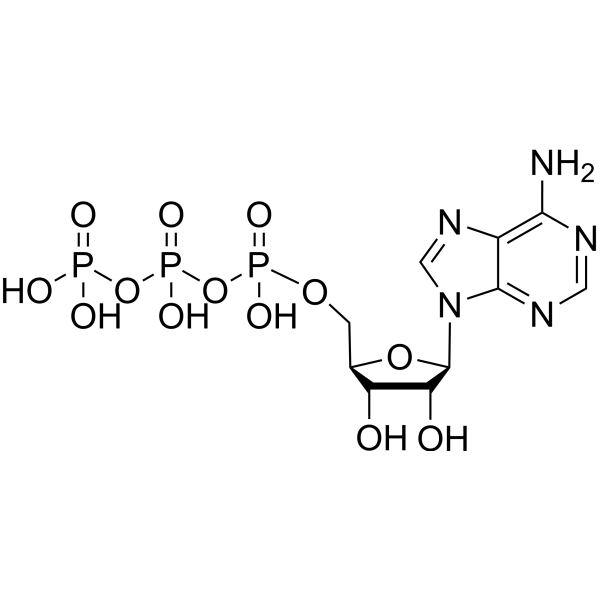
    ATP-PEG8-Biotin is a PEG-based linker that incorporates ATP. ATP is a central component of energy storage and metabolism in vivo. ATP provides the metabolic energy to drive metabolic pumps and serves as a coenzyme in cells. ATP is an important endogenous signaling molecule in immunity and inflammation .
    ATP-PEG8-Biotin
  • HY-E70010

    mutarotases

    Endogenous Metabolite Others
    Aldose 1-epimerase (mutarotases) is a key enzyme of carbohydrate metabolism catalysing the interconversion of the α- and β-anomers of hexose sugars such as glucose and galactose. Aldose 1-epimerase is essential for normal carbohydrate metabolism and the production of complex oligosaccharides .
    Aldose 1-epimerase
  • HY-N6237

    Aminotransferases (Transaminases) Apoptosis Cancer
    Aspulvinone O is a selective inhibitor of glutamate oxaloacetate aminotransferase GOT1. Aspulvinone O inhibits glutamine metabolism and reduces NADPH production, thereby inducing oxidative stress and apoptosis in pancreatic ductal adenocarcinoma (PDAC) cells. Aspulvinone O inhibits PDAC cell proliferation in vitro and tumor growth in xenograft models .
    Aspulvinone O
  • HY-159422

    Acyltransferase Metabolic Disease
    S-309309 is an orally active and selective MGAT2 inhibitor. S-309309 can be used in metabolism-related research .
    S-309309

Inquiry Online

Your information is safe with us. * Required Fields.

Salutation


Country or Region *

Applicant Name *


Organization Name *

Department *


Email Address *


Product Name *

Cat. No.


Requested quantity *

Phone Number *


Remarks

Inquiry Online

Inquiry Information

Product Name:
Cat. No.:
Quantity:
MCE Japan Authorized Agent:

