


1. Search Result
Search Result
Pathways Recommended: Apoptosis
Results for "

mitochondrial apoptosis

" in MedChemExpress (MCE) Product Catalog:

738

Inhibitors & Agonists

4

Screening Libraries

3

Fluorescent Dyes

14

Biochemical Assay Reagents

30

Peptides

4

Inhibitory Antibodies

195

Natural
Products

1

Recombinant Proteins

55

Isotope-Labeled Compounds

3

Antibodies

1

Click Chemistry

6

Oligonucleotides

2

GMP Molecules

Cat. No. Product Name Target Research Areas Chemical Structure
  • HY-B1756
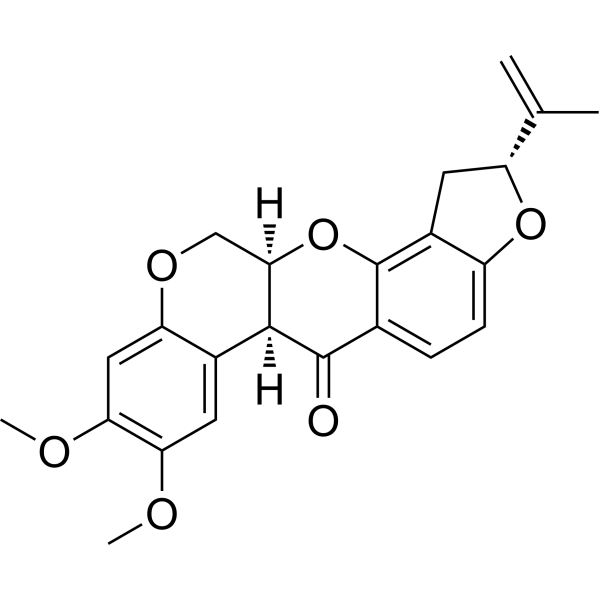
    Rotenone
    Maximum Cited Publications
    178 Publications Verification

    Environmental Pollutants Apoptosis Mitochondrial Metabolism Autophagy Neurological Disease
    Rotenone is a mitochondrial electron transport chain complex I inhibitor. Rotenone induces apoptosis through enhancing mitochondrial reactive oxygen species production.
    Rotenone
  • HY-125857
    Cytochrome C
    1 Publications Verification

    Biochemical Assay Reagents Apoptosis Reactive Oxygen Species (ROS) Metabolic Disease
    Cytochrome C is a multi-functional enzyme involving in life and death decisions of the cell. Cytochrome C is essential in mitochondrial electron transport and intrinsic type II apoptosis .
    Cytochrome C
  • HY-N0492
    α-Lipoic Acid
    10+ Cited Publications

    Thioctic acid; (±)-α-Lipoic acid; DL-α-Lipoic acid

    NF-κB HIV Mitochondrial Metabolism Endogenous Metabolite Apoptosis Infection Inflammation/Immunology Cancer
    α-Lipoic Acid (Thioctic acid) is an antioxidant, which is an essential cofactor of mitochondrial enzyme complexes. α-Lipoic Acid inhibits NF-κB-dependent HIV-1 LTR activation . α-Lipoic Acid induces endoplasmic reticulum (ER) stress-mediated apoptosis in hepatoma cells . α-Lipoic Acid can be used with CPUL1 (HY-151802) to construct the self-assembled nanoaggregate CPUL1-LA NA, which has improved antitumor efficacy than CPUL1 .
    α-Lipoic Acid
  • HY-15453
    Devimistat
    20+ Cited Publications

    CPI-613

    Apoptosis Mitochondrial Metabolism Cancer
    Devimistat is a mitochondrial metabolism inhibitor. Devimistat is a lipoic acid antagonist that abrogates mitochondrial energy metabolism to induce apoptosis in various cancer cells .
    Devimistat
  • HY-N0492A
    α-Lipoic Acid sodium
    10+ Cited Publications

    Thioctic acid sodium; (±)-α-Lipoic acid sodium; DL-α-Lipoic acid sodium

    NF-κB HIV Mitochondrial Metabolism Endogenous Metabolite Apoptosis Infection Inflammation/Immunology Cancer
    α-Lipoic Acid (Thioctic acid) sodium is an antioxidant, which is an essential cofactor of mitochondrial enzyme complexes. α-Lipoic Acid sodium inhibits NF-κB-dependent HIV-1 LTR activation . α-Lipoic Acid sodium induces endoplasmic reticulum (ER) stress-mediated apoptosis in hepatoma cells . α-Lipoic Acid sodium can be used with CPUL1 (HY-151802) to construct the self-assembled nanoaggregate CPUL1-LA NA, which has improved antitumor efficacy than CPUL1 .
    α-Lipoic Acid sodium
  • HY-108547
    Alexidine dihydrochloride
    5 Publications Verification

    Fungal Apoptosis Infection Cancer
    Alexidine dihydrochloride is an anticancer agent that targets a mitochondrial tyrosine phosphatase, PTPMT1, in mammalian cells and causes mitochondrial apoptosis. Alexidine dihydrochloride has antifungal and antibiofilm activity against a diverse range of fungal pathogens .
    Alexidine dihydrochloride
  • HY-N6033

    (+)-Ferruginol

    EBV HSV Apoptosis Infection Cardiovascular Disease Neurological Disease Cancer
    Ferruginol ((+)-Ferruginol), a natural diterpenoid, is an inhibitor of the activation of Epstein-Barr virus early antigen (EBV-EA). Ferruginol inhibits the growth of thyroid cancer cells through the induction of mitochondrial apoptosis. Ferruginol has antitumor, cardioprotective, antioxidant, gastroprotective, and neuroprotective activities .
    Ferruginol
  • HY-B0849
    Azoxystrobin
    3 Publications Verification

    Environmental Pollutants Reactive Oxygen Species (ROS) Fungal Apoptosis Bacterial Phosphatase Infection
    Azoxystrobin is an orally active, broad-spectrum β-methoxyacrylate fungicide. Azoxystrobin inhibits mitochondrial respiration by binding to the Qo site of the cytochrome bc1 complex and inhibiting electron transfer. Azoxystrobin induces the production of reactive oxygen species (ROS) and induces cell apoptosis .
    Azoxystrobin
  • HY-B0432
    Propafenone
    2 Publications Verification

    SA-79

    Sodium Channel Adrenergic Receptor Potassium Channel Cardiovascular Disease Cancer
    Propafenone (SA-79), a sodium-channel blocker, acts an antiarrhythmic agent. Propafenone also has high affinity for the β receptor (IC50=32 nM) . Propafenone blocks the transient outward current (Ito) and the sustained delayed rectifier K current (Isus) with IC50 values of 4.9 μm and 8.6 μm, respectively . Propafenone suppresses esophageal cancer proliferation through inducing mitochondrial dysfunction and induce apoptosis .
    Propafenone
  • HY-16397
    Phenformin
    5+ Cited Publications

    Phenethylbiguanide

    Mitochondrial Metabolism AMPK Apoptosis Autophagy mTOR Neurological Disease Metabolic Disease Cancer
    Phenformin (Phenethylbiguanide) is an orally active biguanide hypoglycemic agent. Phenformin inhibits mitochondrial respiratory chain complex I, leading to an increased AMP/ATP ratio, activation of AMPK, and subsequent inhibition of the mTOR pathway, thereby suppressing cell proliferation, inducing apoptosis and autophagy. Phenformin inhibits cancer stem cells (CSCs) and possesses potent antitumor potential .
    Phenformin
  • HY-125857A

    Biochemical Assay Reagents Apoptosis Caspase Metabolic Disease
    Cytochrome C (equine heart) is composed of 104 amino acids and is a nuclear-encoded mitochondrial protein. Cytochrome C (equine heart) is involved in mitochondrial electron transport and intrinsic type II apoptosis. Cytochrome C (equine heart) can act as a single electron carrier .
    Cytochrome C (equine heart)
  • HY-N0735
    Phellodendrine chloride
    2 Publications Verification

    Autophagy Apoptosis AMPK mTOR STAT Interleukin Related PKC p38 MAPK NF-κB COX Reactive Oxygen Species (ROS) PI3K Akt MMP Neurological Disease Inflammation/Immunology Cancer
    Phellodendrine chloride is an orally active plant alkaloid. Phellodendrine chloride inhibits the proliferation of KRAS-mutated pancreatic cancer cells by suppressing macropinocytosis and glutamine metabolism, inducing ROS accumulation and mitochondrial apoptosis. Phellodendrine chloride promotes autophagy by activating the AMPK/mTOR pathway, alleviating intestinal damage in ulcerative colitis. Phellodendrine chloride can alleviate gouty arthritis by inhibiting the IL-6/STAT3 signaling pathway. Phellodendrine chloride suppresses allergic reactions by altering the conformation of MRGPRB3/MRGPRX2 protein, thereby inhibiting the activation of PKC and subsequent downstream MAPK and NF-κB signaling. Phellodendrine chloride inhibits the AKT/NF-κB pathway and down-regulates the expression of COX-2, thereby protecting zebrafish embryos from oxidative stress. Phellodendrine chloride has an anti-major depressive disorder (MDD) effect by down-regulating CHRM1, HTR1A, and the PI3K/Akt signaling pathway .
    Phellodendrine chloride
  • HY-N7063
    Nerol
    1 Publications Verification

    Environmental Pollutants Apoptosis Endogenous Metabolite Fungal Mitochondrial Metabolism Reactive Oxygen Species (ROS) Infection
    Nerol is a constituent of neroli oil. Nerol Nerol triggers mitochondrial dysfunction and induces apoptosis via elevation of Ca 2+ and ROS. Antifungal activity .
    Nerol
  • HY-103661
    BI-6C9
    3 Publications Verification

    Mitochondrial Metabolism Apoptosis Neurological Disease
    BI-6C9 is a highly specific BH3 interacting domain (Bid) inhibitor, which prevents mitochondrial outer membrane potential (MOMP) and mitochondrial fission, and protects the cells from mitochondrial apoptosis inducing factor (AIF) release and caspase-independent cell death in neurons .
    BI-6C9
  • HY-121222

    PI3K Apoptosis Cancer
    alpha-Bisabolol, an orally active sesquiterpene alcohol, induces cell cycle arrest, mitochondrial apoptosis and inhibition of PI3K/Akt signalling pathways. alpha-Bisabolol exerts a protective action against Cisplatin (HY-17394)-induced nephrotoxicity by mitigating inflammation and oxidative stress through the inhibition of NFκB activation. alpha-Bisabolol exhibits anti-inflammatory, analgesic, antibiotic and anticancer activities .
    alpha-Bisabolol
  • HY-P10285

    D-(KLAKLAK)2

    Apoptosis Mitochondrial Metabolism Caspase Cancer
    d-KLA Peptide (D-(KLAKLAK)2), KLA peptide (HY-P5345) isomer, is a pro-apoptosis peptide. d-KLA Peptide can specifically target mitochondria and induce apoptosis by destroying the mitochondrial membrane. d-KLA Peptide increases caspase 3/7 activity, exerts proapoptotic activity and enhances antitumor efficacy in mouse melanoma models .
    d-KLA Peptide
  • HY-112749

    Heme Oxygenase (HO) Reactive Oxygen Species (ROS) Mitochondrial Metabolism Microtubule/Tubulin Caspase Apoptosis Cancer
    ME-344 is an Isoflavone. ME-344 increases mitochondrial ROS generation. ME-344 inhibits tubulin polymerization. ME-344 inhibits HO-1 and impacts its mitochondrial translocation. ME-344 induces Apoptosis through Caspase 3 activation. ME-344 synergizes with Vinblastine in leukemia cells. ME-344 displays anti-tumor activity against leukemia and lung tumor. ME-344 can be used in the research of lung cancer, acute myeloid leukemia, and HER2-negative breast cancer .
    ME-344
  • HY-159569
    TfR-1-IN-1
    1 Publications Verification

    Transferrin Receptor Ferroptosis Apoptosis Necroptosis Cancer
    TfR-1-IN-1 is a transferrin receptor-1 (TfR-1) inhibitor with tumor cell-specific activity. TfR-1-IN-1 reduces TfR-1 expression, impairs mitochondrial function, induces cell apoptosis, necroptosis and ferroptosis, and increases intracellular iron (II) levels. TfR-1-IN-1 decreases the metabolic activity of cancer cells. TfR-1-IN-1 can be used for the research of ovarian cancer, breast cancer and acute myeloid leukemia .
    TfR-1-IN-1
  • HY-N4102

    Apoptosis JNK FOXO Reactive Oxygen Species (ROS) Caspase Neurological Disease
    5,7-Dihydroxy-4-methylcoumarin is an antioxidant. 5,7-Dihydroxy-4-methylcoumarin protects mouse cochlear hair cells from Cisplatin-induced damage, enhances cell viability and inhibits apoptosis. 5,7-Dihydroxy-4-methylcoumarin downregulates phosphorylated JNK levels, increases the ratio of phosphorylated FoxO1 to total FoxO1, scavenges free radicals, reduces ROS accumulation, maintains mitochondrial membrane potential and alleviates mitochondrial dysfunction. 5,7-Dihydroxy-4-methylcoumarin downregulates the expression of caspase-3 and improves cell viability. 5,7-Dihydroxy-4-methylcoumarin can be used in studies related to ototoxicity .
    5,7-Dihydroxy-4-methylcoumarin
  • HY-B1756R

    Reference Standards Mitochondrial Metabolism Autophagy Apoptosis Neurological Disease Cancer
    Rotenone (Standard) is the analytical standard of Rotenone. This product is intended for research and analytical applications. Rotenone is a mitochondrial electron transport chain complex I inhibitor. Rotenone induces apoptosis through enhancing mitochondrial reactive oxygen species production.
    Rotenone (Standard)
  • HY-W762011

    Apoptosis Reactive Oxygen Species (ROS) JNK Oxidative Phosphorylation Neurological Disease Cancer
    BDE 47 targets mitochondria, inhibits mitochondrial oxidative phosphorylation (OXPHOS), decreases mitochondrial membrane potential (MMP) and induces apoptosis in embryonic cell. BDE 47 induces the generation of ROS, and activates the JNK signaling pathway. BDE 47 exhibits embryonic developmental toxicity in zebrafish .
    BDE 47
  • HY-P10409

    Small humanin-like peptide 2

    Apoptosis Reactive Oxygen Species (ROS) Neurological Disease Metabolic Disease
    SHLP2 (Small humanin-like peptide 2) is a small molecule peptide encoded by mitochondrial DNA, belonging to mitochondria derived peptide. SHLP2 has the activity of regulating apoptosis and inhibits cell death. SHLP2 binds to mitochondrial complex 1. SHLP2 improves mitochondrial metabolism by increasing respiration and biogenesis, reducing ROS, and decreasing mtDNA oxidation. SHLP2 also regulated energy homeostasis through the activation of hypothalamic neurons. SHLP2 can be used in the study of diseases related to mitochondrial dysfunction and anti-aging diseases, such as age-related macular degeneration and Parkinson’s disease .
    SHLP2
  • HY-N0309
    Soyasaponin Ba
    1 Publications Verification

    Aldose Reductase Akt GSK-3 β-catenin Reactive Oxygen Species (ROS) Mitochondrial Metabolism Apoptosis c-Myc Metabolic Disease
    Soyasaponin Ba is a soyasaponin that can be isolated from Phaseolus vulgaris, acts as an aldose reductase inhibitor (ARI). Soyasaponin Ba activates Akt/GSK3β/β-catenin signaling pathway, reduces lipid accumulation, lowers ROS generation, improves mitochondrial membrane potential, ATP levels, and morphology, and inhibits apoptosis. Soyasaponin Ba can be used for the research of lipid accumulation and secondary diabetic complications .
    Soyasaponin Ba
  • HY-177204

    Ferroptosis Apoptosis Glutathione Peroxidase Cardiovascular Disease
    DSPE-PEG2000-WLSEAGPVVTVRALRGTGSW is a polypeptide targeting tenascin-X (Tenascin-X) that can be conjugated with liposomes and exosomes. DSPE-PEG2000-WLSEAGPVVTVRALRGTGSW specifically binds to Tenascin-X on the surface of cardiomyocytes, mediates receptor-dependent uptake of nanocarriers, enhances targeted drug delivery of cargo to cardiomyocytes, and increases drug accumulation in cardiac tissue. DSPE-PEG2000-WLSEAGPVVTVRALRGTGSW protects cardiomyocytes treated with LPS, alleviates oxidative stress, repairs mitochondrial function, inhibits ferroptosis and apoptosis, and downregulates the secretion of pro-inflammatory cytokines at the same time. DSPE-PEG2000-WLSEAGPVVTVRALRGTGSW improves cardiac injury and pathological morphology in mice with sepsis-induced cardiomyopathy, restores GPX4 expression, and promotes the internalization of cardiomyocyte-derived exosomes, making it suitable for related research on sepsis-induced cardiomyopathy, myocardial ischemia-reperfusion injury, and other conditions .
    DSPE-PEG2000-WLSEAGPVVTVRALRGTGSW
  • HY-N0427

    Akt NF-κB AMPK mTOR PKC STAT Interleukin Related p38 MAPK COX Reactive Oxygen Species (ROS) Apoptosis Autophagy PI3K MMP Neurological Disease Inflammation/Immunology Cancer
    Phellodendrine is an orally active plant alkaloid. Phellodendrine inhibits the proliferation of KRAS-mutated pancreatic cancer cells by suppressing macropinocytosis and glutamine metabolism, inducing ROS accumulation and mitochondrial apoptosis. Phellodendrine promotes autophagy by activating the AMPK/mTOR pathway, alleviating intestinal damage in ulcerative colitis. Phellodendrine can alleviate gouty arthritis by inhibiting the IL-6/STAT3 signaling pathway. Phellodendrine suppresses allergic reactions by altering the conformation of MRGPRB3/MRGPRX2 protein, thereby inhibiting the activation of PKC and subsequent downstream MAPK and NF-κB signaling. Phellodendrine inhibits the AKT/NF-κB pathway and down-regulates the expression of COX-2, thereby protecting zebrafish embryos from oxidative stress. Phellodendrine has an anti-major depressive disorder (MDD) effect by down-regulating CHRM1, HTR1A, and the PI3K/Akt signaling pathway .
    Phellodendrine
  • HY-138301
    Miclxin
    1 Publications Verification

    DS37262926

    Wnt β-catenin Apoptosis Cancer
    Miclxin (DS37262926) is a potent inhibitor of mutant β-catenin, involving in Wnt signaling pathway. Miclxin induces β-catenin-dependent apoptosis, leads to severe mitochondrial damage with the loss of mitochondrial membrane. Miclxin kills tumor via targeting to MIC60, a major components of the mitochondrial contact site and cristae organizing system (MICOS) complex .
    Miclxin
  • HY-W017424

    Drug Intermediate Caspase Apoptosis Neurological Disease Cancer
    2-Aminobenzothiazole acts as a caspase 3/7 activator, an anticancer cytotoxic agent, and also exhibits neurotoxicity. 2-Aminobenzothiazole drives the apoptotic pathway by activating caspase 3/7, induces mitochondrial inner membrane depolarization, and triggers both early and late apoptosis via a caspase-dependent pathway. In zebrafish models, 2-Aminobenzothiazole induces oxidative damage in brain tissues and inhibits genes related to GABA and 5-HT synthesis pathways. Long-term exposure to 2-Aminobenzothiazole impairs motor ability, social behavior, anxiety-like state and cognitive function. 2-Aminobenzothiazole can be used in studies of human laryngeal carcinoma and related neurotoxicity .
    2-Aminobenzothiazole
  • HY-164515

    Apoptosis Mitochondrial Metabolism Caspase PARP Cancer
    ONC213 is an orally active αKGDH inhibitor. ONC213 can suppress mitochondrial respiration and elevate α-ketoglutarate levels by inhibiting αKGDH activity. ONC213 can induce cells apoptosis by inducing mitochondrial stress response and inhibiting translation of MCL-1. ONC213 can be used for the research of cancer, such as acute myeloid leukemia research (AML) .
    ONC213
  • HY-114520

    Monoamine Oxidase Mitochondrial Metabolism Apoptosis Reactive Oxygen Species (ROS) Neurological Disease Metabolic Disease
    TT01001 is a selective and orally active mitoNEET agonist and a monoamine oxidase B (MAO-B) inhibitor (IC50 = 8.84 μM). TT01001 does not activate PPARγ but interacts with MitoNEET. TT01001 attenuates oxidative stress and neuronal apoptosis by preventing mitoNEET-mediated mitochondrial dysfunction. TT01001 improves type II diabetes and ameliorates mitochondrial function of mice. TT01001 can used for the studies of type II diabetes and neurological disorders .
    TT01001
  • HY-125918

    Pingyangmycin hydrochloride

    Antibiotic DNA/RNA Synthesis Apoptosis Dynamin PINK1/Parkin Mitophagy Infection Cancer
    Bleomycin A5 (Pingyangmycin) hydrochloride is a glycopeptide antibiotic with multiple biological activities, which can be isolated from Streptomyces. Bleomycin A5 hydrochloride exerts cytotoxic effects by binding to Fe 2+ to form a complex, inducing single-strand and double-strand DNA breaks, and inhibiting DNA replication. Bleomycin A5 hydrochloride inhibits Drp1-mediated mitochondrial fission and suppresses PINK1/Parkin pathway-mediated mitophagy, ultimately triggering mitochondria-mediated cellular apoptosis. Bleomycin A5 hydrochloride can be used in cancer research .
    Bleomycin A5 hydrochloride
  • HY-159734

    Apoptosis Cancer
    TPP-resveratrol is a conjugate of Resveratrol (HY-16561) and triphenylphosphine (TPP) with anticancer activity. TPP-resveratrol increases the potency of Resveratrol through mitochondrial-targeted delivery and induces mitochondria-mediated apoptosis .
    TPP-resveratrol
  • HY-132173

    Bcl-2 Family Cancer
    GL0388 is a Bax activator that results in Bax insertion into mitochondrial membrane. GL0388 shows antiproliferative activities against various cancer cells, with IC50s of 0.299-1.57 μM. GL0388 activates Bax and induce Bax-mediated apoptosis. GL0388 suppresses breast cancer xenograft tumor growth in vivo .
    GL0388
  • HY-120079
    MSN-125
    4 Publications Verification

    Bcl-2 Family Apoptosis Cancer
    MSN-125 is a potent Bax and Bak oligomerization inhibitor. MSN-125 prevents mitochondrial outer membrane permeabilization (MOMP) with an IC50 of 4 μM. MSN-125 potently inhibits Bax/Bak-mediated apoptosis in HCT-116, BMK Cells, and primary cortical neurons, protects primary neurons against glutamate excitotoxicity .
    MSN-125
  • HY-P990189

    MHC Apoptosis Reactive Oxygen Species (ROS) Infection Cancer
    Anti-Monkey/Human MHC class II (HLA-DR) Antibody (L243) is a mouse-derived IgG2a κ type antibody inhibitor, targeting to monkey/human MHC class II. Anti-Monkey/Human MHC class II (HLA-DR) Antibody (L243) can inhibits tumor cells proliferation and induce apoptosis. Anti-Monkey/Human MHC class II (HLA-DR) Antibody (L243) increases cellular reactive oxygen species (ROS) and loss of mitochondrial membrane potential in human endothelial cells. Anti-Monkey/Human MHC class II (HLA-DR) Antibody (L243) can be used for the researches of cancer and infection, such as lymphoma .
    Anti-Monkey/Human MHC class II (HLA-DR) Antibody (L243)
  • HY-14943

    ZIO-101; S-Dimethylarsino-glutathione

    Apoptosis Cancer
    Darinaparsin (ZIO-101), an organic arsenical, is a mitochondrial-targeted agent. Darinaparsin induces apoptosis in ancer cells, and has anticancer effects .
    Darinaparsin
  • HY-161920

    Sirtuin Apoptosis Cancer
    SIRT3-IN-1 (compound 17f) is a SIRT3 inhibitor, with IC50 of 0.043 μM. SIRT3-IN-1 can be used in the research of acute leukemia (AML) .
    SIRT3-IN-1
  • HY-125612

    5'-Hydroxymorusin

    Apoptosis Cancer
    Artonin E (5'-Hydroxymorusin) is a known prenylated flavonoid that induces apoptosis and arrests the cell cycle in S phase. Artonin E can induce anti-proliferative effects through mitochondrial pathway dysregulation and can be used in cancer research .
    Artonin E
  • HY-178749

    ClpP Mitochondrial Metabolism Apoptosis Caspase PARP Cancer
    MS6076 is a mitochondrial protease ClpP agonist. MS6076 specifically activates the ClpP protease in the mitochondrial matrix, significantly disrupting mitochondrial Electron Transport Chain (ETC) function by accelerating the degradation of unfolded proteins. MS6076 exhibits potent cytotoxicity against a variety of cancer cell lines. MS6076 induces cell apoptosis, increasing cleavage of caspase 3 and PARP. MS6076 can be used for the research of breast cancer .
    MS6076
  • HY-N9802

    Apoptosis Bcl-2 Family Cancer
    n-Butyl-β-D-fructofuranoside could be isolated from kangaisan. n-Butyl-β-D-fructofuranoside induces apoptosis through the mitochondrial pathway. n-Butyl-β-D-fructofuranoside can be used for cancer research .
    n-Butyl-β-D-fructofuranoside
  • HY-N7063R

    Reactive Oxygen Species (ROS) Endogenous Metabolite Fungal Mitochondrial Metabolism Apoptosis Reference Standards Infection
    Nerol (Standard) is the analytical standard of Nerol. This product is intended for research and analytical applications. Nerol is a constituent of neroli oil. Nerol Nerol triggers mitochondrial dysfunction and induces apoptosis via elevation of Ca 2+ and ROS. Antifungal activity .
    Nerol (Standard)
  • HY-B1474

    Fungal Infection Cancer
    Alexidine, a bis-biguanide, exhibits antifungal and antibiofilm activity against a diverse range of fungal pathogens. Alexidine is an anticancer agent that targets a mitochondrial tyrosine phosphatase, PTPMT1, in mammalian cells and causes mitochondrial apoptosis .
    Alexidine
  • HY-120035

    Proteasome Ribosomal S6 Kinase (RSK) Apoptosis Cancer
    DD1, a proteasome inhibitor, targets Bax activation and P70S6K degradation during acute myeloid leukemia (AML) apoptosis. DD1 induces apoptosis in the caspase-dependent manner. DD1 induces mitochondrial membrane depolarization and Bad dephosphorylation .
    DD1
  • HY-174827

    Mitochondrial Metabolism Reactive Oxygen Species (ROS) Apoptosis Cancer
    POLRMT-IN-2 is a potent POLRMT inhibitor. POLRMT-IN-2 exhibits strong antiproliferative activity in MOLM-13 cells, with an IC50 of 1.01 μM. POLRMT-IN-2 disrupts mitochondrial function and induces apoptosis in MOLM-13cells. POLRMT-IN-2 can be used for the study of acute myeloid leukemia(AML) .
    POLRMT-IN-2
  • HY-170912

    Topoisomerase Apoptosis ROS Kinase Cytochrome P450 Caspase Bcl-2 Family PI3K Akt mTOR Cancer
    Topo I/II-IN-2 (Compound 3g) is an inhibitor of Topo I and Topo II. Topo I/II-IN-2 inhibits NCI-H446 cells and NCI-H1048 cells with IC50s of 1.30 μM and 1.42 μM, respectively. Topo I/II-IN-2 induces mitochondrial Apoptosis, mitochondrial dysfunction and activity generation. Topo I/II-IN-2 inhibits the PI3K/Akt/mTOR pathway. Topo I/II-IN-2 prevents SCLC (small cell lung cancer) cell proliferation, invasion, and migration in vitro. .
    Topo I/II-IN-2
  • HY-178454

    Monoamine Oxidase Amyloid-β Mitochondrial Metabolism Apoptosis Reactive Oxygen Species (ROS) COX NF-κB Neurological Disease
    Multitarget AD-IN-3 is a brain-penetrant neuroprotective agent. Multitarget AD-IN-3 can selectively inhibit MAO-B with an IC50 of 4.42 μM and a SI of 18.12. Multitarget AD-IN-3 can eliminate ROS. Multitarget AD-IN-3 Multitarget AD-IN-3 can inhibit 1-42 self-aggregation and can reverse Aβ1-42-induced mitochondrial membrane depolarization and inhibit apoptosis. Multitarget AD-IN-3 can be used for the research of neurological disease, such as Alzheimer’s disease .
    Multitarget AD-IN-3
  • HY-158204

    Lipoxygenase Amyloid-β Reactive Oxygen Species (ROS) Apoptosis Neurological Disease Metabolic Disease Inflammation/Immunology
    CNB-001 is a potent and orally active 5-lipoxygenase (5-LOX) inhibitor. CNB-001 can decreases 5-LOX expression and increase proteasome activity. CNB-001 can inhibit accumulation of soluble Amyloid-β and ubiquitinated aggregated proteins. CNB-001 can inhibit apoptosis, ROS production and stabilize mitochondrial membrane potential. CNB-001 can reduce insulin resistance and increase glucose uptake. CNB-001 also exhibits anti-ischemic, anti-inflammatory effects. CNB-001 can be used for the researches of inflammation, neurological and metabolic disease, such as Alzheimer's disease, stroke and diabetes .
    CNB-001
  • HY-176740

    PROTACs Bcl-2 Family p38 MAPK Reactive Oxygen Species (ROS) Mitochondrial Metabolism Apoptosis ERK JNK Cancer
    PROTAC Bcl-xL degrader-4 (Compound 2-38-III) is a Bcl-xL PROTAC degrader. PROTAC Bcl-xL degrader-4 has strong anti-tumor activity against HepG2 cells and HUVEC cells. PROTAC Bcl-xL degrader-4 induces cells apoptosis by decreasing mitochondrial membrane potential and activating the MAPK signaling pathway. PROTAC Bcl-xL degrader-4 significantly inhibits tumor growth in xenograft tumor mouse models . Pink: MAPK ligand (HY-176741); Blue: CRBN ligase ligand (HY-10984); Black: linker (HY-W017440)
    PROTAC Bcl-xL degrader-4
  • HY-B1756S

    Isotope-Labeled Compounds Apoptosis Mitochondrial Metabolism Autophagy Neurological Disease Cancer
    Rotenone-d3 is the deuterium labeled Rotenone (HY-B1756). Rotenone is a mitochondrial electron transport chain complex I inhibitor. Rotenone induces apoptosis through enhancing mitochondrial reactive oxygen species production.
    Rotenone-d3
  • HY-N0735R

    Reference Standards Autophagy mTOR AMPK Apoptosis STAT Interleukin Related PKC p38 MAPK NF-κB COX Reactive Oxygen Species (ROS) PI3K Akt MMP Neurological Disease Inflammation/Immunology Cancer
    Phellodendrine chloride (Standard) is the analytical standard of Phellodendrine chloride (HY-N0735). Phellodendrine chloride is an orally active plant alkaloid. Phellodendrine chloride inhibits the proliferation of KRAS-mutated pancreatic cancer cells by suppressing macropinocytosis and glutamine metabolism, inducing ROS accumulation and mitochondrial apoptosis. Phellodendrine chloride promotes autophagy by activating the AMPK/mTOR pathway, alleviating intestinal damage in ulcerative colitis. Phellodendrine chloride can alleviate gouty arthritis by inhibiting the IL-6/STAT3 signaling pathway. Phellodendrine chloride suppresses allergic reactions by altering the conformation of MRGPRB3/MRGPRX2 protein, thereby inhibiting the activation of PKC and subsequent downstream MAPK and NF-κB signaling. Phellodendrine chloride inhibits the AKT/NF-κB pathway and down-regulates the expression of COX-2, thereby protecting zebrafish embryos from oxidative stress. Phellodendrine chloride has an anti-major depressive disorder (MDD) effect by down-regulating CHRM1, HTR1A, and the PI3K/Akt signaling pathway.
    Phellodendrine chloride (Standard)
  • HY-115806

    Apoptosis Reactive Oxygen Species (ROS) Mitochondrial Metabolism Neurological Disease
    TC9-305 is a potent and selective apoptosis inhibitor. TC9-305 has strong inhibitory activity against both Bim and tBid-induced apoptosis with EC50 values of 0.42 and 0.23 μM. TC9-305 can maintain the mitochondrial membrane potential, reduce ROS production, prevent the release of cytochrome c and block the upstream pathways of mitochondrial-mediated apoptosis. TC9-305 can be used for the research of neurological disease, such as storke .
    TC9-305

Inquiry Online

Your information is safe with us. * Required Fields.

Salutation


Country or Region *

Applicant Name *


Organization Name *

Department *


Email Address *


Product Name *

Cat. No.


Requested quantity *

Phone Number *


Remarks

Inquiry Online

Inquiry Information

Product Name:
Cat. No.:
Quantity:
MCE Japan Authorized Agent:

