1. Search Result
Search Result
Pathways Recommended: Stem Cell/Wnt Cell Cycle/DNA Damage
Results for "

murine spleen cell

" in MedChemExpress (MCE) Product Catalog:

13

Inhibitors & Agonists

6

Natural
Products

3

Isotope-Labeled Compounds

1

Oligonucleotides

Cat. No. Product Name Target Research Areas Chemical Structure
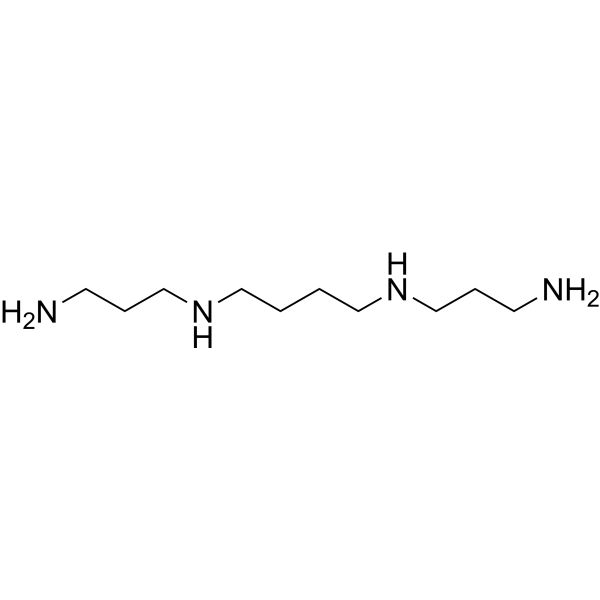
  • HY-B1777
    Spermine
    5+ Cited Publications

    NSC 268508; Neuridine

    Endogenous Metabolite Bacterial Reactive Oxygen Species (ROS) DNA/RNA Synthesis Infection Neurological Disease Inflammation/Immunology
    Spermine is a natural antioxidant and anti-inflammatory agent. Spermine is known to inhibit some bacterial cultures, especially strains of Staphylococcus aureus. Spermine induces neurotoxicity in the striarum dose-dependently. Spermine can reversibly inhibits DNA synthetic response, mixed lymphocyte response and the induction of cytolytic lymphocyte response in primary cultures of murine spleen cells. Spermine tetrahydrochloride is a polyamine nitric oxide donor that can provide nitric oxide to platelets and inhibit platelet activation to a certain extent concentration-dependently. Spermine tetrahydrochloride occurs in mammalian tissues, plants, bacteria, ribosomes and bacteriophage. Spermine tetrahydrochloride inhibits primary human embryo lung fibroblasts in vitro .
    Spermine
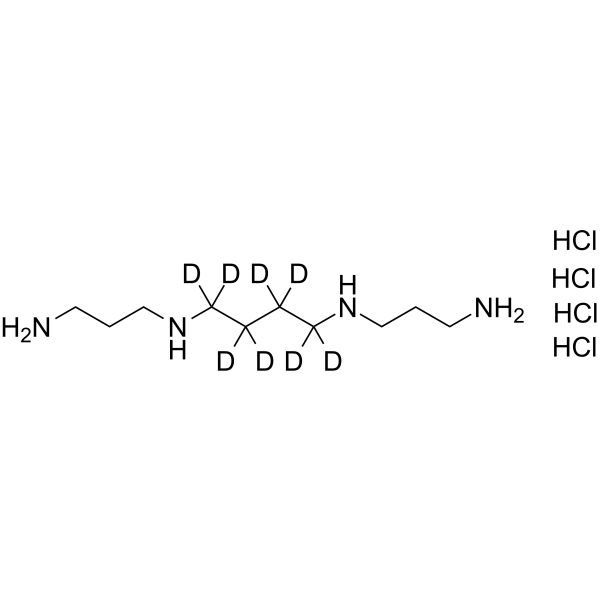
  • HY-B1777AS

    Isotope-Labeled Compounds Endogenous Metabolite Reactive Oxygen Species (ROS) Bacterial DNA/RNA Synthesis Metabolic Disease
    Spermine-d8 (tetrahydrochloride) is the deuterium labeled Spermine tetrahydrochloride. Spermine tetrahydrochloride is a polyamine nitric oxide donor that can provide nitric oxide to platelets and inhibit platelet activation to a certain extent concentration-dependently. Spermine tetrahydrochloride occurs in mammalian tissues, plants, bacteria, ribosomes and bacteriophage. Spermine tetrahydrochloride inhibits primary human embryo lung fibroblasts in vitro. Spermine is a natural antioxidant and anti-inflammatory agent. Spermine is known to inhibit some bacterial cultures, especially strains of Staphylococcus aureus. Spermine induces neurotoxicity in the striarum dose-dependently. Spermine can reversibly inhibits DNA synthetic response, mixed lymphocyte response and the induction of cytolytic lymphocyte response in primary cultures of murine spleen cells .
    Spermine-d8 tetrahydrochloride
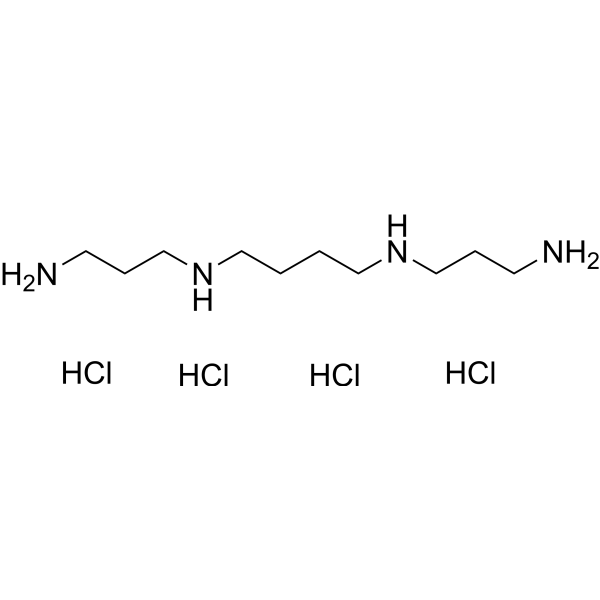
  • HY-B1777A
    Spermine tetrahydrochloride
    5+ Cited Publications

    Endogenous Metabolite Bacterial Reactive Oxygen Species (ROS) DNA/RNA Synthesis Infection Neurological Disease Inflammation/Immunology
    Spermine tetrahydrochloride is a polyamine nitric oxide donor that can provide nitric oxide to platelets and inhibit platelet activation to a certain extent concentration-dependently. Spermine tetrahydrochloride occurs in mammalian tissues, plants, bacteria, ribosomes and bacteriophage. Spermine tetrahydrochloride inhibits primary human embryo lung fibroblasts in vitro. Spermine is a natural antioxidant and anti-inflammatory agent. Spermine is known to inhibit some bacterial cultures, especially strains of Staphylococcus aureus. Spermine induces neurotoxicity in the striarum dose-dependently. Spermine can reversibly inhibits DNA synthetic response, mixed lymphocyte response and the induction of cytolytic lymphocyte response in primary cultures of murine spleen cells .
    Spermine tetrahydrochloride
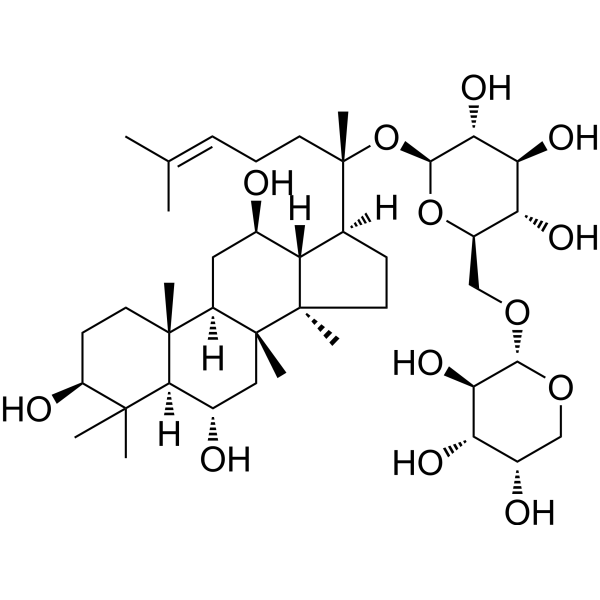
  • HY-N0600

    Interleukin Related IFNAR NF-κB Inflammation/Immunology
    Ginsenoside F3 is a saponin extracted from the leaves of Panax ginseng with immunoenhancing and antitumor immunostimulatory activities. Ginsenoside F3 upregulates RIPOR2 with a Kd value of 3.77 μM. Ginsenoside F3 enhances NF‑κB activation, upregulates T‑bet and downregulates GATA‑3, increases the production of IL‑2 and IFN‑γ, decreases the production of IL‑4 and IL‑10, reverses CD8⁺ T‑cell exhaustion, restores cytokine secretion, and enhances antitumor immunity in a mouse non‑small cell lung cancer model. Ginsenoside F3 can be used for the research of non-small cell lung cancer .
    Ginsenoside F3
  • HY-N6801

    Caspase Apoptosis Bcl-2 Family Infection Inflammation/Immunology Cancer
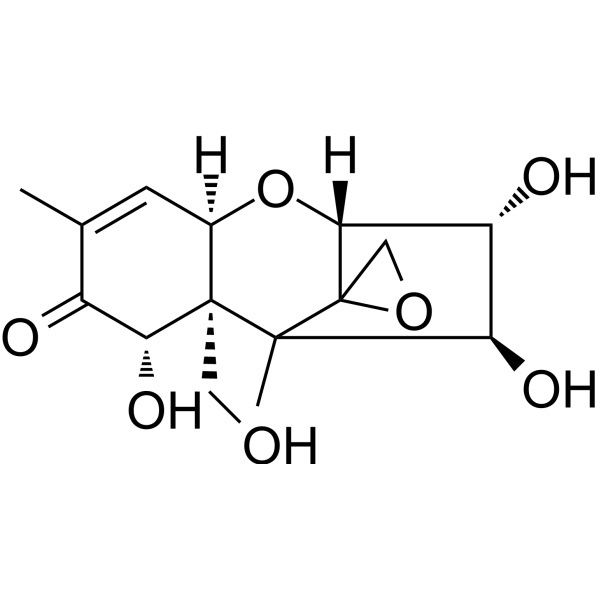
    Nivalenol, a trichothecene mycotoxin that can be produced by Fusarium graminearum, is a fungal metabolite present in agricultural product. Nivalenol modulates apoptotic pathway, cell cycle regulation, Bax, ERK, caspase-3, and poly-ADP-ribose synthase activity in macrophages. Nivalenol inhibits ribosomal peptidyltransferase site, protein synthesis, DNA synthesis, and cell proliferation. Nivalenol induces late-stage apoptotic morphological changes, reduces cellular metabolism, and decreases cell proliferation in erythroleukemia cells. Nivalenol induces lymphocyte apoptosis in murine thymus, spleen, and Peyer's patches. Nivalenol can be used for the research of erythroleukemia .
    Nivalenol
  • HY-N6801S

    Isotope-Labeled Compounds Caspase Apoptosis Bcl-2 Family Infection Inflammation/Immunology Cancer
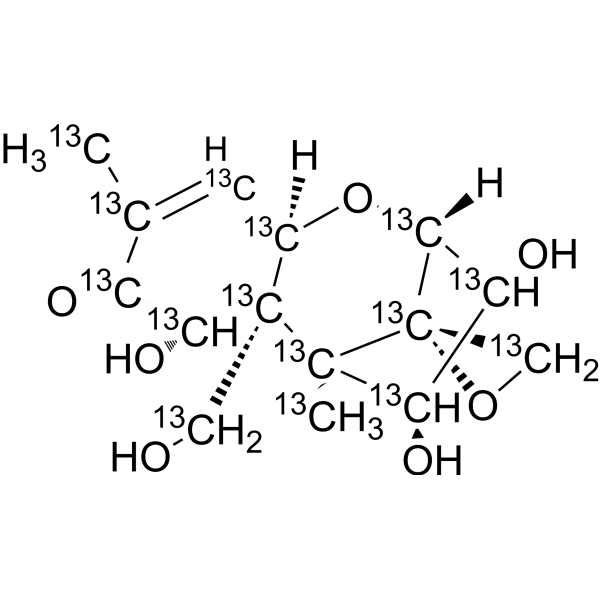
    Nivalenol- 13C15 is the 13C labeled Nivalenol (HY-N6801) . Nivalenol, a trichothecene mycotoxin that can be produced by Fusarium graminearum, is a fungal metabolite present in agricultural product. Nivalenol modulates apoptotic pathway, cell cycle regulation, Bax, ERK, caspase-3, and poly-ADP-ribose synthase activity in macrophages. Nivalenol inhibits ribosomal peptidyltransferase site, protein synthesis, DNA synthesis, and cell proliferation. Nivalenol induces late-stage apoptotic morphological changes, reduces cellular metabolism, and decreases cell proliferation in erythroleukemia cells. Nivalenol induces lymphocyte apoptosis in murine thymus, spleen, and Peyer's patches. Nivalenol can be used for the research of erythroleukemia.
    Nivalenol-13C15
  • HY-N6801R

    Reference Standards Caspase Apoptosis Bcl-2 Family Infection Inflammation/Immunology Cancer
    Nivalenol (Standard) is the analytical standard of Nivalenol (HY-N6801). This product is intended for research and analytical applications. Nivalenol, a trichothecene mycotoxin that can be produced by Fusarium graminearum, is a fungal metabolite present in agricultural product. Nivalenol modulates apoptotic pathway, cell cycle regulation, Bax, ERK, caspase-3, and poly-ADP-ribose synthase activity in macrophages. Nivalenol inhibits ribosomal peptidyltransferase site, protein synthesis, DNA synthesis, and cell proliferation. Nivalenol induces late-stage apoptotic morphological changes, reduces cellular metabolism, and decreases cell proliferation in erythroleukemia cells. Nivalenol induces lymphocyte apoptosis in murine thymus, spleen, and Peyer's patches. Nivalenol can be used for the research of erythroleukemia.
    Nivalenol (Standard)
  • HY-B1777S

    NSC 268508-15N2; Neuridine-15N2

    Isotope-Labeled Compounds Endogenous Metabolite Bacterial Reactive Oxygen Species (ROS) DNA/RNA Synthesis Infection Neurological Disease Inflammation/Immunology
    Spermine- 15N2 (NSC 268508- 15N2) is the 15N-labeled Spermine (HY-B1777). Spermine is a natural antioxidant and anti-inflammatory agent. Spermine is known to inhibit some bacterial cultures, especially strains of Staphylococcus aureus. Spermine induces neurotoxicity in the striarum dose-dependently. Spermine can reversibly inhibits DNA synthetic response, mixed lymphocyte response and the induction of cytolytic lymphocyte response in primary cultures of murine spleen cells. Spermine tetrahydrochloride is a polyamine nitric oxide donor that can provide nitric oxide to platelets and inhibit platelet activation to a certain extent concentration-dependently. Spermine tetrahydrochloride occurs in mammalian tissues, plants, bacteria, ribosomes and bacteriophage. Spermine tetrahydrochloride inhibits primary human embryo lung fibroblasts in vitro .
    Spermine-15N2
  • HY-163544

    Drug Intermediate Cancer
    δ-Tocotrienol prodrug-1 (compound 5b) is a prodrug of δ-tocotrienol (HY-122778). δ-Tocotrienol prodrug-1 shows radioprotective efficacy. δ-Tocotrienol prodrug-1 promotes the hematopoietic progenitor and stem cell regeneration in murine bone marrow and spleen .
    δ-Tocotrienol prodrug-1
  • HY-105460

    Histamine Receptor Inflammation/Immunology
    TEI-6472, a naphthalene derivative, can suppress IgE responses both in vitro and in vivo. TEI-6472 causes significant inhibition of FceRI-mediated histamine release .
    TEI-6472
  • HY-169480

    Liposome Infection Cancer
    Lipid C2 is an ionizable cationic lipid that has been used in the formation of lipid nanoparticles (LNP) for mRNA delivery in vivo. LNPs containing Lipid C2 and encapsulating an mRNA reporter selectively accumulate in the liver and spleen but not the heart, lungs, or kidneys in mice. LNP containing Lipid C2 and encapsulating mRNA encoding the Epstein-Barr virus (EBV) protein latent membrane protein 2 (LMP-2), in combination with an anti-programmed cell death protein 1 (PD-1) antibody, decrease tumor volume and reverse T cell exhaustion, as well as increase the percentage of CD3 +CD8 + central and CD3 +CD8 + effector memory T cells and decrease the percentage of CD3 + T cells expressing Pd-1, in the spleen in a CT26 murine EBV-infected colon cancer model .
    Lipid C2
  • HY-B1777AR

    Reference Standards Endogenous Metabolite Bacterial Reactive Oxygen Species (ROS) DNA/RNA Synthesis Infection Neurological Disease Inflammation/Immunology
    Spermine (tetrahydrochloride) (Standard) is the analytical standard of Spermine (tetrahydrochloride). This product is intended for research and analytical applications. Spermine tetrahydrochloride is a polyamine nitric oxide donor that can provide nitric oxide to platelets and inhibit platelet activation to a certain extent concentration-dependently. Spermine tetrahydrochloride occurs in mammalian tissues, plants, bacteria, ribosomes and bacteriophage. Spermine tetrahydrochloride inhibits primary human embryo lung fibroblasts in vitro. Spermine is a natural antioxidant and anti-inflammatory agent. Spermine is known to inhibit some bacterial cultures, especially strains of Staphylococcus aureus. Spermine induces neurotoxicity in the striarum dose-dependently. Spermine can reversibly inhibits DNA synthetic response, mixed lymphocyte response and the induction of cytolytic lymphocyte response in primary cultures of murine spleen cells .
    Spermine tetrahydrochloride (Standard)
  • HY-W011592

    NO Synthase Inflammation/Immunology
    N-Phthaloyl-L-glutamic acid is an orally active anti-inflammatory agent. N-Phthaloyl-L-glutamic acid inhibits Lipopolysaccharides (HY-D1056) (LPS)-induced nitric oxide production in murine spleen cells. N-Phthaloyl-L-glutamic acid does not exhibit significant cytotoxicity in vitro against tumor cells and BALB/c mice spleen cell culture. N-Phthaloyl-L-glutamic acid can be used for the research of inflammation .
    N-Phthaloyl-L-glutamic acid

Inquiry Online

Your information is safe with us. * Required Fields.

Salutation


Country or Region *

Applicant Name *


Organization Name *

Department *


Email Address *


Product Name *

Cat. No.


Requested quantity *

Phone Number *


Remarks

Inquiry Online

Inquiry Information

Product Name:
Cat. No.:
Quantity:
MCE Japan Authorized Agent:

