
1. Search Result
Search Result
Results for "

neonatal cardiomyocytes

" in MedChemExpress (MCE) Product Catalog:

16

Inhibitors & Agonists

4

Natural
Products

1

Oligonucleotides

Cat. No. Product Name Target Research Areas Chemical Structure
  • HY-W015061
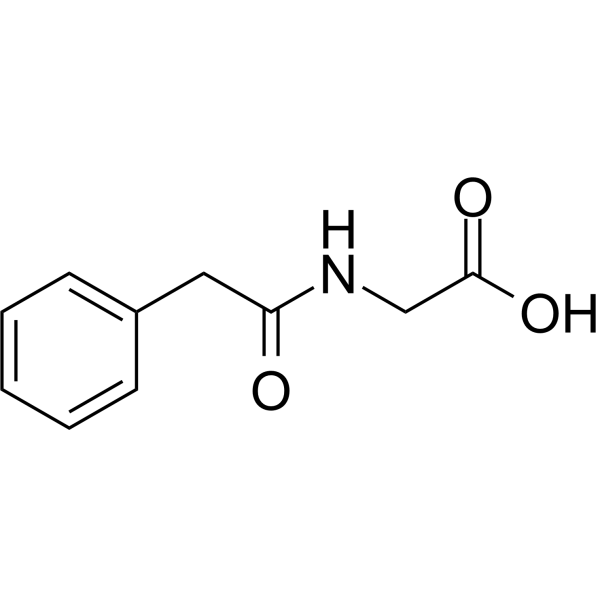
    Phenylacetylglycine
    1 Publications Verification

    Adrenergic Receptor Apoptosis Endogenous Metabolite Cardiovascular Disease Metabolic Disease
    Phenylacetylglycine is a gut microbial metabolite that can activate β2AR. Phenylacetylglycine protects against cardiac injury caused by ischemia/reperfusion .
    Phenylacetylglycine
  • HY-148826

    ARC 183; BC 007

    G Protein-coupled Receptor Kinase (GRK) Cardiovascular Disease
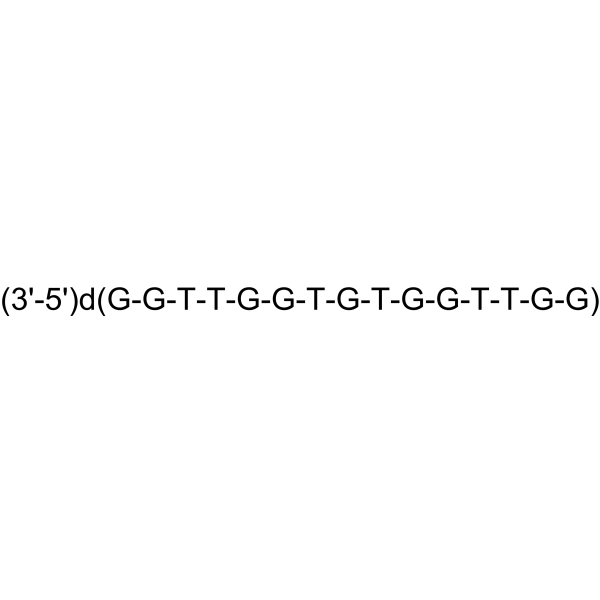
    Rovunaptabin (ARC 183) is an aptamer, a single-stranded DNA molecule composed of 15 deoxynucleotides. It acts as a broad-spectrum neutralizer of pathogenic G-protein-coupled receptor autoantibodies. Rovunaptabin can be used in research related to cardiomyopathy and pulmonary hypertension .
    Rovunaptabin
  • HY-143248
    KR-39038
    1 Publications Verification

    G Protein-coupled Receptor Kinase (GRK) HDAC Cardiovascular Disease
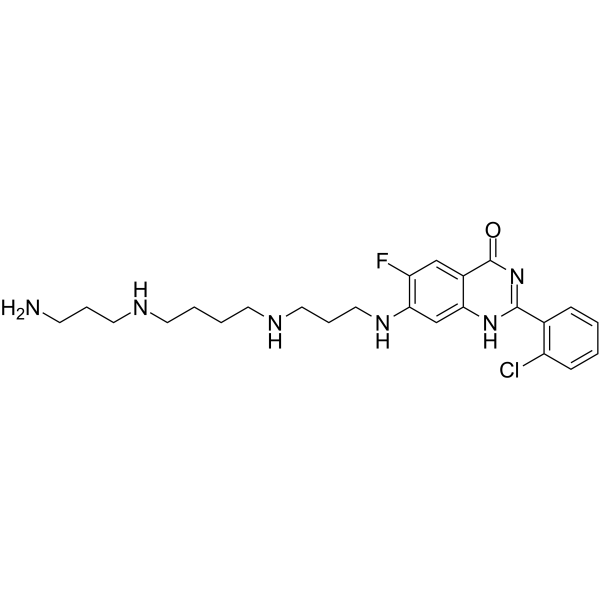
    KR-39038 is an orally active and potent GRK5 (G protein-coupled receptor kinase 5) inhibitor, with an IC50 of 0.02 μM. KR-39038 significantly inhibits angiotensin II-induced cellular hypertrophy through suppression of HDAC5 pathway in neonatal cardiomyocytes. KR-39038 shows profound anti-hypertrophic effects and improved cardiac function. KR-39038 can be used for heart failure research .
    KR-39038
  • HY-17355B
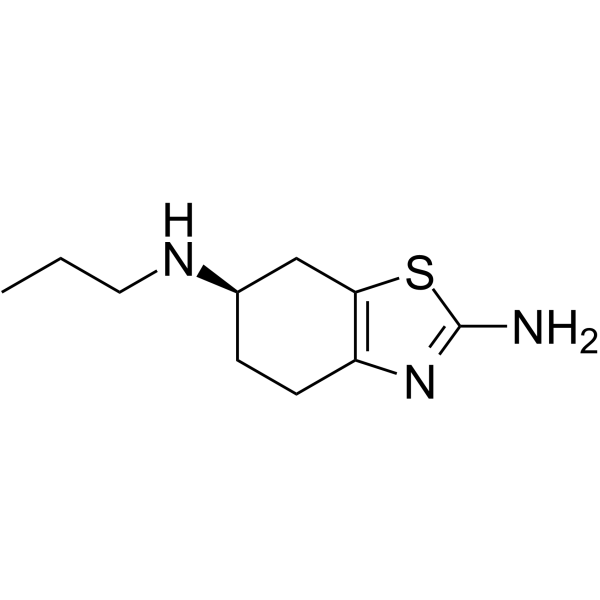
    Dexpramipexole
    2 Publications Verification

    (R)-Pramipexole; R-(+)-Pramipexole; KNS-760704

    PINK1/Parkin Glutathione Peroxidase Sodium Channel ATP Synthase NOD-like Receptor (NLR) Mitophagy Ferroptosis Autophagy Apoptosis Reactive Oxygen Species (ROS) Cardiovascular Disease Neurological Disease Inflammation/Immunology
    Dexpramipexole ((R)-Pramipexole) is an orally active, blood-brain barrier permeable mitochondrial protective agent. Dexpramipexole upregulates the expression of Parkin, PINK1, GPX4 and FSP1; binds to mitochondrial F1/Fo-ATP synthase; blocks the Nav1.8 sodium channel; and inhibits the activation of the NLRP3 inflammasome. Dexpramipexole induces mitophagy, inhibits ferroptosis, pyroptosis, apoptosis, neuroinflammation and eosinophilopoiesis; maintains mitochondrial function and redox homeostasis; reduces reactive oxygen species production; and decreases myocardial infarct size. Dexpramipexole is applicable to studies on eosinophilic asthma, myocardial ischemia/reperfusion injury, sepsis-associated encephalopathy, analgesia, and more .
    Dexpramipexole
  • HY-B0384
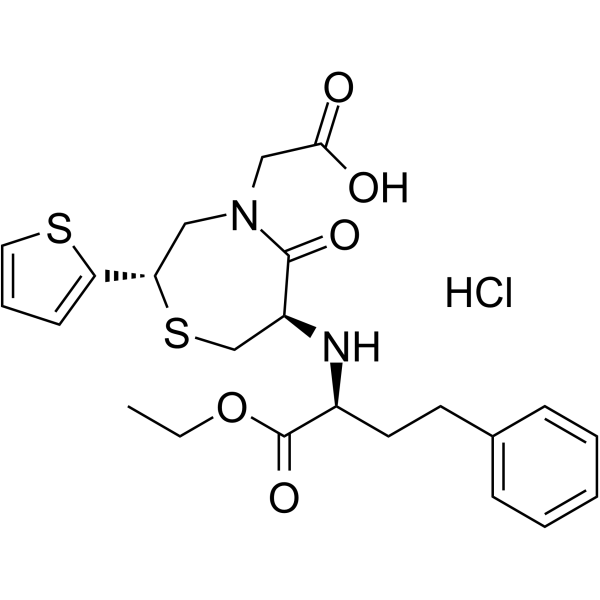
    Temocapril hydrochloride
    2 Publications Verification

    Angiotensin-converting Enzyme (ACE) Cardiovascular Disease
    Temocapril hydrochloride is an orally active angiotensin-converting enzyme (ACE) inhibitor. Temocapril hydrochloride can be used for the research of hypertension, congestive heart failure, acute myocardial infarction, insulin resistance, and renal diseases .
    Temocapril hydrochloride
  • HY-100713
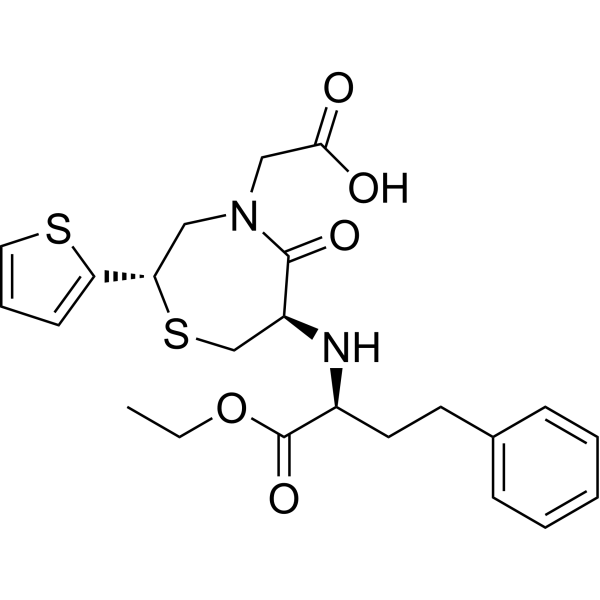
    Temocapril
    2 Publications Verification

    Angiotensin-converting Enzyme (ACE) Cardiovascular Disease
    Temocapril is an orally active angiotensin-converting enzyme (ACE) inhibitor. Temocapril can be used for the research of hypertension, congestive heart failure, acute myocardial infarction, insulin resistance, and renal diseases .
    Temocapril
  • HY-W015061R

    Reference Standards Adrenergic Receptor Apoptosis Endogenous Metabolite Cardiovascular Disease Metabolic Disease
    Phenylacetylglycine (Standard) is the analytical standard of Phenylacetylglycine. This product is intended for research and analytical applications. Phenylacetylglycine is a gut microbial metabolite that can activate β2AR. Phenylacetylglycine protects against cardiac injury caused by ischemia/reperfusion .
    Phenylacetylglycine (Standard)
  • HY-13101
    MCOPPB trihydrochloride
    1 Publications Verification

    Opioid Receptor Autophagy Cardiovascular Disease Neurological Disease
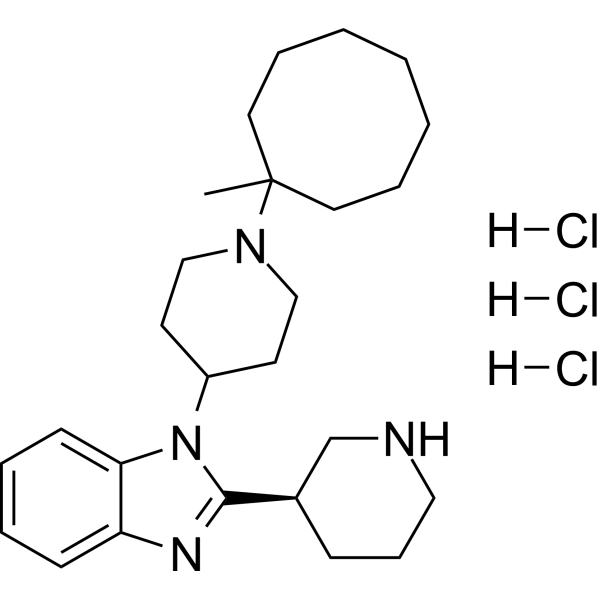
    MCOPPB trihydrochloride is a NOP/ORL1 G protein-coupled receptor agonist and autophagy inhibitor that can cross the blood-brain barrier. MCOPPB trihydrochloride clears senescent cells, regulates locomotion, lipid storage and immune responses, and inhibits fibrosis and angiogenesis. MCOPPB trihydrochloride blocks autophagic flux, induces changes in locomotion and lipid storage, and activates the stress-responsive immune transcription network, thereby improving post-infarction cardiac function and exerting anxiolytic effects. MCOPPB trihydrochloride can be applied to research fields such as aging-related diseases and ischemic heart failure .
    MCOPPB trihydrochloride
  • HY-113040A

    17(R),18(S)-EETeTr

    Calcium Channel Cardiovascular Disease
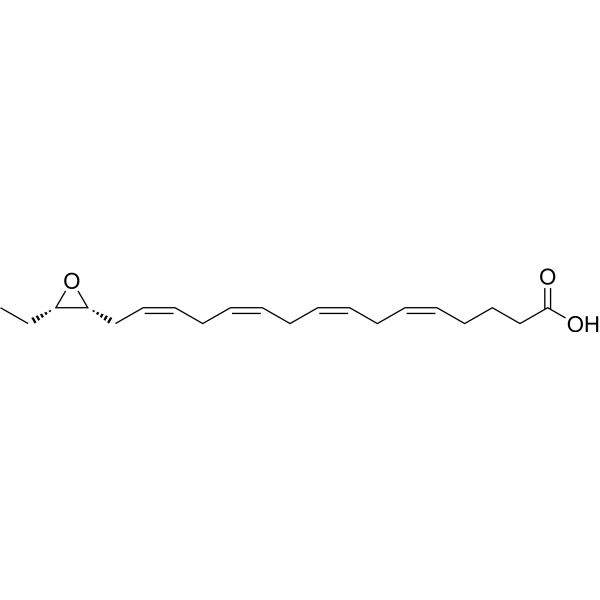
    (17R,18S)-Epoxyeicosatetraenoic acid (17 (R),18 (S)-EETeTr) is a physiologically active fatty acid metabolite and also a vasodilator targeting BKα. (17R,18S)-Epoxyeicosatetraenoic acid activates the outward potassium current mediated by BK channels, and this effect is independent of the BKβ1 subunit, intracellular/extracellular calcium levels, and sarcoplasmic reticulum calcium release regulated by RyR3. (17R,18S)-Epoxyeicosatetraenoic acid is produced by the epoxidation of eicosapentaenoic acid mediated by CYP1A1 variants. (17R,18S)-Epoxyeicosatetraenoic acid is applicable to research related to arrhythmia .
    (17R,18S)-Epoxyeicosatetraenoic acid
  • HY-33015A

    trans-p-Chlorocinnamaldehyde

    Enterovirus Infection
    4-Chlorocinnamaldehyde (trans-p-Chlorocinnamaldehyde) is an antiviral agent. 4-Chlorocinnamaldehyde inhibits the replication of Coxsackievirus B3 in cardiomyocytes, but shows poor efficacy in animal experiments. 4-Chlorocinnamaldehyde can be used in studies related to viral myocarditis .
    4-Chlorocinnamaldehyde
  • HY-129410

    Endogenous Metabolite Others
    ADR-925 is an active chelated iron metabolite with the ability to protect neonatal rat cardiomyocytes from doxorubicin (HY-15142A)-induced damage .
    ADR-925
  • HY-N11449

    Others Others
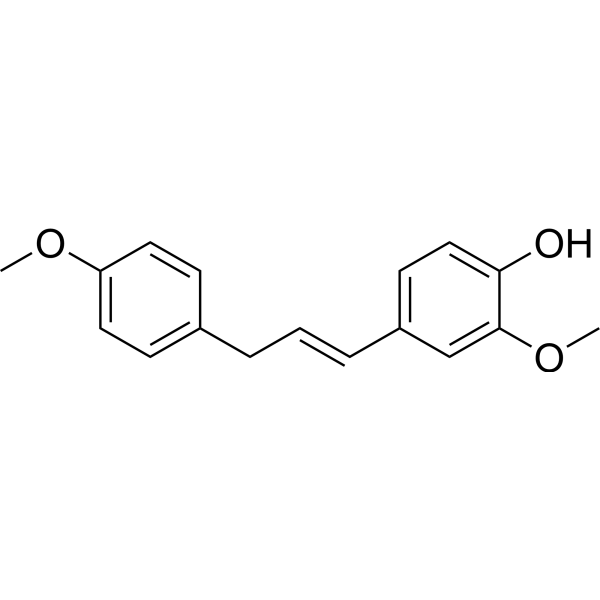
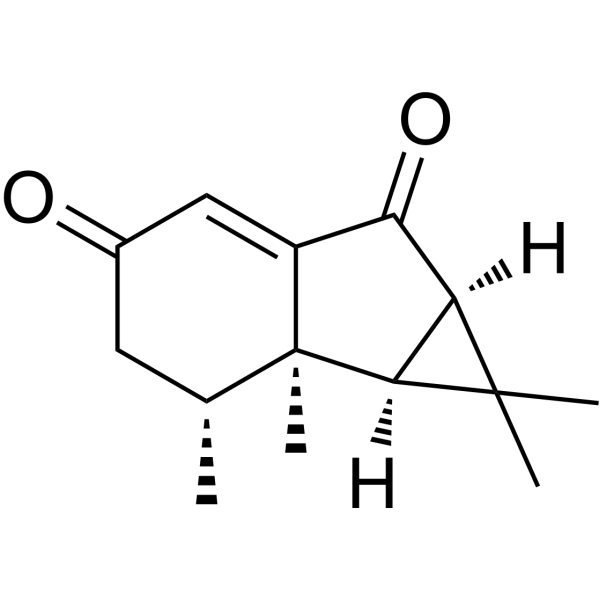
    Nardoaristolone B, a non-sesquiterpene compound isolated from the root of Nardostachys jatamansi, has protective effects on cardiomyocyte injury in neonatal rats .
    Nardoaristolone B
  • HY-W402074

    Butenolide

    Mitochondrial Metabolism Reactive Oxygen Species (ROS) Metabolic Disease
    5-Acetamide-Butenolide (Butenolide) is a mycotoxin with pro-oxidant activity, which is found in Fusarium. 5-Acetamide-Butenolide disrupts the mitochondrial membrane potential in primary neonatal rat cardiomyocytes. 5-Acetamide-Butenolide also induces the production of thiobarbituric acid reactive substances (TBARS) in isolated rat myocardial mitochondria. 5-Acetamide-Butenolide increases the production of reactive oxygen species (ROS), decreases the levels of GSH and reduces the viability of HepG2 cells .
    5-Acetamide-Butenolide
  • HY-100713R

    Reference Standards Angiotensin-converting Enzyme (ACE) Cardiovascular Disease
    Temocapril (Standard) is the analytical standard of Temocapril. This product is intended for research and analytical applications. Temocapril is an orally active angiotensin-converting enzyme (ACE) inhibitor. Temocapril can be used for the research of hypertension, congestive heart failure, acute myocardial infarction, insulin resistance, and renal diseases .
    Temocapril (Standard)
  • HY-133240

    DNA Alkylator/Crosslinker Calcium Channel Potassium Channel Sodium Channel Infection
    trans-AzoTAB is a photoresponsive potassium/sodium/calcium channel modulator and DNA-binding agent. trans-AzoTAB undergoes trans-cis isomerization driven by light, with variable polarity and DNA affinity. trans-AzoTAB also enhances voltage-gated potassium currents and inhibits sodium and calcium currents in cardiomyocytes, thereby reducing spontaneous electrical activity and excitation conduction velocity. In addition, trans-AzoTAB induces compaction and frozen conformation of λ-phage DNA, and non-sequence-dependently inhibits transcription and translation processes in the dark; its activity can be reversed and restored by visible light after activation with ultraviolet irradiation. trans-AzoTAB can serve as a probe for two-photon optical regulation of myocardial excitability, and is used to construct photoresponsive interfacial polymer structures .
    trans-AzoTAB
  • HY-B0384R

    Angiotensin-converting Enzyme (ACE) Reference Standards Cardiovascular Disease
    Temocapril (hydrochloride) (Standard) is the analytical standard of Temocapril (hydrochloride). This product is intended for research and analytical applications. Temocapril hydrochloride is an orally active angiotensin-converting enzyme (ACE) inhibitor. Temocapril hydrochloride can be used for the research of hypertension, congestive heart failure, acute myocardial infarction, insulin resistance, and renal diseases .
    Temocapril hydrochloride (Standard)

Inquiry Online

Your information is safe with us. * Required Fields.

Salutation


Country or Region *

Applicant Name *


Organization Name *

Department *


Email Address *


Product Name *

Cat. No.


Requested quantity *

Phone Number *


Remarks

Inquiry Online

Inquiry Information

Product Name:
Cat. No.:
Quantity:
MCE Japan Authorized Agent:

