1. Search Result
Search Result
Results for "

neurological properties

" in MedChemExpress (MCE) Product Catalog:

29

Inhibitors & Agonists

1

Screening Libraries

1

Biochemical Assay Reagents

5

Natural
Products

1

Isotope-Labeled Compounds

Cat. No. Product Name Target Research Areas Chemical Structure
  • HY-B0388
    Probucol
    2 Publications Verification

    DH-581

    Virus Protease Apoptosis Reactive Oxygen Species (ROS) Glutathione Peroxidase Caspase Infection Neurological Disease Metabolic Disease Inflammation/Immunology Cancer
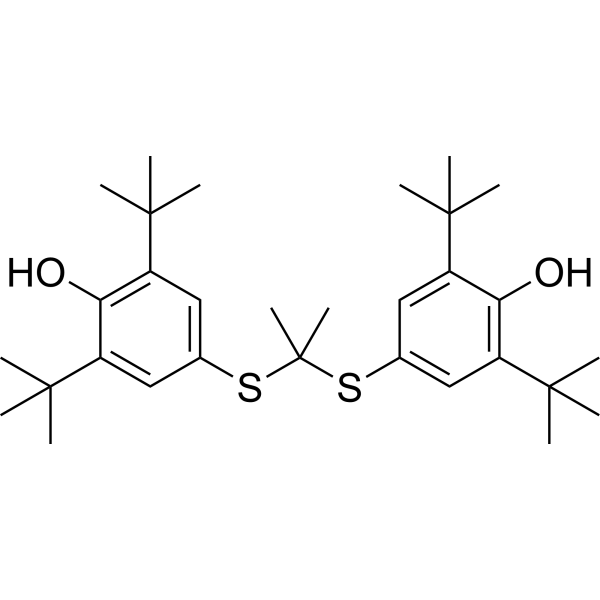
    Probucol (DH-581) is an anti-hyperlipidemic agent. Probucol activates glutathione peroxidase. Probucol promotes low density lipoprotein (LDL) catabolism, inhibits ABCA1-dependent cholesterol efflux, and decreases HDL-C levels. Probucol also has anti-inflammatory, antioxidant and neuroprotective properties. Probucol can be used for researches on bone, cardiovascular, cancer, neurological, and metabolism-related diseases .
    Probucol
  • HY-N0931
    Santacruzamate A
    15+ Cited Publications

    CAY-10683

    HDAC Amyloid-β Neurological Disease Cancer
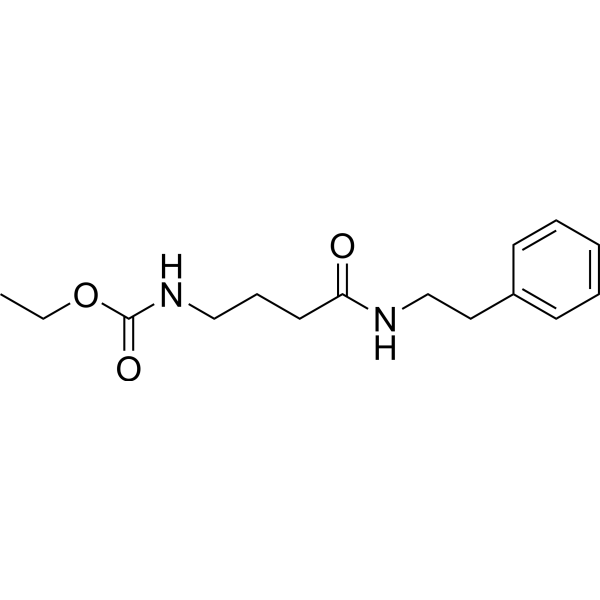
    Santacruzamate A (CAY-10683, STA) is a potent and selective HDAC2 inhibitor with an IC50 of 119 pM. STA also exerts neuroprotective property against amyloid-β protein fragment 25–35. STA can be used for cancer and neurological disease research .
    Santacruzamate A
  • HY-B0612A
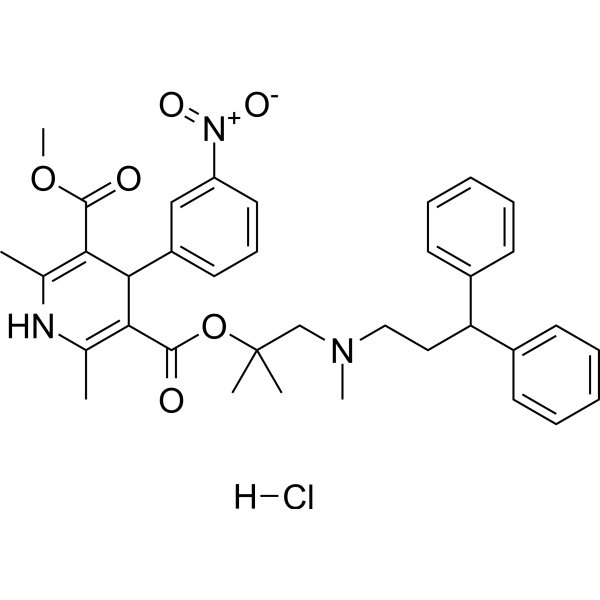
    Lercanidipine hydrochloride
    1 Publications Verification

    Calcium Channel Apoptosis Reactive Oxygen Species (ROS) p38 MAPK NF-κB Cardiovascular Disease Neurological Disease
    Lercanidipine is a third-generation, lipophilic, brain-penetrant, vascular-selective and orally active dihydropyridine-calcium channel blocker with a pIC50 of 7.74 (converts from μM). Lercanidipine has long lasting antihypertensive action as well as reno- and neuro-protective effect. Lercanidipine also shows anti-oxidant, anti-inflammatory and anti-apoptotic properties. Lercanidipine can be used in cardiovascular and neurological research .
    Lercanidipine hydrochloride
  • HY-105296
    Blarcamesine
    3 Publications Verification

    Sigma Receptor mAChR Cancer
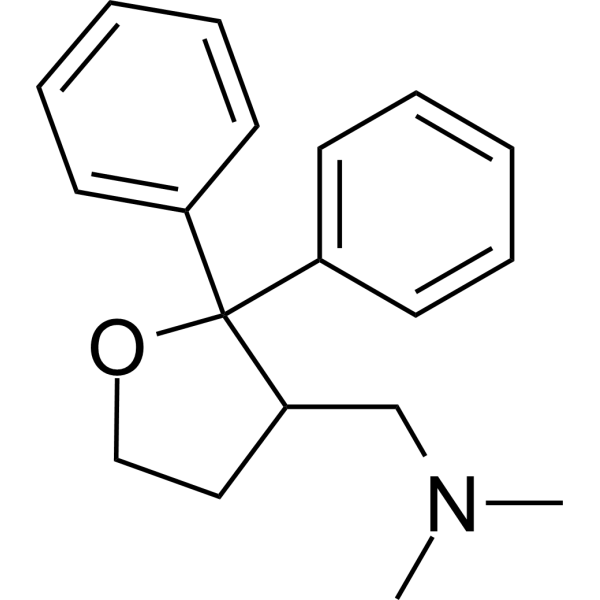
    Blarcamesine is an orally bioavailable Sigma-1 receptor agonist and muscarinic receptor modulator, with anticonvulsant, anti-amnesic, neuroprotective and antidepressant properties. Blarcamesine ameliorates neurologic impairments in a mouse model of Rett syndrome .
    Blarcamesine
  • HY-B0612
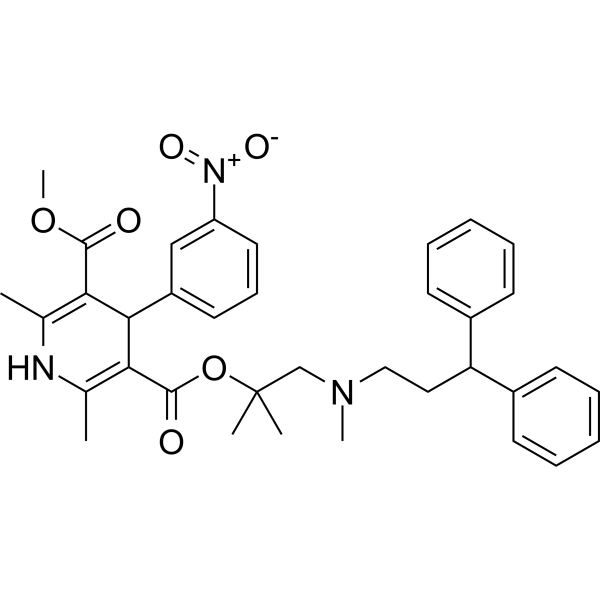
    Lercanidipine
    1 Publications Verification

    Calcium Channel Apoptosis Reactive Oxygen Species (ROS) p38 MAPK NF-κB Cardiovascular Disease Neurological Disease
    Lercanidipine is a third-generation, lipophilic, brain-penetrant, vascular-selective and orally active dihydropyridine-calcium channel blocker with a pIC50 of 7.74 (converts from μM). Lercanidipine has long lasting antihypertensive action as well as reno- and neuro-protective effect. Lercanidipine also shows anti-oxidant, anti-inflammatory and anti-apoptotic properties. Lercanidipine can be used in cardiovascular and neurological research .
    Lercanidipine
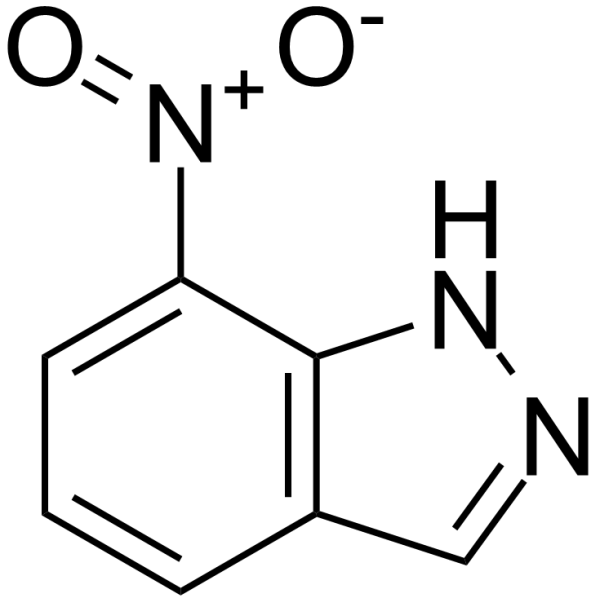
  • HY-69019
    7-Nitroindazole
    1 Publications Verification

    NO Synthase Cardiovascular Disease Neurological Disease
    7-Nitroindazole is a selective and BBB-penetrable inhibitor of nitric oxide synthase (NOS) (IC50 = 0.47 μM in mouse cerebellum). 7-Nitroindazole does not affect blood pressure or endothelium-dependent relaxation while inhibiting nNOS in experimental animals. 7-Nitroindazole has anti-injurious and neuroprotective properties, and can be studied in research for neurological diseases such as Parkinson’s disease .
    7-Nitroindazole
  • HY-N0766
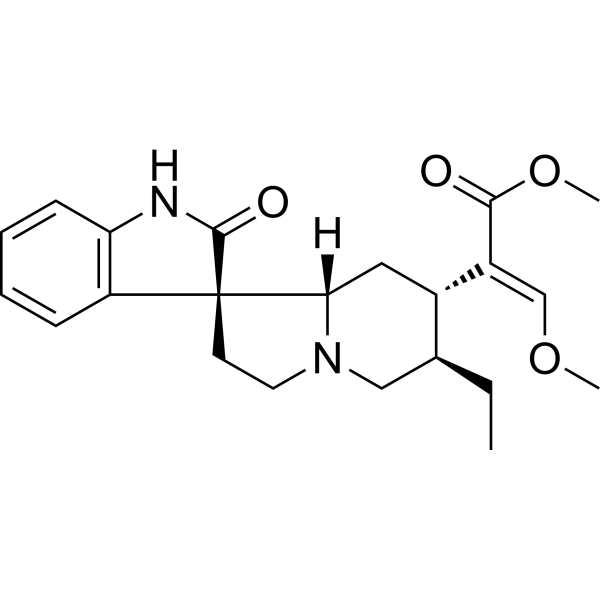
    Isorhynchophylline
    2 Publications Verification

    SOD NF-κB Cardiovascular Disease Neurological Disease Inflammation/Immunology Cancer
    Isorhynchophylline is an alkaloid isolated from Crocus sativus with anticancer, antihypertensive, anti-inflammatory, and neuroprotective properties. Isorhynchophylline can be applied to cardiovascular and neurological disorders, and cancer studies .
    Isorhynchophylline
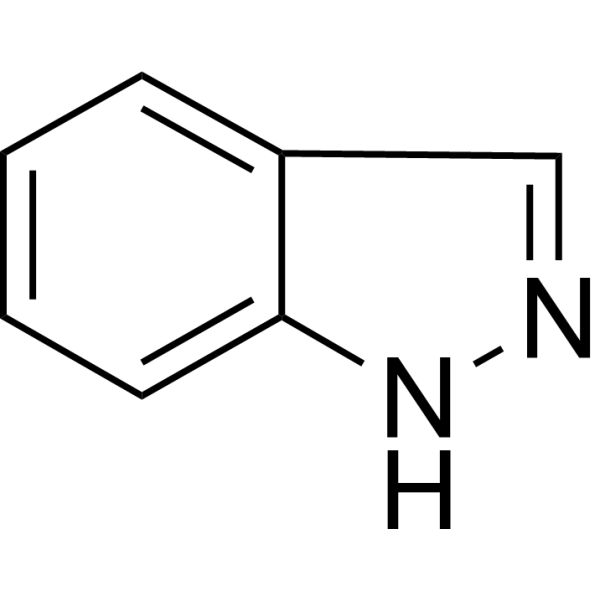
  • HY-40294

    Monoamine Oxidase GSK-3 LRRK2 Cardiovascular Disease Neurological Disease Cancer
    Indazole, also called isoindazole, a heterocyclic aromatic organic compound. Its derivatives display a broad variety of biological activities including anti-inflammatory, antibacterial, anti-HIV, antiarrhythmic, antifungal and antitumour properties. Indazole and its derivatives can be used for research of cancer, neurological disorders, cardiovascular diseases, gastrointestinal diseases .
    Indazole
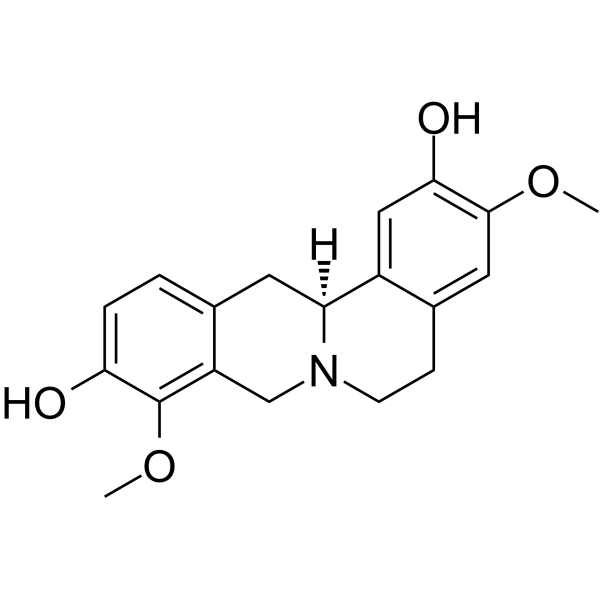
  • HY-N6960

    Stepholidine; (-)-Stepholidine; L-SPD

    Dopamine Receptor Neurological Disease
    L-Stepholidine (Stepholidine) is an alkaloid. L-Stepholidine exhibits mixed dopamine D1 receptor agonist and D2 antagonist properties. L-Stepholidine has neuroprotective effect. L-Stepholidine can be used for the researches of neurological disease, such as Parkinson disease, Alzheimer's disease and opiate addiction .
    L-Stepholidine
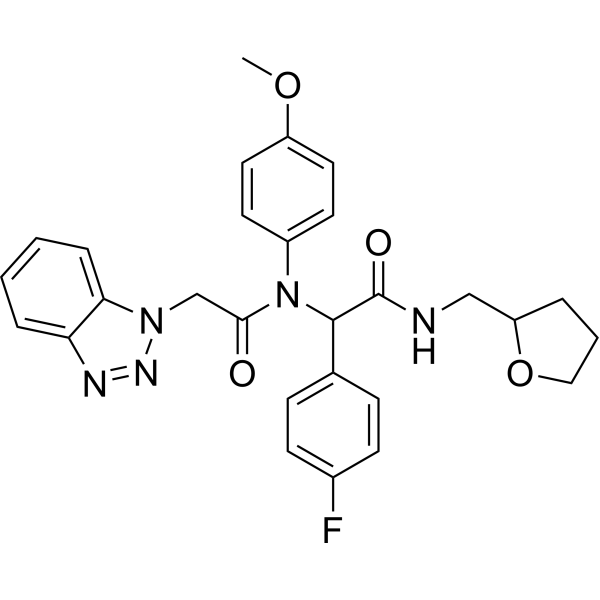
  • HY-173591

    Formyl Peptide Receptor (FPR) Apoptosis Cardiovascular Disease Neurological Disease Inflammation/Immunology
    T0080 is a central nervous system-penetrant FPR1 inhibitor. By functionally blocking the FPR1 signaling pathway, T0080 effectively reduces neutrophil infiltration into ischemic brain tissue and maintains the integrity of the blood-brain barrier. T0080 alleviates tPA-associated hemorrhagic transformation, inhibits demyelination responses and the expression of NOX2. T0080 also possesses anti-apoptotic (apoptosis) and anti-inflammatory properties, thereby protecting myelin and reducing neurological deficits. T0080 is widely used in studies related to ischemic stroke complicated by hemorrhagic transformation after tPA thrombolysis, as well as multiple sclerosis .
    T0080
  • HY-149766

    HDAC Neurological Disease
    PB94 is a selective HDAC11 inhibitor (IC50=108 nM). PB94 can be radiolabeled as [11C]-PB94 for use in positron emission tomography (PET), as well as brain uptake and metabolic properties in administered live animals. PB94 improves neuropathic pain in mice and could be used to study neurological indications .
    PB94
  • HY-203894

    Defekton

    Dopamine Receptor Adrenergic Receptor 5-HT Receptor Neurological Disease
    Carpipramine (Defekton) is an antipsychotic agent that belongs to the iminodibenzyl class. Carpipramine is a potent dopamine antagonist which blocks alpha 1- and alpha 2-adrenoceptors. Carpipramine also has antagonist properties with respect to serotonin (5-ΗΤ2) receptors. Carpipramine exhibits antipsychotic and anti-depressant effects. Carpipramine can be used for the research of neurological disease, such as post-traumatic stress disorder (PTSD) and depression .
    Carpipramine
  • HY-103435
    Vialinin A
    2 Publications Verification

    Terrestrin A

    Deubiquitinase TNF Receptor E1/E2/E3 Enzyme Keap1-Nrf2 Inflammation/Immunology Cancer
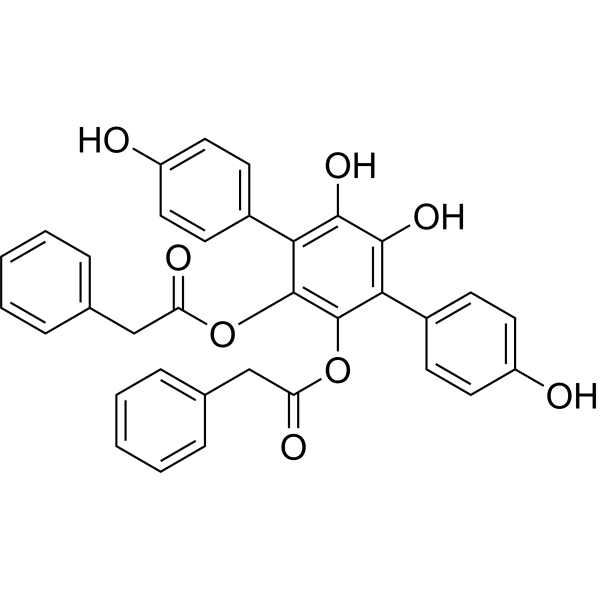
    Vialinin A (Terrestrin A) is a p-terphenyl compound that can be derived from a Chinese edible mushroom. Vialinin A is an inhibitor of ubiquitin-specific peptidase 4 (USP4) and has anti-inflammatory and antioxidant properties. Vialinin A can alleviate cerebral ischaemia-reperfusion injury-induced neurological deficits and neuronal apoptosis. Vialinin A promotes activation of Keap1-Nrf2-ARE signaling pathway and increases the protein degradation of Keap1. Vialinin A possesses various pharmacological activities in cancer, Kawasaki disease, asthma, and pathological scarring. Vialinin A is a potent inhibitor of TNF-α, USP4, USP5, and sentrin/SUMO-specific protease 1 (SENP1). Vialinin A can be studied in reseach for autoimmune diseases, cancer and ischaemic stroke .
    Vialinin A
  • HY-113667

    Transmembrane Glycoprotein Cardiovascular Disease Neurological Disease
    ASN04885796 (compound IV) is an GPR17 activator with an EC50 of 2.27 nM for GPR17 induced GTPγS binding. ASN04885796 has neuroprotective property and can be used for research of neurological diseases .
    ASN04885796
  • HY-155672

    5-HT Receptor Neurological Disease
    JPC0323 is a dual 5-HT2C/5-HT2A receptor positive allosteric modulator. JPC0323 has on-target properties, acceptable plasma exposure and brain penetration. JPC0323 can be used for the research of neurological disease .
    JPC0323
  • HY-175548

    Keap1-Nrf2 Apoptosis Caspase Neurological Disease
    Nrf2 activator-21 is a Nrf2 activator with dual antioxidant and neuroprotective properties. Nrf2 activator-21 binds to Keap1 Kelch domain and disrupts Keap1-Nrf2 interactions and activate antioxidant defense mechanisms. Nrf2 activator-21 reduces apoptosis and decreases caspase-3 activity in the hippocampal neurons. Nrf2 activator-21 targets cerebral ischemia/reperfusion injury (CIRI) via Nrf2 pathway activation. Nrf2 activator-21 improves neurological function, alleviates anxiety-like behavior, enhances memory in rats with 2-vessel occlusion (2VO)-induced CIRI. Nrf2 activator-21 can be used for the study of cerebral ischemia/reperfusion injury .
    Nrf2 activator-21
  • HY-W025830

    Biochemical Assay Reagents Neurological Disease
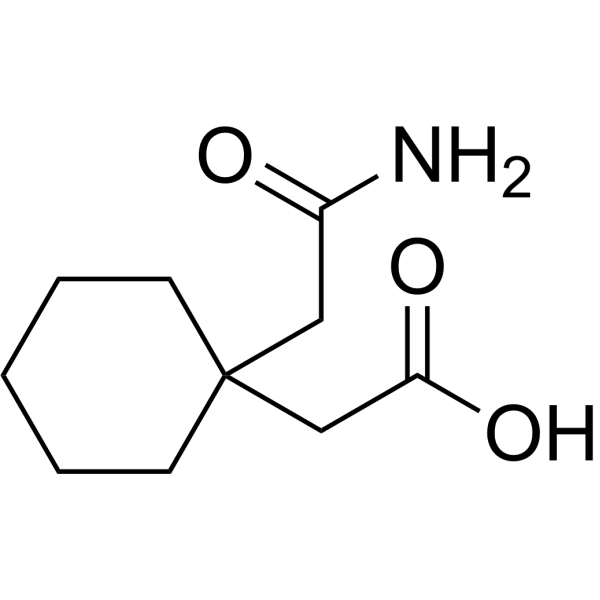
    2-(1-(2-Amino-2-oxoethyl)cyclohexyl)acetic acid has neurological properties and can be used to study the structure and function of proteins and enzymes, as well as protein-protein interactions. 2-(1-(2-Amino-2-oxoethyl)cyclohexyl)acetic acid can also be used to study the structure and function of compounds .
    2-(1-(2-Amino-2-oxoethyl)cyclohexyl)acetic acid
  • HY-N16467

    Speciofiline

    Others Cardiovascular Disease Neurological Disease Inflammation/Immunology Cancer
    Uncarine F (Speciofiline) is a pentacyclic oxindole alkaloid found in Uncaria tomentosa. Uncaria alkaloids have wide medicinal properties, including neuroprotective, anticancer, and antihypertensive activities. Uncaria alkaloids may stimulate the immune system, relax smooth muscles, dilate blood vessels, and act as a diuretic. Uncarine F can be used for the researches of cancer, immunology, cardiovascular and neurological disease .
    Uncarine F
  • HY-40294R

    Monoamine Oxidase GSK-3 LRRK2 Cardiovascular Disease Neurological Disease Cancer
    Indazole (Standard) is the analytical standard of Indazole. This product is intended for research and analytical applications. Indazole, also called isoindazole, a heterocyclic aromatic organic compound. Its derivatives display a broad variety of biological activities including anti-inflammatory, antibacterial, anti-HIV, antiarrhythmic, antifungal and antitumour properties. Indazole and its derivatives can be used for research of cancer, neurological disorders, cardiovascular diseases, gastrointestinal diseases .
    Indazole (Standard)
  • HY-B0612AR

    Reference Standards Calcium Channel Apoptosis Reactive Oxygen Species (ROS) p38 MAPK NF-κB Cardiovascular Disease Neurological Disease
    Lercanidipine (hydrochloride) (Standard) is the analytical standard of Lercanidipine (hydrochloride). This product is intended for research and analytical applications. Lercanidipine is a third-generation, lipophilic, brain-penetrant, vascular-selective and orally active dihydropyridine-calcium channel blocker with a pIC50 of 7.74 (converts from μM). Lercanidipine has long lasting antihypertensive action as well as reno- and neuro-protective effect. Lercanidipine also shows anti-oxidant, anti-inflammatory and anti-apoptotic properties. Lercanidipine can be used in cardiovascular and neurological research .
    Lercanidipine hydrochloride (Standard)
  • HY-W707863

    Reactive Oxygen Species (ROS) Neurological Disease
    Lercanidipine-d3 is the deuterium labeled Lercanidipine (HY-B0612). Lercanidipine is a third-generation, lipophilic, brain-penetrant, vascular-selective and orally active dihydropyridine-calcium channel blocker with a pIC50 of 7.74 (converts from μM). Lercanidipine has long lasting antihypertensive action as well as reno- and neuro-protective effect. Lercanidipine also shows anti-oxidant, anti-inflammatory and anti-apoptotic properties. Lercanidipine can be used in cardiovascular and neurological research .
    Lercanidipine-d3
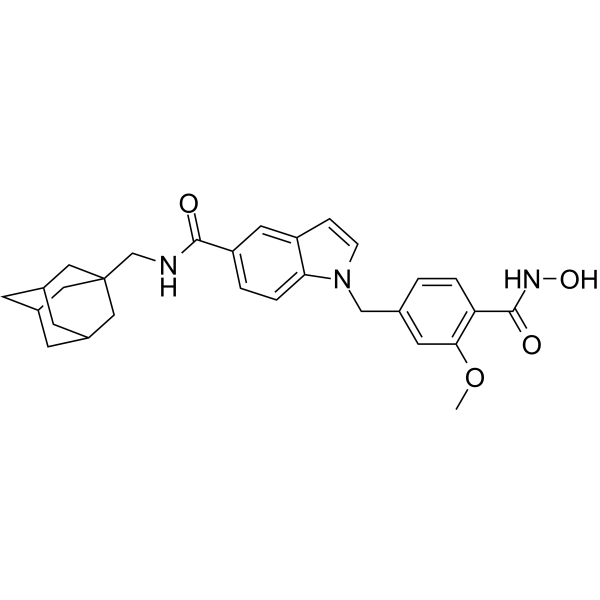
  • HY-157041

    MAGL Cancer
    MAGL-IN-10 is areversible monoacylglycerol lipase (MAGL) inhibitor with very good ADME properties and low in vivo toxicity.MAGL-IN-10 can be used for the research ofcancer, neurological disorders and inflammatory pathologies .
    MAGL-IN-10
  • HY-106465

    Dopamine Receptor Histamine Receptor Adrenergic Receptor 5-HT Receptor Neurological Disease
    Proterguride is a potent dopamine receptor agonist. Proterguride also shows antagonistic properties at the histamine H(1) receptor and alpha(1)-adrenoceptor and partially agonize serotonergic 5-HT2A/B receptor. Proterguride can be used for the research of neurological disease, such as Parkinson's disease .
    Proterguride
  • HY-N0931R

    CAY-10683 (Standard)

    Reference Standards HDAC Amyloid-β Neurological Disease Cancer
    Santacruzamate A (Standard) is the analytical standard of Santacruzamate A. This product is intended for research and analytical applications. Santacruzamate A (CAY-10683, STA) is a potent and selective HDAC2 inhibitor with an IC50 of 119 pM. STA also exerts neuroprotective property against amyloid-β protein fragment 25–35. STA can be used for cancer and neurological disease research[1][2].
    Santacruzamate A (Standard)
  • HY-158627

    5-HT Receptor Others
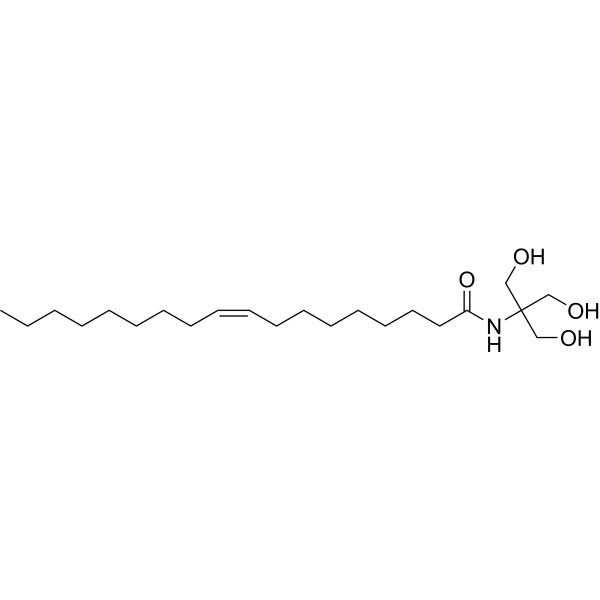
    JPC0323 Oleate is a derivative of JPC0323 (HY-155672). JPC0323 is a dual 5-HT2C/5-HT2A receptor positive allosteric modulator. JPC0323 has on-target properties, acceptable plasma exposure and brain penetration. JPC0323 can be used for the research of neurological disease .
    JPC0323 Oleate
  • HY-157440

    Amyloid-β Reactive Oxygen Species (ROS) Cholinesterase (ChE) Neurological Disease
    AChE/Aβ-IN-3 (compound AM5) is a dual inhibitor of AChE and Amyloid-β aggregation with IC50<.sub> values of 1.29 and 4.93 μM, respectively. AChE/Aβ-IN-3 has antioxidant properties that scavenge ROS and restore their normal levels. AChE/Aβ-IN-3 can be used in the study of neurological diseases, such as Alzheimer's disease .
    AChE/Aβ-IN-3
  • HY-157992

    Interleukin Related Caspase Lactate Dehydrogenase Reactive Oxygen Species (ROS) Neurological Disease Inflammation/Immunology
    LM-021 is a coumarin-chalcone derivative with anti-aggregatory, antioxidant, neuroprotective and anti-inflammatory properties which suppresses nitric oxide (NO), IL-1β, IL-6, TNF-α production, CD68 antigen (CD68) and histocompatibility-2 (MHCII) expression. LM-021 also attenuates the increase of caspase 1 activity, lactate dehydrogenase release and ROS level. LM-021 can be used for neurological research .
    LM-021
  • HY-105296R

    Reference Standards Sigma Receptor mAChR Cancer
    Blarcamesine (Standard) is the analytical standard of Blarcamesine (HY-105296). This product is intended for research and analytical applications. Blarcamesine is an orally bioavailable Sigma-1 receptor agonist and muscarinic receptor modulator, with anticonvulsant, anti-amnesic, neuroprotective and antidepressant properties. Blarcamesine ameliorates neurologic impairments in a mouse model of Rett syndrome .
    Blarcamesine (Standard)
  • HY-182500A

    Toll-like Receptor (TLR) Neurological Disease
    (S,S)-SARM1-IN-9 (Compound MY-13A) is a stereoselective SARM1 inhibitor with covalent binding properties. (S,S)-SARM1-IN-9 covalently modifies Cys311 in the autoregulatory ARM domain of wild-type SARM1, thereby blocking NADase activity, without inhibiting the SARM1 C311A or SARM1 C311S mutants. (S,S)-SARM1-IN-9 blocks vacor- and vincristine-induced axon degeneration in primary rodent dorsal root ganglion neurons. (S,S)-SARM1-IN-9 can be used for research on axon degeneration-dependent neurological disorders, including chemotherapy-induced peripheral neuropathy .
    (S,S)-SARM1-IN-9

Inquiry Online

Your information is safe with us. * Required Fields.

Salutation


Country or Region *

Applicant Name *


Organization Name *

Department *


Email Address *


Product Name *

Cat. No.


Requested quantity *

Phone Number *


Remarks

Inquiry Online

Inquiry Information

Product Name:
Cat. No.:
Quantity:
MCE Japan Authorized Agent:

