
13 Results for "

neurons protection

" in MedChemExpress (MCE) Product Catalog:
Products (13)

13 Results for "neurons protection" in MCE Product Catalog:

22
22 Publications Verification
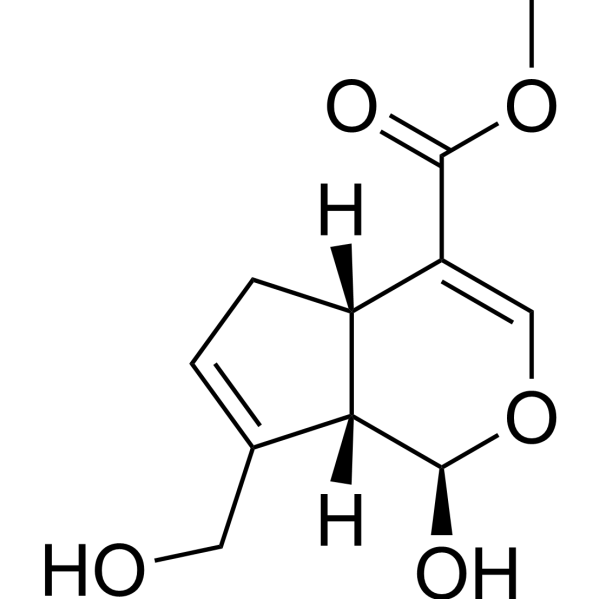
Cat. No.: HY-17389
CAS No.: 6902-77-8
Synonyms: (+)-Genipin
Genipin ((+)-Genipin) is a natural crosslinking reagent derived from Gardenia jasminoides Ellis fruits. Genipin inhibits UCP2 (uncoupling protein 2) in cells. Genipin has a variety of bioactivities, including modulation on proteins, antitumor, anti-inflammation, immunosuppression, antithrombosis, and protection of hippocampal neurons. Genipin also can be used for type 2 diabetes research .
loading...
    loading...
4
4 Cited Publications
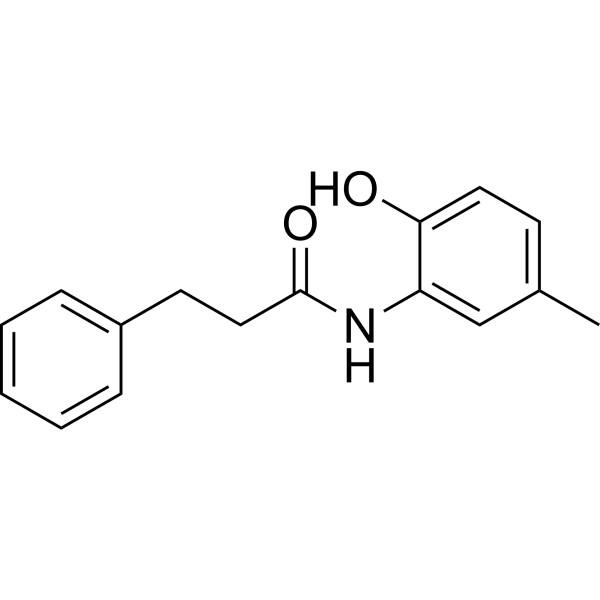
Cat. No.: HY-124293
CAS No.: 393121-74-9
Purity:  99.81%
AA147 is a endoplasmic reticulum (ER) proteostasis regulator. AA147 promotes protection against oxidative damage in neuronal cells and prevents endothelial barrier dysfunction by activating ATF6 arm (selectively) of the unfolded protein response (UPR) and the NRF2 oxidative stress response. AA147 can rebalances XBP1s expression in vivo, and also induces survival motor neuron (SMN) expression and spinal motorneuron (MN) protection .
loading...
    loading...
2
2 Cited Publications
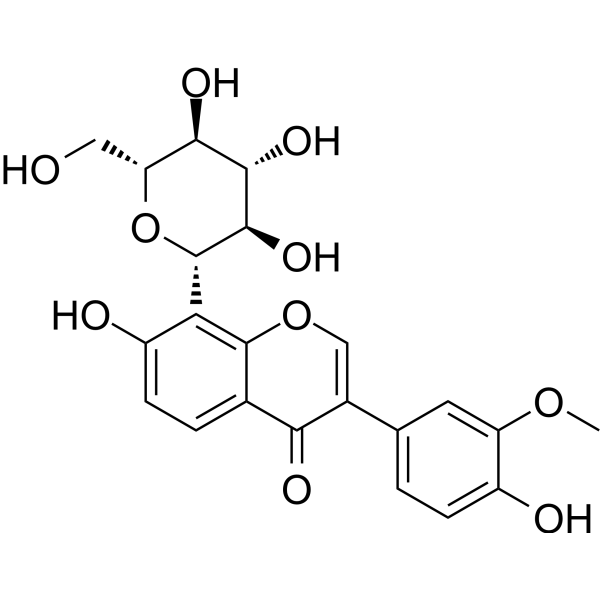
Cat. No.: HY-N1978
CAS No.: 117047-07-1
3'-Methoxypuerarin (3'-MOP) is an isoflavone extracted from radix puerariae that shows neuron protection activity.
loading...
    loading...
Cat. No.: HY-168972
CAS No.: 2375591-69-6
Synonyms: Prostetin/12k
Famlasertib is a potent, brain-penetrant MAP4K inhibitor with IC50s value of 0.3 nM, 23.7 nM, and 44.7 nM for HGK (MAP4K4), MLK3, and MLK1, respectively. Famlasertib shows motor neuron protection and anti-inflammatory properties. Famlasertib can be used for the study of amyotrophic lateral sclerosis (ALS) .
loading...
    loading...
Cat. No.: HY-17389R
CAS No.: 6902-77-8
Synonyms: (+)-Genipin (Standard)
Genipin (Standard) is the analytical standard of Genipin. This product is intended for research and analytical applications. Genipin ((+)-Genipin) is a natural crosslinking reagent derived from Gardenia jasminoides Ellis fruits. Genipin inhibits UCP2 (uncoupling protein 2) in cells. Genipin has a variety of bioactivities, including modulation on proteins, antitumor, anti-inflammation, immunosuppression, antithrombosis, and protection of hippocampal neurons. Genipin also can be used for type 2 diabetes research .
loading...
    loading...
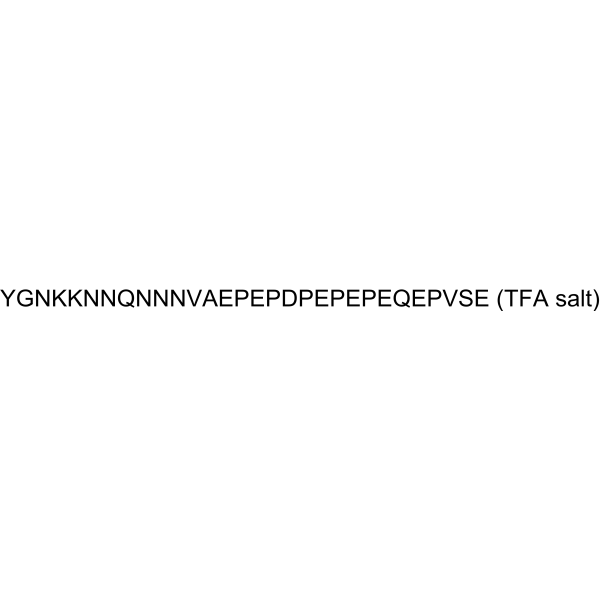
Cat. No.: HY-P5118A
Target:  

Inhibitory Antibodies

Research Areas:  

Neurological Disease

Tat-peptide 190-208 TFA is a cell-permeable and Tat-labeled fusion peptide, corresponding to residues 190-208 of rat G3BP1. Tat sequence from HIV, is placed at the least conserved end of the sequence, for cell permeability. Tat-peptide 190-208 TFA increases axon growth and increases the number of neurites per neuron. Tat-peptide 190-208 TFA likely exhibits an axon intrinsic mechanism. Tat-peptide 190-208 TFA can be used for ischemic protection during endovascular repair for intracranial aneurysms .
loading...
    loading...
Cat. No.: HY-176866
CAS No.: 2222756-46-7
Target:  

HDAC

Research Areas:  

Neurological Disease

Rodin-A is an orally active, brain-penetrant and selective histone deacetylase (HDAC)-co-repressor of repressor element-1 silencing transcription factor (CoREST) complex inhibitor with an IC50 value of 1.80 μM for the CoREST complex, 0.15 μM for HDAC1, and 0.43 μM for HDAC2. Rodin-A increases the acetylation level of histone H3K9, upregulates the expression of neuron-related genes, thereby promoting the increase in dendritic spine density, the colocalization of synaptic proteins (SV2A and PSD95), and the improvement of hippocampal long-term potentiation (LTP), exerting synaptic protection and repair activity. Rodin-A is promising for research of neurodegenerative diseases related to synaptic dysfunction, especially Alzheimer’s disease .
loading...
    loading...
Cat. No.: HY-N1363R
CAS No.: 14113-05-4
Synonyms: (E)-Queen Bee Acid (Standard); (E)-10-Hydroxy-2-decenoic acid (Standard)
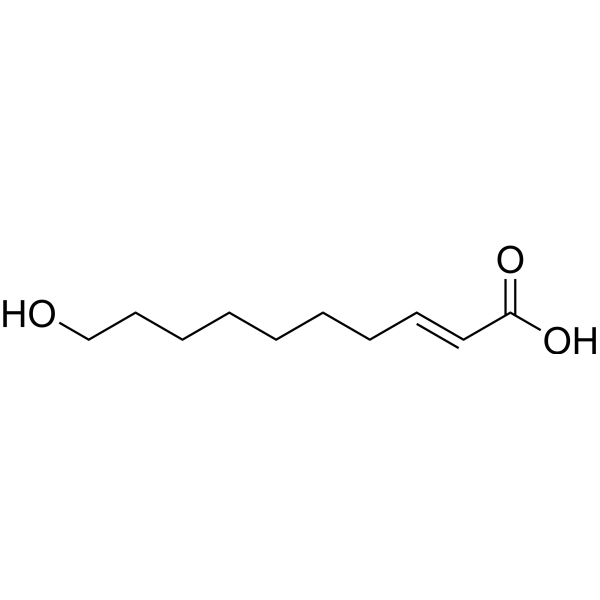
Royal Jelly acid (Standard) is the analytical standard of Royal Jelly acid. This product is intended for research and analytical applications. Royal Jelly acid (Queen Bee Acid) is a fatty acid constituent of royal jelly, promotes the growth and protection of neurons, reduces anxiety-like phenotypes .
loading...
    loading...
Cat. No.: HY-N1978R
CAS No.: 117047-07-1
3'-Methoxypuerarin (Standard) is the analytical standard of 3'-Methoxypuerarin. This product is intended for research and analytical applications. 3'-Methoxypuerarin (3'-MOP) is an isoflavone extracted from radix puerariae that shows neuron protection activity.
loading...
    loading...
Cat. No.: HY-15074
CAS No.: 245063-59-6
Synonyms: NS-1209
Target:  

iGluR

Research Areas:  

Neurological Disease

SPD-502 is a novel glutamate antagonist with potential neuroprotective properties, particularly in brain ischemia. It selectively targets the AMPA receptor, showing high affinity (IC50 = 0.043 μM) and competitive inhibition of AMPA-induced effects in rat cortical membranes and cultured mouse cortical neurons. In vivo, SPD-502 effectively blocks AMPA-evoked spike activity in the hippocampus after intravenous administration, significantly increasing the seizure threshold in mice and demonstrating robust protection against ischemia-induced damage to hippocampal neurons in gerbils. These findings suggest SPD-502 may be promising for studying neurodegenerative conditions associated with glutamate excitotoxicity .
loading...
    loading...
Cat. No.: HY-15076
CAS No.: 205645-02-9
Synonyms: NS-1209 sodium
Target:  

iGluR

Research Areas:  

Neurological Disease

SPD-502 sodium is a novel glutamate antagonist with potential neuroprotective properties, particularly in brain ischemia. It selectively targets the AMPA receptor, showing high affinity (IC50 = 0.043 μM) and competitive inhibition of AMPA-induced effects in rat cortical membranes and cultured mouse cortical neurons. In vivo, SPD-502 sodium effectively blocks AMPA-evoked spike activity in the hippocampus after intravenous administration, significantly increasing the seizure threshold in mice and demonstrating robust protection against ischemia-induced damage to hippocampal neurons in gerbils. These findings suggest SPD-502 sodium may be promising for studying neurodegenerative conditions associated with glutamate excitotoxicity .
loading...
    loading...
Cat. No.: HY-P5118
Target:  

Inhibitory Antibodies

Research Areas:  

Neurological Disease

Tat-peptide 190-208 is a cell-permeable and Tat-labeled fusion peptide, corresponding to residues 190-208 of rat G3BP1. Tat sequence from HIV, is placed at the least conserved end of the sequence, for cell permeability. Tat-peptide 190-208 increases axon growth and increases the number of neurites per neuron. Tat-peptide 190-208 likely exhibits an axon intrinsic mechanism. Tat-peptide 190-208 can be used for ischemic protection during endovascular repair for intracranial aneurysms .
loading...
    loading...
Cat. No.: HY-176867
Target:  

HDAC

Research Areas:  

Neurological Disease

Rodin-B is a selective histone deacetylase (HDAC)-co-repressor of repressor element-1 silencing transcription factor (CoREST) complex inhibitor with an IC50 value of 0.50 μM for the CoREST complex, 0.27 μM for HDAC1, and 0.28 μM for HDAC2. Rodin-B increases the acetylation level of histone H3K9, upregulates the expression of neuron-related genes, thereby promoting the increase in dendritic spine density, the colocalization of synaptic proteins (SV2A and PSD95), and the improvement of hippocampal long-term potentiation (LTP), exerting synaptic protection and repair activity. Rodin-B is promising for research of neurodegenerative diseases related to synaptic dysfunction, especially Alzheimer’s disease .
loading...
    loading...
  • 1

