1. Search Result
Search Result
Results for "

no obvious cytotoxicity

" in MedChemExpress (MCE) Product Catalog:

29

Inhibitors & Agonists

2

Peptides

3

Natural
Products

1

Isotope-Labeled Compounds

Targets Recommended:
Cat. No. Product Name Target Research Areas Chemical Structure
  • HY-128586
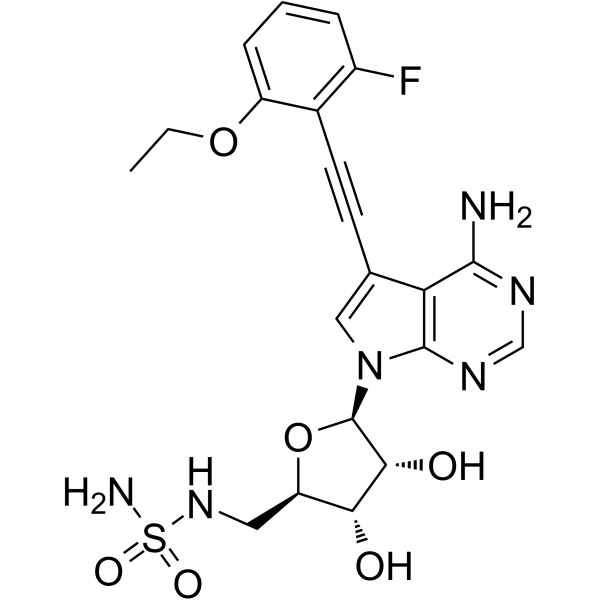
    TAS4464
    5+ Cited Publications

    Apoptosis Carbonic Anhydrase NEDD8-activating Enzyme Cancer
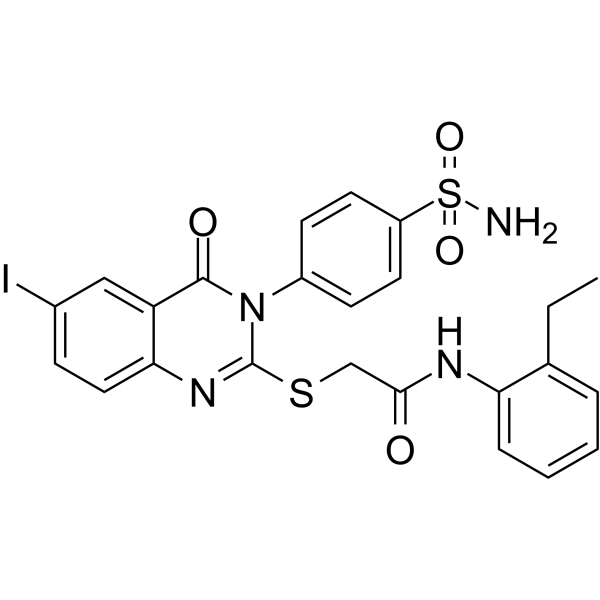
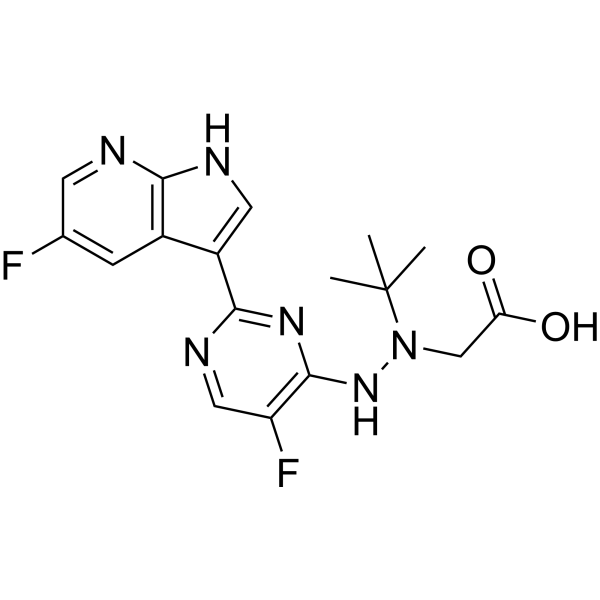
    TAS4464 is a long-acting, highly selective covalent inhibitor targeting NEDD8-activating enzyme (NAE) (IC50=0.955 nM), and also inhibits CAII with an IC50 of 0.73 μM, which is less potent than MLN4924 (HY-70062). The IC50 values of TAS4464 against other E1 enzymes UAE and SAE are 449 nM and 1280 nM, respectively. TAS4464 targets NEDD8 in an ATP-dependent manner to inhibit NAE, blocks the neddylation pathway, causes accumulation of CRL ubiquitin ligase substrates (such as CDT1, p27, phosphorylated IκBα), and further induces tumor cell apoptosis. TAS4464 exhibits antiproliferative and cytotoxic effects, and has broad-spectrum antitumor activity against various hematologic and solid tumor cell lines as well as patient-derived tumor cells. TAS4464 has a wide selcetive window, without obvious toxicity. TAS4464 can be used in the research of hematologic malignancies (leukemia, lymphoma, multiple myeloma, etc.) and solid tumors (small cell lung cancer, colorectal cancer, sarcoma, endometrial cancer, ovarian cancer, etc.) .
    TAS4464
  • HY-12494
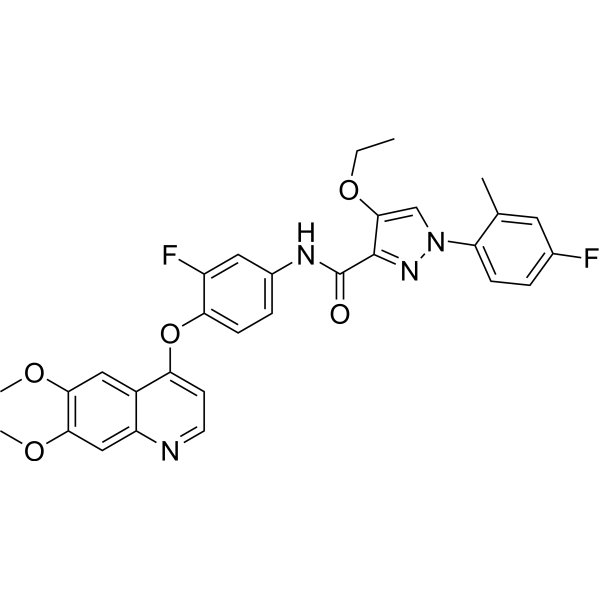
    LDC1267
    Maximum Cited Publications
    10 Publications Verification

    TAM Receptor FLT3 Neurological Disease Cancer
    LDC1267 is a AXL/TAM/FLT3 inhibitor with IC50 values of 42 nM, 130 nM, and 63 nM against AXL, MERTK, and TYRO3, respectively. LDC1267 blocks GAS6-induced AXL phosphorylation and the downstream AKT/ERK1/2 signaling pathway. LDC1267 inhibits cancer cell proliferation, colony formation, and glioblastoma cell invasion, without causing obvious impairment of cytotoxic autophagic flux. LDC1267 exerts a synergistic effect when used in combination with Imatinib (HY-15463) in chronic myeloid leukemia models. LDC1267 can be widely applied in studies related to glioblastoma and chronic myeloid leukemia .
    LDC1267
  • HY-128586A
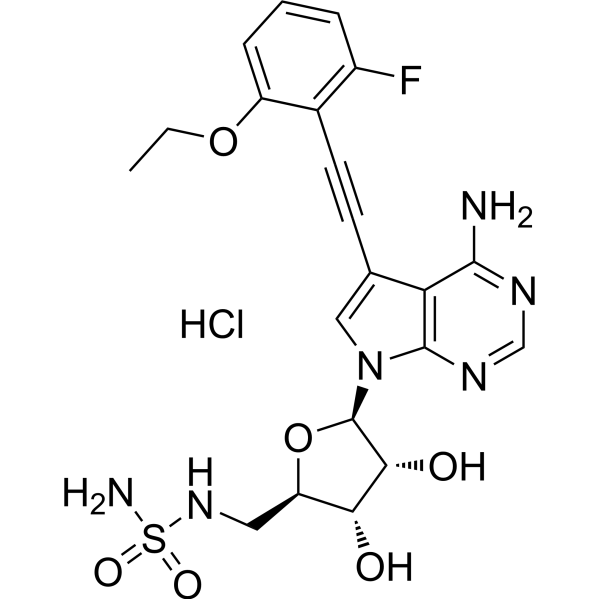
    TAS4464 hydrochloride
    5+ Cited Publications

    NEDD8-activating Enzyme Carbonic Anhydrase Apoptosis Cancer
    TAS4464 hydrochloride is a long-acting, highly selective covalent inhibitor targeting NEDD8-activating enzyme (NAE) (IC50=0.955 nM), and also inhibits CAII with an IC50 of 0.73 μM, which is less potent than MLN4924 (HY-70062). The IC50 values of TAS4464 hydrochloride against other E1 enzymes UAE and SAE are 449 nM and 1280 nM, respectively. TAS4464 hydrochloride targets NEDD8 in an ATP-dependent manner to inhibit NAE, blocks the neddylation pathway, causes accumulation of CRL ubiquitin ligase substrates (such as CDT1, p27, phosphorylated IκBα), and further induces tumor cell apoptosis. TAS4464 hydrochloride exhibits antiproliferative and cytotoxic effects, and has broad-spectrum antitumor activity against various hematologic and solid tumor cell lines as well as patient-derived tumor cells. TAS4464 hydrochloride has a wide therapeutic window, without obvious toxicity. TAS4464 hydrochloride can be used in the research of hematologic malignancies (leukemia, lymphoma, multiple myeloma, etc.) and solid tumors (small cell lung cancer, colorectal cancer, sarcoma, endometrial cancer, ovarian cancer, etc.) .
    TAS4464 hydrochloride
  • HY-162562

    PCSK9 Metabolic Disease Inflammation/Immunology
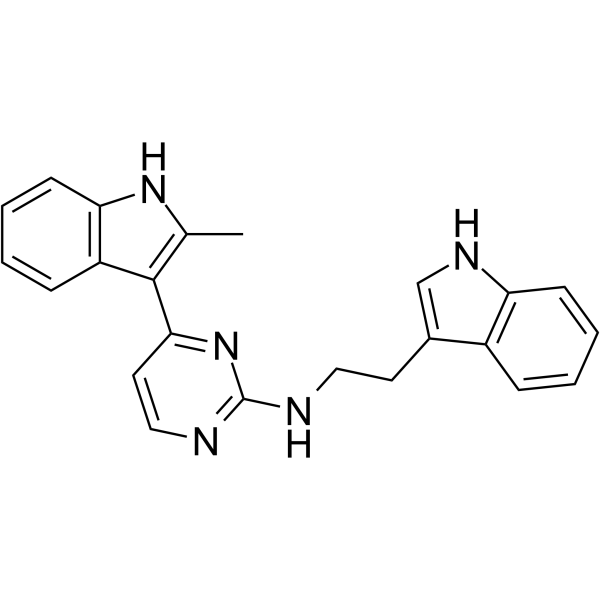
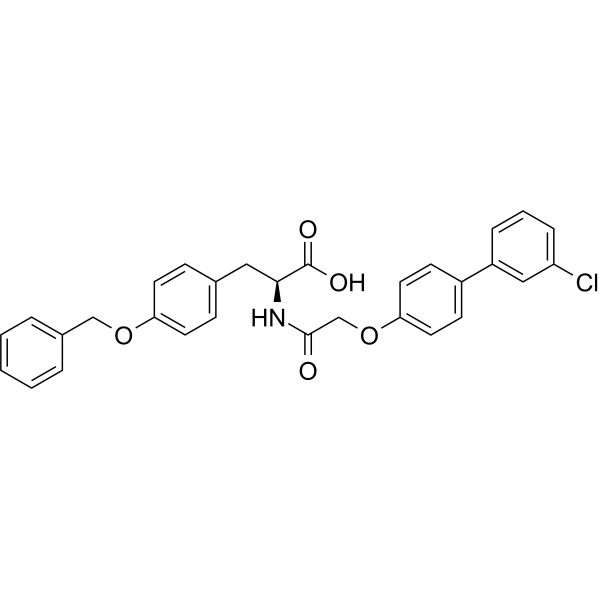
    E28362 is an orally active lipid-lowering agent and a selective PCSK9 antagonist. E28362 blocks the interaction between PCSK9 and LDLR, and induces PCSK9 degradation via the ubiquitin-proteasome pathway. E28362 significantly increases the levels of cell surface and total LDLR proteins, enhances low-density lipoprotein uptake, thereby effectively reducing plasma lipids, hepatic cholesterol and triglyceride levels. E28362 shows no obvious cytotoxicity at high concentrations, and significantly attenuates atherosclerotic lesions in animal models. E28362 is an important molecule in research of hyperlipidemia and atherosclerosis .
    E28362
  • HY-146144

    HIF/HIF Prolyl-Hydroxylase Cancer
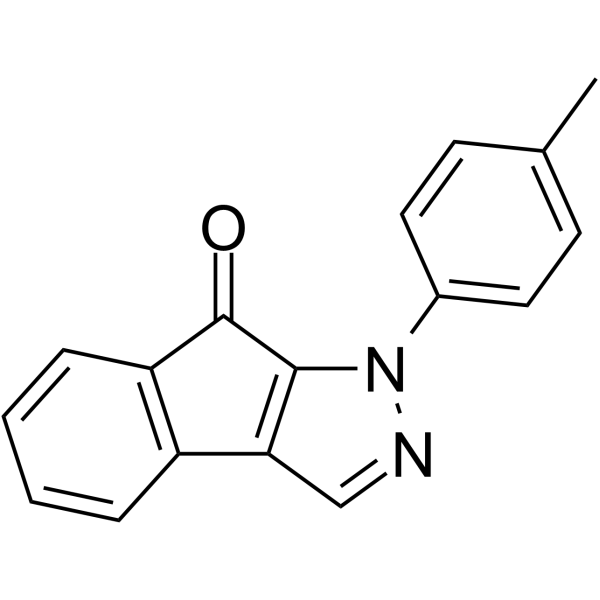
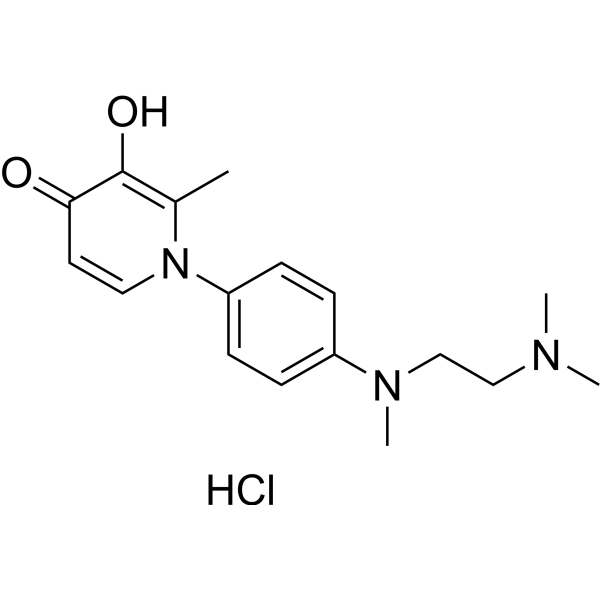
    HIF-IN-1 (Compound 3c) is a hypoxia-inducible factor (HIF)-1 inhibitor. HIF-IN-1 suppresses HIF-1α protein accumulation without affecting the levels of HIF-1α mRNA. HIF-IN-1 shows no obvious cytotoxicity .
    HIF-IN-1
  • HY-155417

    Orphan GPCR ERK Neurological Disease
    GPR34 receptor antagonist 3 (Compound 5e) is a class of GRP34 antagonists, IC50 is 0.680 μM. GPR34 receptor antagonist 3 inhibited ERK1/2 phosphorylation induced by lysophosphatidylserine in a dose-dependent way without obvious cytotoxicity. GPR34 receptor antagonist 3 shows antisensory activity in mouse neuropathic pain model .
    GPR34 receptor antagonist 3
  • HY-136797

    Dengue Virus Infection
    BP13944 is a potential small molecule inhibitor discovered by high-throughput screening. It can effectively inhibit the expression of dengue virus (DENV) replicons with an EC50 value of 1.03±0.09 μM. BP13944 can inhibit the replication or viral RNA synthesis of all four serotypes of DENV, but is ineffective against Japanese encephalitis virus. BP13944 may target the DENV NS3 protease, and the E66G amino acid substitution in the NS3 protease region will cause the virus to become resistant to BP13944. BP13944 has no obvious cytotoxicity. As there is currently no effective dengue vaccine and treatment, BP13944, as an effective small molecule inhibitor, may become a potential agent for the treatment of dengue in the future.
    BP13944
  • HY-163641

    Molecular Glues Androgen Receptor E1/E2/E3 Enzyme Cancer
    AR Degrader-1 (Compound ML 2-9) is a molecular glue androgen receptor (AR) monovalent degrader. AR Degrader-1 degrades AR through DCAF16 (E3 ligase) without obvious cytotoxicity in LNCaP prostate cancer cells .
    AR Degrader-1
  • HY-156240

    E1/E2/E3 Enzyme Keap1-Nrf2 Metabolic Disease
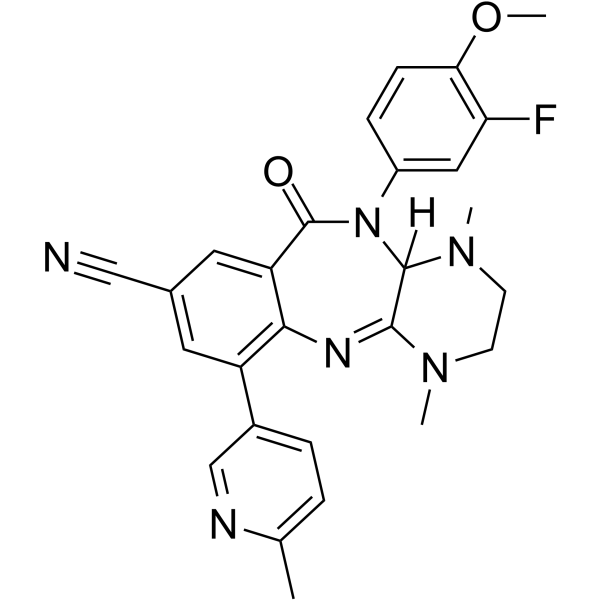
    DI-1548 is a potent, selective, and irreversible covalent inhibitor of DCN1 (IC50 = 4.6 nM). DI-1548 potently and selectively inhibits cullin 3 neddylation at nanomolar concentrations, and exhibits no obvious effect on the neddylation of other cullin members (including cullin 1, 2, 4A, 4B, and 5). DI-1548 exhibits no cytotoxicity. DI-1548 covalently binds to DCN1, disrupting the DCN1-UBC12 interaction, causing the collapse of the neddylation complex, inactivating CRL3, leading to NRF2 accumulation and upregulation of its target genes, and ultimately protecting mice from liver damage. DI-1548 can be used in liver injury research .
    DI-1548
  • HY-146819

    Carbonic Anhydrase Cancer
    Compound 9 is the most effective against tumor specific Ca ix/ca XII (ki=29.1 and 8.8 nm), so it is possible to evaluate its cytotoxicity and selectivity to HepG-2, HCT-116 and MCF-7 cancer cell lines in vitro, and its IC50 values to tumor cells are 1.78, 1.94 and 3.07, respectively μ M. It showed that it had obvious cytotoxicity.
    CAIX/CAXII-IN-1
  • HY-145842

    Virus Protease Infection Neurological Disease
    Encephalitic alphavirus-IN-1 has antiviral activity for VEEV and EEEV with EC50s of 0.24 μM and 0.16 μM, respectively. Encephalitic alphavirus-IN-1 has robust mouse plasma stability, and no obvious cytotoxicity .
    Encephalitic alphavirus-IN-1
  • HY-N7980

    NF-κB Cancer
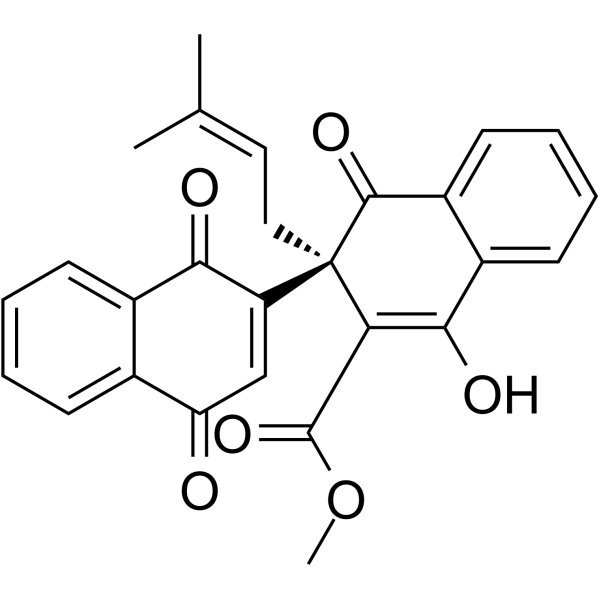
    Rubipodanone A, a naphthohydroquinone dimer, shows cytotoxicity against A549, BEL-7402, HeLa, HepG2, SGC-7901 and U251 cells. Rubipodanone A also shows obvious activating effect at 20 and 40 μM for NF-κB .
    Rubipodanone A
  • HY-163695

    NOD-like Receptor (NLR) Inflammation/Immunology
    NLRP3-IN-41 (compd S-9) is an orally active and brain-penetrant NLRP3 inhibitor with anti-inflammatory activities, anti-neuroinflammatory effect and without obvious cytotoxicity. NLRP3-IN-41 inhibits the priming and activation stages of the NLRP3 inflammasome and can be used for inflammasome-related diseases research .
    NLRP3-IN-41
  • HY-177731

    Molecular Glues MicroRNA Cancer
    MG-Lin1 is a molecular glucose degrading agent that targets the Lin28 protein. MG-Lin1 can significantly reduce the mRNA levels of let-7 targeting oncogenes. MG-Lin1 can significantly inhibit the migration ability of cancer cells. MG-Lin1 has no obvious cytotoxicity. MG-Lin1 can be used for cancer research .
    MG-Lin1
  • HY-P11227

    TGF-β Receptor TGF-beta/Smad Neurological Disease
    Compound 19A8.8 is a cyclic peptide derived from a CD36 protein fragment. Compound 19A8.8 inhibits the TGF-β/Smad3 signaling pathway by suppressing the interaction between TSP1 and CD36. Compound 19A8.8 has no obvious cytotoxicity. Compound 19A8.8 can be used for research on colon injury and fibrosis .
    Compound 19A8.8
  • HY-149263

    Influenza Virus Virus Protease Infection
    HAA-09 is an orally active and potent anti-influenza agent, targeting the influenza PB2_cap binding domain. HAA-09 displays potent anti-influenza A virus activity, with an EC50 of 0.03 μM. HAA-09 shows polymerase inhibition, with an IC50 of 0.06±0.004 μM. HAA-09 blocks virus replication without causing obvious cytotoxicity .
    HAA-09
  • HY-149719

    Ferroptosis Metabolic Disease
    Ferroptosis-IN-4 (compound 6k) is a ferroptosis inhibitor with EC50 value of 20 μM. Ferroptosis-IN-4 has no obvious cytotoxicity. Ferroptosis-IN-4 has a protective effect in glycerol-induced RM-AKI mice with alleviating kidney dysfunction .
    Ferroptosis-IN-4
  • HY-115969

    Bacterial Infection
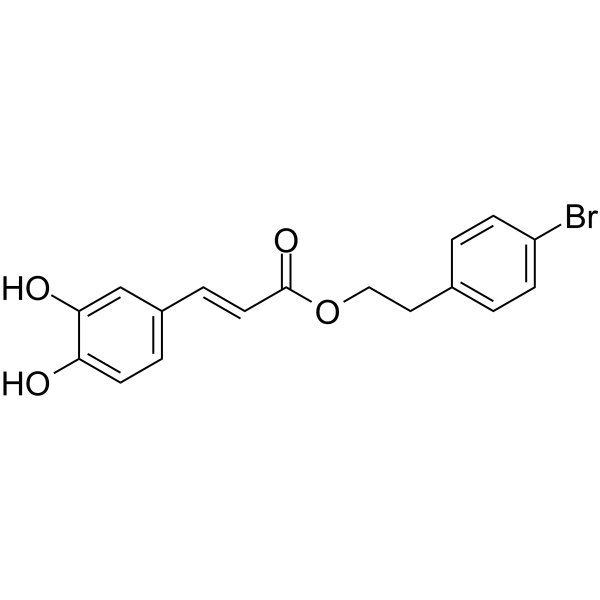
    F-17 is a potential inhibitor of virulence factor. F-17 shows very significant inhibitory effect on biofilm, elastase, pyocyanin, and swarming motility. F-17 also shows a good binding effect on LasR and PqsR. F-17 has no obvious cytotoxicity .
    F-17
  • HY-P10858

    SARS-CoV Virus Protease Infection
    UCI-1 is a SARS-CoV-2 main protease (M pro) cyclic peptide inhibitor with an IC50 of 160 μM. UCI-1 shows no obvious cytotoxicity at the concentration of inhibiting M pro. UCI-1 can be used in the study of anti-COVID-19 drugs .
    UCI-1
  • HY-W009160S

    UV-329-d4

    Isotope-Labeled Compounds Estrogen Receptor/ERR Others
    Octrizole-d4 (UV-329-d4) is deuterium labeled Octrizole (HY-W009160) . Octrizole (UV-329) is a UV screener/stabilizer. Octrizole can prevent products from yellowing and degradation. Octrizole exhibits significant cytotoxicity to MVLN cells at concentrations higher than 50 μM and has no obvious estrogenic activity.
    Octrizole-d4
  • HY-177299

    HCV Infection
    HCV NS5B polymerase-IN-3 (Compound 30a) is an inhibitor of the HCV NS5B polymerase. HCV NS5B polymerase-IN-3 exhibits anti-HCV activity in the Huh7 replicon cell line with an EC50 of 0.23 μM and shows no obvious cytotoxicity. HCV NS5B polymerase-IN-3 can be used in research related to the hepatitis C virus .
    HCV NS5B polymerase-IN-3
  • HY-146001

    Influenza Virus Inflammation/Immunology
    Influenza virus-IN-4 (compound 11e) is a potent influenza virus neuraminidase inhibitor with IC50s of 3.4, 0.094, 0.79, 0.077 µM for H5N1, H5N2, H5N6, H5N8, respectively. Influenza virus-IN-4 shows NA (neuraminidase enzyme)-inhibitory activity. Influenza virus-IN-4 shows low cytotoxicity with an CC50 of >200 µM. Influenza virus-IN-4 shows no obvious toxicity at the dose of 1500 mg/kg in mice .
    Influenza virus-IN-4
  • HY-181119

    Cholinesterase (ChE) Neurological Disease
    AChE-IN-106 is an AChE inhibitor. AChE-IN-106 shows no obvious cytotoxicity at low concentrations. AChE-IN-106 can be used for the research of Alzheimer's disease .
    AChE-IN-106
  • HY-W009160

    UV-329

    Environmental Pollutants Estrogen Receptor/ERR Others
    Octrizole (UV-329) is a UV screener/stabilizer. Octrizole can prevent products from yellowing and degradation. Octrizole exhibits significant cytotoxicity to MVLN cells at concentrations higher than 50 μM and has no obvious estrogenic activity .
    Octrizole
  • HY-N19720

    Drug Derivative Parasite Infection
    Bractein is a natural aurone flavonoid with potential antioxidant activity. Bractein shows in vitro antileishmanial activity and inhibits promastigotes and intracellular amastigotes of Leishmania donovani. Bractein exhibits no obvious cytotoxicity against mammalian macrophages with an EC50 value > 25.0 μg/mL. Bractein can be used for the research of Leishmania .
    Bractein
  • HY-W009160R

    UV-329 (Standard)

    Reference Standards Estrogen Receptor/ERR Others
    Octrizole (Standard) (UV-329 (Standard)) is the analytical standard of Octrizole (HY-W009160). This product is intended for research and analytical applications. Octrizole (UV-329) is a UV screener/stabilizer. Octrizole can prevent products from yellowing and degradation. Octrizole exhibits significant cytotoxicity to MVLN cells at concentrations higher than 50 μM and has no obvious estrogenic activity.
    Octrizole (Standard)
  • HY-180810

    Antibiotic Bacterial Infection
    T504 is an oxazolidinone antibiotic. T504 exhibits significant growth inhibitory effects on Mycobacterium tuberculosis H37Rv, Mycobacterium bovis BCG, and Mycobacterium abscessus, and the MIC value for the reference strain Mycobacterium tuberculosis H37Rv is 0.5-1.0 μg/mL. T504 effectively inhibits the growth of Mycobacterium tuberculosis within macrophages and does not show obvious cytotoxicity. T504 can be used in the research of mycobacterial infections .
    T504
  • HY-W753557

    Drug Derivative Insecticide Bacterial Infection Inflammation/Immunology Cancer
    Avocadene is a natural product isolated from Persea americana leaves, with anticancer, insecticidal, anti-Helicobacter pylori, and anti-inflammatory activity. Avocadene exerts antibacterial and anti‑inflammatory effects by suppressing Helicobacter pylori growth and inhibiting protein denaturation. Avocadene displays obvious cytotoxic activity against human prostate cancer PC‑3 cells with an IC50 of 0.5 μg/mL. Avocadene can be used for research of Helicobacter pylori‑associated gastrointestinal inflammation, gastroduodenal injury and prostate tumors .
    Avocadene
  • HY-182757

    RANKL/RANK Nuclear Factor of activated T Cells (NFAT) Cathepsin Metabolic Disease Inflammation/Immunology
    Y1693 is an orally active RANKL inhibitor with a Kd of 5.03 μM for hRANKL. Y1693 inhibits the activation of the downstream c-fos/NFATc1 signaling pathway by blocking its interaction with RANK. Y1693 significantly inhibits RANKL-induced osteoclast differentiation, F-actin ring formation and bone resorptive activity, while downregulating the mRNA and protein expressions of TRAP, cathepsin K, c-fos and NFATc1. Y1693 shows no obvious cytotoxicity to bone marrow-derived macrophages and osteoclast precursor cells, and exhibits favorable ADME properties. Y1693 improves ovariectomy-induced osteoporosis in mice and reverses ligation-induced periodontal alveolar bone loss. Y1693 is applicable to research related to osteoporosis and periodontal diseases .
    Y1693

Inquiry Online

Your information is safe with us. * Required Fields.

Salutation


Country or Region *

Applicant Name *


Organization Name *

Department *


Email Address *


Product Name *

Cat. No.


Requested quantity *

Phone Number *


Remarks

Inquiry Online

Inquiry Information

Product Name:
Cat. No.:
Quantity:
MCE Japan Authorized Agent:

