
14 Results for "

paracellular permeability

" in MedChemExpress (MCE) Product Catalog:
Products (14)

14 Results for "paracellular permeability" in MCE Product Catalog:

7
7 Cited Publications
Cat. No.: HY-B0377
CAS No.: 76824-35-6
Synonyms: MK-208
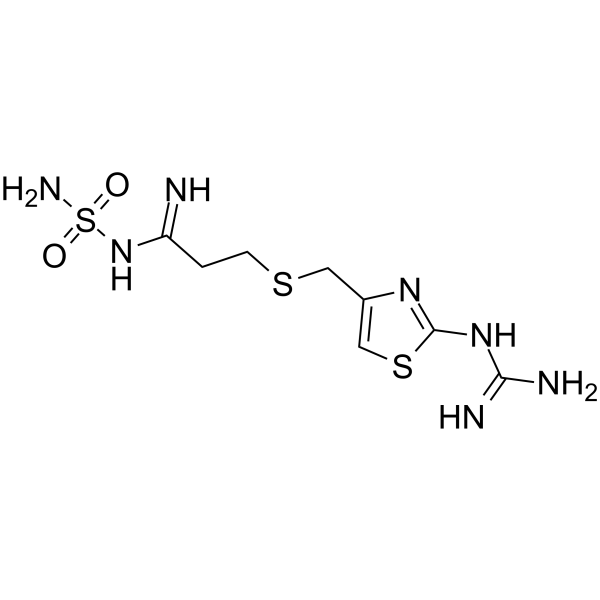
Famotidine (MK-208) is an orally active and highly selective histamine H2 receptor antagonist. It inhibits gastric acid secretion by blocking the Gs signaling pathway, and regulates intracellular cAMP and ERK pathways. Famotidine inhibits TLR3-mediated inflammatory pathways, and reduces the expression of various inflammatory mediators and interferon-related genes. Famotidine scavenges DPPH and nitric oxide free radicals, alleviates oxidative stress damage in gastric tissue, inhibits proMMP-9, improves vascular endothelial permeability, and restores the normal physiological functions of neutrophils and eosinophils. Famotidine crosses intestinal epithelial cells via facilitated diffusion and passive diffusion, blocks paracellular cation transport, and increases intestinal transepithelial electrical resistance. Famotidine reduces serum levels of transaminases and alkaline phosphatase, exerts analgesic effects and gastric protective effects simultaneously. Famotidine can be used in studies related to COVID-19, liver injury and acute gastric ulcer .
loading...
    loading...
Cat. No.: HY-W040203
CAS No.: 82494-09-5
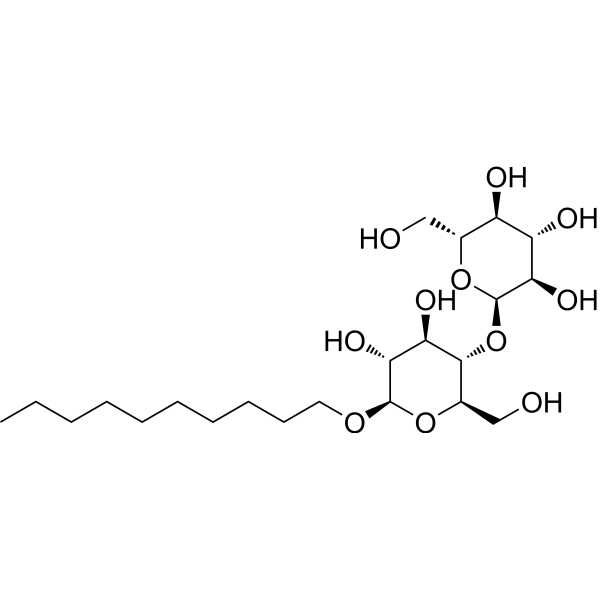
Decyl β-D-maltopyranoside is an epithelial permeability enhancer. Decyl β-D-maltopyranoside regulates the paracellular transport pathway and increases the permeability of molecules and proteins transported via the paracellular route. Decyl β-D-maltopyranoside enhances the transepithelial paracellular permeability of EPO across cell monolayers .
loading...
    loading...
Cat. No.: HY-P1784A
Target:  

Secretin Receptor

Research Areas:  

Endocrinology

ecretin, canine TFA is an endocrine hormone that stimulates the secretion of bicarbonate-rich pancreatic fluids. Secretin, canine TFA can regulates gastric chief cell function and paracellular permeability in canine gastric monolayers by a Src kinase-dependent pathway .
loading...
    loading...
Cat. No.: HY-N12281
CAS No.: 517-43-1
Sennoside is an orally active apoptosis inducer and stimulant laxative, found in Senna (Cassia angustifolia). Sennoside induces overexpression of wild-type p53 and p21/WAF as part of pathways mediating colonic epithelial cell apoptosis. Sennoside stimulates colonic peristalsis, reverses net water, sodium, chloride absorption to secretion and enhances potassium and calcium secretion. Sennoside increases paracellular permeability to small molecules, accelerates colon transit and softens fecal pellets. Sennoside can be used for the research of constipation, melanosis coli, and colorectal cancer .
loading...
    loading...
Cat. No.: HY-N6685
CAS No.: 50722-38-8
Synonyms: 3-AcDON; 3-ADON
3-Acetyldeoxynivalenol (3-AcDON; 3ADON), a trichothecene mycotoxin deoxynivalenol (DON) acetylated derivative, is a brain-penetrant Fusarium mycotoxin. 3-Acetyldeoxynivalenol induces mRNA expression and production of inflammatory chemokine IL-8 in intestinal cells .
loading...
    loading...
Cat. No.: HY-P5070
CAS No.: 142155-24-6
Gluten Exorphin A5 is an orally active δ-opioid receptor ligand. Gluten Exorphin A5 exhibits opioid agonist biological activity, analgesic activity, stress-induced analgesia regulatory effects, memory-promoting effects, and non-cytotoxicity. Gluten Exorphin A5 modulates intestinal permeability, can cross in vitro human intestinal epithelial cells via paracellular transport, and resists brush border peptidase hydrolysis. Gluten Exorphin A5 can be used in the research of stress-related processes and cognitive processes .
loading...
    loading...
Cat. No.: HY-W707517
CAS No.: 2707433-64-3
Synonyms: MK-208-d4
Famotidine-d4 (MK-208-d4) is the deuterated-labeled Famotidine (HY-B0377). Famotidine (MK-208) is an orally active and highly selective histamine H2 receptor antagonist. It inhibits gastric acid secretion by blocking the Gs signaling pathway, and regulates intracellular cAMP and ERK pathways. Famotidine inhibits TLR3-mediated inflammatory pathways, and reduces the expression of various inflammatory mediators and interferon-related genes. Famotidine scavenges DPPH and nitric oxide free radicals, alleviates oxidative stress damage in gastric tissue, inhibits proMMP-9, improves vascular endothelial permeability, and restores the normal physiological functions of neutrophils and eosinophils. Famotidine crosses intestinal epithelial cells via facilitated diffusion and passive diffusion, blocks paracellular cation transport, and increases intestinal transepithelial electrical resistance. Famotidine reduces serum levels of transaminases and alkaline phosphatase, exerts analgesic effects and gastric protective effects simultaneously. Famotidine can be used in studies related to COVID-19, liver injury and acute gastric ulcer .
loading...
    loading...
Cat. No.: HY-B0377S
CAS No.: 2744683-81-4
Synonyms: MK-208-13C,d3
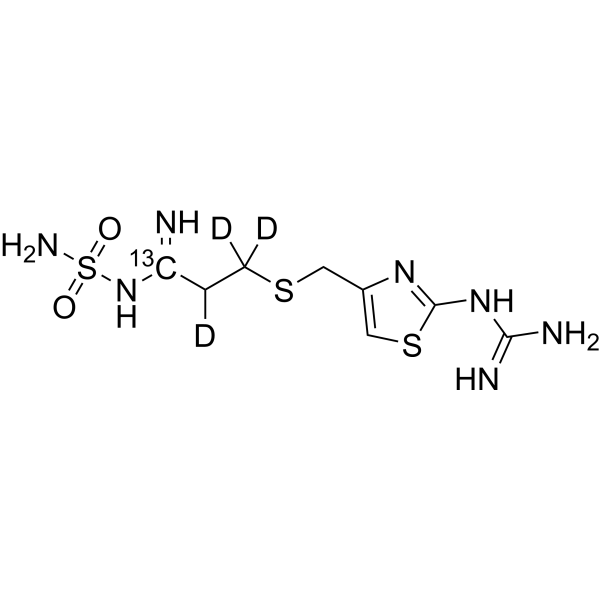
Famotidine- 13C,d3 (MK-208- 13C,d3) is the deuterated, 13C-labeled Famotidine (HY-B0377). Famotidine (MK-208) is an orally active and highly selective histamine H2 receptor antagonist. It inhibits gastric acid secretion by blocking the Gs signaling pathway, and regulates intracellular cAMP and ERK pathways. Famotidine inhibits TLR3-mediated inflammatory pathways, and reduces the expression of various inflammatory mediators and interferon-related genes. Famotidine scavenges DPPH and nitric oxide free radicals, alleviates oxidative stress damage in gastric tissue, inhibits proMMP-9, improves vascular endothelial permeability, and restores the normal physiological functions of neutrophils and eosinophils. Famotidine crosses intestinal epithelial cells via facilitated diffusion and passive diffusion, blocks paracellular cation transport, and increases intestinal transepithelial electrical resistance. Famotidine reduces serum levels of transaminases and alkaline phosphatase, exerts analgesic effects and gastric protective effects simultaneously. Famotidine can be used in studies related to COVID-19, liver injury and acute gastric ulcer .
loading...
    loading...
Cat. No.: HY-P1784
CAS No.: 110786-77-1
Target:  

Secretin Receptor

Research Areas:  

Endocrinology

Secretin, canine is an endocrine hormone that stimulates the secretion of bicarbonate-rich pancreatic fluids. Secretin, canine can regulates gastric chief cell function and paracellular permeability in canine gastric monolayers by a Src kinase-dependent pathway .
loading...
    loading...
Cat. No.: HY-B0377G
CAS No.: 76824-35-6
Synonyms: MK-208 (GMP)
Famotidine GMP (MK-208 GMP) is Famotidine (HY-B0377) produced in GMP guideline. Famotidine is an orally active and highly selective histamine H2 receptor antagonist. It inhibits gastric acid secretion by blocking the Gs signaling pathway, and regulates intracellular cAMP and ERK pathways. Famotidine inhibits TLR3-mediated inflammatory pathways, and reduces the expression of various inflammatory mediators and interferon-related genes. Famotidine scavenges DPPH and nitric oxide free radicals, alleviates oxidative stress damage in gastric tissue, inhibits proMMP-9, improves vascular endothelial permeability, and restores the normal physiological functions of neutrophils and eosinophils. Famotidine crosses intestinal epithelial cells via facilitated diffusion and passive diffusion, blocks paracellular cation transport, and increases intestinal transepithelial electrical resistance. Famotidine reduces serum levels of transaminases and alkaline phosphatase, exerts analgesic effects and gastric protective effects simultaneously. Famotidine can be used in studies related to COVID-19, liver injury and acute gastric ulcer .
loading...
    loading...
Cat. No.: HY-B0377R
CAS No.: 76824-35-6
Synonyms: MK-208 (Standard)
Famotidine (Standard) (MK-208 (Standard)) is the analytical standard of Famotidine (HY-B0377). This product is intended for research and analytical applications. Famotidine (MK-208) is an orally active and highly selective histamine H2 receptor antagonist. It inhibits gastric acid secretion by blocking the Gs signaling pathway, and regulates intracellular cAMP and ERK pathways. Famotidine inhibits TLR3-mediated inflammatory pathways, and reduces the expression of various inflammatory mediators and interferon-related genes. Famotidine scavenges DPPH and nitric oxide free radicals, alleviates oxidative stress damage in gastric tissue, inhibits proMMP-9, improves vascular endothelial permeability, and restores the normal physiological functions of neutrophils and eosinophils. Famotidine crosses intestinal epithelial cells via facilitated diffusion and passive diffusion, blocks paracellular cation transport, and increases intestinal transepithelial electrical resistance. Famotidine reduces serum levels of transaminases and alkaline phosphatase, exerts analgesic effects and gastric protective effects simultaneously. Famotidine can be used in studies related to COVID-19, liver injury and acute gastric ulcer .
loading...
    loading...
Cat. No.: HY-B0377S1
Synonyms: MK-208-13C
Famotidine- 13C (MK-208- 13C) is the 13C-labeled Famotidine (HY-B0377). Famotidine (MK-208) is an orally active and highly selective histamine H2 receptor antagonist. It inhibits gastric acid secretion by blocking the Gs signaling pathway, and regulates intracellular cAMP and ERK pathways. Famotidine inhibits TLR3-mediated inflammatory pathways, and reduces the expression of various inflammatory mediators and interferon-related genes. Famotidine scavenges DPPH and nitric oxide free radicals, alleviates oxidative stress damage in gastric tissue, inhibits proMMP-9, improves vascular endothelial permeability, and restores the normal physiological functions of neutrophils and eosinophils. Famotidine crosses intestinal epithelial cells via facilitated diffusion and passive diffusion, blocks paracellular cation transport, and increases intestinal transepithelial electrical resistance. Famotidine reduces serum levels of transaminases and alkaline phosphatase, exerts analgesic effects and gastric protective effects simultaneously. Famotidine can be used in studies related to COVID-19, liver injury and acute gastric ulcer .
loading...
    loading...
Cat. No.: HY-W777002
CAS No.: 1185241-48-8
Synonyms: MK-208-13C3
Famotidine- 13C3 (MK-208- 13C3) is the 13C3-labeled Famotidine (HY-B0377). Famotidine (MK-208) is an orally active and highly selective histamine H2 receptor antagonist. It inhibits gastric acid secretion by blocking the Gs signaling pathway, and regulates intracellular cAMP and ERK pathways. Famotidine inhibits TLR3-mediated inflammatory pathways, and reduces the expression of various inflammatory mediators and interferon-related genes. Famotidine scavenges DPPH and nitric oxide free radicals, alleviates oxidative stress damage in gastric tissue, inhibits proMMP-9, improves vascular endothelial permeability, and restores the normal physiological functions of neutrophils and eosinophils. Famotidine crosses intestinal epithelial cells via facilitated diffusion and passive diffusion, blocks paracellular cation transport, and increases intestinal transepithelial electrical resistance. Famotidine reduces serum levels of transaminases and alkaline phosphatase, exerts analgesic effects and gastric protective effects simultaneously. Famotidine can be used in studies related to COVID-19, liver injury and acute gastric ulcer .
loading...
    loading...
Cat. No.: HY-B0377A
CAS No.: 125193-62-6
Synonyms: MK-208 hydrochloride
Famotidine hydrochloride (MK-208 hydrochloride) is an orally active and highly selective histamine H2 receptor antagonist. It inhibits gastric acid secretion by blocking the Gs signaling pathway, and regulates intracellular cAMP and ERK pathways. Famotidine hydrochloride inhibits TLR3-mediated inflammatory pathways, and reduces the expression of various inflammatory mediators and interferon-related genes. Famotidine hydrochloride scavenges DPPH and nitric oxide free radicals, alleviates oxidative stress damage in gastric tissue, inhibits proMMP-9, improves vascular endothelial permeability, and restores the normal physiological functions of neutrophils and eosinophils. Famotidine hydrochloride crosses intestinal epithelial cells via facilitated diffusion and passive diffusion, blocks paracellular cation transport, and increases intestinal transepithelial electrical resistance. Famotidine hydrochloride reduces serum levels of transaminases and alkaline phosphatase, exerts analgesic effects and gastric protective effects simultaneously. Famotidine hydrochloride can be used in studies related to COVID-19, liver injury and acute gastric ulcer .
loading...
    loading...
  • 1

