


22 Results for "

peptide scaffold

" in MedChemExpress (MCE) Product Catalog:
Products (22)

22 Results for "peptide scaffold" in MCE Product Catalog:

Cat. No.: HY-P5307
Synonyms: INF7-A5K-TAT
Research Areas:  

Others

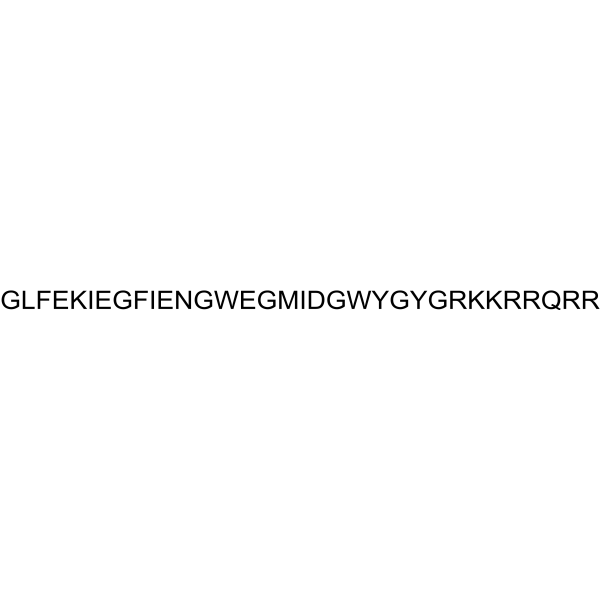
Peptide A5K (INF7-A5K-TAT) is an amphiphilic peptide derived from the HA2-TAT fusion scaffold. Peptide A5K can non-covalently bind to CRISPR ribonucleoproteins and efficiently deliver them to cells, such as primary human T cells, B cells, and NK cells. Peptide A5K enables low-toxicity, precise, and multiplex genome editing, holding great application potential in the field of cell therapy .
loading...
    loading...
Cat. No.: HY-P11328
CAS No.: 245120-10-9
Target:  

Integrin

Research Areas:  

Others

GFOGER peptide is an artificially synthesized collagen-mimetic sequence. GFOGER peptide acts as a ligand for α2β1, α11β1 and α1β1 integrins, thereby supporting integrin-mediated cell adhesion to collagen. GFOGER peptide triggers signaling pathways mediated by the α2β1 integrin receptor and upregulates osteoblast differentiation. GFOGER peptide accelerates and enhances bone formation at sites of refractory femoral defects. GFOGER peptide can be passively adsorbed onto polymer scaffolds for cell-free/growth factor-free bone formation. GFOGER peptide is used in biomaterials such as hydrogels and 3D bioinks for tissue engineering research including bone formation .
loading...
    loading...
Cat. No.: HY-P6022
CAS No.: 774577-43-4
Target:  

Integrin

Research Areas:  

Others

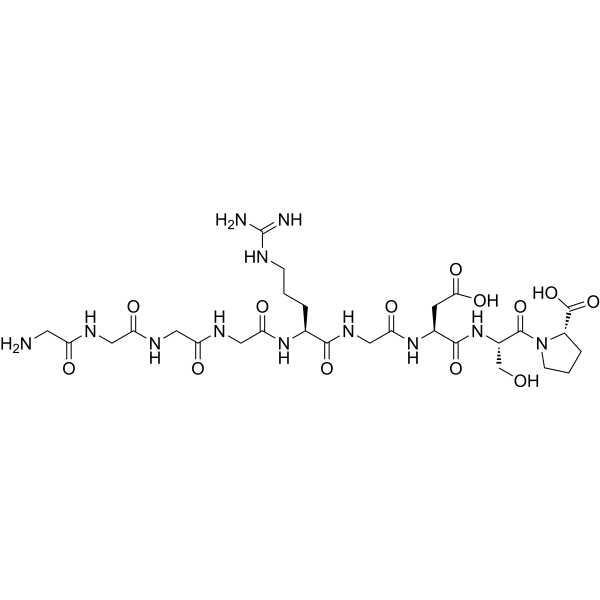
G4RGDSP, Integrin-binding peptide is a cell integrin-binding peptide that targets integrin receptors. G4RGDSP, integrin-binding peptide is coupled to alginate to increase the viability of cells in the scaffold. G4RGDSP, integrin-binding peptide can be used as an extrudable carrier for chondrocyte delivery for the study of 3D printing technology
loading...
    loading...
Cat. No.: HY-78985
CAS No.: 554-95-0
Synonyms: Trimesic acid
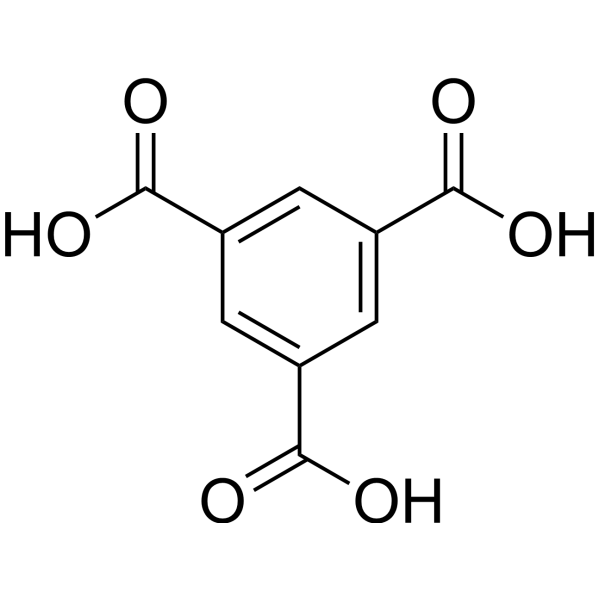
Benzene-1,3,5-tricarboxylic acid (Trimesic acid) is a rigid planar small-molecule scaffold and crosslinker. Benzene-1,3,5-tricarboxylic acid induces bicyclic peptides to adopt a planar conformation, so as to maximize surface area and bind to the flat protein surfaces involved in protein-protein interactions. Benzene-1,3,5-tricarboxylic acid forms ionic crosslinks, hydrogen bonds and π-π bonds with chitosan, thereby constructing a hydrogel network. Benzene-1,3,5-tricarboxylic acid endows chitosan hydrogel systems with specific mechanical properties, enabling sustained release of cancer therapeutic drugs including 5-Fluorouracil (HY-90006) .
loading...
    loading...
Cat. No.: HY-P2632
CAS No.: 289042-25-7
Synonyms: RADA16
Research Areas:  

Neurological Disease

RAD16-I (RADA16) is a non-directed self-assembling peptide hydrogel. Under physiological conditions, RAD16-I spontaneously forms a three-dimensional nanofiber network that mimics the extracellular matrix, and possesses excellent properties such as high water content, biocompatibility and degradability. RAD16-I serves as an ideal scaffold for three-dimensional cell culture. RAD16-I not only maintains cell viability and induces self-organization, but also supports cell adhesion, proliferation, differentiation and insulin secretion, effectively stabilizes islet clusters and promotes directed differentiation of the cardiac lineage. RAD16-I can construct a cell-friendly nano-microenvironment for research related to diseases such as myocardial infarction and diabetes .
loading...
    loading...
Cat. No.: HY-20302
CAS No.: 80875-98-5
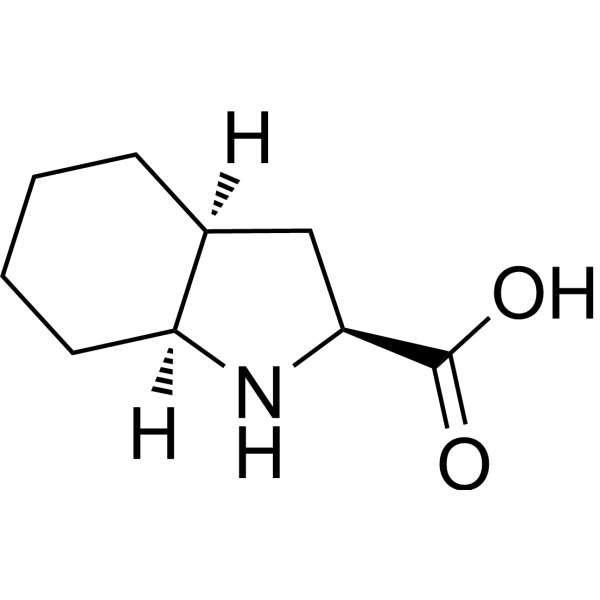
(2S,3aS,7aS)-Octahydroindole-2-carboxylic acid is a bicyclic hydrophobic proline analog that acts as a polyproline-II helix stabilizer. (2S,3aS,7aS)-Octahydroindole-2-carboxylic acid serves as a structural component of Perindopril (HY-B0130). (2S,3aS,7aS)-Octahydroindole-2-carboxylic acid can be used in studies related to organic synthesis .
loading...
    loading...
Cat. No.: HY-P10701
CAS No.: 581799-39-5
Q11 peptide is a β-sheet-forming peptide that plays an important role in self-assembly and targeted applications. As a scaffold peptide, Q11 peptide can display immunogenic epitopes and is widely used in peptide-based immune vaccine research. Additionally, Q11 peptide can be conjugated with MUC1 glycopeptides for the study of self-assembling, adjuvant-free MUC1 glycopeptide vaccines. Q11 peptide holds great potential for research in the field of cancer immunology .
loading...
    loading...
Cat. No.: HY-P11309
CAS No.: 957365-81-0
Research Areas:  

Neurological Disease

QL6 peptide is a self-assembling peptide. QL6 peptide can self-assembles into β-sheets bridging the cavity at neutral pH and improves the inhibitory environment by reducing inflammation and tissue scaring. QL6 peptide can be used for synthesis nanofiber scaffolds for spinal cord injuries (SCI) research .
loading...
    loading...
Cat. No.: HY-W002297
CAS No.: 21568-87-6
Research Areas:  

Infection

(S)-3-Aminoazepan-2-one is the structural unit of the antitubercular peptide, serving as the core scaffold of a hexapeptide antibacterial agent. (S)-3-Aminoazepan-2-one is promising for research of tuberculosis .
loading...
    loading...
Cat. No.: HY-P10556
CAS No.: 622402-94-2
Target:  

Bacterial

Research Areas:  

Infection

(KFF)3K is a cell penetrating peptide that can promote the absorption of other antibiotics by disrupting the outer membrane of bacteria. (KFF)3K can be introduced into a hydrocarbon scaffold to induce its antibacterial properties, making it an effective antimicrobial peptide. (KFF)3K can be used in the development of new antimicrobial agents .
loading...
    loading...
Cat. No.: HY-P5307A
Synonyms: INF7-A5K-TAT acetate
Research Areas:  

Others

Peptide A5K (INF7-A5K-TAT) acetate is an amphiphilic peptide derived from the HA2-TAT fusion scaffold. Peptide A5K acetate can non-covalently bind to CRISPR ribonucleoproteins and efficiently deliver them to cells, such as primary human T cells, B cells, and NK cells. Peptide A5K acetate enables low-toxicity, precise, and multiplex genome editing, holding great application potential in the field of cell therapy .
loading...
    loading...
Cat. No.: HY-150242A
Purity:  99.54%
Target:  

Liposome

Research Areas:  

Others

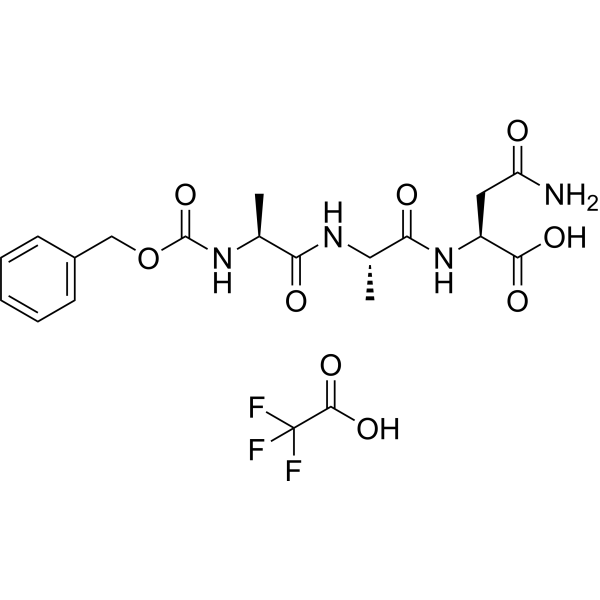
Cbz-Ala-Ala-Asn TFA is a peptide that designed based on the sequence of the substrate of legumain. Legumain is a cysteine protease. Cbz-Ala-Ala-Asn TFA can be applied as a scaffold for drug delivery .
loading...
    loading...
Cat. No.: HY-P10101
Synonyms: APTscr
Target:  

STAT

Research Areas:  

Others

APT STAT3, scrambled (APTscr), a control peptide of STAT3-specific aptide (APTSTAT3), does not bind STAT3. APT STAT3, scrambled contains the same trpzip scaffold but with a scrambled sequence in the target-binding site .
loading...
    loading...
Cat. No.: HY-20302R
CAS No.: 80875-98-5
(2S,3AS,7aS)-Octahydroindole-2-carboxylic acid (Standard) is the analytical standard of (2S,3AS,7aS)-Octahydroindole-2-carboxylic acid (HY-20302). This product is intended for research and analytical applications. (2S,3aS,7aS)-Octahydroindole-2-carboxylic acid is a bicyclic hydrophobic proline analog that acts as a polyproline-II helix stabilizer. (2S,3aS,7aS)-Octahydroindole-2-carboxylic acid serves as a structural component of Perindopril (HY-B0130). (2S,3aS,7aS)-Octahydroindole-2-carboxylic acid can be used in studies related to organic synthesis .
loading...
    loading...
Cat. No.: HY-78985S
CAS No.: 62790-27-6
Synonyms: Trimesic acid-d3
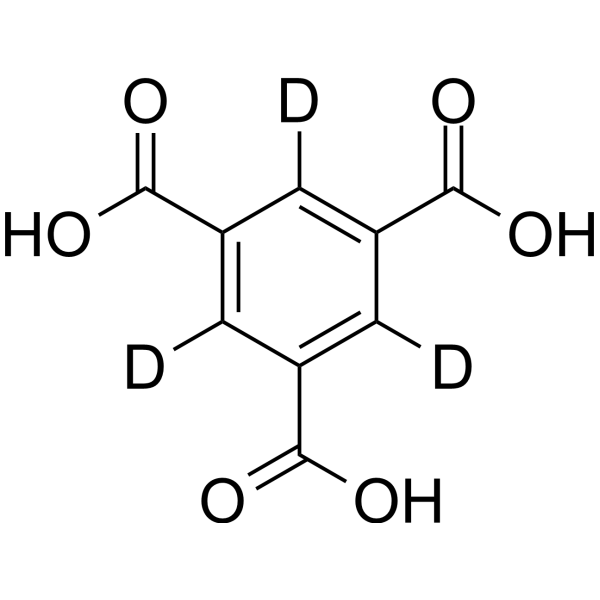
Benzene-1,3,5-tricarboxylic acid-d3 (Trimesic acid-d3) is the deuterium labeled Benzene-1,3,5-tricarboxylic acid (HY-78985). Benzene-1,3,5-tricarboxylic acid (Trimesic acid) is a rigid planar small-molecule scaffold and crosslinker. Benzene-1,3,5-tricarboxylic acid induces bicyclic peptides to adopt a planar conformation, so as to maximize surface area and bind to the flat protein surfaces involved in protein-protein interactions. Benzene-1,3,5-tricarboxylic acid forms ionic crosslinks, hydrogen bonds and π-π bonds with chitosan, thereby constructing a hydrogel network. Benzene-1,3,5-tricarboxylic acid endows chitosan hydrogel systems with specific mechanical properties, enabling sustained release of cancer therapeutic drugs including 5-Fluorouracil (HY-90006) .
loading...
    loading...
Cat. No.: HY-P11063
Target:  

Inhibitory Antibodies

Research Areas:  

Cancer

AcfffGk is a short peptide with the ability to self-assemble into helical nanofibers, forming non-covalently cross-linked hydrogels that serve as scaffolds for 3D cell culture .
loading...
    loading...
Cat. No.: HY-114844
CAS No.: 3617-45-6
Synonyms: H-Phe-Glu-OH
Research Areas:  

Infection

L-Phenylalanyl-L-glutamic acid (H-Phe-Glu-OH) is a dipeptide present in the exudates of alfalfa seedlings, which exhibits high affinity for PEPT2. L-Phenylalanyl-L-glutamic acid can serve as the peptide scaffold of a tyrosyl-tRNA synthetase inhibitor against Staphylococcus aureus .
loading...
    loading...
Cat. No.: HY-114844A
Synonyms: H-Phe-Glu-OH TFA
Research Areas:  

Infection

L-Phenylalanyl-L-glutamic acid TFA (H-Phe-Glu-OH TFA) is a dipeptide present in the exudates of alfalfa seedlings, which exhibits high affinity for PEPT2. L-Phenylalanyl-L-glutamic acid TFA can serve as the peptide scaffold of a tyrosyl-tRNA synthetase inhibitor against Staphylococcus aureus .
loading...
    loading...
Cat. No.: HY-W043574
CAS No.: 1484-73-7
Research Areas:  

Cancer

6-Ethyl-7-hydroxy-4-methyl-2H-chromen-2-one (Compound 32), a derivative of Coumarin (HY-N0709), acts as a Mcl-1 inhibitor with a Ki of 5.47 μM and an IC50 of 30.88 μM. 6-Ethyl-7-hydroxy-4-methyl-2H-chromen-2-one is applicable for cancer research .
loading...
    loading...
Cat. No.: HY-L951
505 compounds

Macrocyclic scaffolds are increasingly valued in modern drug discovery for their exceptional activity against undruggable targets (proteases, kinases, PPIs). 2026 marks a key commercial breakthrough for oral macrocyclic peptides: enlicitide, the world’s first oral PCSK9 macrocyclic peptide, has received FDA approval. Macrocyclic candidates targeting KRAS and other classic undruggable targets have also entered clinical development, validating macrocyclization as an effective strategy to overcome druggability barriers.

Two core R&D directions lead current macrocyclic drug design: AI-driven de novo generation and structural optimization of small-molecule macrocycles, and macrocyclic peptides based on sequence design and conformational engineering. Macrocycle druggability hinges on embedded linkers, which determine cyclization efficiency, final conformation and drug-like properties. Bifunctional reaction orthogonality is the core linker selection criterion. Our linker library enables stepwise intramolecular cyclization with suppressed side reactions, accommodates varied ring sizes, and covers three key reaction systems: amide condensation, nucleophilic substitution and CuAAC click chemistry.

Built on classical macrocyclization systems, the library is processed through reaction classification, bifunctional orthogonality evaluation, novelty clustering and redundancy removal, with PROTAC long-chain and ADC cleavable linkers explicitly excluded. Featuring rigid, semi-rigid and flexible scaffolds, it is widely applicable to small-molecule macrocycle synthesis and linear peptide cyclization.

