1. Search Result
Search Result
Results for "

phenanthrene

" in MedChemExpress (MCE) Product Catalog:

34

Inhibitors & Agonists

2

Fluorescent Dye

21

Natural
Products

4

Isotope-Labeled Compounds

1

Click Chemistry

Cat. No. Product Name Target Research Areas Chemical Structure
  • HY-B1727
    Phenanthrene
    1 Publications Verification

    Environmental Pollutants Apoptosis Inflammation/Immunology Cancer
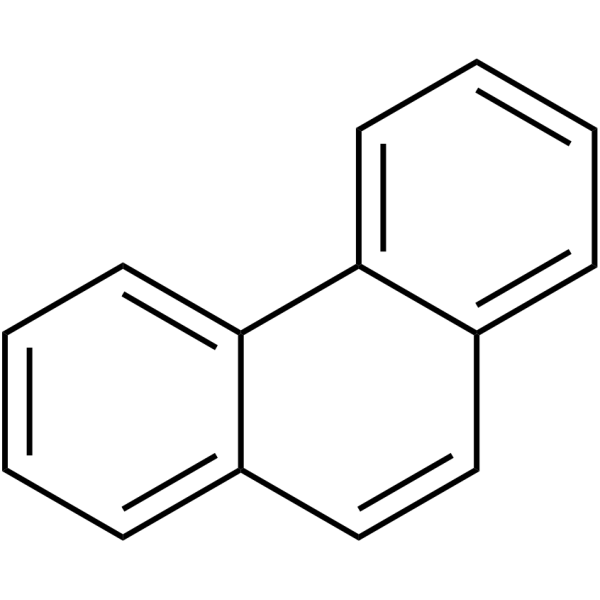
    Phenanthrene is an orally active polycyclic aromatic hydrocarbon (PAH) that induces inflammation, oxidative stress, and apoptosis. Additionally, phenanthrene is commonly used to detect or assess PAH pollution in the environment .
    Phenanthrene
  • HY-103609
    Pyrene
    1 Publications Verification

    Benzo[def]phenanthrene

    Environmental Pollutants Biochemical Assay Reagents Others
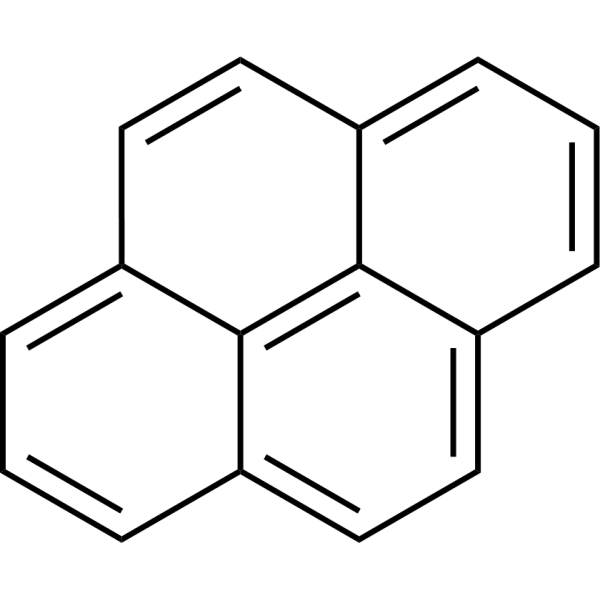
    Pyrene is a polycyclic aromatic hydrocarbon (PAH) composed of four fused benzene rings. It has a distinct aromatic odor, produced by incomplete combustion of organic matter. Pyrene exhibits strong fluorescence, emitting in the blue region of the spectrum, making it useful as a probe for studying molecular interactions in solution and on surfaces. Pyrene is also used as a model compound for the study of PAHs in various environments and biological systems because of its ubiquity in these environments. However, long-term exposure to pyrene has been associated with potential health risks, including carcinogenicity and mutagenicity.
    Pyrene
  • HY-B1727S

    Isotope-Labeled Compounds Inflammation/Immunology
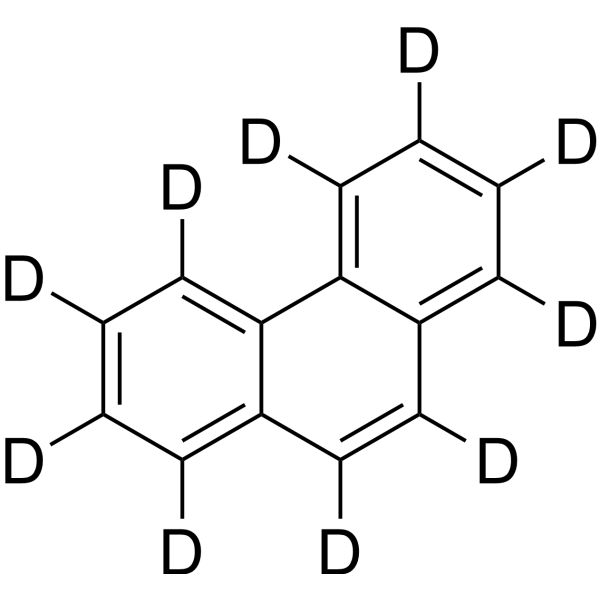
    Phenanthrene-d10 is the deuterium labeled Phenanthrene. Phenanthrene is a polycyclic aromatic hydrocarbon (PAH) and has been frequently used as an indicator for monitoring PAH contaminated matrices . Phenanthrene induces oxidative stress and inflammation .
    Phenanthrene-d10
  • HY-N7385

    MMP Apoptosis Cancer
    Nudol is a phenanthrene compound that has anti-cancer activity. Nudol inhibits cell proliferation, induces cell apoptosis. Nudol inhibits MMP-2M and MMP-9 activity (Ki: 988.9 nM, 1.76 μM, respectively). Nudol can be used in the research of cancers, such as osteosarcoma .
    Nudol
  • HY-N5058

    Apoptosis Cancer
    Dehydroeffusol is a phenanthrene from medicinal herb Juncus effuses. Dehydroeffusol inhibits gastric cancer cell growth and tumorigenicity by selectively inducing tumor-suppressive endoplasmic reticulum stress and a moderate apoptosis. It shows very low toxicity .
    Dehydroeffusol
  • HY-W016103

    Bacterial Drug Intermediate Infection
    1-Hydroxy-2-naphthoic acid is a ubiquitous bicyclic intermediate metabolite in the microbial degradation process of polycyclic aromatic hydrocarbons (PAHs). 1-Hydroxy-2-naphthoic acid can be converted into 1,2-naphthalenediol, which enters the naphthalene degradation pathway and participates in the tricarboxylic acid (TCA) cycle to achieve complete mineralization .
    1-Hydroxy-2-naphthoic acid
  • HY-N10488

    Cholinesterase (ChE) Neurological Disease
    BChE-IN-11 (compound 10) is a potent, selective and non-competitive BChE (butyrylcholinesterase) inhibitor, with an IC50 of 2.1 μM. BChE-IN-11 can be used for Alzheimer's disease (AD) research .
    BChE-IN-11
  • HY-B1727R

    Reference Standards Apoptosis Inflammation/Immunology Cancer
    Phenanthrene (Standard) is the analytical standard of Phenanthrene. This product is intended for research and analytical applications. Phenanthrene is an orally active polycyclic aromatic hydrocarbon (PAH) that induces inflammation, oxidative stress, and apoptosis. Additionally, phenanthrene is commonly used to detect or assess PAH pollution in the environment .
    Phenanthrene (Standard)
  • HY-N12569

    Others Others
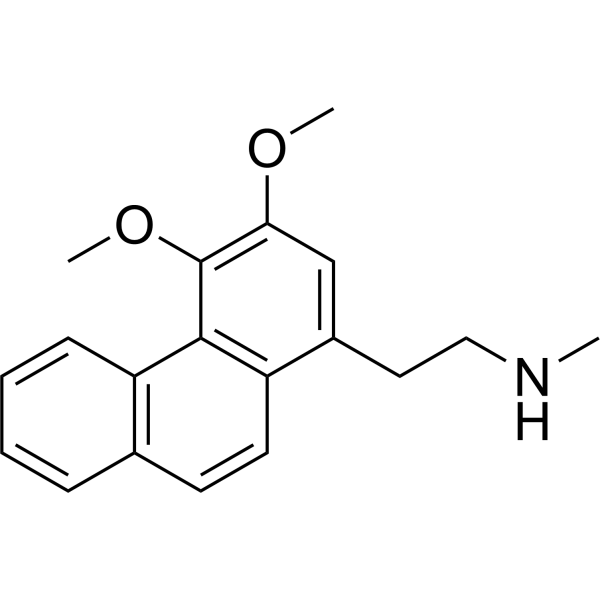
    Orchidble (Compound 9) is a kind of phenanthrene compound which can be isolated from the roots of Bletilla ochracea .
    Orchidble
  • HY-W777456

    Isotope-Labeled Compounds Others
    Phenanthrene- 13C6 is the 13C labeled Phenanthrene (HY-B1727). Phenanthrene is an orally active polycyclic aromatic hydrocarbon (PAH) that induces inflammation, oxidative stress, and apoptosis. Additionally, phenanthrene is commonly used to detect or assess PAH pollution in the environment .
    Phenanthrene-13C6
  • HY-Y1771

    Phthalaldehydic acid

    Drug Metabolite Bacterial Infection
    2-Carboxybenzaldehyde is a key intermediate metabolite in the biodegradation of polycyclic aromatic hydrocarbons (PAHs) such as fluoranthene and phenanthrene. 2-Carboxybenzaldehyde can be produced by the degradation of fluoranthene by Pasteurella sp. IFA and Mycobacterium sp. PYR-1. 2-Carboxybenzaldehyde can also be produced by the degradation of phenanthrene by Pseudomonas sp. PPD .
    2-Carboxybenzaldehyde
  • HY-N16602

    Others Others
    (±)-Blephenanthrofuran B is a pair of enantiomers can be found in Bletilla striata. (±)-Blephenanthrofuran B shows no cytotoxic activity against human lung cancer A549 cells .
    (±)-Blephenanthrofuran B
  • HY-W778162

    Isotope-Labeled Compounds Apoptosis Cancer
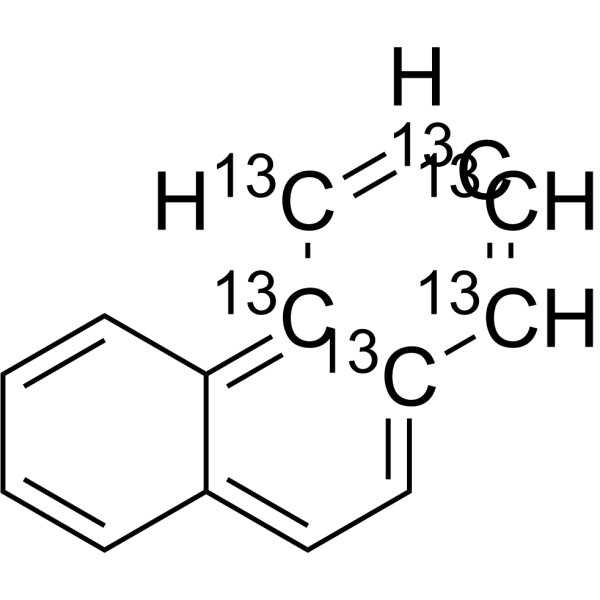
    Phenanthrene- 13C2 is the 13C-labeled Phenanthrene (HY-B1727). Phenanthrene is an orally active polycyclic aromatic hydrocarbon (PAH) that induces inflammation, oxidative stress, and apoptosis. Additionally, phenanthrene is commonly used to detect or assess PAH pollution in the environment .
    Phenanthrene-13C2
  • HY-W012277S

    Isotope-Labeled Compounds Others
    Benzo[c]phenanthrene-d5 is the deuterium labeled Benzo[c]phenanthrene .
    Benzo[c]phenanthrene-d5
  • HY-N11974

    Others Others
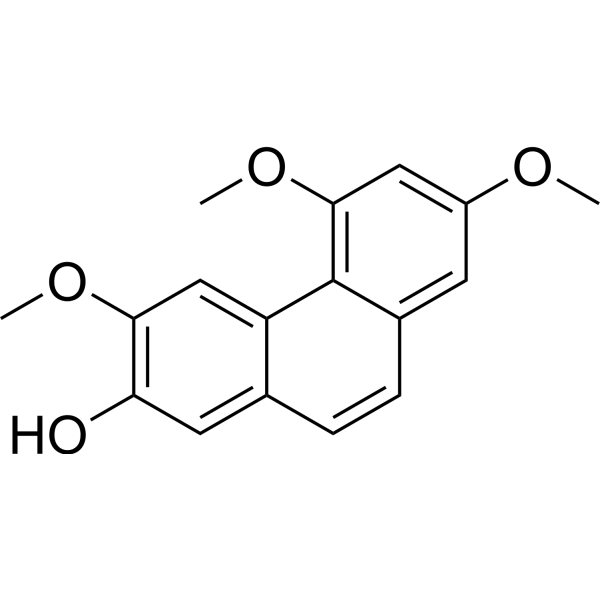
    Isobatatasin I is a phenanthrene derivative that can be isolated from the rhizome of safflower .
    Isobatatasin I
  • HY-N12020

    Others Others
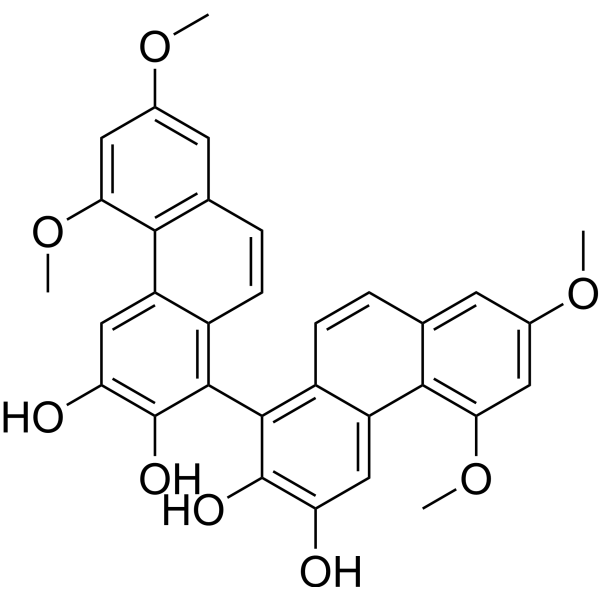
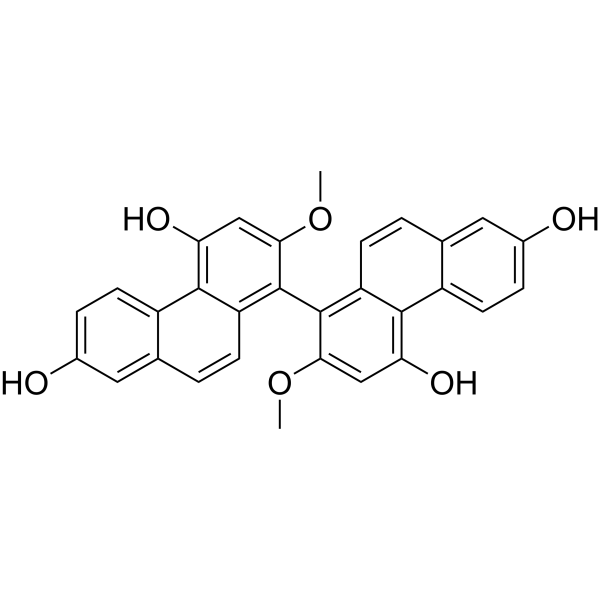
    Volucrin is a dimeric phenanthrene derivative that can be isolated from the orchid lusia volucris .
    Volucrin
  • HY-Y1771R

    Phthalaldehydic acid (Standard)

    Reference Standards Drug Metabolite Bacterial Infection
    2-Carboxybenzaldehyde (Standard) is the analytical standard of 2-Carboxybenzaldehyde (HY-Y1771). This product is intended for research and analytical applications. 2-Carboxybenzaldehyde is a key intermediate metabolite in the biodegradation of polycyclic aromatic hydrocarbons (PAHs) such as fluoranthene and phenanthrene. 2-Carboxybenzaldehyde can be produced by the degradation of fluoranthene by Pasteurella sp. IFA and Mycobacterium sp. PYR-1. 2-Carboxybenzaldehyde can also be produced by the degradation of phenanthrene by Pseudomonas sp. PPD .
    2-Carboxybenzaldehyde (Standard)
  • HY-N11998

    Others Others
    Confusarin (compound 12) is a phenanthrene compound that was isolated from F. fimbriata for the first time .
    Confusarin
  • HY-N12308

    Others Others
    Monbarbatain A (compound 1) is a dimeric phenanthrene. Monbarbatain A can be isolated from the orchids Monomeria barbata .
    Monbarbatain A
  • HY-103609R

    Benzo[def]phenanthrene (Standard)

    Biochemical Assay Reagents Reference Standards Others
    Pyrene (Standard) is the analytical standard of Pyrene. This product is intended for research and analytical applications. Pyrene is a polycyclic aromatic hydrocarbon (PAH) composed of four fused benzene rings. It has a distinct aromatic odor, produced by incomplete combustion of organic matter. Pyrene exhibits strong fluorescence, emitting in the blue region of the spectrum, making it useful as a probe for studying molecular interactions in solution and on surfaces. Pyrene is also used as a model compound for the study of PAHs in various environments and biological systems because of its ubiquity in these environments. However, long-term exposure to pyrene has been associated with potential health risks, including carcinogenicity and mutagenicity.
    Pyrene (Standard)
  • HY-W012277

    Environmental Pollutants Others
    Benzo[c]phenanthrene has carcinogenic activity. Benzo[c]phenanthrene can be used as a substrate or intermediate .
    Benzo[c]phenanthrene
  • HY-W1049917

    MOFs Others
    Phenanthrene-2,7-dicarboxylic acid is a metal-organic framework (MOF).
    Phenanthrene-2,7-dicarboxylic acid
  • HY-W089861

    4,5-phenanthrenedicarboxylic acid

    MOFs Others
    Phenanthrene-4,5-dicarboxylic acid (4,5-Phenanthrenedicarboxylic acid) is a metal-organic framework (MOF).
    Phenanthrene-4,5-dicarboxylic acid
  • HY-N17905

    Others Others
    Plicatol A is a phenanthrene that can be found in the stems of Dendrobium aurantiacum var. denneanum .
    Plicatol A
  • HY-N17911

    Others Others
    Plicatol D is a phenanthrene found in the whole plant of Dendrobium fimbriatum Hook .
    Plicatol D
  • HY-N17891

    NO Synthase Reactive Oxygen Species (ROS) Inflammation/Immunology
    Loddigesiinol A is a phenanthrene compound found in Dendrobium loddigesii. Loddigesiinol A acts as a DPPH radical scavenger with an IC50 of 26.1 μM. Loddigesiinol A also inhibits nitric oxide production. Loddigesiinol A is applicable to inflammation-related research .
    Loddigesiinol A
  • HY-N10621

    Others Cancer
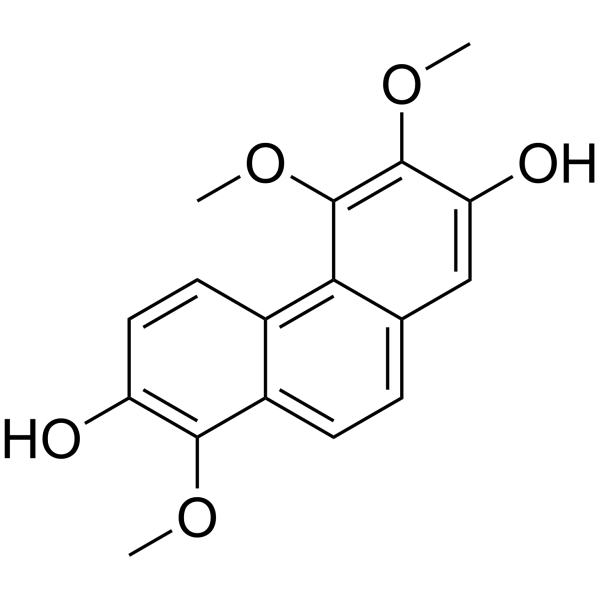
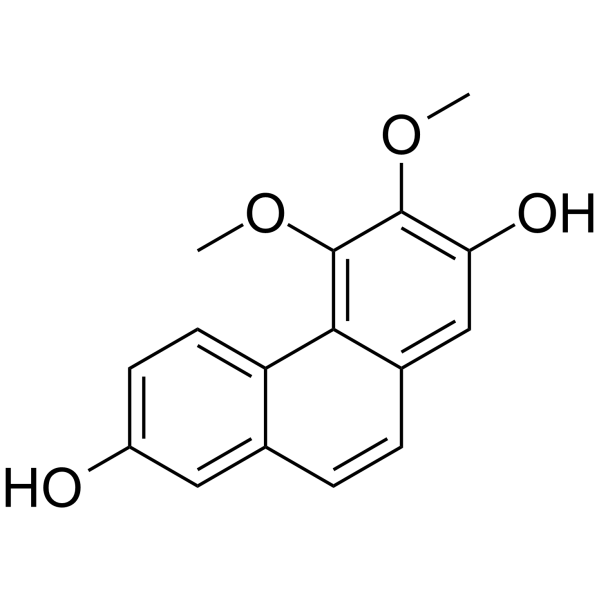
    3,5-Dimethoxy-2,7-phenanthrenediol (compound 2) is a phenanthrene compound isolated from the roots of Combretum laxum. 3,5-Dimethoxy-2,7-phenanthrenediol is cytotoxic to human cancer cell lines 786-0, MCF-7 and NCI/ADR-RES, with IC50s of 73.26 μM, 118.40 μM and 83.99 μM respectively. 3,5-Dimethoxy-2,7-phenanthrenediol also has free radical scavenging activity with an IC50 of 20.4 μM .
    3,5-Dimethoxy-2,7-phenanthrenediol
  • HY-W007969R

    Estradiene dione-3-keta (Standard)

    Reference Standards
    (8S,13S,14S)-13-Methyl-1,2,6,7,8,12,13,14,15,16-decahydrospiro[cyclopenta[a]phenanthrene-3,2'-[1,3]dioxolan]-17(4H)-one (Standard) is the analytical standard of (8S,13S,14S)-13-Methyl-1,2,6,7,8,12,13,14,15,16-decahydrospiro[cyclopenta[a]phenanthrene-3,2'-[1,3]dioxolan]-17(4H)-one. This product is intended for research and analytical applications.
    (8S,13S,14S)-13-Methyl-1,2,6,7,8,12,13,14,15,16-decahydrospiro[cyclopenta[a]phenanthrene-3,2'-[1,3]dioxolan]-17(4H)-one (Standard)
  • HY-N12286

    Others Others
    Denthyrsinin is a phenanthrene .
    Denthyrsinin
  • HY-N14678

    Bacterial Infection
    Piloquinone is a phenanthrene compound. Piloquinone has inhibitory effect on mycobacterium and protozoa, but the effect is not strong .
    Piloquinone
  • HY-W105644R

    Δ9,11-Eplerenone (Standard)

    Reference Standards
    (2'R,7R,8R,10S,13S,14S)-Methyl 10,13-dimethyl-3,5'-dioxo-1,2,3,4',5',6,7,8,10,12,13,14,15,16-tetradecahydro-3'H-spiro[cyclopenta[a]phenanthrene-17,2'-furan]-7-carboxylate (Standard) is the analytical standard of (2'R,7R,8R,10S,13S,14S)-Methyl 10,13-dimethyl-3,5'-dioxo-1,2,3,4',5',6,7,8,10,12,13,14,15,16-tetradecahydro-3'H-spiro[cyclopenta[a]phenanthrene-17,2'-furan]-7-carboxylate. This product is intended for research and analytical applications.
    (2'R,7R,8R,10S,13S,14S)-Methyl 10,13-dimethyl-3,5'-dioxo-1,2,3,4',5',6,7,8,10,12,13,14,15,16-tetradecahydro-3'H-spiro[cyclopenta[a]phenanthrene-17,2'-furan]-7-carboxylate (Standard)
  • HY-N9819

    Bacterial Infection
    Jinflexin D is a potential antibacterial agent, without inhibitory activity against methicillin-resistant Staphylococcus aureus (MRSA). Jinflexin D is a dimeric phenanthrene natural product with a unique seven-membered ring system, naturally extracted from the methanol extract of the roots of Juncus inflexus (a plant of the Juncaceae family) .
    Jinflexin D
  • HY-N17888

    NF-κB p38 MAPK FAK Akt Apoptosis NO Synthase COX TNF Receptor Interleukin Related Inflammation/Immunology Cancer
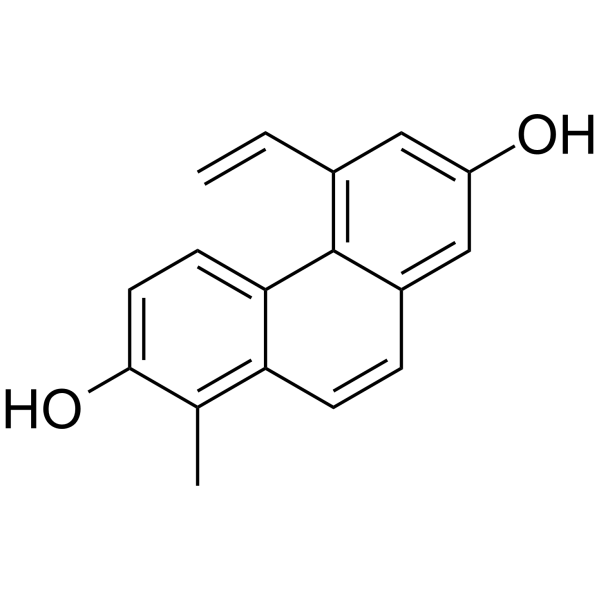
    Ephemeranthol A is a phenanthrene compound with anticancer and anti-inflammatory activities. Ephemeranthol A exerts significant anti-inflammatory effects in macrophages by inhibiting the NF-κB and MAPK signaling pathways. Ephemeranthol A induces apoptosis and inhibits metastasis of lung cancer cells by suppressing the FAK/Akt signaling and EMT processes. Ephemeranthol A can be used for the research of acute and chronic inflammatory diseases and non-small cell lung cancer .
    Ephemeranthol A
  • HY-N16526

    Bacterial Infection
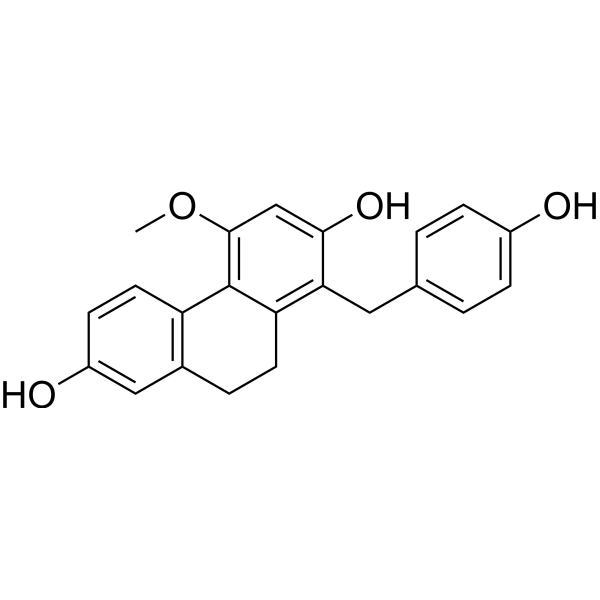
    Juncatrin B is a type of dihydrophenanthrene compound. Juncatrin B exhibits inhibitory activity against both Methicillin (HY-121544)-sensitive Staphylococcus aureus (MSSA) and Methicillin-resistant Staphylococcus aureus (MRSA). Juncatrin B can inhibit the formation of biofilms in MSSA and MRSA. Juncatrin B has no significant activity against Gram-negative bacteria. Juncatrin B can be used in the research of anti-Staphylococcus aureus .
    Juncatrin B

Inquiry Online

Your information is safe with us. * Required Fields.

Salutation


Country or Region *

Applicant Name *


Organization Name *

Department *


Email Address *


Product Name *

Cat. No.


Requested quantity *

Phone Number *


Remarks

Inquiry Online

Inquiry Information

Product Name:
Cat. No.:
Quantity:
MCE Japan Authorized Agent: