Search Result
Results for "
plastics
" in MedChemExpress (MCE) Product Catalog:
27
Biochemical Assay Reagents
27
Isotope-Labeled Compounds
| Cat. No. |
Product Name |
Target |
Research Areas |
Chemical Structure |
-
- HY-W007801
-
|
TPAP
|
Biochemical Assay Reagents
|
Others
|
|
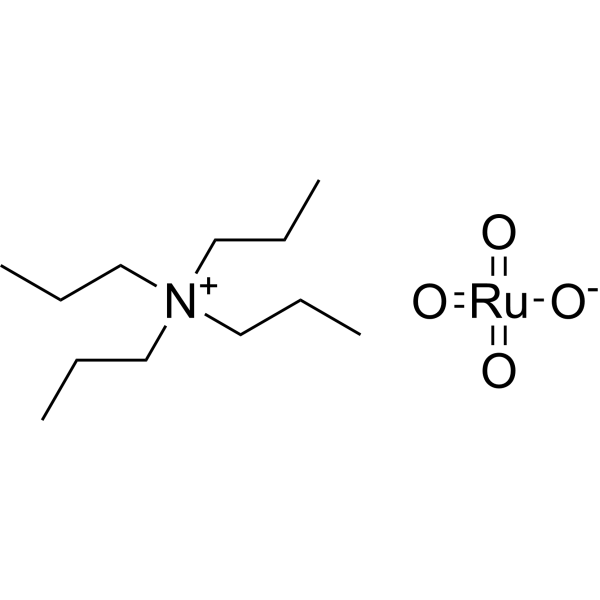
Tetrapropylammonium perruthenate (TPAP) is an organic compound commonly used as a catalyst and oxidizing agent. It can play an oxidation role in some organic synthesis reactions, and can catalyze the oxidation reactions of olefins and aromatic compounds. In addition, the compound is widely used in some industrial production areas, such as in the application of plastics, rubber and textile manufacturing processes.
|
-
-
- HY-W017522
-
-
-
- HY-W010098
-
|
|
Drug Intermediate
|
Cancer
|
|
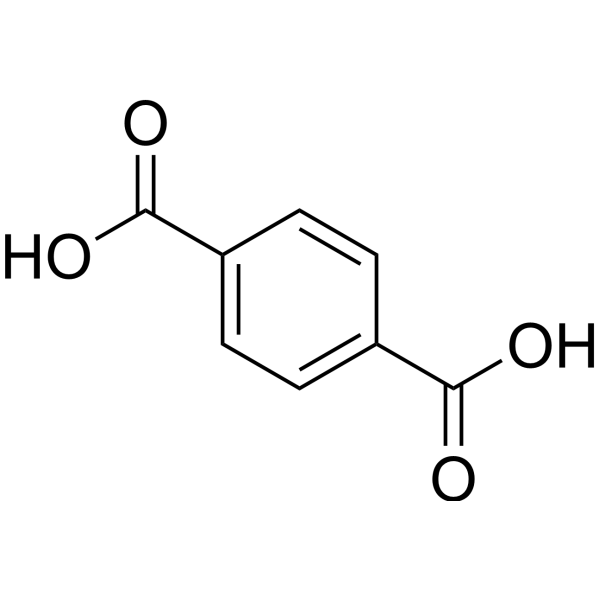
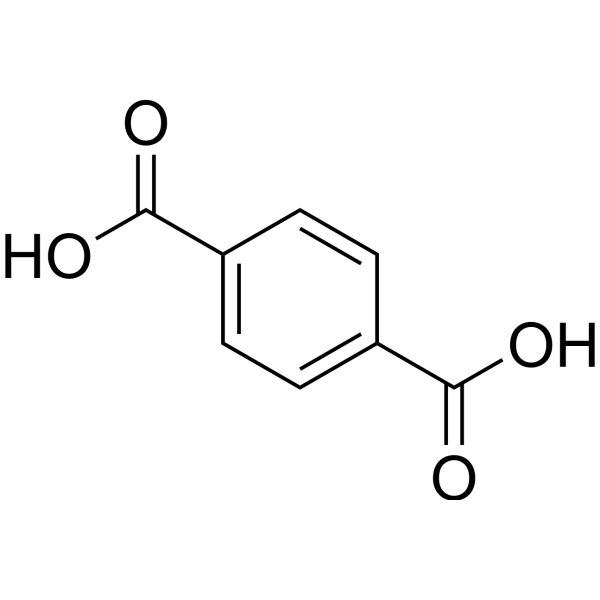
Terephthalic acid is an isomer and a precursor of polyester PET, which can be used to make clothing and plastics. Terephthalic acid can be used to build skin tumor models .
|
-
-
- HY-W017132
-
|
|
MOFs
Histone Demethylase
|
Cancer
|
|
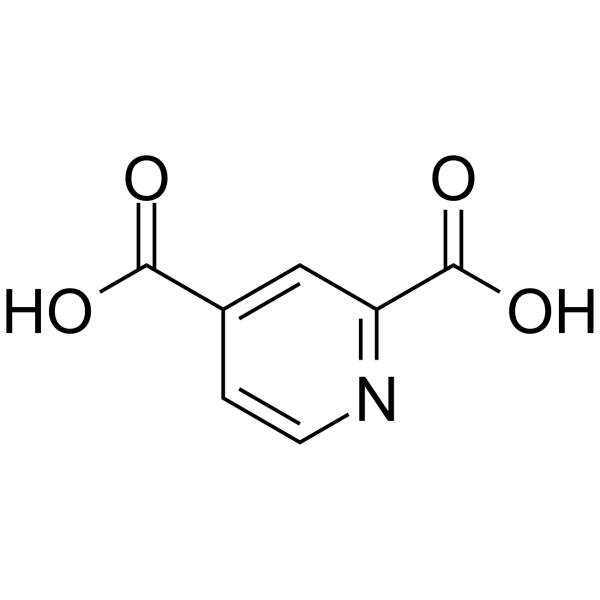
2,4-PDCA (2,4 pyridine dicarboxylic acid) is a broad-spectrum inhibitor of 2OG oxygenase, including JmjC domain-containing family of histone demethylases (JHDMs). 2,4-PDCA is a target chemical in the field of bio-based plastics .
|
-
-
- HY-W011926
-
|
DiPP
|
Estrogen Receptor/ERR
|
Others
|
|
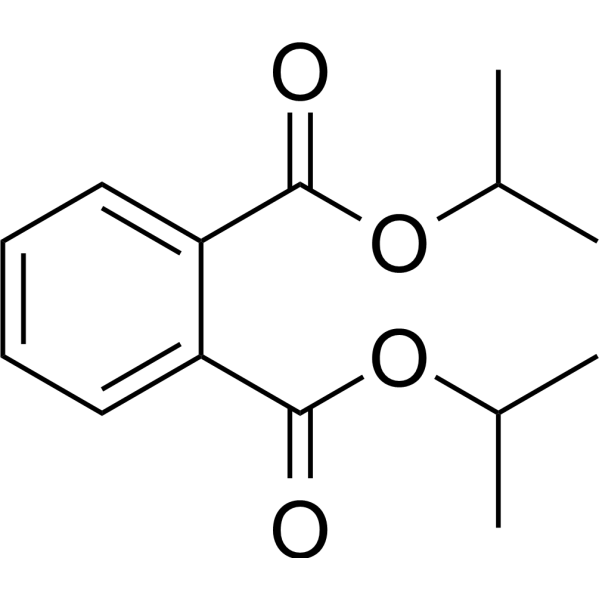
Diisopropyl phthalate (DiPP) is a phthalate diester, which is widely used as an additive in plastics and consumer products. Diisopropyl phthalate has a weak binding ability to the recombinant human estrogen receptor, with an IC50 of 41000 μM .
|
-
-
- HY-W000800
-
|
|
Bacterial
|
Infection
|
|
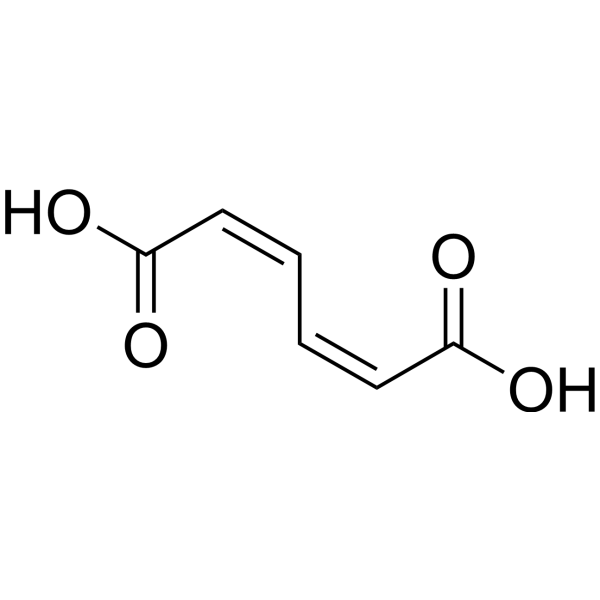
cis,cis-Muconic acid is a dicarboxylic acid produced by Saccharomyces cerevisiae. cis,cis-Muconic acid shows pH-dependent toxicity against Saccharomyces cerevisiae CEN.PK113-7D. cis,cis-Muconic acid can be used as intermediate for the production of various plastics and polymers .
|
-
-
- HY-W010098S1
-
|
|
Isotope-Labeled Compounds
Biochemical Assay Reagents
|
Cancer
|
|
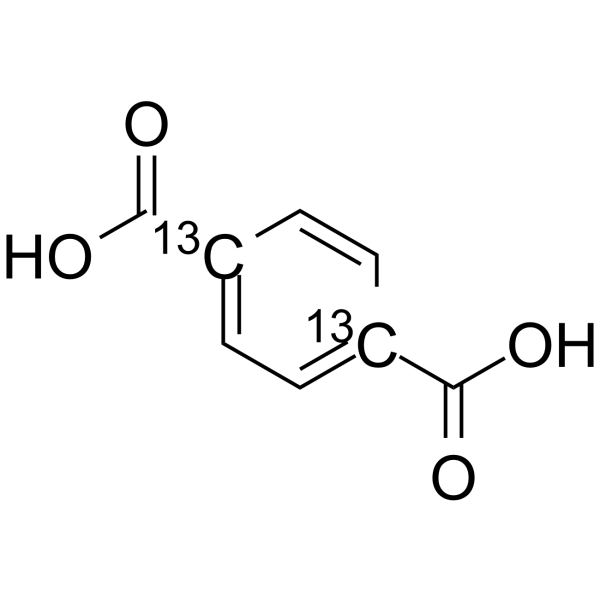
Terephthalic acid- 13C2 is the 13C-labeled Terephthalic acid. Terephthalic acid is an isomer and a precursor of polyester PET, which can be used to make clothing and plastics. Terephthalic acid can be used to build skin tumor models .
|
-
-
- HY-W005355
-
|
|
Biochemical Assay Reagents
|
Others
|
|
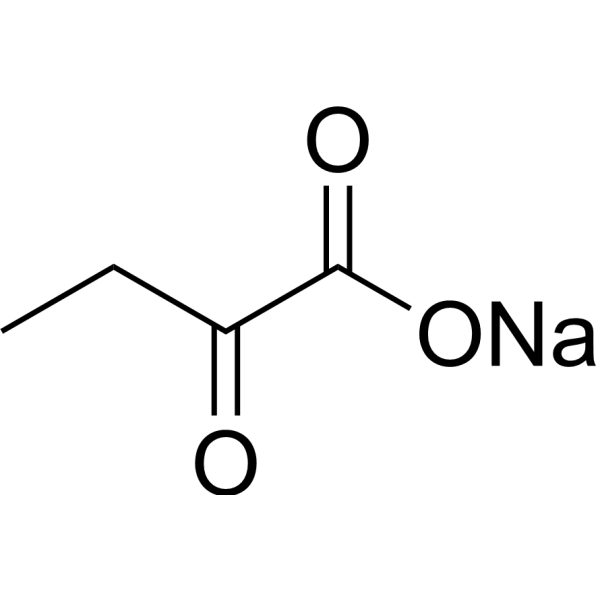
Sodium 2-oxobutanoate is an organic compound commonly used as a food additive and industrial raw material. It can be used as an acidity regulator, leavening agent and preservative, and is often used in the fields of bread, baked goods and canning. In addition, the compound is used in the production of certain industrial products, such as in plastics, textiles and dyes.
|
-
-
- HY-W013807
-
|
Dibutyl decanedioate
|
Biochemical Assay Reagents
|
Others
|
|
Dibutyl sebacate (Dibutyl decanedioate) is a dibutyl ester of sebacic acid, mainly used as a plasticizer in production of plastics .
|
-
-
- HY-D0363
-
|
|
Fluorescent Dye
|
|
|
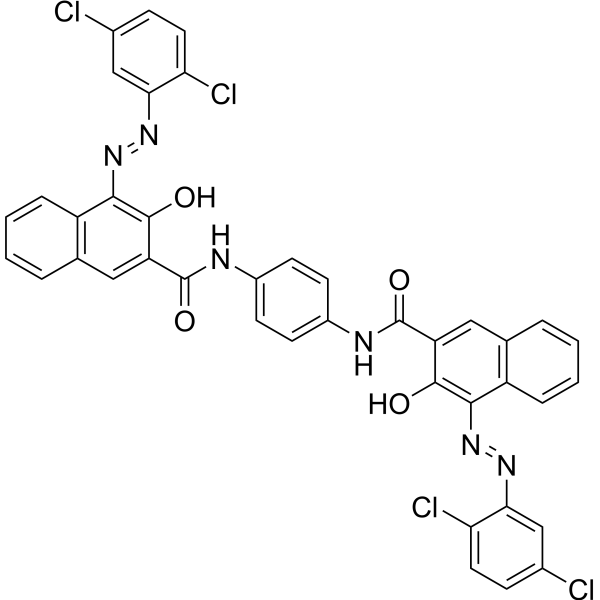
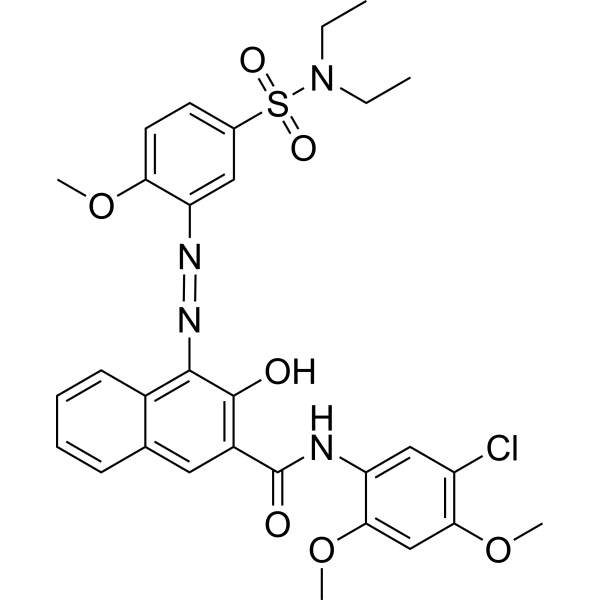
Pigment Red 166 is a commonly used commercial dye for bulk coloring of plastics and synthetic fibers and for surface coatings such as paints and inks.
|
-
-
- HY-W250127
-
|
Terephthalic acid disodium salt
|
Biochemical Assay Reagents
|
Cancer
|
|
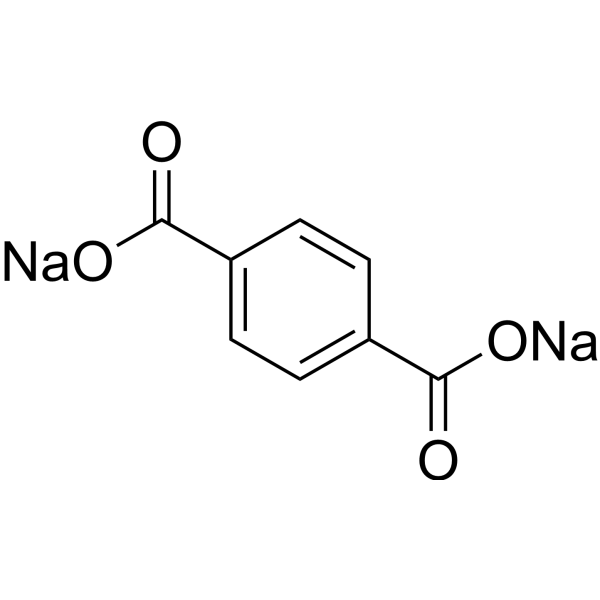
Disodium terephthalate (Terephthalic acid disodium salt) is an isomer and a precursor of polyester PET, which can be used to make clothing and plastics. Disodium terephthalate can be used to build skin tumor models .
|
-
-
- HY-W010098S
-
|
|
Isotope-Labeled Compounds
Biochemical Assay Reagents
|
Cancer
|
|
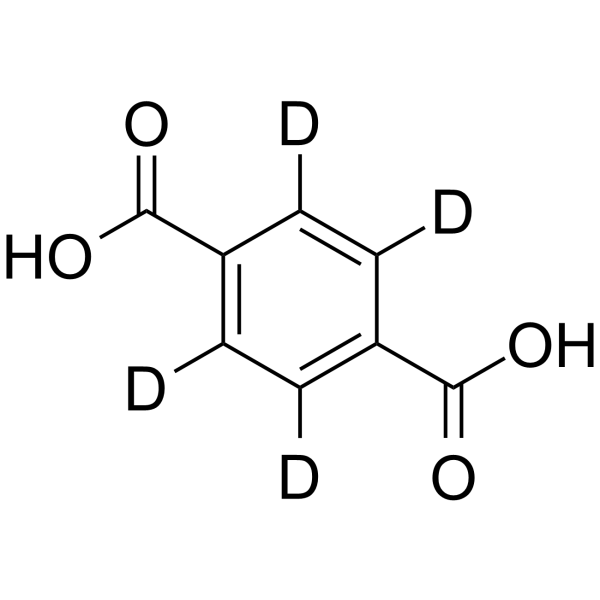
Terephthalic acid-d4 is the deuterium labeled Terephthalic acid. Terephthalic acid is an isomer and a precursor of polyester PET, which can be used to make clothing and plastics. Terephthalic acid can be used to build skin tumor models .
|
-
-
- HY-D1137
-
|
|
Fluorescent Dye
|
|
|
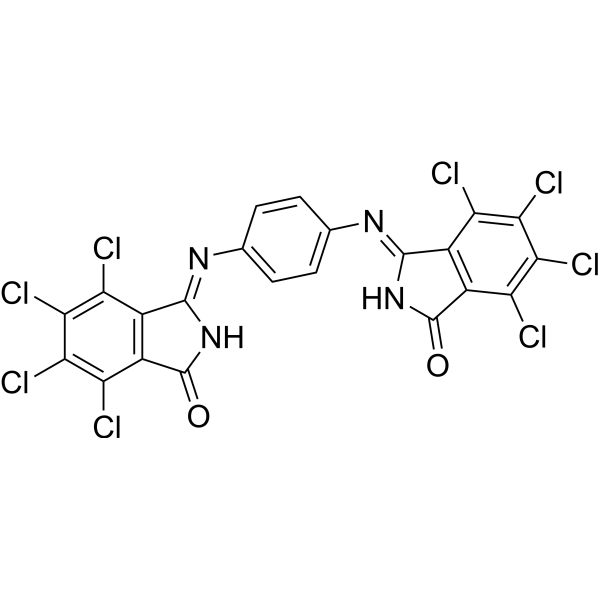
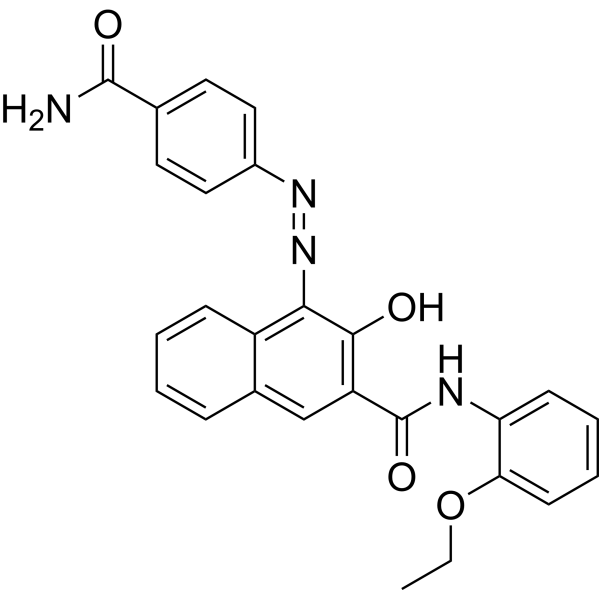
C.I. Pigment yellow 110 is the most important colorant used to add color or change the color of something and is chemically essentially unaffected by the carrier or medium into which it is incorporated. It can be widely used in textile, medicine, food, cosmetics, plastics, paint, ink, photography and paper industries.
|
-
-
- HY-D0278
-
-
-
- HY-W010098R
-
|
|
Reference Standards
Biochemical Assay Reagents
|
Cancer
|
|
Terephthalic acid (Standard) is the analytical standard of Terephthalic acid. This product is intended for research and analytical applications. Terephthalic acid is an isomer and a precursor of polyester PET, which can be used to make clothing and plastics. Terephthalic acid can be used to build skin tumor models .
|
-
-
- HY-D0429
-
|
|
Fluorescent Dye
|
|
|
C.I. Pigment red 5 is the most important colorant used to add color or change the color of something and is chemically essentially unaffected by the carrier or medium into which it is incorporated. It can be widely used in textile, medicine, food, cosmetics, plastics, paint, ink, photography and paper industries.
|
-
-
- HY-D0280
-
|
|
Fluorescent Dye
|
|
|
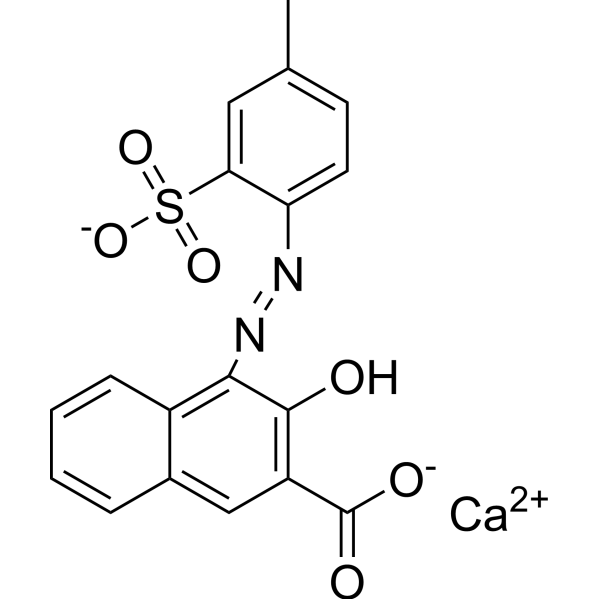
Pigment red 57-1 is a commonly used commercial dye for bulk coloring of plastics and synthetic fibers and for surface coatings such as paints and inks.
|
-
-
- HY-D0531
-
|
|
Fluorescent Dye
|
|
|
C.I. Pigment red 123 is the most important colorant used to add color or change the color of something and is chemically essentially unaffected by the carrier or medium into which it is incorporated. It can be widely used in textile, medicine, food, cosmetics, plastics, paint, ink, photography and paper industries.
|
-
-
- HY-D0960
-
|
|
Fluorescent Dye
|
|
|
C.I. Solvent Blue 43 is the most important colorant used to add color or change the color of something and is chemically essentially unaffected by the carrier or medium into which it is incorporated. It can be widely used in textile, medicine, food, cosmetics, plastics, paint, ink, photography and paper industries.
|
-
-
- HY-W127489
-
|
|
Biochemical Assay Reagents
|
Others
|
|
3-PentadecylphenolIt is an organic compound belonging to the phenolic class. It is attached to the phenolic ring by 15Carbon pentadecyl chain composition, with a touch of sweetness.3-Pentadecylphenol has various applications in the chemical and pharmaceutical industries, especially as an intermediate in the synthesis of various chemicals and pharmaceuticals. In addition, it can be used as an antioxidant for plastics and rubber.
|
-
-
- HY-W008816
-
|
Octyl carbinol; Pelargonic alcohol
|
Environmental Pollutants
|
Others
|
|
Nonan-1-ol is an organic compound commonly used in the manufacture of surfactants and lubricants, among others. It can be used as a detergent, emulsifier and stabilizer, and is widely used in some cosmetics, personal care products and printing inks. In addition, the compound has important applications in certain industrial fields, for example in the production of plastics and rubber.
|
-
-
- HY-D0632
-
|
|
Fluorescent Dye
|
|
|
Pigment Red 147 is a commonly used commercial dye for bulk coloring of plastics and synthetic fibers and for surface coatings such as paints and inks.
|
-
-
- HY-D0384
-
|
|
Fluorescent Dye
|
|
|
Pigment Red 144 is a commonly used commercial dye for bulk coloring of plastics and synthetic fibers and for surface coatings such as paints and inks.
|
-
-
- HY-D0345
-
|
|
Fluorescent Dye
|
|
|
Pigment Red 178 is a commonly used commercial dye for bulk coloring of plastics and synthetic fibers and for surface coatings such as paints and inks.
|
-
-
- HY-D0421
-
|
|
Fluorescent Dye
|
Others
|
|
C.I. Solvent yellow 18 is a lipid-soluble fluorescent azo dye, which is widely used in industries such as textiles, medicine, food, cosmetics, plastics, paints, inks, photography and papermaking .
|
-
-
- HY-W013807R
-
|
Dibutyl decanedioate (Standard)
|
Biochemical Assay Reagents
Reference Standards
|
Others
|
|
Dibutyl sebacate (Standard) is the analytical standard of Dibutyl sebacate. This product is intended for research and analytical applications. Dibutyl sebacate (Dibutyl decanedioate) is a dibutyl ester of sebacic acid, mainly used as a plasticizer in production of plastics .
|
-
-
- HY-D0405
-
|
|
Fluorescent Dye
|
|
|
C.I. Pigment yellow 74 is the most important colorant used to add color or change the color of something and is chemically essentially unaffected by the carrier or medium into which it is incorporated. It can be widely used in textile, medicine, food, cosmetics, plastics, paint, ink, photography and paper industries.
|
-
-
- HY-W091820
-
|
4HDPM
|
Drug Derivative
|
Others
|
|
4-Benzylphenol (4HDPM), a structural analog of Bisphenol F (HY-W014901), has estrogenic activity in vitro and in vivo. 4-Benzylphenol can be used in plastics as a germicide, antiseptic, preservative, and antioxidant, and can be used in during organic synthesis .
|
-
-
- HY-D0457
-
|
|
Fluorescent Dye
|
|
|
C.I. Solvent red 179 is the most important colorant used to add color or change the color of something and is chemically essentially unaffected by the carrier or medium into which it is incorporated. It can be widely used in textile, medicine, food, cosmetics, plastics, paint, ink, photography and paper industries.
|
-
-
- HY-W009400
-
|
|
Drug Intermediate
|
Others
|
|
(2-Dodecen-1-yl)succinic anhydride is an organic compound commonly used in certain polymerization reactions. It is used in the manufacture of products such as plastics and resins, and is widely used in certain industrial fields, such as coatings, inks and textile manufacturing. In addition, the compound is also used as a raw material for pharmaceutical intermediates and surfactants.
|
-
-
- HY-W127364
-
|
Pentaerythritol distearate [Lubricants]
|
Environmental Pollutants
Biochemical Assay Reagents
|
Others
|
|
Pentaerythritol distearate (mixture) is a mixture of ester compounds commonly used as a thickener, emulsifier or lubricant in various cosmetic and personal care products. It is also used as a plasticizer or stabilizer in the production of plastics and resins. Pentaerythritol distearate (mixture) has unique chemical properties that make it an important ingredient in a variety of industrial processes, including the manufacture of adhesives, coatings and sealants.
|
-
-
- HY-W014282
-
|
|
Biochemical Assay Reagents
|
Others
|
|
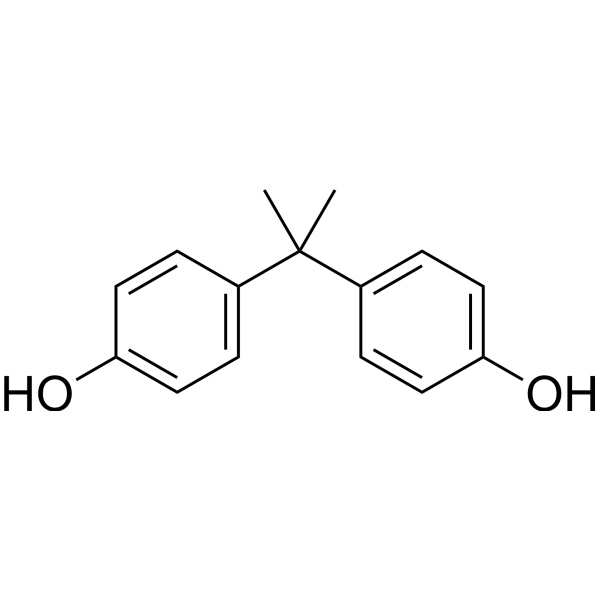
4-Cumylphenol is a polycarbonate chain terminator. 4-Cumylphenol is widely used as a material for polycarbonate plastics, surfactants, fungicides and preservatives. 4-Cumylphenol also induces lipid accumulation in mouse adipocytes .
|
-
-
- HY-D0341
-
|
Solvent Violet 26
|
Fluorescent Dye
|
|
|
Disperse Red 11 is a red dye derived from anthraquinone. It is used in plastics, textiles and cosmetics.
|
-
-
- HY-D0545
-
|
|
Fluorescent Dye
|
Others
|
|
Disperse red 91 is a red dye derived from anthraquinone. It is used in plastics, textiles and cosmetics.
|
-
-
- HY-D0687
-
|
|
Fluorescent Dye
|
|
|
Disperse red 324 is a red dye derived from anthraquinone. It is used in plastics, textiles and cosmetics.
|
-
-
- HY-D0673
-
|
|
Fluorescent Dye
|
|
|
Disperse red 311 is a red dye derived from anthraquinone. It is used in plastics, textiles and cosmetics.
|
-
-
- HY-D0316
-
|
DR 167:1
|
Fluorescent Dye
|
|
|
Disperse red 167:1 is a red dye derived from anthraquinone. It is used in plastics, textiles and cosmetics.
|
-
-
- HY-D1064
-
|
|
Fluorescent Dye
|
|
|
Pigment red 57 is a commonly used commercial dye for bulk coloring of plastics and synthetic fibers and for surface coatings such as paints and inks.
|
-
-
- HY-D0383
-
|
|
Fluorescent Dye
|
|
|
Pigment Red 146 is a commonly used commercial dye for bulk coloring of plastics and synthetic fibers and for surface coatings such as paints and inks.
|
-
-
- HY-D0568
-
|
|
Fluorescent Dye
|
|
|
Pigment Red 242 is a commonly used commercial dye for bulk coloring of plastics and synthetic fibers and for surface coatings such as paints and inks.
|
-
-
- HY-D1139
-
|
|
Fluorescent Dye
|
|
|
Pigment Red 177 is a commonly used commercial dye for bulk coloring of plastics and synthetic fibers and for surface coatings such as paints and inks.
|
-
-
- HY-D0549
-
|
|
Fluorescent Dye
|
|
|
Pigment Red 266 is a commonly used commercial dye for bulk coloring of plastics and synthetic fibers and for surface coatings such as paints and inks.
|
-
-
- HY-D0596
-
|
|
Fluorescent Dye
|
|
|
Pigment Red 188 is a commonly used commercial dye for bulk coloring of plastics and synthetic fibers and for surface coatings such as paints and inks.
|
-
-
- HY-D1233
-
|
Quinaridone magenta 202
|
Fluorescent Dye
|
|
|
Pigment Red 202 is a commonly used commercial dye for bulk coloring of plastics and synthetic fibers and for surface coatings such as paints and inks.
|
-
-
- HY-114686
-
|
|
Drug Metabolite
|
Cardiovascular Disease
|
|
(R)-γ-Valerolactone is a precursor of antihypertensive compounds. (R)-γ-Valerolactone can also be used in the research of biodegradable plastics and biofuels .
|
-
-
- HY-D1164
-
|
D&C Red No. 34
|
Fluorescent Dye
|
|
|
Pigment red 63:1 is a commonly used commercial dye for bulk coloring of plastics and synthetic fibers and for surface coatings such as paints and inks.
|
-
-
- HY-W587742
-
|
|
Drug Metabolite
|
Others
|
|
Dicyclohexylammonium 3-hydroxy-1-methylpropylmercapturic acid is a metabolite of Crotonaldehyde. Crotonaldehyde is an organic aldehyde, mainly used for the synthesis of plastics, drugs and fragrances, etc.
|
-
-
- HY-E70620
-
|
|
Ser/Thr Protease
|
Others
|
|
Poly(ethylene terephthalate) hydrolase is an enzyme involved in the breakdown of Poly(ethylene terephthalate) (PET). Poly(ethylene terephthalate) is one of the most commonly discarded plastics .
|
-
-
- HY-W142663
-
|
|
Endogenous Metabolite
|
|
|
Bisphenol M is a synthetic organic compound with antioxidant activity. Bisphenol M is commonly used in industry to make plastics and resins, and is used as a stabilizer and preservative in cosmetics. Bisphenol M can also be used in certain food packaging materials to improve product durability and safety.
|
-
-
- HY-D0488
-
|
|
Fluorescent Dye
|
|
|
C.I. Pigment orange 36 is the most important colorant used to add color or change the color of something and is chemically essentially unaffected by the carrier or medium into which it is incorporated. It can be widely used in textile, medicine, food, cosmetics, plastics, paint, ink, photography and paper industries.
|
-
- HY-D0489
-
|
|
Fluorescent Dye
|
|
|
C.I. Pigment orange 38 is the most important colorant used to add color or change the color of something and is chemically essentially unaffected by the carrier or medium into which it is incorporated. It can be widely used in textile, medicine, food, cosmetics, plastics, paint, ink, photography and paper industries.
|
-
- HY-D0459
-
|
|
Fluorescent Dye
|
|
|
C.I. Pigment brown 25 is the most important colorant used to add color or change the color of something and is chemically essentially unaffected by the carrier or medium into which it is incorporated. It can be widely used in textile, medicine, food, cosmetics, plastics, paint, ink, photography and paper industries.
|
-
- HY-D0686
-
|
|
Fluorescent Dye
|
|
|
C.I. Pigment red 221 is the most important colorant used to add color or change the color of something and is chemically essentially unaffected by the carrier or medium into which it is incorporated. It can be widely used in textile, medicine, food, cosmetics, plastics, paint, ink, photography and paper industries.
|
-
- HY-D0450
-
|
|
Fluorescent Dye
|
|
|
C.I. Pigment red 112 is the most important colorant used to add color or change the color of something and is chemically essentially unaffected by the carrier or medium into which it is incorporated. It can be widely used in textile, medicine, food, cosmetics, plastics, paint, ink, photography and paper industries.
|
-
- HY-D0486
-
|
|
Fluorescent Dye
|
|
|
C.I. Pigment violet 32 is the most important colorant used to add color or change the color of something and is chemically essentially unaffected by the carrier or medium into which it is incorporated. It can be widely used in textile, medicine, food, cosmetics, plastics, paint, ink, photography and paper industries.
|
-
- HY-D0442
-
|
|
Fluorescent Dye
|
|
|
C.I. Pigment red 14 is the most important colorant used to add color or change the color of something and is chemically essentially unaffected by the carrier or medium into which it is incorporated. It can be widely used in textile, medicine, food, cosmetics, plastics, paint, ink, photography and paper industries.
|
-
- HY-D0510
-
|
|
Fluorescent Dye
|
|
|
C.I. Pigment orange 34 is the most important colorant used to add color or change the color of something and is chemically essentially unaffected by the carrier or medium into which it is incorporated. It can be widely used in textile, medicine, food, cosmetics, plastics, paint, ink, photography and paper industries.
|
-
- HY-D0725
-
|
|
Fluorescent Dye
|
|
|
C.I. Pigment yellow 180 is the most important colorant used to add color or change the color of something and is chemically essentially unaffected by the carrier or medium into which it is incorporated. It can be widely used in textile, medicine, food, cosmetics, plastics, paint, ink, photography and paper industries.
|
-
- HY-D0445
-
|
|
Fluorescent Dye
|
|
|
C.I. Pigment orange 16 is the most important colorant used to add color or change the color of something and is chemically essentially unaffected by the carrier or medium into which it is incorporated. It can be widely used in textile, medicine, food, cosmetics, plastics, paint, ink, photography and paper industries.
|
-
- HY-D0426
-
|
|
Fluorescent Dye
|
|
|
C.I. Pigment red 8 is the most important colorant used to add color or change the color of something and is chemically essentially unaffected by the carrier or medium into which it is incorporated. It can be widely used in textile, medicine, food, cosmetics, plastics, paint, ink, photography and paper industries.
|
-
- HY-D0428
-
|
|
Fluorescent Dye
|
|
|
C.I. Pigment red 9 is the most important colorant used to add color or change the color of something and is chemically essentially unaffected by the carrier or medium into which it is incorporated. It can be widely used in textile, medicine, food, cosmetics, plastics, paint, ink, photography and paper industries.
|
-
- HY-D0460
-
|
Pigment red 48 calcium salt
|
Fluorescent Dye
|
|
|
C.I. Pigment red 48 is the most important colorant used to add color or change the color of something and is chemically essentially unaffected by the carrier or medium into which it is incorporated. It can be widely used in textile, medicine, food, cosmetics, plastics, paint, ink, photography and paper industries.
|
-
- HY-D0394
-
|
|
Fluorescent Dye
|
|
|
C.I. Pigment red 2 is the most important colorant used to add color or change the color of something and is chemically essentially unaffected by the carrier or medium into which it is incorporated. It can be widely used in textile, medicine, food, cosmetics, plastics, paint, ink, photography and paper industries.
|
-
- HY-D0519
-
|
|
Fluorescent Dye
|
|
|
C.I. Pigment red 52:1 is the most important colorant used to add color or change the color of something and is chemically essentially unaffected by the carrier or medium into which it is incorporated. It can be widely used in textile, medicine, food, cosmetics, plastics, paint, ink, photography and paper industries.
|
-
- HY-117964
-
|
Lake Red C
|
Endogenous Metabolite
|
|
|
Pigment Red 53 (Lake Red C) is an organic pigment with good color stability and spectral properties. Pigment Red 53 is widely used in the coatings and plastics industries to provide a vivid red color. Pigment Red 53 is also used in food and cosmetics as a safe colorant to ensure an attractive product appearance.
|
-
- HY-W010119
-
|
|
Biochemical Assay Reagents
|
Others
|
|
4-Methyl-2-phenyl-1,3-dioxolane is an organic compound commonly used as a solvent and intermediate. It can be used in some organic synthesis reactions, such as the synthesis of drugs or other organic compounds. In addition, this compound is also widely used in industrial production fields, such as plastics, coatings and glues.
|
-
- HY-W000800R
-
|
|
Reference Standards
Bacterial
|
Infection
|
|
cis,cis-Muconic acid (Standard) is an analytical standard for cis,cis-Muconic acid (HY-W000800). This product is used for research and analytical applications. cis,cis-Muconic acid is a dicarboxylic acid produced by Saccharomyces cerevisiae. cis,cis-Muconic acid shows pH-dependent toxicity against Saccharomyces cerevisiae CEN.PK113-7D. cis,cis-Muconic acid can be used as intermediate for the production of various plastics and polymers .
|
-
- HY-D2425
-
|
|
Fluorescent Dye
|
Others
|
|
Disperse Red 153 is an azo dye that can be used in plastics, textiles, and cosmetics .
|
-
- HY-D0349
-
|
|
Fluorescent Dye
|
|
|
Disperse Red 13 is a red dye derived from anthraquinone. It is used in plastics, textiles and cosmetics.
|
-
- HY-D0315
-
|
|
Fluorescent Dye
|
|
|
Disperse red 74 is a red dye derived from anthraquinone. It is used in plastics, textiles and cosmetics.
|
-
- HY-D0513
-
|
|
Fluorescent Dye
|
|
|
Disperse red 65 is a red dye derived from anthraquinone. It is used in plastics, textiles and cosmetics.
|
-
- HY-D1037
-
|
|
Fluorescent Dye
|
|
|
Disperse red 50 is a red dye derived from anthraquinone. It is used in plastics, textiles and cosmetics.
|
-
- HY-D0594
-
|
|
Fluorescent Dye
|
|
|
Disperse Red 278 is a red dye derived from anthraquinone. It is used in plastics, textiles and cosmetics.
|
-
- HY-D0288
-
|
|
Fluorescent Dye
|
|
|
Disperse red 86 is a red dye derived from anthraquinone. It is used in plastics, textiles and cosmetics.
|
-
- HY-D0347
-
|
|
Fluorescent Dye
|
|
|
Disperse Red 17 is a red dye derived from anthraquinone. It is used in plastics, textiles and cosmetics.
|
-
- HY-D0393
-
|
|
Fluorescent Dye
|
|
|
Disperse red 54 is a red dye derived from anthraquinone. It is used in plastics, textiles and cosmetics.
|
-
- HY-D0625
-
|
|
Fluorescent Dye
|
|
|
Disperse Red 177 is a red dye derived from anthraquinone. It is used in plastics, textiles and cosmetics.
|
-
- HY-D0515
-
|
|
Fluorescent Dye
|
|
|
Disperse red 73 is a red dye derived from anthraquinone. It is used in plastics, textiles and cosmetics.
|
-
- HY-D1128
-
|
|
Fluorescent Dye
|
|
|
Disperse red 151 is a red dye derived from anthraquinone. It is used in plastics, textiles and cosmetics.
|
-
- HY-D0337
-
|
|
Fluorescent Dye
|
|
|
Pigment Red 4 is a commonly used commercial dye for bulk coloring of plastics and synthetic fibers and for surface coatings such as paints and inks.
|
-
- HY-D1201
-
|
|
Fluorescent Dye
|
|
|
Pigment Red 245 is a commonly used commercial dye for bulk coloring of plastics and synthetic fibers and for surface coatings such as paints and inks.
|
-
- HY-D0697
-
|
|
Fluorescent Dye
|
|
|
Pigment red 95 is a commonly used commercial dye for bulk coloring of plastics and synthetic fibers and for surface coatings such as paints and inks.
|
-
- HY-D1215
-
|
|
Fluorescent Dye
|
Others
|
|
Pigment Red 31 is a commonly used commercial dye for bulk coloring of plastics and synthetic fibers and for surface coatings such as paints and inks.
|
-
- HY-D0566
-
|
|
Fluorescent Dye
|
|
|
Pigment Red 185 is a commonly used commercial dye for bulk coloring of plastics and synthetic fibers and for surface coatings such as paints and inks.
|
-
- HY-D1155
-
|
|
Fluorescent Dye
|
|
|
Pigment Red 176 is a commonly used commercial dye for bulk coloring of plastics and synthetic fibers and for surface coatings such as paints and inks.
|
-
- HY-D0427
-
|
|
Fluorescent Dye
|
|
|
C.I. Pigment red 12 is the most important colorant used to add color or change the color of something and is chemically essentially unaffected by the carrier or medium into which it is incorporated. It can be widely used in textile, medicine, food, cosmetics, plastics, paint, ink, photography and paper industries.
|
-
- HY-D0493
-
|
|
Fluorescent Dye
|
|
|
C.I. Pigment yellow 62 is the most important colorant used to add color or change the color of something and is chemically essentially unaffected by the carrier or medium into which it is incorporated. It can be widely used in textile, medicine, food, cosmetics, plastics, paint, ink, photography and paper industries.
|
-
- HY-D0408
-
|
|
Fluorescent Dye
|
|
|
C.I. Pigment red 38 is the most important colorant used to add color or change the color of something and is chemically essentially unaffected by the carrier or medium into which it is incorporated. It can be widely used in textile, medicine, food, cosmetics, plastics, paint, ink, photography and paper industries.
|
-
- HY-D0392
-
|
|
Fluorescent Dye
|
|
|
C. I. Pigment yellow 16 is the most important colorant used to add color or change the color of something and is chemically essentially unaffected by the carrier or medium into which it is incorporated. It can be widely used in textile, medicine, food, cosmetics, plastics, paint, ink, photography and paper industries.
|
-
- HY-D0433
-
|
Navy Blue G
|
Fluorescent Dye
|
|
|
C.I. Vat Blue 16 is the most important colorant used to add color or change the color of something and is chemically essentially unaffected by the carrier or medium into which it is incorporated. It can be widely used in textile, medicine, food, cosmetics, plastics, paint, ink, photography and paper industries.
|
-
- HY-D0431
-
|
|
Fluorescent Dye
|
|
|
C.I. Pigment blue 56 is the most important colorant used to add color or change the color of something and is chemically essentially unaffected by the carrier or medium into which it is incorporated. It can be widely used in textile, medicine, food, cosmetics, plastics, paint, ink, photography and paper industries.
|
-
- HY-D0415
-
|
|
Fluorescent Dye
|
|
|
C.I. Vat blue 22 is the most important colorant used to add color or change the color of something and is chemically essentially unaffected by the carrier or medium into which it is incorporated. It can be widely used in textile, medicine, food, cosmetics, plastics, paint, ink, photography and paper industries.
|
-
- HY-D0441
-
|
|
Fluorescent Dye
|
|
|
C.I. Pigment red 23 is the most important colorant used to add color or change the color of something and is chemically essentially unaffected by the carrier or medium into which it is incorporated. It can be widely used in textile, medicine, food, cosmetics, plastics, paint, ink, photography and paper industries.
|
-
- HY-W127540
-
|
Hexadecyl acetate
|
Environmental Pollutants
Biochemical Assay Reagents
|
Others
|
|
Palmityl acetate is an ester compound with a waxy odor commonly used as a lubricant or emollient in various cosmetic and personal care products. In addition, it can be used as a plasticizer or stabilizer in the production of plastics and resins. Its unique chemical properties make it an important ingredient in a variety of commercial products, including perfumes, lotions and hair care products.
|
-
- HY-W127346
-
|
|
Environmental Pollutants
Biochemical Assay Reagents
|
Others
|
|
Pentaerythrityl tetrastearate is an ester compound commonly used as a lubricant, emollient or thickener in various cosmetic and personal care products. It is also used as a plasticizer or stabilizer in the production of plastics and resins. Pentaerythrityl tetrastearate has unique chemical properties that make it an important ingredient in a variety of industrial processes, including the manufacture of adhesives, coatings and sealants.
|
-
- HY-W040186
-
|
|
Biochemical Assay Reagents
|
Others
|
|
1-Naphthenyl phosphate hydrate sodium is commonly used as a flame retardant for various materials such as plastics, textiles, and construction materials. In addition, its potential use as a corrosion inhibitor and as an ingredient in fertilizers and detergents has been investigated. Its hydrated form contains variable amounts of water molecules, which affects its physical properties and applications.
|
-
- HY-179081
-
-
- HY-133673
-
|
|
Drug Metabolite
|
Others
|
|
Mono (3-carboxypropyl) phthalate (MCPP) is a metabolite of Di-n-octyl phthalate. Di-n-octyl phthalate (DnOP) is a plasticizer used in polyvinyl chloride plastics, cellulose esters, and polystyrene resins .
|
-
- HY-W587442
-
|
|
Estrogen Receptor/ERR
|
Cancer
|
|
3-Chlorobisphenol A, a chlorinated derivatives of bisphenol A, is an endocrine-disrupting compound. It binds to estrogen receptors, causing disorders in hormone signaling pathways. Bisphenol A is an industrial chemical used in the production of polycarbonate plastics and epoxy resin.
|
-
- HY-D0347R
-
|
|
Fluorescent Dye
Reference Standards
|
Others
|
|
Disperse Red 17 (Standard) is the analytical standard of Disperse Red 17. This product is intended for research and analytical applications. Disperse Red 17 is a red dye derived from anthraquinone. It is used in plastics, textiles and cosmetics.
|
-
- HY-W011926S
-
|
DiPP-d4
|
Isotope-Labeled Compounds
Estrogen Receptor/ERR
|
Others
|
|
Diisopropyl phthalate-d4 (DiPP-d4) is the deuterium labeled Diisopropyl Phthalate (HY-W011926). Diisopropyl phthalate (DiPP) is a phthalate diester, which is widely used as an additive in plastics and consumer products. Diisopropyl phthalate has a weak binding ability to the recombinant human estrogen receptor, with an IC50 of 41000 μM .
|
-
- HY-W011926R
-
|
DiPP (Standard)
|
Reference Standards
Estrogen Receptor/ERR
|
Others
|
|
Diisopropyl phthalate (Standard) (DiPP (Standard)) is the analytical standard of Diisopropyl phthalate (HY-W011926). This product is intended for research and analytical applications. Diisopropyl phthalate (DiPP) is a phthalate diester, which is widely used as an additive in plastics and consumer products. Diisopropyl phthalate has a weak binding ability to the recombinant human estrogen receptor, with an IC50 of 41000 μM .
|
-
- HY-Y0284R
-
|
|
Apoptosis
Reference Standards
|
Endocrinology
|
|
Diethyl phthalate (Standard) is the analytical standard of Diethyl phthalate. This product is intended for research and analytical applications. Diethyl phthalate is an endocrine disruptor that has the activity of affecting the apoptosis system of PC12 cells. Diethyl phthalate is widely used in a variety of plastics and personal care products. Diethyl phthalate has shown the potential to induce male reproductive toxicity unrelated to androgens in animal experiments .
|
-
- HY-W709120
-
|
|
Isotope-Labeled Compounds
Drug Metabolite
|
Others
|
|
Mono(7-carboxyheptyl) phthalate-d4 is the deuterium labeled Mono(7-carboxyheptyl) phthalate (HY-133674). Mono(7-carboxyheptyl) phthalate is a oxidative metabolite of Di-n-octyl phthalate. Di-n-octyl phthalate (DnOP) is a plasticizer used in polyvinyl chloride plastics, cellulose esters, and polystyrene resins .
|
-
- HY-N8045
-
|
Ricinolic acid methyl ester
|
Biochemical Assay Reagents
|
Others
|
|
Methyl ricinoleate is a compound belonging to the group of fatty acid methyl esters. It is derived from ricinoleic acid, a monounsaturated omega-9 fatty acid found in castor oil. Methyl ricinoleate is often used as a reference compound for the analysis of fatty acid methyl esters by gas chromatography. It has also been investigated for its potential use as a biofuel and as an ingredient in the production of biodegradable plastics and surfactants.
|
-
- HY-G0008AR
-
|
Mebeverine metabolite O-desmethyl Mebeverine alcohol hydrochloride (Standard)
|
Reference Standards
Adrenergic Receptor
Drug Metabolite
|
Metabolic Disease
|
|
Diethyl phthalate (Standard) is the analytical standard of Diethyl phthalate. This product is intended for research and analytical applications. Diethyl phthalate is an endocrine disruptor that has the activity of affecting the apoptosis system of PC12 cells. Diethyl phthalate is widely used in a variety of plastics and personal care products. Diethyl phthalate has shown the potential to induce male reproductive toxicity unrelated to androgens in animal experiments .
|
-
- HY-42935A
-
|
Enanthate sodium
|
Biochemical Assay Reagents
|
Others
|
|
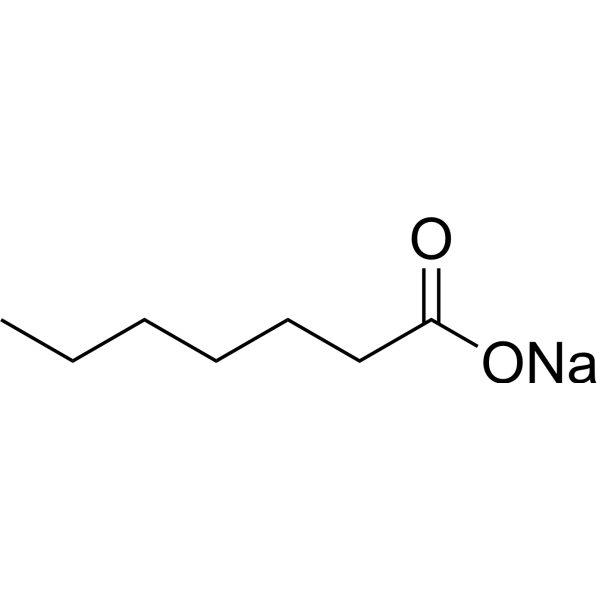
Heptanoate sodium is an organic sodium salt compound widely used in various industries and laboratories. It can be used as surfactant, emulsifier, lubricant and preservative, etc., and plays an important role in some electronic devices. In addition, Heptanoate sodium is also used in the preparation of certain chemicals and raw materials such as paints, plastics, fragrances, etc. Although the compound has no direct medical application, it plays an important role in chemical research and industrial production.
|
-
- HY-W017522S3
-
|
Hexanedioic acid-13C
|
Isotope-Labeled Compounds
Endogenous Metabolite
HSV
|
Infection
Metabolic Disease
|
|
Adipic acid- 13C (Hexanedioic acid- 13C) is the 13C labeled Adipic acid (HY-W017522). Adipic acid (Hexanedioic acid) is an orally active compound with anti-HSV-1 activity. Adipic acid has low toxicity and can be used as a food additive and a gelling agent. Adipic acid can also be used in the synthesis of lubricants, artificial resins, plastics, etc .
|
-
- HY-W017522R
-
|
Hexanedioic acid (Standard)
|
Reference Standards
Endogenous Metabolite
HSV
|
Infection
Metabolic Disease
|
|
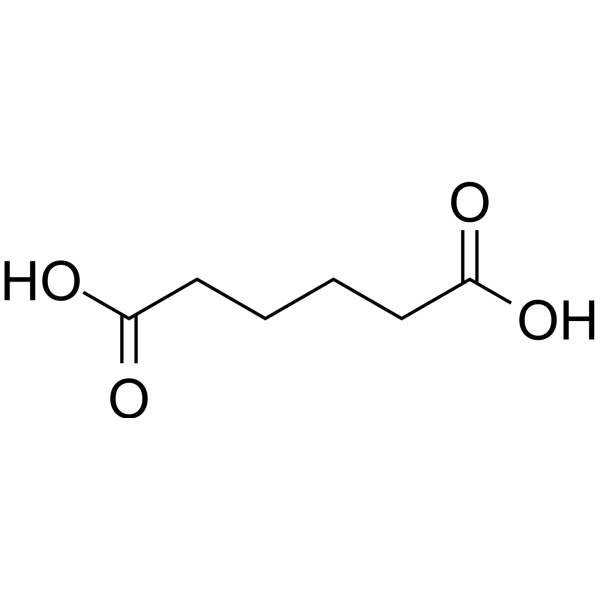
Adipic acid (Standard) (Hexanedioic acid (Standard)) is the analytical standard of Adipic acid (HY-W017522). This product is intended for research and analytical applications. Adipic acid (Hexanedioic acid) is an orally active compound with anti-HSV-1 activity. Adipic acid has low toxicity and can be used as a food additive and a gelling agent. Adipic acid can also be used in the synthesis of lubricants, artificial resins, plastics, etc .
|
-
- HY-18260
-
Bisphenol A
Maximum Cited Publications
15 Publications Verification
|
Environmental Pollutants
Endogenous Metabolite
Apoptosis
Reactive Oxygen Species (ROS)
p38 MAPK
Akt
|
Cardiovascular Disease
Metabolic Disease
Endocrinology
Cancer
|
|
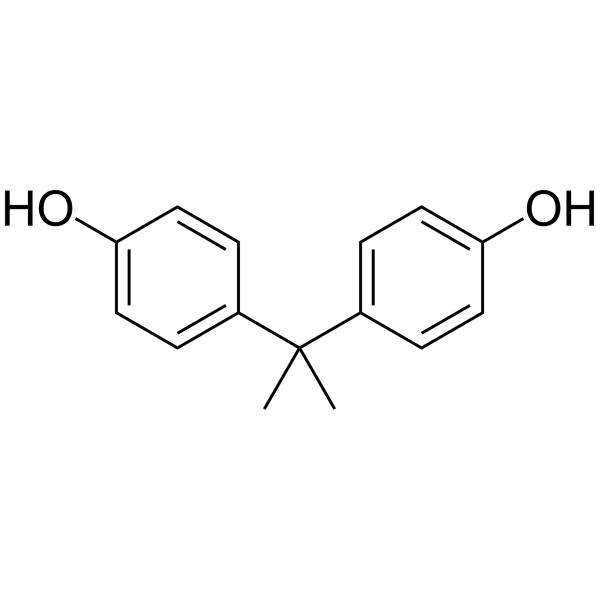
Bisphenol A is a phenolic, organic synthetic compound widely used in the production of polycarbonate plastics and epoxy resins. Bisphenol A is a reproductive, developmental, and systemic toxicant, often classified as an endocrine-disrupting compound (EDC). Bisphenol A is associated with many diseases, including cancers, cardiovascular diseases, respiratory diseases, diabetes, kidney diseases, obesity, and reproductivedisorders .
|
-
- HY-ER010
-
|
Imidazole hydrochloride
|
Biochemical Assay Reagents
|
Others
|
|
1H-Imidazole hydrochloride can be used as ligand, buffer and catalyst, etc., and also plays an important role in the process of drug synthesis and extraction of natural products. In addition, the compound is widely used in certain industrial fields, such as in the manufacturing process of plastics, coatings, textiles and electronic materials. Although the compound has no direct medical applications, it plays an important role in chemical research and laboratory studies.
|
-
- HY-18260S
-
|
|
Endogenous Metabolite
|
Metabolic Disease
|
|
Bisphenol A-d16 is the deuterium labeled Bisphenol A . Bisphenol A is a phenolic, organic synthetic compound widely used in the production of polycarbonate plastics and epoxy resins. Bisphenol A is a reproductive, developmental, and systemic toxicant, often classified as an endocrine-disrupting compound (EDC). Bisphenol A is associated with many diseases, including cardiovascular diseases, respiratory diseases, diabetes, kidney diseases, obesity, and reproductivedisorders .
|
-
- HY-18260S5
-
|
|
Endogenous Metabolite
|
Metabolic Disease
|
|
Bisphenol A-d4-1 is the deuterium labeled Bisphenol A . Bisphenol A is a phenolic, organic synthetic compound widely used in the production of polycarbonate plastics and epoxy resins. Bisphenol A is a reproductive, developmental, and systemic toxicant, often classified as an endocrine-disrupting compound (EDC). Bisphenol A is associated with many diseases, including cardiovascular diseases, respiratory diseases, diabetes, kidney diseases, obesity, and reproductivedisorders .
|
-
- HY-18260S1
-
|
|
Isotope-Labeled Compounds
Endogenous Metabolite
|
Endocrinology
|
|
Bisphenol A-d6 is the deuterium labeled Bisphenol A. Bisphenol A is a phenolic, organic synthetic compound widely used in the production of polycarbonate plastics and epoxy resins. Bisphenol A is a reproductive, developmental, and systemic toxicant, often classified as an endocrine-disrupting compound (EDC). Bisphenol A is associated with many diseases, including cardiovascular diseases, respiratory diseases, diabetes, kidney diseases, obesity, and reproductivedisorders .
|
-
- HY-W778391
-
|
|
Isotope-Labeled Compounds
Endogenous Metabolite
|
Cardiovascular Disease
Endocrinology
|
|
Bisphenol A- 13C2 is 13C labeled Bisphenol A. Bisphenol A is a phenolic, organic synthetic compound widely used in the production of polycarbonate plastics and epoxy resins. Bisphenol A is a reproductive, developmental, and systemic toxicant, often classified as an endocrine-disrupting compound (EDC). Bisphenol A is associated with many diseases, including cardiovascular diseases, respiratory diseases, diabetes, kidney diseases, obesity, and reproductivedisorders .
|
-
- HY-W017522S
-
|
Hexanedioic acid-d10
|
Isotope-Labeled Compounds
Endogenous Metabolite
HSV
|
Infection
Metabolic Disease
|
|
Adipic acid-d10 (Hexanedioic acid-d10) is the deuterium labeled Adipic acid (HY-W017522). Adipic acid (Hexanedioic acid) is an orally active compound with anti-HSV-1 activity. Adipic acid has low toxicity and can be used as a food additive and a gelling agent. Adipic acid can also be used in the synthesis of lubricants, artificial resins, plastics, etc .
|
-
- HY-W017522S6
-
|
Hexanedioic acid-13C2
|
Isotope-Labeled Compounds
Endogenous Metabolite
HSV
|
Infection
Metabolic Disease
|
|
Adipic acid- 13C2 (Hexanedioic acid- 13C2) is 13C labeled Adipic acid (HY-W017522). Adipic acid (Hexanedioic acid) is an orally active compound with anti-HSV-1 activity. Adipic acid has low toxicity and can be used as a food additive and a gelling agent. Adipic acid can also be used in the synthesis of lubricants, artificial resins, plastics, etc .
|
-
- HY-W011215
-
|
|
Apoptosis
Reactive Oxygen Species (ROS)
|
Inflammation/Immunology
|
|
Dihexyl phthalate is one of the commonly used phthalate esters in various plastics and consumer products. Dihexyl phthalate is classified as a priority pollutant and an endocrine disruptor. Dihexyl phthalate can induce reactive oxygen species (ROS) accumulation, promote inflammation, and lead to significant increases in apoptosis and inflammation-related gene expression levels. Dihexyl phthalate can cause testicular atrophy and is a reproductive toxicant .
|
-
- HY-W017522S2
-
|
Hexanedioic acid-d4
|
Isotope-Labeled Compounds
Endogenous Metabolite
HSV
|
Infection
Metabolic Disease
|
|
Adipic acid-d4 (Hexanedioic acid-d4) is the deuterium labeled Adipic acid (HY-W017522). Adipic acid (Hexanedioic acid) is an orally active compound with anti-HSV-1 activity. Adipic acid has low toxicity and can be used as a food additive and a gelling agent. Adipic acid can also be used in the synthesis of lubricants, artificial resins, plastics, etc .
|
-
- HY-W087964
-
|
|
Biochemical Assay Reagents
|
Others
|
|
Dodecanedioyl dichloride, Dodecanedioyl dichloride is commonly used in organic synthesis as a general building block for the preparation of various polymers and plastics, including nylon 12 and polyester resins, it can be used to introduce acid chloride groups into other organic molecules, which can then be further reaction to form more complex compounds, moreover, it has been used in medicinal chemistry as a starting material for the synthesis of various drugs and drug candidates.
|
-
- HY-18260S3
-
|
|
Endogenous Metabolite
|
Metabolic Disease
|
|
Bisphenol A-d8 is the deuterium labeled Bisphenol A . Bisphenol A is a phenolic, organic synthetic compound widely used in the production of polycarbonate plastics and epoxy resins. Bisphenol A is a reproductive, developmental, and systemic toxicant, often classified as an endocrine-disrupting compound (EDC). Bisphenol A is associated with many diseases, including cardiovascular diseases, respiratory diseases, diabetes, kidney diseases, obesity, and reproductivedisorders .
|
-
- HY-W017522S1
-
|
Hexanedioic acid-13C6
|
Isotope-Labeled Compounds
Endogenous Metabolite
HSV
|
Infection
Metabolic Disease
|
|
Adipic acid- 13C6 (Hexanedioic acid- 13C6) is the 13C labeled Adipic acid (HY-W017522). Adipic acid (Hexanedioic acid) is an orally active compound with anti-HSV-1 activity. Adipic acid has low toxicity and can be used as a food additive and a gelling agent. Adipic acid can also be used in the synthesis of lubricants, artificial resins, plastics, etc .
|
-
- HY-W017522S4
-
|
Hexanedioic acid-d8
|
Isotope-Labeled Compounds
Endogenous Metabolite
HSV
|
Infection
Metabolic Disease
|
|
Adipic acid-d8 (Hexanedioic acid-d8) is the deuterium labeled Adipic acid (HY-W017522). Adipic acid (Hexanedioic acid) is an orally active compound with anti-HSV-1 activity. Adipic acid has low toxicity and can be used as a food additive and a gelling agent. Adipic acid can also be used in the synthesis of lubricants, artificial resins, plastics, etc .
|
-
- HY-18260S4
-
|
|
Endogenous Metabolite
|
Metabolic Disease
|
|
Bisphenol A-d4 is the deuterium labeled Bisphenol A . Bisphenol A is a phenolic, organic synthetic compound widely used in the production of polycarbonate plastics and epoxy resins. Bisphenol A is a reproductive, developmental, and systemic toxicant, often classified as an endocrine-disrupting compound (EDC). Bisphenol A is associated with many diseases, including cardiovascular diseases, respiratory diseases, diabetes, kidney diseases, obesity, and reproductivedisorders .
|
-
- HY-N8451
-
|
Triacontanoic acid
|
Biochemical Assay Reagents
|
Others
|
|
Melissic acid, which belongs to the category of long-chain saturated fatty acids. It is a 30-carbon straight-chain fatty acid found in a variety of natural sources, including beeswax and coconut oil. Due to its unique physical properties, such as high melting point and viscosity, Melissic acid has a variety of uses in industry. It can be used as a lubricant in the production of some plastics and rubber, and is also used in the manufacture of surfactants and detergents.
|
-
- HY-18260S6
-
|
|
Isotope-Labeled Compounds
Endogenous Metabolite
|
Metabolic Disease
|
|
Bisphenol A-d14 is a deuterium labeled Bisphenol A (HY-18260). Bisphenol A is a phenolic, organic synthetic compound widely used in the production of polycarbonate plastics and epoxy resins. Bisphenol A is a reproductive, developmental, and systemic toxicant, often classified as an endocrine-disrupting compound (EDC). Bisphenol A is associated with many diseases, including cardiovascular diseases, respiratory diseases, diabetes, kidney diseases, obesity, and reproductivedisorders .
|
-
- HY-133673S
-
|
MCPP-d4
|
Isotope-Labeled Compounds
Drug Metabolite
|
Others
|
|
Mono(3-carboxypropyl) phthalate-d4 (MCPP-d4) is a deuterium labeled Mono(3-carboxypropyl) phthalate (HY-133673). Mono(3-carboxypropyl) phthalate (MCPP) is a metabolite of Di-n-octyl phthalate. Di-n-octyl phthalate (DnOP) is a plasticizer used in polyvinyl chloride plastics, cellulose esters, and polystyrene resins .
|
-
- HY-W010695
-
|
|
Biochemical Assay Reagents
|
Others
|
|
Cholesteryl stearate is a compound belonging to the class of esters. It is a cholesterol ester commonly found in animal and plant sources. Cholesteryl stearate consists of two naturally occurring substances, cholesteryl alcohol and stearic acid. The combination of the two creates a stable compound that is commonly used in a variety of industrial and biomedical applications. Cholesteryl stearate is commonly used as a lubricant, thickener and emollient in cosmetic formulations such as lotions and creams. It is also used to produce certain types of polymers and plastics.
|
-
- HY-18260R
-
|
|
Endogenous Metabolite
Reference Standards
|
Metabolic Disease
|
|
Bisphenol A (Standard) is the analytical standard of Bisphenol A. This product is intended for research and analytical applications. Bisphenol A is a phenolic, organic synthetic compound widely used in the production of polycarbonate plastics and epoxy resins. Bisphenol A is a reproductive, developmental, and systemic toxicant, often classified as an endocrine-disrupting compound (EDC). Bisphenol A is associated with many diseases, including cardiovascular diseases, respiratory diseases, diabetes, kidney diseases, obesity, and reproductivedisorders .
|
-
- HY-W017522S5
-
|
Hexanedioic acid-d4-1
|
Isotope-Labeled Compounds
Endogenous Metabolite
HSV
|
Infection
Metabolic Disease
|
|
Adipic acid-d4-1 (Hexanedioic acid-d4-1) is the deuterium labeled Adipic acid (HY-W017522). Adipic acid (Hexanedioic acid) is an orally active compound with anti-HSV-1 activity. Adipic acid has low toxicity and can be used as a food additive and a gelling agent. Adipic acid can also be used in the synthesis of lubricants, artificial resins, plastics, etc .
|
-
- HY-W005355S12
-
|
|
Isotope-Labeled Compounds
Biochemical Assay Reagents
|
Others
|
|
Sodium 2-oxobutanoate-d5 is the deuterium labeled Sodium 2-oxobutanoate (HY-W005355). Sodium 2-oxobutanoate is an organic compound commonly used as a food additive and industrial raw material. It can be used as an acidity regulator, leavening agent and preservative, and is often used in the fields of bread, baked goods and canning. In addition, the compound is used in the production of certain industrial products, such as in plastics, textiles and dyes.
|
-
- HY-W342261
-
|
Isodurene
|
Drug Isomer
Drug Intermediate
|
Others
|
|
1,2,3,5-Tetramethylbenzene (Isodurene) is an aromatic hydrocarbon isomer of tetramethylbenzene. 1,2,3,5-Tetramethylbenzene serves as an important component of industrial organic solvents. 1,2,3,5-Tetramethylbenzene can be used in the organic synthesis of plastics and resins. 1,2,3,5-Tetramethylbenzene exhibits potential neurotoxicity, acute oral toxicity and mild skin irritation activity .
|
-
- HY-W007174A
-
|
|
Biochemical Assay Reagents
|
Others
|
|
1,4-Anhydro-D-xylitol is a compound belonging to the class of sugar alcohols. It is derived from xylitol, a natural sweetener found in many fruits and vegetables. 1,4-Anhydro-D-xylitol is commonly used as a low-calorie sweetener and excipient in the food and pharmaceutical industries, and as a filler or binder in pharmaceutical formulations. It has also been investigated for its potential use in the development of biodegradable plastics and other sustainable materials.
|
-
- HY-W090294
-
|
Peri-dinaphthalene (purified by sublimation)
|
Environmental Pollutants
Biochemical Assay Reagents
|
Others
|
|
Perylene, which is a polycyclic aromatic hydrocarbon composed of four linearly fused benzene rings, is commonly used as a pigment and dye in a variety of applications, including printing inks, plastics, and textiles. In addition, Perylene has potential uses in solar cells as photosensitizers and as fluorescent probes in biochemistry and materials science. Perylene's rigid planar structure endows it with unique electronic and optical properties, making it a versatile and important compound in many fields of chemistry and materials science.
|
-
- HY-W008816R
-
|
Octyl carbinol (Standard); Pelargonic alcohol (Standard)
|
Others
Reference Standards
|
Others
|
|
Nonanol (Standard) is the analytical standard of Nonanol (HY-W008816). This product is intended for research and analytical applications. Nonan-1-ol is an organic compound commonly used in the manufacture of surfactants and lubricants, among others. It can be used as a detergent, emulsifier and stabilizer, and is widely used in some cosmetics, personal care products and printing inks. In addition, the compound has important applications in certain industrial fields, for example in the production of plastics and rubber.
|
-
- HY-18260S2
-
|
|
Isotope-Labeled Compounds
Reactive Oxygen Species (ROS)
p38 MAPK
Apoptosis
Akt
Endogenous Metabolite
|
Metabolic Disease
|
|
Bisphenol A- 13C12 is the 13C-labeled Bisphenol A (HY-18260). Bisphenol A is a phenolic, organic synthetic compound widely used in the production of polycarbonate plastics and epoxy resins. Bisphenol A is a reproductive, developmental, and systemic toxicant, often classified as an endocrine-disrupting compound (EDC). Bisphenol A is associated with many diseases, including cancers, cardiovascular diseases, respiratory diseases, diabetes, kidney diseases, obesity, and reproductivedisorders .
|
-
- HY-W587519
-
|
|
Biochemical Assay Reagents
Bacterial
|
|
|
Bisphenol A bis(3-chloro-2-hydroxypropyl) ether is an organic compound with potential antimicrobial activity. Bisphenol A bis(3-chloro-2-hydroxypropyl) ether can be widely used in coatings and plastics to improve the strength and durability of materials. Bisphenol A bis(3-chloro-2-hydroxypropyl) ether also plays an important role in textile processing, improving the wrinkle resistance and abrasion resistance of fabrics.
|
-
- HY-N8045R
-
|
Ricinolic acid methyl ester (Standard)
|
Biochemical Assay Reagents
Reference Standards
|
Others
|
|
Methyl ricinoleate (Standard) is the analytical standard of Methyl ricinoleate. This product is intended for research and analytical applications. Methyl ricinoleate is a compound belonging to the group of fatty acid methyl esters. It is derived from ricinoleic acid, a monounsaturated omega-9 fatty acid found in castor oil. Methyl ricinoleate is often used as a reference compound for the analysis of fatty acid methyl esters by gas chromatography. It has also been investigated for its potential use as a biofuel and as an ingredient in the production of biodegradable plastics and surfactants.
|
-
- HY-Y0546
-
|
|
Environmental Pollutants
Endogenous Metabolite
Photosensitizer
|
Cancer
|
|
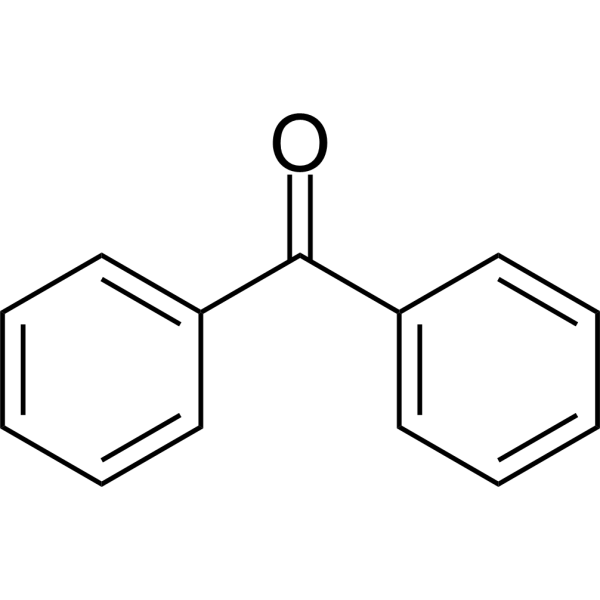
Benzophenone is an endogenous metabolite. Benzophenone is a photosensitizer, that absorbs UV light, transfers its energy to DNA, and triggers DNA damage. Benzophenone can be used as the fragrance enhancer, ultraviolet curing agent, additive in plastics, or the flavor ingredient. Benzophenone can also be used in the manufacturing of insecticides, agricultural chemicals, hypnotics, antihistamines, and other pharmaceuticals. Benzophenone exhibits certain carcinogenicity in mouse/rat models under long term exposure. Benzophenone exhibits estrogenic activity .
|
-
- HY-W010410R
-
|
|
Reference Standards
Others
|
Neurological Disease
Metabolic Disease
|
|
Methyl ricinoleate (Standard) is the analytical standard of Methyl ricinoleate. This product is intended for research and analytical applications. Methyl ricinoleate is a compound belonging to the group of fatty acid methyl esters. It is derived from ricinoleic acid, a monounsaturated omega-9 fatty acid found in castor oil. Methyl ricinoleate is often used as a reference compound for the analysis of fatty acid methyl esters by gas chromatography. It has also been investigated for its potential use as a biofuel and as an ingredient in the production of biodegradable plastics and surfactants.
|
-
- HY-W099538
-
|
Dilauryl 3,3'-Thiodipropionate
|
Environmental Pollutants
Biochemical Assay Reagents
|
Others
|
|
Dilauryl thiodipropionate (DLTDP), which is a sulfur-containing antioxidant commonly used to stabilize polymers and plastics against degradation caused by heat, oxygen, and UV light, acts to scavenge free radicals and others that may cause polymer chain scission and cross-linked active substances, in addition, DLTDP has been used as an additive to lubricants, oils and other industrial fluids to improve their oxidation stability, the long hydrocarbon chain in DLTDP makes it low volatility and compatible with many materials and Good compatibility with substrates.
|
-
- HY-W036120
-
|
2,2′,4,4′-Tetrahydroxybenzophenone
|
Environmental Pollutants
Glycosidase
Estrogen Receptor/ERR
Pregnane X Receptor (PXR)
|
Metabolic Disease
Endocrinology
|
|
Benzophenone-2 (2,2',4,4'-Tetrahydroxybenzophenone) is an organic ultraviolet absorber that is widely used in personal care products and industrial products such as plastics and coatings. Benzophenone-2 is an endocrine disruptor that can interfere with estrogen receptors (ERα receptor) and pregnane X receptor (PXR receptor) activity, leading to reproductive toxicity, immune disorders, and metabolic abnormalities. Benzophenone-2 can inhibit the activity of α-glucosidase (IC50 = 49.72 μM), and can be used for research on diabetes .
|
-
- HY-Y0546S2
-
|
|
Isotope-Labeled Compounds
Endogenous Metabolite
Photosensitizer
|
Cancer
|
|
Benzophenone- 13C is the 13C labeled Benzophenone (HY-Y0546). Benzophenone is an endogenous metabolite. Benzophenone is a photosensitizer, that absorbs UV light, transfers its energy to DNA, and triggers DNA damage. Benzophenone can be used as the fragrance enhancer, ultraviolet curing agent, additive in plastics, or the flavor ingredient. Benzophenone can also be used in the manufacturing of insecticides, agricultural chemicals, hypnotics, antihistamines, and other pharmaceuticals. Benzophenone exhibits certain carcinogenicity in mouse/rat models under long term exposure. Benzophenone exhibits estrogenic activity .
|
-
- HY-W010695R
-
|
|
Biochemical Assay Reagents
Reference Standards
|
Others
|
|
Cholesteryl stearate (Standard) is the analytical standard of Cholesteryl stearate (HY-W010695). This product is intended for research and analytical applications. Cholesteryl stearate is a compound belonging to the class of esters. It is a cholesterol ester commonly found in animal and plant sources. Cholesteryl stearate consists of two naturally occurring substances, cholesteryl alcohol and stearic acid. The combination of the two creates a stable compound that is commonly used in a variety of industrial and biomedical applications. Cholesteryl stearate is commonly used as a lubricant, thickener and emollient in cosmetic formulations such as lotions and creams. It is also used to produce certain types of polymers and plastics.
|
-
- HY-W010695S1
-
|
|
Isotope-Labeled Compounds
Biochemical Assay Reagents
|
Others
|
|
Cholesteryl octadecanoate-d35 is the deuterium labeled Cholesteryl stearate (HY-W010695). Cholesteryl stearate is a compound belonging to the class of esters. It is a cholesterol ester commonly found in animal and plant sources. Cholesteryl stearate consists of two naturally occurring substances, cholesteryl alcohol and stearic acid. The combination of the two creates a stable compound that is commonly used in a variety of industrial and biomedical applications. Cholesteryl stearate is commonly used as a lubricant, thickener and emollient in cosmetic formulations such as lotions and creams. It is also used to produce certain types of polymers and plastics.
|
-
- HY-Y0546S1
-
|
|
Isotope-Labeled Compounds
Endogenous Metabolite
Photosensitizer
|
Cancer
|
|
Benzophenone-d5 is the deuterium labeled Benzophenone (HY-Y0546). Benzophenone is an endogenous metabolite. Benzophenone is a photosensitizer, that absorbs UV light, transfers its energy to DNA, and triggers DNA damage. Benzophenone can be used as the fragrance enhancer, ultraviolet curing agent, additive in plastics, or the flavor ingredient. Benzophenone can also be used in the manufacturing of insecticides, agricultural chemicals, hypnotics, antihistamines, and other pharmaceuticals. Benzophenone exhibits certain carcinogenicity in mouse/rat models under long term exposure. Benzophenone exhibits estrogenic activity .
|
-
- HY-W011215R
-
|
|
Apoptosis
Reactive Oxygen Species (ROS)
Reference Standards
|
Inflammation/Immunology
|
|
Dihexyl phthalate (Standard) is the analytical standard of Dihexyl phthalate (HY-W011215). This product is intended for research and analytical applications. Dihexyl phthalate is one of the commonly used phthalate esters in various plastics and consumer products. Dihexyl phthalate is classified as a priority pollutant and an endocrine disruptor. Dihexyl phthalate can induce reactive oxygen species (ROS) accumulation, promote inflammation, and lead to significant increases in apoptosis and inflammation-related gene expression levels. Dihexyl phthalate can cause testicular atrophy and is a reproductive toxicant .
|
-
- HY-Y0546S
-
|
|
Isotope-Labeled Compounds
Endogenous Metabolite
Photosensitizer
|
Cancer
|
|
Benzophenone-d10 is the deuterium labeled Benzophenone (HY-Y0546). Benzophenone is an endogenous metabolite. Benzophenone is a photosensitizer, that absorbs UV light, transfers its energy to DNA, and triggers DNA damage. Benzophenone can be used as the fragrance enhancer, ultraviolet curing agent, additive in plastics, or the flavor ingredient. Benzophenone can also be used in the manufacturing of insecticides, agricultural chemicals, hypnotics, antihistamines, and other pharmaceuticals. Benzophenone exhibits certain carcinogenicity in mouse/rat models under long term exposure. Benzophenone exhibits estrogenic activity .
|
-
- HY-Y0546R
-
|
|
Reference Standards
Endogenous Metabolite
Photosensitizer
|
Cancer
|
|
Benzophenone (Standard) is the analytical standard of Benzophenone. This product is intended for research and analytical applications. Benzophenone standard is a photosensitizer, that absorbs UV light, transfers its energy to DNA, and triggers DNA damage. Benzophenone standard can be used as the fragrance enhancer, ultraviolet curing agent, additive in plastics, or the flavor ingredient. Benzophenone standard can also be used in the manufacturing of insecticides, agricultural chemicals, hypnotics, antihistamines, and other pharmaceuticals. Benzophenone standard exhibits certain carcinogenicity in mouse/rat models under long term exposure. Benzophenone standard exhibits estrogenic activity .
|
-
- HY-W009400R
-
|
|
Others
Reference Standards
|
Others
|
|
(2-Dodecen-1-yl)succinic anhydride (Standard) is the analytical standard of (2-Dodecen-1-yl)succinic anhydride (HY-W009400). This product is intended for research and analytical applications. (2-Dodecen-1-yl)succinic anhydride is an organic compound commonly used in certain polymerization reactions. It is used in the manufacture of products such as plastics and resins, and is widely used in certain industrial fields, such as coatings, inks and textile manufacturing. In addition, the compound is also used as a raw material for pharmaceutical intermediates and surfactants.
|
-
- HY-W011215S
-
|
|
Isotope-Labeled Compounds
Apoptosis
Reactive Oxygen Species (ROS)
|
Others
|
|
Dihexyl phthalate-3,4,5,6-d4 is the deuterium labeled Dihexyl phthalate-3,4,5,6. Dihexyl phthalate (HY-W011215) is one of the commonly used phthalate esters in various plastics and consumer products. Dihexyl phthalate is classified as a priority pollutant and an endocrine disruptor. Dihexyl phthalate can induce reactive oxygen species (ROS) accumulation, promote inflammation, and lead to significant increases in apoptosis and inflammation-related gene expression levels. Dihexyl phthalate can cause testicular atrophy and is a reproductive toxicant .
|
-
- HY-W099538R
-
|
Dilauryl 3,3'-Thiodipropionate (Standard)
|
Biochemical Assay Reagents
Reference Standards
|
Others
|
|
Dilauryl thiodipropionate (Standard) is the analytical standard of Dilauryl thiodipropionate. This product is intended for research and analytical applications. Dilauryl thiodipropionate (DLTDP), which is a sulfur-containing antioxidant commonly used to stabilize polymers and plastics against degradation caused by heat, oxygen, and UV light, acts to scavenge free radicals and others that may cause polymer chain scission and cross-linked active substances, in addition, DLTDP has been used as an additive to lubricants, oils and other industrial fluids to improve their oxidation stability, the long hydrocarbon chain in DLTDP makes it low volatility and compatible with many materials and Good compatibility with substrates.
|
-
- HY-W093282
-
|
Soybean oil epoxide
|
Environmental Pollutants
Biochemical Assay Reagents
|
Others
|
|
Epoxidized soya bean oil (ESBO) is a vegetable oil-derived organic compound used as a plasticizer and stabilizer in various applications. It is produced by epoxidation of soybean oil, which introduces epoxy groups into the fatty acid chains of the oil. ESBO is a viscous, pale yellow liquid that is soluble in many organic solvents, such as chloroform and ethanol, but insoluble in water. It is commonly used as a plasticizer in polyvinyl chloride (PVC) products, including toys, food packaging materials and medical devices. In addition to its plasticizing properties, ESBO acts as an antioxidant and UV stabilizer, helping to prevent degradation and discoloration of PVC products over time. ESBOs have been investigated for their potential use in biodegradable plastics and as bio-based alternatives to traditional petroleum-derived plasticizers.
|
-
- HY-W250148
-
|
Spirit nigrosine
|
Biochemical Assay Reagents
|
Others
|
|
Solvent black 5 (Spirit nigrosine) is a synthetic dye belonging to the family of azo dyes. Also known as oil black or naphthol black, it is dark blue-black and has excellent solubility in organic solvents. Solvent black 5 is commonly used as a colorant in various industrial applications such as printing inks, coatings and plastics. It can also be used as an indicator dye to detect the presence of metals in solution. Furthermore, due to its high absorption and emission properties in the near-infrared region, it has been used in scientific research as a fluorescent biomarker for tissues and cells. However, Solvent black 5 has been reported to have potentially toxic effects on human health and the environment and its use is therefore regulated in some countries.
|
-
- HY-W587519S
-
|
|
Isotope-Labeled Compounds
Bacterial
|
Others
|
|
Bisphenol A bis(3-chloro-2-hydroxypropyl) ether-d14 is deuterium labeled Bisphenol A bis(3-chloro-2-hydroxypropyl) ether. Bisphenol A bis(3-chloro-2-hydroxypropyl) ether is an organic compound with potential antimicrobial activity. Bisphenol A bis(3-chloro-2-hydroxypropyl) ether can be widely used in coatings and plastics to improve the strength and durability of materials. Bisphenol A bis(3-chloro-2-hydroxypropyl) ether also plays an important role in textile processing, improving the wrinkle resistance and abrasion resistance of fabrics .
|
-
| Cat. No. |
Product Name |
Type |
-
- HY-D0363
-
|
|
Fluorescent Dye
|
|
Pigment Red 166 is a commonly used commercial dye for bulk coloring of plastics and synthetic fibers and for surface coatings such as paints and inks.
|
-
- HY-D1137
-
|
|
Fluorescent Dye
|
|
C.I. Pigment yellow 110 is the most important colorant used to add color or change the color of something and is chemically essentially unaffected by the carrier or medium into which it is incorporated. It can be widely used in textile, medicine, food, cosmetics, plastics, paint, ink, photography and paper industries.
|
-
- HY-D0278
-
|
|
Fluorescent Dye
|
|
Pigment Red 170 is a commonly used commercial dye for bulk coloring of plastics and synthetic fibers and for surface coatings such as paints and inks.
|
-
- HY-D0429
-
|
|
Fluorescent Dye
|
|
C.I. Pigment red 5 is the most important colorant used to add color or change the color of something and is chemically essentially unaffected by the carrier or medium into which it is incorporated. It can be widely used in textile, medicine, food, cosmetics, plastics, paint, ink, photography and paper industries.
|
-
- HY-D0280
-
|
|
Fluorescent Dye
|
|
Pigment red 57-1 is a commonly used commercial dye for bulk coloring of plastics and synthetic fibers and for surface coatings such as paints and inks.
|
-
- HY-D0531
-
|
|
Fluorescent Dye
|
|
C.I. Pigment red 123 is the most important colorant used to add color or change the color of something and is chemically essentially unaffected by the carrier or medium into which it is incorporated. It can be widely used in textile, medicine, food, cosmetics, plastics, paint, ink, photography and paper industries.
|
-
- HY-D0960
-
|
|
Fluorescent Dye
|
|
C.I. Solvent Blue 43 is the most important colorant used to add color or change the color of something and is chemically essentially unaffected by the carrier or medium into which it is incorporated. It can be widely used in textile, medicine, food, cosmetics, plastics, paint, ink, photography and paper industries.
|
-
- HY-W250148
-
|
Spirit nigrosine
|
Fluorescent Dye
|
|
Solvent black 5 (Spirit nigrosine) is a synthetic dye belonging to the family of azo dyes. Also known as oil black or naphthol black, it is dark blue-black and has excellent solubility in organic solvents. Solvent black 5 is commonly used as a colorant in various industrial applications such as printing inks, coatings and plastics. It can also be used as an indicator dye to detect the presence of metals in solution. Furthermore, due to its high absorption and emission properties in the near-infrared region, it has been used in scientific research as a fluorescent biomarker for tissues and cells. However, Solvent black 5 has been reported to have potentially toxic effects on human health and the environment and its use is therefore regulated in some countries.
|
-
- HY-D0632
-
|
|
Fluorescent Dye
|
|
Pigment Red 147 is a commonly used commercial dye for bulk coloring of plastics and synthetic fibers and for surface coatings such as paints and inks.
|
-
- HY-D0384
-
|
|
Fluorescent Dye
|
|
Pigment Red 144 is a commonly used commercial dye for bulk coloring of plastics and synthetic fibers and for surface coatings such as paints and inks.
|
-
- HY-D0345
-
|
|
Fluorescent Dye
|
|
Pigment Red 178 is a commonly used commercial dye for bulk coloring of plastics and synthetic fibers and for surface coatings such as paints and inks.
|
-
- HY-D0421
-
|
|
Fluorescent Dye
|
|
C.I. Solvent yellow 18 is a lipid-soluble fluorescent azo dye, which is widely used in industries such as textiles, medicine, food, cosmetics, plastics, paints, inks, photography and papermaking .
|
-
- HY-D0405
-
|
|
Fluorescent Dye
|
|
C.I. Pigment yellow 74 is the most important colorant used to add color or change the color of something and is chemically essentially unaffected by the carrier or medium into which it is incorporated. It can be widely used in textile, medicine, food, cosmetics, plastics, paint, ink, photography and paper industries.
|
-
- HY-D0457
-
|
|
Fluorescent Dye
|
|
C.I. Solvent red 179 is the most important colorant used to add color or change the color of something and is chemically essentially unaffected by the carrier or medium into which it is incorporated. It can be widely used in textile, medicine, food, cosmetics, plastics, paint, ink, photography and paper industries.
|
-
- HY-D0341
-
|
Solvent Violet 26
|
Fluorescent Dye
|
|
Disperse Red 11 is a red dye derived from anthraquinone. It is used in plastics, textiles and cosmetics.
|
-
- HY-D0545
-
|
|
Fluorescent Dye
|
|
Disperse red 91 is a red dye derived from anthraquinone. It is used in plastics, textiles and cosmetics.
|
-
- HY-D0687
-
|
|
Fluorescent Dye
|
|
Disperse red 324 is a red dye derived from anthraquinone. It is used in plastics, textiles and cosmetics.
|
-
- HY-D0673
-
|
|
Fluorescent Dye
|
|
Disperse red 311 is a red dye derived from anthraquinone. It is used in plastics, textiles and cosmetics.
|
-
- HY-D0316
-
|
DR 167:1
|
Fluorescent Dye
|
|
Disperse red 167:1 is a red dye derived from anthraquinone. It is used in plastics, textiles and cosmetics.
|
-
- HY-D1064
-
|
|
Fluorescent Dye
|
|
Pigment red 57 is a commonly used commercial dye for bulk coloring of plastics and synthetic fibers and for surface coatings such as paints and inks.
|
-
- HY-D0383
-
|
|
Fluorescent Dye
|
|
Pigment Red 146 is a commonly used commercial dye for bulk coloring of plastics and synthetic fibers and for surface coatings such as paints and inks.
|
-
- HY-D0568
-
|
|
Fluorescent Dye
|
|
Pigment Red 242 is a commonly used commercial dye for bulk coloring of plastics and synthetic fibers and for surface coatings such as paints and inks.
|
-
- HY-D1139
-
|
|
Fluorescent Dye
|
|
Pigment Red 177 is a commonly used commercial dye for bulk coloring of plastics and synthetic fibers and for surface coatings such as paints and inks.
|
-
- HY-D0549
-
|
|
Fluorescent Dye
|
|
Pigment Red 266 is a commonly used commercial dye for bulk coloring of plastics and synthetic fibers and for surface coatings such as paints and inks.
|
-
- HY-D0596
-
|
|
Fluorescent Dye
|
|
Pigment Red 188 is a commonly used commercial dye for bulk coloring of plastics and synthetic fibers and for surface coatings such as paints and inks.
|
-
- HY-D1233
-
|
Quinaridone magenta 202
|
Fluorescent Dye
|
|
Pigment Red 202 is a commonly used commercial dye for bulk coloring of plastics and synthetic fibers and for surface coatings such as paints and inks.
|
-
- HY-D1164
-
|
D&C Red No. 34
|
Fluorescent Dye
|
|
Pigment red 63:1 is a commonly used commercial dye for bulk coloring of plastics and synthetic fibers and for surface coatings such as paints and inks.
|
-
- HY-D0488
-
|
|
Fluorescent Dye
|
|
C.I. Pigment orange 36 is the most important colorant used to add color or change the color of something and is chemically essentially unaffected by the carrier or medium into which it is incorporated. It can be widely used in textile, medicine, food, cosmetics, plastics, paint, ink, photography and paper industries.
|
-
- HY-D0489
-
|
|
Fluorescent Dye
|
|
C.I. Pigment orange 38 is the most important colorant used to add color or change the color of something and is chemically essentially unaffected by the carrier or medium into which it is incorporated. It can be widely used in textile, medicine, food, cosmetics, plastics, paint, ink, photography and paper industries.
|
-
- HY-D0459
-
|
|
Fluorescent Dye
|
|
C.I. Pigment brown 25 is the most important colorant used to add color or change the color of something and is chemically essentially unaffected by the carrier or medium into which it is incorporated. It can be widely used in textile, medicine, food, cosmetics, plastics, paint, ink, photography and paper industries.
|
-
- HY-D0686
-
|
|
Fluorescent Dye
|
|
C.I. Pigment red 221 is the most important colorant used to add color or change the color of something and is chemically essentially unaffected by the carrier or medium into which it is incorporated. It can be widely used in textile, medicine, food, cosmetics, plastics, paint, ink, photography and paper industries.
|
-
- HY-D0450
-
|
|
Fluorescent Dye
|
|
C.I. Pigment red 112 is the most important colorant used to add color or change the color of something and is chemically essentially unaffected by the carrier or medium into which it is incorporated. It can be widely used in textile, medicine, food, cosmetics, plastics, paint, ink, photography and paper industries.
|
-
- HY-D0486
-
|
|
Fluorescent Dye
|
|
C.I. Pigment violet 32 is the most important colorant used to add color or change the color of something and is chemically essentially unaffected by the carrier or medium into which it is incorporated. It can be widely used in textile, medicine, food, cosmetics, plastics, paint, ink, photography and paper industries.
|
-
- HY-D0442
-
|
|
Fluorescent Dye
|
|
C.I. Pigment red 14 is the most important colorant used to add color or change the color of something and is chemically essentially unaffected by the carrier or medium into which it is incorporated. It can be widely used in textile, medicine, food, cosmetics, plastics, paint, ink, photography and paper industries.
|
-
- HY-D0510
-
|
|
Fluorescent Dye
|
|
C.I. Pigment orange 34 is the most important colorant used to add color or change the color of something and is chemically essentially unaffected by the carrier or medium into which it is incorporated. It can be widely used in textile, medicine, food, cosmetics, plastics, paint, ink, photography and paper industries.
|
-
- HY-D0725
-
|
|
Fluorescent Dye
|
|
C.I. Pigment yellow 180 is the most important colorant used to add color or change the color of something and is chemically essentially unaffected by the carrier or medium into which it is incorporated. It can be widely used in textile, medicine, food, cosmetics, plastics, paint, ink, photography and paper industries.
|
-
- HY-D0445
-
|
|
Fluorescent Dye
|
|
C.I. Pigment orange 16 is the most important colorant used to add color or change the color of something and is chemically essentially unaffected by the carrier or medium into which it is incorporated. It can be widely used in textile, medicine, food, cosmetics, plastics, paint, ink, photography and paper industries.
|
-
- HY-D0426
-
|
|
Fluorescent Dye
|
|
C.I. Pigment red 8 is the most important colorant used to add color or change the color of something and is chemically essentially unaffected by the carrier or medium into which it is incorporated. It can be widely used in textile, medicine, food, cosmetics, plastics, paint, ink, photography and paper industries.
|
-
- HY-D0428
-
|
|
Fluorescent Dye
|
|
C.I. Pigment red 9 is the most important colorant used to add color or change the color of something and is chemically essentially unaffected by the carrier or medium into which it is incorporated. It can be widely used in textile, medicine, food, cosmetics, plastics, paint, ink, photography and paper industries.
|
-
- HY-D0460
-
|
Pigment red 48 calcium salt
|
Fluorescent Dye
|
|
C.I. Pigment red 48 is the most important colorant used to add color or change the color of something and is chemically essentially unaffected by the carrier or medium into which it is incorporated. It can be widely used in textile, medicine, food, cosmetics, plastics, paint, ink, photography and paper industries.
|
-
- HY-D0394
-
|
|
Fluorescent Dye
|
|
C.I. Pigment red 2 is the most important colorant used to add color or change the color of something and is chemically essentially unaffected by the carrier or medium into which it is incorporated. It can be widely used in textile, medicine, food, cosmetics, plastics, paint, ink, photography and paper industries.
|
-
- HY-D0519
-
|
|
Fluorescent Dye
|
|
C.I. Pigment red 52:1 is the most important colorant used to add color or change the color of something and is chemically essentially unaffected by the carrier or medium into which it is incorporated. It can be widely used in textile, medicine, food, cosmetics, plastics, paint, ink, photography and paper industries.
|
-
- HY-D2425
-
|
|
Fluorescent Dye
|
|
Disperse Red 153 is an azo dye that can be used in plastics, textiles, and cosmetics .
|
-
- HY-D0349
-
|
|
Fluorescent Dye
|
|
Disperse Red 13 is a red dye derived from anthraquinone. It is used in plastics, textiles and cosmetics.
|
-
- HY-D0315
-
|
|
Fluorescent Dye
|
|
Disperse red 74 is a red dye derived from anthraquinone. It is used in plastics, textiles and cosmetics.
|
-
- HY-D0513
-
|
|
Fluorescent Dye
|
|
Disperse red 65 is a red dye derived from anthraquinone. It is used in plastics, textiles and cosmetics.
|
-
- HY-D1037
-
|
|
Fluorescent Dye
|
|
Disperse red 50 is a red dye derived from anthraquinone. It is used in plastics, textiles and cosmetics.
|
-
- HY-D0594
-
|
|
Fluorescent Dye
|
|
Disperse Red 278 is a red dye derived from anthraquinone. It is used in plastics, textiles and cosmetics.
|
-
- HY-D0288
-
|
|
Fluorescent Dye
|
|
Disperse red 86 is a red dye derived from anthraquinone. It is used in plastics, textiles and cosmetics.
|
-
- HY-D0347
-
|
|
Fluorescent Dye
|
|
Disperse Red 17 is a red dye derived from anthraquinone. It is used in plastics, textiles and cosmetics.
|
- HY-D0393
-
|
|
Fluorescent Dye
|
|
Disperse red 54 is a red dye derived from anthraquinone. It is used in plastics, textiles and cosmetics.
|
- HY-D0625
-
|
|
Fluorescent Dye
|
|
Disperse Red 177 is a red dye derived from anthraquinone. It is used in plastics, textiles and cosmetics.
|
- HY-D0515
-
|
|
Fluorescent Dye
|
|
Disperse red 73 is a red dye derived from anthraquinone. It is used in plastics, textiles and cosmetics.
|
- HY-D1128
-
|
|
Fluorescent Dye
|
|
Disperse red 151 is a red dye derived from anthraquinone. It is used in plastics, textiles and cosmetics.
|
- HY-D0337
-
|
|
Fluorescent Dye
|
|
Pigment Red 4 is a commonly used commercial dye for bulk coloring of plastics and synthetic fibers and for surface coatings such as paints and inks.
|
- HY-D1201
-
|
|
Fluorescent Dye
|
|
Pigment Red 245 is a commonly used commercial dye for bulk coloring of plastics and synthetic fibers and for surface coatings such as paints and inks.
|
- HY-D0697
-
|
|
Fluorescent Dye
|
|
Pigment red 95 is a commonly used commercial dye for bulk coloring of plastics and synthetic fibers and for surface coatings such as paints and inks.
|
- HY-D1215
-
|
|
Fluorescent Dye
|
|
Pigment Red 31 is a commonly used commercial dye for bulk coloring of plastics and synthetic fibers and for surface coatings such as paints and inks.
|
- HY-D0566
-
|
|
Fluorescent Dye
|
|
Pigment Red 185 is a commonly used commercial dye for bulk coloring of plastics and synthetic fibers and for surface coatings such as paints and inks.
|
- HY-D1155
-
|
|
Fluorescent Dye
|
|
Pigment Red 176 is a commonly used commercial dye for bulk coloring of plastics and synthetic fibers and for surface coatings such as paints and inks.
|
- HY-D0427
-
|
|
Fluorescent Dye
|
|
C.I. Pigment red 12 is the most important colorant used to add color or change the color of something and is chemically essentially unaffected by the carrier or medium into which it is incorporated. It can be widely used in textile, medicine, food, cosmetics, plastics, paint, ink, photography and paper industries.
|
- HY-D0493
-
|
|
Fluorescent Dye
|
|
C.I. Pigment yellow 62 is the most important colorant used to add color or change the color of something and is chemically essentially unaffected by the carrier or medium into which it is incorporated. It can be widely used in textile, medicine, food, cosmetics, plastics, paint, ink, photography and paper industries.
|
- HY-D0408
-
|
|
Fluorescent Dye
|
|
C.I. Pigment red 38 is the most important colorant used to add color or change the color of something and is chemically essentially unaffected by the carrier or medium into which it is incorporated. It can be widely used in textile, medicine, food, cosmetics, plastics, paint, ink, photography and paper industries.
|
- HY-D0392
-
|
|
Fluorescent Dye
|
|
C. I. Pigment yellow 16 is the most important colorant used to add color or change the color of something and is chemically essentially unaffected by the carrier or medium into which it is incorporated. It can be widely used in textile, medicine, food, cosmetics, plastics, paint, ink, photography and paper industries.
|
- HY-D0433
-
|
Navy Blue G
|
Fluorescent Dye
|
|
C.I. Vat Blue 16 is the most important colorant used to add color or change the color of something and is chemically essentially unaffected by the carrier or medium into which it is incorporated. It can be widely used in textile, medicine, food, cosmetics, plastics, paint, ink, photography and paper industries.
|
- HY-D0431
-
|
|
Fluorescent Dye
|
|
C.I. Pigment blue 56 is the most important colorant used to add color or change the color of something and is chemically essentially unaffected by the carrier or medium into which it is incorporated. It can be widely used in textile, medicine, food, cosmetics, plastics, paint, ink, photography and paper industries.
|
- HY-D0415
-
|
|
Fluorescent Dye
|
|
C.I. Vat blue 22 is the most important colorant used to add color or change the color of something and is chemically essentially unaffected by the carrier or medium into which it is incorporated. It can be widely used in textile, medicine, food, cosmetics, plastics, paint, ink, photography and paper industries.
|
- HY-D0441
-
|
|
Fluorescent Dye
|
|
C.I. Pigment red 23 is the most important colorant used to add color or change the color of something and is chemically essentially unaffected by the carrier or medium into which it is incorporated. It can be widely used in textile, medicine, food, cosmetics, plastics, paint, ink, photography and paper industries.
|
- HY-D0347R
-
|
|
Fluorescent Dye
|
|
Disperse Red 17 (Standard) is the analytical standard of Disperse Red 17. This product is intended for research and analytical applications. Disperse Red 17 is a red dye derived from anthraquinone. It is used in plastics, textiles and cosmetics.
|
| Cat. No. |
Product Name |
Type |
-
- HY-W007801
-
|
TPAP
|
Biochemical Assay Reagents
|
|
Tetrapropylammonium perruthenate (TPAP) is an organic compound commonly used as a catalyst and oxidizing agent. It can play an oxidation role in some organic synthesis reactions, and can catalyze the oxidation reactions of olefins and aromatic compounds. In addition, the compound is widely used in some industrial production areas, such as in the application of plastics, rubber and textile manufacturing processes.
|
-
- HY-N8045
-
|
Ricinolic acid methyl ester
|
Biochemical Assay Reagents
|
|
Methyl ricinoleate is a compound belonging to the group of fatty acid methyl esters. It is derived from ricinoleic acid, a monounsaturated omega-9 fatty acid found in castor oil. Methyl ricinoleate is often used as a reference compound for the analysis of fatty acid methyl esters by gas chromatography. It has also been investigated for its potential use as a biofuel and as an ingredient in the production of biodegradable plastics and surfactants.
|
-
- HY-42935A
-
|
Enanthate sodium
|
Biochemical Assay Reagents
|
|
Heptanoate sodium is an organic sodium salt compound widely used in various industries and laboratories. It can be used as surfactant, emulsifier, lubricant and preservative, etc., and plays an important role in some electronic devices. In addition, Heptanoate sodium is also used in the preparation of certain chemicals and raw materials such as paints, plastics, fragrances, etc. Although the compound has no direct medical application, it plays an important role in chemical research and industrial production.
|
-
- HY-W005355
-
|
|
Biochemical Assay Reagents
|
|
Sodium 2-oxobutanoate is an organic compound commonly used as a food additive and industrial raw material. It can be used as an acidity regulator, leavening agent and preservative, and is often used in the fields of bread, baked goods and canning. In addition, the compound is used in the production of certain industrial products, such as in plastics, textiles and dyes.
|
-
- HY-ER010
-
|
Imidazole hydrochloride
|
Biochemical Assay Reagents
|
|
1H-Imidazole hydrochloride can be used as ligand, buffer and catalyst, etc., and also plays an important role in the process of drug synthesis and extraction of natural products. In addition, the compound is widely used in certain industrial fields, such as in the manufacturing process of plastics, coatings, textiles and electronic materials. Although the compound has no direct medical applications, it plays an important role in chemical research and laboratory studies.
|
-
- HY-N8451
-
|
Triacontanoic acid
|
Biochemical Assay Reagents
|
|
Melissic acid, which belongs to the category of long-chain saturated fatty acids. It is a 30-carbon straight-chain fatty acid found in a variety of natural sources, including beeswax and coconut oil. Due to its unique physical properties, such as high melting point and viscosity, Melissic acid has a variety of uses in industry. It can be used as a lubricant in the production of some plastics and rubber, and is also used in the manufacture of surfactants and detergents.
|
-
- HY-W090294
-
|
Peri-dinaphthalene (purified by sublimation)
|
Biochemical Assay Reagents
|
|
Perylene, which is a polycyclic aromatic hydrocarbon composed of four linearly fused benzene rings, is commonly used as a pigment and dye in a variety of applications, including printing inks, plastics, and textiles. In addition, Perylene has potential uses in solar cells as photosensitizers and as fluorescent probes in biochemistry and materials science. Perylene's rigid planar structure endows it with unique electronic and optical properties, making it a versatile and important compound in many fields of chemistry and materials science.
|
-
- HY-W093282
-
|
Soybean oil epoxide
|
Biochemical Assay Reagents
|
|
Epoxidized soya bean oil (ESBO) is a vegetable oil-derived organic compound used as a plasticizer and stabilizer in various applications. It is produced by epoxidation of soybean oil, which introduces epoxy groups into the fatty acid chains of the oil. ESBO is a viscous, pale yellow liquid that is soluble in many organic solvents, such as chloroform and ethanol, but insoluble in water. It is commonly used as a plasticizer in polyvinyl chloride (PVC) products, including toys, food packaging materials and medical devices. In addition to its plasticizing properties, ESBO acts as an antioxidant and UV stabilizer, helping to prevent degradation and discoloration of PVC products over time. ESBOs have been investigated for their potential use in biodegradable plastics and as bio-based alternatives to traditional petroleum-derived plasticizers.
|
-
- HY-W250127
-
|
Terephthalic acid disodium salt
|
Biochemical Assay Reagents
|
|
Disodium terephthalate (Terephthalic acid disodium salt) is an isomer and a precursor of polyester PET, which can be used to make clothing and plastics. Disodium terephthalate can be used to build skin tumor models .
|
-
- HY-W010695
-
|
|
Biochemical Assay Reagents
|
|
Cholesteryl stearate is a compound belonging to the class of esters. It is a cholesterol ester commonly found in animal and plant sources. Cholesteryl stearate consists of two naturally occurring substances, cholesteryl alcohol and stearic acid. The combination of the two creates a stable compound that is commonly used in a variety of industrial and biomedical applications. Cholesteryl stearate is commonly used as a lubricant, thickener and emollient in cosmetic formulations such as lotions and creams. It is also used to produce certain types of polymers and plastics.
|
-
- HY-W099538
-
|
Dilauryl 3,3'-Thiodipropionate
|
Biochemical Assay Reagents
|
|
Dilauryl thiodipropionate (DLTDP), which is a sulfur-containing antioxidant commonly used to stabilize polymers and plastics against degradation caused by heat, oxygen, and UV light, acts to scavenge free radicals and others that may cause polymer chain scission and cross-linked active substances, in addition, DLTDP has been used as an additive to lubricants, oils and other industrial fluids to improve their oxidation stability, the long hydrocarbon chain in DLTDP makes it low volatility and compatible with many materials and Good compatibility with substrates.
|
-
- HY-W127489
-
|
|
Biochemical Assay Reagents
|
|
3-PentadecylphenolIt is an organic compound belonging to the phenolic class. It is attached to the phenolic ring by 15Carbon pentadecyl chain composition, with a touch of sweetness.3-Pentadecylphenol has various applications in the chemical and pharmaceutical industries, especially as an intermediate in the synthesis of various chemicals and pharmaceuticals. In addition, it can be used as an antioxidant for plastics and rubber.
|
-
- HY-W008816
-
|
Octyl carbinol; Pelargonic alcohol
|
Biochemical Assay Reagents
|
|
Nonan-1-ol is an organic compound commonly used in the manufacture of surfactants and lubricants, among others. It can be used as a detergent, emulsifier and stabilizer, and is widely used in some cosmetics, personal care products and printing inks. In addition, the compound has important applications in certain industrial fields, for example in the production of plastics and rubber.
|
-
- HY-W009400
-
|
|
Biochemical Assay Reagents
|
|
(2-Dodecen-1-yl)succinic anhydride is an organic compound commonly used in certain polymerization reactions. It is used in the manufacture of products such as plastics and resins, and is widely used in certain industrial fields, such as coatings, inks and textile manufacturing. In addition, the compound is also used as a raw material for pharmaceutical intermediates and surfactants.
|
-
- HY-W127364
-
|
Pentaerythritol distearate [Lubricants]
|
Biochemical Assay Reagents
|
|
Pentaerythritol distearate (mixture) is a mixture of ester compounds commonly used as a thickener, emulsifier or lubricant in various cosmetic and personal care products. It is also used as a plasticizer or stabilizer in the production of plastics and resins. Pentaerythritol distearate (mixture) has unique chemical properties that make it an important ingredient in a variety of industrial processes, including the manufacture of adhesives, coatings and sealants.
|
-
- HY-W010119
-
|
|
Biochemical Assay Reagents
|
|
4-Methyl-2-phenyl-1,3-dioxolane is an organic compound commonly used as a solvent and intermediate. It can be used in some organic synthesis reactions, such as the synthesis of drugs or other organic compounds. In addition, this compound is also widely used in industrial production fields, such as plastics, coatings and glues.
|
-
- HY-W087964
-
|
|
Biochemical Assay Reagents
|
|
Dodecanedioyl dichloride, Dodecanedioyl dichloride is commonly used in organic synthesis as a general building block for the preparation of various polymers and plastics, including nylon 12 and polyester resins, it can be used to introduce acid chloride groups into other organic molecules, which can then be further reaction to form more complex compounds, moreover, it has been used in medicinal chemistry as a starting material for the synthesis of various drugs and drug candidates.
|
-
- HY-W127540
-
|
Hexadecyl acetate
|
Biochemical Assay Reagents
|
|
Palmityl acetate is an ester compound with a waxy odor commonly used as a lubricant or emollient in various cosmetic and personal care products. In addition, it can be used as a plasticizer or stabilizer in the production of plastics and resins. Its unique chemical properties make it an important ingredient in a variety of commercial products, including perfumes, lotions and hair care products.
|
-
- HY-W127346
-
|
|
Biochemical Assay Reagents
|
|
Pentaerythrityl tetrastearate is an ester compound commonly used as a lubricant, emollient or thickener in various cosmetic and personal care products. It is also used as a plasticizer or stabilizer in the production of plastics and resins. Pentaerythrityl tetrastearate has unique chemical properties that make it an important ingredient in a variety of industrial processes, including the manufacture of adhesives, coatings and sealants.
|
-
- HY-W040186
-
|
|
Biochemical Assay Reagents
|
|
1-Naphthenyl phosphate hydrate sodium is commonly used as a flame retardant for various materials such as plastics, textiles, and construction materials. In addition, its potential use as a corrosion inhibitor and as an ingredient in fertilizers and detergents has been investigated. Its hydrated form contains variable amounts of water molecules, which affects its physical properties and applications.
|
-
- HY-W007174A
-
|
|
Biochemical Assay Reagents
|
|
1,4-Anhydro-D-xylitol is a compound belonging to the class of sugar alcohols. It is derived from xylitol, a natural sweetener found in many fruits and vegetables. 1,4-Anhydro-D-xylitol is commonly used as a low-calorie sweetener and excipient in the food and pharmaceutical industries, and as a filler or binder in pharmaceutical formulations. It has also been investigated for its potential use in the development of biodegradable plastics and other sustainable materials.
|
-
- HY-N8045R
-
|
Ricinolic acid methyl ester (Standard)
|
Biochemical Assay Reagents
|
|
Methyl ricinoleate (Standard) is the analytical standard of Methyl ricinoleate. This product is intended for research and analytical applications. Methyl ricinoleate is a compound belonging to the group of fatty acid methyl esters. It is derived from ricinoleic acid, a monounsaturated omega-9 fatty acid found in castor oil. Methyl ricinoleate is often used as a reference compound for the analysis of fatty acid methyl esters by gas chromatography. It has also been investigated for its potential use as a biofuel and as an ingredient in the production of biodegradable plastics and surfactants.
|
-
- HY-W099538R
-
|
Dilauryl 3,3'-Thiodipropionate (Standard)
|
Biochemical Assay Reagents
|
|
Dilauryl thiodipropionate (Standard) is the analytical standard of Dilauryl thiodipropionate. This product is intended for research and analytical applications. Dilauryl thiodipropionate (DLTDP), which is a sulfur-containing antioxidant commonly used to stabilize polymers and plastics against degradation caused by heat, oxygen, and UV light, acts to scavenge free radicals and others that may cause polymer chain scission and cross-linked active substances, in addition, DLTDP has been used as an additive to lubricants, oils and other industrial fluids to improve their oxidation stability, the long hydrocarbon chain in DLTDP makes it low volatility and compatible with many materials and Good compatibility with substrates.
|
-
- HY-179081
-
|
|
Biochemical Assay Reagents
|
|
Phenyl-dextran 40 can be used to coat plastics or other related surfaces to impart more hydrophilic properties.
|
-
- HY-W008816R
-
|
Octyl carbinol (Standard); Pelargonic alcohol (Standard)
|
Biochemical Assay Reagents
|
|
Nonanol (Standard) is the analytical standard of Nonanol (HY-W008816). This product is intended for research and analytical applications. Nonan-1-ol is an organic compound commonly used in the manufacture of surfactants and lubricants, among others. It can be used as a detergent, emulsifier and stabilizer, and is widely used in some cosmetics, personal care products and printing inks. In addition, the compound has important applications in certain industrial fields, for example in the production of plastics and rubber.
|
-
- HY-W010695R
-
|
|
Biochemical Assay Reagents
|
|
Cholesteryl stearate (Standard) is the analytical standard of Cholesteryl stearate (HY-W010695). This product is intended for research and analytical applications. Cholesteryl stearate is a compound belonging to the class of esters. It is a cholesterol ester commonly found in animal and plant sources. Cholesteryl stearate consists of two naturally occurring substances, cholesteryl alcohol and stearic acid. The combination of the two creates a stable compound that is commonly used in a variety of industrial and biomedical applications. Cholesteryl stearate is commonly used as a lubricant, thickener and emollient in cosmetic formulations such as lotions and creams. It is also used to produce certain types of polymers and plastics.
|
-
- HY-W009400R
-
|
|
Biochemical Assay Reagents
|
|
(2-Dodecen-1-yl)succinic anhydride (Standard) is the analytical standard of (2-Dodecen-1-yl)succinic anhydride (HY-W009400). This product is intended for research and analytical applications. (2-Dodecen-1-yl)succinic anhydride is an organic compound commonly used in certain polymerization reactions. It is used in the manufacture of products such as plastics and resins, and is widely used in certain industrial fields, such as coatings, inks and textile manufacturing. In addition, the compound is also used as a raw material for pharmaceutical intermediates and surfactants.
|
| Cat. No. |
Product Name |
Category |
Target |
Chemical Structure |
-
- HY-18260
-
Bisphenol A
Maximum Cited Publications
15 Publications Verification
|
Structural Classification
Classification of Application Fields
Phenols
Polyphenols
Endogenous metabolite
Disease Research Fields
Endocrinology
|
Environmental Pollutants
Endogenous Metabolite
Apoptosis
Reactive Oxygen Species (ROS)
p38 MAPK
Akt
|
|
Bisphenol A is a phenolic, organic synthetic compound widely used in the production of polycarbonate plastics and epoxy resins. Bisphenol A is a reproductive, developmental, and systemic toxicant, often classified as an endocrine-disrupting compound (EDC). Bisphenol A is associated with many diseases, including cancers, cardiovascular diseases, respiratory diseases, diabetes, kidney diseases, obesity, and reproductivedisorders .
|
-
-
- HY-W017522
-
-
-
- HY-Y0546
-
|
|
Structural Classification
Microorganisms
Classification of Application Fields
Ketones, Aldehydes, Acids
Metabolic Disease
Endogenous metabolite
Disease Research Fields
Source Classification
|
Environmental Pollutants
Endogenous Metabolite
Photosensitizer
|
|
Benzophenone is an endogenous metabolite. Benzophenone is a photosensitizer, that absorbs UV light, transfers its energy to DNA, and triggers DNA damage. Benzophenone can be used as the fragrance enhancer, ultraviolet curing agent, additive in plastics, or the flavor ingredient. Benzophenone can also be used in the manufacturing of insecticides, agricultural chemicals, hypnotics, antihistamines, and other pharmaceuticals. Benzophenone exhibits certain carcinogenicity in mouse/rat models under long term exposure. Benzophenone exhibits estrogenic activity .
|
-
-
- HY-W010098
-
-
-
- HY-W000800
-
-
-
- HY-W011215
-
|
|
Natural Products
Pyrus bretschneideri Rehder
Rosaceae
Plants
Source Classification
|
Apoptosis
Reactive Oxygen Species (ROS)
|
|
Dihexyl phthalate is one of the commonly used phthalate esters in various plastics and consumer products. Dihexyl phthalate is classified as a priority pollutant and an endocrine disruptor. Dihexyl phthalate can induce reactive oxygen species (ROS) accumulation, promote inflammation, and lead to significant increases in apoptosis and inflammation-related gene expression levels. Dihexyl phthalate can cause testicular atrophy and is a reproductive toxicant .
|
-
-
- HY-18260R
-
|
|
Structural Classification
Classification of Application Fields
Phenols
Polyphenols
Endogenous metabolite
Disease Research Fields
Endocrinology
Source Classification
|
Endogenous Metabolite
Reference Standards
|
|
Bisphenol A (Standard) is the analytical standard of Bisphenol A. This product is intended for research and analytical applications. Bisphenol A is a phenolic, organic synthetic compound widely used in the production of polycarbonate plastics and epoxy resins. Bisphenol A is a reproductive, developmental, and systemic toxicant, often classified as an endocrine-disrupting compound (EDC). Bisphenol A is associated with many diseases, including cardiovascular diseases, respiratory diseases, diabetes, kidney diseases, obesity, and reproductivedisorders .
|
-
-
- HY-W010098R
-
-
-
- HY-W008816
-
-
-
- HY-W017522R
-
-
-
- HY-W000800R
-
-
-
- HY-W010410R
-
|
|
Microorganisms
Plants
Source Classification
|
Reference Standards
Others
|
|
Methyl ricinoleate (Standard) is the analytical standard of Methyl ricinoleate. This product is intended for research and analytical applications. Methyl ricinoleate is a compound belonging to the group of fatty acid methyl esters. It is derived from ricinoleic acid, a monounsaturated omega-9 fatty acid found in castor oil. Methyl ricinoleate is often used as a reference compound for the analysis of fatty acid methyl esters by gas chromatography. It has also been investigated for its potential use as a biofuel and as an ingredient in the production of biodegradable plastics and surfactants.
|
-
-
- HY-Y0546R
-
|
|
Structural Classification
Microorganisms
Ketones, Aldehydes, Acids
Endogenous metabolite
Source Classification
|
Reference Standards
Endogenous Metabolite
Photosensitizer
|
|
Benzophenone (Standard) is the analytical standard of Benzophenone. This product is intended for research and analytical applications. Benzophenone standard is a photosensitizer, that absorbs UV light, transfers its energy to DNA, and triggers DNA damage. Benzophenone standard can be used as the fragrance enhancer, ultraviolet curing agent, additive in plastics, or the flavor ingredient. Benzophenone standard can also be used in the manufacturing of insecticides, agricultural chemicals, hypnotics, antihistamines, and other pharmaceuticals. Benzophenone standard exhibits certain carcinogenicity in mouse/rat models under long term exposure. Benzophenone standard exhibits estrogenic activity .
|
-
-
- HY-W008816R
-
|
Octyl carbinol (Standard); Pelargonic alcohol (Standard)
|
Structural Classification
Natural Products
Rutaceae
Citrus × junos Siebold ex Tanaka
Plants
Source Classification
|
Others
Reference Standards
|
|
Nonanol (Standard) is the analytical standard of Nonanol (HY-W008816). This product is intended for research and analytical applications. Nonan-1-ol is an organic compound commonly used in the manufacture of surfactants and lubricants, among others. It can be used as a detergent, emulsifier and stabilizer, and is widely used in some cosmetics, personal care products and printing inks. In addition, the compound has important applications in certain industrial fields, for example in the production of plastics and rubber.
|
-
-
- HY-W011215R
-
-
| Cat. No. |
Product Name |
Chemical Structure |
-
- HY-18260S2
-
|
|
|
Bisphenol A- 13C12 is the 13C-labeled Bisphenol A (HY-18260). Bisphenol A is a phenolic, organic synthetic compound widely used in the production of polycarbonate plastics and epoxy resins. Bisphenol A is a reproductive, developmental, and systemic toxicant, often classified as an endocrine-disrupting compound (EDC). Bisphenol A is associated with many diseases, including cancers, cardiovascular diseases, respiratory diseases, diabetes, kidney diseases, obesity, and reproductivedisorders .
|
-
-
- HY-18260S
-
|
|
|
Bisphenol A-d16 is the deuterium labeled Bisphenol A . Bisphenol A is a phenolic, organic synthetic compound widely used in the production of polycarbonate plastics and epoxy resins. Bisphenol A is a reproductive, developmental, and systemic toxicant, often classified as an endocrine-disrupting compound (EDC). Bisphenol A is associated with many diseases, including cardiovascular diseases, respiratory diseases, diabetes, kidney diseases, obesity, and reproductivedisorders .
|
-
-
- HY-W010098S1
-
1 Publications Verification
|
|
Terephthalic acid- 13C2 is the 13C-labeled Terephthalic acid. Terephthalic acid is an isomer and a precursor of polyester PET, which can be used to make clothing and plastics. Terephthalic acid can be used to build skin tumor models .
|
-
-
- HY-W010098S
-
|
|
|
Terephthalic acid-d4 is the deuterium labeled Terephthalic acid. Terephthalic acid is an isomer and a precursor of polyester PET, which can be used to make clothing and plastics. Terephthalic acid can be used to build skin tumor models .
|
-
-
- HY-18260S1
-
|
|
|
Bisphenol A-d6 is the deuterium labeled Bisphenol A. Bisphenol A is a phenolic, organic synthetic compound widely used in the production of polycarbonate plastics and epoxy resins. Bisphenol A is a reproductive, developmental, and systemic toxicant, often classified as an endocrine-disrupting compound (EDC). Bisphenol A is associated with many diseases, including cardiovascular diseases, respiratory diseases, diabetes, kidney diseases, obesity, and reproductivedisorders .
|
-
-
- HY-W017522S4
-
|
|
|
Adipic acid-d8 (Hexanedioic acid-d8) is the deuterium labeled Adipic acid (HY-W017522). Adipic acid (Hexanedioic acid) is an orally active compound with anti-HSV-1 activity. Adipic acid has low toxicity and can be used as a food additive and a gelling agent. Adipic acid can also be used in the synthesis of lubricants, artificial resins, plastics, etc .
|
-
-
- HY-Y0546S
-
|
|
|
Benzophenone-d10 is the deuterium labeled Benzophenone (HY-Y0546). Benzophenone is an endogenous metabolite. Benzophenone is a photosensitizer, that absorbs UV light, transfers its energy to DNA, and triggers DNA damage. Benzophenone can be used as the fragrance enhancer, ultraviolet curing agent, additive in plastics, or the flavor ingredient. Benzophenone can also be used in the manufacturing of insecticides, agricultural chemicals, hypnotics, antihistamines, and other pharmaceuticals. Benzophenone exhibits certain carcinogenicity in mouse/rat models under long term exposure. Benzophenone exhibits estrogenic activity .
|
-
-
- HY-W017522S3
-
|
|
|
Adipic acid- 13C (Hexanedioic acid- 13C) is the 13C labeled Adipic acid (HY-W017522). Adipic acid (Hexanedioic acid) is an orally active compound with anti-HSV-1 activity. Adipic acid has low toxicity and can be used as a food additive and a gelling agent. Adipic acid can also be used in the synthesis of lubricants, artificial resins, plastics, etc .
|
-
-
- HY-18260S6
-
|
|
|
Bisphenol A-d14 is a deuterium labeled Bisphenol A (HY-18260). Bisphenol A is a phenolic, organic synthetic compound widely used in the production of polycarbonate plastics and epoxy resins. Bisphenol A is a reproductive, developmental, and systemic toxicant, often classified as an endocrine-disrupting compound (EDC). Bisphenol A is associated with many diseases, including cardiovascular diseases, respiratory diseases, diabetes, kidney diseases, obesity, and reproductivedisorders .
|
-
-
- HY-W017522S
-
|
|
|
Adipic acid-d10 (Hexanedioic acid-d10) is the deuterium labeled Adipic acid (HY-W017522). Adipic acid (Hexanedioic acid) is an orally active compound with anti-HSV-1 activity. Adipic acid has low toxicity and can be used as a food additive and a gelling agent. Adipic acid can also be used in the synthesis of lubricants, artificial resins, plastics, etc .
|
-
-
- HY-W017522S1
-
|
|
|
Adipic acid- 13C6 (Hexanedioic acid- 13C6) is the 13C labeled Adipic acid (HY-W017522). Adipic acid (Hexanedioic acid) is an orally active compound with anti-HSV-1 activity. Adipic acid has low toxicity and can be used as a food additive and a gelling agent. Adipic acid can also be used in the synthesis of lubricants, artificial resins, plastics, etc .
|
-
-
- HY-W011926S
-
|
|
|
Diisopropyl phthalate-d4 (DiPP-d4) is the deuterium labeled Diisopropyl Phthalate (HY-W011926). Diisopropyl phthalate (DiPP) is a phthalate diester, which is widely used as an additive in plastics and consumer products. Diisopropyl phthalate has a weak binding ability to the recombinant human estrogen receptor, with an IC50 of 41000 μM .
|
-
-
- HY-W017522S2
-
|
|
|
Adipic acid-d4 (Hexanedioic acid-d4) is the deuterium labeled Adipic acid (HY-W017522). Adipic acid (Hexanedioic acid) is an orally active compound with anti-HSV-1 activity. Adipic acid has low toxicity and can be used as a food additive and a gelling agent. Adipic acid can also be used in the synthesis of lubricants, artificial resins, plastics, etc .
|
-
-
- HY-18260S3
-
|
|
|
Bisphenol A-d8 is the deuterium labeled Bisphenol A . Bisphenol A is a phenolic, organic synthetic compound widely used in the production of polycarbonate plastics and epoxy resins. Bisphenol A is a reproductive, developmental, and systemic toxicant, often classified as an endocrine-disrupting compound (EDC). Bisphenol A is associated with many diseases, including cardiovascular diseases, respiratory diseases, diabetes, kidney diseases, obesity, and reproductivedisorders .
|
-
-
- HY-18260S4
-
|
|
|
Bisphenol A-d4 is the deuterium labeled Bisphenol A . Bisphenol A is a phenolic, organic synthetic compound widely used in the production of polycarbonate plastics and epoxy resins. Bisphenol A is a reproductive, developmental, and systemic toxicant, often classified as an endocrine-disrupting compound (EDC). Bisphenol A is associated with many diseases, including cardiovascular diseases, respiratory diseases, diabetes, kidney diseases, obesity, and reproductivedisorders .
|
-
-
- HY-Y0546S2
-
|
|
|
Benzophenone- 13C is the 13C labeled Benzophenone (HY-Y0546). Benzophenone is an endogenous metabolite. Benzophenone is a photosensitizer, that absorbs UV light, transfers its energy to DNA, and triggers DNA damage. Benzophenone can be used as the fragrance enhancer, ultraviolet curing agent, additive in plastics, or the flavor ingredient. Benzophenone can also be used in the manufacturing of insecticides, agricultural chemicals, hypnotics, antihistamines, and other pharmaceuticals. Benzophenone exhibits certain carcinogenicity in mouse/rat models under long term exposure. Benzophenone exhibits estrogenic activity .
|
-
-
- HY-W011215S
-
|
|
|
Dihexyl phthalate-3,4,5,6-d4 is the deuterium labeled Dihexyl phthalate-3,4,5,6. Dihexyl phthalate (HY-W011215) is one of the commonly used phthalate esters in various plastics and consumer products. Dihexyl phthalate is classified as a priority pollutant and an endocrine disruptor. Dihexyl phthalate can induce reactive oxygen species (ROS) accumulation, promote inflammation, and lead to significant increases in apoptosis and inflammation-related gene expression levels. Dihexyl phthalate can cause testicular atrophy and is a reproductive toxicant .
|
-
-
- HY-133673S
-
|
|
|
Mono(3-carboxypropyl) phthalate-d4 (MCPP-d4) is a deuterium labeled Mono(3-carboxypropyl) phthalate (HY-133673). Mono(3-carboxypropyl) phthalate (MCPP) is a metabolite of Di-n-octyl phthalate. Di-n-octyl phthalate (DnOP) is a plasticizer used in polyvinyl chloride plastics, cellulose esters, and polystyrene resins .
|
-
-
- HY-W709120
-
|
|
|
Mono(7-carboxyheptyl) phthalate-d4 is the deuterium labeled Mono(7-carboxyheptyl) phthalate (HY-133674). Mono(7-carboxyheptyl) phthalate is a oxidative metabolite of Di-n-octyl phthalate. Di-n-octyl phthalate (DnOP) is a plasticizer used in polyvinyl chloride plastics, cellulose esters, and polystyrene resins .
|
-
-
- HY-18260S5
-
|
|
|
Bisphenol A-d4-1 is the deuterium labeled Bisphenol A . Bisphenol A is a phenolic, organic synthetic compound widely used in the production of polycarbonate plastics and epoxy resins. Bisphenol A is a reproductive, developmental, and systemic toxicant, often classified as an endocrine-disrupting compound (EDC). Bisphenol A is associated with many diseases, including cardiovascular diseases, respiratory diseases, diabetes, kidney diseases, obesity, and reproductivedisorders .
|
-
-
- HY-W017522S6
-
|
|
|
Adipic acid- 13C2 (Hexanedioic acid- 13C2) is 13C labeled Adipic acid (HY-W017522). Adipic acid (Hexanedioic acid) is an orally active compound with anti-HSV-1 activity. Adipic acid has low toxicity and can be used as a food additive and a gelling agent. Adipic acid can also be used in the synthesis of lubricants, artificial resins, plastics, etc .
|
-
-
- HY-W017522S5
-
|
|
|
Adipic acid-d4-1 (Hexanedioic acid-d4-1) is the deuterium labeled Adipic acid (HY-W017522). Adipic acid (Hexanedioic acid) is an orally active compound with anti-HSV-1 activity. Adipic acid has low toxicity and can be used as a food additive and a gelling agent. Adipic acid can also be used in the synthesis of lubricants, artificial resins, plastics, etc .
|
-
-
- HY-Y0546S1
-
|
|
|
Benzophenone-d5 is the deuterium labeled Benzophenone (HY-Y0546). Benzophenone is an endogenous metabolite. Benzophenone is a photosensitizer, that absorbs UV light, transfers its energy to DNA, and triggers DNA damage. Benzophenone can be used as the fragrance enhancer, ultraviolet curing agent, additive in plastics, or the flavor ingredient. Benzophenone can also be used in the manufacturing of insecticides, agricultural chemicals, hypnotics, antihistamines, and other pharmaceuticals. Benzophenone exhibits certain carcinogenicity in mouse/rat models under long term exposure. Benzophenone exhibits estrogenic activity .
|
-
-
- HY-W587519S
-
|
|
|
Bisphenol A bis(3-chloro-2-hydroxypropyl) ether-d14 is deuterium labeled Bisphenol A bis(3-chloro-2-hydroxypropyl) ether. Bisphenol A bis(3-chloro-2-hydroxypropyl) ether is an organic compound with potential antimicrobial activity. Bisphenol A bis(3-chloro-2-hydroxypropyl) ether can be widely used in coatings and plastics to improve the strength and durability of materials. Bisphenol A bis(3-chloro-2-hydroxypropyl) ether also plays an important role in textile processing, improving the wrinkle resistance and abrasion resistance of fabrics .
|
-
-
- HY-W778391
-
|
|
|
Bisphenol A- 13C2 is 13C labeled Bisphenol A. Bisphenol A is a phenolic, organic synthetic compound widely used in the production of polycarbonate plastics and epoxy resins. Bisphenol A is a reproductive, developmental, and systemic toxicant, often classified as an endocrine-disrupting compound (EDC). Bisphenol A is associated with many diseases, including cardiovascular diseases, respiratory diseases, diabetes, kidney diseases, obesity, and reproductivedisorders .
|
-
-
- HY-W005355S12
-
|
|
|
Sodium 2-oxobutanoate-d5 is the deuterium labeled Sodium 2-oxobutanoate (HY-W005355). Sodium 2-oxobutanoate is an organic compound commonly used as a food additive and industrial raw material. It can be used as an acidity regulator, leavening agent and preservative, and is often used in the fields of bread, baked goods and canning. In addition, the compound is used in the production of certain industrial products, such as in plastics, textiles and dyes.
|
-
-
- HY-W010695S1
-
|
|
|
Cholesteryl octadecanoate-d35 is the deuterium labeled Cholesteryl stearate (HY-W010695). Cholesteryl stearate is a compound belonging to the class of esters. It is a cholesterol ester commonly found in animal and plant sources. Cholesteryl stearate consists of two naturally occurring substances, cholesteryl alcohol and stearic acid. The combination of the two creates a stable compound that is commonly used in a variety of industrial and biomedical applications. Cholesteryl stearate is commonly used as a lubricant, thickener and emollient in cosmetic formulations such as lotions and creams. It is also used to produce certain types of polymers and plastics.
|
-
| Cat. No. |
Product Name |
|
Classification |
-
- HY-W010695
-
|
|
|
Cholesterol
|
|
Cholesteryl stearate is a compound belonging to the class of esters. It is a cholesterol ester commonly found in animal and plant sources. Cholesteryl stearate consists of two naturally occurring substances, cholesteryl alcohol and stearic acid. The combination of the two creates a stable compound that is commonly used in a variety of industrial and biomedical applications. Cholesteryl stearate is commonly used as a lubricant, thickener and emollient in cosmetic formulations such as lotions and creams. It is also used to produce certain types of polymers and plastics.
|
Your information is safe with us. * Required Fields.
Inquiry Information
- Product Name:
- Cat. No.:
- Quantity:
- MCE Japan Authorized Agent:

