
1. Search Result
Search Result
Results for "

polyp

" in MedChemExpress (MCE) Product Catalog:

19

Inhibitors & Agonists

5

Inhibitory Antibodies

2

Natural
Products

1

Oligonucleotides

Cat. No. Product Name Target Research Areas Chemical Structure
  • HY-P990774

    ASP-7266; TRAB-1; UPB-101

    Interleukin Related Inflammation/Immunology
    Verekitug (ASP-7266; TRAB-1; UPB-101) is a human monoclonal antibody targeting the thymic stromal lymphopoietin receptor (TSLPR), with a mean half-life of approximately 20 days. At doses of Verekitug ≥100 mg, complete and sustained TSLPR-specific occupancy is achieved, and the antibody does not bind to IL-7Rα. By inhibiting TSLP-driven inflammatory responses, Verekitug blocks TSLP-induced cell proliferation and TARC expression, while reducing fractional exhaled NO levels, blood eosinophil counts, and levels of IL-5 and IgE. Verekitug significantly improves scores for nasal polyps, nasal congestion and olfactory dysfunction, with favorable safety and good tolerability; potential adverse reactions include headache, upper respiratory tract infection, sinusitis and nasopharyngitis. Verekitug is used in relevant studies on asthma, chronic rhinosinusitis with nasal polyps and chronic obstructive pulmonary disease .
    Verekitug
  • HY-113273A

    P2X Receptor Neurological Disease
    Diadenosine pentaphosphate pentasodium is an agonist and negative modulator of the P2X1 receptor, an endogenous vasoactive purine dinucleotide that can be isolated from platelets. Diadenosine pentaphosphate pentasodium mediates negative regulation of dendrite growth and number by activating homologous and heterologous P2X1 receptors, which triggers a transient and moderate increase in intracellular calcium levels within dendritic growth cones. Diadenosine pentaphosphate pentasodium is widely present in secretory vesicles such as platelets, chromaffin cells and brain synaptosomes, and exhibits selective activity on dendrite growth of cultured hippocampal neurons, inhibiting only dendrite growth without affecting axon growth. Diadenosine pentaphosphate pentasodium has a weaker ability to compete with RcCHAD for binding to polyP than short-chain polyPs .
    Diadenosine pentaphosphate pentasodium
  • HY-32337
    Tacalcitol
    3 Publications Verification

    1,24(R)-Dihydroxyvitamin D3; 1.alpha.,24R-Dihydroxyvitamin D3

    VD/VDR Interleukin Related Metabolic Disease Inflammation/Immunology Cancer
    Tacalcitol (1,24(R)-Dihydroxyvitamin D3; 1.alpha.,24R-Dihydroxyvitamin D3) can promote normal bone growth by regulating calcium ions. Tacalcitol inhibits cancer cell proliferation and migration. Tacalcitol can be used in the research of inflammation, cancer, and skin diseases .
    Tacalcitol
  • HY-B0327
    Irsogladine
    3 Publications Verification

    Dicloguamine

    Phosphodiesterase (PDE) NF-κB AP-1 TRP Channel Interleukin Related Inflammation/Immunology Cancer
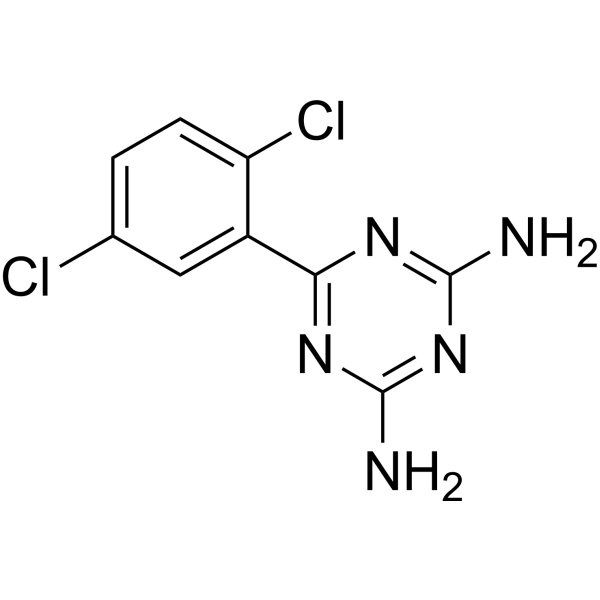
    Irsogladine (Dicloguamine) is an orally active gastric mucosal protective agent. Irsogladine inhibits breast cancer recurrence and lung metastasis in nude mice . Irsogladine inhibits the transcriptional activities of NF-κB and AP-1, suppresses the activities of PDE and PDE4 to elevate intracellular cAMP levels, and activates TRPV1 and KATP channels. Irsogladine enhances iNOS expression, NO production, and the activation of cAMP-responsive elements. Irsogladine inhibits the development and progression of intestinal polyps in Apc-mutant mice. Irsogladine alleviates oxidative stress, increases gastric mucosal blood flow, and stimulates the production of endogenous prostaglandins. Irsogladine promotes insulin secretion in MIN6 cells. Irsogladine inhibits tumor angiogenesis, cancer cell proliferation, and the production of proinflammatory cytokines. Irsogladine exerts protective effects on astrocytes in ethanol/hydrochloric acid-induced gastric ulcers in mice. Irsogladine prevents colitis in IL-10 gene-deficient mice by reducing the production of IL-12 and IL-23. Irsogladine upregulates gap junction intercellular communication in pancreatic cancer cells via the PKA pathway. Irsogladine is applicable to research related to breast cancer, intestinal polyposis, gastric ulcer, spontaneous colitis, glioma, liver cancer, and pancreatic cancer [5][6] .
    Irsogladine
  • HY-N1976
    (+)-(3R,8S)-Falcarindiol
    1 Publications Verification

    (3R,8S)-Falcarindiol; 3(R),8(S),9(Z)-Falcarindiol

    Infection Cancer
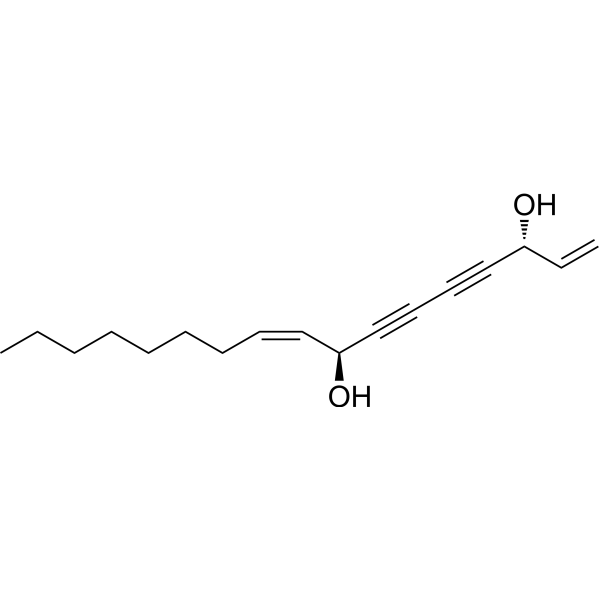
    (+)-(3R,8S)-Falcarindiol ((3R,8S)-Falcarindiol; 3 (R),8 (S),9 (Z)-Falcarindiol) is an orally active polyacetylene anti-mycobacterial agent. (+)-(3R,8S)-Falcarindiol exhibits antibacterial activity against Gram-positive bacteria, Gram-negative bacteria and mycobacteria. Co-administration of (+)-(3R,8S)-Falcarindiol with (3R)-falcarinol alters the composition of gut microbiota, reduces colonic tumor lesions and slows down polyp growth. (+)-(3R,8S)-Falcarindiol can be used in research related to tuberculosis and colorectal cancer .
    (+)-(3R,8S)-Falcarindiol
  • HY-P990933

    CM-326

    Interleukin Related Inflammation/Immunology
    Ocankitug (CM-326) is a humanized IgG1κ antibody targeting thymic stromal lymphopoietin (TSLP). It can be used for research on type 2 inflammatory respiratory diseases, including moderate to severe asthma, chronic sinusitis with nasal polyps, etc.
    Ocankitug
  • HY-114988

    tetranor-PGEM

    Drug Metabolite Metabolic Disease Inflammation/Immunology Cancer
    PGE-M (tetranor-PGEM) is a metabolite of Prostaglandin E2 (HY-101952) and also an inflammatory biomarker. Urinary PGE-M is a potential biomarker for detecting advanced colorectal tumors. PGE-M can be used in studies related to colorectal cancer, obesity, aging and breast cancer .
    PGE-M
  • HY-16726

    CG100649

    COX Carbonic Anhydrase Cancer
    Polmacoxib (CG100649) is a first-in-class, orally active nonsteroidal anti-inflammatory agent (NSAID) which is a dual inhibitor of COX-2 (IC50 around 0.1 μg/ml) and carbonic anhydrase . Polmacoxib inhibits colorectal adenoma and tumor growth in mouse models .
    Polmacoxib
  • HY-12093
    MMP408
    1 Publications Verification

    MMP Inflammation/Immunology
    MMP408 is a selective and orally effective inhibitor of MMP-12 with IC50 values for human, mouse and rat MMP-12 of 2 nM, 160 nM and 3 μM respectively. MMP408 exhibits IC50 value for human MMP-13 of 120 nM, and its activity against other MMPs is weak. MMP408 can alleviate inflammation, fibrosis and tissue remodeling by inhibiting MMP-12. MMP408 can be used in the research of chronic obstructive pulmonary disease and chronic sinusitis with nasal polyps .
    MMP408
  • HY-12093A

    Drug Isomer MMP Cadherin Inflammation/Immunology
    (R)-MMP408 is an isomer of MMP408 (HY-12093). MMP408 is an orally active MMP-12 inhibitor (IC50=2.0 nM for hMMP-12) that effectively interferes with the epithelial-mesenchymal transition (EMT) process. MMP408 significantly upregulates the expression of E-cadherin in nasal epithelial cells, while inhibiting mesenchymal markers such as vimentin, α-smooth muscle actin and fibronectin, thereby reversing the EMT phenotype. MMP408 is used in studies of airway remodeling-related diseases, including chronic rhinosinusitis with nasal polyps, chronic obstructive pulmonary disease (COPD) and asthma .
    (R)-MMP408
  • HY-W588187

    5β-Cholestan-3-one

    Drug Metabolite Apoptosis Cancer
    Coprostanone (5β-cholestan-3-one) is an oxysterol and active metabolite of Cholesterol (HY-N0322). Coprostanone induces apoptosis in primary dog gallbladder epithelial cells. Coprostanone is promising for research of colon cancers or adenomatous polyps .
    Coprostanone
  • HY-P991515

    Interleukin Related Inflammation/Immunology
    TQH-2722 is a humanized IgG4 anti-IL-4Rα monoclonal antibody. TQH-2722 targets the IL-4Rα receptor in humans, effectively disrupting the interaction between IL-4Rα and the downstream cytokines IL-4 and IL-13, thereby inhibiting inflammatory response. TQH-2722 can be used for the study of atopic dermatitis (AD) and chronic rhinosinusitis with nasal polyps (CRSwNP) .
    TQH-2722
  • HY-178028

    Histone Methyltransferase Cancer
    PRMT5-IN-53 is a gut-restricted and orally active PRMT5 inhibitor with pIC50s of ≥ 9.7 against hPRMT5 and mPRMT5. PRMT5-IN-53 binds to the PRMT5:MEP50 complex with a KD of 11.3 pM. PRMT5-IN-53 effectively inhibits PRMT5 locally in the intestines of mice, significantly reducing the number and area of polyps, while avoiding systemic hematological toxicity (such as anemia, neutropenia). PRMT5-IN-53 can be used for the study of colorectal cancer especially for familial adenomatous polyposis (FAP) .
    PRMT5-IN-53
  • HY-P991071

    Transmembrane Glycoprotein Inflammation/Immunology
    AK-001 is a fully human IgG1 antibody that targets Siglec-8. VRC-01 can be used for the study of chronic rhinosinusitis with nasal polyps. The isotype control for AK-001 can refer to Human IgG1 kappa, Isotype Control (HY-P99001) .
    AK-001
  • HY-116131

    Others Others
    DAC-2-25 is a molecule that causes a homeotic transformation of body column into tentacle zone .
    DAC-2-25
  • HY-16726R

    CG100649 (Standard)

    Reference Standards COX Carbonic Anhydrase Cancer
    Polmacoxib (Standard) is the analytical standard of Polmacoxib. This product is intended for research and analytical applications. Polmacoxib (CG100649) is a first-in-class, orally active nonsteroidal anti-inflammatory agent (NSAID) which is a dual inhibitor of COX-2 (IC50 around 0.1 μg/ml) and carbonic anhydrase . Polmacoxib inhibits colorectal adenoma and tumor growth in mouse models .
    Polmacoxib (Standard)
  • HY-32337R

    1,24(R)-Dihydroxyvitamin D3 (Standard); 1.alpha.,24R-Dihydroxyvitamin D3 (Standard)

    Reference Standards VD/VDR Interleukin Related Metabolic Disease Inflammation/Immunology Cancer
    Tacalcitol (Standard) is the analytical standard of Tacalcitol. This product is intended for research and analytical applications. Tacalcitol (1,24(R)-Dihydroxyvitamin D3; 1.alpha.,24R-Dihydroxyvitamin D3) can promote normal bone growth by regulating calcium ions. Tacalcitol inhibits cancer cell proliferation and migration. Tacalcitol can be used in the research of inflammation, cancer, and skin diseases.
    Tacalcitol (Standard)
  • HY-182637

    Prostaglandin Receptor Inflammation/Immunology
    ACT-774312 is a potent and selective CRTH2 antagonist with an IC50 of 4 nM. ACT-774312 blocks the activity and internalization of the CRTH2 receptor, and inhibits PGD2-induced morphological changes in eosinophils. ACT-774312 can be used in the research of nasal polyps and type 2 inflammatory diseases.
    ACT-774312
  • HY-P992440

    Interleukin Related Inflammation/Immunology
    PF-06817024 is a high affinity, humanized antibody that binds IL-33. PF-06817024 binds to IL-33, prevents IL-33 from binding to receptor ST2, and inhibits downstream type 2 inflammatory responses. PF-06817024 can be used for the research of allergic diseases .
    PF-06817024

Inquiry Online

Your information is safe with us. * Required Fields.

Salutation


Country or Region *

Applicant Name *


Organization Name *

Department *


Email Address *


Product Name *

Cat. No.


Requested quantity *

Phone Number *


Remarks

Inquiry Online

Inquiry Information

Product Name:
Cat. No.:
Quantity:
MCE Japan Authorized Agent:

