118 Results for "

polyurethane film

" in MedChemExpress (MCE) Product Catalog:
Products (118)

118 Results for "polyurethane film" in MCE Product Catalog:

32
32 Publications Verification
Cat. No.: HY-K2005

High Sensitivity ECL Kit enables low picogram detection of antigen by oxidizing luminol in the presence of HRP and peroxide. This reaction produces a prolonged chemiluminescence which can be visualized on X-ray film or digital imaging systems. The 100 mL is defined as the base specification. All larger sizes correspond to incremental volumes of this base.

loading...
    loading...
8
8 Cited Publications
Cat. No.: HY-K2006

Sensitive ECL Kit enables low picogram detection of antigen by oxidizing luminol in the presence of HRP and peroxide. This reaction produces a prolonged chemiluminescence which can be visualized on X-ray film or digital imaging systems. The 100 mL is defined as the base specification. All larger sizes correspond to incremental volumes of this base.

loading...
    loading...
2
2 Cited Publications
Cat. No.: HY-W002105
CAS No.: 3238-40-2
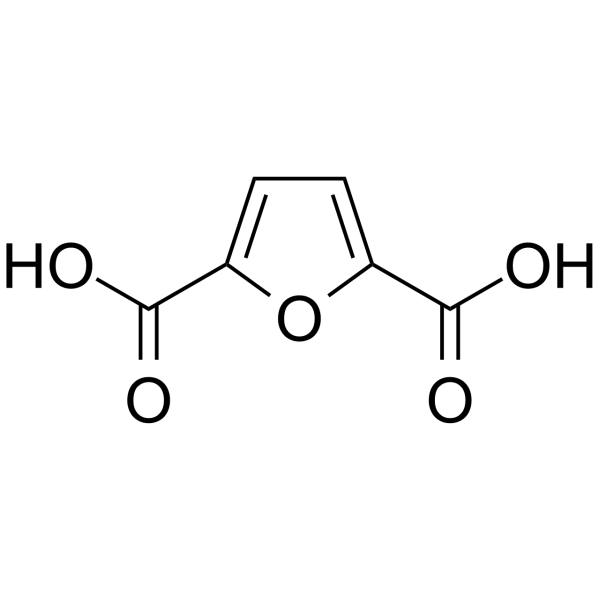
2,5-Furandicarboxylic acid is an endogenous metabolite that can be detected in human urine. 2,5-Furandicarboxylic acid serves as an environmentally friendly substitute for terephthalic acid in the production of polyesters. 2,5-Furandicarboxylic acid can be used as the raw material for various chemical intermediates to synthesize polymers, polyurethanes, thermosetting resins, and plasticizers .
loading...
    loading...
1
1 Cited Publications
Cat. No.: HY-W127758
CAS No.: 9005-32-7
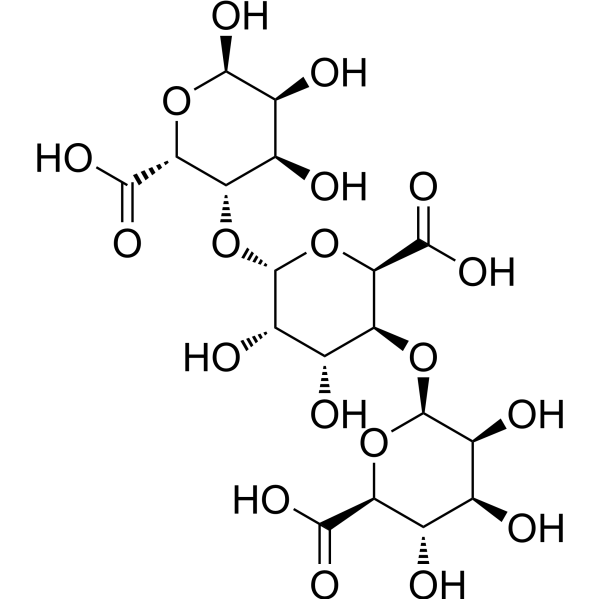
Alginic acid is a natural polysaccharide, which has been widely concerned and applied due to its excellent water solubility, film formation, biodegradability and biocompatibility. Alginic acid induces oxidative stress-mediated hormone secretion disorder, apoptosis and autophagy in mouse granulosa cells and ovaries. Alginic acid has an inhibitory effect on histamine release. Anti-anaphylactic and anti-inflammatory properties .
loading...
    loading...
1
1 Cited Publications
Cat. No.: HY-Y0395
CAS No.: 25487-66-5
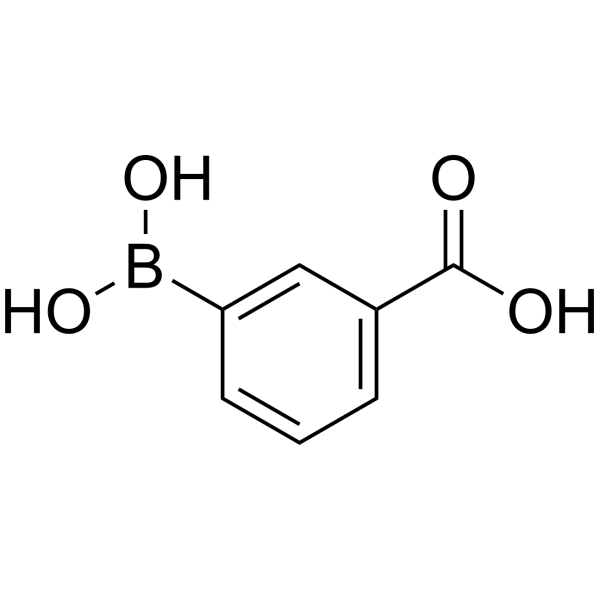
3-Carboxyphenylboronic acid is a biochemical reagent with multiple functions including nanoparticle enhancement, perovskite passivation, fluorescence quenching, and adhesion. 3-Carboxyphenylboronic acid improves tumor penetration and pulmonary retention of nanoparticles, and serves as a tumor-targeting ligand for carboxymethyl chitosan nanoparticles. 3-Carboxyphenylboronic acid optimizes film crystallization via coordinate chelation of free lead/iodide ions in perovskites. 3-Carboxyphenylboronic acid acts as an additive for n-i-p perovskite solar cells. Conjugation of 3-Carboxyphenylboronic acid with PPEG8 quenches the near-infrared fluorescence of single-walled carbon nanotubes, enabling aqueous dispersion of carbon nanotubes through binding to the diol structure of saccharides .
loading...
    loading...
Cat. No.: HY-Y1310A
CAS No.: 9005-38-3
Sodium alginate is an anionic straight chain polysaccharide. Sodium alginate can be obtained from different species of algae. Sodium alginate has different properties, such as pH-sensitivity, nontoxicity, nonimmunogenicity. Sodium alginate has weak gelation, viscosity, and film-forming properties. Sodium alginate can be utilized to prepare gels and film materials for food preservation. Sodium alginate is a versatile functional biomaterial for viscosity enhancement, stabilizer, matrixing agent, encapsulation polymer, bioadhesive and film former .
loading...
    loading...
Cat. No.: HY-Y0338
CAS No.: 107-21-1
Ethylene glycol is an organic compound that is often used as an antifreeze agent and coolant. Ethylene glycol lowers the freezing point by forming hydrogen bonds with water molecules, exerting antifreeze activity. Ethylene glycol is also used as a raw material in the synthesis of polymers such as polyester fibers and polyurethanes .
loading...
    loading...
Cat. No.: HY-125940
CAS No.: 200880-41-7
Purity:  ≥98.0%
Synonyms: 1,2-Dipalmitoyl-sn-glycero-3-phosphoglycerol sodium
Target:  

Liposome

Research Areas:  

Others

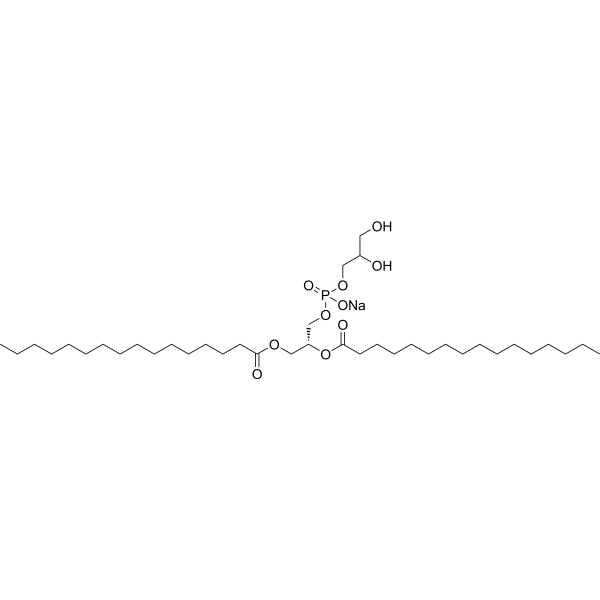
DPPG (UV radiation exposure) suffers cleavage of C―O, C=O and -PO2- bonds and loses monolayer stability; when DNA exists in the subphase, ionic degradation products from DPPG and DNA stabilize intact DPPG molecules and mitigate UV irradiation damage .
loading...
    loading...
Cat. No.: HY-W017758
CAS No.: 504-63-2
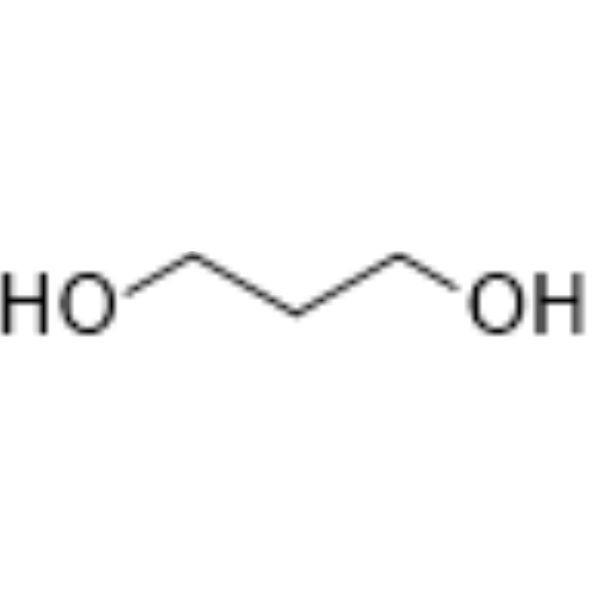
1,3-Propanediol is a versatile plant-derived humectant and solvent . 1,3-Propanediol can be produced by Klebsiella pneumoniae via glycerol fermentation, with the highest yield under anaerobic conditions. 1,3-Propanediol serves as a solvent and stabilizer in film preparation processes .
loading...
    loading...
Cat. No.: HY-W011426
CAS No.: 142-91-6
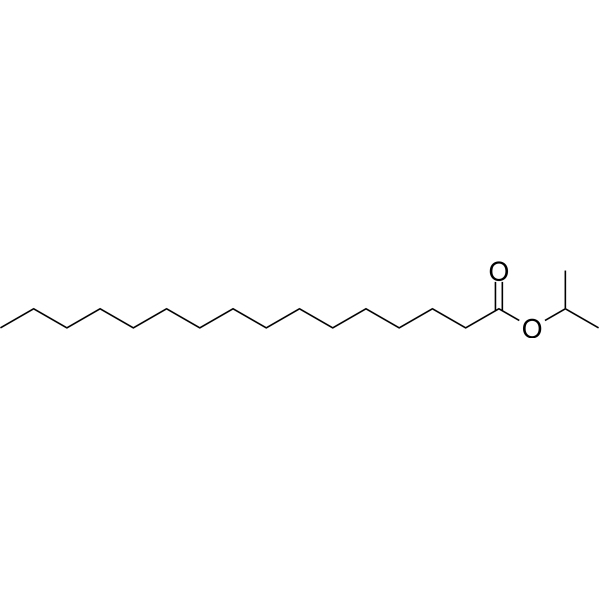
Synonyms: Propan-2-yl hexadecanoate
Isopropyl palmitate is an fatty acid ester. Isopropyl palmitate can be used for design and characterization of bioactive bilayer films. The bilayer membrane not only has the ability to scavenge free radicals and inhibit lipid peroxidation, but also can inhibit the growth of known foodborne pathogens. Isopropyl palmitate can be used as an excipient, such as lubricant, oily carrier, solvent, controlled-release transdermal film. Pharmaceutical excipients, or pharmaceutical auxiliaries, refer to other chemical substances used in the pharmaceutical process other than pharmaceutical ingredients. Pharmaceutical excipients generally refer to inactive ingredients in pharmaceutical preparations, which can improve the stability, solubility and processability of pharmaceutical preparations. Pharmaceutical excipients also affect the absorption, distribution, metabolism, and elimination (ADME) processes of co-administered drugs .
loading...
    loading...
Cat. No.: HY-W115746
CAS No.: 9004-57-3
Synonyms: Ethyl cellulose N-200
Research Areas:  

Others

Ethyl cellulose (Ethyl cellulose N-200) is a non-toxic cellulose derivative with unique properties including oil gel formation, active ingredient delivery and film-forming ability. Ethyl cellulose can serve as a pharmaceutical excipient, such as a coating agent, flavoring agent, tablet filler, etc. .
loading...
    loading...
Cat. No.: HY-W019885A
CAS No.: 7758-29-4
Synonyms: Sodium triphosphate pentabasic, 98%
Sodium tripolyphosphate (STPP), 98% is an inorganic, non-toxic polyphosphate crosslinker, inducer and enhancer. Sodium tripolyphosphate (STPP), 98% induces the formation of unique needle-like microcrystals in sodium alginate-chitosan composite films. Sodium tripolyphosphate (STPP), 98% enhances the DPPH free radical scavenging activity of sodium alginate-chitosan composite films .
loading...
    loading...
Cat. No.: HY-W392209A
CAS No.: 25086-89-9
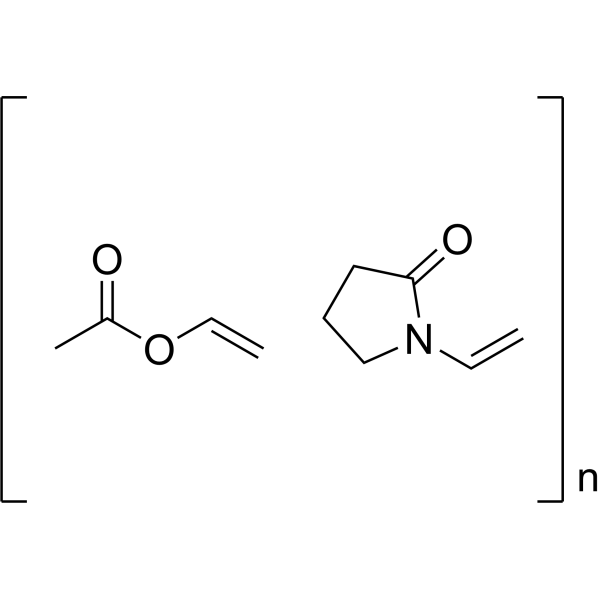
Copovidone can be used as an excipient, such as Film formers, adhesives, etc. Pharmaceutical excipients, or pharmaceutical auxiliaries, refer to other chemical substances used in the pharmaceutical process other than pharmaceutical ingredients. Pharmaceutical excipients generally refer to inactive ingredients in pharmaceutical preparations, which can improve the stability, solubility and processability of pharmaceutical preparations. Pharmaceutical excipients also affect the absorption, distribution, metabolism, and elimination (ADME) processes of co-administered drugs .
loading...
    loading...
Cat. No.: HY-P11070
CAS No.: 1927877-75-5
Target:  

Inhibitory Antibodies

Research Areas:  

Others

SDSSD is an osteoblast-targeting peptide. SDSSD selectively binds to periostin on osteoblasts and mediates targeted delivery to these cells. SDSSD can endow calcium phosphate nanocomposites with bone-targeting properties, and these materials exhibit osteointegrative capacity in both in vitro and in vivo models. When conjugated with polyurethane nanomicelles, SDSSD enables targeted delivery of siRNA/microRNA to osteoblasts .
loading...
    loading...
Cat. No.: HY-112768
Purity:  ≥95.0%
Research Areas:  

Others

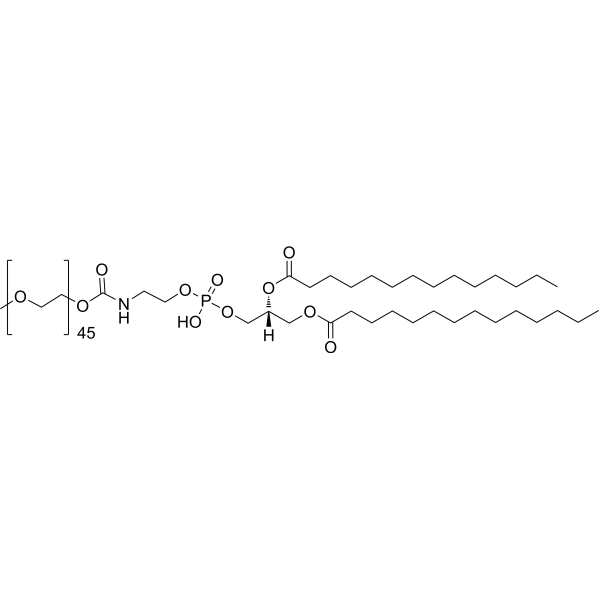
PEG2000-DMPE is a polyethylene glycol-lipid conjugate combined with phosphatidylethanolamine. PEG2000-DMPE undergoes a conformational transition from mushroom-like to brush-like at a concentration of 7 mol%, thereby exerting multiple functions such as inhibitor, stabilizer and surface defect modifier. PEG2000-DMPE can form a steric hindrance barrier on the vesicle surface to block calcium ion-induced liposome fusion, and dynamically regulate the fusion process through spontaneous transfer rate. PEG2000-DMPE can delay the thinning of foam thin liquid films and smoothly seal surface defects of solid support layers. PEG2000-DMPE can be used in the design and related research of stealth liposomes and micelles .
loading...
    loading...
Cat. No.: HY-W089777
CAS No.: 2530-83-8
Synonyms: GPTMS
3-Glycidyloxypropyltrimethoxysilane (GPTMS) is a silicon source for the preparation of inorganic-organic hybrid polymers. 3-Glycidyloxypropyltrimethoxysilane can be used to prepare hard coatings of organic polymers, such as contact lens materials in the optical industry, as well as related materials in the fields of electronics, thin films, sensors, nanoimprinting, waveguides, and biology .
loading...
    loading...
Cat. No.: HY-W007531
CAS No.: 171197-80-1
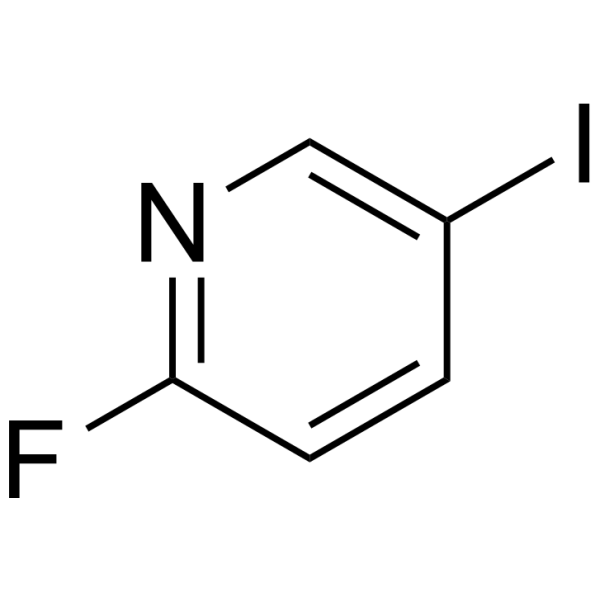
2-Fluoro-5-iodopyridine is an electrolyte additive. 2-Fluoro-5-iodopyridine can not only effectively protect the anode by forming a stable SEI film, but also convert dead lithium into active lithium. 2-Fluoro-5-iodopyridine effectively improves the performance of lithium metal batteries .
loading...
    loading...
Cat. No.: HY-172445
CAS No.: 438545-06-3
Synonyms: SS-DNA
Deoxyribonucleic acid sodium salt from salmon testes (SS-DNA) is a double-stranded deoxyribonucleic acid sodium salt extracted from salmon testes, which serves as an anti-adhesion agent and surface passivating agent for the surface of gold plasmonic sensors. Deoxyribonucleic acid sodium salt from salmon testes forms a nanoscale-thick film on the surface of gold plasmonic sensors, preventing non-specific adsorption of subsequent DNA analyte layers .
loading...
    loading...
Cat. No.: HY-D0947
CAS No.: 531-53-3
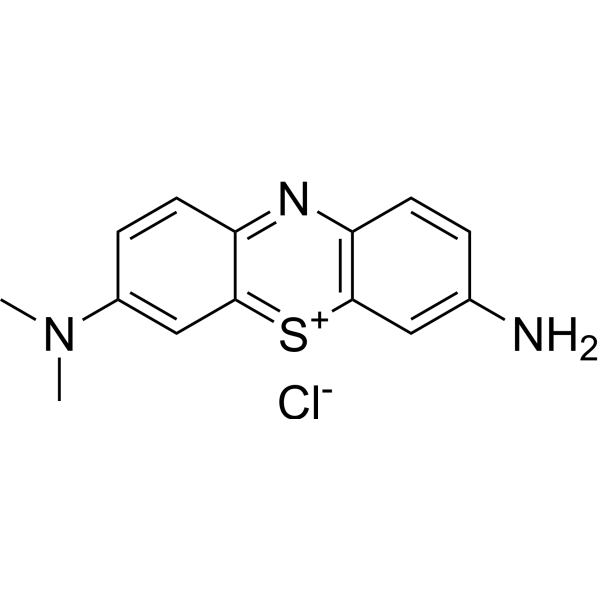
Azure A chloride is a phenothiazine dye. Azure A chloride is an alternative DNA dye used for the separation of DNA and protein fragments in agarose gel electrophoresis and PAGE. Azure A chloride can be chemisorbed on the surface of mild steel according to the Langmuir adsorption isotherm to form a protective film. Azure A chloride binds to double-stranded DNA in a non-cooperative manner via weak intercalation, triggering molecular conformational disturbance, restricted rotational motion, and changes in optical activity .
loading...
    loading...
Cat. No.: HY-Y1365C
CAS No.: 9000-70-8
Fish Gelatin,suitable for cell culture is an essential natural biopolymer. Fish Gelatin,suitable for cell culture can be isolated from fish processing by-products, such as fish skin, scales, bones and fish maw. Fish Gelatin,suitable for cell culture has been considered as a feasible substitute for mammalian gelatin. Modified Fish gelatin shows significant promise across various industries, including nanomaterials, 3D printing, thin films, coatings, and biopharmaceuticals. Fish Gelatin,suitable for cell culture can be used for cell culture .
loading...
    loading...

