
1. Search Result
Search Result
Pathways Recommended: Stem Cell/Wnt Cell Cycle/DNA Damage
Results for "

rat fibroblast cells

" in MedChemExpress (MCE) Product Catalog:

17

Inhibitors & Agonists

4

Peptides

1

Inhibitory Antibodies

5

Natural
Products

Cat. No. Product Name Target Research Areas Chemical Structure
  • HY-129630

    Microtubule/Tubulin Neurological Disease Cancer
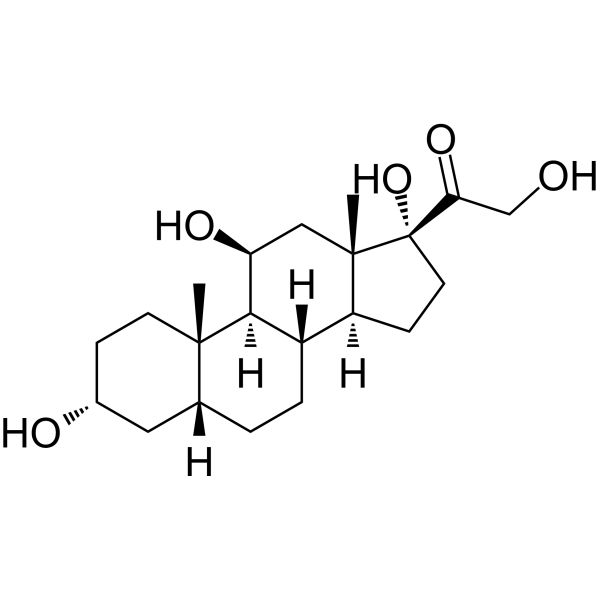
    Tetrahydrocortisol is a cortisol metabolite that inhibits dexamethasone-induced formation of cross-linked actin networks. Tetrahydrocortisol can be used in the research of primary open-angle glaucoma, glucocorticoid-induced ocular hypertension, Lewis lung carcinoma, and EMT-6 mouse breast cancer .
    Tetrahydrocortisol
  • HY-105088

    MSI 78 free base

    Bacterial Infection Cancer
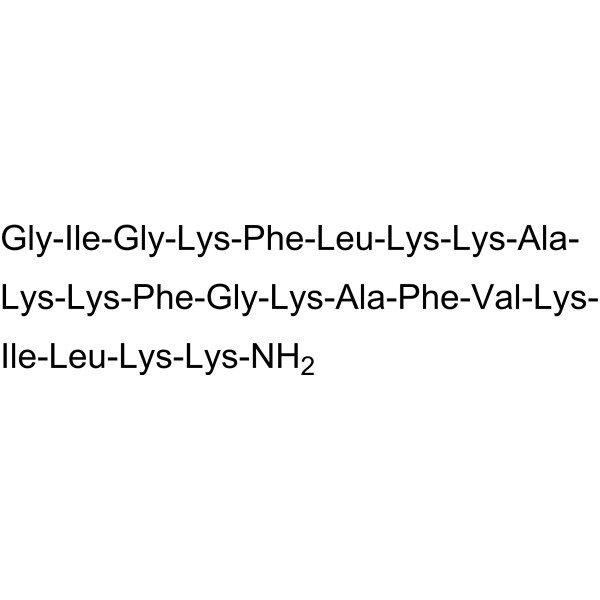
    Pexiganan (MSI 78) is an orally active antimicrobial peptide with broad-spectrum bactericidal. Pexiganan disrupts bacterial cell membranes, induces peptidoglycan damage and cell lysis. Pexiganan TFA can be used for the research of bacterial infection .
    Pexiganan
  • HY-112487

    Acyltransferase Metabolic Disease
    Sandoz 58-035 is a selective acyl-CoA:cholesterol acyltransferase (ACAT) inhibitor. Sandoz 58-035 inhibits this enzyme in intact cells and isolated microsomal fractions. Sandoz 58-035 blocks the esterification of exogenous vesicle-derived cholesterol and the incorporation of oleic acid into cellular cholesterol esters, reducing the formation and accumulation of cholesterol esters. Sandoz 58-035 causes a slight increase in cellular free cholesterol, and at high concentrations, it also causes a slight reduction in overall cellular protein synthesis. Sandoz 58-035 can be used in studies related to cellular cholesterol regulation .
    Sandoz 58-035
  • HY-124211

    Environmental Pollutants MDM-2/p53 Aryl Hydrocarbon Receptor Cancer
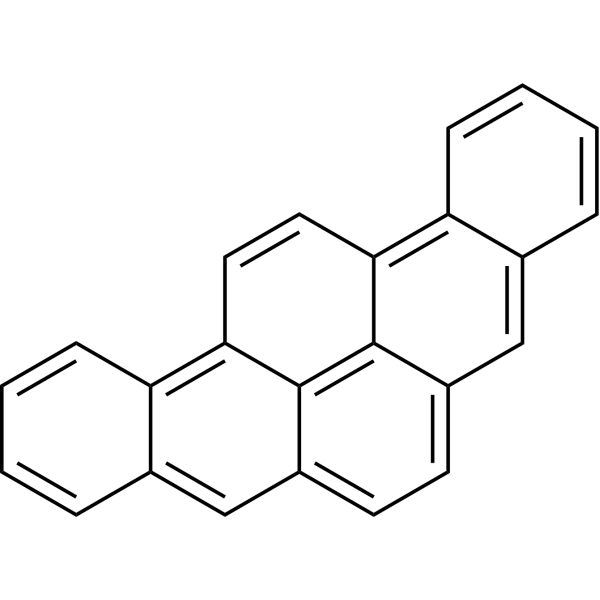
    Dibenzo (a,i) pyrene is a polycyclic aromatic hydrocarbon and also a carcinogenic ligand of the TCDD (Ah) receptor. Dibenzo (a,i) pyrene binds to the TCDD (Ah) receptor in rat liver. Dibenzo (a,i) pyrene induces DNA adduct formation and upregulates the protein levels of p53 and p21 WAF1 in diploid lung fibroblasts. Dibenzo (a,i) pyrene alters the cell cycle distribution of diploid lung fibroblasts, increasing the proportion of cells in the S phase, decreasing the proportions of cells in the G0/G1 and G2/M phases, and causing S phase delay/arrest. Dibenzo (a,i) pyrene is applicable for cancer research .
    Dibenzo(a,i)pyrene
  • HY-112460

    CDK Cancer
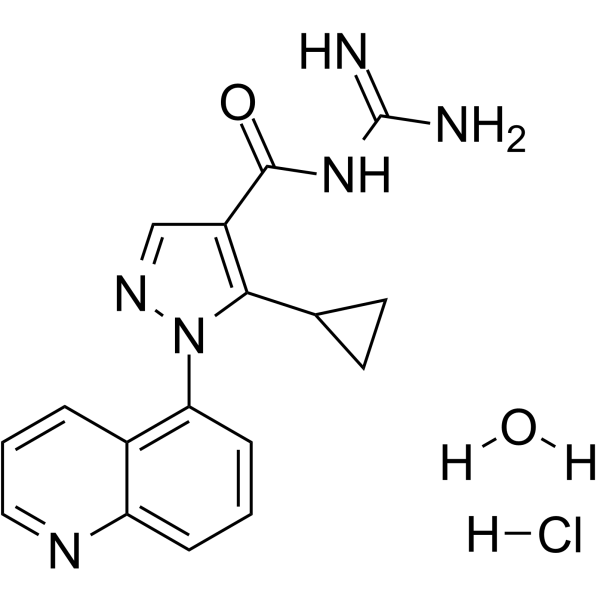
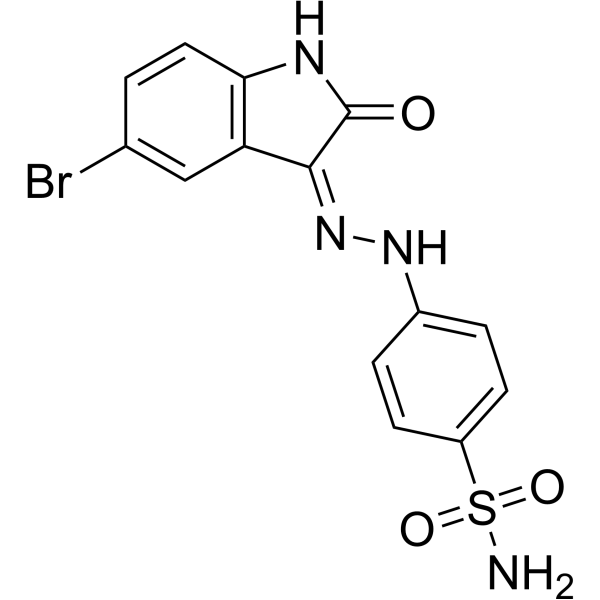
    CDK2-IN-3 (compound 3) is a potent and selective CDK2 inhibitor with an IC50 of 60 nM .
    CDK2-IN-3
  • HY-N6005

    Bacterial Fungal Apoptosis Bcl-2 Family Infection Metabolic Disease Cancer
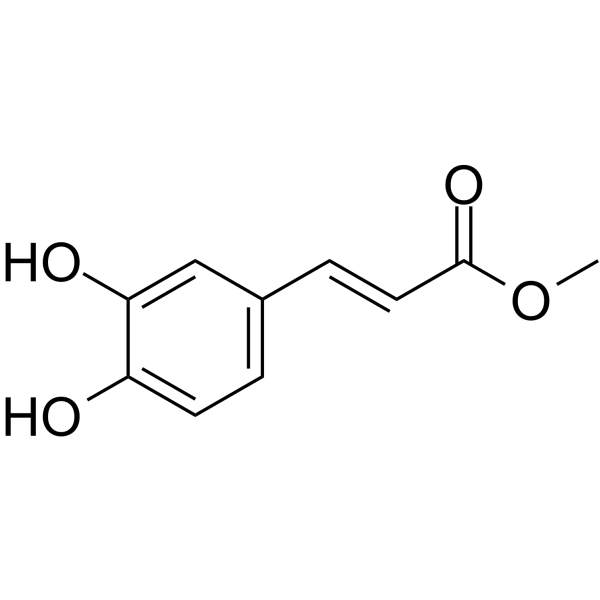
    Methyl caffeate is a phenylpropanoid, antibacterial agent, and Apoptosis-inducing agent. Methyl caffeate can be isolated from the flowers of peach Prunus persica (L.). Methyl caffeate upregulates the expression of pro-apoptotic proteins Bid, Bax and p53, and downregulates the expression of anti-apoptotic protein BCL-2. Methyl caffeate downregulates SASP factors. Methyl caffeate enhances glucose-stimulated insulin secretion. Methyl caffeate inhibits the growth of Gram-positive bacteria, Gram-negative bacteria, fungi, and Mycobacterium tuberculosis strains. Methyl caffeate can be used in studies related to breast cancer, type 2 diabetes, and tuberculosis .
    Methyl caffeate
  • HY-P10720

    Endogenous Metabolite Cardiovascular Disease
    C-Type Natriuretic Peptide (1-53), Porcine, Rat, mouse is an activator of particulate guanylate cyclase B (pGC-B), which is highly expressed in endothelial cells, kidneys, and the heart. C-Type Natriuretic Peptide (1-53), Porcine, Rat, mouse can mediate a potent anti-fibrotic effect in human cardiac and renal fibroblasts by generating the second messenger cGMP .
    C-Type Natriuretic Peptide (1-53), Porcine, Rat,mouse
  • HY-116540A

    7DMB-Forskolin

    Adenylate Cyclase Cardiovascular Disease
    L 858051 (7DMB-Forskolin) dihydrochloride, an analog of Forskolin (HY-15371), is an adenylyl cyclase stimulator. L 858051 dihydrochloride directly activates adenylyl cyclase to increase intracellular, cellular, and ciliary cAMP levels. L 858051 dihydrochloride activates recombinant cyclic nucleotide-gated (E583M CNGA2) channels to induce a non-selective, Mg 2+-sensitive current in adult rat ventricular myocytes. L 858051 dihydrochloride maximally stimulates L-type Ca 2+ current in adult rat ventricular myocytes. L 858051 dihydrochloride increases total PDE3 and PDE4 activities in adult rat ventricular myocytes, with effects insensitive to PKA inhibition. L 858051 dihydrochloride serves as a tool to elevate intracellular cAMP for studying subsarcolemmal cAMP dynamics and compartmentation in adult rat ventricular myocytes .
    L 858051 dihydrochloride
  • HY-105088A

    MSI 78

    Bacterial Infection
    Pexiganan (MSI 78) acetate is an orally active antimicrobial peptide with broad-spectrum bactericidal. Pexiganan TFA disrupts bacterial cell membranes, induces peptidoglycan damage and cell lysis. Pexiganan acetate can be used for the research of bacterial infection .
    Pexiganan acetate
  • HY-N14903

    Antibiotic Bacterial Infection Cancer
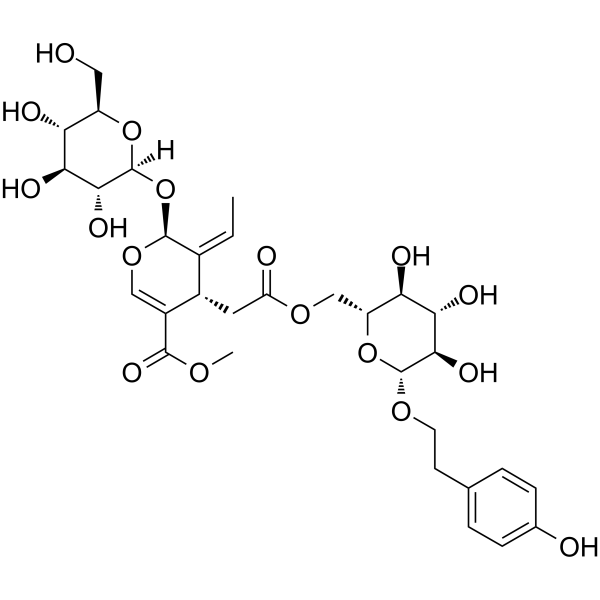
    Oximidine III is an anti-tumor antibiotic. Oximidine III can selectively inhibit the growth of 3Y1 in rat fibroblasts with degeneration of various tumor genes. Oximidine III inhibits v-H-ras-3Y1, v-src-3Y1 cells and the normal 3Y1 cells with IC50s (nM) of 14, 4.5 and 140, respectively. Oximidine III stops RAS-or SRC-denatured cells at G1 phase of the cell cycle and increases p21WAF1 expression .
    Oximidine Ⅲ
  • HY-117560

    GABA Receptor Neurological Disease
    PWZ-029 is a selective inverse agonist for 5 GABAA receptors. PWZ-029 is a benzodiazepine site ligand. PWZ-029 shows a weak but significant partial agonistic effect at 1- and 3-containing receptors. PWZ-029 significantly increases retention session latency in mouse fibroblast cells. PWZ-029 can improve object recognition in normal and scopolamine-treated rat model .
    PWZ-029
  • HY-116540

    7DMB-Forskolin free base

    Adenylate Cyclase Cardiovascular Disease
    L 858051 (7DMB-Forskolin free base), an analog of Forskolin (HY-15371), is an adenylyl cyclase stimulator. L 858051 directly activates adenylyl cyclase to increase intracellular, cellular, and ciliary cAMP levels. L 858051 activates recombinant cyclic nucleotide-gated (E583M CNGA2) channels to induce a non-selective, Mg 2+-sensitive current in adult rat ventricular myocytes. L 858051 maximally stimulates L-type Ca 2+ current in adult rat ventricular myocytes. L 858051 increases total PDE3 and PDE4 activities in adult rat ventricular myocytes, with effects insensitive to PKA inhibition. L 858051 serves as a tool to elevate intracellular cAMP for studying subsarcolemmal cAMP dynamics and compartmentation in adult rat ventricular myocytes .
    L 858051
  • HY-P991815

    Transmembrane Glycoprotein Inflammation/Immunology
    Anti-Mouse CD90.1 Antibody (OX-7) reacts with the mouse and rat CD90.1. CD90 is present on a variety of cell types in murine and rat, including lymphatic vessels, T cells, neurons and fibroblasts. Recommend Isotype Controls: Mouse IgG1 kappa, Isotype Control (HY-P99977) .
    Anti-Mouse CD90.1 Antibody (OX-7)
  • HY-19107

    HMG-CoA Reductase (HMGCR) Metabolic Disease Endocrinology
    SQ-33600 is an HMG-CoA reductase inhibitor. SQ-33600 has cholesterol-lowering activity. SQ-33600 possesses cell-type selectivity, with much higher inhibitory activity on rat hepatocytes (IC50: 93 nM) than on human skin fibroblasts (IC50: 14200 nM). SQ-33600 can be used in the research of diseases such as hypercholesterolemia .
    SQ-33600
  • HY-167262

    RAR/RXR Metabolic Disease Cancer
    AGN-191659 is an orally active RAR/RXR agonist with EC50 values of 11 nM, 23 nM, and 37 nM for RXRα, RARβ, and RARγ, respectively. AGN-191659 activates RXRα, RARβ and RARγ to induce gene transcription. AGN-191659 induces tissue transglutaminase activity, inhibits ornithine decarboxylase activity induced by tumor promoters, and suppresses chondrogenesis. AGN-191659 reverses basic fibroblast growth factor-induced endothelial cell proliferation. AGN-191659 induces hypertriglyceridemia in rat models. AGN-191659 inhibits total heparin-releasable lipase activity. AGN-191659 can be used in research related to promyelocytic leukemia and hypertriglyceridemia .
    AGN-191659
  • HY-122744

    Cytochrome P450 Metabolic Disease Cancer
    CYP11B1-IN-1 (Compound 25) is a selective, orally active hCYP11B1 inhibitor, with an IC50 of 2 nM against hCYP11B1 and an IC50 of 1.8 μM against rat CYP11B1. CYP11B1-IN-1 can be used for the research of Cushing's disease .
    CYP11B1-IN-1
  • HY-105088C

    MSI 78 TFA

    Bacterial Infection
    Pexiganan (MSI 78) TFA is an orally active antimicrobial peptide with broad-spectrum bactericidal. Pexiganan TFA disrupts bacterial cell membranes, induces peptidoglycan damage and cell lysis. Pexiganan TFA can be used for the research of bacterial infection .
    Pexiganan TFA

Inquiry Online

Your information is safe with us. * Required Fields.

Salutation


Country or Region *

Applicant Name *


Organization Name *

Department *


Email Address *


Product Name *

Cat. No.


Requested quantity *

Phone Number *


Remarks

Inquiry Online

Inquiry Information

Product Name:
Cat. No.:
Quantity:
MCE Japan Authorized Agent:

