1. Search Result
Search Result
Results for "

rat paw edema

" in MedChemExpress (MCE) Product Catalog:

23

Inhibitors & Agonists

5

Natural
Products

1

Isotope-Labeled Compounds

Cat. No. Product Name Target Research Areas Chemical Structure
  • HY-103175
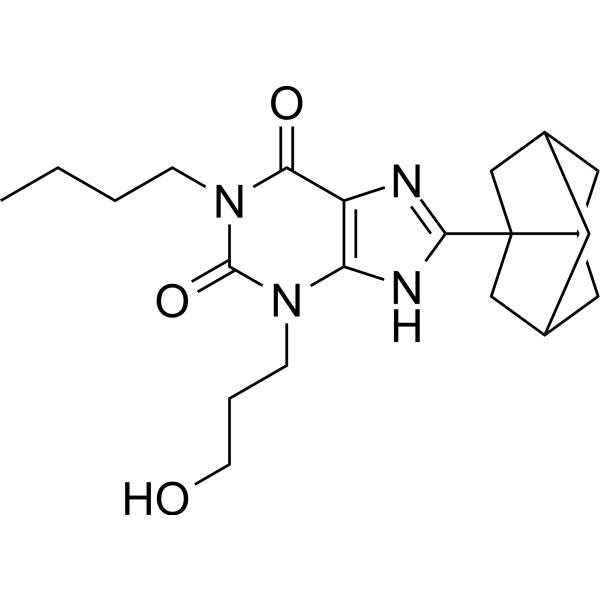
    PSB36
    1 Publications Verification

    Adenosine Receptor Cardiovascular Disease Neurological Disease Inflammation/Immunology
    PSB36 is a highly selective A1 adenosine receptor antagonist, with a Ki of 0.12 nM and a Kd of 0.7 nM. Systemic administration of PSB36 reduces formalin- and Carrageenan (HY-125474)-induced edema in mice and decreases pain-related behaviors, with no local paw activity. PSB36 prolongs the APD90 of rat and human atria, produces a frequency-dependent prolongation of rat atrial ERP, increases the diastolic threshold of rat atria, and shortens the duration of atrial fibrillation episodes. PSB36 can be used in research related to inflammatory pain, inflammatory hyperalgesia, edema and atrial fibrillation .
    PSB36
  • HY-129143
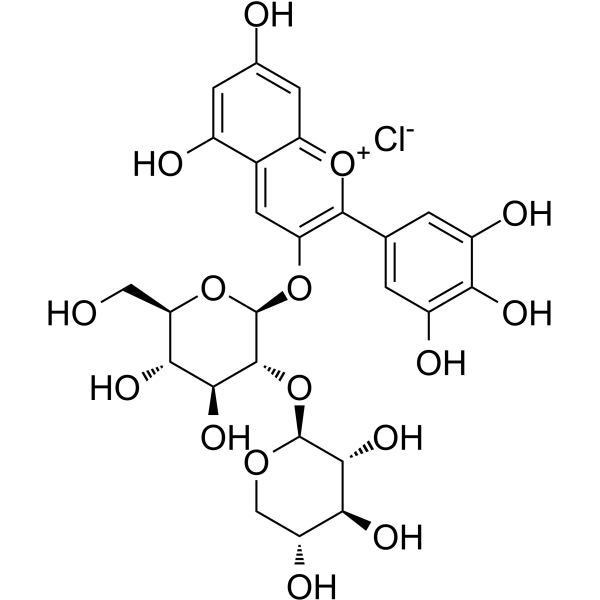
    Delphinidin-3-sambubioside chloride
    1 Publications Verification

    Dp3‐Sam chloride

    Apoptosis Metabolic Disease Inflammation/Immunology
    Delphinidin-3-sambubioside (Dp3‐Sam) chloride is an anthocyanin that has orally active anti-inflammatory activity. Delphinidin-3-sambubioside chloride inhibits LPS-induced inflammatory factors release. Delphinidin-3-sambubioside chloride also alleviates hepatic lipid accumulation in HFD rats. Delphinidin-3-sambubioside chloride can be isolated from Hibiscus sabdariffa L. .
    Delphinidin-3-sambubioside chloride
  • HY-W021267

    Reactive Oxygen Species (ROS) Inflammation/Immunology
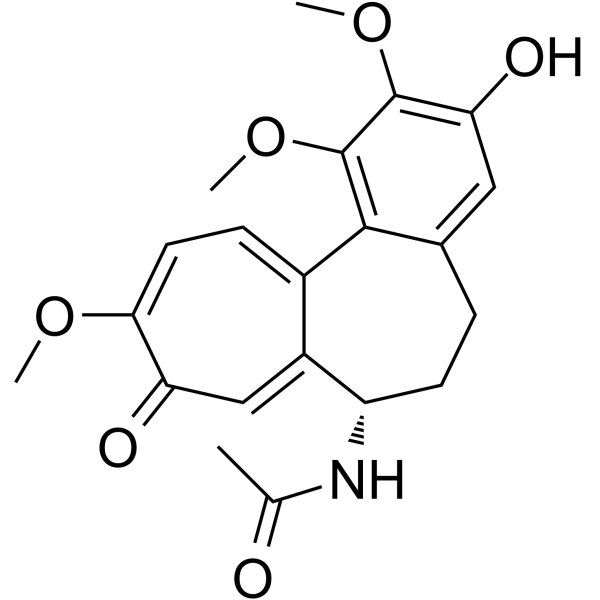
    3-Demethylcolchicine, a colchicine metabolite and anti-inflammatory agent, exhibits potent tubulin-binding activity. 3-Demethylcolchicine inhibits carrageenan-induced rat paw edema. 3-Demethylcolchicine bears a hydroxyl group on its carbocyclic ring; this group participates in free radical scavenging processes, allowing it to act as a free radical scavenger. 3-Demethylcolchicine is applicable to studies related to carrageenan-induced paw edema .
    3-Demethylcolchicine
  • HY-N2478

    Autophagy Parasite Inflammation/Immunology
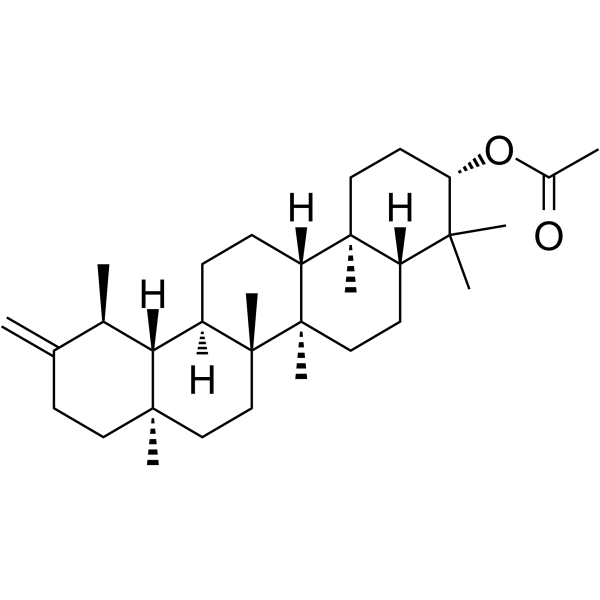
    Taraxasteryl acetate is isolated from P. sagittalis,and has a broad spectrum of anti-inflammatory activity. Taraxasterol acetate promotes RNF31 degradation by activating autophagy. Taraxasteryl acetate relieves dextran, zymosan and arachidonic acid induced rat hind-paw edema. Taraxasteryl acetate can be used for the topical inflammation treatment [1] [2] .
    Taraxasteryl acetate
  • HY-134521

    COX Inflammation/Immunology
    Diclofenac amide is a prodrug for Diclofenac sodium (HY-15037). Diclofenac amide is an orally active inhibitor for COX-1/2, that inhibits the production of prostaglandins (PG) and thromboxanes (TX). Diclofenac amide exhibits anti-inflammatory efficacy in Carrageenan (HY-125474)-induced rat paw edema model without causing gastric ulcer (300 μmol/kg) .
    Diclofenac amide
  • HY-124517

    Histamine Receptor Adrenergic Receptor Neurological Disease Inflammation/Immunology
    Burimamide is a blocker of histamine H2-receptor. Burimamide inhibits gastric acid secretion evoked by Pentagastrin (HY-A0261) or Gastrin. Burimamide also has alpha-adrenoceptor blocking activity. Burimamide in combination with the H1-receptor antagonist Mepyramine (HY-B1281) shows anti-inflammatory activity in a rat paw edema model induced by Compound 48/80 (HY-115768) .
    Burimamide
  • HY-119298

    p38 MAPK Inflammation/Immunology
    AW-814141 is a selective and orally active p38 MAP kinase inhibitor. AW-814141 has an IC50 values of 100 nM and 158 nM for p38-α and β isoforms, respectively. AW-814141 can inhibit the production of TNF-α induced by LPS (HY-D1056). AW-814141 can inhibit paw edema in rats in a dose-dependent manner. AW-814141 exhibits anti-inflammatory activity and can be used in the research of inflammatory diseases such as rheumatoid arthritis .
    AW-814141
  • HY-116873

    COX Inflammation/Immunology
    Flunoxaprofen is an orally active COX inhibitor. Flunoxaprofen shows anti-inflammatory activity in a rat paw edema model. Flunoxaprofen may be used in research on immune system diseases such as arthritis .
    Flunoxaprofen
  • HY-155133

    COX Inflammation/Immunology
    COX-2-IN-34 (compound 8a) is a selective and orally active inhibitor of COX-2 , with an IC50 of 0.42 μM. COX-2-IN-34 has no gastric ulcer toxicity but has anti-inflammatory effects .
    COX-2-IN-34
  • HY-119279

    Histamine Receptor Inflammation/Immunology
    VUF 10214 is a H4 receptor ligand with a pKi of 8.25. VUF 10214 exhibits significant anti-inflammatory activity in a carrageenan-induced paw edema rat model and can be used for research in the field of inflammatory diseases .
    VUF 10214
  • HY-134996

    COX Inflammation/Immunology
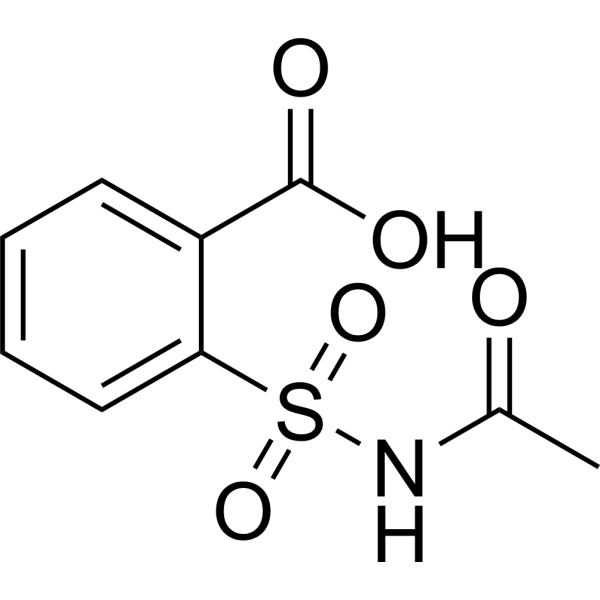
    N-Acetyl-2-carboxybenzenesulfonamide is an orally active COX-1 and COX-2 inhibitor with IC50s of 0.06 μM and 0.25 μM, respectively. N-Acetyl-2-carboxybenzenesulfonamide shows anti-inflammatory activity .
    N-Acetyl-2-carboxybenzenesulfonamide
  • HY-N8458

    NSC 272693

    PGE synthase Inflammation/Immunology
    Cryogenine is an alkaloid originally isolated from H. salicifolia that has anti-inflammatory activity. It inhibits prostaglandin synthetase (IC50=424 μM). Cryogenine (100 mg/kg per day, p.o.) reduces paw edema and the mean arthritic index in a rat model of adjuvant-induced polyarthritis.
    Cryogenine
  • HY-147719

    COX Inflammation/Immunology
    COX-2-IN-16 (compound 2b) is a potent, selective and orally active COX-2 inhibitor with an IC50 of 102 µM. COX-2-IN-16 inhibits the NO production. COX-2-IN-16 shows anti-inflammatory activity .
    COX-2-IN-16
  • HY-N2478R

    Autophagy Reference Standards Inflammation/Immunology
    Taraxasteryl acetate (Standard) is the analytical standard of Taraxasteryl acetate. This product is intended for research and analytical applications. Taraxasteryl acetate is isolated from P. sagittalis,and has a broad spectrum of anti-inflammatory activity. Taraxasterol acetate promotes RNF31 degradation by activating autophagy. Taraxasteryl acetate relieves dextran, zymosan and arachidonic acid induced rat hind-paw edema. Taraxasteryl acetate can be used for the topical inflammation treatment .
    Taraxasteryl acetate (Standard)
  • HY-129143R

    Dp3‐Sam chloride (Standard)

    Reference Standards Others Metabolic Disease Inflammation/Immunology
    Delphinidin-3-sambubioside (chloride) (Standard) is the analytical standard of Delphinidin-3-sambubioside (chloride). This product is intended for research and analytical applications. Delphinidin-3-sambubioside (Dp3‐Sam) chloride is an anthocyanin that has orally active anti-inflammatory activity. Delphinidin-3-sambubioside chloride inhibits LPS-induced inflammatory factors release. Delphinidin-3-sambubioside chloride also alleviates hepatic lipid accumulation in HFD rats. Delphinidin-3-sambubioside chloride can be isolated from Hibiscus sabdariffa L. .
    Delphinidin-3-sambubioside chloride (Standard)
  • HY-W747879

    Isotope-Labeled Compounds COX Inflammation/Immunology
    Diclofenac Amide- 13C6 is the 13C-labeled Diclofenac amide (HY-134521). Diclofenac amide is a prodrug for Diclofenac sodium (HY-15037). Diclofenac amide is an orally active inhibitor for COX-1/2, that inhibits the production of prostaglandins (PG) and thromboxanes (TX). Diclofenac amide exhibits anti-inflammatory efficacy in Carrageenan (HY-125474)-induced rat paw edema model without causing gastric ulcer (300 μmol/kg) .
    Diclofenac Amide-13C6
  • HY-162166

    COX Lipoxygenase Inflammation/Immunology
    COX-2/15-LOX/mPGES1-IN-1 (Compound 2c) is an inhibitor of COX-2, 15-LOX, and mPGES-1 enzymes with IC50 values of 0.057, 2.39, and 2.8 μM, respectively. COX-2/15-LOX/mPGES1-IN-1 possesses anti-inflammatory activity and can inhibit rat paw edema in vivo experiments .
    COX-2/15-LOX/mPGES1-IN-1
  • HY-149270

    COX Inflammation/Immunology
    COX-2-IN-31 (compound 7b) is an orally active and dual inhibitor of COX-2 (IC50=60 nM) and 5-LOX (IC50=1.9 μM). COX-2-IN-31 also inhibits transmembrane hCA IX(Ki=48.9 nM) and hCA XII(Ki=5.8 nM) activity. COX-2-IN-31 exhibits anti-inflammatory and analgesic activity .
    COX-2-IN-31
  • HY-179700

    COX Inflammation/Immunology
    COX-2-IN-61 is an orally active COX-2 inhibitor with an IC50 of 22 µM, also inhibits COX-1 with an IC50 of 43 µM. COX-2-IN-61 exhibits anti-inflammation effects in a Carrageenan (HY-125474) induced rat paw edema model, with promising safety profiles. COX-2-IN-61 can be used for the research of inflammation .
    COX-2-IN-61
  • HY-180822

    COX TNF Receptor Interleukin Related Inflammation/Immunology
    COX-2-IN-63 (Compound 6k) is an orally active COX-2 inhibitor with an IC50 of 0.89 μM. COX-2-IN-63 reduces the levels of inflammatory mediators PGE2, TNF-α, and IL-6. COX-2-IN-63 can effectively alleviate acute inflammation in a rat paw edema model and has a lower risk of gastrointestinal side effects. COX-2-IN-63 can be used in anti-inflammatory research .
    COX-2-IN-63
  • HY-181235

    COX Cytochrome P450 Inflammation/Immunology Cancer
    COX-2/Aromatase-IN-1 is a potent dual inhibitor of COX-2 and aromatase. COX-2/Aromatase-IN-1 can simultaneously inhibit COX-2 and aromatase, significantly suppress inflammation and induce proliferation inhibition of breast cancer cells. COX-2/Aromatase-IN-1 exerts anti-breast cancer and anti-inflammatory effects in the MCF-7 breast cancer cell and carrageenan-induced rat paw edema model. COX-2/Aromatase-IN-1 can be used for the study of inflammation and breast cancer .
    COX-2/Aromatase-IN-1
  • HY-181236

    COX Cytochrome P450 Inflammation/Immunology Cancer
    COX-2/Aromatase-IN-2 is a potent dual inhibitor of COX-2 and aromatase. COX-2/Aromatase-IN-2 can simultaneously inhibit COX-2 and aromatase, suppress inflammation and induce proliferation inhibition of breast cancer cells. COX-2/Aromatase-IN-2 exerts anti-breast cancer and anti-inflammatory effects in the MCF-7 breast cancer cell and carrageenan-induced rat paw edema model. COX-2/Aromatase-IN-2 can be used for the study of inflammation and breast cancer .
    COX-2/Aromatase-IN-2
  • HY-182786

    Cholinesterase (ChE) Monoamine Oxidase Beta-secretase COX Amyloid-β Neurological Disease
    MAO-B-IN-56 is a multi-target-directed ligand with AChE, BChE, MAO-B, and BACE1 inhibitory activity, with IC50 values of 0.35 μM, 3.22 μM, 0.14 μM, and 3.85 μM respectively, and shows selectivity for AChE over BChE and MAO-B over MAO-A.MAO-B-IN-56 reduces amyloid-beta production, reduces paw edema, improves spatial memory, and enhances Alzheimer's disease hallmarks and associated histopathological alterations.MAO-B-IN-56 can be used for the research of alzheimer's disease .
    MAO-B-IN-56

Inquiry Online

Your information is safe with us. * Required Fields.

Salutation


Country or Region *

Applicant Name *


Organization Name *

Department *


Email Address *


Product Name *

Cat. No.


Requested quantity *

Phone Number *


Remarks

Inquiry Online

Inquiry Information

Product Name:
Cat. No.:
Quantity:
MCE Japan Authorized Agent:

