1. Search Result
Search Result
Results for "

sensitization

" in MedChemExpress (MCE) Product Catalog:

491

Inhibitors & Agonists

1

Screening Libraries

183

Fluorescent Dye

8

Biochemical Assay Reagents

19

Peptides

3

Inhibitory Antibodies

50

Natural
Products

2

Recombinant Proteins

10

Isotope-Labeled Compounds

10

Click Chemistry

2

Oligonucleotides

Cat. No. Product Name Target Research Areas Chemical Structure
  • HY-101194
    Tin protoporphyrin IX dichloride
    15+ Cited Publications

    Tin-protoporphyrin IX; Sn-Protoporphyrin; SnPPIX

    Reactive Oxygen Species (ROS) Cancer
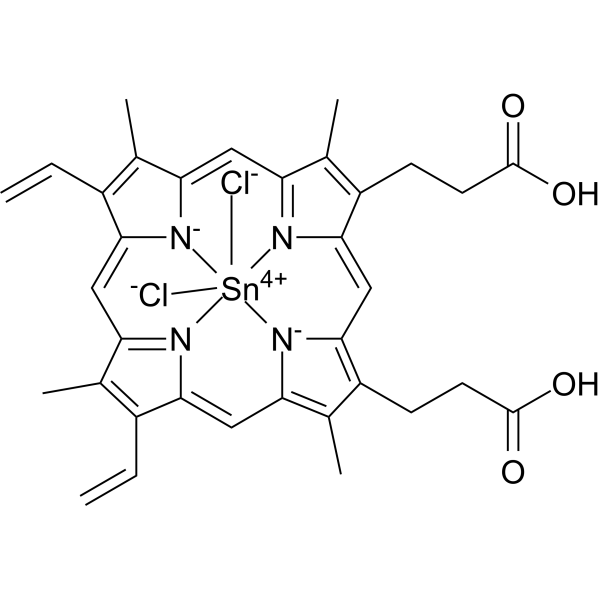
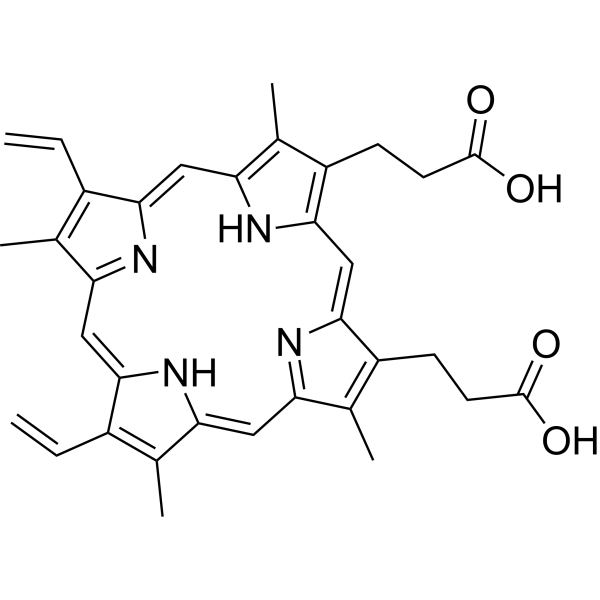
    Tin protoporphyrin IX dichloride (SnPPIX) is a potent Heme oxygenase-1 (HO-1) inhibitor. Tin protoporphyrin IX dichloride sensitizes pancreatic ductal adenocarcinoma (PDAC) tumors to chemotherapy in mice model .
    Tin protoporphyrin IX dichloride
  • HY-114490
    ULK-101
    5+ Cited Publications

    ULK Cancer
    ULK-101 is a potent and selective ULK1 inhibitor, with IC50 values of 1.6 nM and 30 nM for ULK1 and ULK2, respectively. ULK-101 suppresses autophagy and sensitizes cancer cells to nutrient stress .
    ULK-101
  • HY-N6253
    Pinoresinol
    1 Publications Verification

    (+)-Pinoresinol

    Apoptosis Cancer
    Pinoresinol is a lignol of plant origin serving for defense in a caterpillar. Pinoresinol drastically sensitizes cancer cells against TNF-related apoptosis-inducing ligand (TRAIL) -induced apoptosis .
    Pinoresinol
  • HY-Y0912

    N-HBTU

    Biochemical Assay Reagents Inflammation/Immunology
    HBTU (N-HBTU) is a guanidinium-based peptide coupling reagent and immunological sensitizer. HBTU can be used in combination with bases such as DIPEA (HY-130142) to complete coupling reactions, with HOBt and TMU as by-products. HBTU is a standard reagent in automated solid-phase peptide synthesis, particularly for the Fmoc/tBu strategy, which effectively promotes coupling steps, but it is not suitable for sterically hindered amino acids or dipeptide derivatives. HBTU can induce rhinitis, dermatitis, bronchial asthma and severe allergic reactions. HBTU can be used to study the pathogenesis of allergic reactions, occupational rhinitis, allergic contact dermatitis and bronchial asthma .
    HBTU
  • HY-112716

    Amino Acid Derivatives Cancer
    N-alpha-Tosyl-L-lysine chloromethyl ketone (TLCK), a trypsin like protease inhibitor, sensitizes HeLa cells to Fas-mediated cell death.
    N-alpha-Tosyl-L-lysine chloromethyl ketone hydrochloride
  • HY-117037
    FR900359
    4 Publications Verification

    Apoptosis ERK Cardiovascular Disease Cancer
    FR900359 is a depsipeptide selective inhibitor of q/11/14 in mammalia, can inhibits ERK pathway. FR900359 suppresses the proliferation of melanoma cells and decreases of blood pressure. FR900359 also protected against airway hyperreactivity in murine models of allergen sensitization in Ovalbumin, low endotoxin (HY-W250978A)-induced sensitization model of asthma. FR900359 can be used for cancer and cardiovascular disease research .
    FR900359
  • HY-15489
    Scriptaid
    4 Publications Verification

    Scriptide; GCK1026

    HDAC Autophagy Apoptosis Influenza Virus Cancer
    Scriptaid is a potent histone deacetylase (HDAC) inhibitor, used in cancer research. Scriptaid is also a sensitizer to antivirals and has potential for epstein-barr virus (EBV)-associated lymphomas treatment.
    Scriptaid
  • HY-100550
    MSDC 0160
    4 Publications Verification

    Mitoglitazone; CAY10415

    Insulin Receptor Mitochondrial Metabolism Neurological Disease Endocrinology
    MSDC 0160 (Mitoglitazone) is a mitochondrial target of thiazolidinediones (mTOT)-modulating insulin sensitizer and a modulator of mitochondrial pyruvate carrier (MPC). MSDC 0160 is a thiazolidinedione (TZD) with antidiabetic and neuroprotective activities. MSDC 0160 has the potential for Alzheimer′s disease .
    MSDC 0160
  • HY-18099A
    S1RA hydrochloride
    3 Publications Verification

    E-52862 hydrochloride

    Sigma Receptor 5-HT Receptor Neurological Disease
    S1RA (E-52862) hydrochloride is an orally active and selective sigma-1 receptor (σ1R) antagonist with a Ki value of 17 nM. S1RA hydrochloride shows good selectivity against σ2R (Ki >1000 nM). S1RA hydrochloride is a human 5-HT2B receptor antagonist with an IC50 value of 4.7 μM. S1RA hydrochloride inhibits neuropathic pain and activity-induced spinal sensitization .
    S1RA hydrochloride
  • HY-A0169A
    Methyl aminolevulinate hydrochloride
    1 Publications Verification

    Reactive Oxygen Species (ROS) Photosensitizer Cancer
    Methyl aminolevulinate hydrochloride is a sensitizer used in photodynamic therapy (PDT). Methyl aminolevulinate hydrochloride penetrates the skin and induces the production of photoactive porphyrins including protoporphyrin IX in cells; upon exposure to appropriate light, it generates ROS, which triggers cellular oxidation and cell death. Methyl aminolevulinate hydrochloride acts as a photo-damage reversing agent through epidermal reconstruction, cytokine-mediated activation of dermal fibroblasts, elastin breakdown, new collagen formation, and compression of dilated capillaries. Methyl aminolevulinate hydrochloride reduces the expression of the proliferation marker Ki-67 and the early skin carcinogenesis marker TP53. Methyl aminolevulinate hydrochloride delays the onset of ultraviolet-induced skin tumors and reduces tumor burden in hairless mice. Methyl aminolevulinate hydrochloride is applicable to research related to actinic keratosis and basal cell carcinoma .
    Methyl aminolevulinate hydrochloride
  • HY-101849
    Fasentin
    4 Publications Verification

    GLUT TNF Receptor Apoptosis Cardiovascular Disease Cancer
    Fasentin, a potent glucose uptake inhibitor, inhibits GLUT-1/GLUT-4 transporters. Fasentin preferentially inhibits GLUT4 (IC50=68 μM) over GLUT1. Fasentin is a death receptor stimuli (FAS) sensitizer and sensitizes cells to FAS-induced cell death. Fasentin is also a tumor necrosis factor (TNF) apoptosis-inducing ligand sensitizer. Fasentin blocks glucose uptake in cancer cell lines and has anti-angiogenic activity .
    Fasentin
  • HY-106844A

    Phosphodiesterase (PDE) Cardiovascular Disease
    (+)-EMD 57033 is a cardiac troponin C (cTnC) activator, is a dominant Ca 2+ sensitizer. (+)-EMD 57033 binds the cardiac/slow skeletal troponin C isoform and exerts myocardial contractile promotion function .
    (+)-EMD 57033
  • HY-158420

    Autophagy Cancer
    STL001 is potent and selective FOXM1 inhibitor. STL001 induces the translocation of nuclear FOXM1 to the cytoplasm and promotes its autophagic degradation. STL001 sensitizes human cancers to a broad-spectrum of cancer therapies .
    STL001
  • HY-16349
    Nimorazole
    1 Publications Verification

    K-1900

    Parasite Antibiotic Infection Cancer
    Nimorazole (K-1900), a 2-nitroimidazole, is a hypoxic cell-radiation sensitizer. Nimorazole has anti-infective and anti-protozoal against trichomoniasis. Nimorazole has the potential for head and neck cancer .
    Nimorazole
  • HY-145955

    Sodium stearoyl glutamate

    Biochemical Assay Reagents Others
    Sodium stearoyl glutamate is a sodium salt of monocarboxylic acid anionic surfactant, which serves as a chelating agent, skin sensitizer and anionic co-emulsifier .
    Stearoyl glutamic acid sodium
  • HY-D1474

    Wnt Cancer
    WNT7A-IN-1 sodium (1365-0109), a WNT7A inhibitor, disrupts the protein-protein interaction between WNT7A and its receptor FZD5, resulting in the upregulation of MHC-I expression. WNT7A-IN-1 sodium significantly increases the expression of MHC-I and p-p65,while concurrently reducing the expression of active β-catenin . WNT7A-IN-1 sodium (compound F) is also a photographic sensitizer in the green spectral region .
    WNT7A-IN-1 sodium
  • HY-112030

    Potassium tetrachloroplatinate(Ⅱ)

    Biochemical Assay Reagents Cancer
    Dipotassium tetrachloroplatinate (Potassium tetrachloroplatinate (Ⅱ)) is an important reagent for the preparation of other platinum coordination complexes. Dipotassium tetrachloroplatinate acts as a radiosensitizer to enhance the killing effect of hyperthermia. Dipotassium tetrachloroplatinate serves as a catalyst. Dipotassium tetrachloroplatinate exhibits antitumor activity .
    Dipotassium tetrachloroplatinate
  • HY-W013762

    Environmental Pollutants Biochemical Assay Reagents Others
    Tributyl citrate is a low-toxicity and orally active citrate ester with no genotoxicity or skin sensitizing activity. Tributyl citrate also acts as a plasticizer, solvent, FDA-approved indirect food additive, and topical anesthetic, among other uses. Tributyl citrate induces a needle-prick insensitivity response that lasts for more than 2 hours, and a 5% suspension of it temporarily eliminates the corneal reflex in rabbits. Tributyl citrate causes no significant systemic toxicity in rats and cats at most tested doses, and only may cause growth retardation and gastrointestinal reactions such as diarrhea and nausea at high doses or with repeated oral administration .
    Tributyl citrate
  • HY-126539
    UBE2T/FANCL-IN-1
    1 Publications Verification

    E1/E2/E3 Enzyme Cancer
    UBE2T/FANCL-IN-1 is a potent inhibitor of UBE2T/FANCL-mediated FANCD2 monoubiquitylation that sensitizes cells to the DNA cross-linking agent, Carboplatin .
    UBE2T/FANCL-IN-1
  • HY-W008292

    Fluorescent Dye Others
    Carbostyril 124 is a sensitising chromophore. Carbostyril 124 is a reasonably effective organic sensitizer for a proximate bound terbium ion .
    Carbostyril 124
  • HY-108523

    UVI 2112

    RAR/RXR Metabolic Disease
    LG100754 (UVI 2112) is a RXR dimers modulater. LG100754 acts as a RXR:RXR homodimer antagonist, but functions as a agonist towards RXR:PPARα and RXR:PPARγ heterodimers. LG100754 is an insulin sensitizer that functions through RXR .
    LG100754
  • HY-170411

    Wnt Cancer
    WNT7A-IN-1 (1365-0109), a WNT7A inhibitor, disrupts the protein-protein interaction between WNT7A and its receptor FZD5, resulting in the upregulation of MHC-I expression. WNT7A-IN-1 significantly increases the expression of MHC-I and p-p65,while concurrently reducing the expression of active β-catenin. WNT7A-IN-1 (compound F) is also a photographic sensitizer in the green spectral region .
    WNT7A-IN-1
  • HY-139178

    Phosphodiesterase (PDE) Neurological Disease
    KVA-D-88 is a blood-brain barrier-permeable PDE4 inhibitor with IC50 values of 140 and 880 nM for PDE4B and PDE4D, respectively. KVA-D-88 induces cAMP accumulation and inhibits neuroactive substance-mediated hyperlocomotion, locomotor sensitization. KVA-D-88 can be used for the research of drug addiction .
    KVA-D-88
  • HY-W008293

    Drug Derivative Inflammation/Immunology
    Himic anhydride is an acid anhydride compound and sensitizer. Himic anhydride with cross-reactivity to hexahydrophthalic anhydride. Himic anhydride induces immunoglobulin E (IgE)-mediated sensitization and allergic immune responses. Himic anhydride can be used for the research of occupational asthma .
    Himic anhydride
  • HY-50938

    D149; Indoline dye D149

    Fluorescent Dye Others
    D149 Dye is an indoline-based dye, which is a high-extinction-coefficient metal-free organic sensitizer.
    D149 Dye
  • HY-135746
    OR-1896
    2 Publications Verification

    Potassium Channel Phosphodiesterase (PDE) Drug Metabolite Apoptosis Cardiovascular Disease
    OR-1896 is an active long-lived metabolite of Levosimendan. OR-1896 is a highly selective phosphodiesterase (PDE) III isoform inhibitor and a powerful vasodilator. OR-1896 can open ATP-sensitive K + channels and has Ca 2+-sensitizing effect. OR-1896 mitigates cardiomyocyte apoptosis, cardiac remodeling and myocardial inflammation .
    OR-1896
  • HY-101250

    MDL11939

    Serotonin Transporter Neurological Disease
    Glemanserin (MDL11939) is a potent and selective antagonist for serotonin receptor 5-HT2A (Ki=2.89, 0.54 and 2.5 nM for rat 5-HT2A, rabbit 5-HT2A and human 5-HT2A, respectively) .
    Glemanserin
  • HY-N7152

    Apoptosis Cancer
    6-Dehydrogingerdione sensitizes human hepatoblastoma Hep G2 cells to TRAIL-induced apoptosis via reactive oxygen species-mediated increase of DR5 .
    6-Dehydrogingerdione
  • HY-16421

    (-)-DRF 2725; NNC 61-0029

    PPAR Metabolic Disease
    Ragaglitazar is a PPARα and PPARγ agonist with potent lipid-lowering and insulin-sensitizing efficacy in animal models. Ragaglitazar improves glycemic control and lipid profile in type 2 diabetic.
    Ragaglitazar
  • HY-W010372

    Biochemical Assay Reagents Others
    1-Methylbenzimidazole is an imidazole compound. 1-Methylbenzimidazole functions as an electrolyte additive in dye-sensitized solar cells. 1-Methylbenzimidazole is promising for research of solar cell performance .
    1-Methylbenzimidazole
  • HY-18961

    Checkpoint Kinase (Chk) Wee1 Inflammation/Immunology Cancer
    PD 407824 is a checkpoint kinase Chk1 and WEE1 inhibitor with IC50s of 47 and 97 nM, respectively. PD 407824 is a chemical BMP sensitizer and increases the sensitivity of cells to sub-threshold amounts of BMP4 .
    PD 407824
  • HY-126583

    Calcium Channel Cancer
    Nemadipine-A is a specific inhibitor of the EGL-19 L-type Ca 2+ channel . Nemadipine-A, a cell-permeable L-type calcium channel inhibitor, sensitizes TRAIL-resistant cancer cells to this ligand .
    Nemadipine-A
  • HY-101352

    Cholecystokinin Receptor Neurological Disease
    LY 225910 is a selective antagonist for cholecystokinin receptor (CCK2 receptor), which affects the excitatory response to morphine, and leads to morphine sensitization .
    LY 225910
  • HY-W035133

    5,10,15,20-Tetra-p-tolyl-21H,23H-porphine

    MOFs Others
    5,10,15,20-Tetrakis(p-tolyl)porphyrin (TTP) is an organic compound belonging to the class of porphyrins, a cyclic molecule composed of four pyrrole rings linked together. TTP is a synthetic porphyrin commonly used as a sensitizer for dye-sensitized solar cells and a catalyst for organic reactions. Due to its unique structure, TTP has a series of interesting properties, including at specific wavelengths and its potential as a catalyst for various chemical reactions. In dye-sensitized solar cells, TTPs help convert sunlight into electricity by absorbing photons and transferring electrons to the semiconductor layer of the device. In organic chemistry, TTP is often used as a catalyst for various organic compounds in reactions such as oxidation and reduction. Its ability to selectively bind certain substrates makes it a useful tool for synthesizing complex molecules and studying their properties.
    5,10,15,20-Tetrakis(p-tolyl)porphyrin
  • HY-W020755

    Biochemical Assay Reagents Others
    Thiohexam is a rubber cure accelerator. Thiohexam is also a known allergen and dermatological sensitizer .
    Thiohexam
  • HY-Y0700

    Fluorescent Dye Others
    Calconcarboxylic acid, an azo dye, acts as a silver-ion sensitizer to stain protein in SDS-PAGE gels. Calconcarboxylic acid increases silver binding on protein bands or spots by the formation of a silver-dye complex and also increases the reducing power o
    Calconcarboxylic acid
  • HY-N7029

    Others Cancer
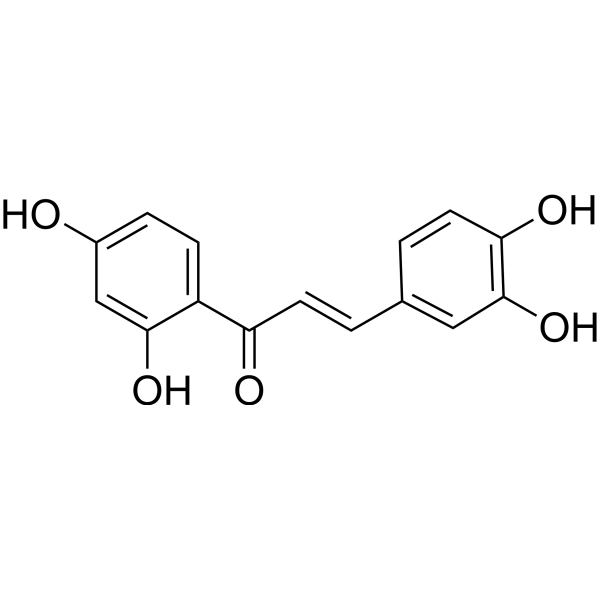
    3',4',5',5,7-Pentamethoxyflavone, a natural flavonoid extracted from Rutaceae plants, sensitizes chemoresistant cancer cells to chemotherapeutic agents by inhibition of Nrf2 pathway .
    3',​4',​5',​5,​7-​Pentamethoxyflavone
  • HY-131948

    Potassium Channel Cardiovascular Disease
    3-Chlorodiphenylamine is a high affinity Ca 2+ sensitizer of cardiac muscle. 3-Chlorodiphenylamine is based on diphenylamine and binds to the isolated N-domain of cardiac troponin C (cTnC) (Kd=6 µM). 3-Chlorodiphenylamine is an excellent starting scaffold for the development of more potent Ca 2+-sensitizing compounds due to its small size, and can be used for systolic heart failure research .
    3-Chlorodiphenylamine
  • HY-D2337

    Fluorescent Dye Inflammation/Immunology
    Quinophthalone is a dye with distinctive greenish yellow color. Quinophthalone is used as coloring agents for various materials. Quinophthalone is a strong sensitizer in guinea pigs, and its threshold concentration for induction and challenge is 10 ppm .
    Quinophthalone
  • HY-N7147

    Others Cancer
    Irisquinone, a natural product, is an anticancer agent. Irisquinone is also a radiation sensitizer for cancer. Irisquinone reduces GSH level and inhibits the repair of DNA singular strand breaks .
    Irisquinone
  • HY-106844

    Phosphodiesterase (PDE) Cardiovascular Disease
    EMD 53998 is a cardiotonic agent that increases myocardial contractility as an inhibitor for phosphodiesterase III (PDE III) and a calcium sensitizer. EMD 53998 increases myocardial contractility, reduces energy consumption and the risk of inducing arrhythmias .
    EMD 53998
  • HY-23497

    Others Others
    Poly(4-vinylphenol) is a polymer cross-linking agent that can be used to prepare non-toxic films. Poly(4-vinylphenol) is a sensitizer of titania for visible light photocatalysis. Poly(4-vinylphenol) also can be used as a water resistive wood adhesive, as a gate dielectric insulator in organic field effect transistors, and as a responsive surface coating .
    Poly(4-vinylphenol)
  • HY-172587

    Cannabinoid Receptor Neurological Disease
    CB1R Allosteric modulator 5 (compound 3) is a selective, and blood-brain barrier (BBB) permeable Cannabinoid receptor type 1 allosteric modulator with a pIC50 of 6.89. CB1R Allosteric modulator 5 attenuates both cocaine-seeking behavior specific to cue-induced reinstatement and cocaine-induced behavioral sensitization without altering locomotor activity .
    CB1R Allosteric modulator 5
  • HY-W009688

    Drug Intermediate Inflammation/Immunology
    Dibutyl maleate, the diester of the Maleic Acid, can be used as an intermediate of pharmaceutical synthesis. Dibutyl maleate can enhance contact sensitization to Fluorescein isothiocyanate in mice .
    Dibutyl maleate
  • HY-D1180

    3,3′-Diethylthiatricarbocyanine iodide

    Fluorescent Dye Others
    DTTCI (3,3′-Diethylthiatricarbocyanine iodide) is an infrared photographic sensitizing dye. DTTCI is a highly sensitive chiroptical reporter of DNA helicity and sequence .
    DTTCI
  • HY-P1185

    Vasopressin Receptor Apoptosis Cardiovascular Disease Cancer
    Antagonist G is a potent vasopressin antagonist. Antagonist G is also a weak antagonist of GRP and Bradykinin. Antagonist G induces AP-1 transcription and sensitizes cells to chemotherapy .
    Antagonist G
  • HY-161622

    Checkpoint Kinase (Chk) Cancer
    K1586 is an amidine derivative that efficiently targets Chk1. K1586 enhances the degradation of Chk1 that sensitizes colorectal cancer cells to ionizing radiation. K1586 shows anticancer effects .
    K1586
  • HY-34544

    Others Others
    2-Hexylthiophene is an extremely weak basic heteroaromatic compound. 2-Hexylthiophene can be used to modify and improve the molar absorption coefficient of ruthenium sensitizer
    2-Hexylthiophene
  • HY-161839

    Aldose Reductase Cancer
    AKR1C2/3-IN-1 (compound 3a) is a potent AKR1C2 and AKR1C3 inhibitor with IC50 values of 90, 50 nM, respectively. AKR1C2/3-IN-1 can be used as a radiation sensitizer and as a potentiator of chemotherapy cytotoxicity .
    AKR1C2/3-IN-1
  • HY-12144

    Neurokinin Receptor p38 MAPK Neurological Disease
    CP-99994 is a Tachykinin neurokinin 1 (NK-1) receptor antagonist with a Ki of 0.25 nM. CP-99994 prevents colorectal sensitization in the context of visceral hypersensitivity. CP-99994 reduces colorectal hypersensitivity induced by acetic acid injections in a model of bladder-colon cross-sensitization. CP-99994 hydrochloride attenuates the neuroglial interactions and MAPK-p38 phosphorylation associated with visceral hypersensitivity .
    CP-99994

Inquiry Online

Your information is safe with us. * Required Fields.

Salutation


Country or Region *

Applicant Name *


Organization Name *

Department *


Email Address *


Product Name *

Cat. No.


Requested quantity *

Phone Number *


Remarks

Inquiry Online

Inquiry Information

Product Name:
Cat. No.:
Quantity:
MCE Japan Authorized Agent:

