46 Results for "

very long-chain fatty acid

" in MedChemExpress (MCE) Product Catalog:
Products (46)

46 Results for "very long-chain fatty acid" in MCE Product Catalog:

4
4 Cited Publications
Cat. No.: HY-N7109
CAS No.: 112-86-7
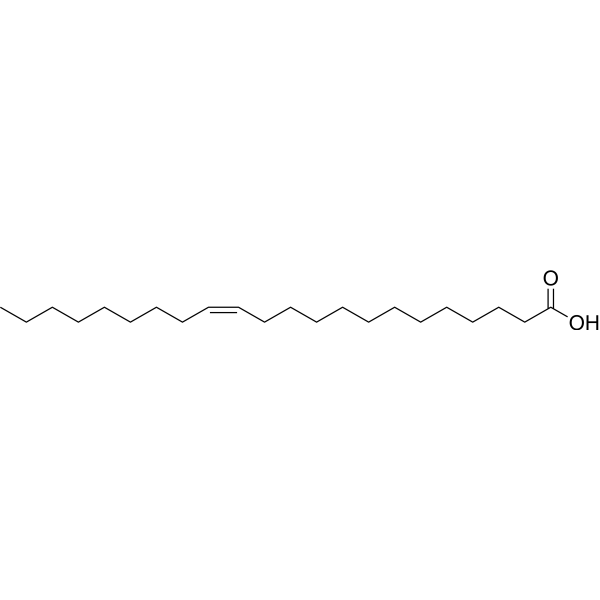
Erucic acid, a monounsaturated fatty acid (MUFA), is isolated from the seed of Raphanus sativus L. Erucic acid can readily cross the blood-brain barrier (BBB), it has been reported to normalize the accumulation of very long-chain fatty acids in the brain. Erucic acid can improve cognitive impairment and be effective against dementia .
loading...
    loading...
2
2 Cited Publications
Cat. No.: HY-W010629
CAS No.: 79-07-2
Target:  

Bacterial

Research Areas:  

Infection

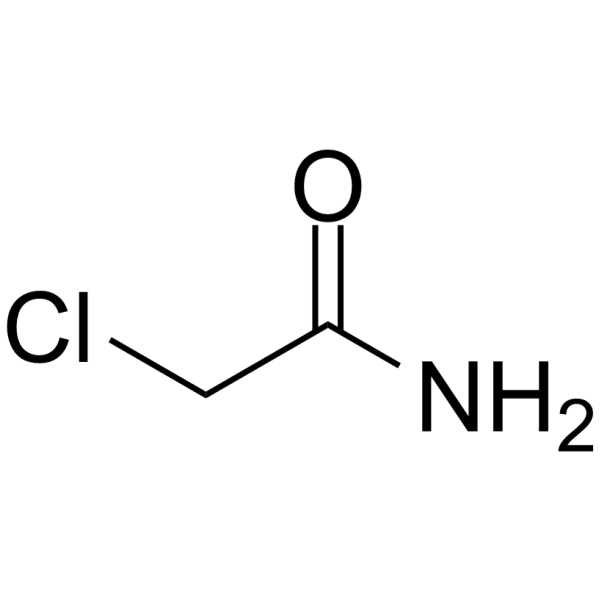
2-Chloroacetamide is a preservative and is a herbicide for both uplands and paddy fields. 2-Chloroacetamide is a biocide in agriculture, glues, paints and coatings. 2-Chloroacetamide inhibits very-long-chain fatty acid elongase .
loading...
    loading...
2
2 Cited Publications
Cat. No.: HY-145272
CAS No.: 2761063-99-2
Purity:  99.81%
Target:  

ELOVL

Research Areas:  

Neurological Disease

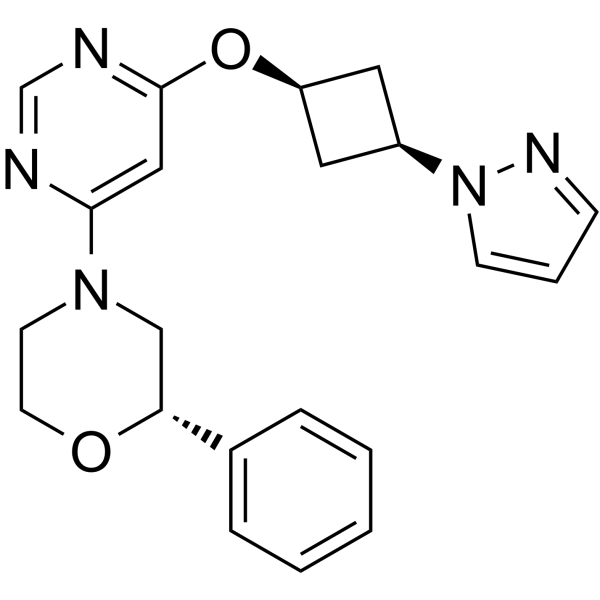
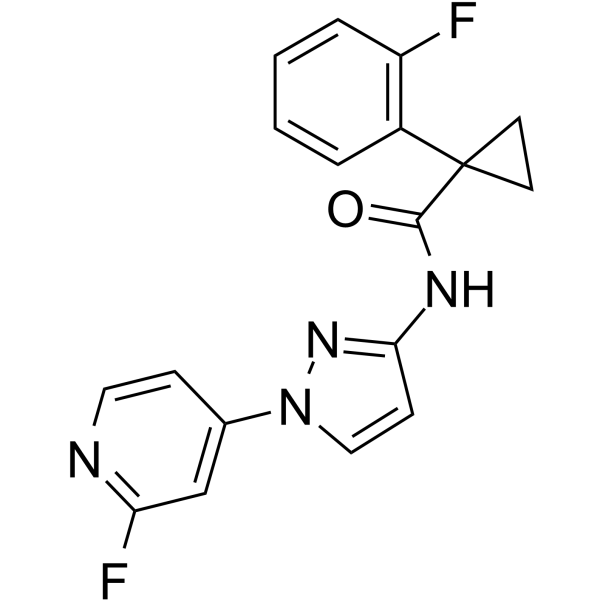
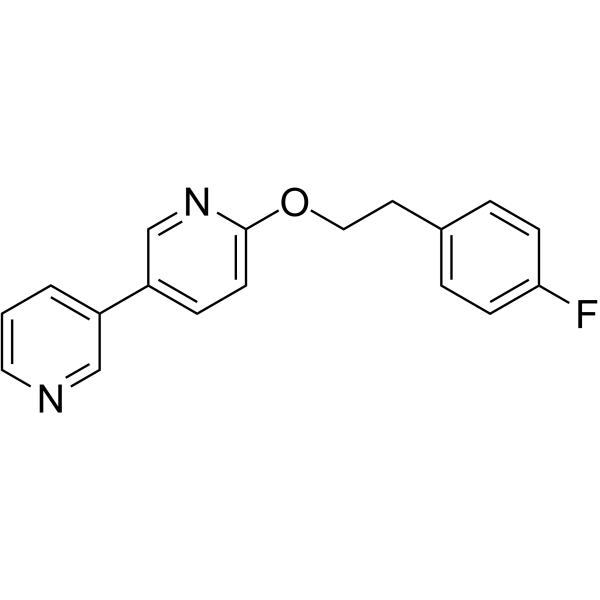
ELOVL1-IN-3 (Compound 22) is a potent and orally active inhibitor of elongation of very long chain fatty acid 1 (ELOVL1) enzyme. ELOVL1-IN-3 serves as a useful tool for researching adrenoleukodystrophy (ALD) [1].
loading...
    loading...
1
1 Cited Publications
Cat. No.: HY-113301
CAS No.: 506-46-7
Purity:  ≥95.0%
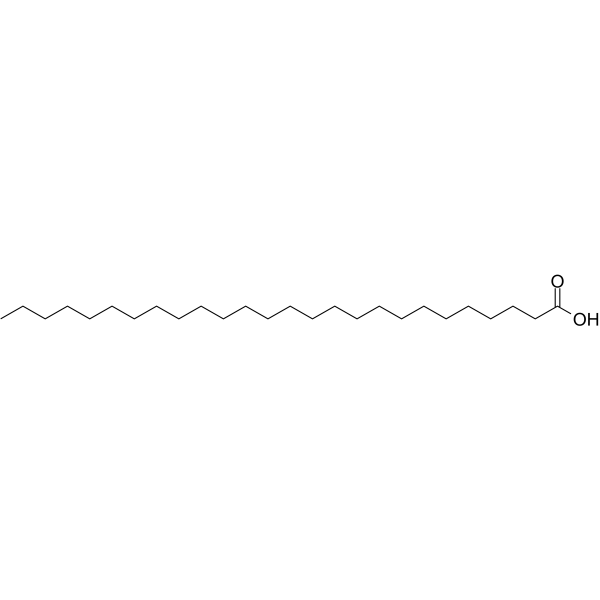
Hexacosanoic acid is a very long-chain fatty acid. Abnormally elevated levels of Hexacosanoic acid are closely associated with various diseases, such as X-linked adrenoleukodystrophy, adrenomyeloneuropathy, atherosclerosis, and dementia .
loading...
    loading...
1
1 Cited Publications
Cat. No.: HY-145122
CAS No.: 2227482-41-7
Purity:  98.02%
Target:  

ELOVL

Research Areas:  

Metabolic Disease

ELOVL1-IN-1 is an ELOVL1 inhibitor extracted from patent WO2018107056A1, compound 87. ELOVL1-IN-1 can reduce very long chain fatty acid levels. ELOVL1-IN-1 can be used for the research of adrenoleukodystrophy (ALD) .
loading...
    loading...
Cat. No.: HY-113201
CAS No.: 25597-07-3
Purity:  ≥98.0%
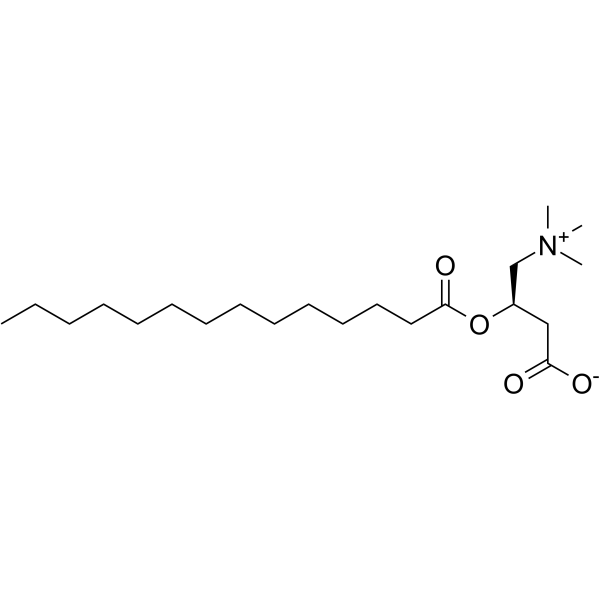
Tetradecanoylcarnitine is an acylcarnitine involved in mitochondrial β-oxidation of long-chain saturated fatty acids and fatty acid metabolism. Tetradecanoylcarnitine serves as a biomarker for very long-chain acyl-CoA dehydrogenase deficiency and MPTP (HY-15608)-induced Parkinson's disease. Tetradecanoylcarnitine exhibits a characteristic significant elevation in plasma levels in patients with sarcopenia, including those complicated with hypertension, and this elevation is closely associated with an increased risk of death. Tetradecanoylcarnitine is widely used in research on the pathological mechanisms of diseases such as Parkinson's disease and sarcopenia .
loading...
    loading...
Cat. No.: HY-145270
CAS No.: 2761063-79-8
Purity:  99.82%
Target:  

ELOVL

Research Areas:  

Metabolic Disease

ELOVL1-IN-2 is an elongation of very long chain fatty acid 1 (ELOVL1) enzyme inhibitor, ELOVL1-IN-2 shows weak ELOVL1 inhibition (IC50=21 μM) and moderate potency in a primary cellular assay (HEK293 C26 IC50=6.7 μM) .
loading...
    loading...
Cat. No.: HY-N8425
CAS No.: 506-48-9
Synonyms: Montanic acid
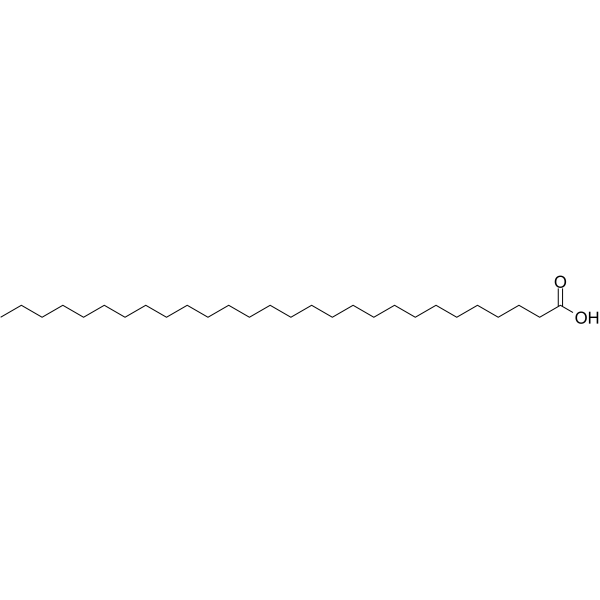
Octacosanoic acid is a very long-chain saturated fatty acid. It is the major component of D-003, a mixture of very long-chain aliphatic acids purified from sugar cane wax that has antiplatelet and cholesterol-lowering activities in animal models .
loading...
    loading...
Cat. No.: HY-136373
CAS No.: 67129-08-2
Purity:  99.76%
Synonyms: BAS 479H
Research Areas:  

Others

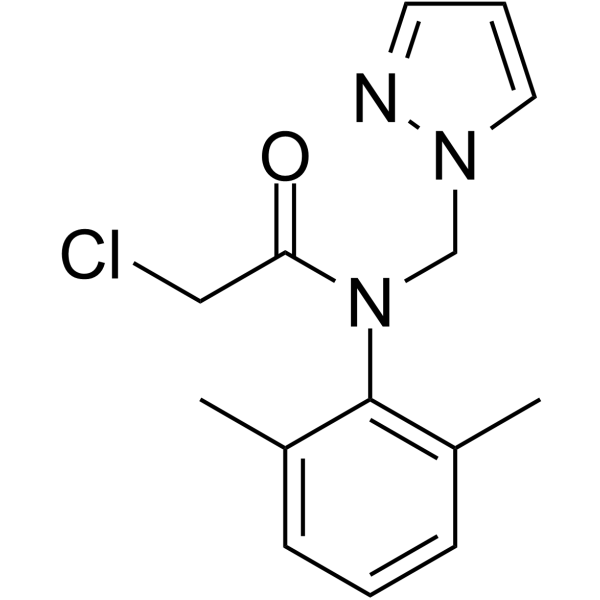
Metazachlor (BAS 479H) is a herbicide belonging to the chloroacetamides class. Metazachlor can inhibit the synthesis of very long chain fatty acids during the germination and emergence of weed seeds, thereby interfering with cell division and tissue differentiation, and thus hindering the normal growth and development of weeds .
loading...
    loading...
Cat. No.: HY-119435
CAS No.: 2303-17-5
Purity:  99.02%
Research Areas:  

Others

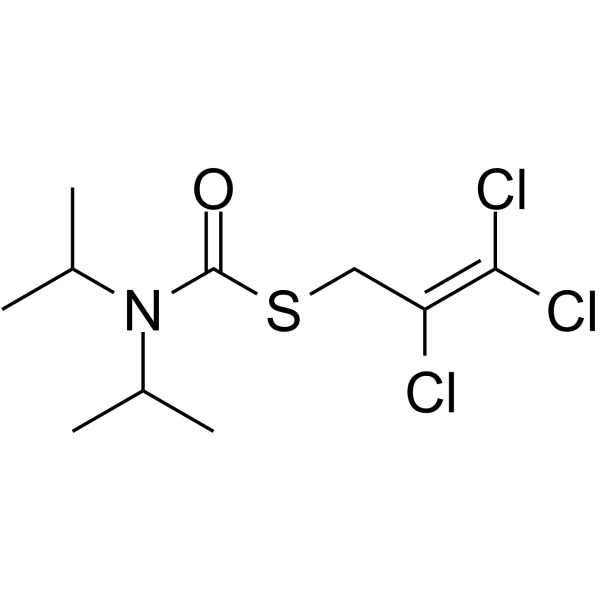
Triallate is a selective thiocarbamate herbicide. Triallate regulates the biosynthesis of very-long-chain fatty acids and inhibits the elongation and division of plant cells. Triallate is used to control wild oats in barley, spring wheat, durum wheat, winter wheat and sugar beets .
loading...
    loading...
Cat. No.: HY-156679
CAS No.: 852949-30-5
Purity:  99.87%
VK-0214 is an orally effective agonist of the thyroid β receptor (TRβ). VK-0214 reduces the accumulation of very long-chain fatty acids (VLCFA) by activating ABCD2 expression. VK-0214 has the effect of regulating fatty acid metabolism. VK-0214 can serve as a GBM repurposing candidate compound identified through network pharmacology screening. VK-0214 can be used in research related to X-linked adrenoleukodystrophy (X-ALD) and glioblastoma .
loading...
    loading...
Cat. No.: HY-136373S
CAS No.: 1246816-51-2
Synonyms: BAS 479H-d6
Metazachlor-d6 (BAS 479H-d6) is a deuterium labeled Metazachlor (HY-136373). Metazachlor (BAS 479H) is a herbicide belonging to the chloroacetamides class. Metazachlor can inhibit the synthesis of very long chain fatty acids during the germination and emergence of weed seeds, thereby interfering with cell division and tissue differentiation, and thus hindering the normal growth and development of weeds .
loading...
    loading...
Cat. No.: HY-120958
CAS No.: 68378-49-4
Purity:  95.6%
Synonyms: C24:6n-3
Target:  

Endogenous Metabolite

Research Areas:  

Metabolic Disease

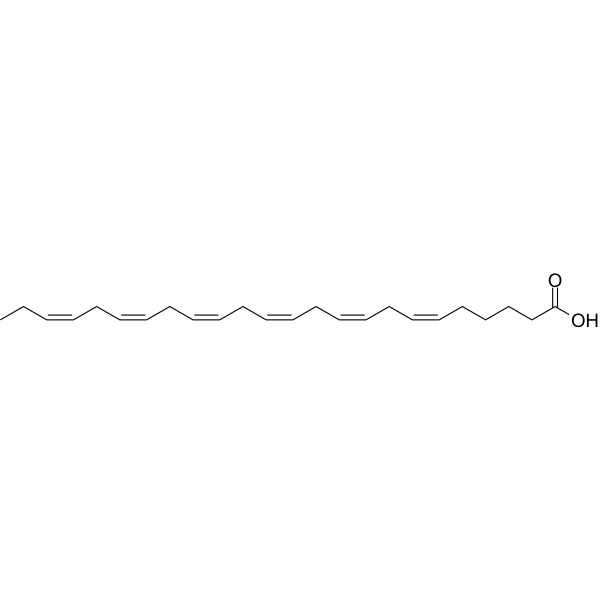
Nisinic acid (C24:6n-3) is a very long chain polyunsaturated fatty acid (VLCPUFA) that is a component of triglycerides and cholesterol esters in mouse and rat testis .
loading...
    loading...
Cat. No.: HY-117057S
CAS No.: 2692624-21-6
Hexaenoic acid-d6 is deuterium labeled Hexaenoic acid. Very long chain polyunsaturated fatty acids (VLCPUFAs) are important components of ceramides and sphingomyelin and are present in retina, sperm, and brain. Tetratriaconta-16(Z),19(Z),22(Z),25(Z),28(Z),31(Z)-hexaenoic acid is a C34:6 VLCPUFA whose specific biological actions are largely unknown. This VLCPUFA, along with others, has been investigated for its role in activating protein kinase C .
loading...
    loading...
Cat. No.: HY-CE01045
Synonyms: 3-Hydroxytetracosanoyl-coenzyme A
Research Areas:  

Metabolic Disease

3-Hydroxytetracosanoyl-CoA (3-Hydroxytetracosanoyl-coenzyme A) is a very long-chain fatty acyl-CoA.
loading...
    loading...
Cat. No.: HY-N8425R
CAS No.: 506-48-9
Synonyms: Montanic acid (Standard)
Octacosanoic acid (Standard) is the analytical standard of Octacosanoic acid. This product is intended for research and analytical applications. Octacosanoic acid is a very long-chain saturated fatty acid. It is the major component of D-003, a mixture of very long-chain aliphatic acids purified from sugar cane wax that has antiplatelet and cholesterol-lowering activities in animal models .
loading...
    loading...
Cat. No.: HY-CE00395
CAS No.: 1245945-31-6
Synonyms: (S)-3-Hydroxyhexacosanoyl-coenzyme A
Research Areas:  

Metabolic Disease

(S)-3-Hydroxyhexacosanoyl-CoA ((S)-3-Hydroxyhexacosanoyl-coenzyme A) is a very long-chain hydroxy fatty acyl-CoA.
loading...
    loading...
Cat. No.: HY-121423
CAS No.: 50563-36-5
Dimethachlor, a synthetic herbicide, inhibits the undesirable growth of weeds via the suppression of very long-chain fatty acid synthesis. Dimethachlor disrupts normal developmental processes via the induction of apoptosis and ROS production .
loading...
    loading...
Cat. No.: HY-N7109B
CAS No.: 14488-85-8
Erucic acid sodium, a monounsaturated fatty acid (MUFA), is isolated from the seed of Raphanus sativus L. Erucic acid sodium can readily cross the blood-brain barrier (BBB), it has been reported to normalize the accumulation of very long-chain fatty acids in the brain. Erucic acid sodium can improve cognitive impairment and be effective against dementia .
loading...
    loading...
Cat. No.: HY-113301S1
CAS No.: 1194984-85-4
Purity:  ≥98.0%
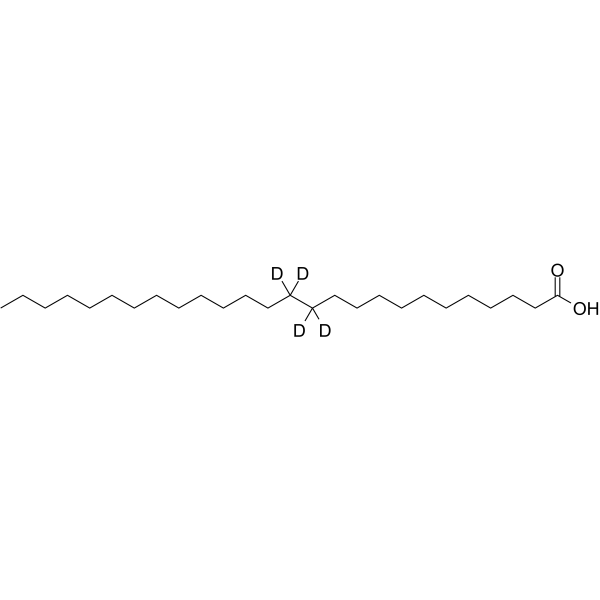
Hexacosanoic acid-d4-11 is the deuterium labeled Hexacosanoic acid (HY-113301). Hexacosanoic acid is a very long-chain fatty acid. Abnormally elevated levels of Hexacosanoic acid are closely associated with various diseases, such as X-linked adrenoleukodystrophy, adrenomyeloneuropathy, atherosclerosis, and dementia .
loading...
    loading...

