14 Results for "

viable bacteria

" in MedChemExpress (MCE) Product Catalog:
Products (14)

14 Results for "viable bacteria" in MCE Product Catalog:

2
2 Cited Publications
Cat. No.: HY-K1095

MCE Live & Dead Bacterial Viability and Counting Kit is based on dual-fluorescence staining technology, which can effectively differentiate live bacteria from dead bacteria and enable quantitative detection using flow cytometry. It can also be used for quantitative analysis of various bacterial mixtures.

loading...
    loading...
1
1 Cited Publications
Cat. No.: HY-N7435
CAS No.: 54814-64-1
Synonyms: (±)-Massoia lactone
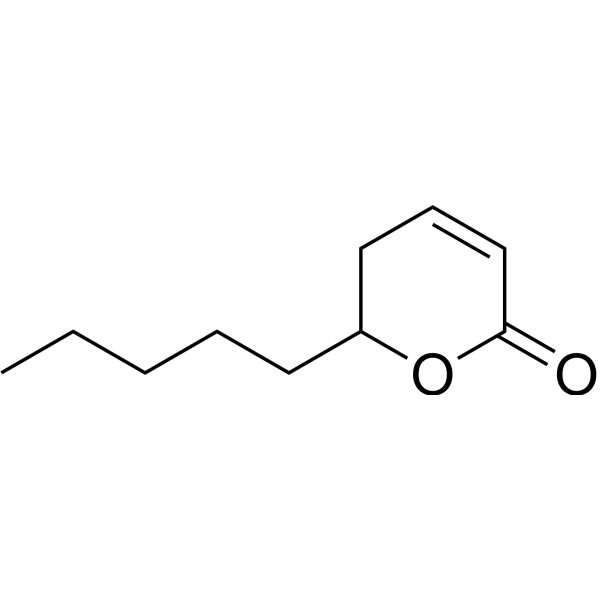
Massoia lactone ((±)-Massoia lactone) is a natural lactone-based biosurfactant with antifungal (fungal), antibiofilm, and cytotoxic activities. Massoia lactone inhibits fungal hyphal growth and spore germination, and induces fungal cell necrosis by forming membrane pores, reducing ergosterol, elevating ROS, and causing leakage of intracellular components. Massoia lactone inhibits the viability and proliferation of tumor cells. Massoia lactone degrades the extracellular polymeric substances of polymicrobial biofilms, penetrates the biofilm matrix, inhibits the growth of planktonic oral bacteria (bacterial), and reduces surface tension through its amphiphilic properties. Massoia lactone is a low-toxicity, biodegradable food additive with a coconut cream aroma, which can be used for flavor improvement and also serves as a quality control marker for Cs-4 mycelium. Massoia lactone can be used for research on Fusarium head blight, malignant tumors, and oral polymicrobial biofilm-associated dental diseases .
loading...
    loading...
Cat. No.: HY-E70529
Research Areas:  

Infection

Ribonucleoside vanadyl complexes are a class of potent RNase and Taq polymerase inhibitors. Ribonucleoside vanadyl complexes protect RNA during RNA isolation by inhibiting ribonucleases, and also reduce the viability of bacteria and eukaryotic cells by interfering with ribosomal subunit assembly. Ribonucleoside vanadyl complexes block PCR and reverse transcription reactions templated by viral nucleic acids and enhance the effects of antibiotics against Staphylococcus aureus, but do not directly inhibit protein synthesis. Ribonucleoside vanadyl complexes can be effectively removed by phenol-chloroform extraction, thus enabling subsequent PCR analysis. Ribonucleoside vanadyl complexes can be applied in research related to chronic hepatitis C (HCV) and Staphylococcus aureus infection .
loading...
    loading...
Cat. No.: HY-D0933
CAS No.: 2465-27-2
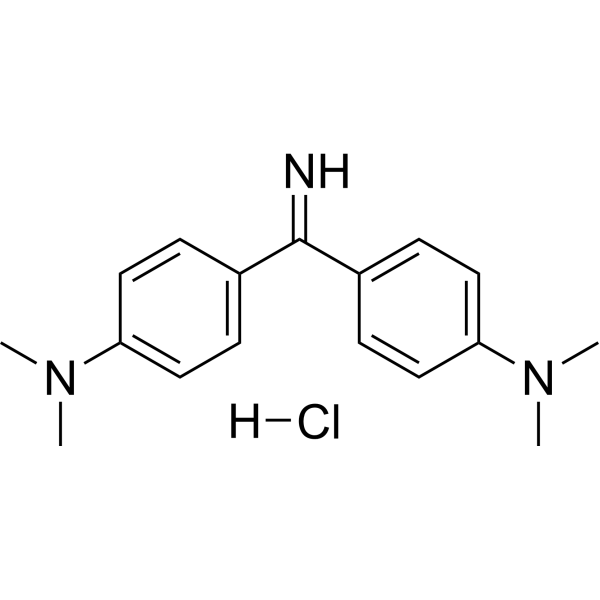
Auramine O is a yellow fluorescent dye. Auramine O is used to detect amyloid fibrils. Auramine O promotes lung malignancy. Auramine O is also used to determine algal cell viability and stain acid-fast bacteria .
loading...
    loading...
Cat. No.: HY-W984782
CAS No.: 523-64-8
Flindersine is an alkaloid with multiple activities including antibacterial, antifungal, antitumor, and antidiabetic properties. Flindersine increases the activity of antioxidant enzymes, restores the levels of renal biomarkers, and reduces blood glucose, blood lipid, and insulin levels in diabetic rats. Flindersine inhibits the growth of Gram-positive bacteria, Gram-negative bacteria, drug-resistant bacteria, as well as dermatophytes, filamentous fungi, and yeasts. Flindersine reduces the viability of cancer cells and induces apoptosis. Flindersine can be used in research related to breast cancer, type 2 diabetes, bacterial infections, and fungal infections .
loading...
    loading...
Cat. No.: HY-N8389
CAS No.: 489-41-8
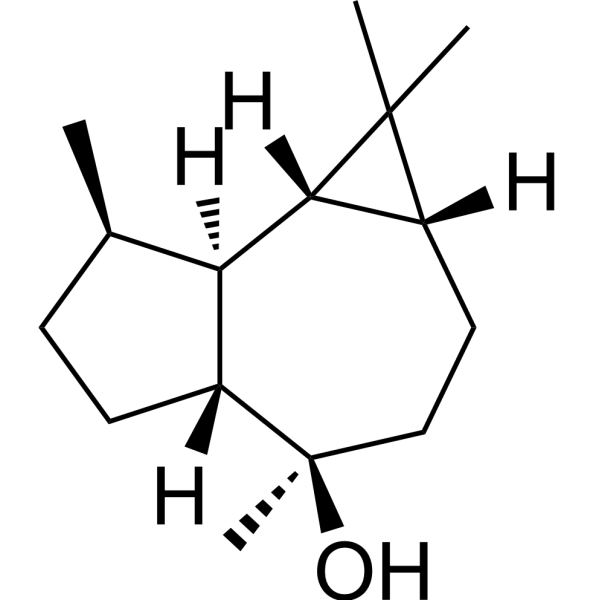
Globulol is a terpenoid metabolite and Antimicrobial agent. Globulol can be isolated from Alpinia oxyphylla Miq. Globulol binds to PAK4, reduces the expression level of PAK4 in cancer cells, decreases the phosphorylation of AKT, and downregulates the expressions of STAT3, phosphorylated STAT3, and PD-L1. Globulol promotes the secretion of CCL4 by cancer cells. Globulol reduces the viability and proliferation ability of cancer cells, induces G0/G1 cell cycle arrest and Apoptosis in cancer cells, and inhibits cancer cell migration and the integrity of 3D tumor spheres. Globulol enhances the relevant effects of anti-PD-1 agents in the cancer cell microenvironment. Globulol exhibits anticancer activity against liver cancer. Globulol inhibits the mycelial growth of phytopathogenic fungi and the growth of phytopathogenic bacteria. Globulol can be used in studies related to hepatocellular carcinoma .
loading...
    loading...
Cat. No.: HY-139971
CAS No.: 618865-52-4
Target:  

Bacterial

Research Areas:  

Infection

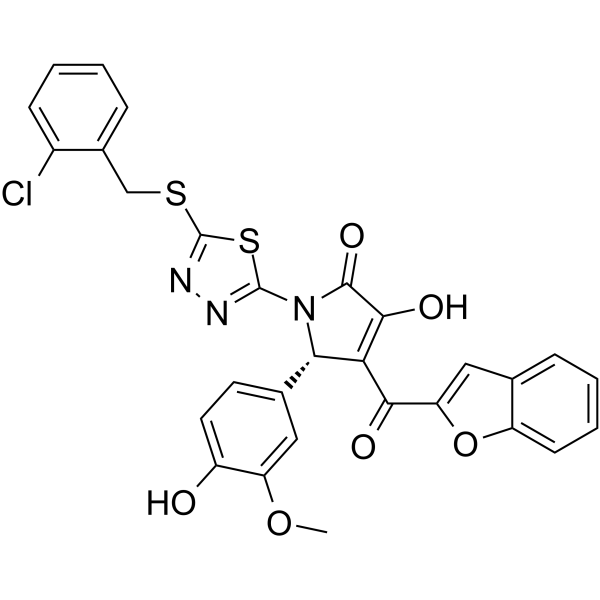
Antibacterial agent 64 (compound 62) is a potent YycG inhibitor (IC50=6.1 µM) and an antibacterial agent. Antibacterial agent 64 combines with ampicillin could synergistically eradicate the biofilm-embedded viable bacteria .
loading...
    loading...
Cat. No.: HY-DY2047
Research Areas:  

Infection

Phosphotungstic Acid Negative Staining Solution (3%, pH 7.0) is an electron microscopy negative stain. Phosphotungstic Acid Negative Staining Solution (3%, pH 7.0) forms an electron-dense background around samples, enabling the imaging of viruses, bacterial, macromolecules and organelles .
loading...
    loading...
Cat. No.: HY-D3459
SYTO-9 is a cell-permeable fluorescent dye that can be used for nucleic acid staining. The fluorescence intensity of SYTO-9 increases significantly upon binding to RNA and DNA . SYTO-9 can stain RNA and DNA in live and dead eukaryotic cells, as well as in Gram-positive and Gram-negative bacteria. SYTO-9 is applicable for fluorescence microscopy, flow cytometry, fluorophotometry, and bacterial counting in aquatic systems (RNA: Ex/Em = 486/501 nm; DNA: Ex/Em = 485/498 nm) .
loading...
    loading...
Cat. No.: HY-W093378
CAS No.: 21548-73-2
Research Areas:  

Infection

Silver (I) sulfide is a biochemical reagent. Silver (I) sulfide nanoparticles exert Antibacterial effects against a variety of resistant bacteria, including Gram-positive and Gram-negative bacteria. Silver (I) sulfide can be used in the research of bacterial infections, such as infections caused by Staphylococcus aureus, Streptococcus agalactiae, Escherichia coli and Pseudomonas species .
loading...
    loading...
Cat. No.: HY-181282
CAS No.: 3105177-29-2
Target:  

Bacterial

Research Areas:  

Infection

MSU-44147 is an inhibitor and antimicrobial agent targeting MmpL3 in Mycobacterium abscessus, with low eukaryotic cytotoxicity, a narrow antimicrobial spectrum that is specific only to mycobacteria, and low drug resistance frequency. MSU-44147 reduces trehalose dimycolate levels by inhibiting MmpL3 function, disrupts biofilm formation and reduces the viability of related bacteria, while exerting bactericidal effects on intracellular Mycobacterium abscessus. MSU-44147 exhibits additive or synergistic effects with antibiotics and can be used in research on multidrug-resistant isolates and infections of Mycobacterium abscessus .
loading...
    loading...
Cat. No.: HY-W718262
CAS No.: 49608-51-7
Synonyms: (Rac)-CGP 52547
Research Areas:  

Infection Cancer

Dihydroaeruginoic acid ((Rac)-CGP 52547), an antifungal antibiotic, is a thiazoline iron chelator. Dihydroaeruginoic acid is the condensation product of salicylate and one cysteine residue. Dihydroaeruginoic acid chelates Fe(III), inhibits DNA replication via ribonucleotide reductase, induces G1/S cell cycle block, reduces leukemia cell clonogenic viability. Dihydroaeruginoic acid inhibits phytopathogenic fungi and bacteria, suppresses Candida albicans development, and inhibits Agrobacterium tumefaciens biofilm formation via extracellular iron sequestration. Dihydroaeruginoic acid can be used for the research of phytopathogenic fungal and bacterial infections, and leukemia .
loading...
    loading...
Cat. No.: HY-D3391
RMR-Tre is a fluorescent probe targeting the mycobacterial acyltransferase Ag85. Under the catalysis of Ag85, RMR-Tre undergoes 6-position mycoloylation and anchors to the mycobacterial membrane, while achieving fluorescence activation by inhibiting the intramolecular twisted charge transfer state transition. RMR-Tre can distinguish live mycobacteria from dead ones through metabolism-driven labeling, enabling rapid, wash-free, low-background detection of viable bacteria. RMR-Tre reports the drug resistance of Mycobacterium tuberculosis via the trehalose catalytic shift activity readout associated with TreS. In addition, RMR-Tre can be combined with flow cytometry or high-content imaging techniques to visualize and quantitatively analyze the metabolic heterogeneity of Mycobacterium tuberculosis related to persistence and drug resistance. RMR-Tre is widely used in tuberculosis-related research .
loading...
    loading...
Cat. No.: HY-N7435R
CAS No.: 54814-64-1
Synonyms: (±)-Massoia lactone (Standard)
Massoia lactone (Standard) ((±)-Massoia lactone (Standard)) is the analytical standard of Massoia lactone (HY-N7435). This product is intended for research and analytical applications. Massoia lactone ((±)-Massoia lactone) is a natural lactone-based biosurfactant with antifungal (fungal), antibiofilm, and cytotoxic activities. Massoia lactone inhibits fungal hyphal growth and spore germination, and induces fungal cell necrosis by forming membrane pores, reducing ergosterol, elevating ROS, and causing leakage of intracellular components. Massoia lactone inhibits the viability and proliferation of tumor cells. Massoia lactone degrades the extracellular polymeric substances of polymicrobial biofilms, penetrates the biofilm matrix, inhibits the growth of planktonic oral bacteria (bacterial), and reduces surface tension through its amphiphilic properties. Massoia lactone is a low-toxicity, biodegradable food additive with a coconut cream aroma, which can be used for flavor improvement and also serves as a quality control marker for Cs-4 mycelium. Massoia lactone can be used for research on Fusarium head blight, malignant tumors, and oral polymicrobial biofilm-associated dental diseases .
loading...
    loading...
  • 1

