1. Search Result
Search Result
Results for "

viral protein synthesis

" in MedChemExpress (MCE) Product Catalog:

26

Inhibitors & Agonists

1

Screening Libraries

5

Natural
Products

1

Isotope-Labeled Compounds

1

Oligonucleotides

Targets Recommended:
Cat. No. 상품명 Target 연구분야 Chemical Structure
  • HY-E70529

    DNA/RNA Synthesis Bacterial Infection
    Ribonucleoside vanadyl complexes are a class of potent RNase and Taq polymerase inhibitors. Ribonucleoside vanadyl complexes protect RNA during RNA isolation by inhibiting ribonucleases, and also reduce the viability of bacteria and eukaryotic cells by interfering with ribosomal subunit assembly. Ribonucleoside vanadyl complexes block PCR and reverse transcription reactions templated by viral nucleic acids and enhance the effects of antibiotics against Staphylococcus aureus, but do not directly inhibit protein synthesis. Ribonucleoside vanadyl complexes can be effectively removed by phenol-chloroform extraction, thus enabling subsequent PCR analysis. Ribonucleoside vanadyl complexes can be applied in research related to chronic hepatitis C (HCV) and Staphylococcus aureus infection .
    Ribonucleoside vanadyl complexes
  • HY-128744
    Phosphonoacetic acid
    2 Publications Verification

    Endogenous Metabolite Orthopoxvirus HSV DNA/RNA Synthesis Infection
    Phosphonoacetic acid is an endogenous metabolite and antiviral agent. Phosphonoacetic acid is active against orthopoxviruses and herpes viruses. Phosphonoacetic acid can inhibit HSV DNA synthesis and virus-specific DNA polymerase activity, and affect the synthesis of late viral proteins .
    Phosphonoacetic acid
  • HY-N0093
    Ancitabine hydrochloride
    1 Publications Verification

    Cyclocytidine hydrochloride; Cyclo-CMP hydrochloride; Cyclo-C

    Autophagy CMV DNA/RNA Synthesis Infection Cancer
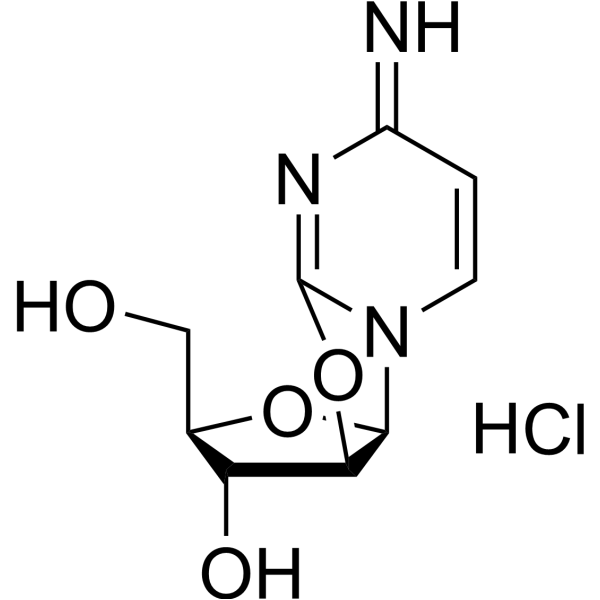
    Ancitabine hydrochloride is a cytarabine derivative that inhibits viral replication. Ancitabine hydrochloride blocks vaccinia virus DNA replication, the progression of viral protein synthesis from early to late stages, and one-step growth of vaccinia virus. Ancitabine hydrochloride is applicable to research related to vaccinia virus infection, leukemia, human cytomegalovirus infection and colorectal cancer .
    Ancitabine hydrochloride
  • HY-N2036
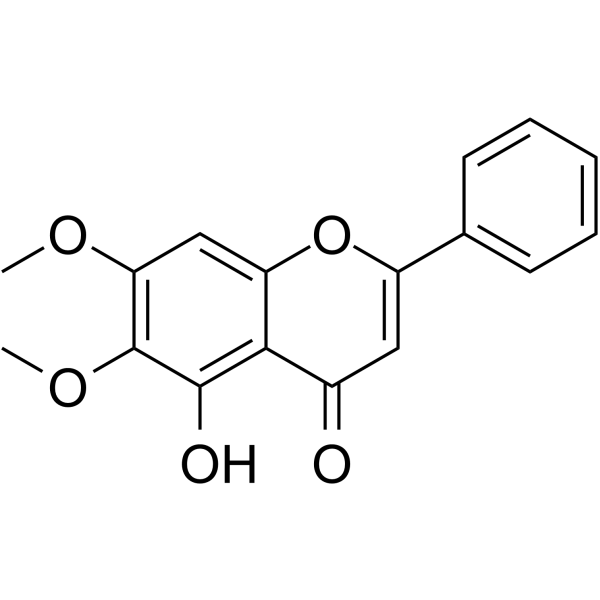
    Mosloflavone
    1 Publications Verification

    TNF Receptor Enterovirus Bacterial Infection
    Mosloflavone is a flavonoid isolated from Scutellaria baicalensis Georgi with ?anti-EV71 activity. Mosloflavone? inhibits VP2 virus replication and protein expression during the initial stage of virus infection and inhibits viral VP2 capsid protein synthesis. Mosloflavone is a promising biocide and inhibits P. aeruginosa virulence and biofilm formation.
    Mosloflavone
  • HY-172760

    SARS-CoV Infection
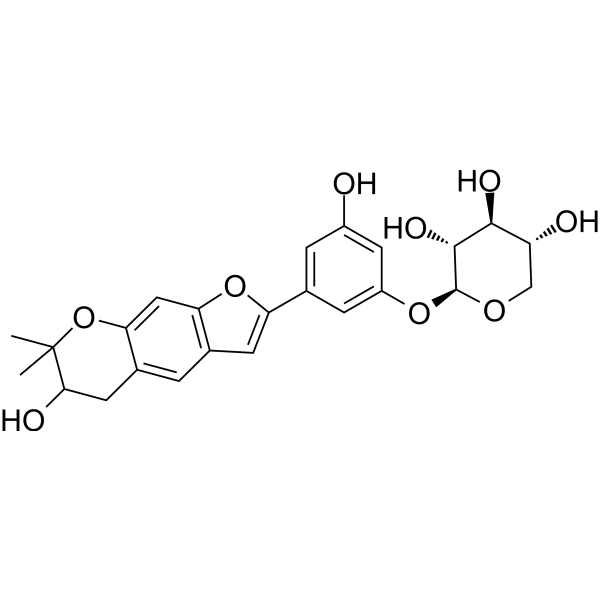
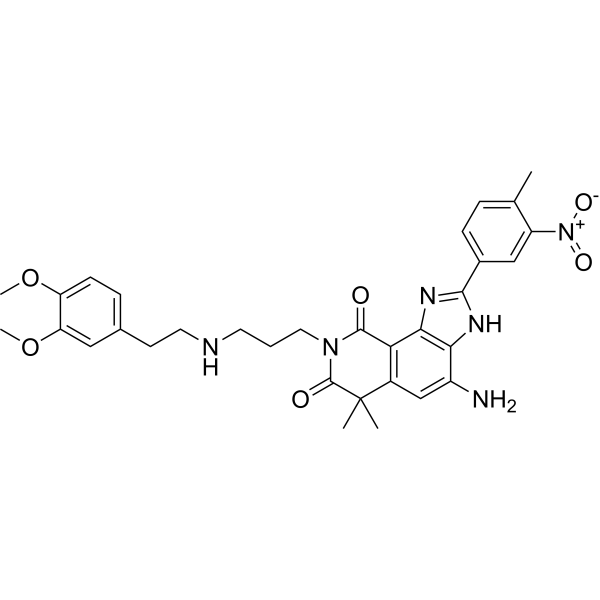
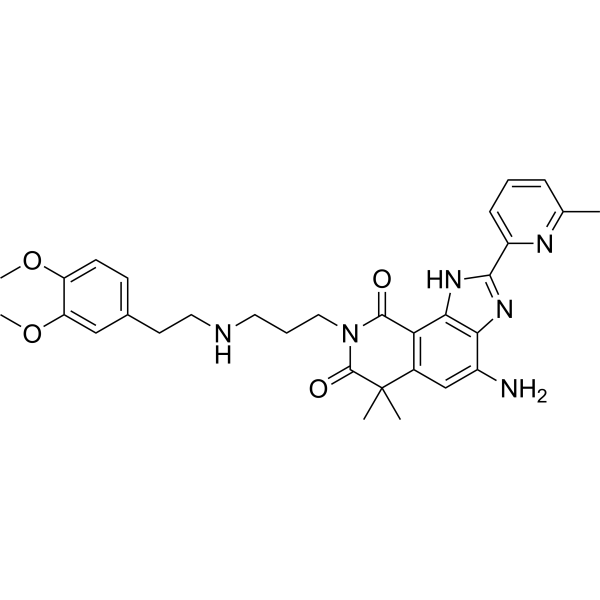
    CIM-834 is an orally effective inhibitor of SARS-CoV-2 membrane protein. CIM-834 can prevent the assembly of infectious virus particles without inhibiting the synthesis of viral RNA. CIM-834 can reduce the viral titer in the lungs of SCID mice infected nasally with SARS-CoV-2, block the spread of SARS-CoV-2 among Syrian hamsters, and inhibit the replication of SARS-CoV-2 (including variants) and SARS-CoV. CIM-834 can be used in related research on COVID-19 .
    CIM-834
  • HY-110354
    UCM05
    2 Publications Verification

    G28UCM

    Fatty Acid Synthase (FASN) Bacterial Infection
    UCM05 (G28UCM) is a fatty acid synthase (FASN) and filamentous temperature-sensitive protein Z (Ftsz) inhibitor. UCM05 inhibits fatty acid synthesis, viral replication, and Gram-positive bacterial growth. UCM05 binds to FtsZ GTP-binding sites, inhibits GTPase activity, and disrupts Z-ring localization. UCM05 can be used for the research of HSV-1/2 infection, HIV-1 infection, and Gram-positive bacterial infections[1][2][3].
    UCM05
  • HY-124806
    TTP-8307
    2 Publications Verification

    Enterovirus DNA/RNA Synthesis HCV Infection
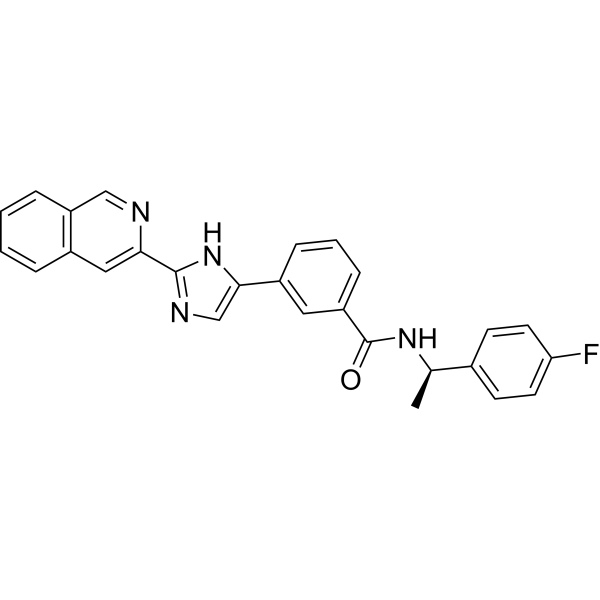
    TTP-8307 is a potent inhibitor of the replication of several rhino- and enteroviruses. TTP-8307 inhibits coxsackievirus B3 (CVB3; EC50=1.2 μM) and poliovirus by interfering with the synthesis of viral RNA. TTP-8307 exerts antiviral activity through oxysterol-binding protein (OSBP) .
    TTP-8307
  • HY-10118
    Filibuvir
    4 Publications Verification

    HCV DNA/RNA Synthesis Infection
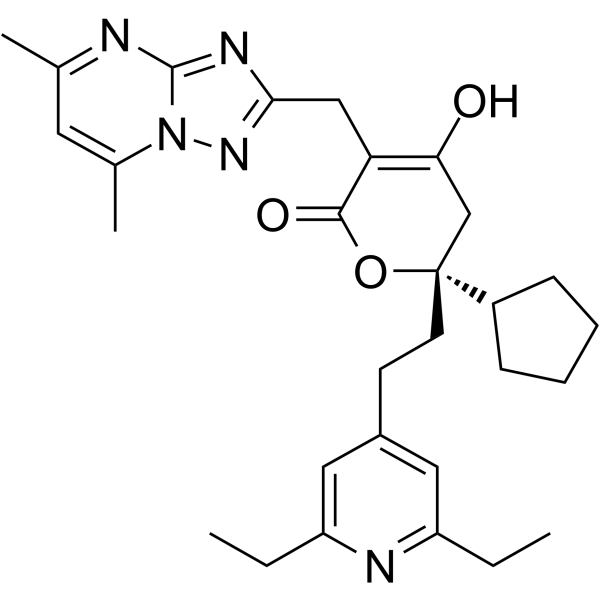
    Filibuvir is an orally active, selective non-nucleoside inhibitor of the HCV nonstructural 5B protein (NS5B) RNA-dependent RNA polymerase (RdRp). Filibuvir binds noncovalently in the thumb II allosteric pocket of NS5B. Filibuvir inhibits genotype 1a and 1b replicons with EC50s of 59 nM for both isoforms, respectively . Filibuvir preferentially inhibits elongative RNA synthesis and potently decreases viral RNA accumulation .
    Filibuvir
  • HY-148170

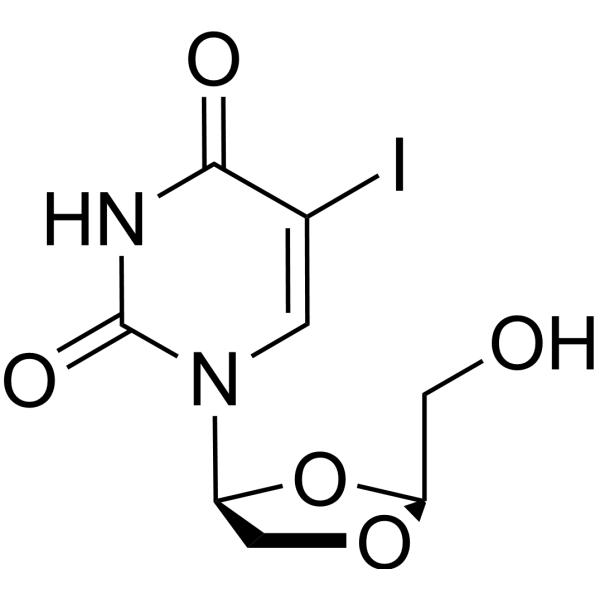
    EBV DNA/RNA Synthesis Nucleoside Antimetabolite/Analog Infection
    L-I-OddU, a L-5'-halo- dioxolane nucleoside analogue, is a potent and selective anti-Epstein-Barr virus (EBV) agent with an EC50 value of 0.03μM. L-I-OddU has low cytotoxicity with a CC50 value of 1000 nM. L-I-OddU has antiviral activity by suppressing replicative EBV DNA and viral protein synthesis .
    L-I-OddU
  • HY-W555382

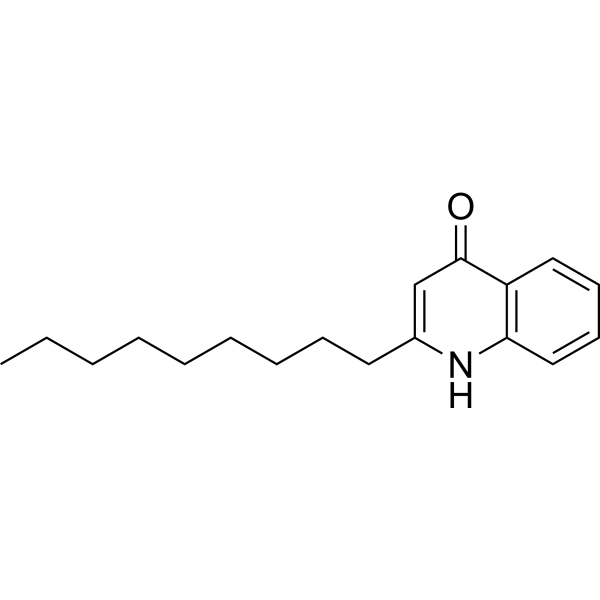
    2-Nonylquinolin-4(1H)-one

    HCV Infection
    Pseudane IX, a compound isolated from the leaves of Ruta angustifolia, has strong anti-HCV activity with an IC50 value of 1.4 μg/mL. Pseudane IX reduces HCV RNA replication and viral protein synthesis levels .
    Pseudane IX
  • HY-163529

    HSV Cytochrome P450 Infection
    HN0037 is a selective, orally active Helicase-primase inhibitor. HN0037 is mainly metabolized by CYP3A4. HN0037 inhibits HSV replication by targeting the viral helicase-primase complex, which consists of three proteins encoded by UL5 (helicase), UL52 (primase), and UL8 (scaffold protein that promotes primer synthesis) .
    HN0037
  • HY-111233

    WIN-51711

    Enterovirus Infection
    Disoxaril (WIN-51711) is an antivirus agent with activity against poliovirus types 1 and 2. Disoxaril inserts into the hydrophobic interior of virus capsid protein VP1 to stabilize virion conformation, inhibits poliovirus uncoating, and prevents viral RNA release and synthesis. Disoxaril can be used for the research of poliovirus infection .
    Disoxaril
  • HY-115574

    RSV Infection
    RSV L-protein-IN-1 (compound D) is a potent inhibitor of Respiratory syncytial virus (RSV) (EC50=0.021 μM). RSV L-protein-IN-1 inhibits Polymerase (IC50=0.089 μM),and blocks RSV mRNA synthesis by inhibiting guanylation of viral transcripts. RSV L-protein-IN-1 shows moderate cytotoxicity (CC50=8.4 μM,HEp-2),also exhibits activity and lowers virus titers in mouse models of RSV infection .
    RSV L-protein-IN-1
  • HY-122668

    SARS-CoV DNA/RNA Synthesis Infection
    K22 is an anti-Coronaviral compound. K22 reduces double-stranded RNA. K22 displays antiviral activity beyond the Coronavirinae subfamily, namely against nidoviruses of the Torovirinae subfamily (EToV and WBV) and members of the Arteriviridae family (PRRSV, EAV). K22 displays antiviral activity against HCoV-229E .
    K22
  • HY-173189B

    2′,5′-ApApA TEA; 2′,5′-trioligoadenylate TEA; 5'-O-Triphosphoryladenylyl-(2'→5')-adenylyl-(2'→5')-adenosine TEA

    RSV DNA/RNA Synthesis Infection Inflammation/Immunology Cancer
    2-5A (2′,5′-ApApA; 2′,5′-trioligoadenylate; 5'-O-Triphosphoryladenylyl-(2'→5')-adenylyl-(2'→5')-adenosine) TEA is a 5'-triphosphorylated (2',5') oligoadenylate. 2-5A TEA is an immunotransmitter that fuels RNase L immunity. 2-5A TEA degrades viral mRNA and inhibits protein synthesis by binding to RNase L and activating its endoribonuclease activity. 2-5A TEA can be used in RSV and cancer research .
    2-5A TEA
  • HY-N0093A

    Cyclocytidine; Cyclo-CMP

    DNA/RNA Synthesis CMV Autophagy Cancer
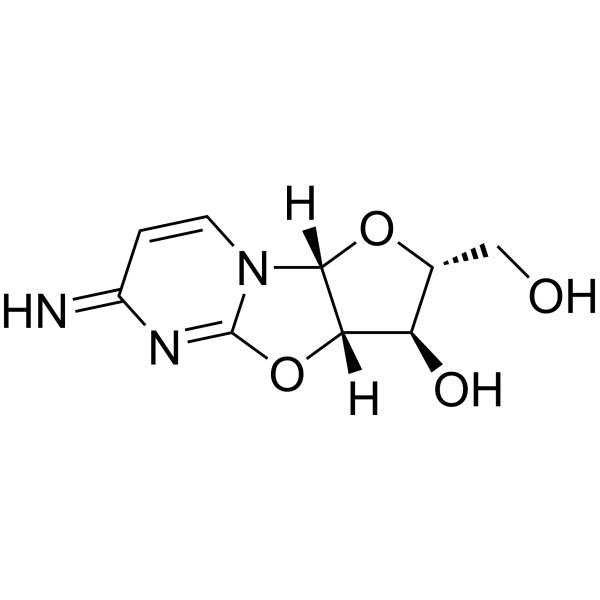
    Ancitabine is a cytarabine derivative that inhibits viral replication. Ancitabine blocks vaccinia virus DNA replication, the progression of viral protein synthesis from early to late stages, and one-step growth of vaccinia virus. Ancitabine is applicable to research related to vaccinia virus infection, leukemia, human cytomegalovirus infection and colorectal cancer .
    Ancitabine
  • HY-107009

    VZV HSV VSV Infection
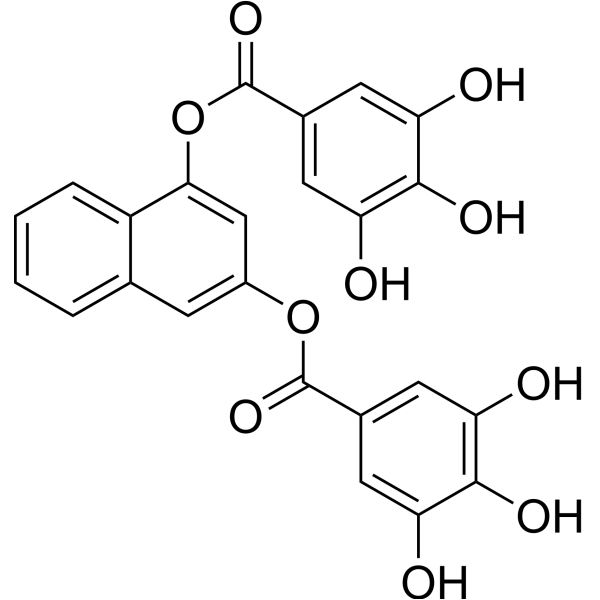
    CTC 96 is an antiviral agent, showing inhibitory effects particularly on herpes viruses and adenoviruses. CTC 96 directly blocks the fusion process between the viral envelope and the cell membrane, preventing the entry of viral nucleic acids and proteins into the cells. CTC 96 can completely block the penetration and intercellular transmission of HSV-1, preventing the synthesis of viral proteins and mRNA. CTC 96 exhibits significant anti-adenovirus activity in rabbit eye models. CTC 96 is also effective against varicella-zoster virus (VZV) and vesicular stomatitis virus (VSV). CTC 96 can be used for broad-spectrum antiviral research .
    CTC 96
  • HY-N0093R

    Cyclocytidine hydrochloride (Standard); Cyclo-CMP hydrochloride (Standard); Cyclo-C (Standard)

    Reference Standards Autophagy CMV DNA/RNA Synthesis Cancer
    Ancitabine hydrochloride (Standard) is the analytical standard of Ancitabine hydrochloride. This product is intended for research and analytical applications. Ancitabine hydrochloride is a cytarabine derivative that inhibits viral replication. Ancitabine hydrochloride blocks vaccinia virus DNA replication, the progression of viral protein synthesis from early to late stages, and one-step growth of vaccinia virus. Ancitabine hydrochloride is applicable to research related to vaccinia virus infection, leukemia, human cytomegalovirus infection and colorectal cancer .
    Ancitabine hydrochloride (Standard)
  • HY-128744R

    Reference Standards Endogenous Metabolite Orthopoxvirus HSV DNA/RNA Synthesis Infection
    Phosphonoacetic acid (Standard) is the analytical standard of Phosphonoacetic acid (HY-128744). This product is intended for research and analytical applications. Phosphonoacetic acid is an endogenous metabolite and antiviral agent. Phosphonoacetic acid is active against orthopoxviruses and herpes viruses. Phosphonoacetic acid can inhibit HSV DNA synthesis and virus-specific DNA polymerase activity, and affect the synthesis of late viral proteins .
    Phosphonoacetic acid (Standard)
  • HY-111026

    Influenza Virus Infection
    PPQ-581 is an anti-influenza agent with an EC50 of 1 μM for preventing virus-induced cytopathic effects. PPQ-581 inhibits viral protein synthesis. PPQ-581 blocks the RNP nuclear export and cytoplasmic RNP aggregation .
    PPQ-581
  • HY-154968

    RSV Infection
    RSV L-protein-IN-5 (compound E) is a potent inhibitor of Respiratory syncytial virus (RSV) (EC50=0.1 μM). RSV L-protein-IN-5 inhibits Polymerase (IC50=0.66 μM),and blocks RSV mRNA synthesis by inhibiting guanylation of viral transcripts. RSV L-protein-IN-5 shows moderate cytotoxicity (CC50=10.7 μM,HEp-2),also exhibits activity and lowers virus titers in mouse models of RSV infection .
    RSV L-protein-IN-5
  • HY-W555382S

    2-Nonylquinolin-4(1H)-one-d4

    Isotope-Labeled Compounds HCV Infection
    Pseudane IX-d4 (2-Nonylquinolin-4(1H)-one-d4) is deuterium labeled Pseudane IX. Pseudane IX, a compound isolated from the leaves of Ruta angustifolia, has strong anti-HCV activity with an IC50 value of 1.4 μg/mL. Pseudane IX reduces HCV RNA replication and viral protein synthesis levels .
    Pseudane IX-d4
  • HY-171587

    HCV Infection
    3′-Deoxy CTP is a nucleotide analogue and a mandatory chain terminator. 3′-Deoxy CTP can cause chain termination by lacking the 3′-hydroxyl group, inhibiting the RNA synthesis activity of HCV nonstructural protein (NS5B) polymerase and blocking viral replication. 3′-Deoxy CTP can be used to study the chain termination mechanism of HCV polymerase and the development of antiviral drugs .
    3′-Deoxy CTP
  • HY-171587A

    HCV Infection
    3′-Deoxy CTP trisodium is the sodium salt form of 3′-Deoxy CTP (HY-171587). 3′-Deoxy CTP trisodium is a nucleotide analogue and a mandatory chain terminator. 3′-Deoxy CTP trisodium can cause chain termination by lacking the 3′-hydroxyl group, inhibiting the RNA synthesis activity of HCV nonstructural protein (NS5B) polymerase and blocking viral replication. 3′-Deoxy CTP trisodium can be used to study the chain termination mechanism of HCV polymerase and the development of antiviral drugs .
    3′-Deoxy CTP trisodium
  • HY-110354R

    G28UCM (Standard)

    Reference Standards Fatty Acid Synthase (FASN) Bacterial Infection
    UCM05 (Standard) is the analytical standard of Lysipressin. This product is intended for research and analytical applications. UCM05 (G28UCM) is a fatty acid synthase (FASN) and filamentous temperature-sensitive protein Z (Ftsz) inhibitor. UCM05 inhibits fatty acid synthesis, viral replication, and Gram-positive bacterial growth. UCM05 binds to FtsZ GTP-binding sites, inhibits GTPase activity, and disrupts Z-ring localization. UCM05 can be used for the research of HSV-1/2 infection, HIV-1 infection, and Gram-positive bacterial infections [1][2][3].
    UCM05 (Standard)
  • HY-183314

    Flavivirus Infection
    ZIKV-IN-9 is a ZIKV inhibitor that blocks the early binding of viral particles to the cell surface. ZIKV-IN-9 inhibits ZIKV in various cell models. ZIKV-IN-9 is applicable to research related to Zika virus infection .
    ZIKV-IN-9

온라인 문의

Your information is safe with us. * Required Fields.

호칭


Country or Region *

고객명 *


회사명 *

Department *


메일주소 *


상품명 *

Cat. No.


Requested quantity *

전화번호 *


비고

온라인 문의

Inquiry Information

상품명:
Cat. No.:
수량:
MCE Japan Authorized Agent:

