



U-74389G

Based on 1 Customer Validation
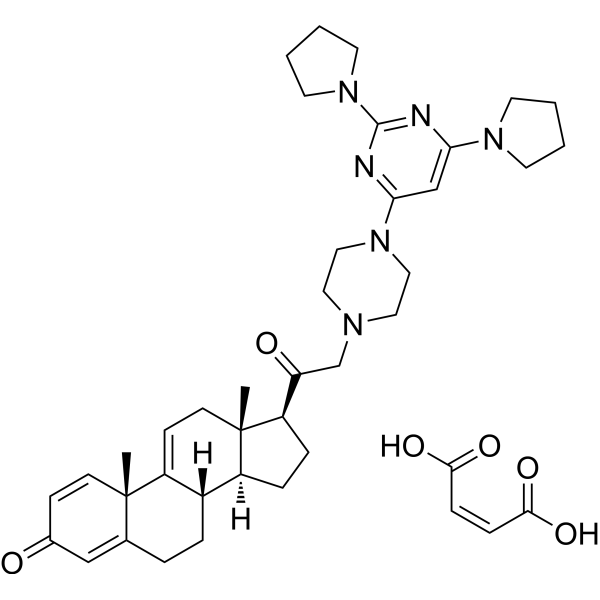
U-74389G (PNU74389G meleate) is an antioxidant, can inhibit lipid peroxidation reactions. U-74389G can protect against ischemia-reperfusion injury and be widely used in animal models of ischemic injury and hypertension. U-74389G shows anti-inflammatory activity.
연구목적의 판매만을 진행합니다. 환자를 대상으로 한 판매는 하지 않습니다.
- Purity : 99.08%
- CAS No.: 153190-29-5
- 화학식: C41H54N6O6
- 분자량:726.90
-
보관:
-20°C, sealed storage, away from moisture
* In solvent : -80°C, 6 months; -20°C, 1 month (sealed storage, away from moisture)

To place orders, for customer services and technical support, please contact: MedChemExpress USA
Tel: 609-228-6898 E-mail: [email protected] [email protected]


-
 Biological Activity
-
Chemical Information
-
용액&용해도
- Protocol
- 순도&문서
- References
-
 Help & FAQs




Biological Activity
제품 설명
In Vitro
U-74389G (12.5, 25 and 50 μM; 24 h) inhibits nitrite production in endotoxin stimulated peritoneal macrophages[3].
MedChemExpress (MCE) has not independently confirmed the accuracy of these methods. They are for reference only. Further protocols information, click here.
-
Cell Line:Peritoneal macrophages
-
Concentration:12.5, 25 and 50 μM
-
Incubation Time:24 hours
-
Result:Reduced the nitrite concentrations in the supernatants of LPS-primed macrophages in a dose-dependent manner.
In Vivo
U-74389G (intravenous injection; 15 or 30 mg/kg) treatment significantly protects against lipopolysaccharide-induced lethality, reduces hypotension, ameliorates liver function, decreases plasma nitrite levels, restores the hyporeactivity of aortic rings to their control values and inhibits the activity of inducible NO synthase in the liver and in the aorta[3].
MedChemExpress (MCE) has not independently confirmed the accuracy of these methods. They are for reference only.
-
Animal Model:Rat model of trinitrobenzenesulfonic acid-induced colitis[2]
-
Dosage:10 mg/kg
-
Administration:Intravenous injection; 10 mg/kg; once daily; 6 d
-
Result:Reduced TNF-α, the macroscopic index of mucosal damage score (CMDI) and increased body weight.
-
Animal Model:Male Sprague–Dawley rats injected with Lipopolysaccharide[3]
-
Dosage:15 or 30 mg/kg
-
Administration:Intravenous injection; 15 or 30 mg/kg
-
Result:Protected against lipopolysaccharide-induced lethality (90% survival rate 24 h and 80% 72 h after Lipopolysaccharide injection, respectively, following the highest dose).


Chemical Information
-
CAS No. 153190-29-5
-
Appearance Solid
-
분자량 726.90
-
화학식 C41H54N6O6
-
Color White to off-white
-
SMILES
OC(/C=C\C(O)=O)=O.C[C@@]12[C@](CC[C@@H]2C(CN3CCN(C4=NC(N5CCCC5)=NC(N6CCCC6)=C4)CC3)=O)([H])[C@@]7([H])C([C@@]8(C(CC7)=CC(C=C8)=O)C)=CC1
-
Synonyms
PNU74389G (meleate)
-
선적
Room temperature in continental US; may vary elsewhere.
-
보관
-20°C, sealed storage, away from moisture
* In solvent : -80°C, 6 months; -20°C, 1 month (sealed storage, away from moisture)


용액&용해도
In Vitro:
DMSO : 100 mg/mL (137.57 mM; Need ultrasonic; Hygroscopic DMSO has a significant impact on the solubility of product, please use newly opened DMSO)
Please refer to the solubility information to select the appropriate solvent. Once prepared, please aliquot and store the solution to prevent product inactivation from repeated freeze-thaw cycles.
Storage method and period of stock solution: -80°C, 6 months; -20°C, 1 month (sealed storage, away from moisture). When stored at -80°C, please use it within 6 months. When stored at -20°C, please use it within 1 month.
Please refer to the solubility information to select the appropriate solvent. Once prepared, please aliquot and store the solution to prevent product inactivation from repeated freeze-thaw cycles.
Storage method and period of stock solution: -80°C, 6 months; -20°C, 1 month (sealed storage, away from moisture). When stored at -80°C, please use it within 6 months. When stored at -20°C, please use it within 1 month.
Concentration (start) × Volume (start) = Concentration (final) × Volume (final)

Protocol
-
Cotton Pellet Granuloma
Cotton pellet granuloma is a classical in vivo chronic inflammation model used to evaluate the anti-inflammatory potential of test substances by measuring their ability to inhibit granuloma tissue formation around an implanted foreign body (cotton pellet) in rodents. The method is based on the biological response to a sterile implanted material, which induces proliferative phase inflammation characterized by fibroblast proliferation and collagen-rich granuloma formation, and the final readout reflects the extent of chronic inflammatory tissue growth surrounding the pellet. In multiple preclinical pharmacological evaluations, inhibition of cotton pellet-induced granuloma formation has been used as an indicator of anti-inflammatory activity in both synthetic and natural product screening contexts.
-
Carrageenan-Induced Paw Edema
Carrageenan-induced paw edema is an acute inflammation model in which intraplantar injection of carrageenan induces localized inflammatory swelling characterized by vascular permeability, leukocyte infiltration, and production of inflammatory mediators such as prostaglandins and cytokines, making it widely used to evaluate anti-inflammatory agents in vivo. The resulting paw volume or thickness increase is quantified over time as a direct readout of inflammatory intensity and drug efficacy, typically reflecting cyclooxygenase-mediated prostaglandin-driven edema formation and immune cell recruitment in peripheral tissue[20].
-
Research Protocol for Cardiovascular Diseases
Cardiovascular disease can be modeled as maladaptive cardiac remodeling, where ischemic injury or pressure overload activates inflammatory signaling, fibroblast activation, extracellular-matrix deposition, cardiomyocyte hypertrophy, vascular remodeling, and progressive ventricular dysfunction. The TGF-β/SMAD axis is a central profibrotic pathway after myocardial injury and pressure overload, while innate immune and cytokine pathways regulate leukocyte recruitment, scar formation, and adverse remodeling. Key unresolved questions include which inflammatory signals are reparative versus harmful, when fibrosis is protective versus maladaptive, and whether pathway inhibition improves function without weakening necessary infarct healing or compensatory remodeling.
-
Ferroptosis Solutions
Ferroptosis is an iron-dependent, non-apoptotic form of regulated cell death characterized by lethal lipid peroxidation and sensitivity to suppression by iron chelators or lipophilic radical-trapping antioxidants. The core pathway links cystine uptake through system Xc−, glutathione availability, GPX4-dependent detoxification of phospholipid hydroperoxides, iron-dependent oxidative reactions, and polyunsaturated-phospholipid metabolism into a cell-death program that is biochemically and morphologically distinct from apoptosis, necrosis, and autophagy. The ferroptosis pathway is experimentally linked to phenotype through chemical and genetic perturbation. Erastin induces ferroptosis by inhibiting cystine uptake through system Xc− and weakening antioxidant defenses, while GPX4 inhibition or depletion causes lipid peroxide accumulation and ferroptotic cancer-cell death. ACSL4 and oxidizable arachidonoyl- or adrenoyl-containing phosphatidylethanolamines shape ferroptosis sensitivity by con
-
Research Protocol for Inflammation-related Diseases
The NLRP3 inflammasome is a cytosolic innate immune signaling platform that integrates priming signals and danger-signal activation to promote caspase-1 activation, maturation of IL-1β and IL-18, and gasdermin D-mediated pyroptotic cell death. The core experimental logic is to determine whether inflammatory disease phenotypes are driven by increased NLRP3 expression, ASC-containing inflammasome assembly, caspase-1 cleavage, GSDMD cleavage, and extracellular release of IL-1β/IL-18 rather than by nonspecific cell injury alone. The pathway is strongly linked to inflammation-related disease phenotypes because monosodium urate crystals activate NALP3/NLRP3 inflammasome signaling in gout-like crystal inflammation, cholesterol crystals activate NLRP3 inflammasomes in atherogenesis models, and DSS-induced intestinal inflammation has been reported to involve NLRP3 inflammasome activity. However, experimental colitis studies also show context-dependent protective effects of NLRP3 inflammasome co


순도&문서
-
Data Sheet (280 KB)
-
SDS (252 KB)
- English - EN (252 KB)
- Français - FR (252 KB)
- Deutsch - DE (252 KB)
- Norwegian - NO (252 KB)
- Español - ES (252 KB)
- Swedish - SV (252 KB)
- Italian - IT (252 KB)
- Korean - KR (252 KB)
- Portuguese - PT (252 KB)
-
Handling Instructions (2659 KB)
References
[1]. A M Perna, et al. Protection of rat heart from ischaemia-reperfusion injury by the 21-aminosteroid U-74389G. Pharmacol Res. 1996 Jul-Aug;34(1-2):25-31. [Content Brief]
[2]. Georgios Antonios Margonis, et al. Effectiveness of sildenafil and U-74389G in a rat model of colitis. J Surg Res. 2015 Feb;193(2):667-74. [Content Brief]
[3]. D Altavilla, et al. The lazaroid, U-74389G, inhibits inducible nitric oxide synthase activity, reverses vascular failure and protects against endotoxin shock. Eur J Pharmacol. 1999 Mar 12;369(1):49-55. [Content Brief]


Complete Stock Solution Preparation Table
Please refer to the solubility information to select the appropriate solvent. Once prepared, please aliquot and store the solution to prevent product inactivation from repeated freeze-thaw cycles.
Storage method and period of stock solution: -80°C, 6 months; -20°C, 1 month (sealed storage, away from moisture). When stored at -80°C, please use it within 6 months. When stored at -20°C, please use it within 1 month.
| Optional Solvent | Concentration Solvent Mass | 1 mg | 5 mg | 10 mg | 25 mg |
|---|---|---|---|---|---|
| DMSO | 1 mM | 1.3757 mL | 6.8785 mL | 13.7571 mL | 34.3926 mL |
| 5 mM | 0.2751 mL | 1.3757 mL | 2.7514 mL | 6.8785 mL | |
| 10 mM | 0.1376 mL | 0.6879 mL | 1.3757 mL | 3.4393 mL | |
| 15 mM | 0.0917 mL | 0.4586 mL | 0.9171 mL | 2.2928 mL | |
| 20 mM | 0.0688 mL | 0.3439 mL | 0.6879 mL | 1.7196 mL | |
| 25 mM | 0.0550 mL | 0.2751 mL | 0.5503 mL | 1.3757 mL | |
| 30 mM | 0.0459 mL | 0.2293 mL | 0.4586 mL | 1.1464 mL | |
| 40 mM | 0.0344 mL | 0.1720 mL | 0.3439 mL | 0.8598 mL | |
| 50 mM | 0.0275 mL | 0.1376 mL | 0.2751 mL | 0.6879 mL | |
| 60 mM | 0.0229 mL | 0.1146 mL | 0.2293 mL | 0.5732 mL | |
| 80 mM | 0.0172 mL | 0.0860 mL | 0.1720 mL | 0.4299 mL | |
| 100 mM | 0.0138 mL | 0.0688 mL | 0.1376 mL | 0.3439 mL |


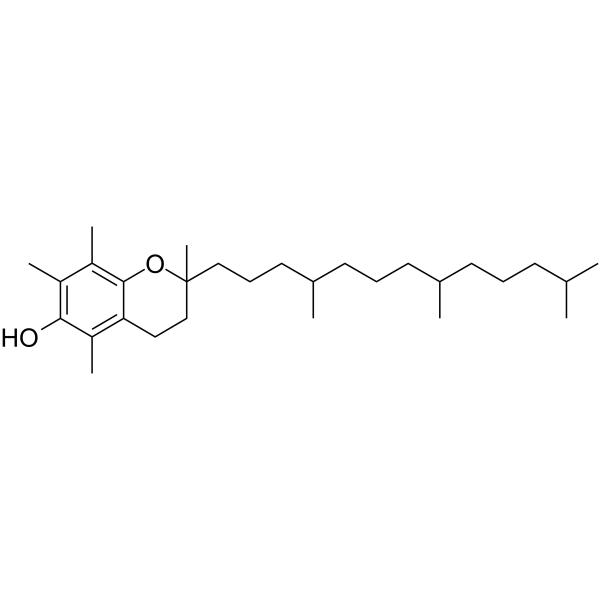
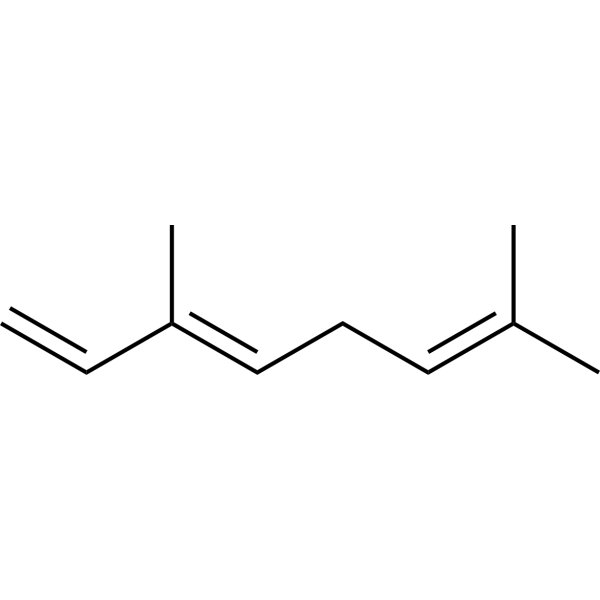
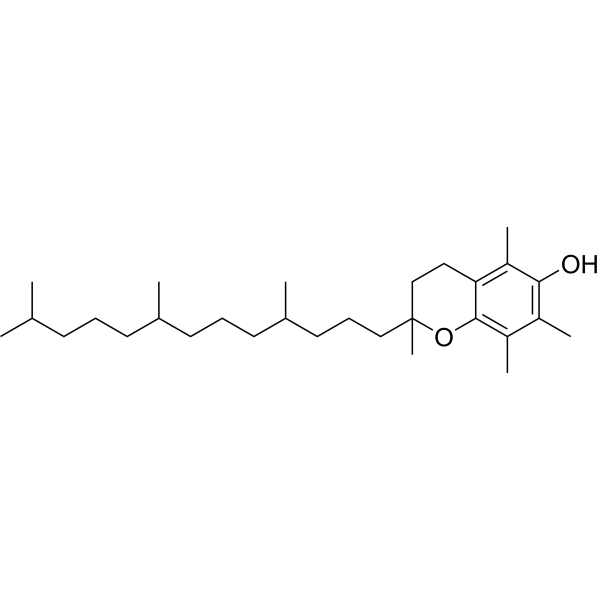
U-74389G Related Classifications
HY-106592A Related Classifications
 Powered by Bioz