



2-Ethyl-3-methylpyrazine

Based on 1 Customer Validation
2-Ethyl-3-methylpyrazine is a GABAA receptor potentiator, Antibacterial agent and Antifungal agent, with a Kp of 1.14 mM for GABAA. 2-Ethyl-3-methylpyrazine forms via the Maillard reaction in sunflower seeds and also exists in the crust of wheat bread. 2-Ethyl-3-methylpyrazine regulates mood or states of consciousness via central GABAA receptors. 2-Ethyl-3-methylpyrazine inhibits the growth of Ralstonia solanacearum and Magnaporthe oryzae. 2-Ethyl-3-methylpyrazine acts as an anxiolytic. 2-Ethyl-3-methylpyrazine is one of the sources of cocoa aroma, imparting nutty, corn-like, burnt, cereal, roasted and earthy flavors to foods. 2-Ethyl-3-methylpyrazine can be used in studies related to anxiety disorders and plant bacterial, fungal and oomycete infections.
For research use only. We do not sell to patients.
- CAS No.: 15707-23-0
- Formula: C7H10N2
- Molecular Weight:122.17
-
Storage:
Store at room temperature 3 years.
In solvent -80°C, 2 years , -20°C, 1 year


To place orders, for customer services and technical support, please contact: MedChemExpress USA
Tel: 609-228-6898 E-mail: [email protected] [email protected]


-
 Biological Activity
-
Chemical Information
- Protocols
- Purity & Documentation
- References
-
 Help & FAQs


-
HY-34439
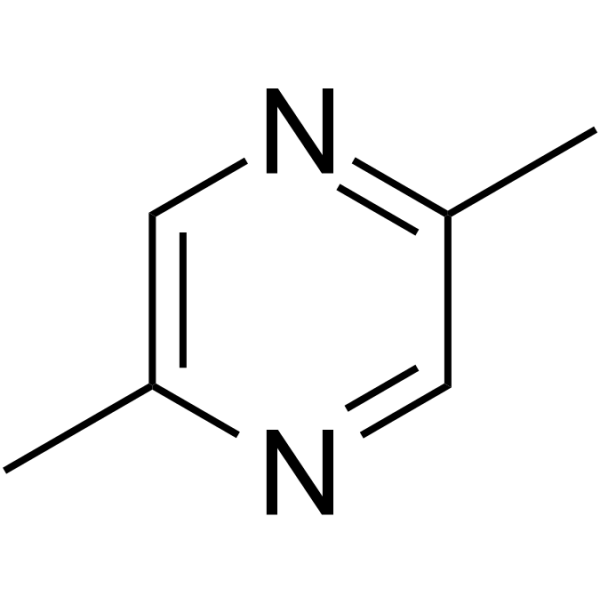
2,5-DimethylpyrazineFlavor Compound -
HY-W067358
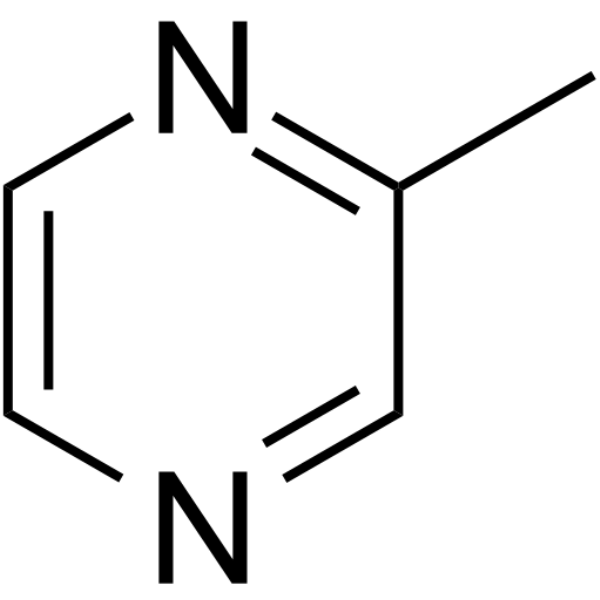
2-MethylpyrazineGreener Solvent/Flavoring Agent -
HY-W040790
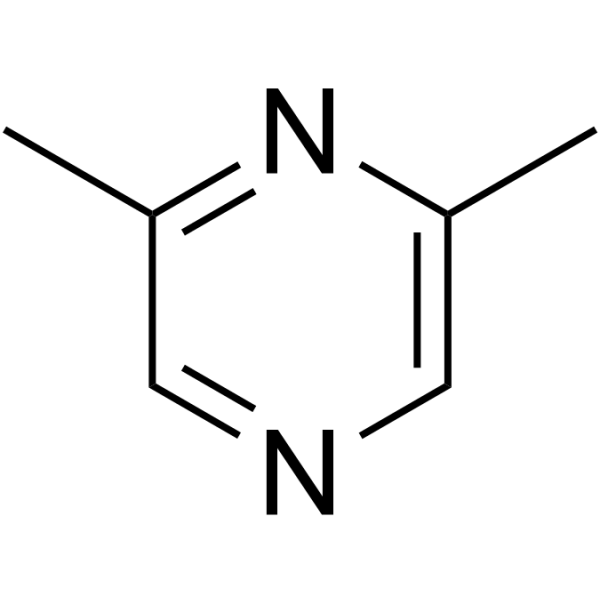
2,6-DimethylpyrazineAroma Compound -
HY-W040948
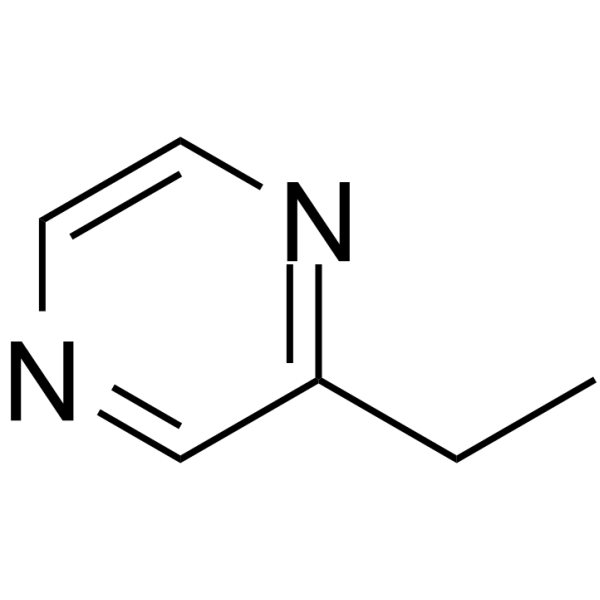
2-Ethylpyrazine -
HY-W015914
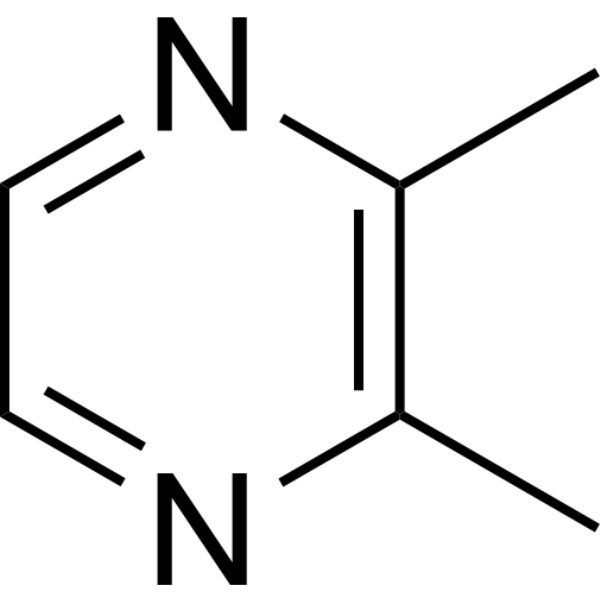
2,3-DimethylpyrazineBiochemical Reagent -
HY-14768
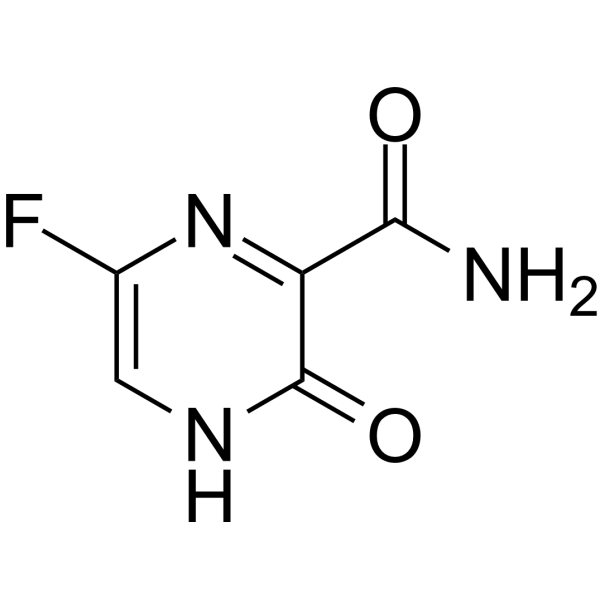
FavipiravirRNA Polymerase Inhibitor -

HY-34439R
2,5-Dimethylpyrazine (Standard)Endogenous Metabolite -
HY-W067358R
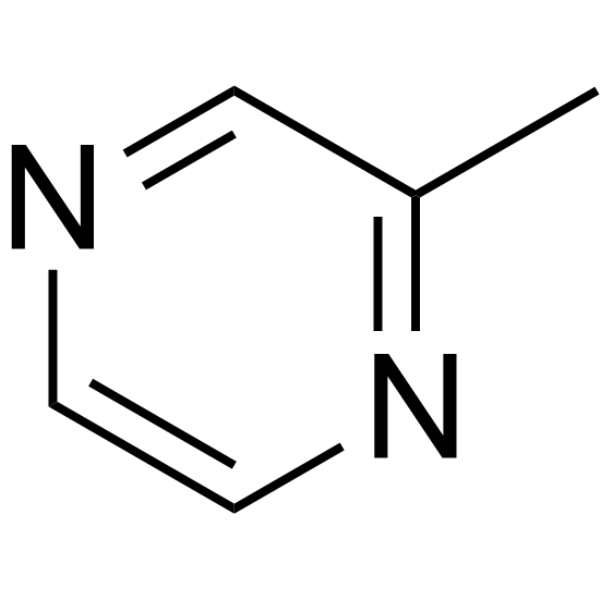
2-Methylpyrazine (Standard)Alkylpyrazine -

HY-W040790R
2,6-Dimethylpyrazine (Standard)Standard Of 2,6-Dimethylpyrazine -

HY-W040948R
2-Ethylpyrazine (Standard) -
HY-N0264
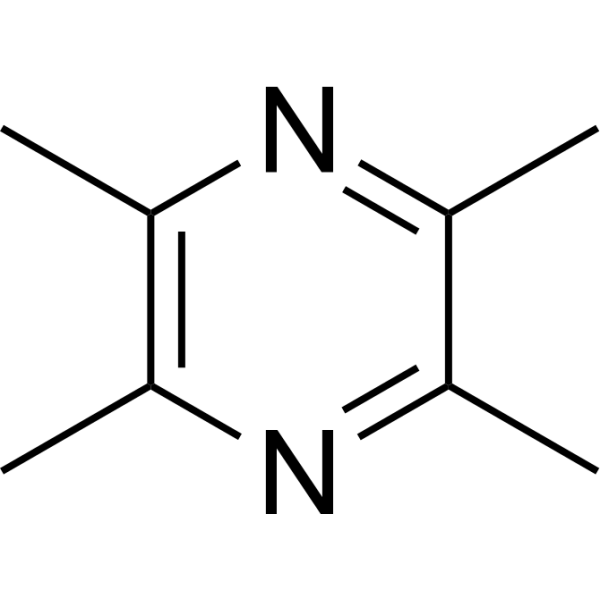
LigustrazineNeuroprotective Agent/Lipid Lowering Agent -
HY-B0271
PyrazinamideAntitubercular Antibiotic


Biological Activity
Description
In Vitro
2-Ethyl-3-methylpyrazine (0.01% (v/v), 0.8 mM) potently potentiates GABA-induced responses of bovine GABAₐ receptors expressed in Xenopus oocytes, with a maximum potentiation magnitude of 555% and a dissociation constant (Kp) of 1.14 mM[1].
2-Ethyl-3-methylpyrazine (335-672 µg/mL) inhibits the growth of Ralstonia solanacearum in a dose-dependent manner, with an inhibition rate of up to 95.9% at the concentration of 672 µg/mL[2].
2-Ethyl-3-methylpyrazine (168 µg/mL) completely inhibits the mycelial growth of Magnaporthe oryzae[2].
2-Ethyl-3-methylpyrazine inhibits the growth of the phytopathogenic fungus Gibberella moniliformis[2].
2-Ethyl-3-methylpyrazine inhibits the growth of the phytopathogenic fungus Phaeomoniella chlamydospora[2].
MedChemExpress (MCE) has not independently confirmed the accuracy of these methods. They are for reference only. Further protocols information, click here.
In Vivo
2-Ethyl-3-methylpyrazine (100 mg/kg; i.p.; twice daily; 2 days) exhibits anti-anxiety activity in Mus musculus, as shown by significant increases in open arm entries and open arm stay time in an elevated plus maze test following 100 mg/kg intraperitoneal dosing twice daily for 2 days[1].
MedChemExpress (MCE) has not independently confirmed the accuracy of these methods. They are for reference only.
-
Animal Model:ICR mice (male, 7-10 weeks old, 32-40 g)[1]
-
Dosage:25 mg/kg; 100 mg/kg
-
Administration:i.p.; single dose
-
Result:Prolonged pentobarbital-induced sleeping time significantly relative to control at 100 mg/kg.
Doubled the sleeping time compared to control at 25 mg/kg.
-
Animal Model:ICR mice (male, 7-10 weeks old, 32-40 g)[1]
-
Dosage:100 mg/kg
-
Administration:i.p.; twice daily; 2 days
-
Result:Increased the number of entries into the open arms significantly relative to control.
Increased the duration of stay in the open arms significantly relative to control.


Chemical Information
-
CAS No. 15707-23-0
-
Appearance Liquid
-
Molecular Weight 122.17
-
Formula C7H10N2
-
SMILES
CCC1=C(N=CC=N1)C
-
Structure Classification
-
Initial Source
-
Shipping
Room temperature in continental US; may vary elsewhere.
-
Storage
Store at room temperature 3 years
In solvent -80°C 2 years -20°C 1 year

Protocols
-
Research Protocol for Infectious Diseases
Infectious-disease experiments test how pathogens interact with host barriers, innate immune receptors, inflammatory signaling, pathogen replication, and tissue injury; pattern-recognition receptors such as TLRs, RIG-I-like receptors, NOD-like receptors, and inflammasomes detect microbial molecules and activate NF-κB, interferon, and cytokine responses. The central hypothesis is that infection severity reflects the balance between pathogen burden and host response: protective inflammation restricts pathogen growth, whereas excessive or mislocalized inflammation contributes to tissue damage and disease phenotype. Unresolved questions include which host pathways are protective versus pathogenic, why some infection models fail to translate to human disease, and which combined readouts best predict clinically relevant infection outcomes.


Purity & Documentation
References
[1]. Mitou M, et al. Effect of dried bonito (katsuobushi) and some of its components on GABAA receptors. Food Chem. 2008 Jun 1;108(3):840-6. [Content Brief]
[3]. Fayek NM, et al. A multifunctional study of naturally occurring pyrazines in biological systems; formation mechanisms, metabolism, food applications and functional properties. Crit Rev Food Sci Nutr. 2023;63(21):5322-5338. [Content Brief]

Calculators
Concentration (start) × Volume (start) = Concentration (final) × Volume (final)


2-Ethyl-3-methylpyrazine Related Classifications
HY-W012832 Related Classifications
 Powered by Bioz