



4-IBP

Based on 1 Customer Validation
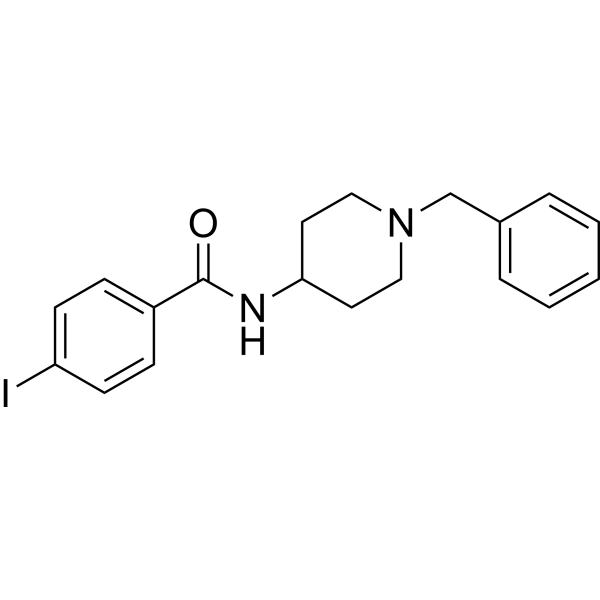
4-IBP is a selective σ₁ receptor agonist with high affinity for the σ₁ receptor (Ki =1.7 nM) and moderate affinity for the σ₂ receptor (Ki = 25.2 nM). 4-IBP can make cancer cells more sensitive to the cytotoxic effects of pro-apoptotic and pro-autophagic compounds. 4-IBP significantly reduces the migration ability of a variety of cancer cells. 4-IBP is mainly used in glioblastoma, non-small cell lung cancer and prostate cancer research.
For research use only. We do not sell to patients.
- Purity : 98.90%
- CAS No.: 155798-08-6
- Formula: C19H21IN2O
- Molecular Weight:420.29
-
Storage:Powder -20°C, 3 years , 4°C, 2 years ; In solvent -80°C, 2 years , -20°C, 1 year

To place orders, for customer services and technical support, please contact: MedChemExpress USA
Tel: 609-228-6898 E-mail: [email protected] [email protected]


-
 Biological Activity
-
Chemical Information
-
Solvent & Solubility
- Protocols
- Purity & Documentation
- References
-
 Help & FAQs


-
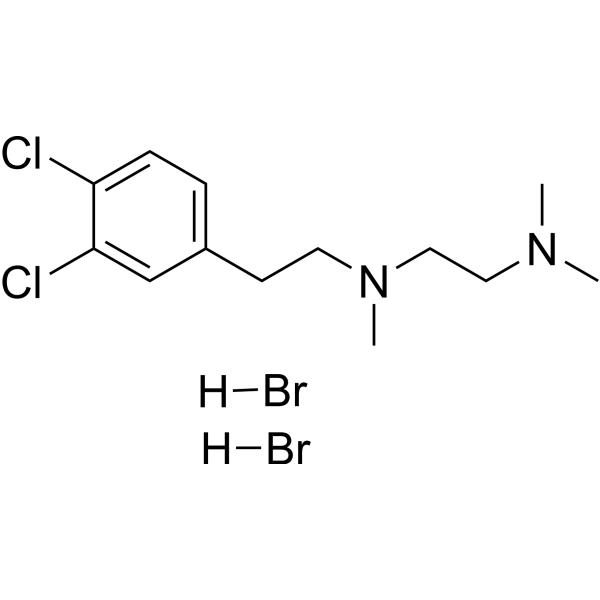
HY-16996A
BD-1047 dihydrobromideSigma-1 Receptor Antagonist -
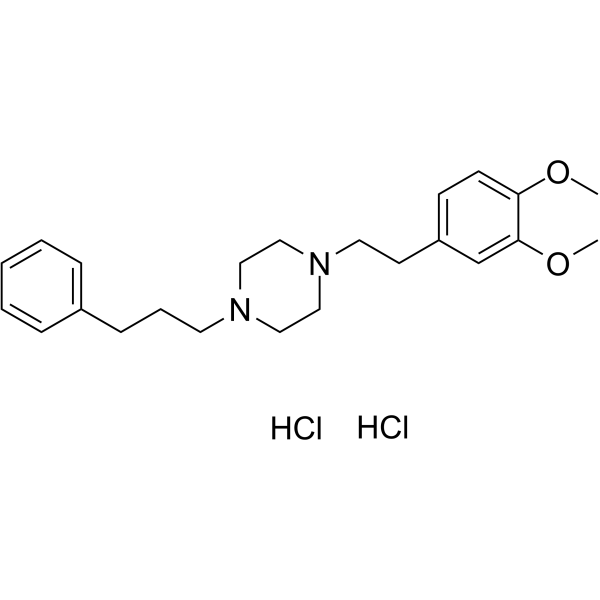
HY-13510
Cutamesine dihydrochlorideσ1R Agonist -
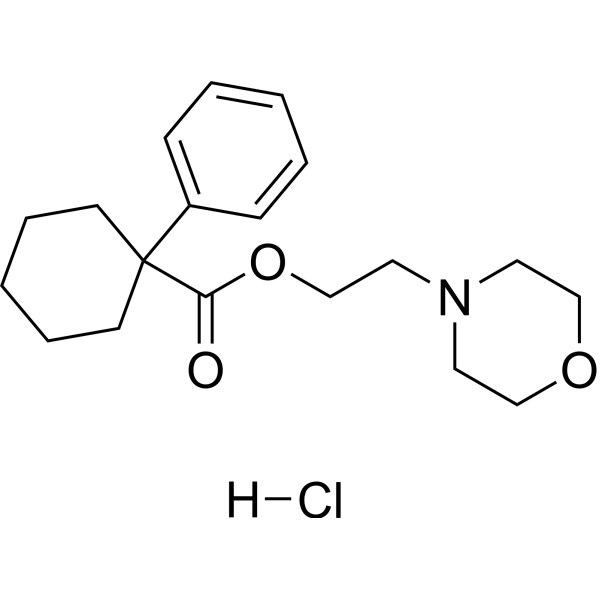
HY-18100A
PRE-084 hydrochlorideS1R Agonist -
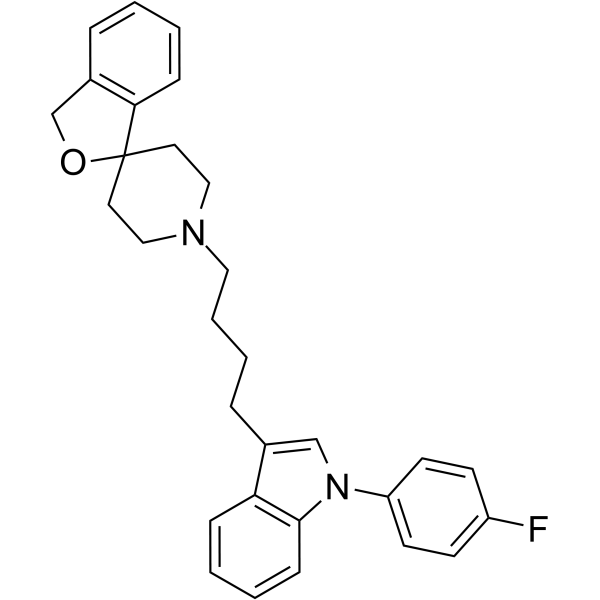
HY-14221
SiramesineSigma-2 Receptor Agonist -
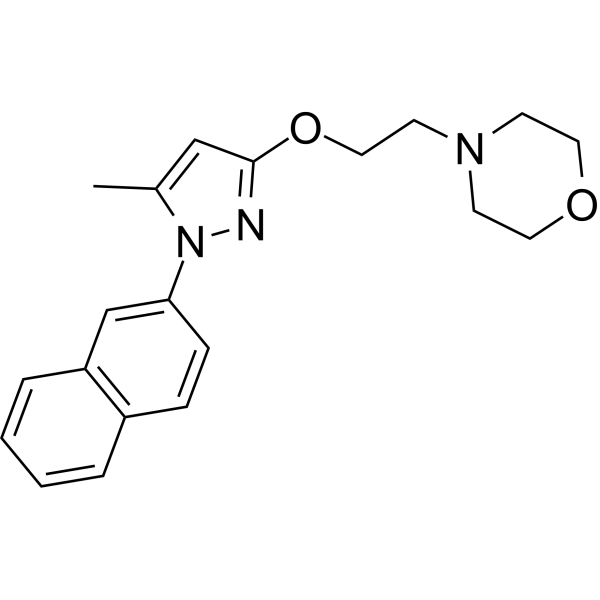
HY-18099
S1RAσ1R Antagonist -
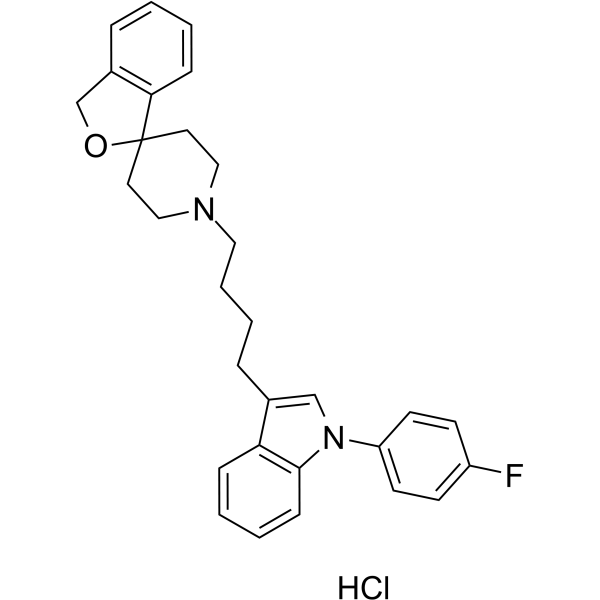
HY-14221A
Siramesine hydrochlorideSigma-2 Receptor Agonist -
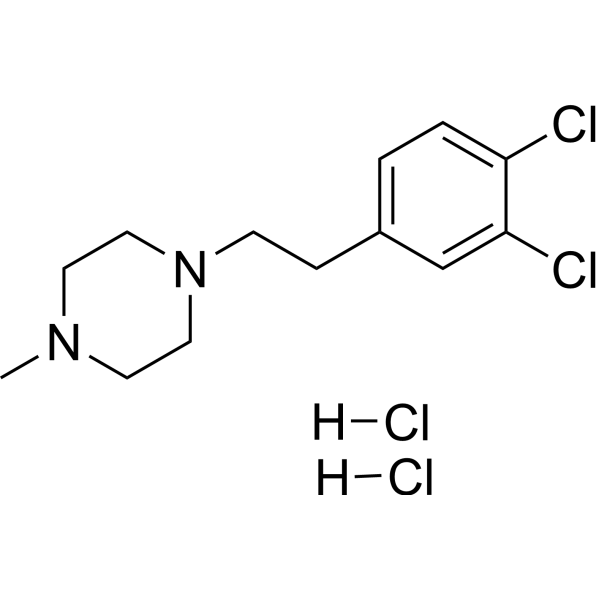
HY-18101A
BD-1063 dihydrochlorideσ-1R Antagonist -
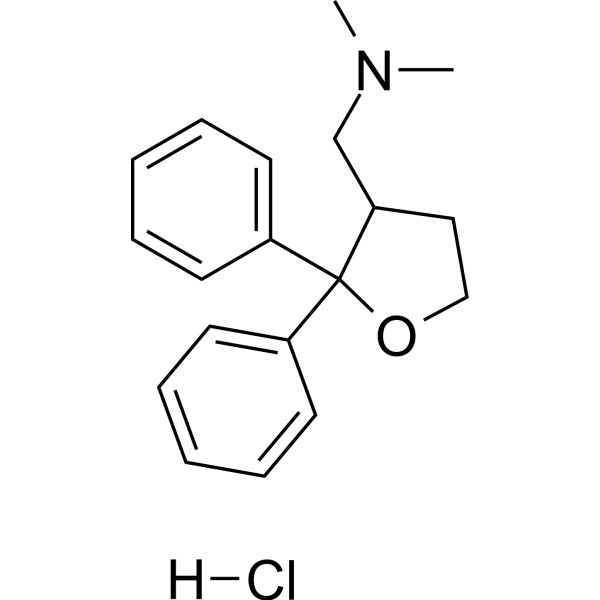
HY-101864
Blarcamesine hydrochlorideSigma-1 Receptor Agonist -
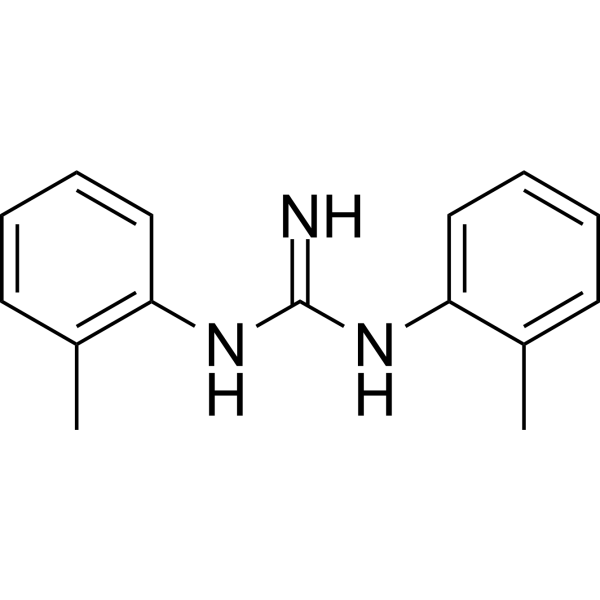
HY-14218
DitolylguanidineSigma Receptor Agonist -
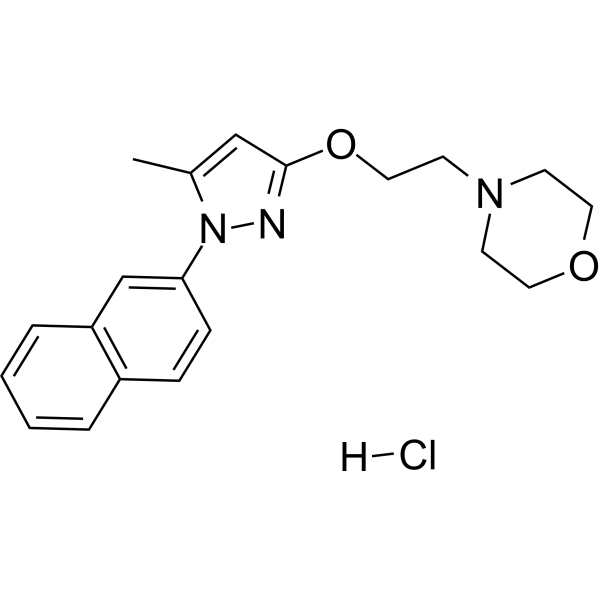
HY-18099A
S1RA hydrochlorideσ1R Antagonist -
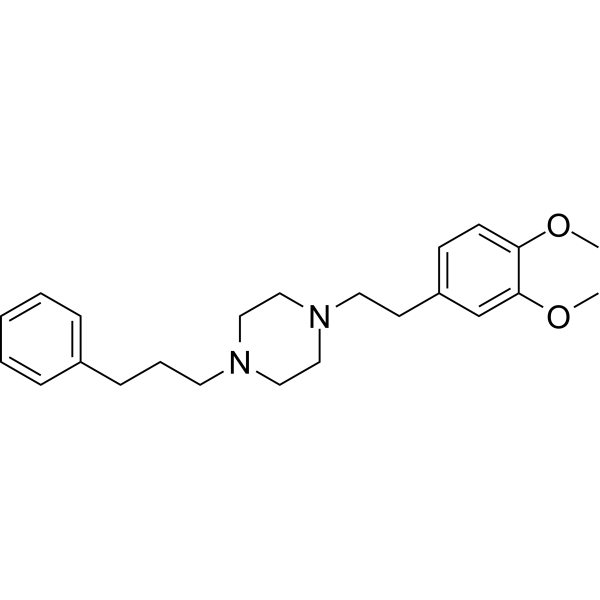
HY-14813
Cutamesineσ1R Agonist -

HY-100155R
4-IBP (Standard)σ1 Receptor Agonist
All Sigma Receptor Isoforms
More

Biological Activity
Description
IC50 & Target
|
Sigma 1 Receptor |
Sigma 2 Receptor |
In Vitro
4-IBP (1-100 nM) significantly reduces the migration ability of C32 melanoma, U373-MG glioblastoma, A549 non-small cell lung carcinoma, and PC3 prostate cancer cells[1].
4-IBP (10 nM; 1-24 h) can significantly sensitize U373-MG glioblastoma cells to the pro-apoptotic effect of Lomustine (HY-13669) or the pro-autophagic effect of Temozolomide (HY-17364)[1].
4-IBP (10 μM; 1-6 days) significantly inhibits the growth of T98G glioblastoma cells[3].
MedChemExpress (MCE) has not independently confirmed the accuracy of these methods. They are for reference only.
-
Cell Line:U373-MG glioblastoma cells
-
Concentration:10 nM, 100 nM, 1000 nM, 10000 nM
-
Incubation Time:48, 72, 96 h
-
Result:Did not modify p53 expression.
Did not induce autophagy as shown by Western blot analyses of LC3 and Beclin-1.
In Vivo
4-IBP (2 mg/kg; subcutaneous implantation of an osmotic minipump; 28 days) significantly increases the survival rate and enhances the therapeutic effect of Temozolomide in immunocompromised mice orthotopically implanted with U373-MG glioblastoma[1].
4-IBP (2 mg/kg/day; administered by an osmotic minipump implanted subcutaneously; 2-21 days) significantly increases the basal firing rate of 5-HT neurons in the dorsal raphe nucleus in male SD rats[2].
MedChemExpress (MCE) has not independently confirmed the accuracy of these methods. They are for reference only.


Chemical Information
-
CAS No. 155798-08-6
-
Appearance Solid
-
Molecular Weight 420.29
-
Formula C19H21IN2O
-
Color White to off-white
-
SMILES
O=C(NC1CCN(CC2=CC=CC=C2)CC1)C3=CC=C(I)C=C3
-
Shipping
Room temperature in continental US; may vary elsewhere.
-
Storage
Powder -20°C 3 years 4°C 2 years In solvent -80°C 2 years -20°C 1 year


Solvent & Solubility
In Vitro:
DMSO : 100 mg/mL (237.93 mM; Need ultrasonic; Hygroscopic DMSO has a significant impact on the solubility of product, please use newly opened DMSO)
Please refer to the solubility information to select the appropriate solvent. Once prepared, please aliquot and store the solution to prevent product inactivation from repeated freeze-thaw cycles.
Storage method and period of stock solution: -80°C, 2 years; -20°C, 1 year. When stored at -80°C, please use it within 2 years. When stored at -20°C, please use it within 1 year.
Please refer to the solubility information to select the appropriate solvent. Once prepared, please aliquot and store the solution to prevent product inactivation from repeated freeze-thaw cycles.
Storage method and period of stock solution: -80°C, 2 years; -20°C, 1 year. When stored at -80°C, please use it within 2 years. When stored at -20°C, please use it within 1 year.
Concentration (start) × Volume (start) = Concentration (final) × Volume (final)
In Vivo:
Select the appropriate dissolution method based on your experimental animal and administration route.
- For the following dissolution methods, please ensure to first prepare a clear stock solution using an In Vitro approach and then sequentially add co-solvents:
- To ensure reliable experimental results, the clarified stock solution can be appropriately stored based on storage conditions. As for the working solution for In Vivo experiments, it is recommended to prepare freshly and use it on the same day.
- The percentages shown for the solvents indicate their volumetric ratio in the final prepared solution. If precipitation or phase separation occurs during preparation, heat and/or sonication can be used to aid dissolution.
Add each solvent one by one: 10% DMSO 40% PEG300 5% Tween-80 45% Saline
Solubility: ≥ 2.5 mg/mL (5.95 mM); Clear solution
This protocol yields a clear solution of ≥ 2.5 mg/mL (saturation unknown).
Taking 1 mL working solution as an example, add 100 μL DMSO stock solution (25.0 mg/mL) to 400 μL PEG300, and mix evenly; then add 50 μL Tween-80 and mix evenly; then add 450 μL Saline to adjust the volume to 1 mL.
Preparation of Saline: Dissolve 0.9 g sodium chloride in ddH₂O and dilute to 100 mL to obtain a clear Saline solution.
In Vivo Dissolution Calculator
Please enter the basic information of animal experiments:
-
-
-
-
Recommended: Prepare an additional quantity of animals to account for potential losses during experiments.
Please enter your animal formula composition:
-
%DMSO +
Recommended: Keep the proportion of DMSO in working solution below 2% if your animal is weak.
-
%+
-
+%Tween-80 + +
-
%Saline +
The co-solvents required include: DMSO, . All of co-solvents are available by MedChemExpress (MCE). , Tween 80. All of co-solvents are available by MedChemExpress (MCE).
Working solution concentration: 0.22 mg/mL
Method for preparing stock solution: mg drug dissolved in μL DMSO. Stock solution concentration: mg/mL.
1. Take μL DMSO stock solution;
2. Add μL .
μL , mix evenly;
3. Then add μL Tween 80, mix evenly;
4. Then add μL
Please ensure that the stock solution in the first step is dissolved to a clear state, and add co-solvents in sequence. You can use ultrasonic heating (ultrasonic cleaner, recommended frequency 20-40 kHz), vortexing, etc. to assist dissolution.


Purity & Documentation
-
Data Sheet (273 KB)
-
SDS (396 KB)
- English - EN (396 KB)
- Français - FR (396 KB)
- Deutsch - DE (396 KB)
- Norwegian - NO (396 KB)
- Español - ES (396 KB)
- Swedish - SV (396 KB)
- Italian - IT (396 KB)
- Korean - KR (396 KB)
- Portuguese - PT (396 KB)
-
Handling Instructions (2659 KB)
References
[1]. Mégalizzi V, et al. 4-IBP, a sigma1 receptor agonist, decreases the migration of human cancer cells, including glioblastoma cells, in vitro and sensitizes them in vitro and in vivo to cytotoxic insults of proapoptotic and proautophagic drugs. Neoplasia. 2007 May;9(5):358-69. [Content Brief]
[2]. Bermack JE, et al. Modulation of serotonergic neurotransmission by short- and long-term treatments with sigma ligands. Br J Pharmacol. 2001 Oct;134(3):691-9. [Content Brief]
[3]. Debeir O, et al. Videomicroscopic extraction of specific information on cell proliferation and migration in vitro. Exp Cell Res. 2008 Oct 1;314(16):2985-98. [Content Brief]
[4]. Amer MS, et al. Inhibition of endothelial cell Ca²⁺ entry and transient receptor potential channels by Sigma-1 receptor ligands. Br J Pharmacol. 2013 Mar;168(6):1445-55. [Content Brief]
[5]. Mégalizzi V, et al. 4-IBP, a sigma1 receptor agonist, decreases the migration of human cancer cells, including glioblastoma cells, in vitro and sensitizes them in vitro and in vivo to cytotoxic insults of proapoptotic and proautophagic drugs. Neoplasia. 2007 May;9(5):358-69. [Content Brief]


Complete Stock Solution Preparation Table
Please refer to the solubility information to select the appropriate solvent. Once prepared, please aliquot and store the solution to prevent product inactivation from repeated freeze-thaw cycles.
Storage method and period of stock solution: -80°C, 2 years; -20°C, 1 year. When stored at -80°C, please use it within 2 years. When stored at -20°C, please use it within 1 year.
| Optional Solvent | Concentration Solvent Mass | 1 mg | 5 mg | 10 mg | 25 mg |
|---|---|---|---|---|---|
| DMSO | 1 mM | 2.3793 mL | 11.8965 mL | 23.7931 mL | 59.4827 mL |
| 5 mM | 0.4759 mL | 2.3793 mL | 4.7586 mL | 11.8965 mL | |
| 10 mM | 0.2379 mL | 1.1897 mL | 2.3793 mL | 5.9483 mL | |
| 15 mM | 0.1586 mL | 0.7931 mL | 1.5862 mL | 3.9655 mL | |
| 20 mM | 0.1190 mL | 0.5948 mL | 1.1897 mL | 2.9741 mL | |
| 25 mM | 0.0952 mL | 0.4759 mL | 0.9517 mL | 2.3793 mL | |
| 30 mM | 0.0793 mL | 0.3966 mL | 0.7931 mL | 1.9828 mL | |
| 40 mM | 0.0595 mL | 0.2974 mL | 0.5948 mL | 1.4871 mL | |
| 50 mM | 0.0476 mL | 0.2379 mL | 0.4759 mL | 1.1897 mL | |
| 60 mM | 0.0397 mL | 0.1983 mL | 0.3966 mL | 0.9914 mL | |
| 80 mM | 0.0297 mL | 0.1487 mL | 0.2974 mL | 0.7435 mL | |
| 100 mM | 0.0238 mL | 0.1190 mL | 0.2379 mL | 0.5948 mL |


4-IBP Related Classifications
HY-100155 Related Classifications
 Powered by Bioz