



4-hydroxy Nonenal Mercapturic Acid
Based on 1 publication(s) in Google Scholar
4-hydroxy Nonenal Mercapturic Acid is a major urinary metabolite of 4-hydroxy-2-nonenal (4-HNE). 4-hydroxy Nonenal Mercapturic Acid metabolites include reduced alcohols, aldehydes, and carboxylic acids, which further form gamma-lactols and gamma-lactones, resulting in 4-5 final urinary metabolites in vivo. 4-hydroxy Nonenal Mercapturic Acid can be used as a biomarker to assess oxidative stress.
For research use only. We do not sell to patients.
- CAS No.: 146764-24-1
- Formula: C14H25NO5S
- Molecular Weight:319.42
-
Storage:
Please store the product under the recommended conditions in the Certificate of Analysis.


To place orders, for customer services and technical support, please contact: MedChemExpress USA
Tel: 609-228-6898 E-mail: [email protected] [email protected]


-
 Biological Activity
-
Chemical Information
- Protocols
- Purity & Documentation
- References
-
 Help & FAQs


-

HY-124355
4-Hydroxy hexenalLipid Peroxidation Product -

HY-113884A
(±)-Coriolic acidRacemic Monohydroxy Fatty Acids -
HY-120893
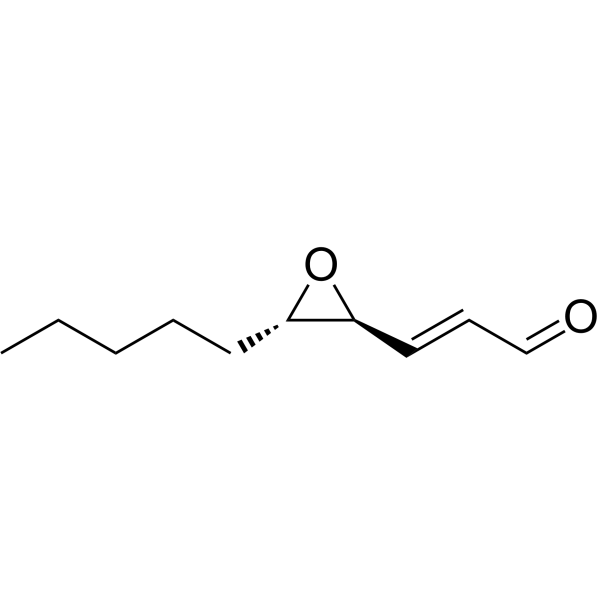
trans-4,5-Epoxy-(E)-2-decenalα,β-unsaturated aldehyde -
HY-116722
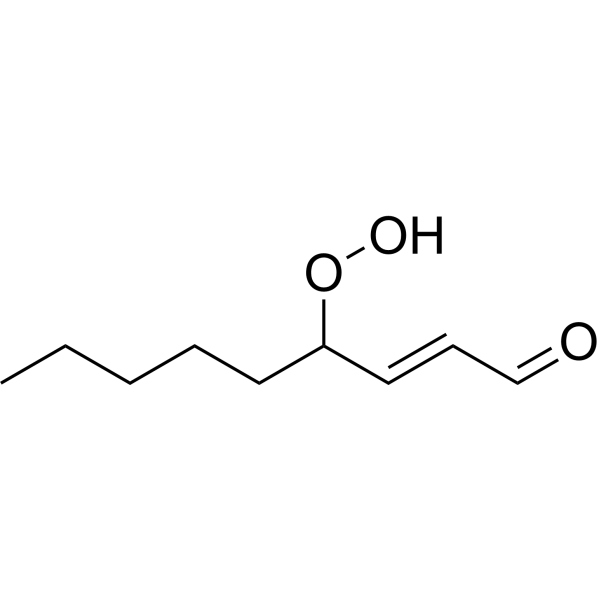
(2E)-4-Hydroperoxy-2-nonenalLipid Peroxidation -
HY-113336B
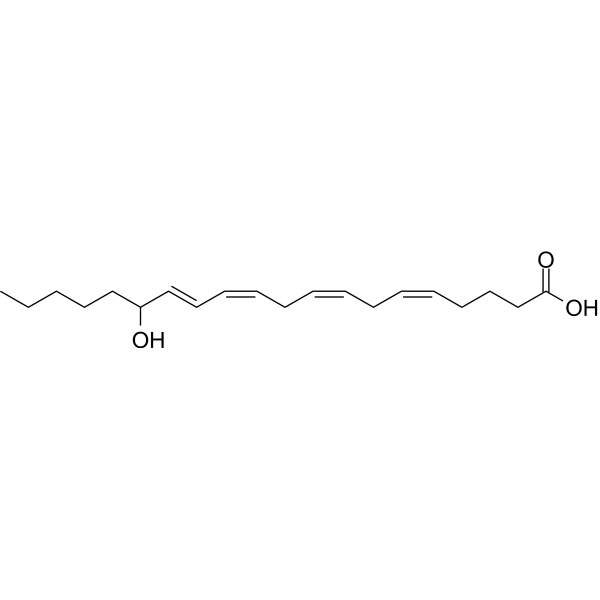
(±)15-HETEPROTAC Linkers -

HY-117044A
(±)12-HEPE -

HY-N7801
(±)5-HEPE -

HY-126108
(±)8-HEPE -
HY-115421
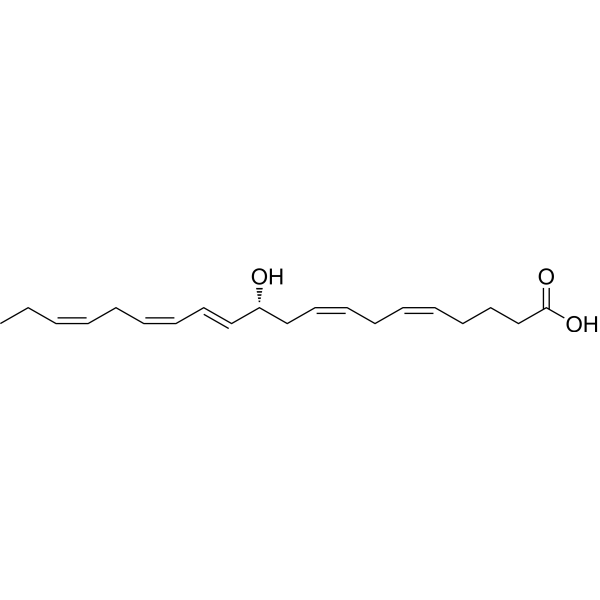
11(R)-HEPEMonohydroxy Fatty Acid -
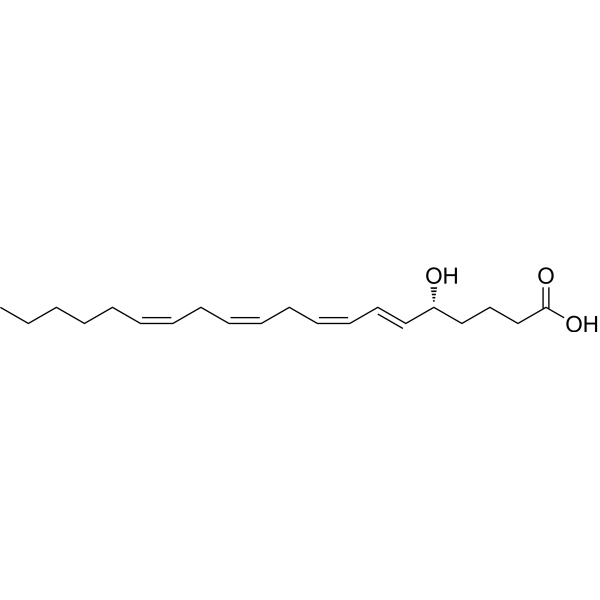
HY-113434A
5(R)-HETEInducer of Neutrophil Migration -
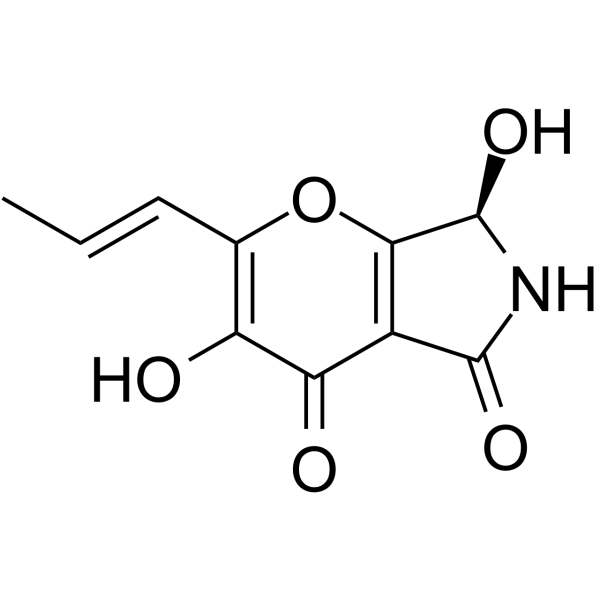
HY-126604
Pyranonigrin AAnti-infection Agent
Publications Citing Use of MedChemExpress (MCE) 4-hydroxy Nonenal Mercapturic Acid
MoreAll Endogenous Metabolite Isoforms
More

Biological Activity
Description
In Vitro
4-Hydroxy Nonenal Mercapturic Acid can be used to assess oxidative stress and disease risk: By detecting 4-Hydroxy Nonenal Mercapturic Acid in urine, an individual's systemic oxidative stress level can be objectively evaluated, thereby facilitating the investigation of its associations with—and the associated risks for—various chronic diseases (such as atherosclerosis, diabetes, Alzheimer's disease, etc.).
MedChemExpress (MCE) has not independently confirmed the accuracy of these methods. They are for reference only. Further protocols information, click here.


Chemical Information
-
CAS No. 146764-24-1
-
Molecular Weight 319.42
-
Formula C14H25NO5S
-
SMILES
OC1CC(SCC(NC(C)=O)C(O)=O)C(CCCCC)O1
-
Shipping
Room temperature in continental US; may vary elsewhere.
-
Storage
Please store the product under the recommended conditions in the Certificate of Analysis.


Publications (1)
-
Journal Impact Factor
-
Most Recent

Protocols
-
ROS/oxidative-stress fluorescent staining
ROS/oxidative-stress fluorescent staining uses cell-permeant fluorogenic probes that become fluorescent after oxidation inside cells or tissues; commonly used examples include DCFH-DA/DCFDA for broad cellular oxidant detection, DHE for superoxide-related signal detection, MitoSOX for mitochondrial superoxide-related signal detection, and CellROX probes for oxidative-stress-associated fluorescence readouts. The assay detects probe oxidation rather than a single ROS species unless the probe and analysis method have been chemically validated for that species. DCFH-DA enters cells, is deacetylated by intracellular esterases to DCFH, and produces fluorescent DCF after oxidation, so the readout is used as an operational measure of total cellular oxidative stress rather than a species-specific ROS measurement. DHE and MitoSOX can report superoxide-related oxidation, but red fluorescence alone can include non-specific ethidium-like oxidation products; HPLC or optimized spectral approaches are


Purity & Documentation
References

Calculators
Concentration (start) × Volume (start) = Concentration (final) × Volume (final)


4-hydroxy Nonenal Mercapturic Acid Related Classifications
HY-136410 Related Classifications
 Powered by Bioz