



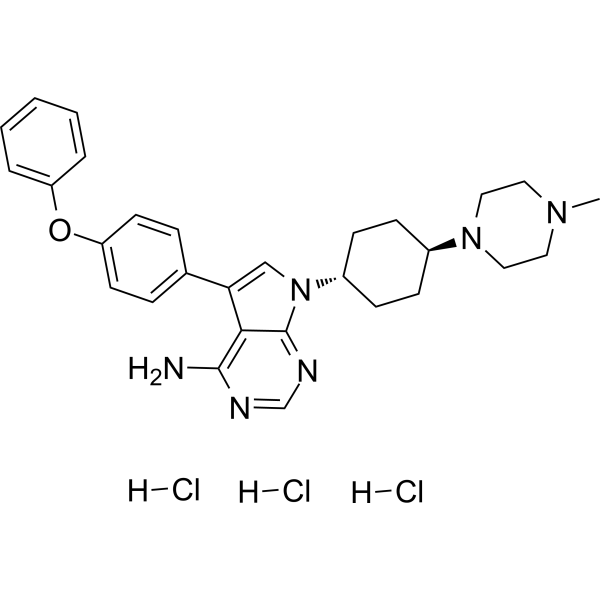
A 419259 trihydrochloride
Based on 12 publication(s) in Google Scholar
A 419259 trihydrochloride is a Src family kinases inhibitor with IC50s of 9 nM, 3 nM and 3 nM for Src, Lck and Lyn, respectively.
For research use only. We do not sell to patients.
- Purity : 98.28%
- CAS No.: 1435934-25-0
- Formula: C29H37Cl3N6O
- Molecular Weight:592.00
-
Storage:
4°C, sealed storage, away from moisture
* In solvent : -80°C, 6 months; -20°C, 1 month (sealed storage, away from moisture)

To place orders, for customer services and technical support, please contact: MedChemExpress USA
Tel: 609-228-6898 E-mail: [email protected] [email protected]


-
 Biological Activity
-
Chemical Information
-
Solvent & Solubility
- Protocol
- Purity & Documentation
- References
-
 Help & FAQs


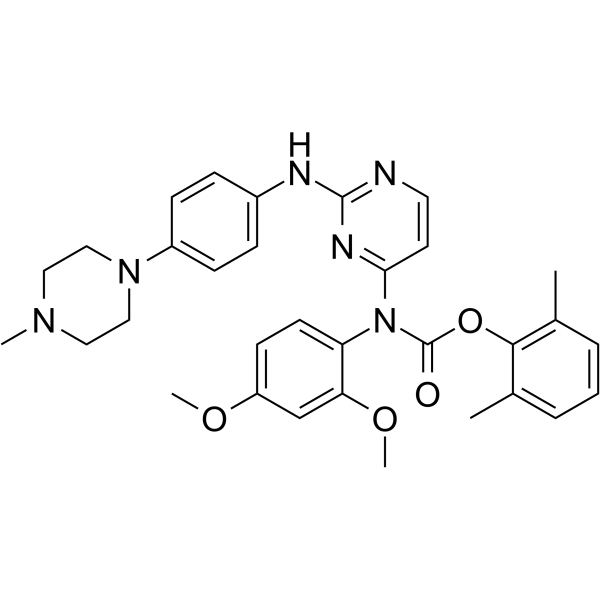
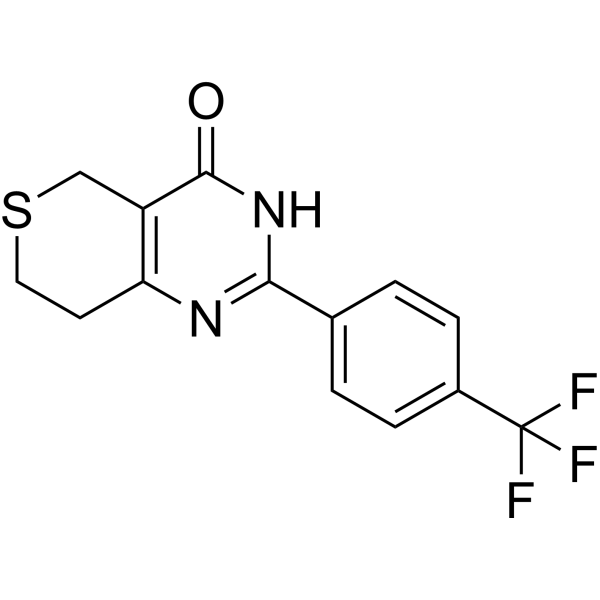
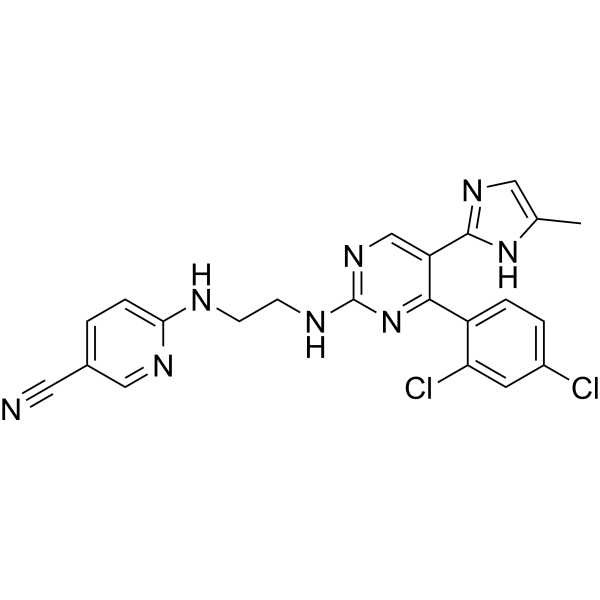
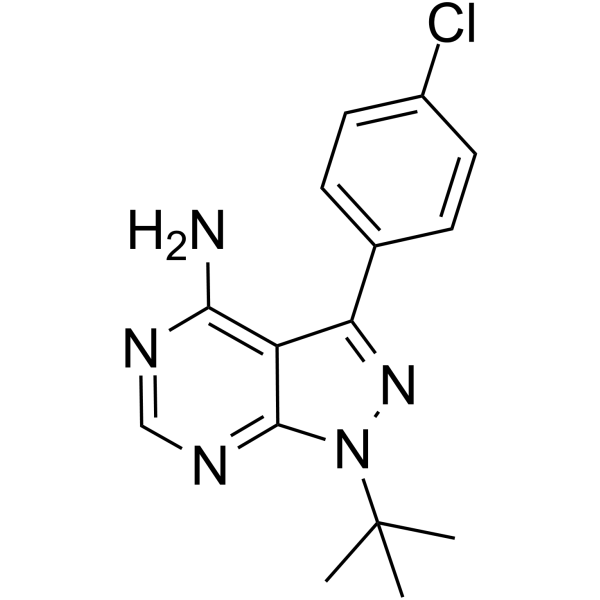
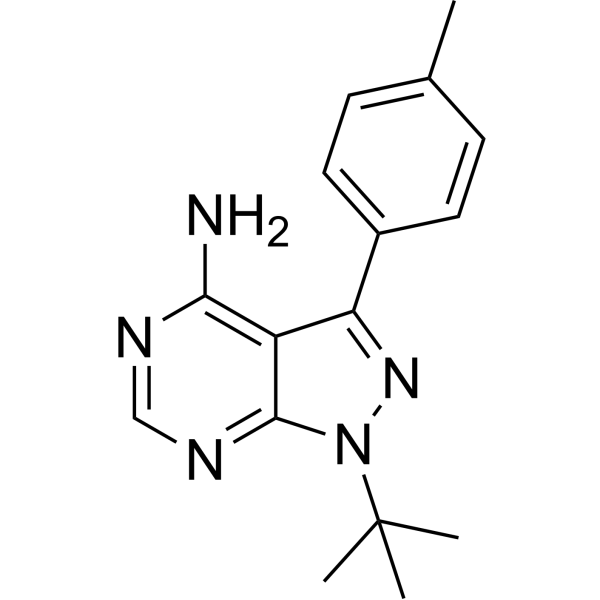
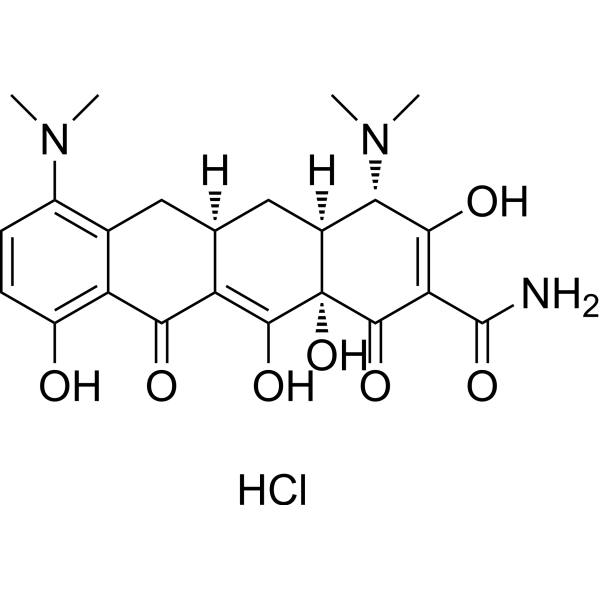
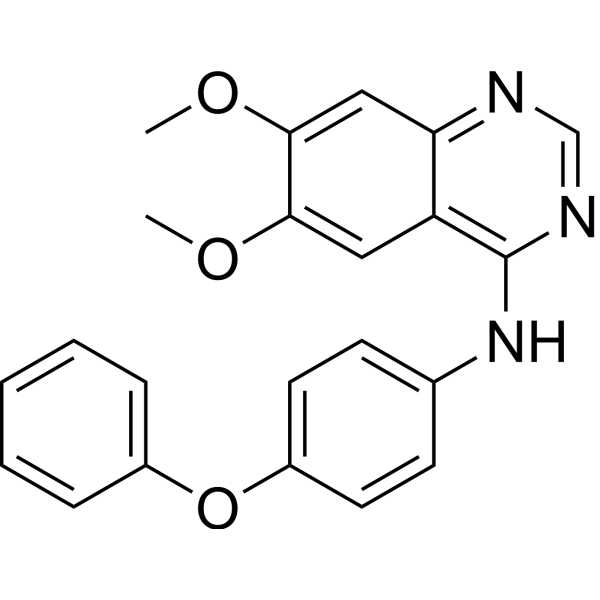
Publications Citing Use of MedChemExpress (MCE) A 419259 trihydrochloride
More- Blood. 2016 Jun 23;127(25):3237-52. [Abstract]
- Adv Sci (Weinh). 2025 Jun 30:e17764. [Abstract]
- Clin Transl Med. 2026 Jul;16(7):e70731.
- Aging Cell. 2026 Jan 20;25(2):e70352.
- J Med Chem. 2024 Nov 28;67(22):20571-20579. [Abstract]
- Commun Biol. 2026 Apr 9;9(1):780. [Abstract]
- Microb Pathog. 2025 Feb:199:107252. [Abstract]
- Biochem Biophys Res Commun. 2026 Aug 27:828:154112. [Abstract]
- Res Sq. 2026 May 8:rs.3.rs-9500406. [Abstract]
- Free University of Berlin. 2025 Aug 4.
- Patent. US20250228856A1.
- Patent. US20170333436A1.


Biological Activity
Description
IC50 & Target
IC50: 9 nM (Src), <3 nM (Lck), <3 nM (Lyn), 3 μM (Abl)[1]
In Vitro
"A419259 is a second-generation pyrrolopyrimidine that blocks proliferation and induces apoptosis in CML cell lines. It induces apoptosis in K-562 cells and also inhibits Meg-01 proliferation (IC50=0.1 μM)[1].
In the absence of IL-3, A-419259 strongly inhibits DAGM/Bcr-Abl cell proliferation (IC50=0.1-0.3 μM)[1].
A-419259 also inhibits overall SFK activity in CML cell lines and blocks Src kinase activation (IC50=0.1-0.3 μM)[1].
A 419259 trihydrochloride (1 μM; 16 h) inhibits endogenous SFK (c-Src and Lck) activity, thereby inhibiting Src-driven differentiation of mES cells toward primitive ectoderm-like cells[2].
A 419259 trihydrochloride (0.3, 1 μM; 5 days) has no effect on undifferentiated colony morphology of hES cells grown in mTeSR medium[2].
"
MedChemExpress (MCE) has not independently confirmed the accuracy of these methods. They are for reference only.


Chemical Information
-
CAS No. 1435934-25-0
-
Appearance Solid
-
Molecular Weight 592.00
-
Formula C29H37Cl3N6O
-
Color White to yellow
-
SMILES
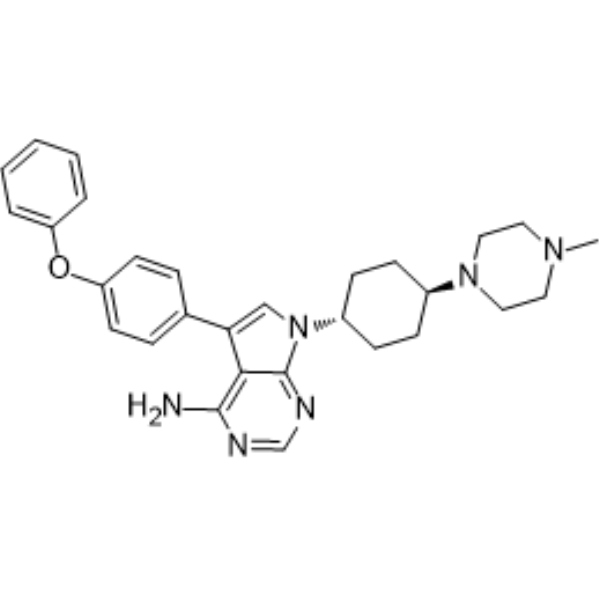
NC1=C2C(N([C@H]3CC[C@H](N4CCN(C)CC4)CC3)C=C2C5=CC=C(OC6=CC=CC=C6)C=C5)=NC=N1.[H]Cl.[H]Cl.[H]Cl
-
Synonyms
RK 20449 trihydrochloride
-
Shipping
Room temperature in continental US; may vary elsewhere.
-
Storage
4°C, sealed storage, away from moisture
* In solvent : -80°C, 6 months; -20°C, 1 month (sealed storage, away from moisture)


Publications (12)
-
Journal Impact Factor
-
Most Recent
-
Blood
HCK is a survival determinant transactivated by mutated MYD88, and a direct target of ibrutinib. [Abstract]2016 Jun 23;127(25):3237-52. PMID: 27143257 -
Adv Sci (Weinh)
2025 Jun 30:e17764. PMID: 40586282 -
-
-
J Med Chem
2024 Nov 28;67(22):20571-20579. PMID: 39513680 -
Commun Biol
Enhancing reprogramming towards induced human expanded pluripotency through substitution of SOX2 with engineered SOX17 transcription factors. [Abstract]2026 Apr 9;9(1):780. PMID: 41957290 -
Microb Pathog
Upregulation of haematopoetic cell kinase (Hck) activity by a secreted parasite effector protein (Ta9) drives proliferation of Theileria annulata-transformed leukocytes. [Abstract]2025 Feb:199:107252. PMID: 39730099 -
Biochem Biophys Res Commun
Hematopoietic cell kinase activation in skeletal myocytes contributes to local inflammation and pain sensitization in myofascial trigger points. [Abstract]2026 Aug 27:828:154112. PMID: 42269276 -
Res Sq
Cyclin-Dependent Kinase 5 Contributes to Bruton's Tyrosine Kinase Inhibitor Resistance via the IRE1α/XBP1 Axis in Mantle Cell Lymphoma. [Abstract]2026 May 8:rs.3.rs-9500406. PMID: 42147166 -
-
-


Solvent & Solubility
In Vitro:
H2O : 50 mg/mL (84.46 mM; Need ultrasonic)
DMSO : 1 mg/mL (1.69 mM; Need ultrasonic; Hygroscopic DMSO has a significant impact on the solubility of product, please use newly opened DMSO)
Please refer to the solubility information to select the appropriate solvent. Once prepared, please aliquot and store the solution to prevent product inactivation from repeated freeze-thaw cycles.
Storage method and period of stock solution: -80°C, 6 months; -20°C, 1 month (sealed storage, away from moisture). When stored at -80°C, please use it within 6 months. When stored at -20°C, please use it within 1 month.
* Note: If you choose water as the stock solution, please dilute it to the working solution, then filter and sterilize it with a 0.22 μm filter before use.
Please refer to the solubility information to select the appropriate solvent. Once prepared, please aliquot and store the solution to prevent product inactivation from repeated freeze-thaw cycles.
Storage method and period of stock solution: -80°C, 6 months; -20°C, 1 month (sealed storage, away from moisture). When stored at -80°C, please use it within 6 months. When stored at -20°C, please use it within 1 month.
* Note: If you choose water as the stock solution, please dilute it to the working solution, then filter and sterilize it with a 0.22 μm filter before use.
Concentration (start) × Volume (start) = Concentration (final) × Volume (final)
In Vivo:
For the following dissolution methods, please prepare the working solution directly:
It is recommended to prepare fresh solutions and use them promptly within a short period of time.
The percentages shown for the solvents indicate their volumetric ratio in the final prepared solution. If precipitation or phase separation occurs during preparation, heat and/or sonication can be used to aid dissolution.
Add each solvent one by one: PBS
Solubility: 100 mg/mL (168.92 mM); Clear solution; Need ultrasonic

Protocol
Kinase Assay[1]
In vitro kinase assays are performed on His(6)-tagged Lck (residues 62-509) and full-length c-Abl purified from Sf-9 cells, and commercial sources of Lyn, Src and PKC. Lck, Lyn, Src and Abl activities are measured with an ELISA-based assay. Flat bottom 96-well ELISA plates are incubated with a 200 μg/mL solution of Poly(Glu,Tyr) 4 : 1 substrate in phosphate buffered saline (PBS) for 1 h at 37°C and then washed with PBS containing 0.1% Tween-20 (PBS-T). Inhibitor dilutions are added to the washed plates already containing the appropriate enzyme in kinase assay buffer (250 mM Mopso, pH 6.75, 10 mM MgCl2, 2 mM MnCl2, 2.5 mM DTT, 0.02% BSA, 2 mM Na3VO4, 5% DMSO, 5 μM ATP). After incubation at room temperature for 20 min, plates are washed three times with PBS-T and plate-bound phosphotyrosine is detected with an anti-phosphotyrosine-HRP antibody conjugate and subsequent color development with K-Blue reagents. All assays are optimized to use the least amount of enzyme necessary for a reproducible signal-to-noise ratio[1].
MedChemExpress (MCE) has not independently confirmed the accuracy of these methods. They are for reference only.
Cell Assay[1]
K-562 cells are grown in RPMI 1640 supplemented with 10% fetal calf serum (FCS), and 50 g/mL Gentamycin. Meg-01 cells are cultured in Vitacell modified RPMI 1640 (ATCC), supplemented with 10% FCS and 50 μg/mL Gentamycin. The human GM-CSF-dependent myeloid leukemia cell line TF-1 is grown in RPMI 1640 supplemented with 10% FCS, 50 μg/mL Gentamycin, and 1 ng/mL of recombinant human GM-CSF. DAGM murine myeloid leukemia cells are cultured in RPMI 1640 supplemented with 10% FCS, 50 μg/mL Gentamycin, and 0.5 ng/mL recombinant IL-3. Concentrated stock solutions of PP2 (5 mM) and A-419259 (2 mM) are prepared in DMSO and stored at -20°C. Cellular proliferation is measured using the Live/Dead growth assay. This assay employs calcein-AM, a fluorogenic esterase substrate that is taken up by viable cells and hydrolyzed intracellularly, releasing a green fluorescent product. Briefly, 104 cells are plated per well in 96-well plates for each day of a 4-day time course. Various concentrations of PP2, A-419259 or vehicle control are added to the wells (five wells per concentration per day) and the plates are incubated at 37°C. At each time point, one plate is centrifuged at 1500 g for 10 min to pellet the cells. Cells are washed with phosphate buffered saline (PBS), and calcein-AM is added to each well to a final concentration of 1 μM. Plates are incubated in the dark at room temperature for 1 h. The plates are then read at 485/530 nm (excitation/emission) using a SpectraMax Gemini XS fluorescent plate reader and data are analysed with SoftMax Pro software[1].
MedChemExpress (MCE) has not independently confirmed the accuracy of these methods. They are for reference only.


Purity & Documentation
-
Data Sheet (282 KB)
-
SDS (252 KB)
- English - EN (252 KB)
- Français - FR (252 KB)
- Deutsch - DE (252 KB)
- Norwegian - NO (252 KB)
- Español - ES (252 KB)
- Swedish - SV (252 KB)
- Italian - IT (252 KB)
- Korean - KR (252 KB)
- Portuguese - PT (252 KB)
-
Handling Instructions (2659 KB)
References
[1]. Wilson MB, et al. Selective pyrrolo-pyrimidine inhibitors reveal a necessary role for Src family kinases in Bcr-Abl signal transduction and oncogenesis. Oncogene. 2002 Nov 21;21(53):8075-88. [Content Brief]
[2]. Zhang X, et al. Src-family tyrosine kinase activities are essential for differentiation of human embryonic stem cells. Stem Cell Res. 2014 Nov;13(3 Pt A):379-89. [Content Brief]


Complete Stock Solution Preparation Table
Please refer to the solubility information to select the appropriate solvent. Once prepared, please aliquot and store the solution to prevent product inactivation from repeated freeze-thaw cycles.
Storage method and period of stock solution: -80°C, 6 months; -20°C, 1 month (sealed storage, away from moisture). When stored at -80°C, please use it within 6 months. When stored at -20°C, please use it within 1 month.
| Optional Solvent | Concentration Solvent Mass | 1 mg | 5 mg | 10 mg | 25 mg |
|---|---|---|---|---|---|
| DMSO / H2O | 1 mM | 1.6892 mL | 8.4459 mL | 16.8919 mL | 42.2297 mL |
| H2O | 5 mM | 0.3378 mL | 1.6892 mL | 3.3784 mL | 8.4459 mL |
| 10 mM | 0.1689 mL | 0.8446 mL | 1.6892 mL | 4.2230 mL | |
| 15 mM | 0.1126 mL | 0.5631 mL | 1.1261 mL | 2.8153 mL | |
| 20 mM | 0.0845 mL | 0.4223 mL | 0.8446 mL | 2.1115 mL | |
| 25 mM | 0.0676 mL | 0.3378 mL | 0.6757 mL | 1.6892 mL | |
| 30 mM | 0.0563 mL | 0.2815 mL | 0.5631 mL | 1.4077 mL | |
| 40 mM | 0.0422 mL | 0.2111 mL | 0.4223 mL | 1.0557 mL | |
| 50 mM | 0.0338 mL | 0.1689 mL | 0.3378 mL | 0.8446 mL | |
| 60 mM | 0.0282 mL | 0.1408 mL | 0.2815 mL | 0.7038 mL | |
| 80 mM | 0.0211 mL | 0.1056 mL | 0.2111 mL | 0.5279 mL |
* Note: If you choose water as the stock solution, please dilute it to the working solution, then filter and sterilize it with a 0.22 μm filter before use.


A 419259 trihydrochloride Related Classifications
HY-15764A Related Classifications
 Powered by Bioz