



AP5
Based on 2 publication(s) in Google Scholar
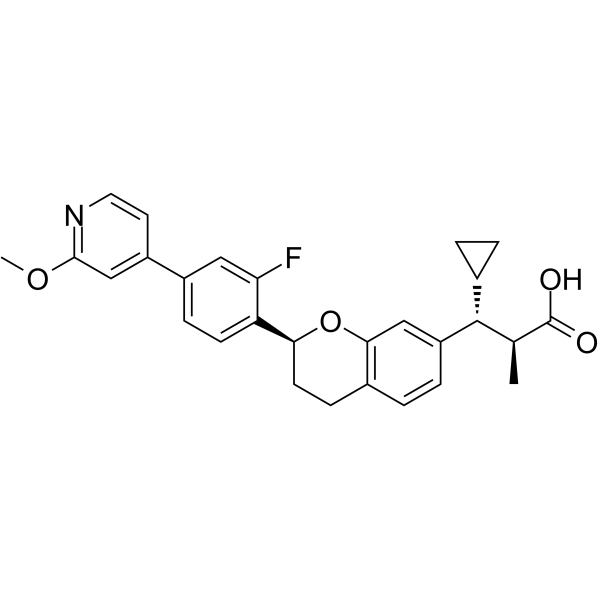
AP5 is a potent, orlly active, and selective GPR40 receptor agonist with a positive allosteric modulation of endogenous ligand (AgoPAM). AP5 demonstrates rat and human inositol monophosphate (IP1) EC50 values of 0.49 nM and 0.8 nM against the GPR40 receptor, respectively. AP5 has the potential for type II diabetes research.
For research use only. We do not sell to patients.
- CAS No.: 1623194-37-5
- Formula: C28H28FNO4
- Molecular Weight:461.52
-
Storage:
Please store the product under the recommended conditions in the Certificate of Analysis.

To place orders, for customer services and technical support, please contact: MedChemExpress USA
Tel: 609-228-6898 E-mail: [email protected] [email protected]


-
 Biological Activity
-
Chemical Information
- Protocols
- Purity & Documentation
- References
-
 Help & FAQs


-
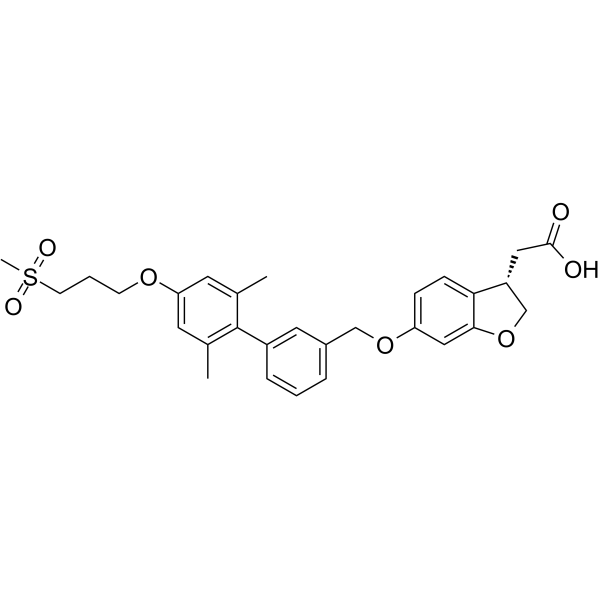
HY-10480
FasiglifamGPR40 Agonist -
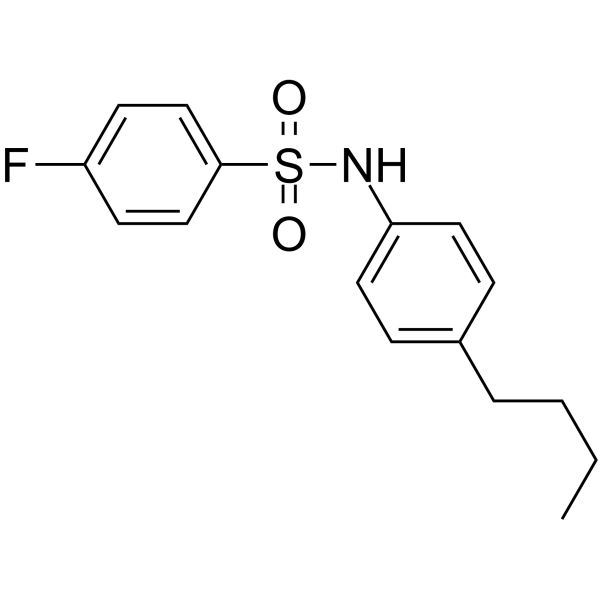
HY-101906
DC260126GPR40 antagonist -
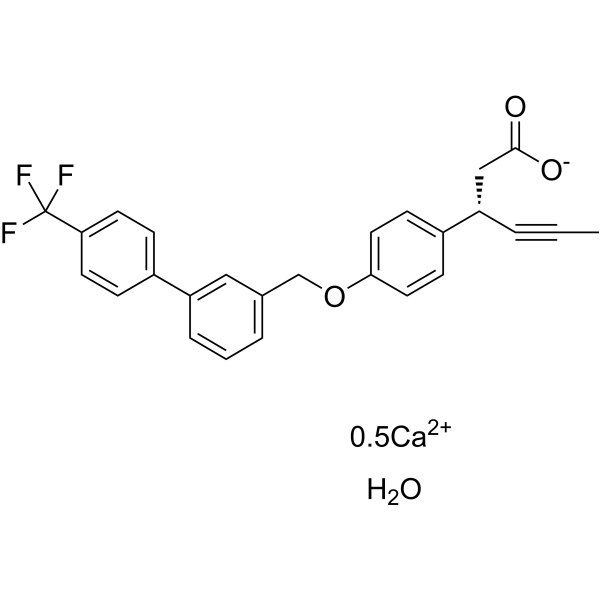
HY-13967B
AMG 837 calcium hydrateGPR40/FFA1 Agonist -
HY-15697
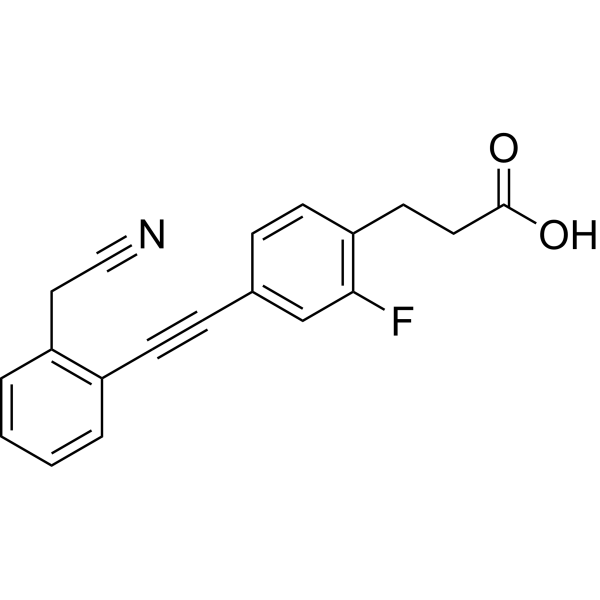
TUG-770GPR40/FFA1 Agonist -
HY-12647
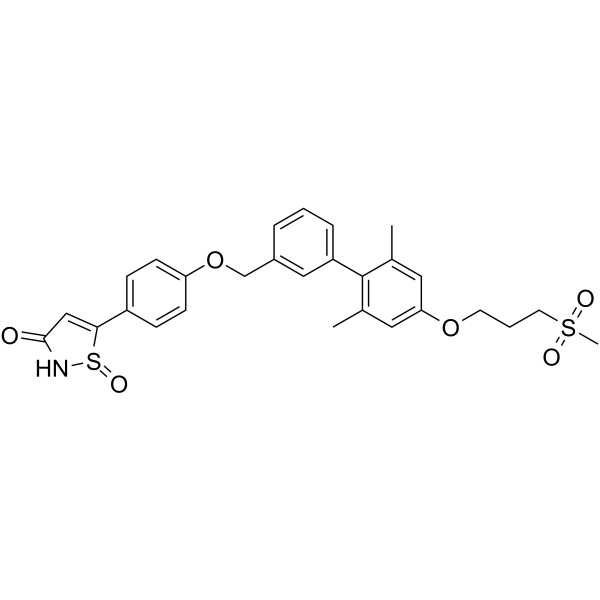
GPR40 Activator 2 -
HY-13967
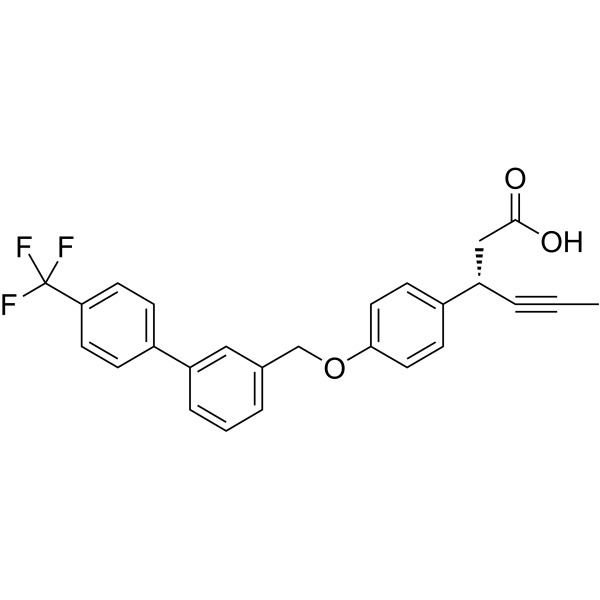
AMG 837GPR40/FFA1 Agonist -
HY-13971
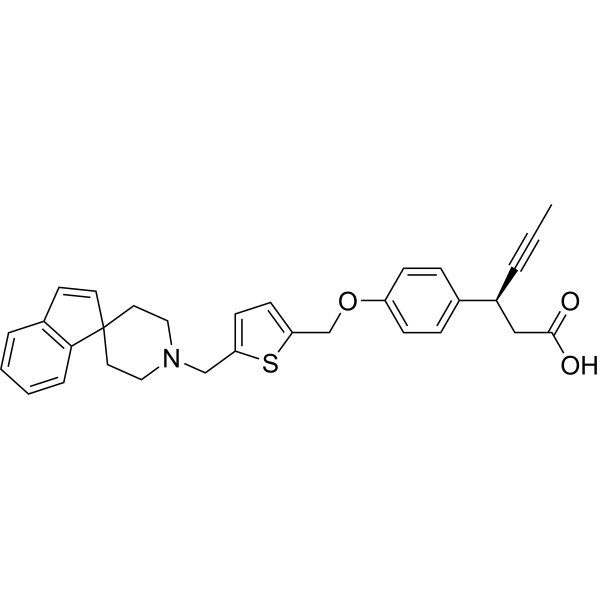
GPR40 Activator 1GPR40 Activator -
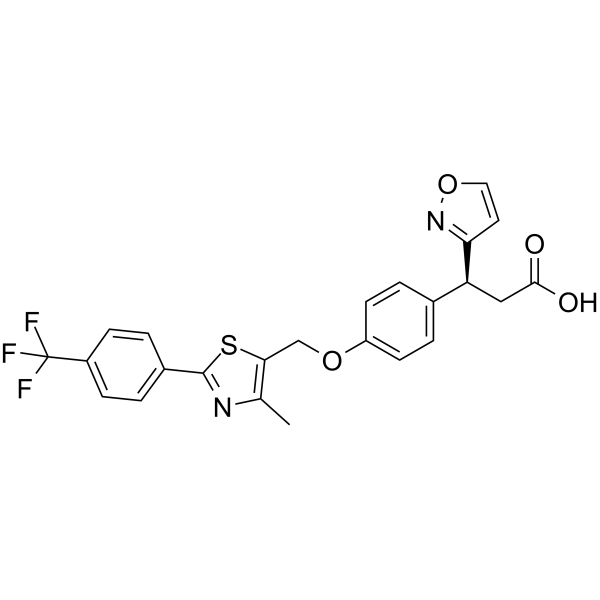
HY-12585
AM-4668GPR40 Agonist -
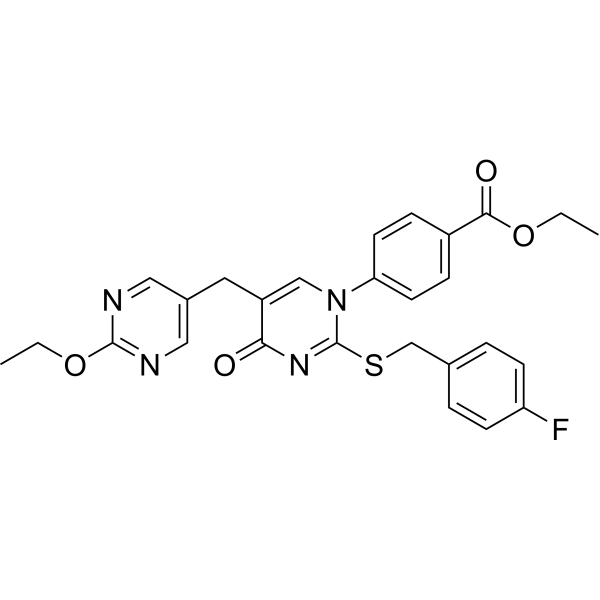
HY-50691
GW-1100Free Fatty Acid Receptor Antagonist -

HY-10480R
Fasiglifam (Standard)Reference Standard -

HY-101906R
DC260126 (Standard)Reference Standard -
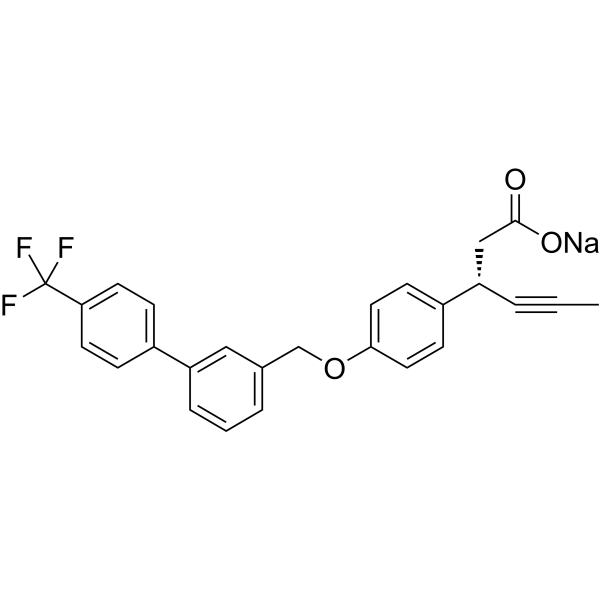
HY-13967A
AMG 837 sodium saltGPR40/FFA1 Agonist
Publications Citing Use of MedChemExpress (MCE) AP5
More

Biological Activity
Description
IC50 & Target
EC50: 0.49±0.28 nM (GPR40 Receptor)[1]
In Vitro
AP5 is a potent and selective GPR40 AgoPAM that demonstrates excellent in vivo efficacy. In the GK rat oral glucose tolerance test (oGTT), oral administration of AP5 1 h before an oral dextrose challenge shows that AP5 significantly reduces blood glucose levels compared to the vehicle. AP5 is determined to be more efficacious in this model, demonstrating maximally efficacious glucose lowering at a plasma concentration of 4.9 μM at 10 mg/kg[1].
MedChemExpress (MCE) has not independently confirmed the accuracy of these methods. They are for reference only. Further protocols information, click here.


Chemical Information
-
CAS No. 1623194-37-5
-
Molecular Weight 461.52
-
Formula C28H28FNO4
-
SMILES
FC1=CC(C2=CC(OC)=NC=C2)=CC=C1[C@@H]3CCC(C=CC([C@H](C4CC4)[C@H](C)C(O)=O)=C5)=C5O3
-
Shipping
Room temperature in continental US; may vary elsewhere.
-
Storage
Please store the product under the recommended conditions in the Certificate of Analysis.


Publications (2)
-
Journal Impact Factor
-
Most Recent
-
Nat Neurosci
Emergence of consciousness from anesthesia through ubiquitin degradation of KCC2 in the ventral posteromedial nucleus of the thalamus. [Abstract]2023 May;26(5):751-764. PMID: 36973513 -
Nat Commun
2024 May 15;15(1):4122. PMID: 38750027

Protocols
-
Research Protocol for Metabolic Diseases
AMP-activated protein kinase, AMPK, is a conserved cellular energy sensor that responds to reduced cellular energy status and coordinates metabolism by increasing ATP-generating catabolic pathways while suppressing ATP-consuming anabolic processes. In metabolic disease research, the AMPK pathway is experimentally relevant because it regulates hepatic lipid synthesis, fatty acid oxidation, glucose production, skeletal-muscle glucose disposal, mTORC1-linked biosynthesis, autophagy, mitochondrial homeostasis, and whole-body energy balance. The central pathway logic is that energy stress, metformin, exercise-like stimulation, or direct AMPK activators increase AMPKα Thr172 phosphorylation and downstream substrate phosphorylation, including ACC and RAPTOR. Phosphorylation of ACC suppresses lipogenesis and supports fatty acid oxidation, whereas phosphorylation of RAPTOR suppresses mTORC1 signaling and links cellular energy status to growth and protein synthesis control. The pathway is linked


Purity & Documentation
References

Calculators
Concentration (start) × Volume (start) = Concentration (final) × Volume (final)


AP5 Related Classifications
HY-112603 Related Classifications
 Powered by Bioz