



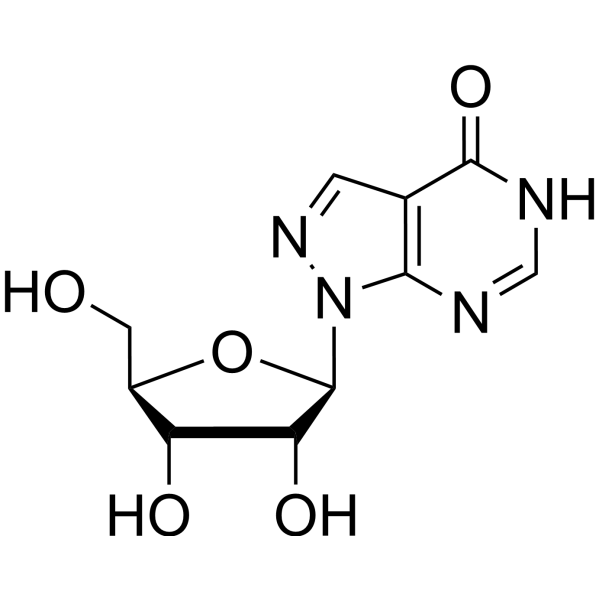
Allopurinol riboside
Based on 3 publication(s) in Google Scholar
Allopurinol riboside, a metabolite of allopurinol, shows potent activities against parasites.
Nur für Forschungszwecke. Wir verkaufen nicht an Patienten.
- Reinheit : 99.71%
- CAS. Nr.: 16220-07-8
- Formel: C10H12N4O5
- Molecular Weight:268.23
-
Speicherung:Powder -20°C, 3 years , 4°C, 2 years ; In solvent -80°C, 6 months , -20°C, 1 month

To place orders, for customer services and technical support, please contact: MedChemExpress USA
Tel: 609-228-6898 E-mail: [email protected] [email protected]


-
 Biologische Aktivität
-
Chemical Information
-
Lösungsmittel & Löslichkeit
- Reinheit & Dokumentation
- Verweise
-
 Help & FAQs


-

HY-101397R
Allopurinol riboside (Standard)Parasites Inhibitor -
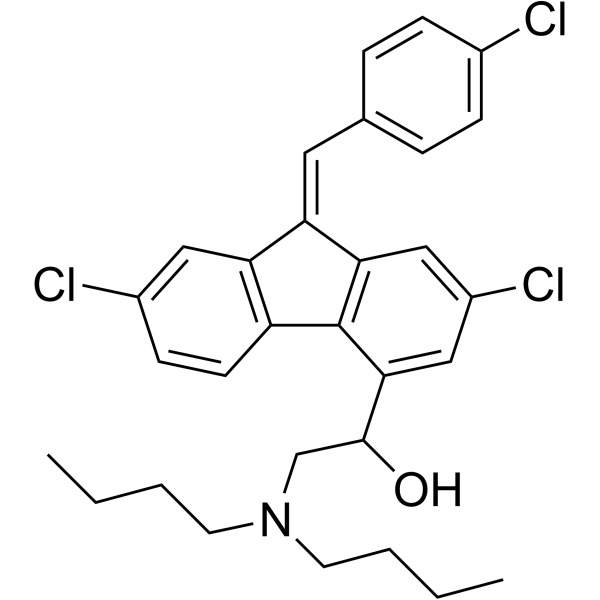
HY-B0803
LumefantrineParasite Inhibitor -
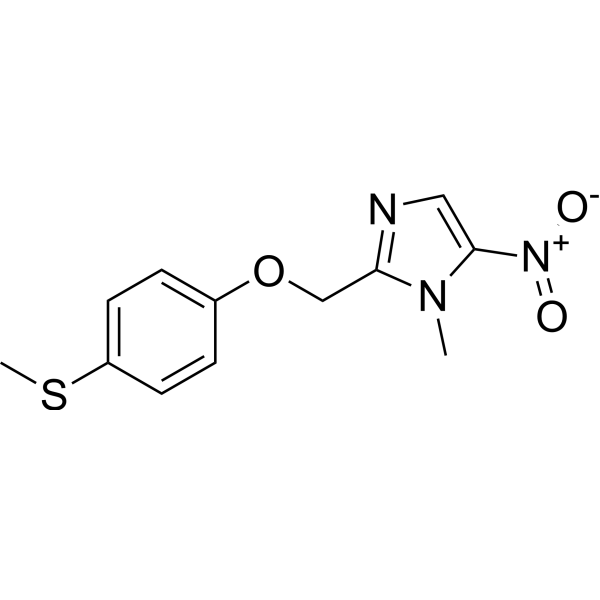
HY-13801
FexinidazoleAntitrypanosomal Drug -
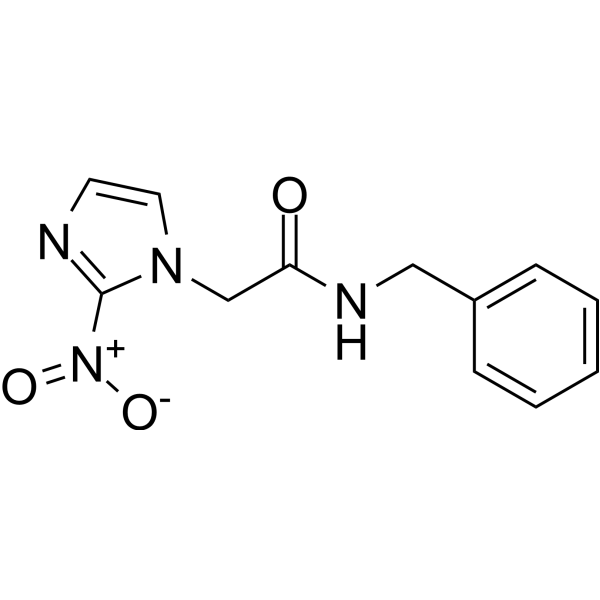
HY-B1548
BenznidazoleAntibiotic -
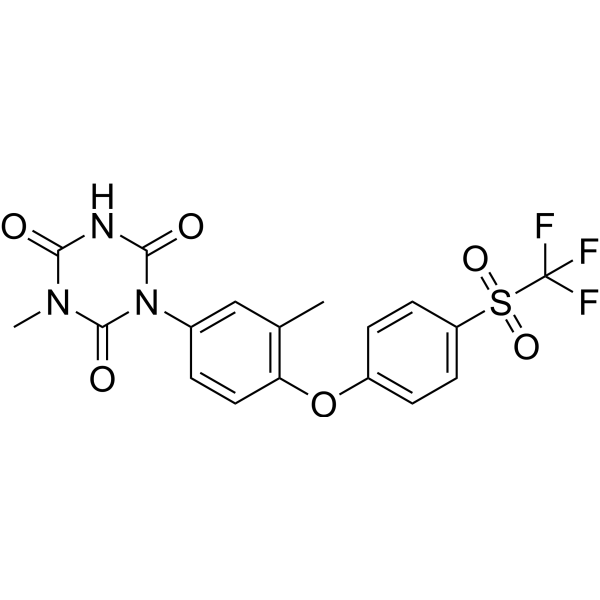
HY-17008
Toltrazuril sulfoneAnticoccidial -
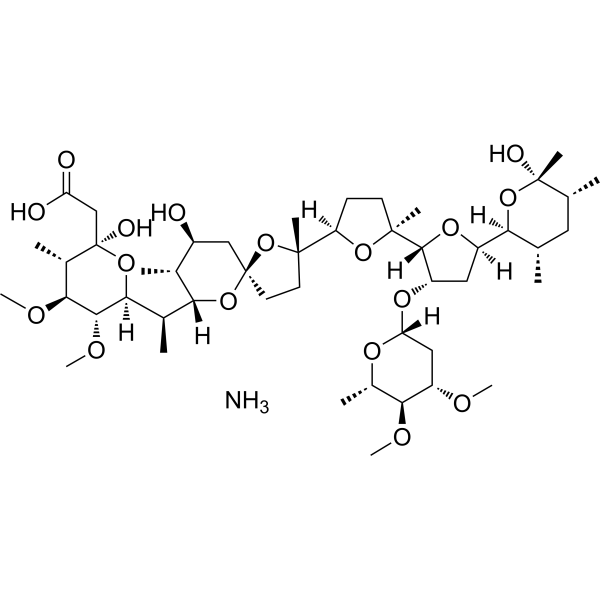
HY-N7071A
Maduramicin ammoniumAntibiotic -
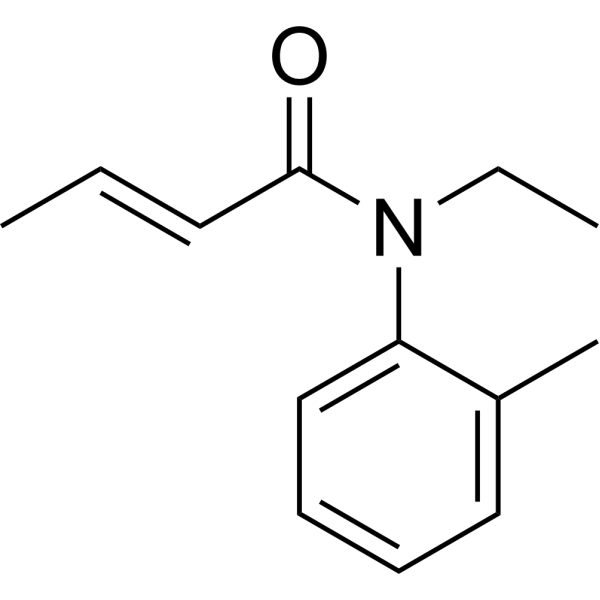
HY-B1177
CrotamitonTRPV4 Inhibitor -
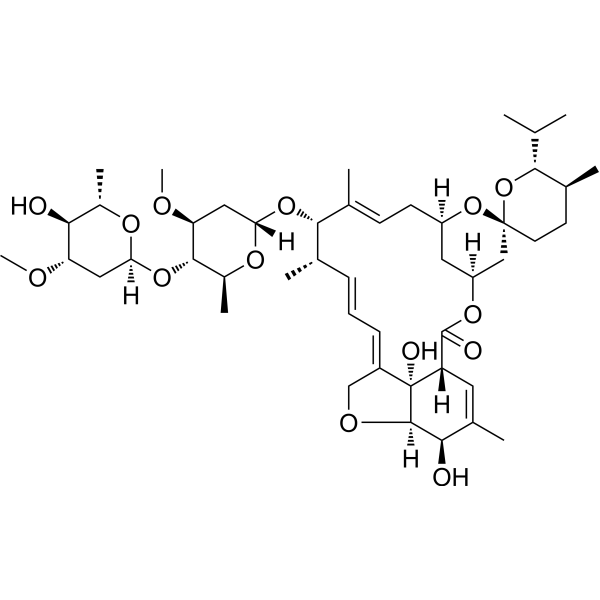
HY-125729
Ivermectin B1bSARS-CoV Inhibitor -

HY-B0803R
Lumefantrine (Standard)Parasite Inhibitor -

HY-13801R
Fexinidazole (Standard)Antitrypanosomal Drug -
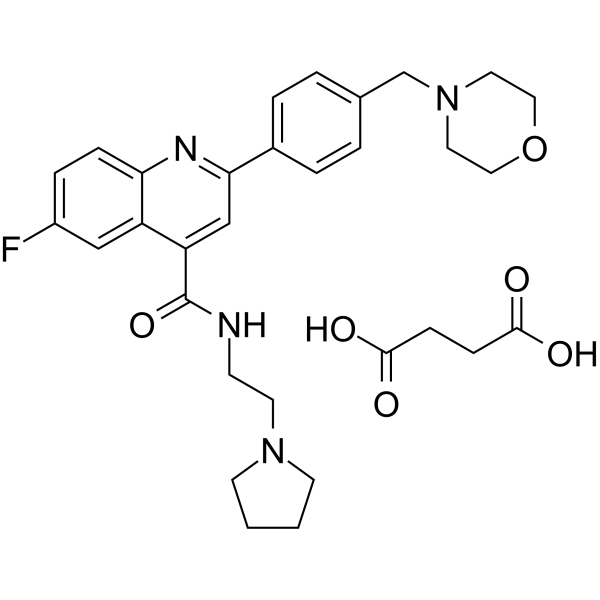
HY-117684A
Cabamiquine succinateAntimalarial Agent -
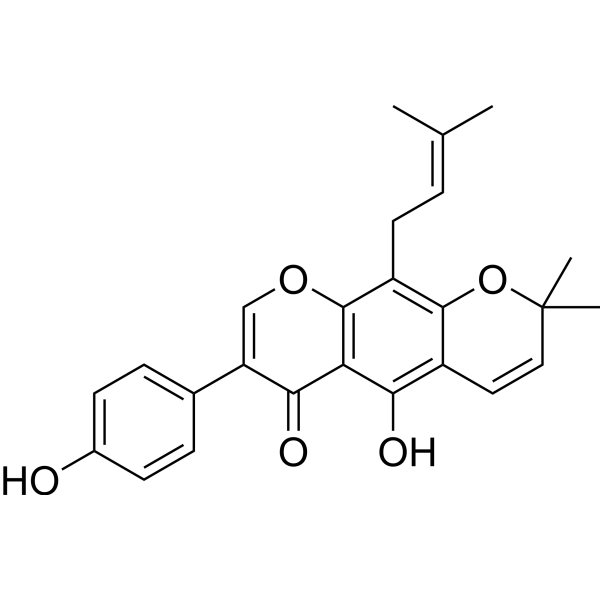
HY-N1074
WarangalonePKA Inhibitor
Publications Citing Use of MedChemExpress (MCE) Allopurinol riboside
MoreAlle Parasite Isoform-spezifische Produkte anzeigen
MoreAlle Endogenous Metabolite Isoform-spezifische Produkte anzeigen
More

Biologische Aktivität
Beschreibung
IC50 & Target
|
Leishmania |
Cellular Effect
|
Cell Line

|
Type | Value | Description | References |
|---|---|---|---|---|
| Peritoneal macrophage | CC50 |
>64 μM
Compound: 2
|
Cytotoxicity against Swiss mouse peritoneal macrophages assessed as cell detachment, lysis and granulation measured after 5 days by microscopic analysis
Cytotoxicity against Swiss mouse peritoneal macrophages assessed as cell detachment, lysis and granulation measured after 5 days by microscopic analysis
|
[PMID: 33784107] |
In Vitro
Allopurinol-riboside competitively inhibits the action of purine nucleoside phosphorylase on inosine with a Ki of 277 μM. Lymphocyte blastogensis induced by PHA and Con A is significantly suppressed by allopurinol-riboside in a concentration-dependent manner. When LPS is used as a mitogen, the inhibition of allopurinol-ribosideon lymphocyte proliferation is less marked. Humoral immunity is not suppressed by allopurinol-riboside[1]. Allopurinol riboside is an experimental agent for the treatment of leishmaniasis and American trypanosomiasis. Allopurinol riboside is effective against parasites, because a series of enzymes (analogous to those that mediate purine salvage in humans) convert it into 4-aminopyrazolopyrimidine ribonucleoside triphosphate, a cytotoxic product. Allopurinol riboside is selectively toxic, because it is not metabolized by the corresponding enzymes in humans[2].
MedChemExpress (MCE) has not independently confirmed the accuracy of these methods. They are for reference only.
In Vivo
MedChemExpress (MCE) has not independently confirmed the accuracy of these methods. They are for reference only.


Chemical Information
-
CAS. Nr. 16220-07-8
-
Appearance Solid
-
Molecular Weight 268.23
-
Formel C10H12N4O5
-
Color White to off-white
-
SMILES
O=C1C(C=NN2[C@H]3[C@H](O)[C@H](O)[C@@H](CO)O3)=C2N=CN1
-
Structure Classification
-
Initial Source
-
Versand
Room temperature in continental US; may vary elsewhere.
-
Speicherung
Powder -20°C 3 years 4°C 2 years In solvent -80°C 6 months -20°C 1 month


Publications (3)
-
Journal Impact Factor
-
Most Recent
-
Adv Sci (Weinh)
Metabolomic and Cellular Mechanisms of Drug-Induced Ototoxicity and Nephrotoxicity: Therapeutic Implications of Uric Acid Modulation. [Abstract]2025 Apr;12(16):e2415041. PMID: 40041973 -
Int J Biol Macromol
Molecular basis of BACE1 modulation revealed by machine learning, molecular simulations, and experimental validation. [Abstract]2026 May 6:152409. PMID: 42103119 -
Int J Biol Macromol
Integrated microbiome and metabolome analysis reveals synergistic efficacy of basil polysaccharide and gefitinib in lung cancer through modulation of gut microbiota and fecal metabolites. [Abstract]2024 Nov;281(Pt 2):135992. PMID: 39414535


Lösungsmittel & Löslichkeit
In Vitro:
DMSO : 100 mg/mL (372.81 mM; Need ultrasonic; Hygroscopic DMSO has a significant impact on the solubility of product, please use newly opened DMSO)
Please refer to the solubility information to select the appropriate solvent. Once prepared, please aliquot and store the solution to prevent product inactivation from repeated freeze-thaw cycles.
Storage method and period of stock solution: -80°C, 6 months; -20°C, 1 month. When stored at -80°C, please use it within 6 months. When stored at -20°C, please use it within 1 month.
Please refer to the solubility information to select the appropriate solvent. Once prepared, please aliquot and store the solution to prevent product inactivation from repeated freeze-thaw cycles.
Storage method and period of stock solution: -80°C, 6 months; -20°C, 1 month. When stored at -80°C, please use it within 6 months. When stored at -20°C, please use it within 1 month.
Konzentration (Stammlösung) × Volumen (Stammlösung) = Konzentration (Ziellösung) × Volumen (Ziellösung)
In Vivo:
Select the appropriate dissolution method based on your experimental animal and administration route.
- For the following dissolution methods, please ensure to first prepare a clear stock solution using an In Vitro approach and then sequentially add co-solvents:
- To ensure reliable experimental results, the clarified stock solution can be appropriately stored based on storage conditions. As for the working solution for In Vivo experiments, it is recommended to prepare freshly and use it on the same day.
- The percentages shown for the solvents indicate their volumetric ratio in the final prepared solution. If precipitation or phase separation occurs during preparation, heat and/or sonication can be used to aid dissolution.
Add each solvent one by one: 10% DMSO 40% PEG300 5% Tween-80 45% Saline
Solubility: ≥ 2.5 mg/mL (9.32 mM); Clear solution
This protocol yields a clear solution of ≥ 2.5 mg/mL (saturation unknown).
Taking 1 mL working solution as an example, add 100 μL DMSO stock solution (25.0 mg/mL) to 400 μL PEG300, and mix evenly; then add 50 μL Tween-80 and mix evenly; then add 450 μL Saline to adjust the volume to 1 mL.
Preparation of Saline: Dissolve 0.9 g sodium chloride in ddH₂O and dilute to 100 mL to obtain a clear Saline solution.
Add each solvent one by one: 10% DMSO 90% (20% SBE-β-CD in Saline)
Solubility: ≥ 2.5 mg/mL (9.32 mM); Clear solution
This protocol yields a clear solution of ≥ 2.5 mg/mL (saturation unknown).
Taking 1 mL working solution as an example, add 100 μL DMSO stock solution (25.0 mg/mL) to 900 μL 20% SBE-β-CD in Saline, and mix evenly.
Preparation of 20% SBE-β-CD in Saline (4°C, storage for one week): 2 g SBE-β-CD powder is dissolved in 10 mL Saline, completely dissolve until clear.
In Vivo Dissolution Calculator
Please enter the basic information of animal experiments:
-
-
-
-
Recommended: Prepare an additional quantity of animals to account for potential losses during experiments.
Please enter your animal formula composition:
-
%DMSO +
Recommended: Keep the proportion of DMSO in working solution below 2% if your animal is weak.
-
%+
-
+%Tween-80 + +
-
%Saline +
The co-solvents required include: DMSO, . All of co-solvents are available by MedChemExpress (MCE). , Tween 80. All of co-solvents are available by MedChemExpress (MCE).
Working solution concentration: 0.22 mg/mL
Method for preparing stock solution: mg drug dissolved in μL DMSO. Stock solution concentration: mg/mL.
1. Take μL DMSO stock solution;
2. Add μL .
μL , mix evenly;
3. Then add μL Tween 80, mix evenly;
4. Then add μL
Please ensure that the stock solution in the first step is dissolved to a clear state, and add co-solvents in sequence. You can use ultrasonic heating (ultrasonic cleaner, recommended frequency 20-40 kHz), vortexing, etc. to assist dissolution.


Reinheit & Dokumentation
-
Data Sheet (277 KB)
-
SDS (396 KB)
- English - EN (396 KB)
- Français - FR (396 KB)
- Deutsch - DE (396 KB)
- Norwegian - NO (396 KB)
- Español - ES (396 KB)
- Swedish - SV (396 KB)
- Italian - IT (396 KB)
- Korean - KR (396 KB)
- Portuguese - PT (396 KB)
-
Handling Instructions (2659 KB)
Verweise
[1]. Nishida Y, et al. Inhibition of purine nucleoside phosphorylase activity and of T-cell function with allopurinol-riboside. Agents Actions. 1979 Dec;9(5-6):549-52. [Content Brief]
[2]. Pacher P, et al. Therapeutic effects of xanthine oxidase inhibitors: renaissance half a century after the discovery of allopurinol. Pharmacol Rev. 2006 Mar;58(1):87-114. [Content Brief]
[3]. Shapiro TA, et al. Pharmacokinetics and metabolism of allopurinol riboside. Clin Pharmacol Ther. 1991 May;49(5):506-14. [Content Brief]
[4]. Were JB, et al. Effects of probenecid on the pharmacokinetics of allopurinol riboside. Antimicrob Agents Chemother. 1993 May;37(5):1193-6. [Content Brief]


Complete Stock Solution Preparation Table
Please refer to the solubility information to select the appropriate solvent. Once prepared, please aliquot and store the solution to prevent product inactivation from repeated freeze-thaw cycles.
Storage method and period of stock solution: -80°C, 6 months; -20°C, 1 month. When stored at -80°C, please use it within 6 months. When stored at -20°C, please use it within 1 month.
| Optional Solvent | Concentration Solvent Mass | 1 mg | 5 mg | 10 mg | 25 mg |
|---|---|---|---|---|---|
| DMSO | 1 mM | 3.7281 mL | 18.6407 mL | 37.2814 mL | 93.2036 mL |
| 5 mM | 0.7456 mL | 3.7281 mL | 7.4563 mL | 18.6407 mL | |
| 10 mM | 0.3728 mL | 1.8641 mL | 3.7281 mL | 9.3204 mL | |
| 15 mM | 0.2485 mL | 1.2427 mL | 2.4854 mL | 6.2136 mL | |
| 20 mM | 0.1864 mL | 0.9320 mL | 1.8641 mL | 4.6602 mL | |
| 25 mM | 0.1491 mL | 0.7456 mL | 1.4913 mL | 3.7281 mL | |
| 30 mM | 0.1243 mL | 0.6214 mL | 1.2427 mL | 3.1068 mL | |
| 40 mM | 0.0932 mL | 0.4660 mL | 0.9320 mL | 2.3301 mL | |
| 50 mM | 0.0746 mL | 0.3728 mL | 0.7456 mL | 1.8641 mL | |
| 60 mM | 0.0621 mL | 0.3107 mL | 0.6214 mL | 1.5534 mL | |
| 80 mM | 0.0466 mL | 0.2330 mL | 0.4660 mL | 1.1650 mL | |
| 100 mM | 0.0373 mL | 0.1864 mL | 0.3728 mL | 0.9320 mL |


Allopurinol riboside Related Classifications
HY-101397 Related Classifications
 Powered by Bioz