



Banoxantrone dihydrochloride
Based on 11 publication(s) in Google Scholar
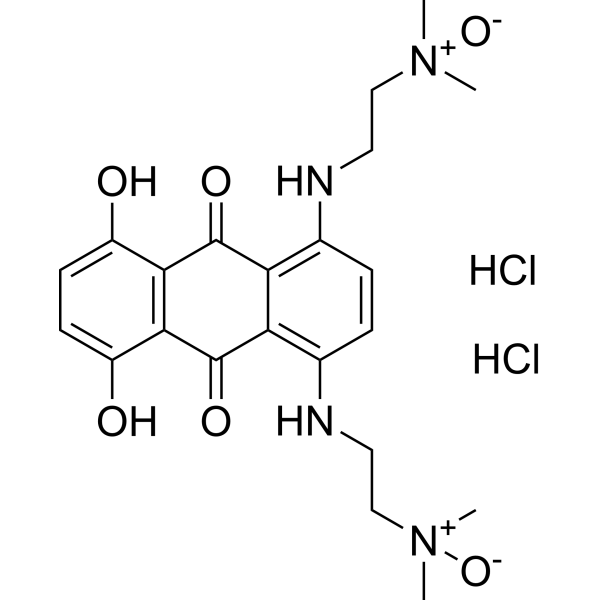
Banoxantrone dihydrochloride is a novel bioreductive agent that can be reduced to a stable, DNA-affinic compound AQ4, which is a potent topoisomerase II inhibitor.
For research use only. We do not sell to patients.
- Purity : 99.43%
- CAS No.: 252979-56-9
- Formula: C22H30Cl2N4O6
- Molecular Weight:517.40
-
Storage:
-20°C, protect from light, stored under nitrogen
* In solvent : -80°C, 2 years; -20°C, 1 year (protect from light, stored under nitrogen)

To place orders, for customer services and technical support, please contact: MedChemExpress USA
Tel: 609-228-6898 E-mail: [email protected] [email protected]


-
 Biological Activity
-
Chemical Information
-
Solvent & Solubility
- Purity & Documentation
- References
-
 Help & FAQs


-
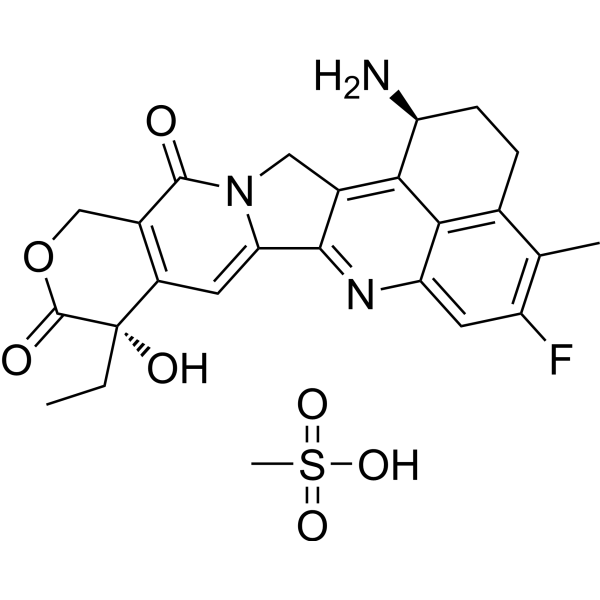
HY-13631A
Exatecan mesylateTopoisomerase I Inhibitor -
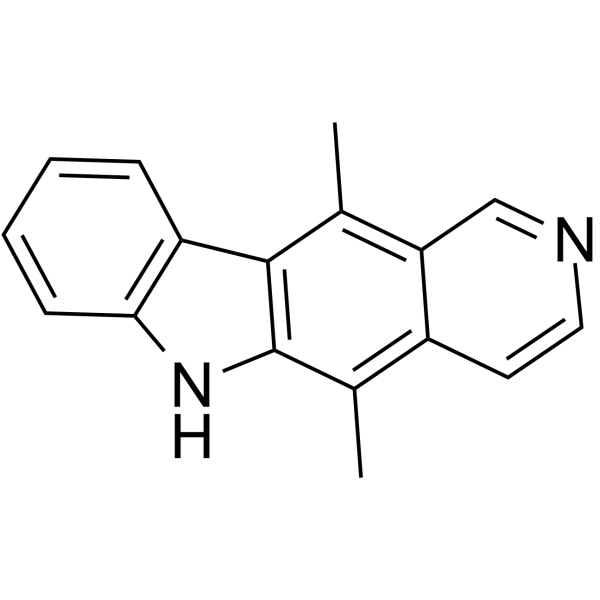
HY-15753
EllipticineTopoisomerase Inhibitor -
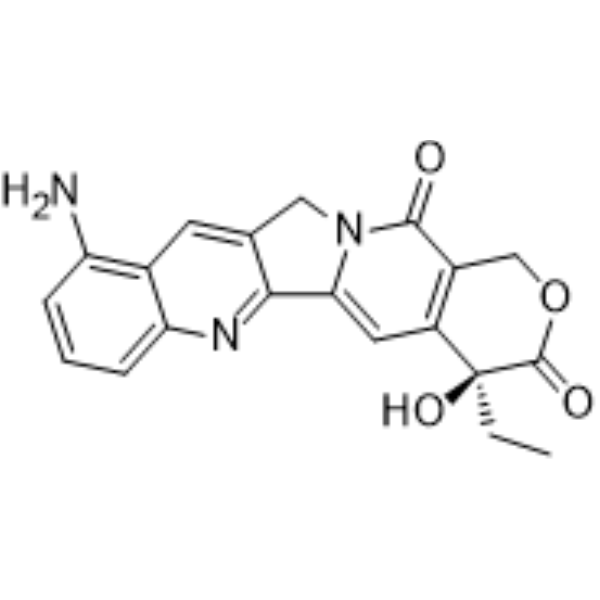
HY-100309
9-AminocamptothecinTopoisomerase I Inhibitor -
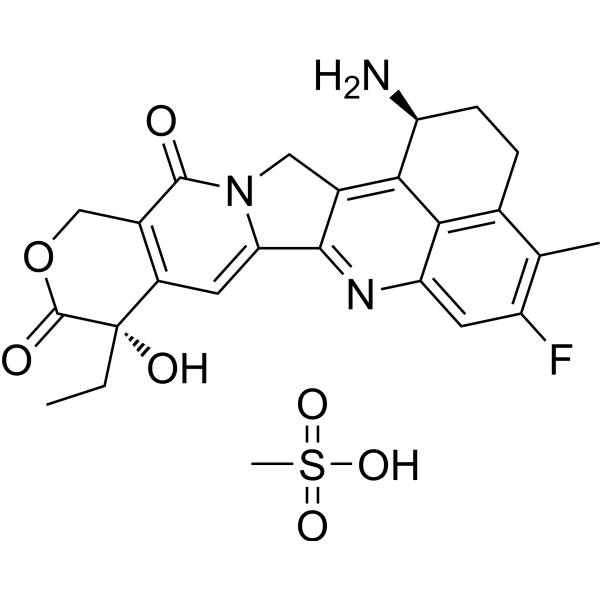
HY-13631AG
Exatecan mesylate (GMP)Topoisomerase I Inhibitor -
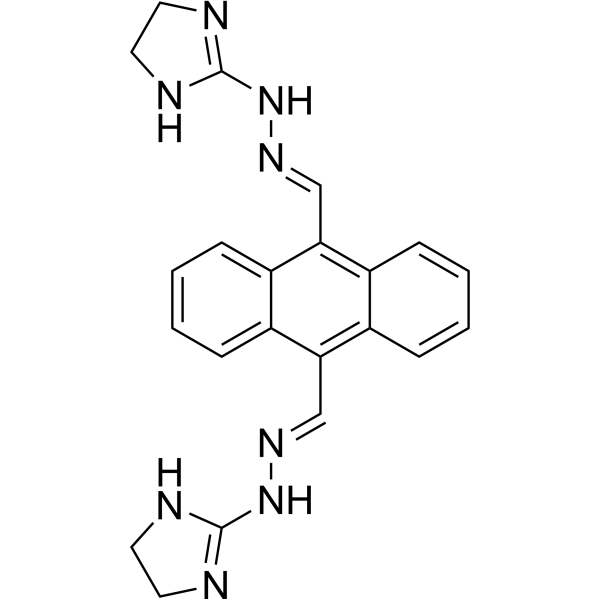
HY-100875
BisantreneAntitumor Agent -
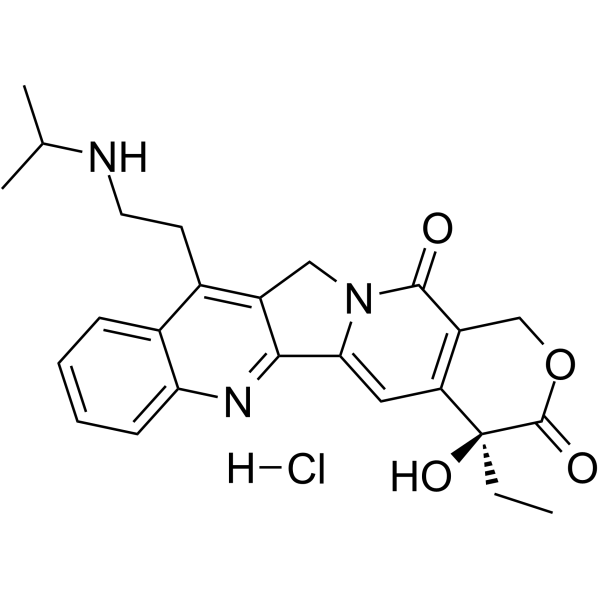
HY-13566A
Belotecan hydrochlorideTopoisomerase Inhibitor -
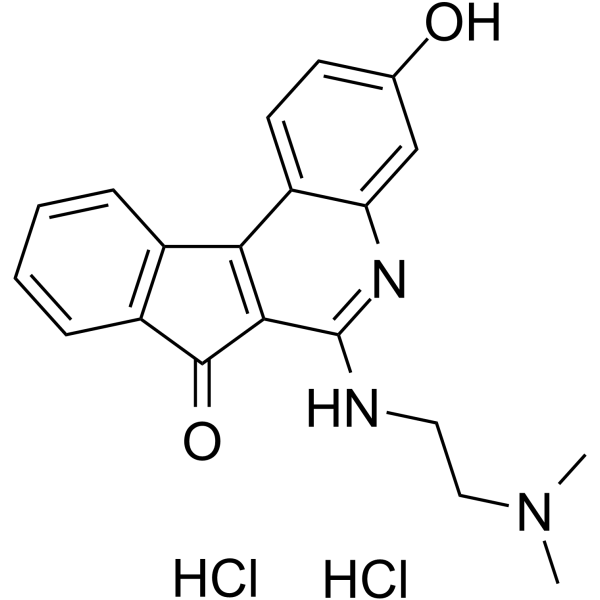
HY-13758A
TAS-103 dihydrochloride -
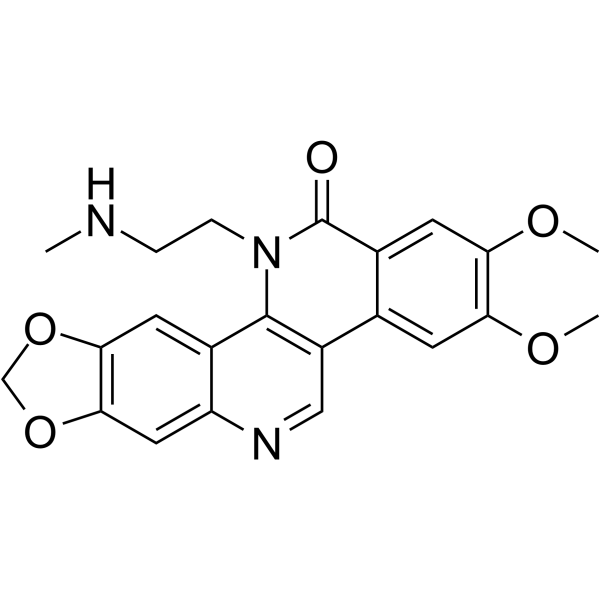
HY-16228
Genz-644282 -
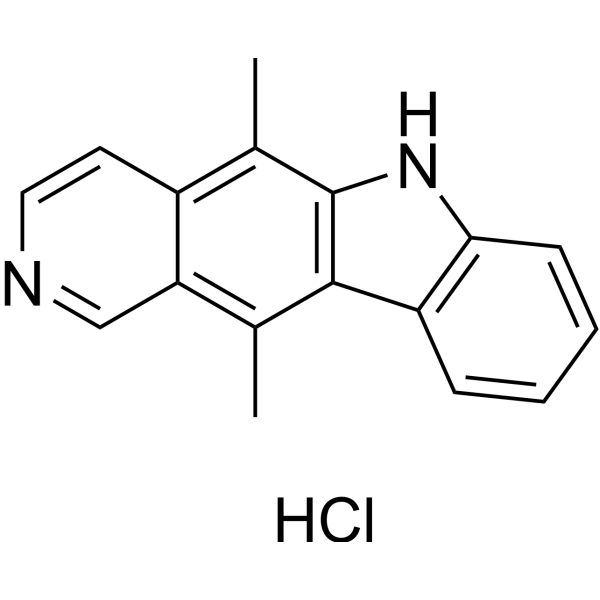
HY-15753A
Ellipticine hydrochlorideTopoisomerase Inhibitor -
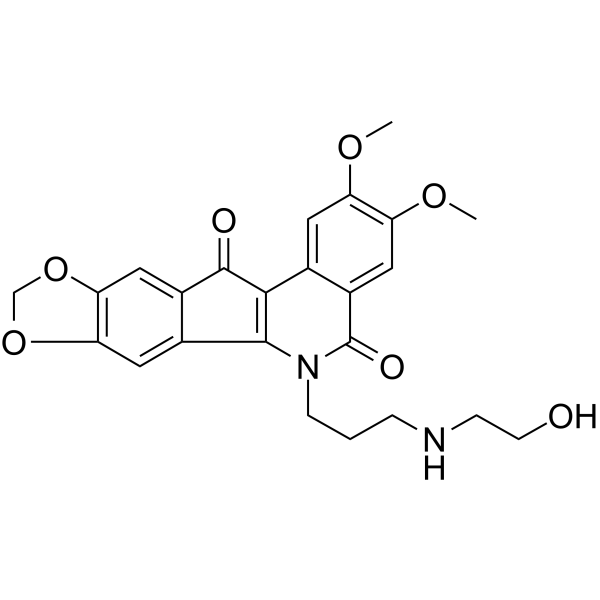
HY-U00248
LMP744 -
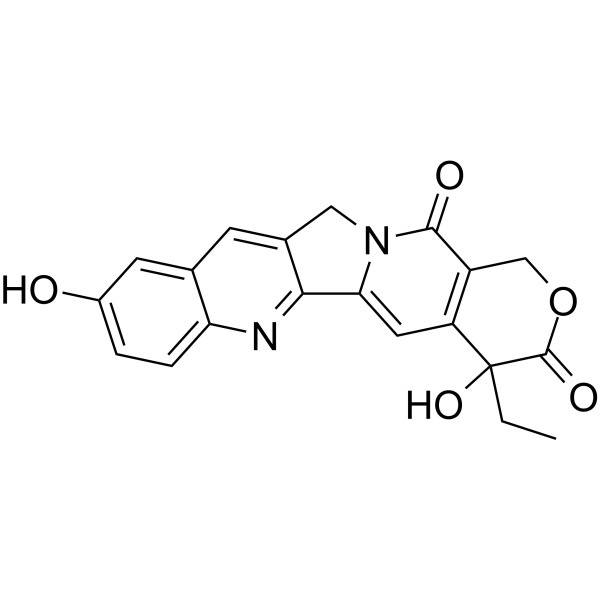
HY-N0275
(±)-10-HydroxycamptothecinTopoisomerase Inhibitor -
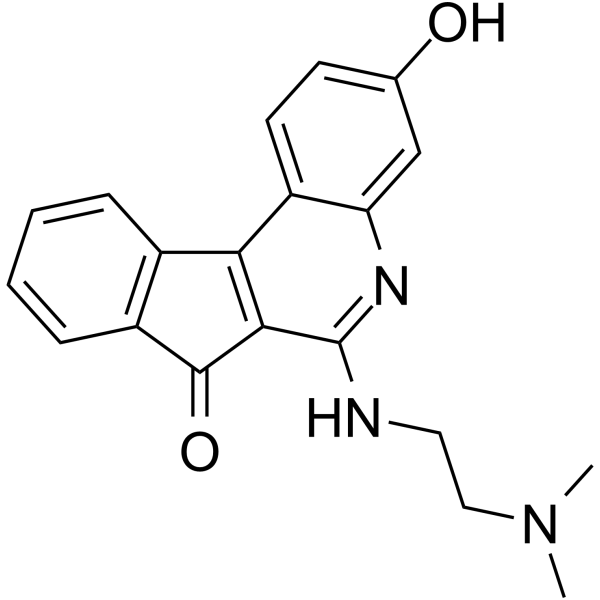
HY-13758
TAS-103
Publications Citing Use of MedChemExpress (MCE) Banoxantrone dihydrochloride
More- ACS Nano. 2024 Jul 16;18(28):18412-18424. [Abstract]
- J Nanobiotechnology. 2026 Feb 1;24(1):200. [Abstract]
- Adv Sci (Weinh). 2026 Jan 18:e21886. [Abstract]
- Chem Eng J. 2025 Feb 1.
- J Control Release. 2025 Jul 10:383:113789. [Abstract]
- Mater Today Bio. 2026 May 17:38:103244. [Abstract]
- Mater Today Bio. 2025 Dec 15:36:102695. [Abstract]
- Acta Biomater. 2022 Sep 15:150:337-352. [Abstract]
- J Colloid Interface Sci. 2026 Apr 15:708:139847. [Abstract]
- Int J Nanomedicine. 2024 Apr 8:19:3367-3386. [Abstract]
- J Mol Med (Berl). 2019 Aug;97(8):1183-1193. [Abstract]
All Topoisomerase Isoforms
More

Biological Activity
Description
IC50 & Target
[1]|
Topoisomerase II |
In Vitro
Banoxantrone (AQ4N) can be reduced in a hypoxic environment to a stable DNA-affinic agent AQ4. AQ4, a potent topoisomerase II inhibitor, would be capable of damaging cells recruited into the cell cycle following radiation damage to the well-oxygenated cells of the tumor[1]. Banoxantrone shows more than 8-fold higher cytotoxicity under hypoxia than normoxia in cultures of 9L rat gliosarcoma and H460 human non-small-cell lung carcinoma cells but not for 11 other human cancer cell lines. DT-diaphorase protein levels and banoxantrone chemosensitivity are poorly correlated across the cancer cell line panel, and banoxantrone chemosensitivity is not affected by DT-diaphorase inhibitors[2]. Banoxantrone is a bis-N-oxide that is reduced via two sequential two-electron reductions to the tertiary amine, AQ4, which is a potent cytotoxic agent toward both aerobic and hypoxic cells. AQ4, but not AQ4N, intercalates in DNA with high affinity to generate a stable persistent complex that can inhibit topoisomerase II and cause DNA damage and cell death[3].
MedChemExpress (MCE) has not independently confirmed the accuracy of these methods. They are for reference only. .
In Vivo
MedChemExpress (MCE) has not independently confirmed the accuracy of these methods. They are for reference only.


Chemical Information
-
CAS No. 252979-56-9
-
Appearance Solid
-
Molecular Weight 517.40
-
Formula C22H30Cl2N4O6
-
Color Dark blue to black
-
SMILES
O=C1C2=C(C(O)=CC=C2O)C(C3=C(NCC[N+](C)(C)[O-])C=CC(NCC[N+](C)(C)[O-])=C13)=O.Cl.Cl
-
Synonyms
AQ4N dihydrochloride
-
Shipping
Room temperature in continental US; may vary elsewhere.
-
Storage
-20°C, protect from light, stored under nitrogen
* In solvent : -80°C, 2 years; -20°C, 1 year (protect from light, stored under nitrogen)


Publications (11)
-
Journal Impact Factor
-
Most Recent
-
ACS Nano
Hypoxia-Specific Metal-Organic Frameworks Augment Cancer Immunotherapy of High-Intensity Focused Ultrasound. [Abstract]2024 Jul 16;18(28):18412-18424. PMID: 38949962 -
J Nanobiotechnology
HIFU postoperative hypoxia-activated metal-organic frameworks modulate the tumor microenvironment to augment immunotherapy. [Abstract]2026 Feb 1;24(1):200. PMID: 41622222 -
Adv Sci (Weinh)
Fluorinated Hypoxia-Responsive Aza-BODIPY for NIR-II FL/19F MR/PA Imaging and Phototherapy of Lung Cancer. [Abstract]2026 Jan 18:e21886. PMID: 41549220 -
-
J Control Release
Hypoxia-responsive albumin nanoparticles co-delivering banoxantrone and STING agonist enhance immunotherapy of high-intensity focused ultrasound. [Abstract]2025 Jul 10:383:113789. PMID: 40318808 -
Mater Today Bio
2026 May 17:38:103244. PMID: 42211060 -
Mater Today Bio
Hypoxia-specific metal-organic frameworks combined with lactate immunometabolism regulation augment anti-tumor immunity of HIFU. [Abstract]2025 Dec 15:36:102695. PMID: 41509979 -
Acta Biomater
Genetically engineered bacteria-mediated multi-functional nanoparticles for synergistic tumor-targeting therapy. [Abstract]2022 Sep 15:150:337-352. PMID: 35931281 -
J Colloid Interface Sci
Manganese-based metal-organic frameworks augment postoperative immunotherapy of high-intensity focused ultrasound. [Abstract]2026 Apr 15:708:139847. PMID: 41518922 -
Int J Nanomedicine
Folic Acid Functionalized AQ4N/Gd@PDA Nanoplatform with Real-Time Monitoring of Hypoxia Relief and Enhanced Synergistic Chemo/Photothermal Therapy in Glioma. [Abstract]2024 Apr 8:19:3367-3386. PMID: 38617794 -
J Mol Med (Berl)
2019 Aug;97(8):1183-1193. PMID: 31201471


Solvent & Solubility
In Vitro:
DMSO : 25 mg/mL (48.32 mM; Need ultrasonic; Hygroscopic DMSO has a significant impact on the solubility of product, please use newly opened DMSO)
H2O : 20 mg/mL (38.65 mM; Need ultrasonic)
Please refer to the solubility information to select the appropriate solvent. Once prepared, please aliquot and store the solution to prevent product inactivation from repeated freeze-thaw cycles.
Storage method and period of stock solution: -80°C, 2 years; -20°C, 1 year (protect from light, stored under nitrogen). When stored at -80°C, please use it within 2 years. When stored at -20°C, please use it within 1 year.
* Note: If you choose water as the stock solution, please dilute it to the working solution, then filter and sterilize it with a 0.22 μm filter before use.
Please refer to the solubility information to select the appropriate solvent. Once prepared, please aliquot and store the solution to prevent product inactivation from repeated freeze-thaw cycles.
Storage method and period of stock solution: -80°C, 2 years; -20°C, 1 year (protect from light, stored under nitrogen). When stored at -80°C, please use it within 2 years. When stored at -20°C, please use it within 1 year.
* Note: If you choose water as the stock solution, please dilute it to the working solution, then filter and sterilize it with a 0.22 μm filter before use.
Concentration (start) × Volume (start) = Concentration (final) × Volume (final)
In Vivo:
For the following dissolution methods, please prepare the working solution directly:
It is recommended to prepare fresh solutions and use them promptly within a short period of time.
The percentages shown for the solvents indicate their volumetric ratio in the final prepared solution. If precipitation or phase separation occurs during preparation, heat and/or sonication can be used to aid dissolution.
Add each solvent one by one: PBS
Solubility: 8.33 mg/mL (16.10 mM); Clear solution; Need ultrasonic and warming and heat to 60°C


Purity & Documentation
-
Data Sheet (283 KB)
-
SDS (420 KB)
- English - EN (420 KB)
- Français - FR (420 KB)
- Deutsch - DE (420 KB)
- Norwegian - NO (420 KB)
- Español - ES (420 KB)
- Swedish - SV (420 KB)
- Italian - IT (420 KB)
- Korean - KR (420 KB)
- Portuguese - PT (420 KB)
-
Handling Instructions (2659 KB)
References
[1]. Hejmadi MV, et al. DNA damage following combination of radiation with the bioreductive drug AQ4N: possible selective toxicity to oxic and hypoxic tumour cells. Br J Cancer. 1996 Feb;73(4):499-505. [Content Brief]
[2]. Manley E Jr, et al. Impact of tumor blood flow modulation on tumor sensitivity to the bioreductive drug banoxantrone. J Pharmacol Exp Ther. 2013 Feb;344(2):368-77. [Content Brief]
[3]. Williams KJ, et al. In vivo activation of the hypoxia-targeted cytotoxin AQ4N in human tumor xenografts. Mol Cancer Ther. 2009 Dec;8(12):3266-75. [Content Brief]


Complete Stock Solution Preparation Table
Please refer to the solubility information to select the appropriate solvent. Once prepared, please aliquot and store the solution to prevent product inactivation from repeated freeze-thaw cycles.
Storage method and period of stock solution: -80°C, 2 years; -20°C, 1 year (protect from light, stored under nitrogen). When stored at -80°C, please use it within 2 years. When stored at -20°C, please use it within 1 year.
| Optional Solvent | Concentration Solvent Mass | 1 mg | 5 mg | 10 mg | 25 mg |
|---|---|---|---|---|---|
| H2O / DMSO | 1 mM | 1.9327 mL | 9.6637 mL | 19.3274 mL | 48.3185 mL |
| 5 mM | 0.3865 mL | 1.9327 mL | 3.8655 mL | 9.6637 mL | |
| 10 mM | 0.1933 mL | 0.9664 mL | 1.9327 mL | 4.8319 mL | |
| 15 mM | 0.1288 mL | 0.6442 mL | 1.2885 mL | 3.2212 mL | |
| 20 mM | 0.0966 mL | 0.4832 mL | 0.9664 mL | 2.4159 mL | |
| 25 mM | 0.0773 mL | 0.3865 mL | 0.7731 mL | 1.9327 mL | |
| 30 mM | 0.0644 mL | 0.3221 mL | 0.6442 mL | 1.6106 mL | |
| DMSO | 40 mM | 0.0483 mL | 0.2416 mL | 0.4832 mL | 1.2080 mL |
* Note: If you choose water as the stock solution, please dilute it to the working solution, then filter and sterilize it with a 0.22 μm filter before use.


Banoxantrone dihydrochloride Related Classifications
HY-13562A Related Classifications
 Powered by Bioz