



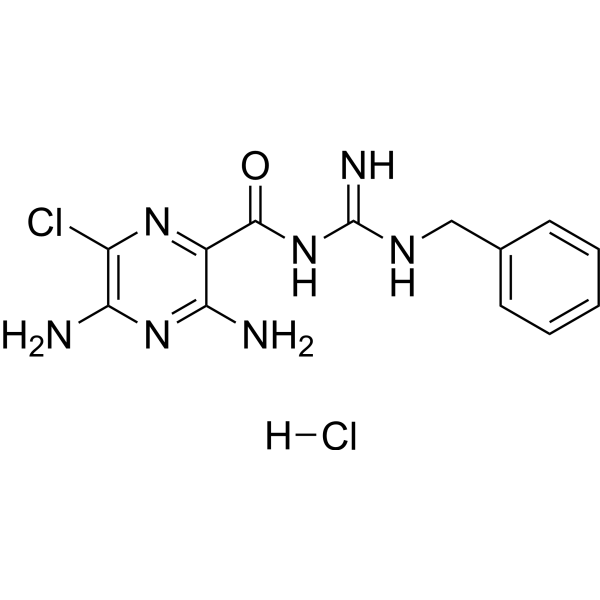
Benzamil hydrochloride
Based on 2 publication(s) in Google Scholar
Benzamil hydrochloride (Benzylamiloride hydrochloride), an Amiloride analogue, is a Na+/Ca2+ exchanger (NCX) inhibitor (IC50~100 nM). Benzamil hydrochloride also is a non-selective Deg/epithelial sodium channels (ENaC) blocker, and can potentiate myogenic vasoconstriction. Benzamil hydrochloride inhibits TRPP3-mediated Ca2+-activated currents, with an IC50 of 1.1 μM.
For research use only. We do not sell to patients.
- Purity : 99.70%
- CAS No.: 161804-20-2
- Formula: C13H15Cl2N7O
- Molecular Weight:356.21
-
Storage:
4°C, sealed storage, away from moisture
* In solvent : -80°C, 6 months; -20°C, 1 month (sealed storage, away from moisture)

To place orders, for customer services and technical support, please contact: MedChemExpress USA
Tel: 609-228-6898 E-mail: [email protected] [email protected]


-
 Biological Activity
-
Chemical Information
-
Solvent & Solubility
- Protocols
- Purity & Documentation
- References
-
 Help & FAQs


-
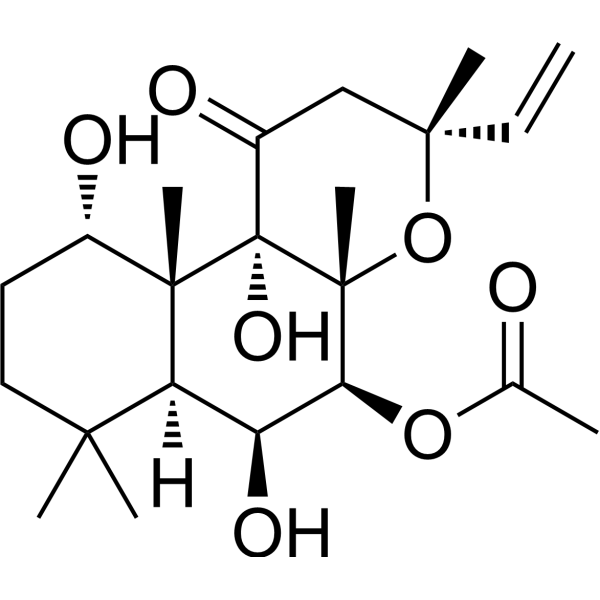
HY-15371
ForskolinAdenylate Cyclase Activator -
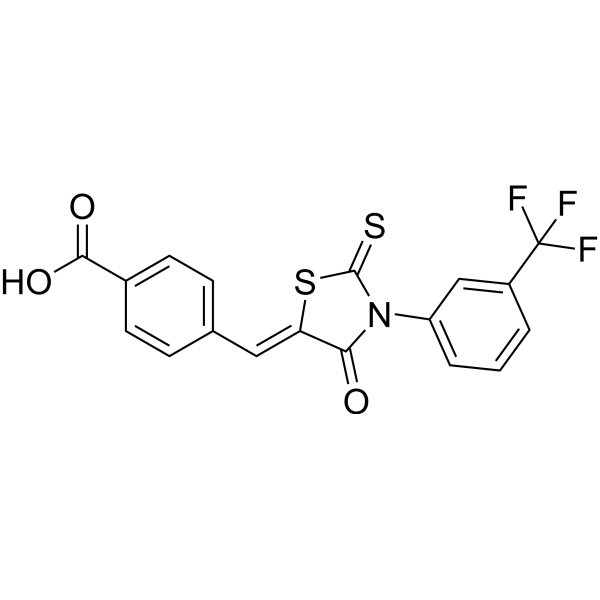
HY-16671
CFTR(inh)-172CFTR Inhibitor -
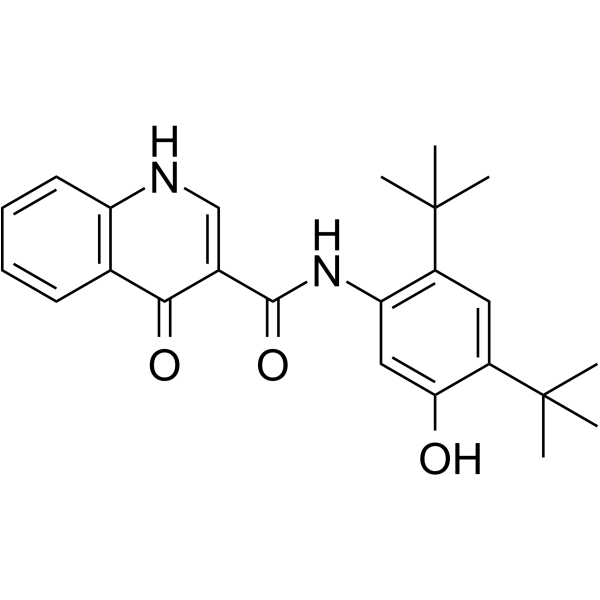
HY-13017
IvacaftorCFTR Potentiator -
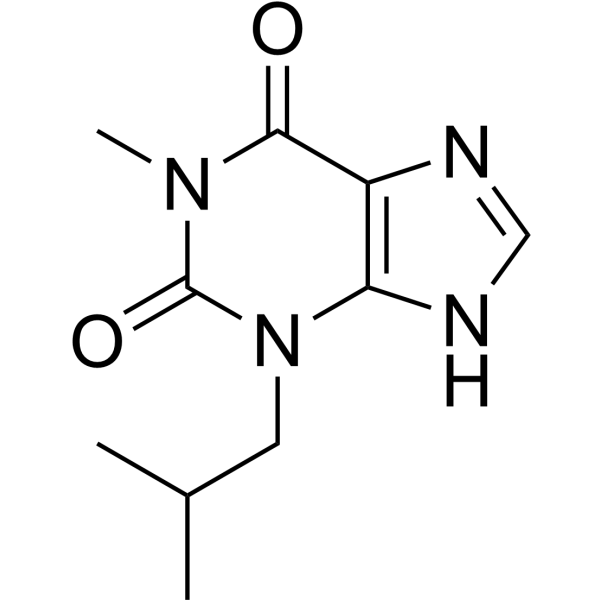
HY-12318
IBMXPDE Inhibitor -
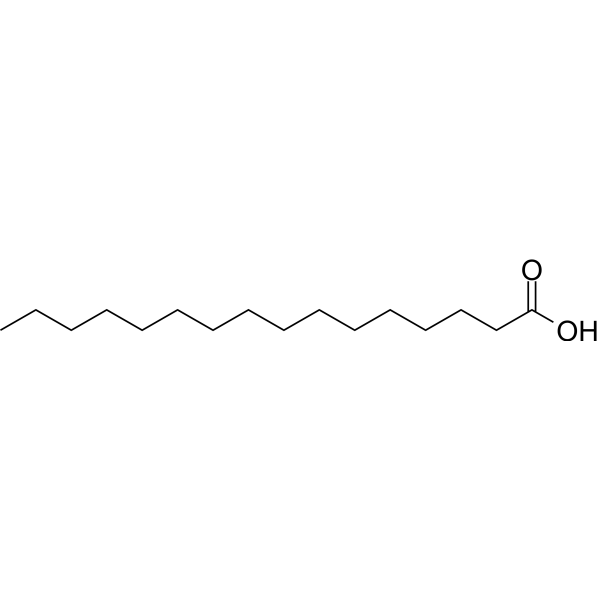
HY-N0830
Palmitic acidEndogenous Metabolite -
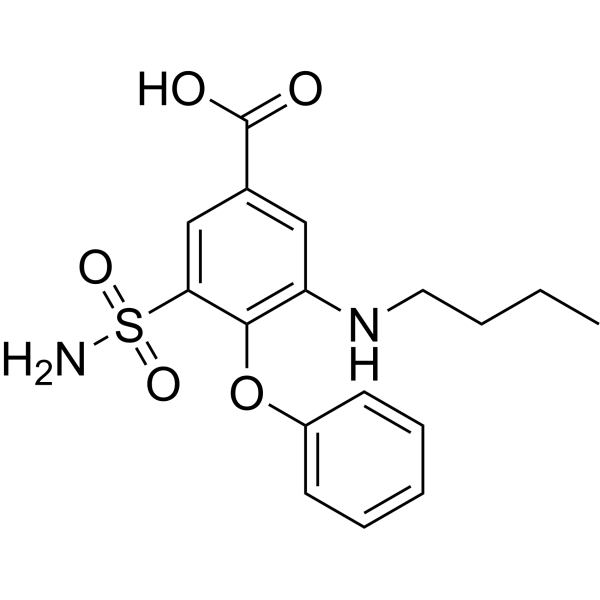
HY-17468
BumetanideNKCC1 Inhibitor -
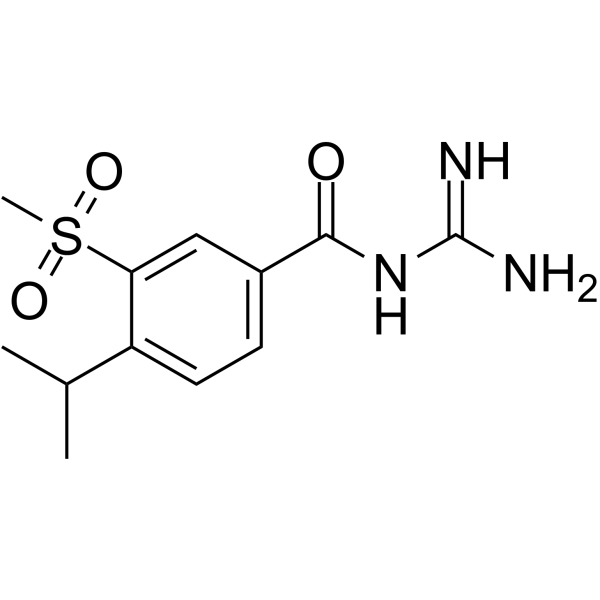
HY-19693
CariporideNa+/H+ Exchange Inhibitor -
HY-15448
TezacaftorCFTR Corrector -
HY-111772
ElexacaftorCFTR Corrector -
HY-15415
KB-R7943 mesylateNCXrev Inhibitor -
HY-15754
CGP37157Na+/Ca2+ Exchanger Inhibitor -
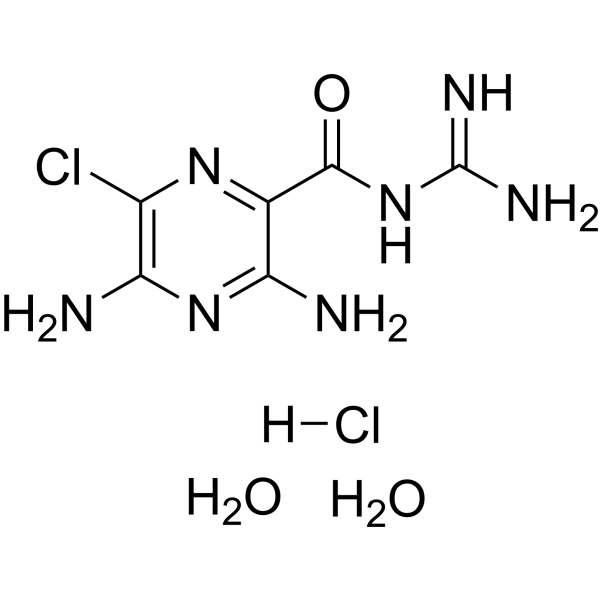
HY-B0285B
Amiloride hydrochloride dihydrateENaC/uTPA Inhibitor
Publications Citing Use of MedChemExpress (MCE) Benzamil hydrochloride
More

Biological Activity
Description
In Vitro
Benzamil hydrochloride (Benzylamiloride hydrochloride) inhibits neuronal and heterologously expressed small conductance Ca2+-activated K2+ channels[4].
MedChemExpress (MCE) has not independently confirmed the accuracy of these methods. They are for reference only. Further protocols information, click here.
In Vivo
MedChemExpress (MCE) has not independently confirmed the accuracy of these methods. They are for reference only.


Chemical Information
-
CAS No. 161804-20-2
-
Appearance Solid
-
Molecular Weight 356.21
-
Formula C13H15Cl2N7O
-
Color Light yellow to yellow
-
SMILES
O=C(C1=NC(Cl)=C(N)N=C1N)NC(NCC2=CC=CC=C2)=N.[H]Cl
-
Synonyms
Benzylamiloride hydrochloride
-
Shipping
Room temperature in continental US; may vary elsewhere.
-
Storage
4°C, sealed storage, away from moisture
* In solvent : -80°C, 6 months; -20°C, 1 month (sealed storage, away from moisture)


Publications (2)
-
Journal Impact Factor
-
Most Recent
-
Int J Med Sci
ABCG1 promotes the proliferation and migration of clear cell renal cell carcinoma and reduces its apoptosis. [Abstract]2025 May 30;22(11):2721-2737. PMID: 40520894 -


Solvent & Solubility
In Vitro:
DMSO : ≥ 100 mg/mL (280.73 mM; Hygroscopic DMSO has a significant impact on the solubility of product, please use newly opened DMSO)
H2O : < 0.1 mg/mL (insoluble)
* "≥" means soluble, but saturation unknown.
Please refer to the solubility information to select the appropriate solvent. Once prepared, please aliquot and store the solution to prevent product inactivation from repeated freeze-thaw cycles.
Storage method and period of stock solution: -80°C, 6 months; -20°C, 1 month (sealed storage, away from moisture). When stored at -80°C, please use it within 6 months. When stored at -20°C, please use it within 1 month.
Please refer to the solubility information to select the appropriate solvent. Once prepared, please aliquot and store the solution to prevent product inactivation from repeated freeze-thaw cycles.
Storage method and period of stock solution: -80°C, 6 months; -20°C, 1 month (sealed storage, away from moisture). When stored at -80°C, please use it within 6 months. When stored at -20°C, please use it within 1 month.
Concentration (start) × Volume (start) = Concentration (final) × Volume (final)
In Vivo:
Select the appropriate dissolution method based on your experimental animal and administration route.
- For the following dissolution methods, please ensure to first prepare a clear stock solution using an In Vitro approach and then sequentially add co-solvents:
- To ensure reliable experimental results, the clarified stock solution can be appropriately stored based on storage conditions. As for the working solution for In Vivo experiments, it is recommended to prepare freshly and use it on the same day.
- The percentages shown for the solvents indicate their volumetric ratio in the final prepared solution. If precipitation or phase separation occurs during preparation, heat and/or sonication can be used to aid dissolution.
Add each solvent one by one: 10% DMSO 40% PEG300 5% Tween-80 45% Saline
Solubility: ≥ 2.5 mg/mL (7.02 mM); Clear solution
This protocol yields a clear solution of ≥ 2.5 mg/mL (saturation unknown).
Taking 1 mL working solution as an example, add 100 μL DMSO stock solution (25.0 mg/mL) to 400 μL PEG300, and mix evenly; then add 50 μL Tween-80 and mix evenly; then add 450 μL Saline to adjust the volume to 1 mL.
Preparation of Saline: Dissolve 0.9 g sodium chloride in ddH₂O and dilute to 100 mL to obtain a clear Saline solution.
Add each solvent one by one: 10% DMSO 90% (20% SBE-β-CD in Saline)
Solubility: ≥ 2.5 mg/mL (7.02 mM); Clear solution
This protocol yields a clear solution of ≥ 2.5 mg/mL (saturation unknown).
Taking 1 mL working solution as an example, add 100 μL DMSO stock solution (25.0 mg/mL) to 900 μL 20% SBE-β-CD in Saline, and mix evenly.
Preparation of 20% SBE-β-CD in Saline (4°C, storage for one week): 2 g SBE-β-CD powder is dissolved in 10 mL Saline, completely dissolve until clear.
In Vivo Dissolution Calculator
Please enter the basic information of animal experiments:
-
-
-
-
Recommended: Prepare an additional quantity of animals to account for potential losses during experiments.
Please enter your animal formula composition:
-
%DMSO +
Recommended: Keep the proportion of DMSO in working solution below 2% if your animal is weak.
-
%+
-
+%Tween-80 + +
-
%Saline +
The co-solvents required include: DMSO, . All of co-solvents are available by MedChemExpress (MCE). , Tween 80. All of co-solvents are available by MedChemExpress (MCE).
Working solution concentration: 0.22 mg/mL
Method for preparing stock solution: mg drug dissolved in μL DMSO. Stock solution concentration: mg/mL. * In solvent : -80°C, 6 months; -20°C, 1 month (sealed storage, away from moisture)
1. Take μL DMSO stock solution;
2. Add μL .
μL , mix evenly;
3. Then add μL Tween 80, mix evenly;
4. Then add μL
Please ensure that the stock solution in the first step is dissolved to a clear state, and add co-solvents in sequence. You can use ultrasonic heating (ultrasonic cleaner, recommended frequency 20-40 kHz), vortexing, etc. to assist dissolution.

Protocols
-
Cell Cytotoxicity Assay
Cytotoxicity assays are usually based on the assessment of cell membrane damage, which can also be indirectly detected by measuring cell viability. Detection methods include MTT assay, CKK-8 assay, LDH assay and ATP assay, etc.
-
Ca2+ Staining Technique
Ca2+ staining is an experimental technique that utilizes specific fluorescent probes (such as Fluo-4 AM, Fura-2, etc.) to qualitatively or quantitatively detect dynamic changes in intracellular Ca2+ concentrations; this is achieved by monitoring the changes in fluorescent signals generated when these probes bind to free intracellular calcium ions. The underlying principle relies primarily on the presence of chelating groups within the probe's molecular structure that possess high affinity for calcium ions.


Purity & Documentation
-
Data Sheet (279 KB)
-
SDS (394 KB)
- English - EN (394 KB)
- Français - FR (394 KB)
- Deutsch - DE (394 KB)
- Norwegian - NO (394 KB)
- Español - ES (394 KB)
- Swedish - SV (394 KB)
- Italian - IT (394 KB)
- Korean - KR (394 KB)
- Portuguese - PT (394 KB)
-
Handling Instructions (2659 KB)
References
[1]. Fischer KG, et al. Characterization of a Na(+)-Ca(2+) exchanger in podocytes. Nephrol Dial Transplant. 2002 Oct;17(10):1742-50. [Content Brief]
[2]. Wang X, et al. Effects of amiloride, benzamil, and alterations in extracellular Na+ on the rat afferent arteriole and its myogenic response. Am J Physiol Renal Physiol. 2008 Jul;295(1):F272-82. [Content Brief]
[3]. Dai XQ, et al. Inhibition of TRPP3 channel by amiloride and analogs. Mol Pharmacol. 2007 Dec;72(6):1576-85. [Content Brief]
[4]. Castañeda MS, et al. Benzamil inhibits neuronal and heterologously expressed small conductance Ca2+-activated K+channels. Neuropharmacology. 2019 Nov 1;158:107738. [Content Brief]
[5]. Teiwes J, et al. Epithelial sodium channel inhibition in cardiovascular disease. A potential role for amiloride. Am J Hypertens. 2007 Jan;20(1):109-17. [Content Brief]


Complete Stock Solution Preparation Table
Please refer to the solubility information to select the appropriate solvent. Once prepared, please aliquot and store the solution to prevent product inactivation from repeated freeze-thaw cycles.
Storage method and period of stock solution: -80°C, 6 months; -20°C, 1 month (sealed storage, away from moisture). When stored at -80°C, please use it within 6 months. When stored at -20°C, please use it within 1 month.
| Optional Solvent | Concentration Solvent Mass | 1 mg | 5 mg | 10 mg | 25 mg |
|---|---|---|---|---|---|
| DMSO | 1 mM | 2.8073 mL | 14.0367 mL | 28.0733 mL | 70.1833 mL |
| 5 mM | 0.5615 mL | 2.8073 mL | 5.6147 mL | 14.0367 mL | |
| 10 mM | 0.2807 mL | 1.4037 mL | 2.8073 mL | 7.0183 mL | |
| 15 mM | 0.1872 mL | 0.9358 mL | 1.8716 mL | 4.6789 mL | |
| 20 mM | 0.1404 mL | 0.7018 mL | 1.4037 mL | 3.5092 mL | |
| 25 mM | 0.1123 mL | 0.5615 mL | 1.1229 mL | 2.8073 mL | |
| 30 mM | 0.0936 mL | 0.4679 mL | 0.9358 mL | 2.3394 mL | |
| 40 mM | 0.0702 mL | 0.3509 mL | 0.7018 mL | 1.7546 mL | |
| 50 mM | 0.0561 mL | 0.2807 mL | 0.5615 mL | 1.4037 mL | |
| 60 mM | 0.0468 mL | 0.2339 mL | 0.4679 mL | 1.1697 mL | |
| 80 mM | 0.0351 mL | 0.1755 mL | 0.3509 mL | 0.8773 mL | |
| 100 mM | 0.0281 mL | 0.1404 mL | 0.2807 mL | 0.7018 mL |


Benzamil hydrochloride Related Classifications
HY-B1546A Related Classifications
 Powered by Bioz