



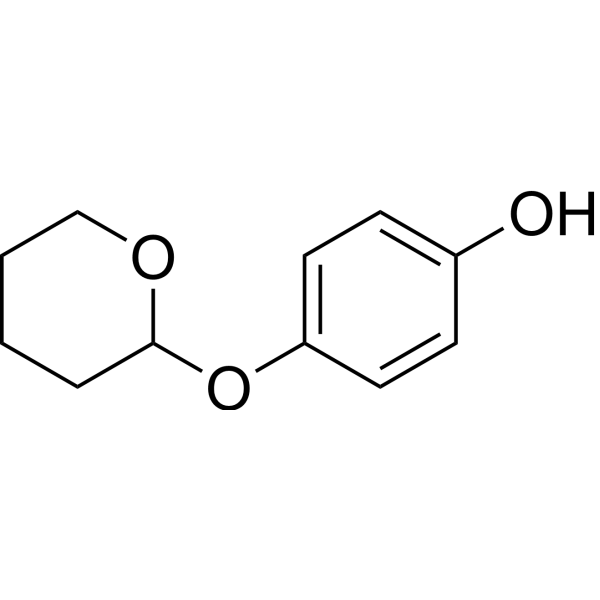
Deoxyarbutin

Based on 1 Customer Validation
Deoxyarbutin is an orally active tyrosinase inhibitor that can promote apoptosis of melanoma cells, enhance the vitality of mouse acinar cells, and has skin whitening and anti-tumor activity[1][2][3].
For research use only. We do not sell to patients.
- Purity : 99.92%
- CAS No.: 53936-56-4
- Formula: C11H14O3
- Molecular Weight:194.23
-
Storage:Powder -20°C, 3 years , 4°C, 2 years ; In solvent -80°C, 6 months , -20°C, 1 month

To place orders, for customer services and technical support, please contact: MedChemExpress USA
Tel: 609-228-6898 E-mail: [email protected] [email protected]


-
 Biological Activity
-
Chemical Information
-
Solvent & Solubility
- Protocols
- Purity & Documentation
- References
-
 Help & FAQs


-
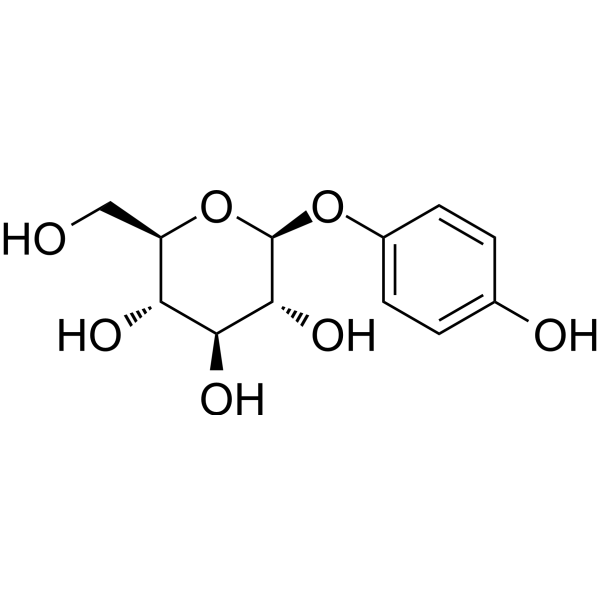
HY-N0192
ArbutinEndogenous Metabolite -
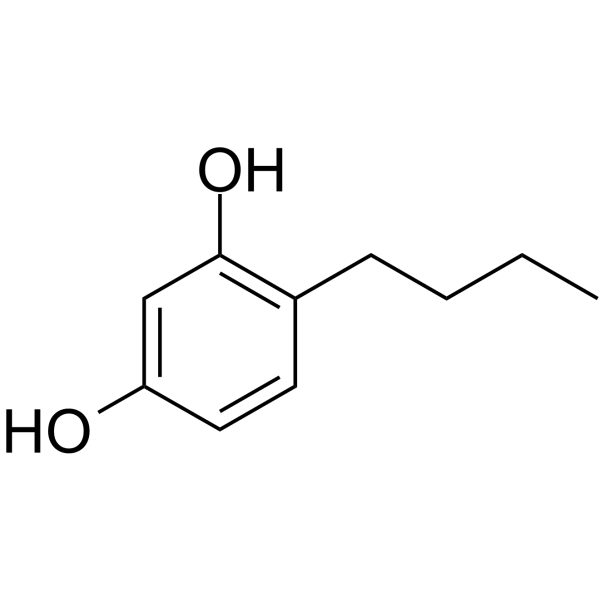
HY-107369
4-ButylresorcinolTyrosinase Inhibitor -

HY-N0192R
Arbutin (Standard)Endogenous Metabolite -
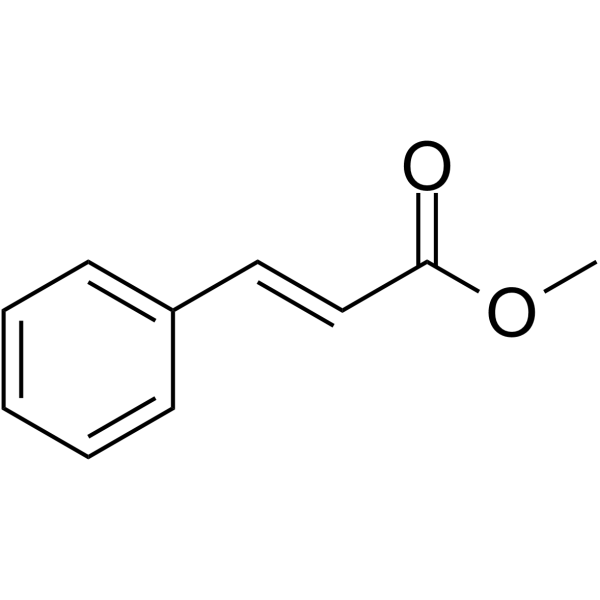
HY-W017212
Methyl cinnamateTyrosinase Inhibitor -
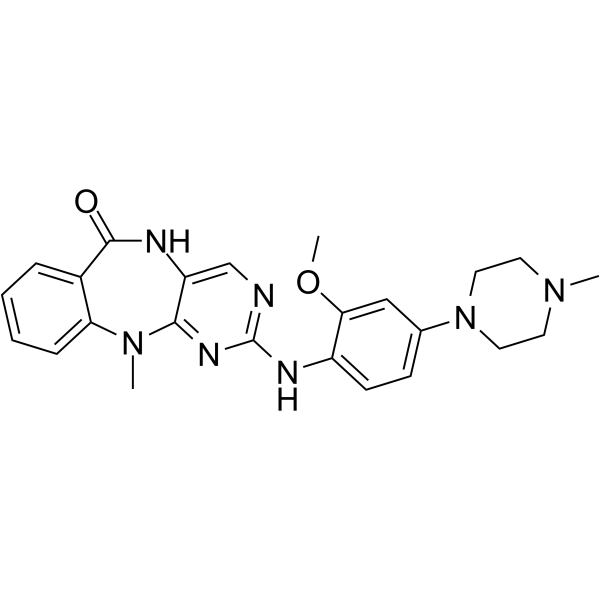
HY-15811
XMD8-87TNK2 Inhibitor -
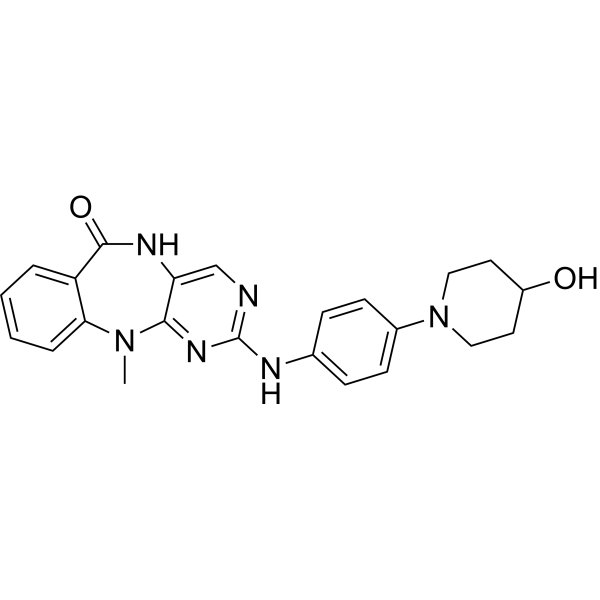
HY-101243
XMD16-5TNK2 Inhibitor -
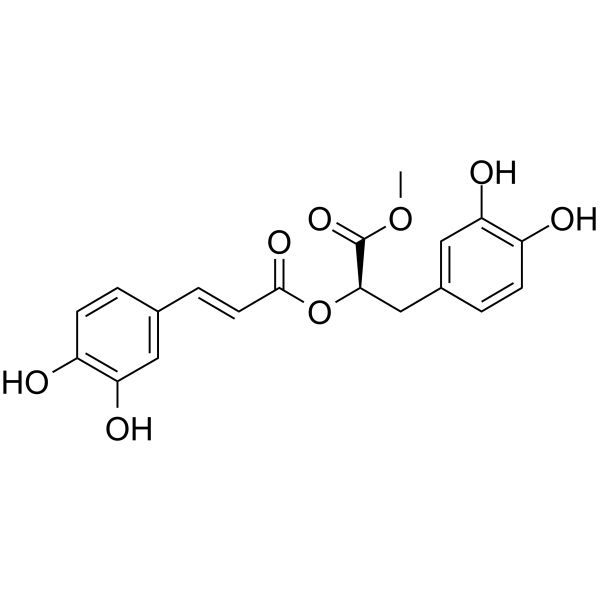
HY-N3266
Methyl rosmarinateHydroxycinnamic Acid -
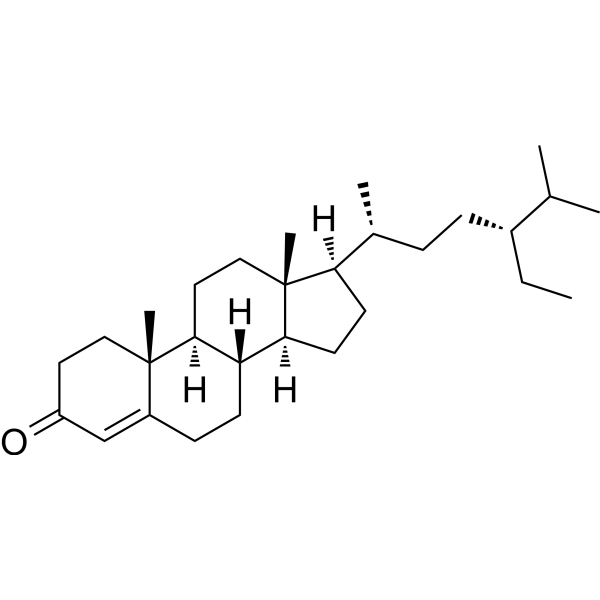
HY-N1238
β-SitostenoneTyrosinase/COX Inhibitor -

HY-107369R
4-Butylresorcinol (Standard)Tyrosinase Inhibitor -
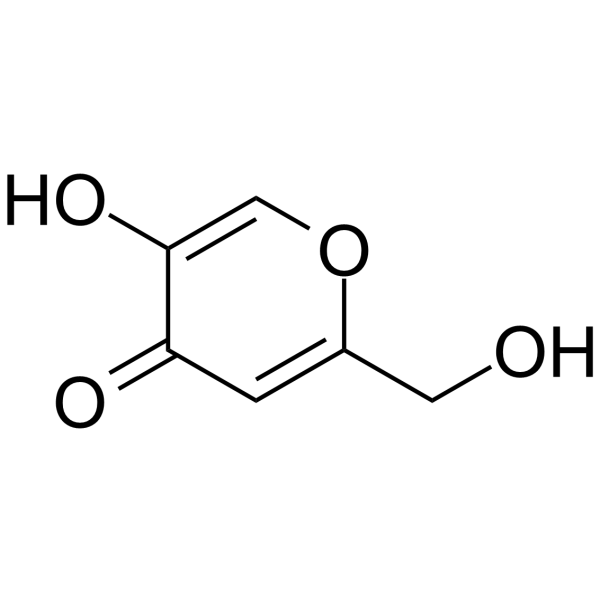
HY-W050154
Kojic acidTyrosinase Inhibitor -
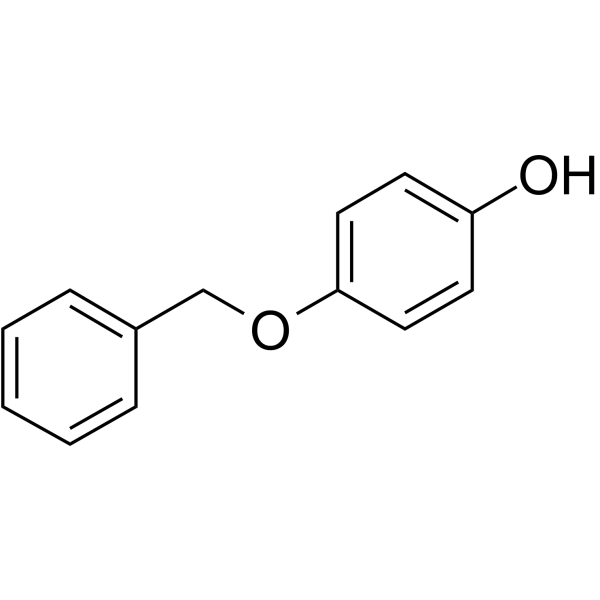
HY-30272
MonobenzoneSkin Depigmenting Agent -
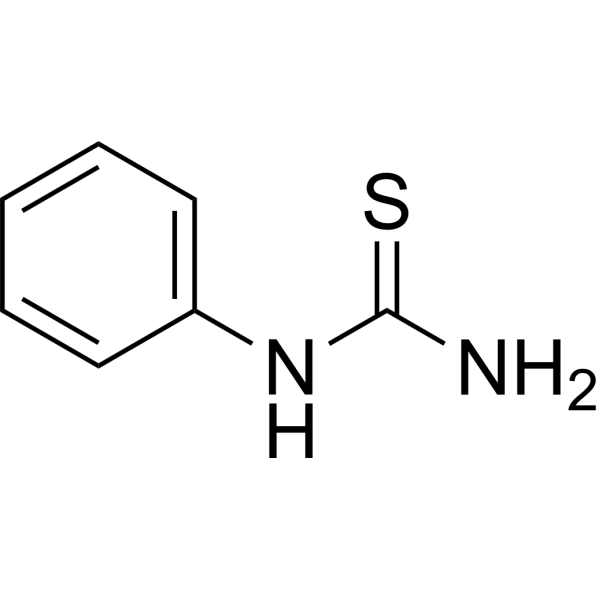
HY-Y0351
PhenylthioureaPhenoloxidase Inhibitor


Biological Activity
Description
IC50 & Target
Tyrosinase[1].
In Vitro
Deoxyarbutin (5-200 μM, 24 h) promotes melanoma cell apoptosis through p38 mediated mitochondrial related apoptosis pathway[2]. Deoxyarbutin (0-1200 μM, 24 h) can restore mitochondrial function and enhance cell viability in mouse pancreatic acinar cells[3].
MedChemExpress (MCE) has not independently confirmed the accuracy of these methods. They are for reference only.
-
Cell Line:NIH/3T3、HS68、HK-2、L02、HLECs、HUVECs、B16F10、LL/2 cells
-
Concentration:5-200 μM
-
Incubation Time:24 h
-
Result:Inhibited the proliferation of tumor cells, including B16F10 cells and LL/2 cells, and showed lower cytotoxicity to other normal cell lines.
-
Cell Line:The mouse pancreatic acinar cell line 266-6 cells
-
Concentration:0-1200 μM
-
Incubation Time:24 h
-
Result:Improved cell vitality in a dose-dependent manner.
In Vivo
MedChemExpress (MCE) has not independently confirmed the accuracy of these methods. They are for reference only.
-
Animal Model:A hairless pigmented (black) guinea pig model[1].
-
Dosage:0-3 %
-
Administration:Handling skin; 6 weeks
-
Result:Exhibited a dose-dependent skin whitening effect and re pigmentation of the skin after discontinuation of treatment.
-
Animal Model:Male C57Bl/6 J mouse model of melanoma implanted with B16F10 cells[2].
-
Dosage:50 mg/kg
-
Administration:Oral gavage (p.o.); once daily; 3 weeks
-
Result:Inhibited tumor growth and lung metastasis.
-
Animal Model:Male C57BL/6 mice receiving retrograde injection of 3.5% NaT into the pancreatic duct (25–30 g; 6–8 weeks)[3].
-
Dosage:25, 50 mg/kg
-
Administration:Intraperitoneal injection (i.p.); 1 h, 3 h, and 6 h after modeling
-
Result:Improved pancreatic histological features and histological scores for edema, inflammation, and necrosis.


Chemical Information
-
CAS No. 53936-56-4
-
Appearance Solid
-
Molecular Weight 194.23
-
Formula C11H14O3
-
Color White to off-white
-
SMILES
OC1=CC=C(OC2CCCCO2)C=C1
-
Structure Classification
-
Initial Source
-
Shipping
Room temperature in continental US; may vary elsewhere.
-
Storage
Powder -20°C 3 years 4°C 2 years In solvent -80°C 6 months -20°C 1 month


Solvent & Solubility
In Vitro:
DMSO : 100 mg/mL (514.85 mM; Need ultrasonic; Hygroscopic DMSO has a significant impact on the solubility of product, please use newly opened DMSO)
Please refer to the solubility information to select the appropriate solvent. Once prepared, please aliquot and store the solution to prevent product inactivation from repeated freeze-thaw cycles.
Storage method and period of stock solution: -80°C, 6 months; -20°C, 1 month. When stored at -80°C, please use it within 6 months. When stored at -20°C, please use it within 1 month.
Please refer to the solubility information to select the appropriate solvent. Once prepared, please aliquot and store the solution to prevent product inactivation from repeated freeze-thaw cycles.
Storage method and period of stock solution: -80°C, 6 months; -20°C, 1 month. When stored at -80°C, please use it within 6 months. When stored at -20°C, please use it within 1 month.
Concentration (start) × Volume (start) = Concentration (final) × Volume (final)
In Vivo:
Select the appropriate dissolution method based on your experimental animal and administration route.
- For the following dissolution methods, please ensure to first prepare a clear stock solution using an In Vitro approach and then sequentially add co-solvents:
- To ensure reliable experimental results, the clarified stock solution can be appropriately stored based on storage conditions. As for the working solution for In Vivo experiments, it is recommended to prepare freshly and use it on the same day.
- The percentages shown for the solvents indicate their volumetric ratio in the final prepared solution. If precipitation or phase separation occurs during preparation, heat and/or sonication can be used to aid dissolution.
Add each solvent one by one: 10% DMSO 40% PEG300 5% Tween-80 45% Saline
Solubility: ≥ 2.5 mg/mL (12.87 mM); Clear solution
This protocol yields a clear solution of ≥ 2.5 mg/mL (saturation unknown).
Taking 1 mL working solution as an example, add 100 μL DMSO stock solution (25.0 mg/mL) to 400 μL PEG300, and mix evenly; then add 50 μL Tween-80 and mix evenly; then add 450 μL Saline to adjust the volume to 1 mL.
Preparation of Saline: Dissolve 0.9 g sodium chloride in ddH₂O and dilute to 100 mL to obtain a clear Saline solution.
Add each solvent one by one: 10% DMSO 90% (20% SBE-β-CD in Saline)
Solubility: ≥ 2.5 mg/mL (12.87 mM); Clear solution
This protocol yields a clear solution of ≥ 2.5 mg/mL (saturation unknown).
Taking 1 mL working solution as an example, add 100 μL DMSO stock solution (25.0 mg/mL) to 900 μL 20% SBE-β-CD in Saline, and mix evenly.
Preparation of 20% SBE-β-CD in Saline (4°C, storage for one week): 2 g SBE-β-CD powder is dissolved in 10 mL Saline, completely dissolve until clear.
In Vivo Dissolution Calculator
Please enter the basic information of animal experiments:
-
-
-
-
Recommended: Prepare an additional quantity of animals to account for potential losses during experiments.
Please enter your animal formula composition:
-
%DMSO +
Recommended: Keep the proportion of DMSO in working solution below 2% if your animal is weak.
-
%+
-
+%Tween-80 + +
-
%Saline +
The co-solvents required include: DMSO, . All of co-solvents are available by MedChemExpress (MCE). , Tween 80. All of co-solvents are available by MedChemExpress (MCE).
Working solution concentration: 0.22 mg/mL
Method for preparing stock solution: mg drug dissolved in μL DMSO. Stock solution concentration: mg/mL.
1. Take μL DMSO stock solution;
2. Add μL .
μL , mix evenly;
3. Then add μL Tween 80, mix evenly;
4. Then add μL
Please ensure that the stock solution in the first step is dissolved to a clear state, and add co-solvents in sequence. You can use ultrasonic heating (ultrasonic cleaner, recommended frequency 20-40 kHz), vortexing, etc. to assist dissolution.


Purity & Documentation
-
Data Sheet (277 KB)
-
SDS (393 KB)
- English - EN (393 KB)
- Français - FR (393 KB)
- Deutsch - DE (393 KB)
- Norwegian - NO (393 KB)
- Español - ES (393 KB)
- Swedish - SV (393 KB)
- Italian - IT (393 KB)
- Korean - KR (393 KB)
- Portuguese - PT (393 KB)
-
Handling Instructions (2659 KB)
References
[1]. Boissy RE, et al. DeoxyArbutin: a novel reversible tyrosinase inhibitor with effective in vivo skin lightening potency. Exp Dermatol. 2005 Aug;14(8):601-8. [Content Brief]
[2]. Ma L, et al. Deoxyarbutin displays antitumour activity against melanoma in vitro and in vivo through a p38-mediated mitochondria associated apoptotic pathway. Sci Rep. 2017 Aug 3;7(1):7197. [Content Brief]
[3]. Li Y, et al. Deoxyarbutin attenuates severe acute pancreatitis via the HtrA2/PGC-1α pathway. Free Radic Res. 2022 Sep-Oct;56(9-10):651-665. [Content Brief]


Complete Stock Solution Preparation Table
Please refer to the solubility information to select the appropriate solvent. Once prepared, please aliquot and store the solution to prevent product inactivation from repeated freeze-thaw cycles.
Storage method and period of stock solution: -80°C, 6 months; -20°C, 1 month. When stored at -80°C, please use it within 6 months. When stored at -20°C, please use it within 1 month.
| Optional Solvent | Concentration Solvent Mass | 1 mg | 5 mg | 10 mg | 25 mg |
|---|---|---|---|---|---|
| DMSO | 1 mM | 5.1485 mL | 25.7427 mL | 51.4854 mL | 128.7134 mL |
| 5 mM | 1.0297 mL | 5.1485 mL | 10.2971 mL | 25.7427 mL | |
| 10 mM | 0.5149 mL | 2.5743 mL | 5.1485 mL | 12.8713 mL | |
| 15 mM | 0.3432 mL | 1.7162 mL | 3.4324 mL | 8.5809 mL | |
| 20 mM | 0.2574 mL | 1.2871 mL | 2.5743 mL | 6.4357 mL | |
| 25 mM | 0.2059 mL | 1.0297 mL | 2.0594 mL | 5.1485 mL | |
| 30 mM | 0.1716 mL | 0.8581 mL | 1.7162 mL | 4.2904 mL | |
| 40 mM | 0.1287 mL | 0.6436 mL | 1.2871 mL | 3.2178 mL | |
| 50 mM | 0.1030 mL | 0.5149 mL | 1.0297 mL | 2.5743 mL | |
| 60 mM | 0.0858 mL | 0.4290 mL | 0.8581 mL | 2.1452 mL | |
| 80 mM | 0.0644 mL | 0.3218 mL | 0.6436 mL | 1.6089 mL | |
| 100 mM | 0.0515 mL | 0.2574 mL | 0.5149 mL | 1.2871 mL |


Deoxyarbutin Related Classifications
HY-B1461 Related Classifications
 Powered by Bioz