



Etonogestrel

Based on 1 Customer Validation
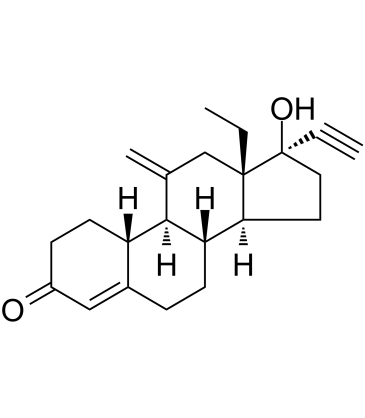
Etonogestrel (3-Oxodesogestrel), a biologically active metabolite of progestin Desogestrel, binds with high affinity to progesterone receptors and estrogen receptors in the target organs. Etonogestrel induce FKBP51 mRNA and protein expression in cultured human endometrial stromal cells (HESCs).
For research use only. We do not sell to patients.
- Purity : 99.91%
- CAS No.: 54048-10-1
- Formula: C22H28O2
- Molecular Weight:324.46
-
Storage:Powder -20°C, 3 years , 4°C, 2 years ; In solvent -80°C, 2 years , -20°C, 1 year

To place orders, for customer services and technical support, please contact: MedChemExpress USA
Tel: 609-228-6898 E-mail: [email protected] [email protected]


-
 Biological Activity
-
Chemical Information
-
Solvent & Solubility
- Protocols
- Purity & Documentation
- References
-
 Help & FAQs


-
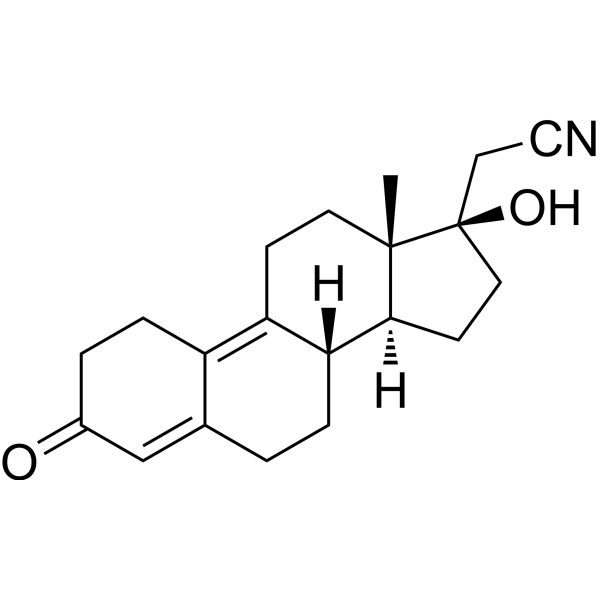
HY-B0084
DienogestProgesterone Receptor Agonist -
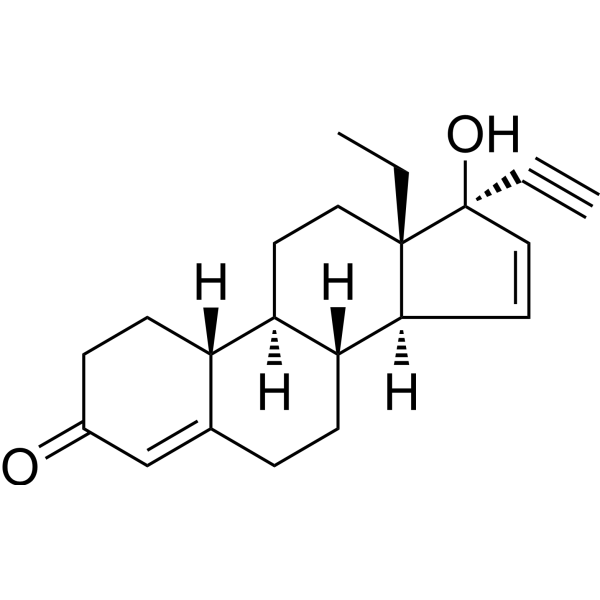
HY-B0110
GestodeneSynthetic Progestogen -
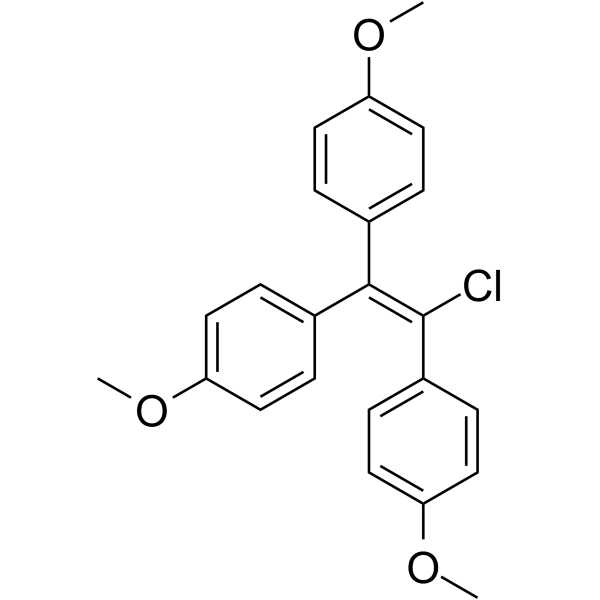
HY-B2158
ChlorotrianiseneEstrogen Receptor Modulator -

HY-B0652R
Etonogestrel (Standard)Progesterone/ERR Agonist -
HY-N0322
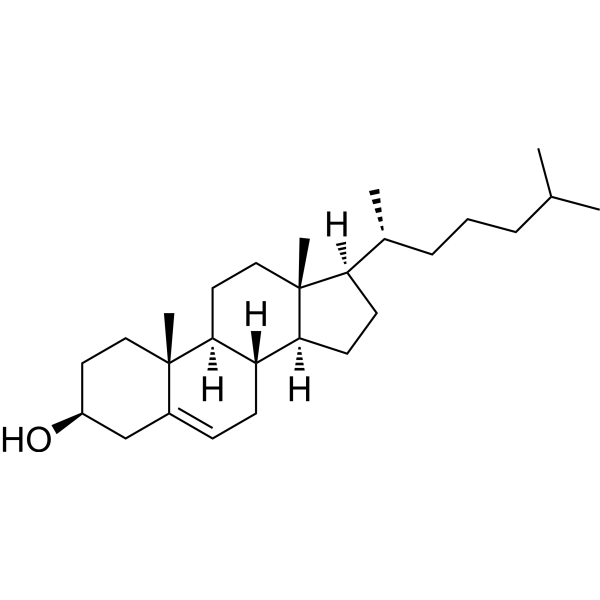
Cholesterol (from animal)ERRα Agonist -
HY-16950
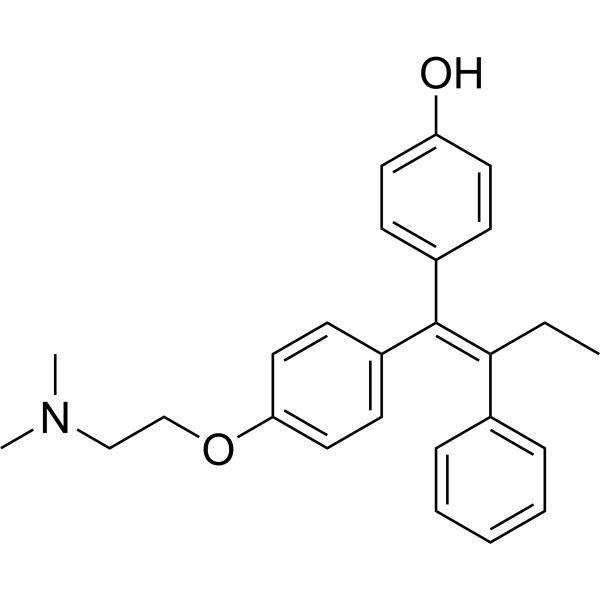
4-HydroxytamoxifenEstrogen Receptor Modulator -
HY-13683
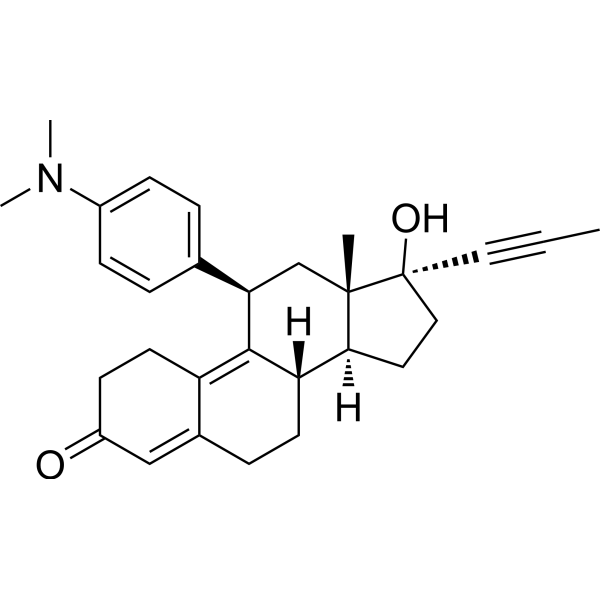
MifepristoneProgesterone Receptor Antagonist -
HY-N0437
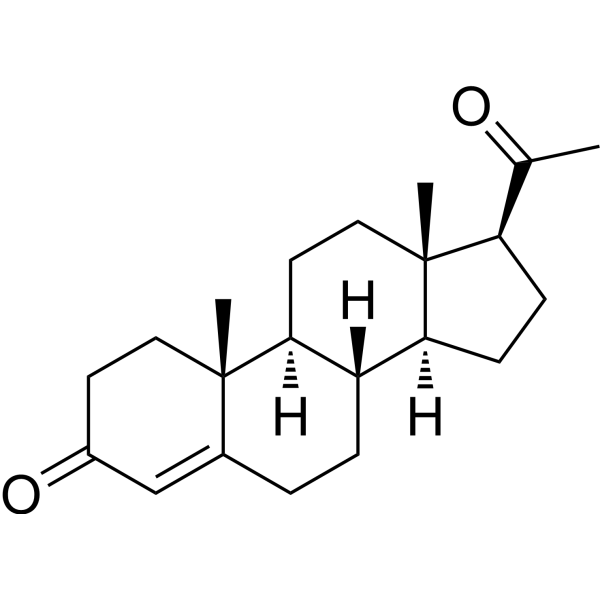
ProgesteroneEndogenous Metabolite -
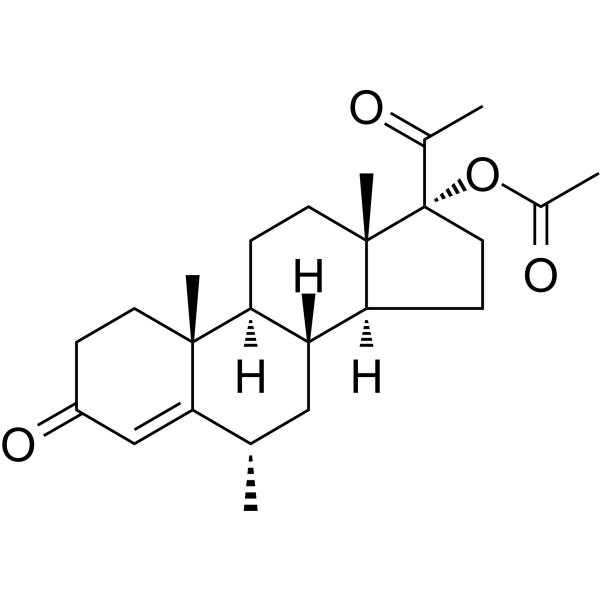
HY-B0469
Medroxyprogesterone acetateProgesterone Receptor Agonist -
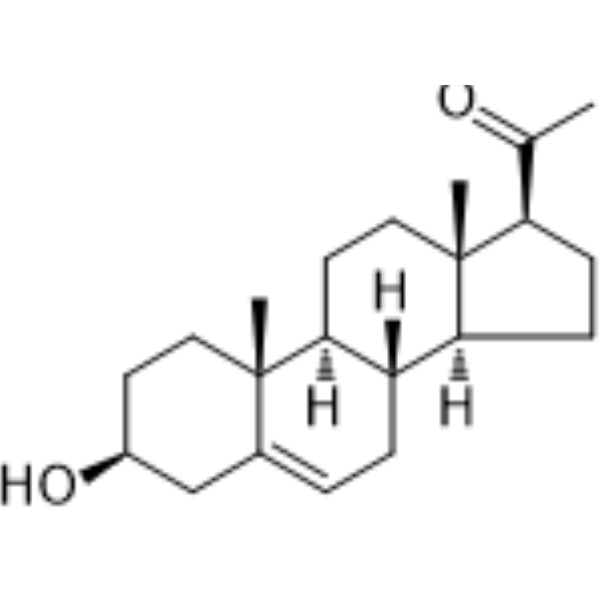
HY-B0151
PregnenoloneCB1 Inhibitor -
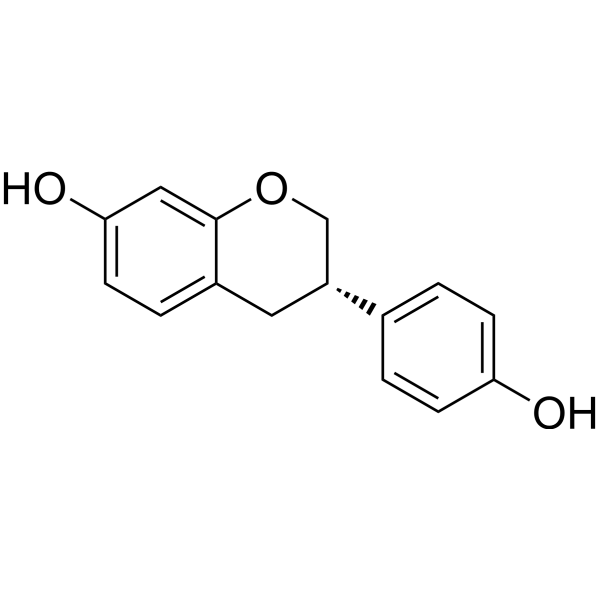
HY-100583
(-)-(S)-EquolEstrogen Receptor β Ligand -
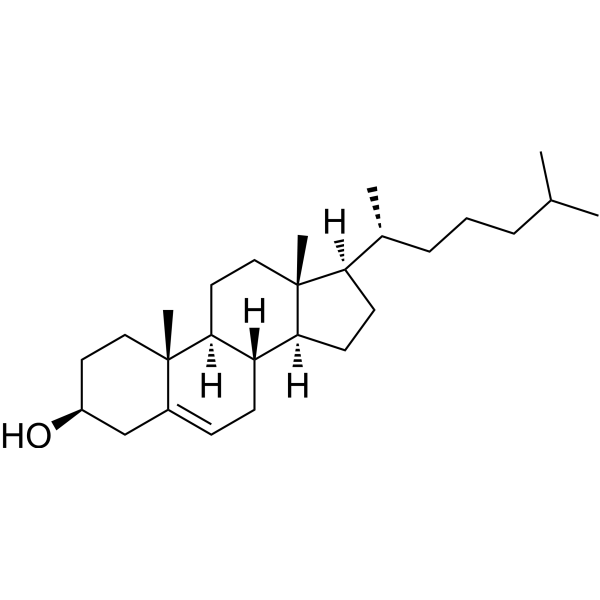
HY-N0322R
Cholesterol (Standard)
All Endogenous Metabolite Isoforms
More

Biological Activity
Description
IC50 & Target
Progesterone Receptor[1]
In Vitro
Etonogestrel inhibits fertility by inhibiting the release of luteinizing hormone (LH), one of the reproductive hormones important in ovulation[1].
Etonogestrel also increases the viscosity of cervical mucus, which hinders the passage of spermatozoa and alters the lining of the uterus to prevent implantation of a fertilized egg into the endometrium[1].
Etonogestrel, a progestin, is a substrate of the CYP 3A4 oxidase system[1].
Etonogestrel induce FKBP51 mRNA and protein expression in cultured human endometrial stromal cells (HESCs)[2].
MedChemExpress (MCE) has not independently confirmed the accuracy of these methods. They are for reference only. Further protocols information, click here.
-
Cell Line:Human endometrial stromal cells (HESCs)
-
Concentration:100 nM
-
Incubation Time:24 hours
-
Result:Increased FKBP51 mRNA and protein levels.
Clinical Trial
| NCT Number | Sponsor | Condition | Start Date |
Phase

|
|---|---|---|---|---|
| NCT01329991 | Plexxikon| | 2011-05 | PHASE1 |


Chemical Information
-
CAS No. 54048-10-1
-
Appearance Solid
-
Molecular Weight 324.46
-
Formula C22H28O2
-
Color White to off-white
-
SMILES
CC[C@]([C@]1(O)C#C)(C2)[C@](CC1)([H])[C@@](CCC3=CC4=O)([H])[C@]([C@@]3([H])CC4)([H])C2=C
-
Synonyms
3-Oxodesogestrel; 3-keto-Desogestrel
-
Structure Classification
-
Initial Source
-
Shipping
Room temperature in continental US; may vary elsewhere.
-
Storage
Powder -20°C 3 years 4°C 2 years In solvent -80°C 2 years -20°C 1 year


Solvent & Solubility
In Vitro:
DMSO : 50 mg/mL (154.10 mM; Need ultrasonic; Hygroscopic DMSO has a significant impact on the solubility of product, please use newly opened DMSO)
Please refer to the solubility information to select the appropriate solvent. Once prepared, please aliquot and store the solution to prevent product inactivation from repeated freeze-thaw cycles.
Storage method and period of stock solution: -80°C, 2 years; -20°C, 1 year. When stored at -80°C, please use it within 2 years. When stored at -20°C, please use it within 1 year.
Please refer to the solubility information to select the appropriate solvent. Once prepared, please aliquot and store the solution to prevent product inactivation from repeated freeze-thaw cycles.
Storage method and period of stock solution: -80°C, 2 years; -20°C, 1 year. When stored at -80°C, please use it within 2 years. When stored at -20°C, please use it within 1 year.
Concentration (start) × Volume (start) = Concentration (final) × Volume (final)
In Vivo:
Select the appropriate dissolution method based on your experimental animal and administration route.
- For the following dissolution methods, please ensure to first prepare a clear stock solution using an In Vitro approach and then sequentially add co-solvents:
- To ensure reliable experimental results, the clarified stock solution can be appropriately stored based on storage conditions. As for the working solution for In Vivo experiments, it is recommended to prepare freshly and use it on the same day.
- The percentages shown for the solvents indicate their volumetric ratio in the final prepared solution. If precipitation or phase separation occurs during preparation, heat and/or sonication can be used to aid dissolution.
In Vivo Dissolution Calculator
Please enter the basic information of animal experiments:
-
-
-
-
Recommended: Prepare an additional quantity of animals to account for potential losses during experiments.
Please enter your animal formula composition:
-
%DMSO +
Recommended: Keep the proportion of DMSO in working solution below 2% if your animal is weak.
-
%+
-
+%Tween-80 + +
-
%Saline +
The co-solvents required include: DMSO, . All of co-solvents are available by MedChemExpress (MCE). , Tween 80. All of co-solvents are available by MedChemExpress (MCE).
Working solution concentration: 0.22 mg/mL
Method for preparing stock solution: mg drug dissolved in μL DMSO. Stock solution concentration: mg/mL.
1. Take μL DMSO stock solution;
2. Add μL .
μL , mix evenly;
3. Then add μL Tween 80, mix evenly;
4. Then add μL
Please ensure that the stock solution in the first step is dissolved to a clear state, and add co-solvents in sequence. You can use ultrasonic heating (ultrasonic cleaner, recommended frequency 20-40 kHz), vortexing, etc. to assist dissolution.

Protocols
-
RNA extraction experimental
By lysing cells, releasing RNA, and removing impurities such as proteins and DNA, high-purity RNA products are finally obtained. The commonly used traditional method is the guanidine isothiocyanate/phenol/chloroform method (Trizol), which is suitable for a variety of animal materials including animal tissues, microorganisms, cultured cells, etc., and most plant materials.
-
Western Blot
Western blotting (WB) is a commonly used experimental method in molecular biology, biochemistry, and immunogenetics for identifying and quantifying target proteins. It combines gel electrophoresis with immunoassay, enabling researchers to analyze protein expression, post-translational modifications, and molecular weight.
-
Research Protocol for Endocrine Diseases
Endocrine diseases often arise from disrupted hormone production, hormone signaling, or target-tissue responsiveness; for diabetes-focused endocrine disease models, insulin signaling regulates glucose uptake, hepatic glucose output, lipid metabolism, and β-cell compensation. Type 2 diabetes develops through interacting defects in insulin resistance, β-cell dysfunction, adipose inflammation, hepatic glucose overproduction, altered incretin signaling, and ectopic lipid metabolism. A major unresolved question is whether endocrine dysfunction is driven primarily by target-tissue insulin resistance, intrinsic β-cell failure, immune/inflammatory stress, or combined multi-organ failure that differs by disease stage.
-
Protocol For Protein Expression And Purification
Recombinant protein expression in Escherichia coli followed by purification of a His-tagged soluble protein by immobilized metal affinity chromatography (IMAC), with optional MBP fusion and TEV tag removal when the construct includes these elements. The biological readout is production of the encoded target protein, detected as an inducible band at the expected molecular mass by SDS-PAGE and quantified by total protein assay or chromatographic absorbance; the purification readout is enrichment of the target protein in elution fractions after selective binding of polyhistidine residues to immobilized Ni2+/metal-chelate resin and elution by imidazole-containing buffer. Expression is driven by an inducible bacterial expression system, commonly T7/lac-based, in which IPTG or lactose/auto-induction activates transcription and translation of the cloned gene; lower induction temperature, lower inducer concentration, induction timing, and solubility-enhancing fusion tags can influence the frac


Purity & Documentation
-
Data Sheet (277 KB)
-
SDS (419 KB)
- English - EN (419 KB)
- Français - FR (419 KB)
- Deutsch - DE (419 KB)
- Norwegian - NO (419 KB)
- Español - ES (419 KB)
- Swedish - SV (419 KB)
- Italian - IT (419 KB)
- Korean - KR (419 KB)
- Portuguese - PT (419 KB)
-
Handling Instructions (2659 KB)
References
[1]. http://www.drugbank.ca/drugs/DB00294
[3]. Ozlem Guzeloglu Kayisli, et al. Progestins Upregulate FKBP51 Expression in Human Endometrial Stromal Cells to Induce Functional Progesterone and Glucocorticoid Withdrawal: Implications for Contraceptive- Associated Abnormal Uterine Bleeding. PLoS One. 2015 Oct 5;10(10):e0137855. [Content Brief]


Complete Stock Solution Preparation Table
Please refer to the solubility information to select the appropriate solvent. Once prepared, please aliquot and store the solution to prevent product inactivation from repeated freeze-thaw cycles.
Storage method and period of stock solution: -80°C, 2 years; -20°C, 1 year. When stored at -80°C, please use it within 2 years. When stored at -20°C, please use it within 1 year.
| Optional Solvent | Concentration Solvent Mass | 1 mg | 5 mg | 10 mg | 25 mg |
|---|---|---|---|---|---|
| DMSO | 1 mM | 3.0820 mL | 15.4102 mL | 30.8204 mL | 77.0511 mL |
| 5 mM | 0.6164 mL | 3.0820 mL | 6.1641 mL | 15.4102 mL | |
| 10 mM | 0.3082 mL | 1.5410 mL | 3.0820 mL | 7.7051 mL | |
| 15 mM | 0.2055 mL | 1.0273 mL | 2.0547 mL | 5.1367 mL | |
| 20 mM | 0.1541 mL | 0.7705 mL | 1.5410 mL | 3.8526 mL | |
| 25 mM | 0.1233 mL | 0.6164 mL | 1.2328 mL | 3.0820 mL | |
| 30 mM | 0.1027 mL | 0.5137 mL | 1.0273 mL | 2.5684 mL | |
| 40 mM | 0.0771 mL | 0.3853 mL | 0.7705 mL | 1.9263 mL | |
| 50 mM | 0.0616 mL | 0.3082 mL | 0.6164 mL | 1.5410 mL | |
| 60 mM | 0.0514 mL | 0.2568 mL | 0.5137 mL | 1.2842 mL | |
| 80 mM | 0.0385 mL | 0.1926 mL | 0.3853 mL | 0.9631 mL | |
| 100 mM | 0.0308 mL | 0.1541 mL | 0.3082 mL | 0.7705 mL |


Etonogestrel Related Classifications
HY-B0652 Related Classifications
 Powered by Bioz