



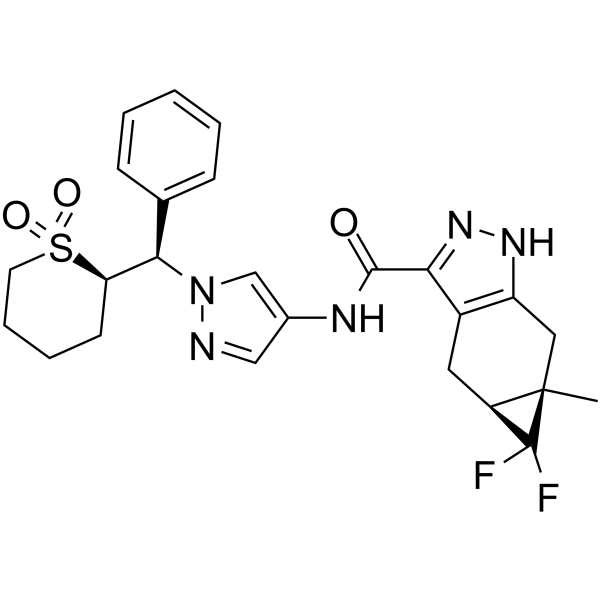
GNE-4997
GNE-4997 is a potent and selective interleukin-2-inducible T-cell kinase (ITK) inhibitor with a Ki of 0.09 nM, and the correlation between the basicity of solubilizing elements in GNE-4997 and off-target antiproliferative effects reduces cytotoxicity.
For research use only. We do not sell to patients.
- CAS No.: 1705602-02-3
- Formula: C25H27F2N5O3S
- Molecular Weight:515.58
-
Storage:
Please store the product under the recommended conditions in the Certificate of Analysis.

To place orders, for customer services and technical support, please contact: MedChemExpress USA
Tel: 609-228-6898 E-mail: [email protected] [email protected]


-
 Biological Activity
-
Chemical Information
- Protocols
- Purity & Documentation
- References
-
 Help & FAQs


-
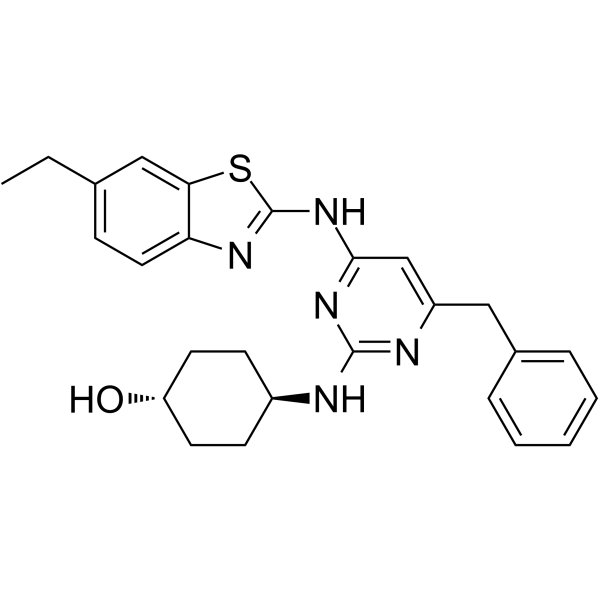
HY-120559
GSK-2250665AItk Inhibitor -
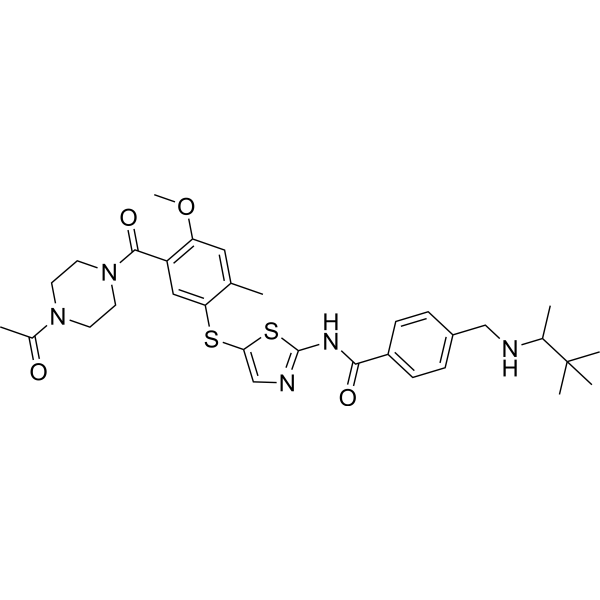
HY-11092
BMS-509744ITK Inhibitor -
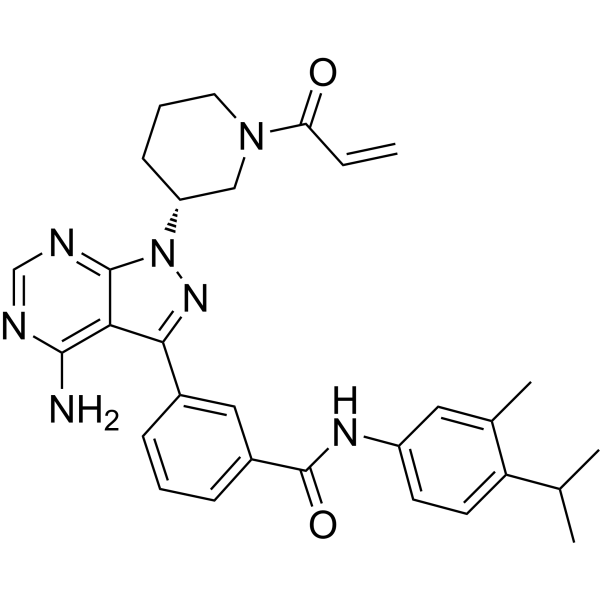
HY-108691
PF-06465469ITK Inhibitor -
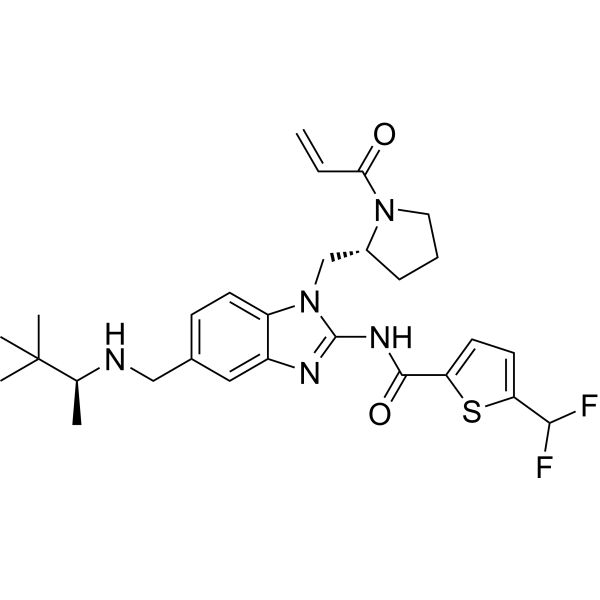
HY-12680
PRN694ITK/RLK Inhibitor -
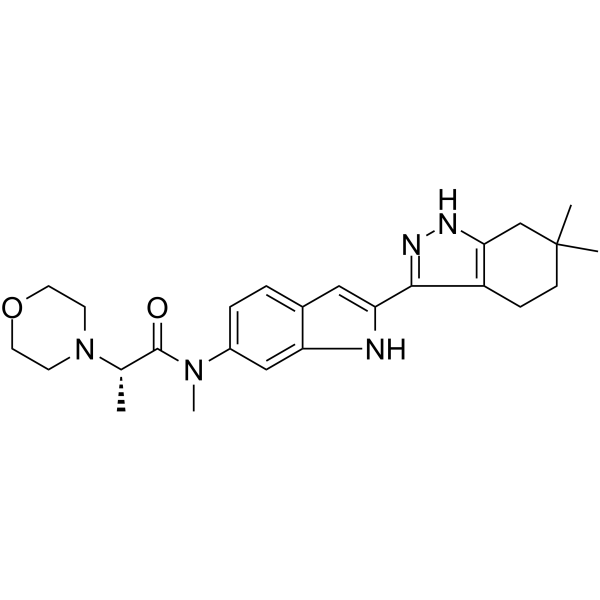
HY-128726
ITK inhibitor 2ITK Inhibitor -
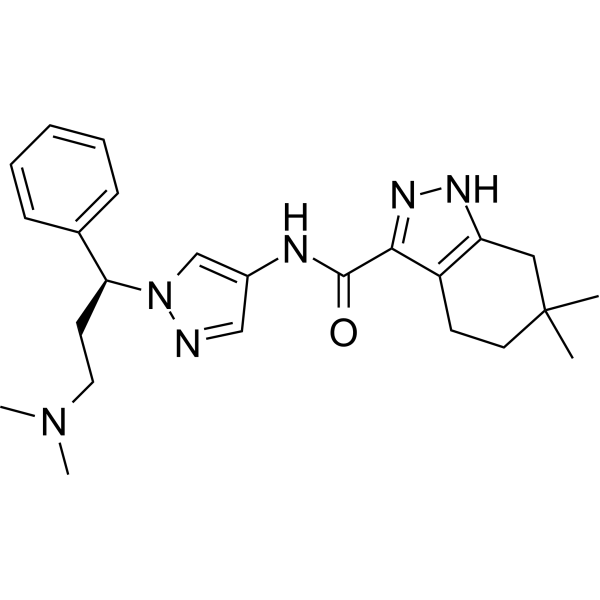
HY-12410
GNE-9822ITK Inhibitor -

HY-108691R
PF-06465469 (Standard)Reference Standard -
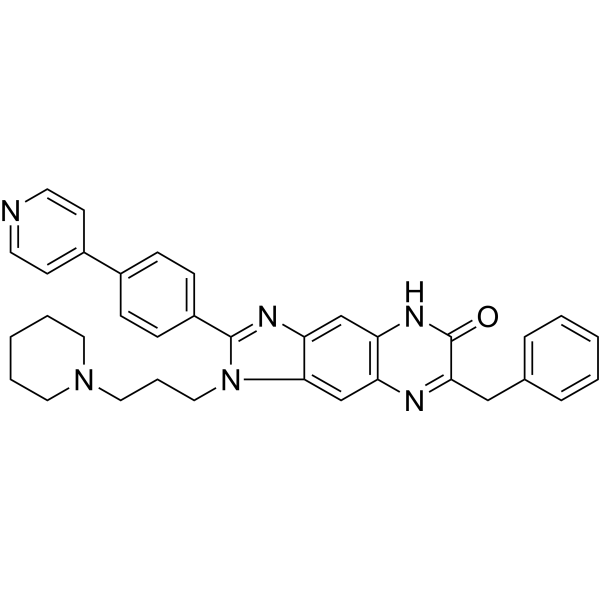
HY-110113
CTA056ITK inhibitor -
HY-109078
VecabrutinibBTK/ITK Inhibitor -

HY-109078R
Vecabrutinib (Standard)Reference Standard -
HY-141864
ITK/TRKA-IN-1Itk Inhibitor


Biological Activity
Description
IC50 & Target
Ki: 0.09 nM (ITK)[1]
Cellular Effect
|
Cell Line

|
Type | Value | Description | References |
|---|---|---|---|---|
| Hepatocyte | IC50 |
>100 μM
Compound: 28, GNE-4997
|
Cytotoxicity against hepatocytes (unknown origin)
Cytotoxicity against hepatocytes (unknown origin)
|
[PMID: 25844760] |
| Jurkat | IC50 |
0.004 μM
Compound: 28, GNE-4997
|
Inhibition of ITK in TCR stimulated human Jurkat T cells assessed as reduction of PLC-gamma phosphorylation preincubated for 30 mins followed by TCR induction for 2 mins
Inhibition of ITK in TCR stimulated human Jurkat T cells assessed as reduction of PLC-gamma phosphorylation preincubated for 30 mins followed by TCR induction for 2 mins
|
[PMID: 25844760] |
| Jurkat | IC50 |
12 μM
Compound: 28, GNE-4997
|
Cytotoxicity against human Jurkat T cells without TCR stimulation assessed as cell viability by ATPlite assay
Cytotoxicity against human Jurkat T cells without TCR stimulation assessed as cell viability by ATPlite assay
|
[PMID: 25844760] |
In Vitro
GNE-4997 inhibits PLC-γ phosphorylation in Jurkat cells by T-cell receptor stimulation with an IC50 of 4 nM [1].
MedChemExpress (MCE) has not independently confirmed the accuracy of these methods. They are for reference only.


Chemical Information
-
CAS No. 1705602-02-3
-
Molecular Weight 515.58
-
Formula C25H27F2N5O3S
-
SMILES
O=C(C1=NNC2=C1C[C@H](C3(F)F)[C@@]3(C)C2)NC4=CN([C@H](C5=CC=CC=C5)[C@@H]6S(CCCC6)(=O)=O)N=C4
-
Shipping
Room temperature in continental US; may vary elsewhere.
-
Storage
Please store the product under the recommended conditions in the Certificate of Analysis.


Purity & Documentation
References

Calculators
Concentration (start) × Volume (start) = Concentration (final) × Volume (final)


GNE-4997 Related Classifications
HY-16984 Related Classifications
 Powered by Bioz