



GlyRS-IN-1
Based on 3 publication(s) in Google Scholar
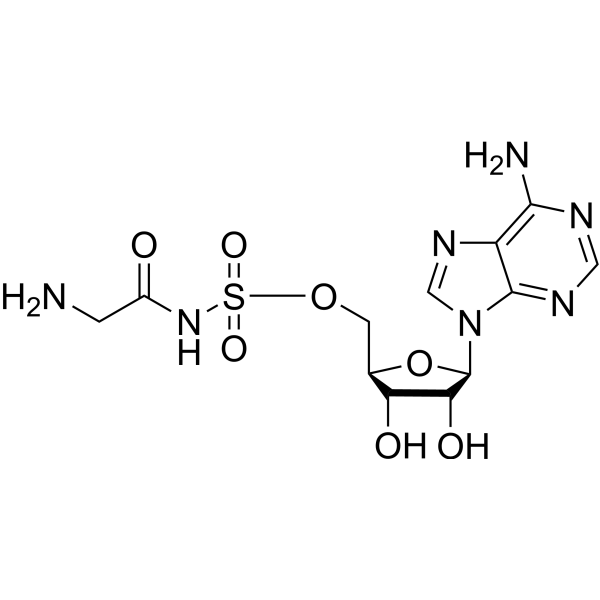
GlyRS-IN-1 is a GlyRS inhibitor. GlyRS-IN-1 reduces lung metastasis in breast cancer mice. GlyRS-IN-1 can be used in research on breast cancer, non-small cell lung cancer, renal cancer, prostate cancer, ovarian cancer, leukemia, and colon cancer.
For research use only. We do not sell to patients.
- Purity : 99.40%
- CAS No.: 112921-11-6
- Formula: C12H17N7O7S
- Molecular Weight:403.37
-
Storage:
-20°C, protect from light, stored under nitrogen
* In solvent : -80°C, 6 months; -20°C, 1 month (protect from light, stored under nitrogen)

To place orders, for customer services and technical support, please contact: MedChemExpress USA
Tel: 609-228-6898 E-mail: [email protected] [email protected]


-
 Biological Activity
-
Chemical Information
-
Solvent & Solubility
- Protocols
- Purity & Documentation
- References
-
 Help & FAQs


-
HY-112861
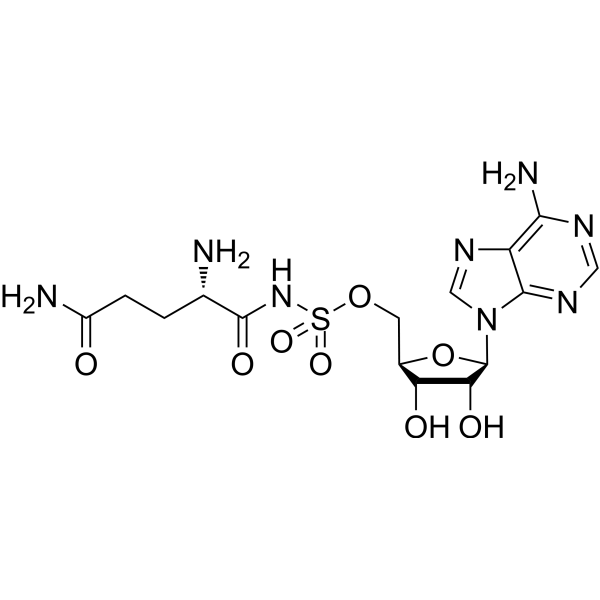
Gln-AMSAminoacyl-tRNA Synthetase Inhibitor -
HY-108939
Aminoacyl tRNA synthetase-IN-1aaRS Inhibitor -
HY-108900
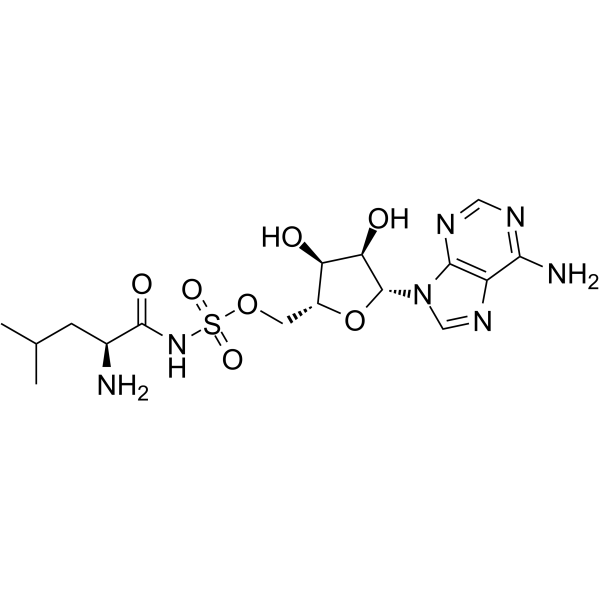
Leu-AMSLeucyl-tRNA Synthetase Inhibitor -
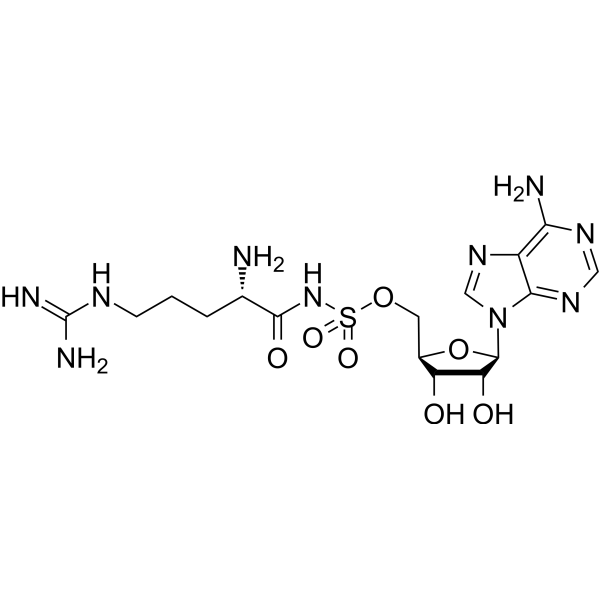
HY-112862
Arg-AMSAminoacyl-tRNA Synthetase Inhibitor -

HY-108940R
GlyRS-IN-1 (Standard)Reference Standard -
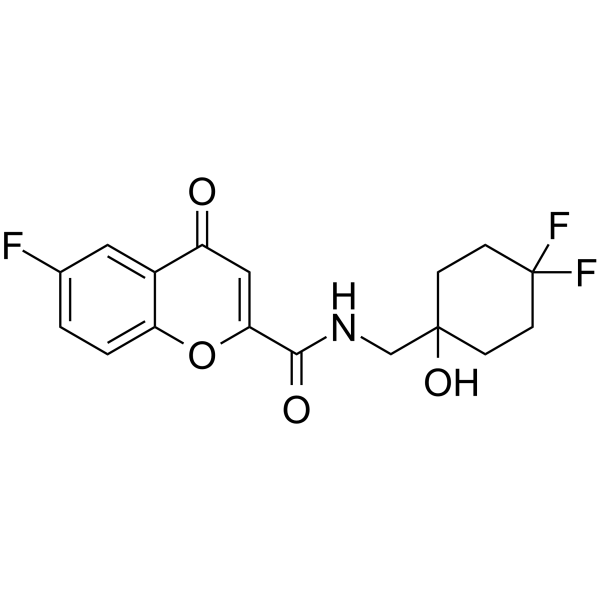
HY-126130
LysRs-IN-2Aminoacyl-tRNA Synthetase Inhibitor -

HY-108939R
Aminoacyl tRNA synthetase-IN-1 (Standard)Reference Standard -
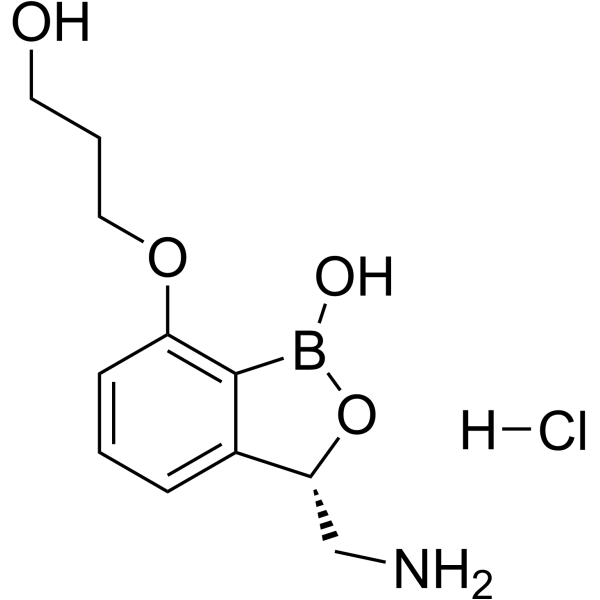
HY-12479A
Epetraborole hydrochlorideLeuRS Inhibitor -

HY-108900R
Leu-AMS (Standard)Reference Standard
Publications Citing Use of MedChemExpress (MCE) GlyRS-IN-1
More

Biological Activity
Description
IC50 & Target
Cellular Effect
|
Cell Line

|
Type | Value | Description | References |
|---|---|---|---|---|
| PBMC | IC50 |
0.8 μM
Compound: GlySA
|
Immunosuppressive activity against human PBMC assessed as inhibition of allogenic mixed lymphocyte reaction
Immunosuppressive activity against human PBMC assessed as inhibition of allogenic mixed lymphocyte reaction
|
[PMID: 18438987] |
In Vitro
GlyRS-IN-1 (Compound GlySA) inhibits the growth of multiple cancer cell lines, including HOP-62, SF-268, SN12C, and DU-145, with GI50 values of 0.372, 0.501, 0.562, and 0.692 μM, respectively[1].
MedChemExpress (MCE) has not independently confirmed the accuracy of these methods. They are for reference only. Further protocols information, click here.
In Vivo
MedChemExpress (MCE) has not independently confirmed the accuracy of these methods. They are for reference only.
-
Animal Model:NOD.Cg-Prkdcscid Il2rg[1]
-
Dosage:4 mg/kg
-
Administration:i.v.; twice per week
-
Result:Reduced lung metastasis.


Chemical Information
-
CAS No. 112921-11-6
-
Appearance Solid
-
Molecular Weight 403.37
-
Formula C12H17N7O7S
-
Color White to off-white
-
SMILES
NC1=C2N=CN([C@@H]([C@H](O)[C@@H]3O)O[C@@H]3COS(=O)(NC(CN)=O)=O)C2=NC=N1
-
Shipping
Room temperature in continental US; may vary elsewhere.
-
Storage
-20°C, protect from light, stored under nitrogen
* In solvent : -80°C, 6 months; -20°C, 1 month (protect from light, stored under nitrogen)


Publications (3)
-
Journal Impact Factor
-
Most Recent


Solvent & Solubility
In Vitro:
DMSO : 100 mg/mL (247.91 mM; Need ultrasonic; Hygroscopic DMSO has a significant impact on the solubility of product, please use newly opened DMSO)
Please refer to the solubility information to select the appropriate solvent. Once prepared, please aliquot and store the solution to prevent product inactivation from repeated freeze-thaw cycles.
Storage method and period of stock solution: -80°C, 6 months; -20°C, 1 month (protect from light, stored under nitrogen). When stored at -80°C, please use it within 6 months. When stored at -20°C, please use it within 1 month.
Please refer to the solubility information to select the appropriate solvent. Once prepared, please aliquot and store the solution to prevent product inactivation from repeated freeze-thaw cycles.
Storage method and period of stock solution: -80°C, 6 months; -20°C, 1 month (protect from light, stored under nitrogen). When stored at -80°C, please use it within 6 months. When stored at -20°C, please use it within 1 month.
Concentration (start) × Volume (start) = Concentration (final) × Volume (final)
In Vivo:
Select the appropriate dissolution method based on your experimental animal and administration route.
- For the following dissolution methods, please ensure to first prepare a clear stock solution using an In Vitro approach and then sequentially add co-solvents:
- To ensure reliable experimental results, the clarified stock solution can be appropriately stored based on storage conditions. As for the working solution for In Vivo experiments, it is recommended to prepare freshly and use it on the same day.
- The percentages shown for the solvents indicate their volumetric ratio in the final prepared solution. If precipitation or phase separation occurs during preparation, heat and/or sonication can be used to aid dissolution.
Add each solvent one by one: 10% DMSO 40% PEG300 5% Tween-80 45% Saline
Solubility: ≥ 1.67 mg/mL (4.14 mM); Clear solution
This protocol yields a clear solution of ≥ 1.67 mg/mL (saturation unknown).
Taking 1 mL working solution as an example, add 100 μL DMSO stock solution (16.7 mg/mL) to 400 μL PEG300, and mix evenly; then add 50 μL Tween-80 and mix evenly; then add 450 μL Saline to adjust the volume to 1 mL.
Preparation of Saline: Dissolve 0.9 g sodium chloride in ddH₂O and dilute to 100 mL to obtain a clear Saline solution.
Add each solvent one by one: 10% DMSO 90% (20% SBE-β-CD in Saline)
Solubility: ≥ 1.67 mg/mL (4.14 mM); Clear solution
This protocol yields a clear solution of ≥ 1.67 mg/mL (saturation unknown).
Taking 1 mL working solution as an example, add 100 μL DMSO stock solution (16.7 mg/mL) to 900 μL 20% SBE-β-CD in Saline, and mix evenly.
Preparation of 20% SBE-β-CD in Saline (4°C, storage for one week): 2 g SBE-β-CD powder is dissolved in 10 mL Saline, completely dissolve until clear.
In Vivo Dissolution Calculator
Please enter the basic information of animal experiments:
-
-
-
-
Recommended: Prepare an additional quantity of animals to account for potential losses during experiments.
Please enter your animal formula composition:
-
%DMSO +
Recommended: Keep the proportion of DMSO in working solution below 2% if your animal is weak.
-
%+
-
+%Tween-80 + +
-
%Saline +
The co-solvents required include: DMSO, . All of co-solvents are available by MedChemExpress (MCE). , Tween 80. All of co-solvents are available by MedChemExpress (MCE).
Working solution concentration: 0.22 mg/mL
Method for preparing stock solution: mg drug dissolved in μL DMSO. Stock solution concentration: mg/mL. * In solvent : -80°C, 6 months; -20°C, 1 month (protect from light, stored under nitrogen)
1. Take μL DMSO stock solution;
2. Add μL .
μL , mix evenly;
3. Then add μL Tween 80, mix evenly;
4. Then add μL
Please ensure that the stock solution in the first step is dissolved to a clear state, and add co-solvents in sequence. You can use ultrasonic heating (ultrasonic cleaner, recommended frequency 20-40 kHz), vortexing, etc. to assist dissolution.

Protocols
-
Tail-Vein Experimental Metastasis Xenograft
Tail-vein experimental metastasis xenograft models assess the ability of injected tumor cells to survive circulation, arrest in vascular beds, extravasate, and colonize distant organs, most commonly lung after lateral tail-vein injection; this model bypasses primary-tumor formation, local invasion, and intravasation, so the readout reflects late metastatic colonization rather than the full metastatic cascade. The main readouts are metastatic burden measured by bioluminescence imaging, gross metastatic nodules, histology, organ weight, survival, or ex vivo tumor-cell quantification; luciferase-labeled tumor cells permit longitudinal noninvasive monitoring, while histology confirms organ colonization and tissue localization.
-
Breast Cancer Modeling
Breast cancer is a heterogeneous cancer, and it has been distinguished into four subtypes: luminal A, luminal B, HER2-positive and basal-like. Molecular mutations, epigenetic alterations, hormone exposure and immune microenvironment are related to the progression of breast cancer.
-
Orthotopic Cell-Line Xenograft
Orthotopic cell-line xenograft models involve implantation of human cancer cell lines into the anatomically corresponding organ of immunodeficient mice to reproduce tumor growth within a native microenvironment, enabling more clinically relevant tumor behavior compared with subcutaneous models. These models are widely used because orthotopic placement better recapitulates tumor progression, including invasion and metastatic spread, which are often underrepresented in heterotopic implantation systems. Compared with conventional xenografts, orthotopic implantation is described as more technically complex but provides improved simulation of tumor-microenvironment interactions and metastatic behavior, making it particularly valuable for translational oncology research. Surgical orthotopic implantation approaches have been emphasized as enabling faithful reproduction of clinical cancer features, including metastasis and disease progression patterns that align with the tumor’s organ of origi


Purity & Documentation
-
Data Sheet (284 KB)
-
SDS (252 KB)
- English - EN (252 KB)
- Français - FR (252 KB)
- Deutsch - DE (252 KB)
- Norwegian - NO (252 KB)
- Español - ES (252 KB)
- Swedish - SV (252 KB)
- Italian - IT (252 KB)
- Korean - KR (252 KB)
- Portuguese - PT (252 KB)
-
Handling Instructions (2659 KB)
References


Complete Stock Solution Preparation Table
Please refer to the solubility information to select the appropriate solvent. Once prepared, please aliquot and store the solution to prevent product inactivation from repeated freeze-thaw cycles.
Storage method and period of stock solution: -80°C, 6 months; -20°C, 1 month (protect from light, stored under nitrogen). When stored at -80°C, please use it within 6 months. When stored at -20°C, please use it within 1 month.
| Optional Solvent | Concentration Solvent Mass | 1 mg | 5 mg | 10 mg | 25 mg |
|---|---|---|---|---|---|
| DMSO | 1 mM | 2.4791 mL | 12.3956 mL | 24.7911 mL | 61.9778 mL |
| 5 mM | 0.4958 mL | 2.4791 mL | 4.9582 mL | 12.3956 mL | |
| 10 mM | 0.2479 mL | 1.2396 mL | 2.4791 mL | 6.1978 mL | |
| 15 mM | 0.1653 mL | 0.8264 mL | 1.6527 mL | 4.1319 mL | |
| 20 mM | 0.1240 mL | 0.6198 mL | 1.2396 mL | 3.0989 mL | |
| 25 mM | 0.0992 mL | 0.4958 mL | 0.9916 mL | 2.4791 mL | |
| 30 mM | 0.0826 mL | 0.4132 mL | 0.8264 mL | 2.0659 mL | |
| 40 mM | 0.0620 mL | 0.3099 mL | 0.6198 mL | 1.5494 mL | |
| 50 mM | 0.0496 mL | 0.2479 mL | 0.4958 mL | 1.2396 mL | |
| 60 mM | 0.0413 mL | 0.2066 mL | 0.4132 mL | 1.0330 mL | |
| 80 mM | 0.0310 mL | 0.1549 mL | 0.3099 mL | 0.7747 mL | |
| 100 mM | 0.0248 mL | 0.1240 mL | 0.2479 mL | 0.6198 mL |


GlyRS-IN-1 Related Classifications
HY-108940 Related Classifications
 Powered by Bioz