



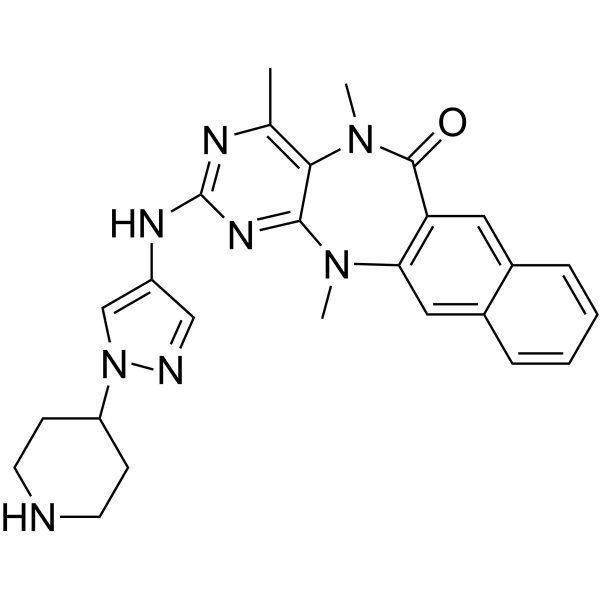
HTH-01-015
Based on 1 publication(s) in Google Scholar
HTH-01-015 is a selective NUAK1/ARK5 inhibitor (IC50 is 100 nM). HTH-01-015 inhibits NUAK1 with >100-fold higher potency than NUAK2 (IC50 of >10 μM).
For research use only. We do not sell to patients.
- Purity : 99.10%
- CAS No.: 1613724-42-7
- Formula: C26H28N8O
- Molecular Weight:468.55
-
Storage:Powder -20°C, 3 years , 4°C, 2 years ; In solvent -80°C, 1 year , -20°C, 6 months

To place orders, for customer services and technical support, please contact: MedChemExpress USA
Tel: 609-228-6898 E-mail: [email protected] [email protected]


-
 Biological Activity
-
Chemical Information
-
Solvent & Solubility
- Protocols
- Purity & Documentation
- References
-
 Help & FAQs


-
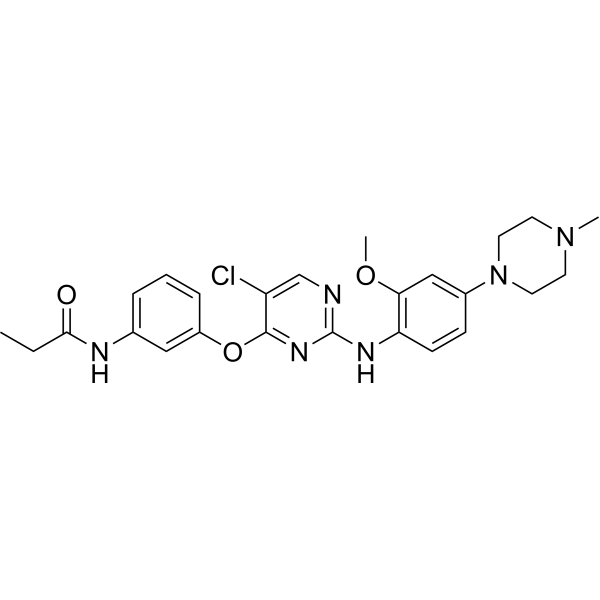
HY-15802
WZ4003NUAK Kinase Inhibitor -
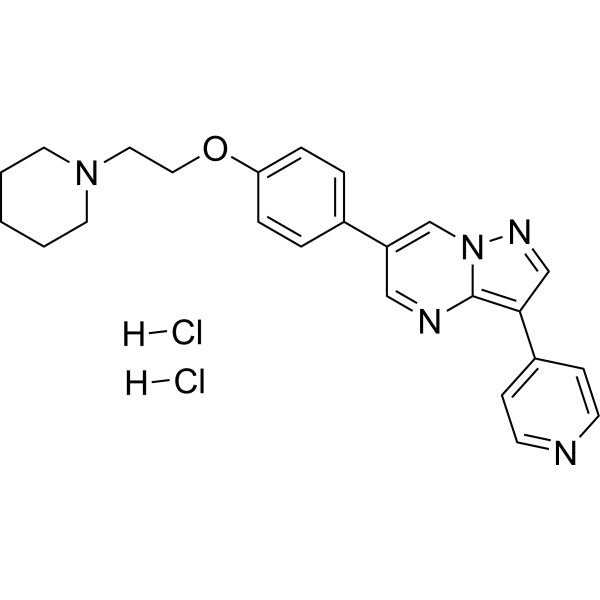
HY-13418
Dorsomorphin dihydrochlorideAMPK Inhibitor -
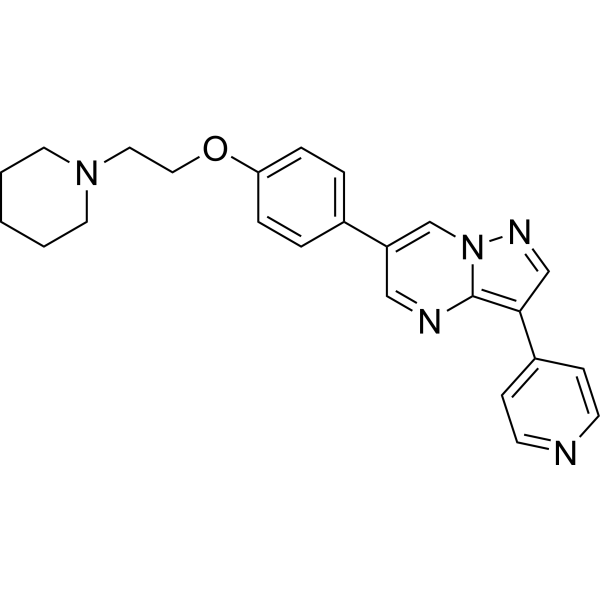
HY-13418A
DorsomorphinAMPK Inhibitor -
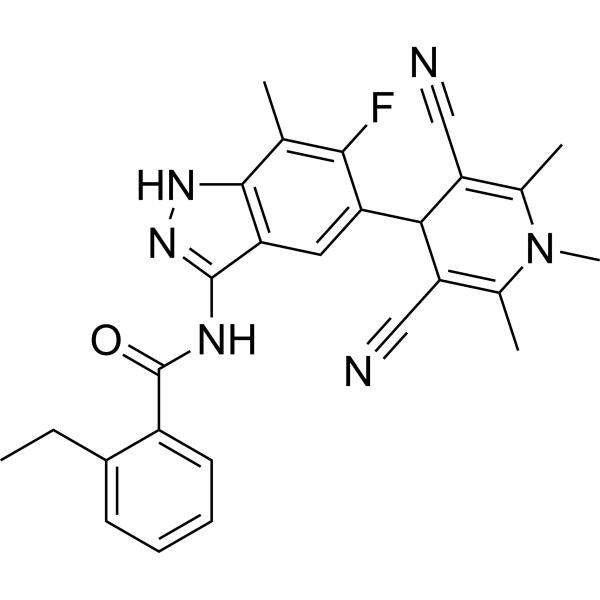
HY-112083
BAY-3827AMPK Inhibitor -
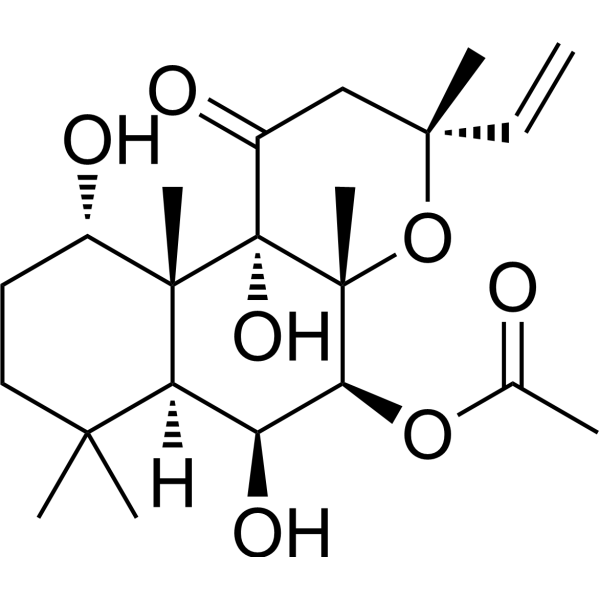
HY-15371
ForskolinAdenylate Cyclase Activator -
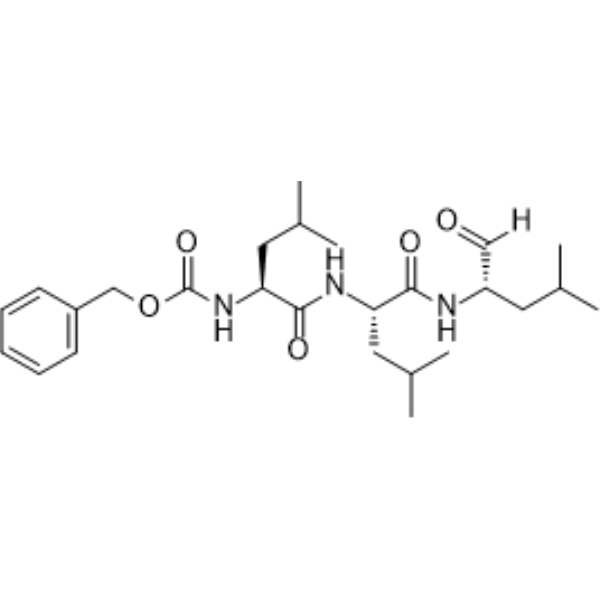
HY-13259
MG-132Proteasome Inhibitor -
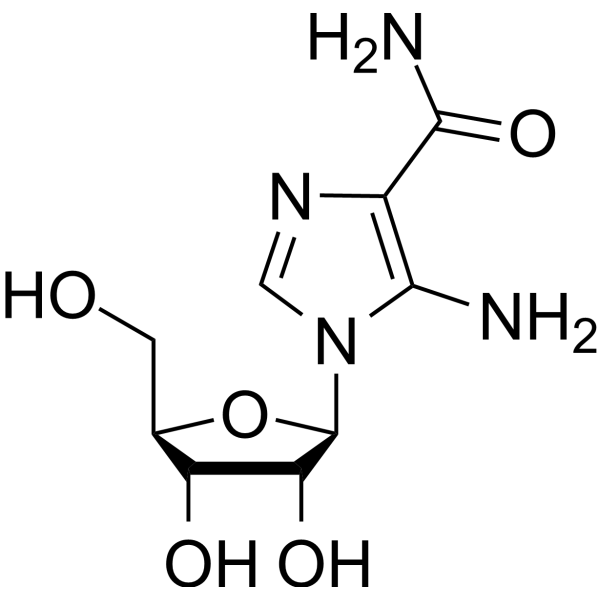
HY-13417
AICARAMPK Activator -
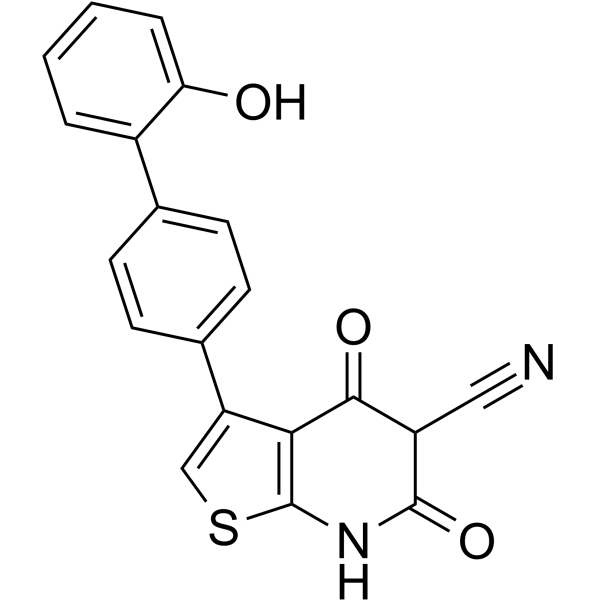
HY-50662
A-769662AMPK Activator -
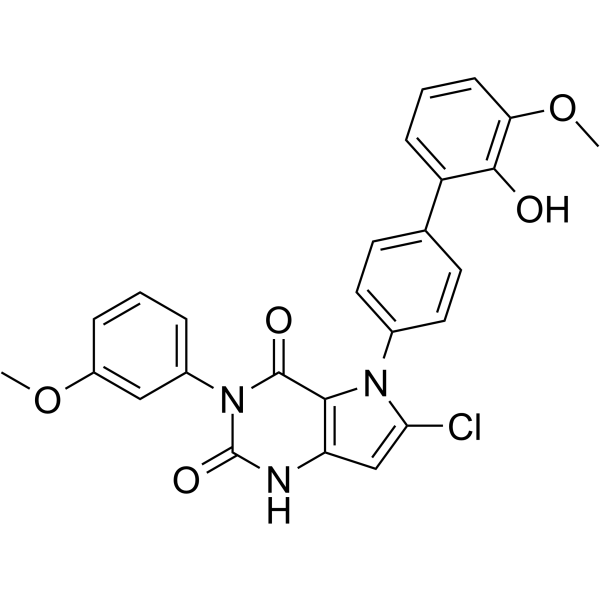
HY-100548
GSK621AMPK Activator -
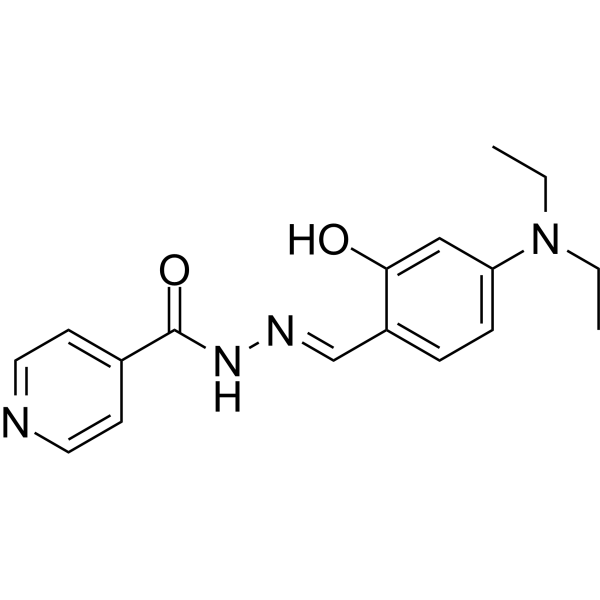
HY-103238
RSVA405AMPK Activator -
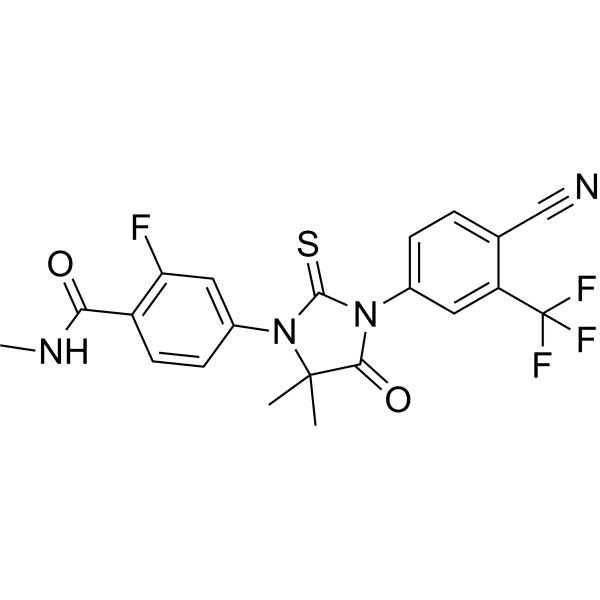
HY-70002
EnzalutamideAndrogen Receptor Antagonist -
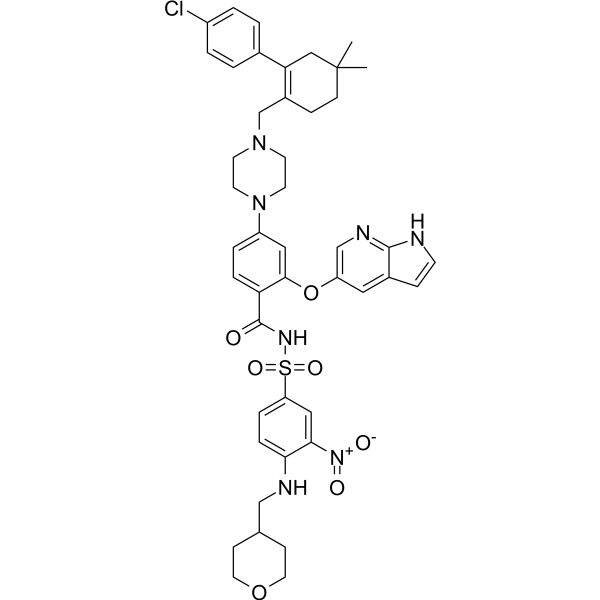
HY-15531
VenetoclaxBCL-2 Inhibitor
Publications Citing Use of MedChemExpress (MCE) HTH-01-015
More Customer Validation & Images

-
Cell Migration/Invasion Assay

-
WB

-
RT-PCR

-
IF

-
WB

All AMPK Isoforms
More

Biological Activity
Description
IC50 & Target
[1]|
NUAK1 100 nM (IC50) |
In Vitro
HTH-01-015 is a specific NUAK1 inhibitor. The related NUAK1 and NUAK2 are members of the AMPK (AMP-activated protein kinase) family of protein kinases that are activated by the LKB1 (liver kinase B1) tumor suppressor kinase. HTH-01-015 inhibits NUAK1 with an IC50 of 100 nM, but does not significantly inhibit NUAK2 (IC50 of >10 μM). In all cell lines tested, HTH-01-015 inhibits the phosphorylation of the only well-characterized substrate, MYPT1 (myosin phosphate-targeting subunit 1) that is phosphorylated by NUAK1 at Ser445. In U2OS cells, HTH-01-015 suppresses proliferation and phosphorylation of MYPT1 to the same extent as shRNA-mediated NUAK1 knockdown. In mouse embryonic fibroblasts (MEFs), treatment with 10 μM HTH-01-015 suppresses proliferation and phosphorylation of MYPT1 to the same extent as NUAK1-knockout. To test whether NUAK1 inhibition impaired the ability of the invasive U2OS cells to enter a matrix, 3D Matrigel Transwell invasion assays demonstrate that 10 μM HTH-01-015 markedly inhibits the invasiveness of U2OS cells in this assay[1].
MedChemExpress (MCE) has not independently confirmed the accuracy of these methods. They are for reference only. Further protocols information, click here.


Chemical Information
-
CAS No. 1613724-42-7
-
Appearance Solid
-
Molecular Weight 468.55
-
Formula C26H28N8O
-
Color Light yellow to khaki
-
SMILES
O=C1C(C=C2C=CC=CC2=C3)=C3N(C)C4=NC(NC5=CN(N=C5)C6CCNCC6)=NC(C)=C4N1C
-
Shipping
Room temperature in continental US; may vary elsewhere.
-
Storage
Powder -20°C 3 years 4°C 2 years In solvent -80°C 1 year -20°C 6 months


Publications (1)
-
Journal Impact Factor
-
Most Recent
-
J Cancer
LncRNA HOTAIR Enhances Epithelial-to-mesenchymal Transition to Promote the Migration and Invasion of Liver Cancer by Regulating NUAK1 via Epigenetic Inhibition miR-145-5p Expression. [Abstract]2023 Jul 24;14(12):2329-2343. PMID: 37576402
HTH-01-015 purchased from MedChemExpress. Usage Cited in: J Cancer. 2023 Jul 24;14(12):2329-2343. [Abstract]
Added HTH-01-015 to SNU-387 and HepG2 cells, and Transwell test to detect cell invasion ability.
HTH-01-015 purchased from MedChemExpress. Usage Cited in: J Cancer. 2023 Jul 24;14(12):2329-2343. [Abstract]
Added HTH-01-015 to SNU-387 and HepG2 cells, and detected the protein expression of E-cadherin, N-cadherin, Vimentin, MMP2, MMP9 by Western blot.
HTH-01-015 purchased from MedChemExpress. Usage Cited in: J Cancer. 2023 Jul 24;14(12):2329-2343. [Abstract]
Added HTH-01-015 to SNU-387 and HepG2 cells, and detected the mRNA expression of E-cadherin, N-cadherin, Vimentin, MMP2, MMP9 by qPCR.
HTH-01-015 purchased from MedChemExpress. Usage Cited in: J Cancer. 2023 Jul 24;14(12):2329-2343. [Abstract]
Immunofluorescence of N-cadherin in cells treated with HTH-01-015 showed that the expression of N-cadherin protein was reduced compared with control cells.
HTH-01-015 purchased from MedChemExpress. Usage Cited in: J Cancer. 2023 Jul 24;14(12):2329-2343. [Abstract]
Transfected LZRS-HOTAIR plasmid in SNU-387 and HepG2 cells, and co-transfected LZRS-HOTAIR plasmid and HTH-01-015, used Western blot to detect the protein expression of E-cadherin, N-cadherin, Vimentin.

HTH-01-015 purchased from MedChemExpress. Usage Cited in: J Cancer. 2023 Jul 24;14(12):2329-2343. [Abstract]
To evaluate the role of NUAK1 in liver cancer invasion and migration, we next used HTH-01-015, an inhibitor of NUAK1, in transwell and scratch assays in SNU-387 and HepG2 cells. The results showed that inhibition of NUAK1 reduced the invasion and migration ability of liver cancer cells.


Solvent & Solubility
In Vitro:
DMSO : 100 mg/mL (213.42 mM; Need ultrasonic; Hygroscopic DMSO has a significant impact on the solubility of product, please use newly opened DMSO)
Please refer to the solubility information to select the appropriate solvent. Once prepared, please aliquot and store the solution to prevent product inactivation from repeated freeze-thaw cycles.
Storage method and period of stock solution: -80°C, 1 year; -20°C, 6 months. When stored at -80°C, please use it within 1 year. When stored at -20°C, please use it within 6 months.
Please refer to the solubility information to select the appropriate solvent. Once prepared, please aliquot and store the solution to prevent product inactivation from repeated freeze-thaw cycles.
Storage method and period of stock solution: -80°C, 1 year; -20°C, 6 months. When stored at -80°C, please use it within 1 year. When stored at -20°C, please use it within 6 months.
Concentration (start) × Volume (start) = Concentration (final) × Volume (final)
In Vivo:
Select the appropriate dissolution method based on your experimental animal and administration route.
- For the following dissolution methods, please ensure to first prepare a clear stock solution using an In Vitro approach and then sequentially add co-solvents:
- To ensure reliable experimental results, the clarified stock solution can be appropriately stored based on storage conditions. As for the working solution for In Vivo experiments, it is recommended to prepare freshly and use it on the same day.
- The percentages shown for the solvents indicate their volumetric ratio in the final prepared solution. If precipitation or phase separation occurs during preparation, heat and/or sonication can be used to aid dissolution.
Add each solvent one by one: 10% DMSO 40% PEG300 5% Tween-80 45% Saline
Solubility: ≥ 2.5 mg/mL (5.34 mM); Clear solution
This protocol yields a clear solution of ≥ 2.5 mg/mL (saturation unknown).
Taking 1 mL working solution as an example, add 100 μL DMSO stock solution (25.0 mg/mL) to 400 μL PEG300, and mix evenly; then add 50 μL Tween-80 and mix evenly; then add 450 μL Saline to adjust the volume to 1 mL.
Preparation of Saline: Dissolve 0.9 g sodium chloride in ddH₂O and dilute to 100 mL to obtain a clear Saline solution.
Add each solvent one by one: 10% DMSO 90% (20% SBE-β-CD in Saline)
Solubility: ≥ 2.5 mg/mL (5.34 mM); Clear solution
This protocol yields a clear solution of ≥ 2.5 mg/mL (saturation unknown).
Taking 1 mL working solution as an example, add 100 μL DMSO stock solution (25.0 mg/mL) to 900 μL 20% SBE-β-CD in Saline, and mix evenly.
Preparation of 20% SBE-β-CD in Saline (4°C, storage for one week): 2 g SBE-β-CD powder is dissolved in 10 mL Saline, completely dissolve until clear.
In Vivo Dissolution Calculator
Please enter the basic information of animal experiments:
-
-
-
-
Recommended: Prepare an additional quantity of animals to account for potential losses during experiments.
Please enter your animal formula composition:
-
%DMSO +
Recommended: Keep the proportion of DMSO in working solution below 2% if your animal is weak.
-
%+
-
+%Tween-80 + +
-
%Saline +
The co-solvents required include: DMSO, . All of co-solvents are available by MedChemExpress (MCE). , Tween 80. All of co-solvents are available by MedChemExpress (MCE).
Working solution concentration: 0.22 mg/mL
Method for preparing stock solution: mg drug dissolved in μL DMSO. Stock solution concentration: mg/mL.
1. Take μL DMSO stock solution;
2. Add μL .
μL , mix evenly;
3. Then add μL Tween 80, mix evenly;
4. Then add μL
Please ensure that the stock solution in the first step is dissolved to a clear state, and add co-solvents in sequence. You can use ultrasonic heating (ultrasonic cleaner, recommended frequency 20-40 kHz), vortexing, etc. to assist dissolution.

Protocols
-
Cell Cytotoxicity Assay
Cytotoxicity assays are usually based on the assessment of cell membrane damage, which can also be indirectly detected by measuring cell viability. Detection methods include MTT assay, CKK-8 assay, LDH assay and ATP assay, etc.


Purity & Documentation
-
Data Sheet (279 KB)
-
SDS (393 KB)
- English - EN (393 KB)
- Français - FR (393 KB)
- Deutsch - DE (393 KB)
- Norwegian - NO (393 KB)
- Español - ES (393 KB)
- Swedish - SV (393 KB)
- Italian - IT (393 KB)
- Korean - KR (393 KB)
- Portuguese - PT (393 KB)
-
Handling Instructions (2659 KB)
References


Complete Stock Solution Preparation Table
Please refer to the solubility information to select the appropriate solvent. Once prepared, please aliquot and store the solution to prevent product inactivation from repeated freeze-thaw cycles.
Storage method and period of stock solution: -80°C, 1 year; -20°C, 6 months. When stored at -80°C, please use it within 1 year. When stored at -20°C, please use it within 6 months.
| Optional Solvent | Concentration Solvent Mass | 1 mg | 5 mg | 10 mg | 25 mg |
|---|---|---|---|---|---|
| DMSO | 1 mM | 2.1342 mL | 10.6712 mL | 21.3424 mL | 53.3561 mL |
| 5 mM | 0.4268 mL | 2.1342 mL | 4.2685 mL | 10.6712 mL | |
| 10 mM | 0.2134 mL | 1.0671 mL | 2.1342 mL | 5.3356 mL | |
| 15 mM | 0.1423 mL | 0.7114 mL | 1.4228 mL | 3.5571 mL | |
| 20 mM | 0.1067 mL | 0.5336 mL | 1.0671 mL | 2.6678 mL | |
| 25 mM | 0.0854 mL | 0.4268 mL | 0.8537 mL | 2.1342 mL | |
| 30 mM | 0.0711 mL | 0.3557 mL | 0.7114 mL | 1.7785 mL | |
| 40 mM | 0.0534 mL | 0.2668 mL | 0.5336 mL | 1.3339 mL | |
| 50 mM | 0.0427 mL | 0.2134 mL | 0.4268 mL | 1.0671 mL | |
| 60 mM | 0.0356 mL | 0.1779 mL | 0.3557 mL | 0.8893 mL | |
| 80 mM | 0.0267 mL | 0.1334 mL | 0.2668 mL | 0.6670 mL | |
| 100 mM | 0.0213 mL | 0.1067 mL | 0.2134 mL | 0.5336 mL |


HTH-01-015 Related Classifications
HY-12334 Related Classifications
 Powered by Bioz