



L189
Based on 3 publication(s) in Google Scholar
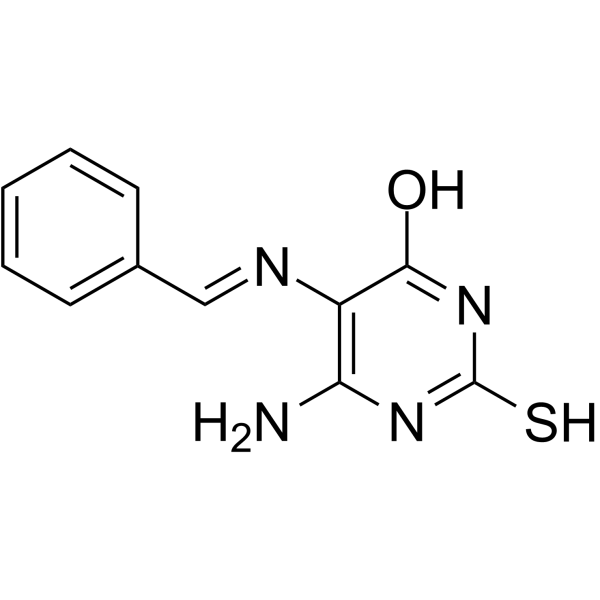
L189 is a DNA ligase inhibitor. L189 has inhibition effect for DNA Ligase I, III and IV with IC50 values of 5 μM, 9 μM and 5 μM, respectively. L189 has no cytotoxicity and individually increase cell death. L189 can be used for the research of cancer.
For research use only. We do not sell to patients.
- Purity : 98.0%
- CAS No.: 64232-83-3
- Formula: C11H10N4OS
- Molecular Weight:246.29
-
Storage:Powder -20°C, 3 years , 4°C, 2 years ; In solvent -80°C, 2 years , -20°C, 1 year

To place orders, for customer services and technical support, please contact: MedChemExpress USA
Tel: 609-228-6898 E-mail: [email protected] [email protected]


-
 Biological Activity
-
Chemical Information
-
Solvent & Solubility
- Protocols
- Purity & Documentation
- References
-
 Help & FAQs


-
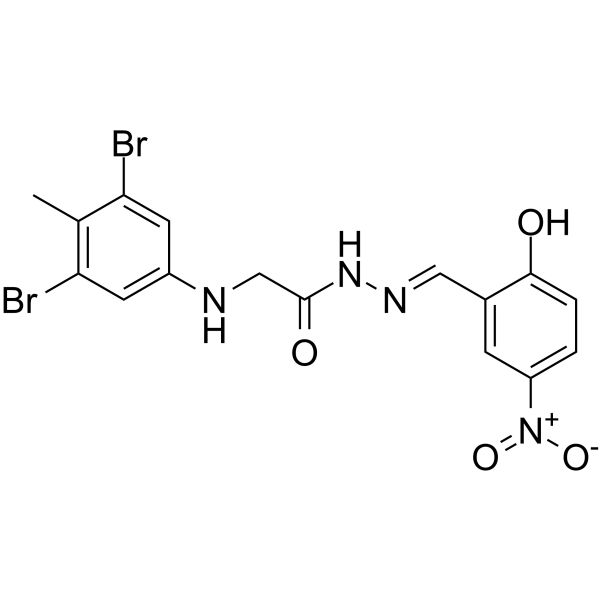
HY-15586
L67DNA Ligase Inhibitor -
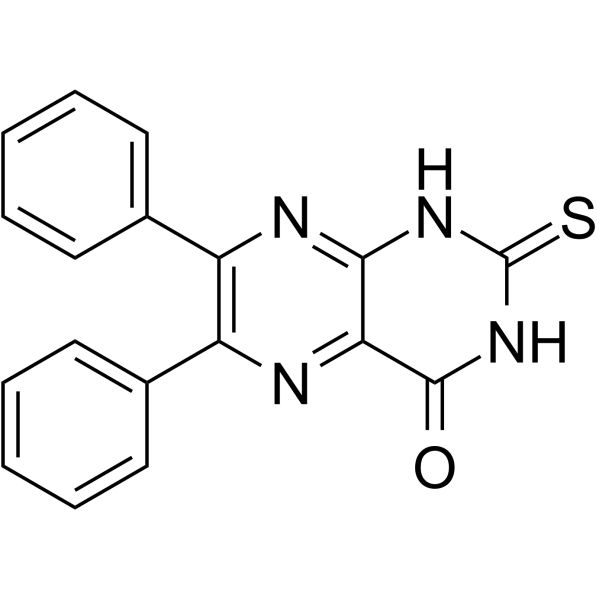
HY-107845
SCR7 pyrazineLigase IV Inhibitor/HDR Enhancer -
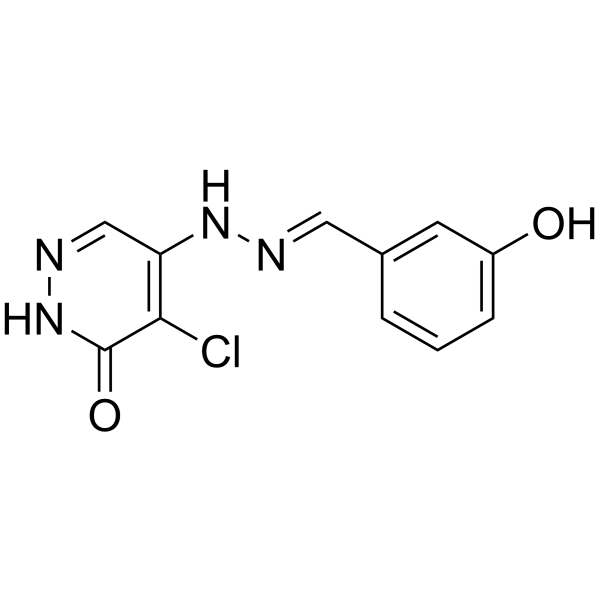
HY-148161
L82-G17Lig I Inhibitor -
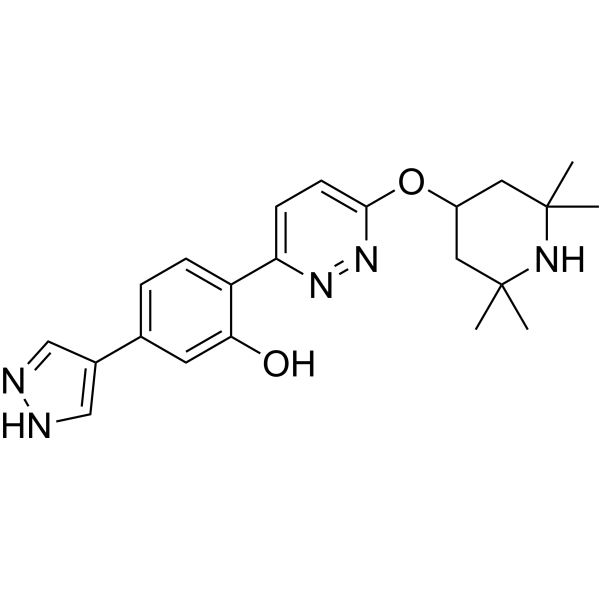
HY-19620
BranaplamSMN2 Splicing Modulator -
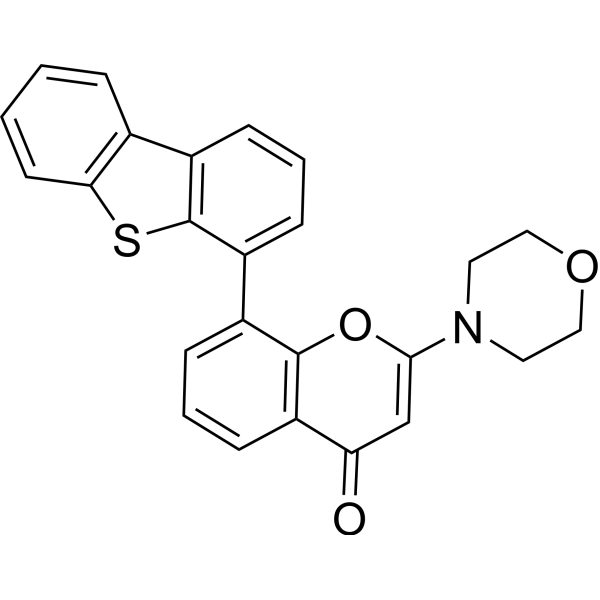
HY-11006
KU-57788DNA-PK Inhibitor -
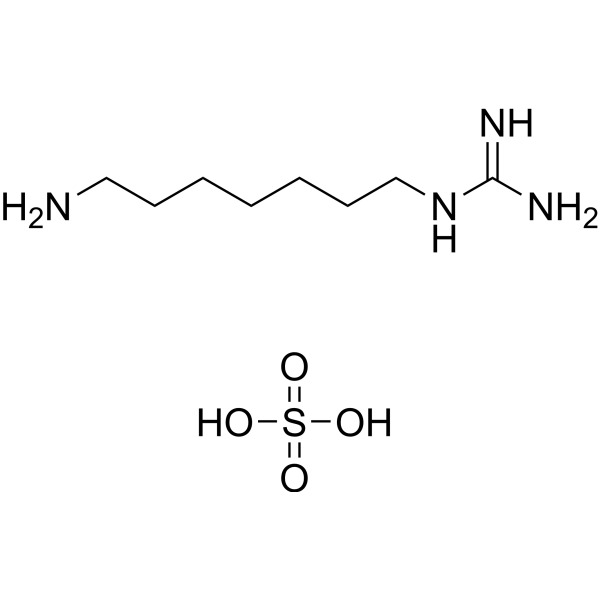
HY-108314A
GC7 SulfateDHPS Inhibitor -
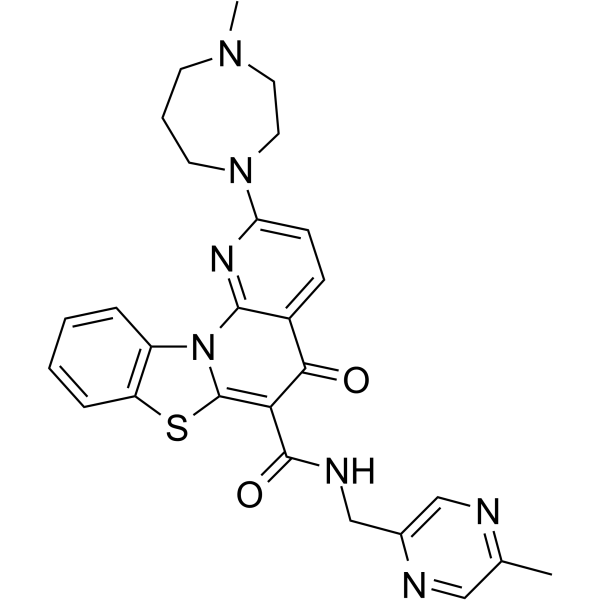
HY-13323
CX-5461RNA Polymerase I Inhibitor -
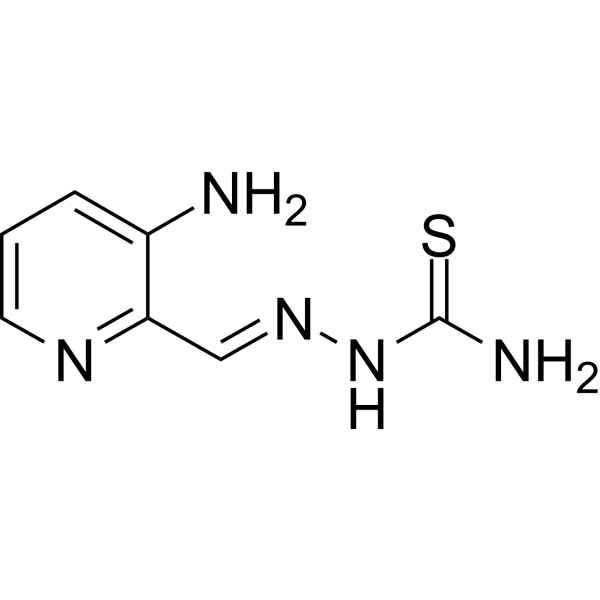
HY-10082
TriapineRibonucleotide Reductase Inhibitor -
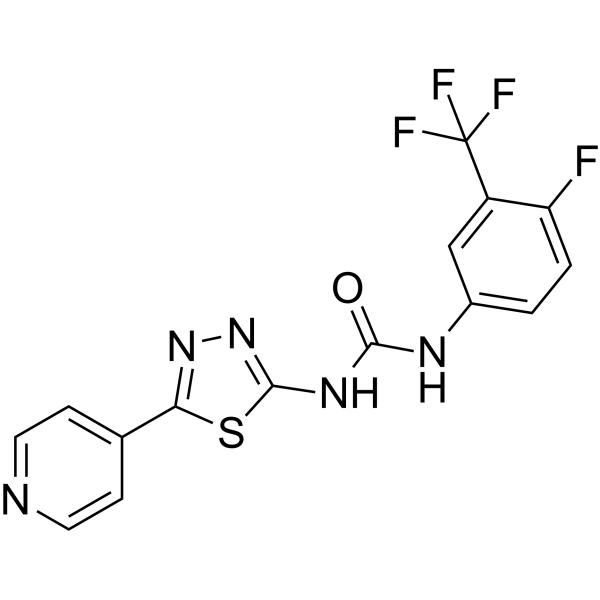
HY-12342
ML216BLM Helicase Inhibitor -
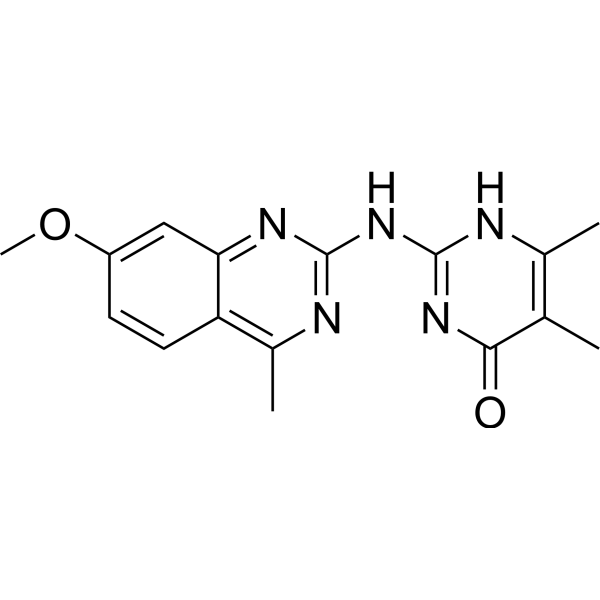
HY-100236
MadrasinSplicing Inhibitor -
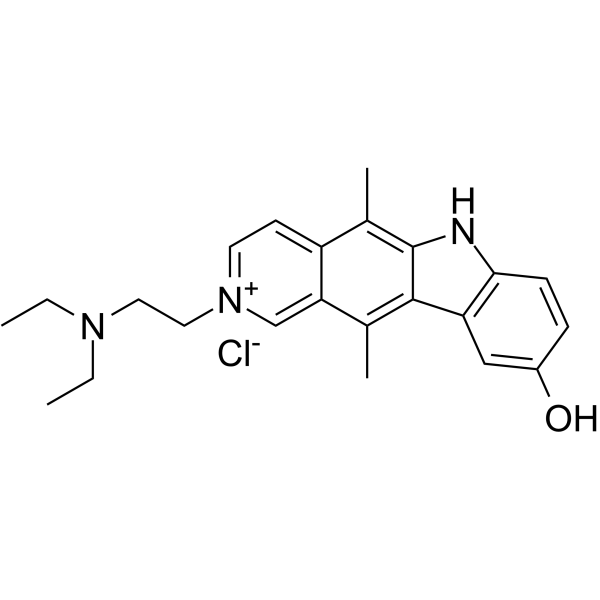
HY-U00337
Datelliptium chloride -
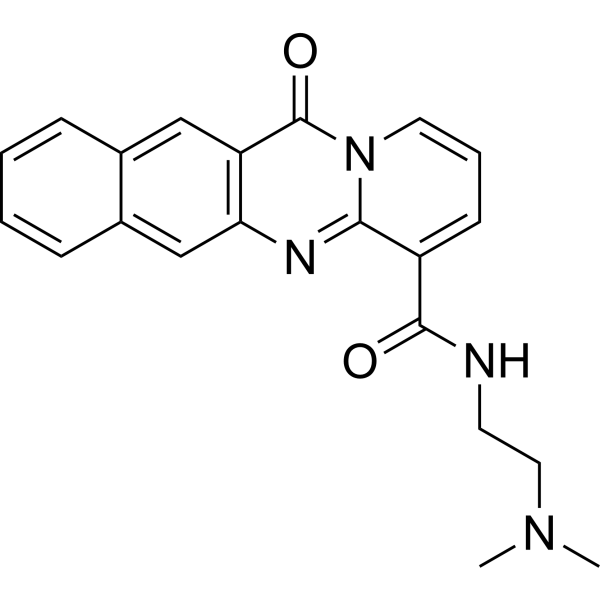
HY-12484
BMH-21DNA Intercalator/Pol I Elongation Inhibitor
Publications Citing Use of MedChemExpress (MCE) L189
MoreAll DNA/RNA Synthesis Isoforms
More

Biological Activity
Description
IC50 & Target
|
DNA Ligase |
In Vitro
L189 inhibits DNA Ligase I, III and IV activity with IC50 values of 5 μM, 9 μM and 5 μM, respectively[1].
L189 (5 μM, 48 h) bring good anti-proliferation activity preferentially and cause cell death by creating a cytotoxic environment[2].
L189 (5 μM, 48 h) reduces HeLa nuclear staining along with TMZ[2].
L189 (5 μM, 48 h) enhances TMZ-induced HeLa growth arrest when along with TMZ that possibly in G2/M cell cycle phase without employing cell death mechanisms[2].
MedChemExpress (MCE) has not independently confirmed the accuracy of these methods. They are for reference only. Further protocols information, click here.
-
Cell Line:HeLa cells
-
Concentration:5 μM
-
Incubation Time:48 h
-
Result:Blocked to HeLa growth and proliferation along with TMZ and not mark the significant cell cytotoxicity alone.


Chemical Information
-
CAS No. 64232-83-3
-
Appearance Solid
-
Molecular Weight 246.29
-
Formula C11H10N4OS
-
Color Light yellow to yellow
-
SMILES
OC1=NC(S)=NC(N)=C1/N=C/C2=CC=CC=C2
-
Shipping
Room temperature in continental US; may vary elsewhere.
-
Storage
Powder -20°C 3 years 4°C 2 years In solvent -80°C 2 years -20°C 1 year


Publications (3)
-
Journal Impact Factor
-
Most Recent
-
Nat Methods
2023 Sep;20(9):1388-1399. PMID: 37474806 -
Mol Cell
Replication gaps are a key determinant of PARP inhibitor synthetic lethality with BRCA deficiency. [Abstract]2021 Aug 5;81(15):3128-3144.e7. PMID: 34216544 -
J Mol Med (Berl)
2019 Aug;97(8):1183-1193. PMID: 31201471


Solvent & Solubility
In Vitro:
DMSO : ≥ 33 mg/mL (133.99 mM; Hygroscopic DMSO has a significant impact on the solubility of product, please use newly opened DMSO)
* "≥" means soluble, but saturation unknown.
Please refer to the solubility information to select the appropriate solvent. Once prepared, please aliquot and store the solution to prevent product inactivation from repeated freeze-thaw cycles.
Storage method and period of stock solution: -80°C, 2 years; -20°C, 1 year. When stored at -80°C, please use it within 2 years. When stored at -20°C, please use it within 1 year.
Please refer to the solubility information to select the appropriate solvent. Once prepared, please aliquot and store the solution to prevent product inactivation from repeated freeze-thaw cycles.
Storage method and period of stock solution: -80°C, 2 years; -20°C, 1 year. When stored at -80°C, please use it within 2 years. When stored at -20°C, please use it within 1 year.
Concentration (start) × Volume (start) = Concentration (final) × Volume (final)
In Vivo:
Select the appropriate dissolution method based on your experimental animal and administration route.
- For the following dissolution methods, please ensure to first prepare a clear stock solution using an In Vitro approach and then sequentially add co-solvents:
- To ensure reliable experimental results, the clarified stock solution can be appropriately stored based on storage conditions. As for the working solution for In Vivo experiments, it is recommended to prepare freshly and use it on the same day.
- The percentages shown for the solvents indicate their volumetric ratio in the final prepared solution. If precipitation or phase separation occurs during preparation, heat and/or sonication can be used to aid dissolution.
Add each solvent one by one: 10% DMSO 40% PEG300 5% Tween-80 45% Saline
Solubility: ≥ 2.5 mg/mL (10.15 mM); Clear solution
This protocol yields a clear solution of ≥ 2.5 mg/mL (saturation unknown).
Taking 1 mL working solution as an example, add 100 μL DMSO stock solution (25.0 mg/mL) to 400 μL PEG300, and mix evenly; then add 50 μL Tween-80 and mix evenly; then add 450 μL Saline to adjust the volume to 1 mL.
Preparation of Saline: Dissolve 0.9 g sodium chloride in ddH₂O and dilute to 100 mL to obtain a clear Saline solution.
In Vivo Dissolution Calculator
Please enter the basic information of animal experiments:
-
-
-
-
Recommended: Prepare an additional quantity of animals to account for potential losses during experiments.
Please enter your animal formula composition:
-
%DMSO +
Recommended: Keep the proportion of DMSO in working solution below 2% if your animal is weak.
-
%+
-
+%Tween-80 + +
-
%Saline +
The co-solvents required include: DMSO, . All of co-solvents are available by MedChemExpress (MCE). , Tween 80. All of co-solvents are available by MedChemExpress (MCE).
Working solution concentration: 0.22 mg/mL
Method for preparing stock solution: mg drug dissolved in μL DMSO. Stock solution concentration: mg/mL.
1. Take μL DMSO stock solution;
2. Add μL .
μL , mix evenly;
3. Then add μL Tween 80, mix evenly;
4. Then add μL
Please ensure that the stock solution in the first step is dissolved to a clear state, and add co-solvents in sequence. You can use ultrasonic heating (ultrasonic cleaner, recommended frequency 20-40 kHz), vortexing, etc. to assist dissolution.

Protocols
-
Cell Cytotoxicity Assay
Cytotoxicity assays are usually based on the assessment of cell membrane damage, which can also be indirectly detected by measuring cell viability. Detection methods include MTT assay, CKK-8 assay, LDH assay and ATP assay, etc.
-
Mammalian live/dead viability and cytotoxicity staining
Live/dead viability and cytotoxicity staining assays are based on the simultaneous detection of intracellular esterase activity in metabolically active (viable) cells and membrane integrity loss in non-viable cells. In commonly used dual-staining approaches, membrane-permeant fluorogenic substrates are converted by intracellular esterases into fluorescent products in live cells, while impermeant DNA-binding dyes selectively enter cells with compromised plasma membranes and label nucleic acids in dead or dying cells, enabling discrimination between viable and non-viable populations by fluorescence microscopy or flow cytometry.
-
Apoptosis Solutions
Apoptosis is a regulated, generally non-lytic cell-death pathway that removes unwanted, damaged, infected, or abnormal cells through coordinated morphological changes, caspase activation, DNA fragmentation, and membrane remodeling. The intrinsic apoptosis pathway is controlled mainly by mitochondrial outer membrane permeabilization, BCL-2 family proteins, cytochrome c release, apoptosome formation, caspase-9 activation, and downstream executioner caspase-3/7 activation. The extrinsic apoptosis pathway is initiated by death receptors such as Fas, TNFR, and TRAIL receptors, which recruit adaptor proteins and activate caspase-8 before engaging executioner caspases or mitochondrial amplification through BID cleavage. Apoptosis is linked to many phenotypes, including cancer cell killing, tissue homeostasis, immune regulation, neurodegeneration, infection response, and treatment-induced cytotoxicity; unresolved questions include how apoptosis interacts with necroptosis, pyroptosis, ferroptos
-
Cell Viability Determination by MTT Colorimetric Assay
The following protocol uses the MTT colorimetric assay as a classic literature-established method for assessing cell viability/metabolic activity in cultured mammalian cells. MTT[3-(4,5-dimethylthiazol-2-yl)-2,5-diphenyltetrazolium bromide] is reduced by metabolically active cells to a colored formazan product; the amount of formazan is quantified spectrophotometrically and provides an indirect measure of metabolically active viable cells. Importantly, MTT reduction reflects cellular oxidoreductase/metabolic activity rather than an absolute direct count of living cells, so changes in cellular metabolism can alter the signal independently of cell number.


Purity & Documentation
-
Data Sheet (275 KB)
-
SDS (643 KB)
- English - EN (643 KB)
- Français - FR (643 KB)
- Deutsch - DE (643 KB)
- Norwegian - NO (643 KB)
- Español - ES (643 KB)
- Swedish - SV (643 KB)
- Italian - IT (643 KB)
- Korean - KR (643 KB)
- Portuguese - PT (643 KB)
-
Handling Instructions (2659 KB)
References


Complete Stock Solution Preparation Table
Please refer to the solubility information to select the appropriate solvent. Once prepared, please aliquot and store the solution to prevent product inactivation from repeated freeze-thaw cycles.
Storage method and period of stock solution: -80°C, 2 years; -20°C, 1 year. When stored at -80°C, please use it within 2 years. When stored at -20°C, please use it within 1 year.
| Optional Solvent | Concentration Solvent Mass | 1 mg | 5 mg | 10 mg | 25 mg |
|---|---|---|---|---|---|
| DMSO | 1 mM | 4.0603 mL | 20.3013 mL | 40.6025 mL | 101.5064 mL |
| 5 mM | 0.8121 mL | 4.0603 mL | 8.1205 mL | 20.3013 mL | |
| 10 mM | 0.4060 mL | 2.0301 mL | 4.0603 mL | 10.1506 mL | |
| 15 mM | 0.2707 mL | 1.3534 mL | 2.7068 mL | 6.7671 mL | |
| 20 mM | 0.2030 mL | 1.0151 mL | 2.0301 mL | 5.0753 mL | |
| 25 mM | 0.1624 mL | 0.8121 mL | 1.6241 mL | 4.0603 mL | |
| 30 mM | 0.1353 mL | 0.6767 mL | 1.3534 mL | 3.3835 mL | |
| 40 mM | 0.1015 mL | 0.5075 mL | 1.0151 mL | 2.5377 mL | |
| 50 mM | 0.0812 mL | 0.4060 mL | 0.8121 mL | 2.0301 mL | |
| 60 mM | 0.0677 mL | 0.3384 mL | 0.6767 mL | 1.6918 mL | |
| 80 mM | 0.0508 mL | 0.2538 mL | 0.5075 mL | 1.2688 mL | |
| 100 mM | 0.0406 mL | 0.2030 mL | 0.4060 mL | 1.0151 mL |


L189 Related Classifications
HY-15588 Related Classifications
 Powered by Bioz