



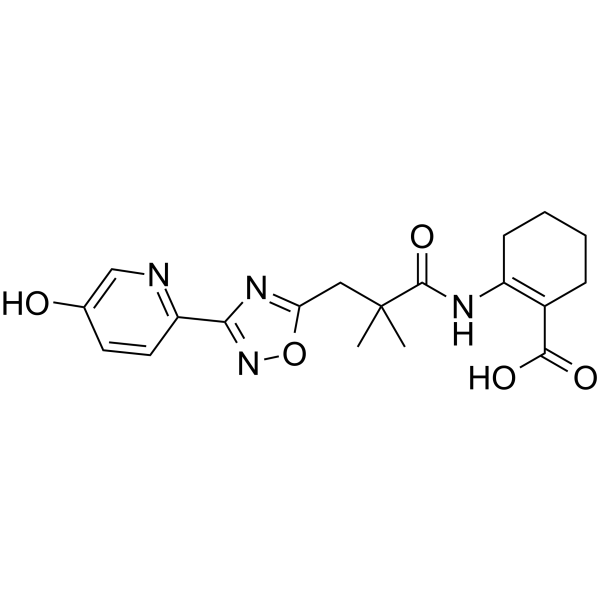
MK-6892
Based on 8 publication(s) in Google Scholar
MK-6892 is a potent, selective, and full agonist for the high affinity nicotinic acid (NA) receptor GPR109A. Ki and GTPγS EC50 of MK-6892 on the Human GPR109A is 4 nM and 16 nM, respectively.
연구목적의 판매만을 진행합니다. 환자를 대상으로 한 판매는 하지 않습니다.
- Purity : 99.37%
- CAS No.: 917910-45-3
- 화학식: C19H22N4O5
- 분자량:386.40
-
보관:Powder -20°C, 3 years , 4°C, 2 years ; In solvent -80°C, 2 years , -20°C, 1 year

To place orders, for customer services and technical support, please contact: MedChemExpress USA
Tel: 609-228-6898 E-mail: [email protected] [email protected]


-
 Biological Activity
-
Chemical Information
-
용액&용해도
- 순도&문서
- References
-
 Help & FAQs


-
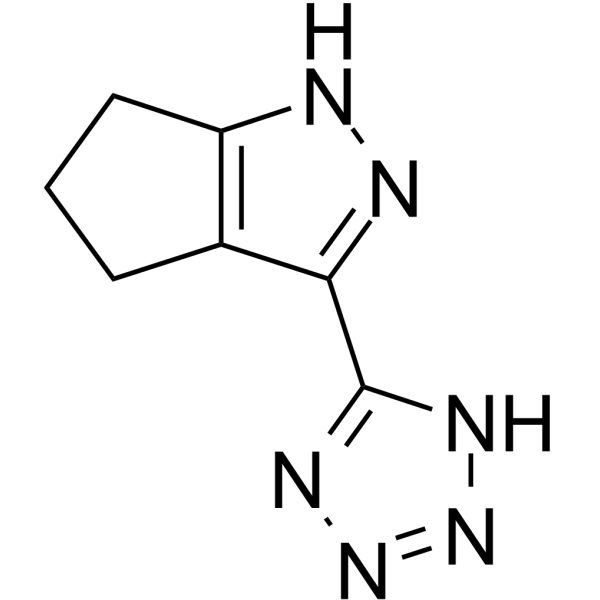
HY-13008
MK-0354GPR109A Agonist -
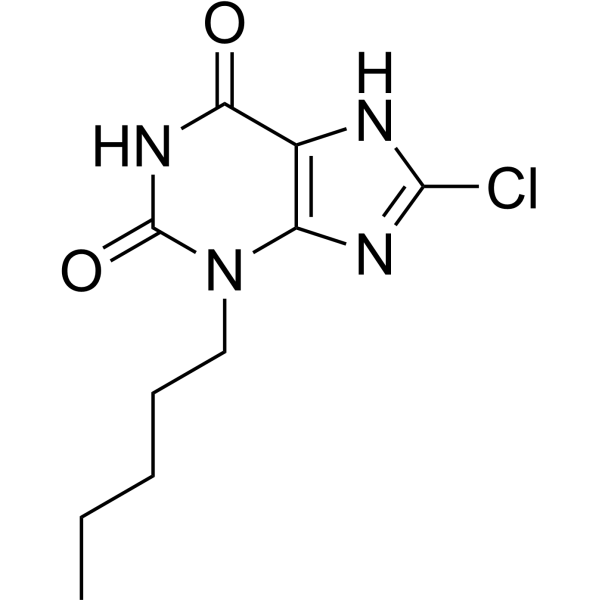
HY-119222
GSK256073GPR109A Agonist -
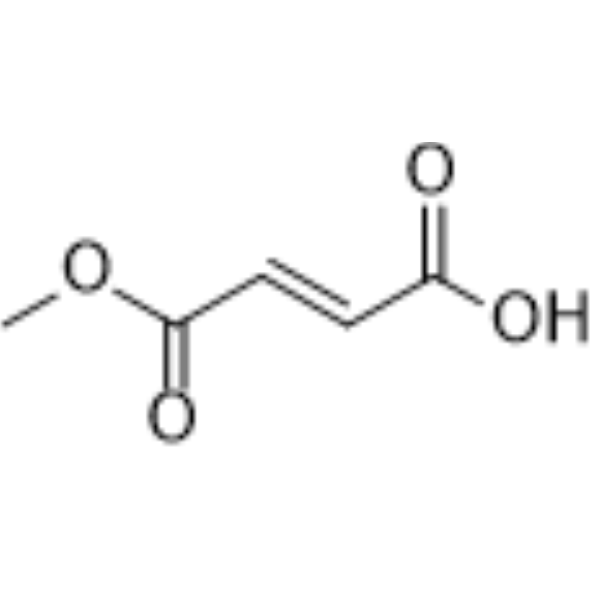
HY-103252
Monomethyl fumarateGPR109A Agonist -
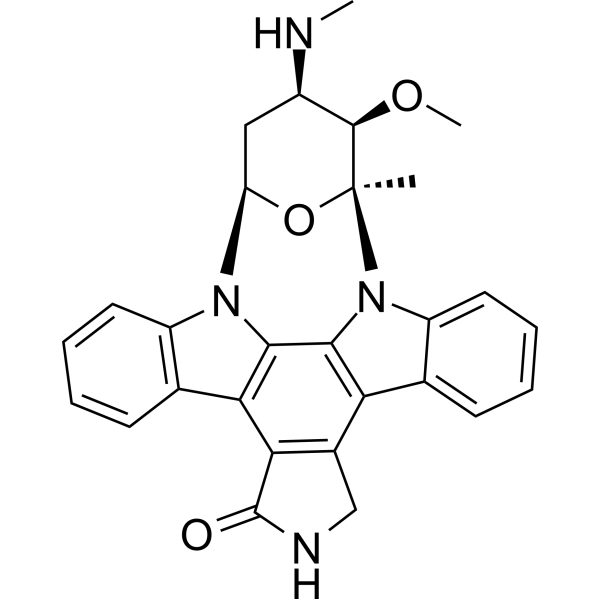
HY-15141
StaurosporinePKC/PKA Inhibitor -
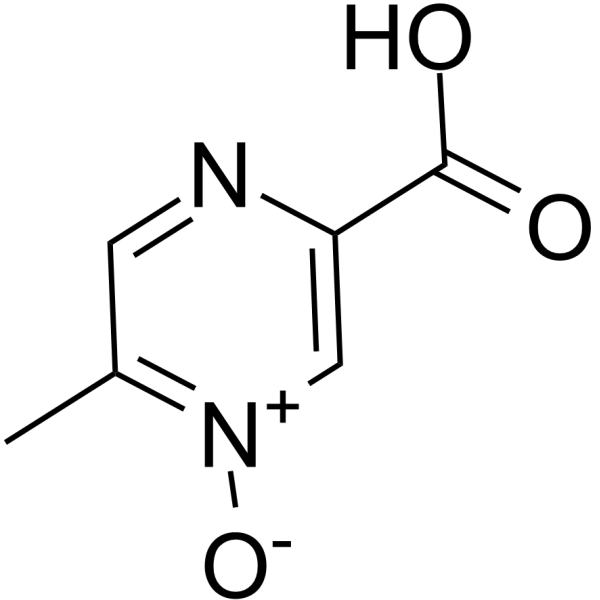
HY-B0283
AcipimoxAntilipolytic Agent -
HY-B0143
NiacinB3 vitamin -
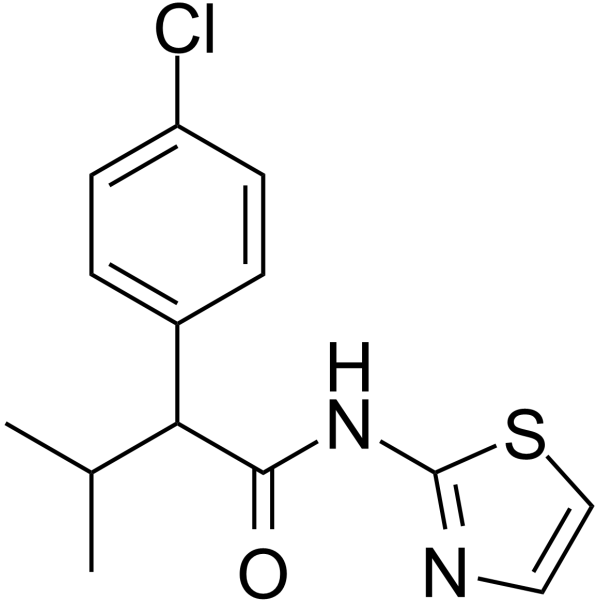
HY-P1125
4-CMTBFFA2 Agonist -
HY-156025
HCAR2 agonist 1HCAR2 Agonist -

HY-10680R
MK-6892 (Standard)Reference Standard -
HY-112813
TUG-1375FFA2/GPR43 Agonist -
HY-10681
GedatolisibPI3K/mTOR Inhibitor -

HY-10681R
Gedatolisib (Standard)PI3K/mTOR Inhibitor
Publications Citing Use of MedChemExpress (MCE) MK-6892
More- Glia. 2018 Feb;66(2):256-278. [Abstract]
- iScience. 2026 May 22;29(6):116030. [Abstract]
- Front Biosci (Landmark Ed). 2025 Jun 30;30(7):39311. [Abstract]
- bioRxiv. 2025 August 25.
- bioRxiv. 2024 Jul 26:2024.07.26.605282. [Abstract]
- Research Square Preprint. 2023 Jul 7.
- bioRxiv. 2023 Jul 3.
- bioRxiv. 2023 Mar 29.
 Customer Validation & Images

-
WB


Biological Activity
제품 설명
IC50 & Target
Cellular Effect
|
Cell Line

|
Type | Value | Description | References |
|---|---|---|---|---|
| CHO-K1 | EC50 |
16 nM
Compound: 1e, MK-6892
|
Agonist activity at cloned human GPR109A receptor expressed in CHO-K1 cells by [35S]GTPgammaS binding assay
Agonist activity at cloned human GPR109A receptor expressed in CHO-K1 cells by [35S]GTPgammaS binding assay
|
[PMID: 20184326] |
In Vitro
In Vivo
MedChemExpress (MCE) has not independently confirmed the accuracy of these methods. They are for reference only.


Chemical Information
-
CAS No. 917910-45-3
-
Appearance Solid
-
분자량 386.40
-
화학식 C19H22N4O5
-
Color White to off-white
-
SMILES
OC(C=C1)=CN=C1C2=NOC(CC(C)(C)C(NC3=C(C(O)=O)CCCC3)=O)=N2
-
선적
Room temperature in continental US; may vary elsewhere.
-
보관
Powder -20°C 3 years 4°C 2 years In solvent -80°C 2 years -20°C 1 year


Publications (8)
-
Journal Impact Factor
-
Most Recent
-
Glia
The ketone body metabolite β-hydroxybutyrate induces an antidepression-associated ramification of microglia via HDACs inhibition-triggered Akt-small RhoGTPase activation. [Abstract]2018 Feb;66(2):256-278. PMID: 29058362
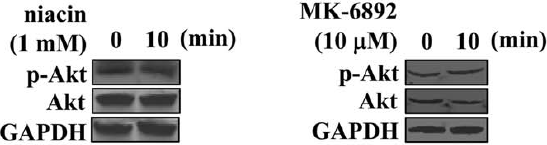
MK-6892 purchased from MedChemExpress. Usage Cited in: Glia. 2018 Feb;66(2):256-278. [Abstract]
Representative images and quantitative analysis showing the effects of Niacin (1 mM, 10 min) and MK-6892 (10 lM, 10 min) on Akt phosphorylation levels in primary cultured microglia.
-
iScience
Comparative analysis reveals molecular adaptation of mammalian HCA2 to microbial metabolites. [Abstract]2026 May 22;29(6):116030. PMID: 42221821 -
Front Biosci (Landmark Ed)
HCAR2 Exerts Anti-Depressive Effects on Corticosterone-Induced Depression in Mice by Modulating Microglial Activity. [Abstract]2025 Jun 30;30(7):39311. PMID: 40765344 -
-
bioRxiv
2024 Jul 26:2024.07.26.605282. PMID: 39091869 -
-
-


용액&용해도
In Vitro:
DMSO : 50 mg/mL (129.40 mM; Need ultrasonic; Hygroscopic DMSO has a significant impact on the solubility of product, please use newly opened DMSO)
Please refer to the solubility information to select the appropriate solvent. Once prepared, please aliquot and store the solution to prevent product inactivation from repeated freeze-thaw cycles.
Storage method and period of stock solution: -80°C, 2 years; -20°C, 1 year. When stored at -80°C, please use it within 2 years. When stored at -20°C, please use it within 1 year.
Please refer to the solubility information to select the appropriate solvent. Once prepared, please aliquot and store the solution to prevent product inactivation from repeated freeze-thaw cycles.
Storage method and period of stock solution: -80°C, 2 years; -20°C, 1 year. When stored at -80°C, please use it within 2 years. When stored at -20°C, please use it within 1 year.
Concentration (start) × Volume (start) = Concentration (final) × Volume (final)
In Vivo:
Select the appropriate dissolution method based on your experimental animal and administration route.
- For the following dissolution methods, please ensure to first prepare a clear stock solution using an In Vitro approach and then sequentially add co-solvents:
- To ensure reliable experimental results, the clarified stock solution can be appropriately stored based on storage conditions. As for the working solution for In Vivo experiments, it is recommended to prepare freshly and use it on the same day.
- The percentages shown for the solvents indicate their volumetric ratio in the final prepared solution. If precipitation or phase separation occurs during preparation, heat and/or sonication can be used to aid dissolution.
Add each solvent one by one: 10% DMSO 40% PEG300 5% Tween-80 45% Saline
Solubility: ≥ 2.5 mg/mL (6.47 mM); Clear solution
This protocol yields a clear solution of ≥ 2.5 mg/mL (saturation unknown).
Taking 1 mL working solution as an example, add 100 μL DMSO stock solution (25.0 mg/mL) to 400 μL PEG300, and mix evenly; then add 50 μL Tween-80 and mix evenly; then add 450 μL Saline to adjust the volume to 1 mL.
Preparation of Saline: Dissolve 0.9 g sodium chloride in ddH₂O and dilute to 100 mL to obtain a clear Saline solution.
Add each solvent one by one: 10% DMSO 90% (20% SBE-β-CD in Saline)
Solubility: ≥ 2.5 mg/mL (6.47 mM); Clear solution
This protocol yields a clear solution of ≥ 2.5 mg/mL (saturation unknown).
Taking 1 mL working solution as an example, add 100 μL DMSO stock solution (25.0 mg/mL) to 900 μL 20% SBE-β-CD in Saline, and mix evenly.
Preparation of 20% SBE-β-CD in Saline (4°C, storage for one week): 2 g SBE-β-CD powder is dissolved in 10 mL Saline, completely dissolve until clear.
In Vivo Dissolution Calculator
Please enter the basic information of animal experiments:
-
-
-
-
Recommended: Prepare an additional quantity of animals to account for potential losses during experiments.
Please enter your animal formula composition:
-
%DMSO +
Recommended: Keep the proportion of DMSO in working solution below 2% if your animal is weak.
-
%+
-
+%Tween-80 + +
-
%Saline +
The co-solvents required include: DMSO, . All of co-solvents are available by MedChemExpress (MCE). , Tween 80. All of co-solvents are available by MedChemExpress (MCE).
Working solution concentration: 0.22 mg/mL
Method for preparing stock solution: mg drug dissolved in μL DMSO. Stock solution concentration: mg/mL.
1. Take μL DMSO stock solution;
2. Add μL .
μL , mix evenly;
3. Then add μL Tween 80, mix evenly;
4. Then add μL
Please ensure that the stock solution in the first step is dissolved to a clear state, and add co-solvents in sequence. You can use ultrasonic heating (ultrasonic cleaner, recommended frequency 20-40 kHz), vortexing, etc. to assist dissolution.


순도&문서
-
Data Sheet (275 KB)
-
SDS (251 KB)
- English - EN (251 KB)
- Français - FR (251 KB)
- Deutsch - DE (251 KB)
- Norwegian - NO (251 KB)
- Español - ES (251 KB)
- Swedish - SV (251 KB)
- Italian - IT (251 KB)
- Korean - KR (251 KB)
- Portuguese - PT (251 KB)
-
Handling Instructions (2659 KB)
References
[1]. Shen HC, et al. Discovery of a biaryl cyclohexene carboxylic acid (MK-6892): a potent and selective high affinity niacin receptor full agonist with reduced flushing profiles in animals as a preclinical candidate. J Med Chem. 2010 Mar 25;53(6):2666-70. [Content Brief]
[2]. Kim HY, et al. Discovery of 4-(phenyl)thio-1H-pyrazole derivatives as agonists of GPR109A, a high affinity niacin receptor. Arch Pharm Res. 2015 Jun;38(6):1019-32. [Content Brief]


Complete Stock Solution Preparation Table
Please refer to the solubility information to select the appropriate solvent. Once prepared, please aliquot and store the solution to prevent product inactivation from repeated freeze-thaw cycles.
Storage method and period of stock solution: -80°C, 2 years; -20°C, 1 year. When stored at -80°C, please use it within 2 years. When stored at -20°C, please use it within 1 year.
| Optional Solvent | Concentration Solvent Mass | 1 mg | 5 mg | 10 mg | 25 mg |
|---|---|---|---|---|---|
| DMSO | 1 mM | 2.5880 mL | 12.9400 mL | 25.8799 mL | 64.6998 mL |
| 5 mM | 0.5176 mL | 2.5880 mL | 5.1760 mL | 12.9400 mL | |
| 10 mM | 0.2588 mL | 1.2940 mL | 2.5880 mL | 6.4700 mL | |
| 15 mM | 0.1725 mL | 0.8627 mL | 1.7253 mL | 4.3133 mL | |
| 20 mM | 0.1294 mL | 0.6470 mL | 1.2940 mL | 3.2350 mL | |
| 25 mM | 0.1035 mL | 0.5176 mL | 1.0352 mL | 2.5880 mL | |
| 30 mM | 0.0863 mL | 0.4313 mL | 0.8627 mL | 2.1567 mL | |
| 40 mM | 0.0647 mL | 0.3235 mL | 0.6470 mL | 1.6175 mL | |
| 50 mM | 0.0518 mL | 0.2588 mL | 0.5176 mL | 1.2940 mL | |
| 60 mM | 0.0431 mL | 0.2157 mL | 0.4313 mL | 1.0783 mL | |
| 80 mM | 0.0323 mL | 0.1617 mL | 0.3235 mL | 0.8087 mL | |
| 100 mM | 0.0259 mL | 0.1294 mL | 0.2588 mL | 0.6470 mL |


MK-6892 Related Classifications
HY-10680 Related Classifications
 Powered by Bioz