



NI-57
Based on 1 publication(s) in Google Scholar
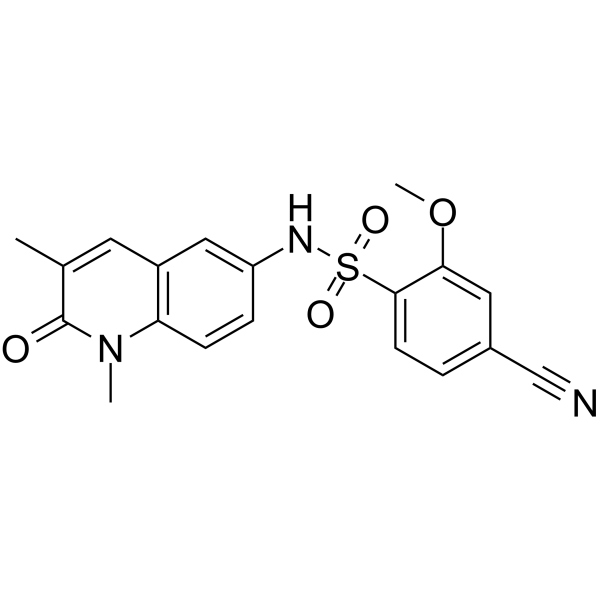
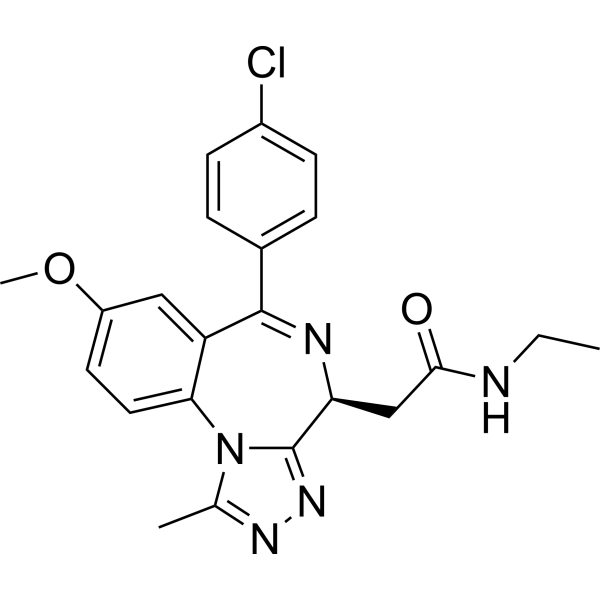
NI-57, a chemical probe, is an inhibitor of bromodomain and plant homeodomain finger-containing (BRPF) famlily of proteins, with IC50s of 3.1, 46 and 140 nM for BRPF1, BRPF2 (BRD1) and BRPF3, respectively.
Nur für Forschungszwecke. Wir verkaufen nicht an Patienten.
- Reinheit : 99.42%
- CAS. Nr.: 1883548-89-7
- Formel: C19H17N3O4S
- Molecular Weight:383.42
-
Speicherung:Powder -20°C, 3 years , 4°C, 2 years ; In solvent -80°C, 2 years , -20°C, 1 year

To place orders, for customer services and technical support, please contact: MedChemExpress USA
Tel: 609-228-6898 E-mail: [email protected] [email protected]


-
 Biologische Aktivität
-
Chemical Information
-
Lösungsmittel & Löslichkeit
- Reinheit & Dokumentation
- Verweise
-
 Help & FAQs


-
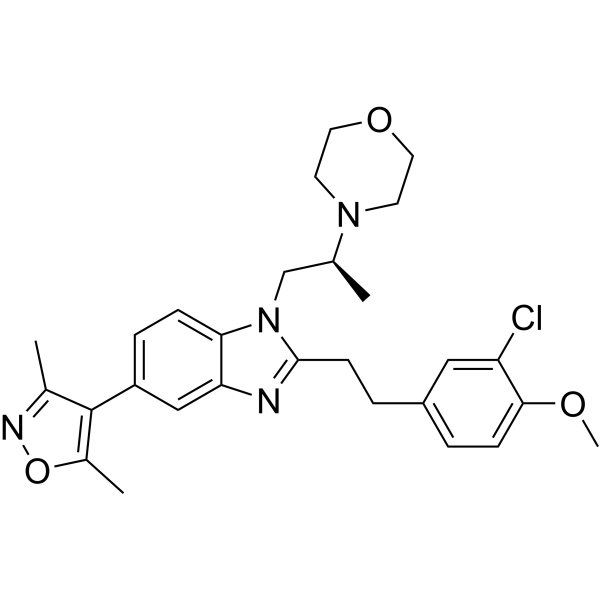
HY-15826
SGC-CBP30CBP/p300 Inhibitor -
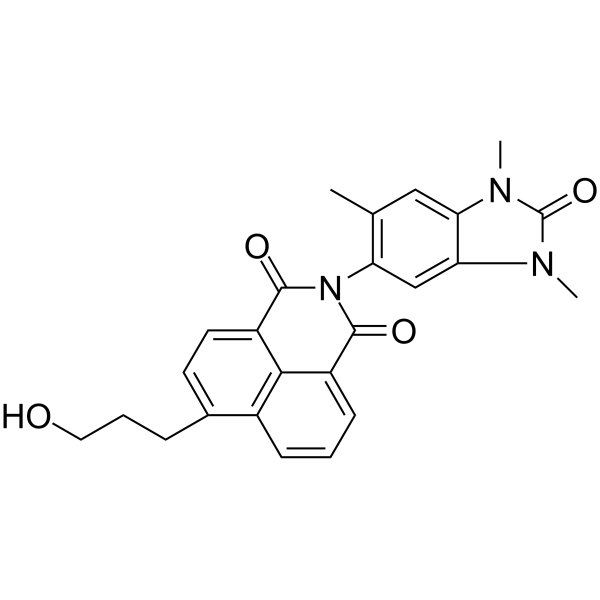
HY-107424
BAY-299BRPF2 Bromodomain Inhibitor -
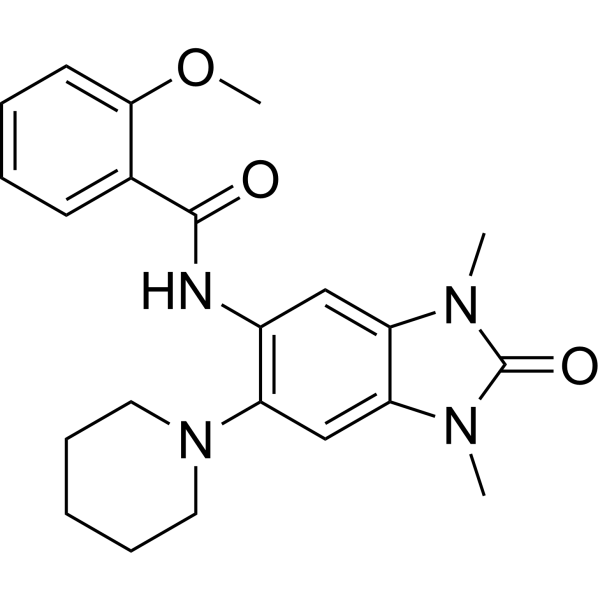
HY-18665
GSK-5959BRPF1 Inhibitor -
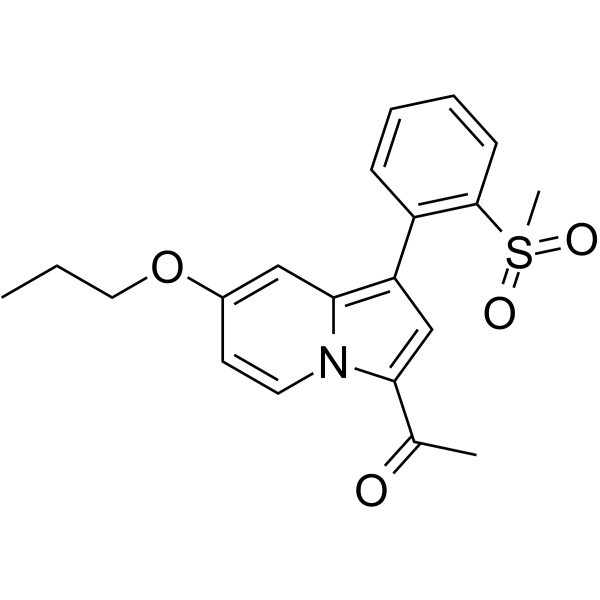
HY-15658
GSK2801BAZ2A/B Inhibitor -
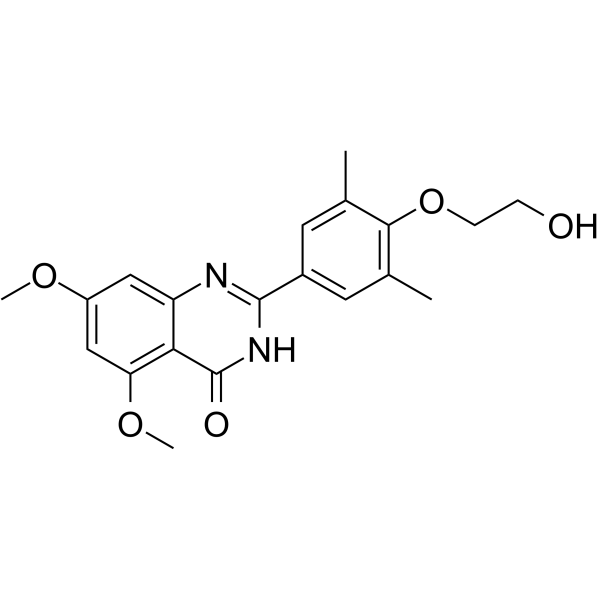
HY-16652
ApabetaloneBET Inhibitor -
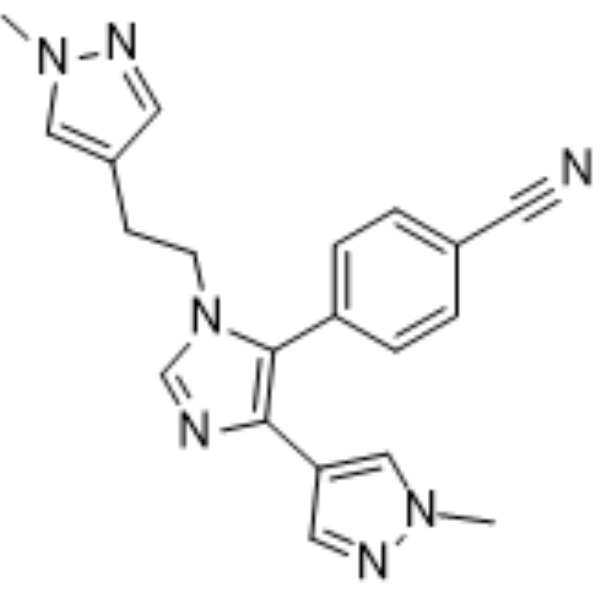
HY-19336
BAZ2-ICRBAZ2A/B Inhibitor -
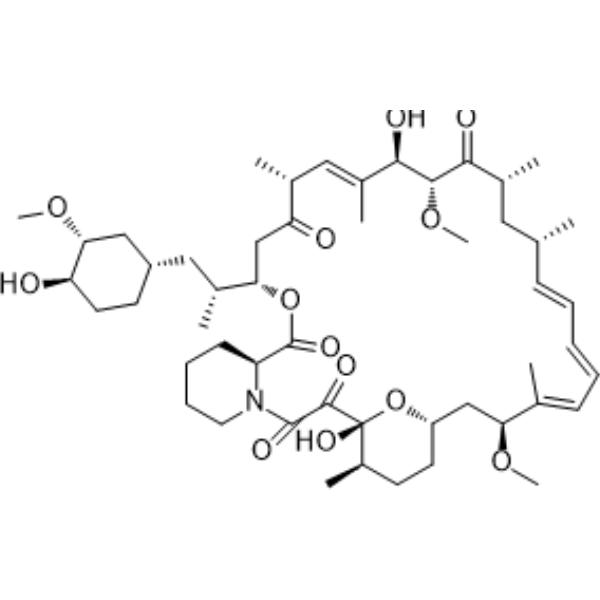
HY-10219
RapamycinmTOR Inhibitor -
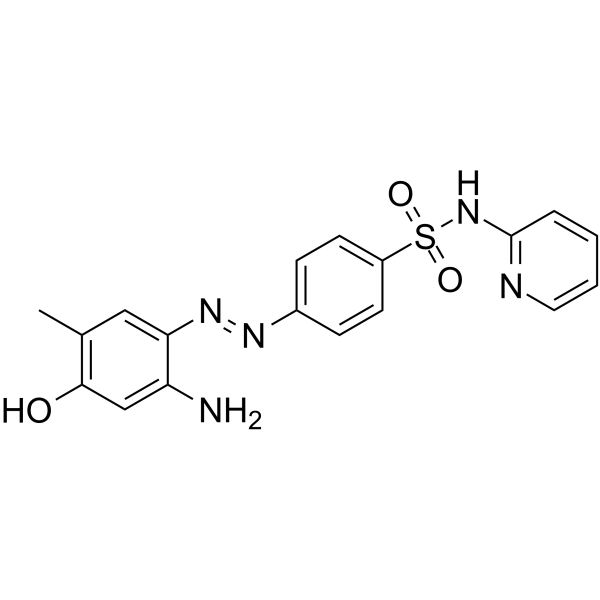
HY-13959
MS436Bromodomain Inhibitor -
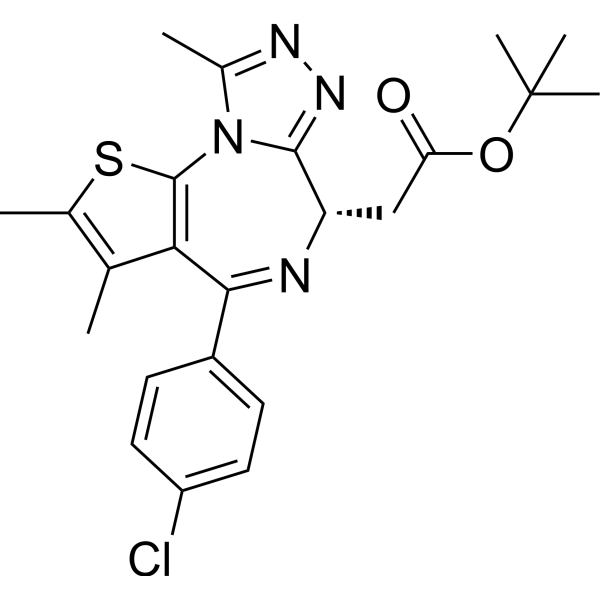
HY-13030
(+)-JQ-1BET Inhibitor -
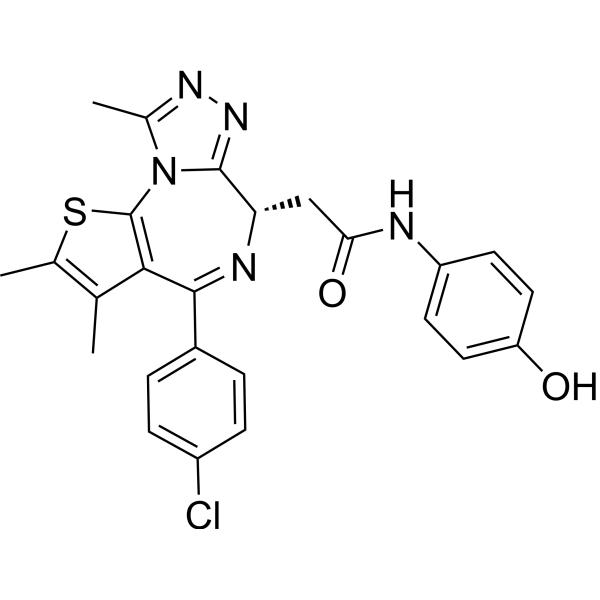
HY-15743
BirabresibBRD2/3/4 Inhibitor -
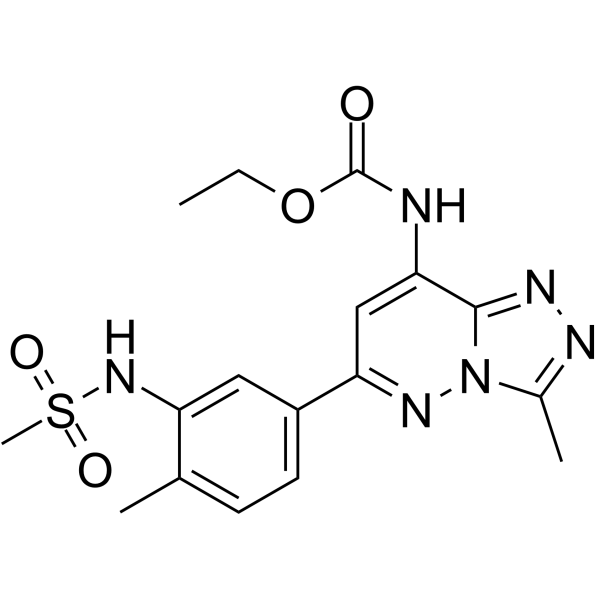
HY-15815
BromosporineBET Inhibitor -
HY-13032
MolibresibBET Inhibitor
Publications Citing Use of MedChemExpress (MCE) NI-57
More

Biologische Aktivität
Beschreibung
IC50 & Target
IC50: 3.1 nM (BRPF1), 46 nM (BRPF2 (BRD1)), 140 nM (BRPF3)[1]
Cellular Effect
|
Cell Line

|
Type | Value | Description | References |
|---|---|---|---|---|
| DMS-114 | GI50 |
14.7 μM
Compound: 16; Nl-57
|
Inhibition of cell proliferation of human DMS114 cells after 72 hrs by MTS assay
Inhibition of cell proliferation of human DMS114 cells after 72 hrs by MTS assay
|
[PMID: 28714688] |
| NCI-H1703 | GI50 |
10.4 μM
Compound: 16; Nl-57
|
Inhibition of cell proliferation of human NCI-H1703 cells after 72 hrs by MTS assay
Inhibition of cell proliferation of human NCI-H1703 cells after 72 hrs by MTS assay
|
[PMID: 28714688] |
In Vitro
NI-57 is an inhibitor of bromodomain and plant homeodomain finger-containing (BRPF), with IC50s of 3.1, 46 and 140 nM for BRPF1, BRPF2 (BRD1) and BRPF3, respectively. NI-57 binds the BRD of BRPF1 with a Kd of 31 ± 2 nM, BRD1 with a Kd of 110 ± 13 nM, and BRPF3 with a Kd of 410 ± 47 nM, whereas binding to BRD9 is weaker (Kd 1000 ± 130 nM) measured by isothermal titration calorimetry. NI-57 shows less active effect on BRD9 (IC50, 520 nM) and BRD4 (BD1) (IC50, 3700 nM), TRIM24 (IC50, 1600 nM). NI-57 also inhibits BRPF BRDs in the nucleus, but shows little effect on the proliferation of many cancer cell lines with GI50s of 10.4 μM (NCI-H1703 cells), 14.7 μM (DMS114), 15.6 μM (HRA-19), and 16.6 μM (RERF-LC-Sq1). Furthermore, Inhibition on BRPF1 of NI-57 (10 μM) reduces the gene expression of CCL-22 by 27.7 ± 9.4%[1].
MedChemExpress (MCE) has not independently confirmed the accuracy of these methods. They are for reference only.
In Vivo
MedChemExpress (MCE) has not independently confirmed the accuracy of these methods. They are for reference only.


Chemical Information
-
CAS. Nr. 1883548-89-7
-
Appearance Solid
-
Molecular Weight 383.42
-
Formel C19H17N3O4S
-
Color White to off-white
-
SMILES
COC1=CC(C#N)=CC=C1S(NC2=CC3=C(C=C2)N(C)C(C(C)=C3)=O)(=O)=O
-
Versand
Room temperature in continental US; may vary elsewhere.
-
Speicherung
Powder -20°C 3 years 4°C 2 years In solvent -80°C 2 years -20°C 1 year


Publications (1)
-
Journal Impact Factor
-
Most Recent
-
Nat Commun
Human iPSC-based Modeling of Pulmonary Fibrosis Reveals p300/CBP Inhibition Suppresses Alveolar Transitional Cell State. [Abstract]2026 Feb 12;17(1):1214. PMID: 41680175


Lösungsmittel & Löslichkeit
In Vitro:
DMSO : 100 mg/mL (260.81 mM; Need ultrasonic; Hygroscopic DMSO has a significant impact on the solubility of product, please use newly opened DMSO)
Please refer to the solubility information to select the appropriate solvent. Once prepared, please aliquot and store the solution to prevent product inactivation from repeated freeze-thaw cycles.
Storage method and period of stock solution: -80°C, 2 years; -20°C, 1 year. When stored at -80°C, please use it within 2 years. When stored at -20°C, please use it within 1 year.
Please refer to the solubility information to select the appropriate solvent. Once prepared, please aliquot and store the solution to prevent product inactivation from repeated freeze-thaw cycles.
Storage method and period of stock solution: -80°C, 2 years; -20°C, 1 year. When stored at -80°C, please use it within 2 years. When stored at -20°C, please use it within 1 year.
Konzentration (Stammlösung) × Volumen (Stammlösung) = Konzentration (Ziellösung) × Volumen (Ziellösung)
In Vivo:
Select the appropriate dissolution method based on your experimental animal and administration route.
- For the following dissolution methods, please ensure to first prepare a clear stock solution using an In Vitro approach and then sequentially add co-solvents:
- To ensure reliable experimental results, the clarified stock solution can be appropriately stored based on storage conditions. As for the working solution for In Vivo experiments, it is recommended to prepare freshly and use it on the same day.
- The percentages shown for the solvents indicate their volumetric ratio in the final prepared solution. If precipitation or phase separation occurs during preparation, heat and/or sonication can be used to aid dissolution.
Add each solvent one by one: 10% DMSO 40% PEG300 5% Tween-80 45% Saline
Solubility: 2.5 mg/mL (6.52 mM); Suspended solution; Need ultrasonic
This protocol yields a suspended solution of 2.5 mg/mL. Suspended solution can be used for oral and intraperitoneal injection.
Taking 1 mL working solution as an example, add 100 μL DMSO stock solution (25.0 mg/mL) to 400 μL PEG300, and mix evenly; then add 50 μL Tween-80 and mix evenly; then add 450 μL Saline to adjust the volume to 1 mL.
Preparation of Saline: Dissolve 0.9 g sodium chloride in ddH₂O and dilute to 100 mL to obtain a clear Saline solution.
In Vivo Dissolution Calculator
Please enter the basic information of animal experiments:
-
-
-
-
Recommended: Prepare an additional quantity of animals to account for potential losses during experiments.
Please enter your animal formula composition:
-
%DMSO +
Recommended: Keep the proportion of DMSO in working solution below 2% if your animal is weak.
-
%+
-
+%Tween-80 + +
-
%Saline +
The co-solvents required include: DMSO, . All of co-solvents are available by MedChemExpress (MCE). , Tween 80. All of co-solvents are available by MedChemExpress (MCE).
Working solution concentration: 0.22 mg/mL
Method for preparing stock solution: mg drug dissolved in μL DMSO. Stock solution concentration: mg/mL.
1. Take μL DMSO stock solution;
2. Add μL .
μL , mix evenly;
3. Then add μL Tween 80, mix evenly;
4. Then add μL
Please ensure that the stock solution in the first step is dissolved to a clear state, and add co-solvents in sequence. You can use ultrasonic heating (ultrasonic cleaner, recommended frequency 20-40 kHz), vortexing, etc. to assist dissolution.


Reinheit & Dokumentation
-
Data Sheet (275 KB)
-
SDS (393 KB)
- English - EN (393 KB)
- Français - FR (393 KB)
- Deutsch - DE (393 KB)
- Norwegian - NO (393 KB)
- Español - ES (393 KB)
- Swedish - SV (393 KB)
- Italian - IT (393 KB)
- Korean - KR (393 KB)
- Portuguese - PT (393 KB)
-
Handling Instructions (2659 KB)
Verweise


Complete Stock Solution Preparation Table
Please refer to the solubility information to select the appropriate solvent. Once prepared, please aliquot and store the solution to prevent product inactivation from repeated freeze-thaw cycles.
Storage method and period of stock solution: -80°C, 2 years; -20°C, 1 year. When stored at -80°C, please use it within 2 years. When stored at -20°C, please use it within 1 year.
| Optional Solvent | Concentration Solvent Mass | 1 mg | 5 mg | 10 mg | 25 mg |
|---|---|---|---|---|---|
| DMSO | 1 mM | 2.6081 mL | 13.0405 mL | 26.0811 mL | 65.2026 mL |
| 5 mM | 0.5216 mL | 2.6081 mL | 5.2162 mL | 13.0405 mL | |
| 10 mM | 0.2608 mL | 1.3041 mL | 2.6081 mL | 6.5203 mL | |
| 15 mM | 0.1739 mL | 0.8694 mL | 1.7387 mL | 4.3468 mL | |
| 20 mM | 0.1304 mL | 0.6520 mL | 1.3041 mL | 3.2601 mL | |
| 25 mM | 0.1043 mL | 0.5216 mL | 1.0432 mL | 2.6081 mL | |
| 30 mM | 0.0869 mL | 0.4347 mL | 0.8694 mL | 2.1734 mL | |
| 40 mM | 0.0652 mL | 0.3260 mL | 0.6520 mL | 1.6301 mL | |
| 50 mM | 0.0522 mL | 0.2608 mL | 0.5216 mL | 1.3041 mL | |
| 60 mM | 0.0435 mL | 0.2173 mL | 0.4347 mL | 1.0867 mL | |
| 80 mM | 0.0326 mL | 0.1630 mL | 0.3260 mL | 0.8150 mL | |
| 100 mM | 0.0261 mL | 0.1304 mL | 0.2608 mL | 0.6520 mL |


NI-57 Related Classifications
HY-19537 Related Classifications
 Powered by Bioz