



Lupinus perennis L.
-
Lupinus perennis L. (9)


- Formula: C17H27NO7
- Molecular Weight: 357.40
7-Acetyllycopsamine N-oxide is a pyrrolizidine alkaloid N-oxide (PA N-oxide) that can be extracted from plants such as those in the Boraginaceae, Asteraceae or Compositae families. 7-Acetyllycopsamine N-oxide acts as a metabolic and potential toxic precursor. 7-Acetyllycopsamine N-oxide can be used in studies on component quantitative analysis, quality control of traditional Chinese medicine, and toxicological risk assessment for public health.

- Formula: C21H20O9
- Molecular Weight: 416.38
Eupalestin is an anti-inflammatory agent. Eupalestin reduces the levels of p-p65 NF-κB and p-p38 MAPK. Eupalestin inhibits MPO and adenosine deaminase. Eupalestin decreases the levels of pro-inflammatory cytokines including IL-17A, IL-6, TNF and IFN-γ. Eupalestin exerts anti-inflammatory activity in a carrageenan (HY-125474)-induced mouse pleurisy model.

- Formula: C26H32O6
- Molecular Weight: 440.53
Ageratochromene dimer (Precocene II dimer) is a natural phenolic compound.
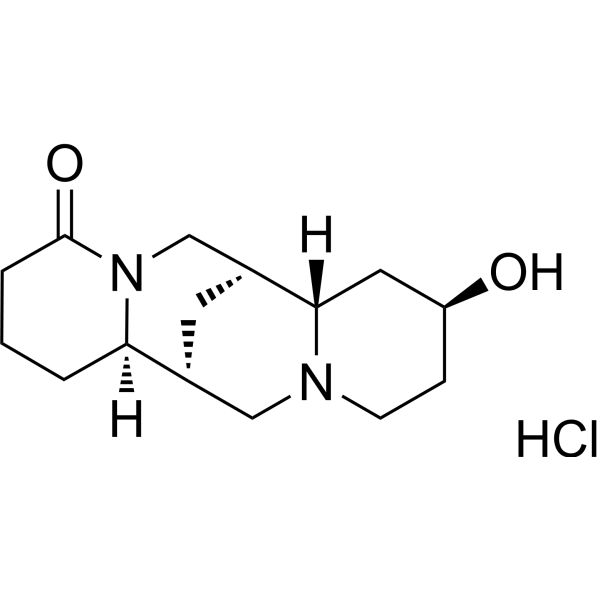
- Formula: C15H25ClN2O2
- Molecular Weight: 300.82
13-Hydroxylupanine Hydroxylupanine is the typical alkaloid profile of sweet lupins. 13-Hydroxylupanine Hydroxylupanine blocks ganglionic transmission, decreases cardiac contractility and contracts uterine smooth muscle.
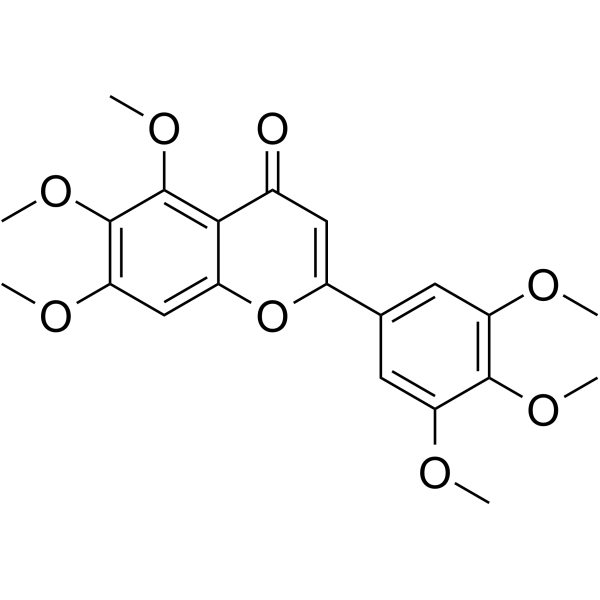
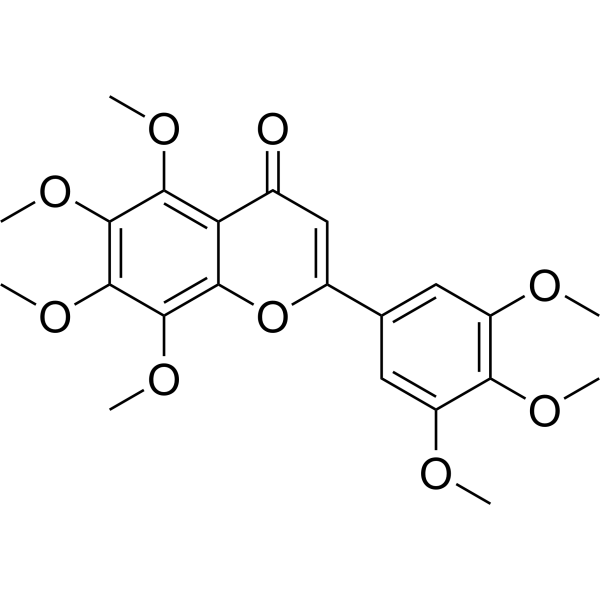
- Formula: C21H22O8
- Molecular Weight: 402.39
3′,4′,5′,5,6,7-Hexamethoxyflavone is a flavonoid with antiprotozoal activity. 3′,4′,5′,5,6,7-Hexamethoxyflavone inhibits trypanosoma bruceirhodesiense with IC50 of 21.3 μM (8.58 g/mL).

- Formula: C12H14O2
- Molecular Weight: 190.24

- Formula: C20H20O8
- Molecular Weight: 388.37
Ageconyflavone C is a natural pentamethoxyflavonoid found in the aerial parts of Ageratum conyzoides L. Ageconyflavone C inhibits Trypanosoma brucei rhodesiense, Leishmania donovani, and Chloroquine (HY-17589A)- and Pyrimethamine (HY-18062)-resistant Plasmodium falciparum K1, with IC50 values of 7.8, 9.2, and 9.25 μM, respectively. Ageconyflavone C can be used in studies related to anti-protozoal and parasitic infection research.

- Formula: C19H18O7
- Molecular Weight: 358.34
Ageconyflavone B is a flavonoid. Ageconyflavone B can be separated from AC-AgNPs. Ageconyflavone B reduces inflammation by interfering with IκBα phosphorylation.



