



Cynanchum paniculatum (Bunge) Kitagawa
-
Cynanchum paniculatum (Bunge) Kitagawa (5)

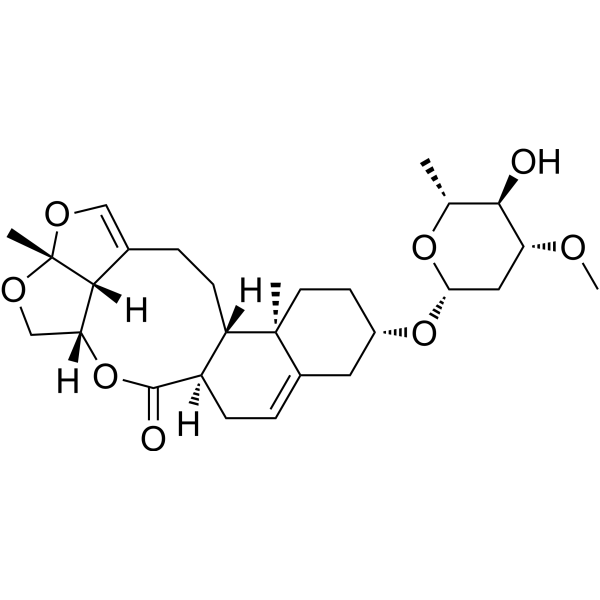
- Formula: C28H40O8
- Molecular Weight: 504.61
Cynatratoside A, an oligoglycoside, is a nature product that could be isolated from the roots of Cynanchum paniculatum.
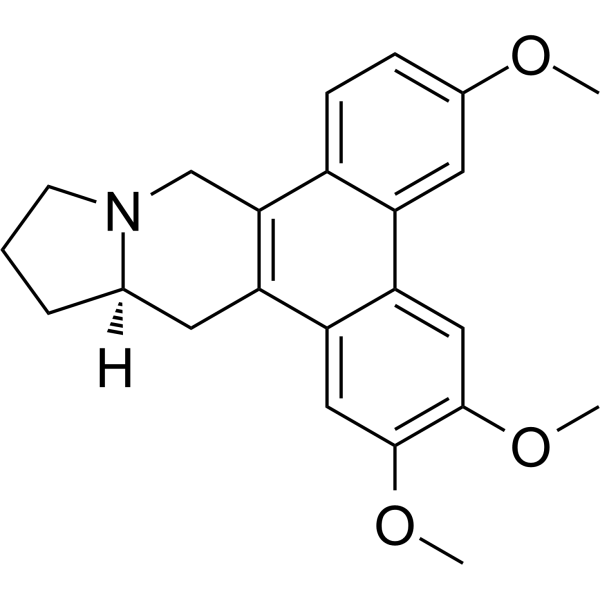
- Formula: C23H25NO3
- Molecular Weight: 363.45
(-)-Antofine is an alkaloid, a levorotatory Antofine. Antofine is an antifungal compound.
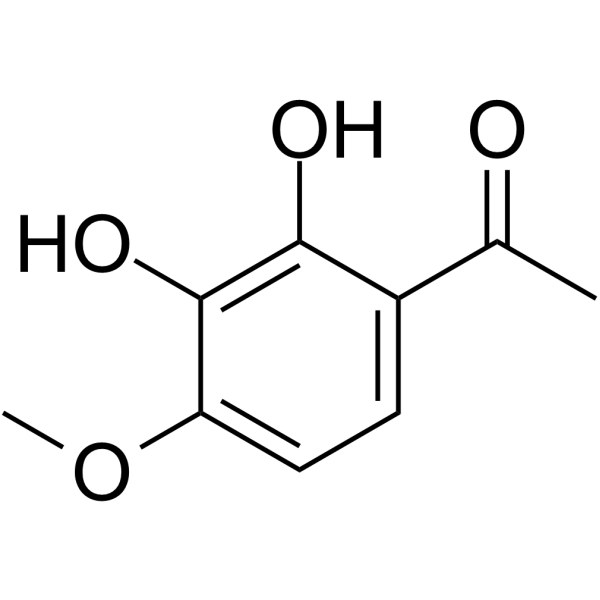
- Formula: C9H10O4
- Molecular Weight: 182.17
2,3-Dihydroxy-4-methoxyacetophenone is a neuroprotective compound from Cynenchum paniculatum. 2,3-Dihydroxy-4-methoxyacetophenone improves cognitive function and may has the potential for the treatment of Alzheimer's disease research.

- Formula: C7H16O
- Molecular Weight: 116.20
3-Methyl-1-hexanol, a volatile organic compound, is a microbial antagonist that can be isolated from Aureobasidium pullulans. 3-Methyl-1-hexanol has antifungal activities against Alternaria alternate and Botrytis cinerea. 3-Methyl-1-hexanol can be used for microbial infections research.
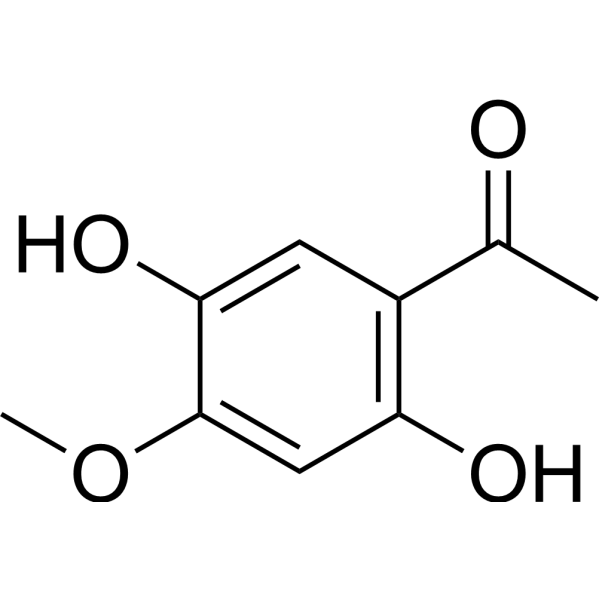
- Formula: C9H10O4
- Molecular Weight: 182.17
2,5-Dihydroxy-4-methoxyacetophenone (compounds 3) can be isolated from the 80% methanol extract of roots of Cynanchum paniculatum Kitagawa. 2,5-Dihydroxy-4-methoxyacetophenone inhibits glutamate-induced cytotoxicity in hippocampal HT22 cell line. 2,5-Dihydroxy-4-methoxyacetophenone significantly inhibites MMP-13 expression in SW1353 cells, and have the potential for alleviating cartilage degradation.



