



Cancer Targeted Therapy
Cancer targeted therapy is the foundation of precision medicine; it uses drugs or other substances to target specific genes and proteins that control cancer cells’ growth, division and spreading. Compared to traditional chemotherapy drugs, targeted-drugs can specifically act on cancer cells with high efficacy without damaging normal cells. Drugs used in cancer targeted therapy mainly includes small molecules and macromolecules (e.g., monoclonal antibodies), which can target cancer cells and constituents in the tumor microenvironment to activate the immune system. Anti-angiogenesis drugs, such as those targeting vascular endothelial growth factor (VEGF), epidermal growth factor receptor (EGFR), transforming growth factor (TGF)-α, TGF-β, Tumor necrosis factor (TNF)-α, and platelet-derived endothelial growth factor (PDGFR) inhibit the proliferation and metastasis of cancer cells. In recent years, the proportion of antibody drugs in cancer treatment has gradually become prominent. Antibody-drug conjugates (ADCs) are a new type of targeted drugs that are composed of monoclonal antibody, cytotoxic drug and linker. ADCs can deliver drugs to tumor cells and minimize the toxicity to normal tissues. Proteolysis-targeting chimera (PROTAC) is a useful technology for targeted protein degradation. PROTAC exploits the ubiquitin-proteasome system and forms a ternary complex with a hijacked E3 ubiquitin ligase and target protein, leading to polyubiquitination and degradation of the target protein.
Targeted therapy is a useful strategy in treatment of cancer either alone or in combination with standard chemotherapy. At present, targeted therapy has proved significant clinical success in the treatment of many types of cancer, including breast cancer, colorectal cancer, leukemia, ovarian cancer and lung cancer.
-
hsa-miR-3714 antagomir
 0 ImagesCat. No.: HY-RI00819A
hsa-miR-3714 antagomirs are chemically-modified oligonucleotides that hybridize with mature miRNAs. The miRNA antagomirs have 2 phosphorothioates at the 5' end, 4 phosphorothioates at the 3' end, 1 cholesterol group at the 3' end, and full-length nucleotide 2'-methoxy modification. The miRNA antagomirs strongly compete with mature miRNAs to prevent the complementary pairing of miRNAs and their target genes, thereby inhibiting miRNAs from functioning. Stability of miRNA antagomirs appears to be significantly higher than miRNA inhibitors, they exhibits enhanced cellular uptake, stability and regulatory activity in vivo.
-
hsa-miR-4798-5p inhibitor
 0 ImagesCat. No.: HY-RI01440
hsa-miR-4798-5p inhibitors are chemically-modified oligonucleotides that hybridize with mature miRNAs. The miRNA inhibitors have full-length nucleotide 2'-methoxy modification. The miRNA inhibitors strongly compete with mature miRNAs to prevent the complementary pairing of miRNAs and their target genes, thereby inhibiting miRNAs from functioning.
-
hsa-miR-6752-3p antagomir
 0 ImagesCat. No.: HY-RI02060A
hsa-miR-6752-3p antagomirs are chemically-modified oligonucleotides that hybridize with mature miRNAs. The miRNA antagomirs have 2 phosphorothioates at the 5' end, 4 phosphorothioates at the 3' end, 1 cholesterol group at the 3' end, and full-length nucleotide 2'-methoxy modification. The miRNA antagomirs strongly compete with mature miRNAs to prevent the complementary pairing of miRNAs and their target genes, thereby inhibiting miRNAs from functioning. Stability of miRNA antagomirs appears to be significantly higher than miRNA inhibitors, they exhibits enhanced cellular uptake, stability and regulatory activity in vivo.
-
PARP1 degrader 1
 0 ImagesCat. No.: HY-180276
PARP1 degrader 1 (Compound 2c) is a comparatively potent PARP1 HyT degrader (DC50: 618 nM for intracellular PARP-1). PARP1 degrader 1 is also a HyT-Olaparib (HY-10162) conjugate. PARP1 degrader 1 induces UPR/autophagy, thus facilitating the degradation of PARP-1. PARP1 Degrader 1 can be used in the research of cancer.
-
SphK2-IN-5
 0 ImagesCat. No.: HY-184272
SphK2-IN-5 is a selective SphK2 inhibitor with an IC50 of 0.55 μM. SphK2-IN-5 exhibits anticancer activity against colon cancer and liver cancer.
-
Momordin Ic (Standard)
 0 Images
Momordin Ic (Standard) is the analytical standard of Momordin Ic. This product is intended for research and analytical applications. Momordin Ic is an orally active triterpenoid saponin that can be isolated from Kochia scoparia. It is also a SUMO specific protease 1 (SENP1) inhibitor, SENP1/c-MYC signaling pathway inhibitor, and apoptosis inducer. Momordin Ic induces autophagy and apoptosis in liver cancer cells through the PI3K/Akt and MAPK signaling pathways mediated by reactive oxygen species. Momordin Ic has the ability to control glucose induced blood glucose elevation, inhibit gastric emptying, resist rheumatoid arthritis, reduce CCl4 (HY-Y0298) induced hepatotoxicity and anti-tumor activity.
-
hsa-miR-186-3p inhibitor
 0 ImagesCat. No.: HY-RI00347
hsa-miR-186-3p inhibitors are chemically-modified oligonucleotides that hybridize with mature miRNAs. The miRNA inhibitors have full-length nucleotide 2'-methoxy modification. The miRNA inhibitors strongly compete with mature miRNAs to prevent the complementary pairing of miRNAs and their target genes, thereby inhibiting miRNAs from functioning.
-
hsa-miR-4289 inhibitor
 0 ImagesCat. No.: HY-RI00968
hsa-miR-4289 inhibitors are chemically-modified oligonucleotides that hybridize with mature miRNAs. The miRNA inhibitors have full-length nucleotide 2'-methoxy modification. The miRNA inhibitors strongly compete with mature miRNAs to prevent the complementary pairing of miRNAs and their target genes, thereby inhibiting miRNAs from functioning.
-
hsa-miR-519a-3p antagomir
 0 ImagesCat. No.: HY-RI01588A
hsa-miR-519a-3p antagomirs are chemically-modified oligonucleotides that hybridize with mature miRNAs. The miRNA antagomirs have 2 phosphorothioates at the 5' end, 4 phosphorothioates at the 3' end, 1 cholesterol group at the 3' end, and full-length nucleotide 2'-methoxy modification. The miRNA antagomirs strongly compete with mature miRNAs to prevent the complementary pairing of miRNAs and their target genes, thereby inhibiting miRNAs from functioning. Stability of miRNA antagomirs appears to be significantly higher than miRNA inhibitors, they exhibits enhanced cellular uptake, stability and regulatory activity in vivo.
-
BET bromodomain inhibitor 3
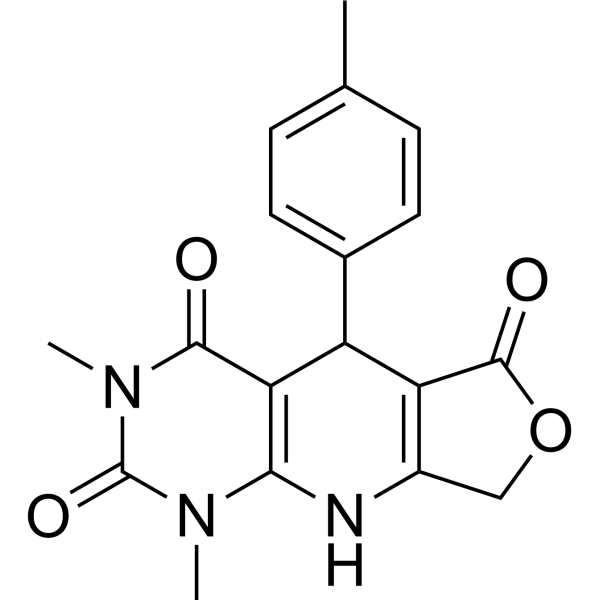 0 ImagesCat. No.: HY-153593CAS No.: 854137-39-6
-
BTK-IN-36
 0 ImagesCat. No.: HY-158064CAS No.: 2502301-31-5
BTK-IN-36 (S-016) is a BTK inhibitor, with IC50 of 0.5 nM. BTK-IN-36 can be used in cancer-related research.
-
Elliptinium acetate
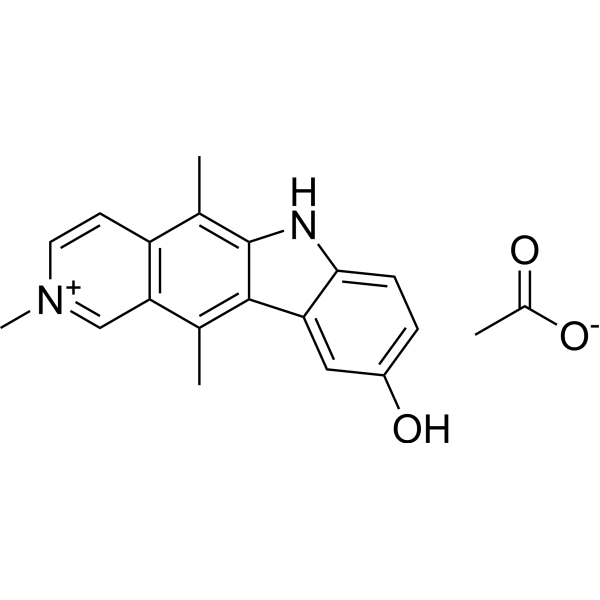 0 ImagesCat. No.: HY-16189CAS No.: 58337-35-2Synonyms: NSC 264137; Celiptium
Elliptinium acetate (NSC 264137) is a DNA intercalating agent that is highly cytotoxic to L1 210 cells and covalently binds to nucleic acids from L1210 cells. Elliptinium acetate can be used in cancer research, particularly in metastatic breast cancer.
-
BTK ligand 1
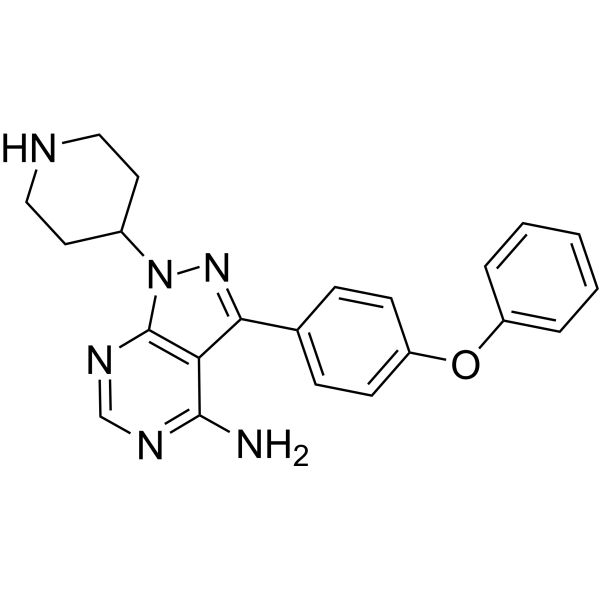 0 ImagesCat. No.: HY-150885CAS No.: 330785-90-5
BTK ligand 1 (compound 1) is a ligand targeting Bruton’s tyrosine kinase (Btk). BTK ligand 1 can combine with E3 ligase ligand (Ligand for E3 Ligase) through PROTAC Linker to form PROTAC. PROTACs targeting Btk can be used in the study of chronic lymphocytic leukemia (CLL) and other BK cell malignancies.
-
2-Methoxy-9-β-D-ribofuranosyl-9H-purine
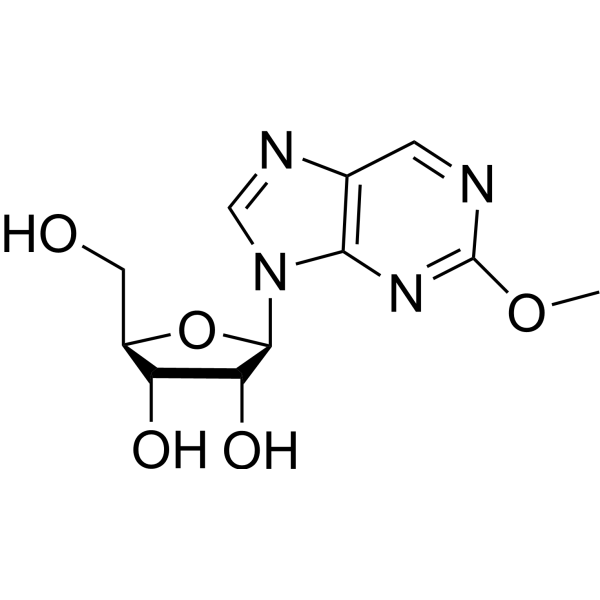 0 ImagesCat. No.: HY-154251CAS No.: 39638-84-1
2-Methoxy-9-β-D-ribofuranosyl-9H-purine is a purine nucleoside analog. Purine nucleoside analogs have broad antitumor activity targeting indolent lymphoid malignancies. Anticancer mechanisms in this process rely on inhibition of DNA synthesis, induction of apoptosis, etc.
-
hsa-miR-7702 inhibitor
 0 ImagesCat. No.: HY-RI02417
hsa-miR-7702 inhibitors are chemically-modified oligonucleotides that hybridize with mature miRNAs. The miRNA inhibitors have full-length nucleotide 2'-methoxy modification. The miRNA inhibitors strongly compete with mature miRNAs to prevent the complementary pairing of miRNAs and their target genes, thereby inhibiting miRNAs from functioning.
-
mmu-miR-344-3p inhibitor
 0 ImagesCat. No.: HY-RI03039
mmu-miR-344-3p inhibitors are chemically-modified oligonucleotides that hybridize with mature miRNAs. The miRNA inhibitors have full-length nucleotide 2'-methoxy modification. The miRNA inhibitors strongly compete with mature miRNAs to prevent the complementary pairing of miRNAs and their target genes, thereby inhibiting miRNAs from functioning.
-
mmu-miR-6968-5p inhibitor
 0 ImagesCat. No.: HY-RI03664
mmu-miR-6968-5p inhibitors are chemically-modified oligonucleotides that hybridize with mature miRNAs. The miRNA inhibitors have full-length nucleotide 2'-methoxy modification. The miRNA inhibitors strongly compete with mature miRNAs to prevent the complementary pairing of miRNAs and their target genes, thereby inhibiting miRNAs from functioning.
-
rno-miR-200c-5p inhibitor
 0 ImagesCat. No.: HY-RI04285
rno-miR-200c-5p inhibitors are chemically-modified oligonucleotides that hybridize with mature miRNAs. The miRNA inhibitors have full-length nucleotide 2'-methoxy modification. The miRNA inhibitors strongly compete with mature miRNAs to prevent the complementary pairing of miRNAs and their target genes, thereby inhibiting miRNAs from functioning.
-
STA-1474
 0 ImagesCat. No.: HY-13752CAS No.: 1118915-78-8
STA-1474 is an orally active and highly selective HSP90 inhibitor, as well as a phosphate prodrug of the HSP90 inhibitor STA-9090 (HY-15205). STA-1474 disrupts the chaperone function of HSP90 and promotes the degradation of client proteins. STA-1474 inhibits the phosphorylation of Met, Akt and STAT3, thereby blocking related signaling pathways. STA-1474 induces apoptosis and inhibits proliferation of osteosarcoma cells, and triggers the up-regulation of HSP70 and HSP90. STA-1474 induces tumor regression and caspase-3 activation in mouse osteosarcoma xenograft models. STA-1474 can be used in the research of osteosarcoma.
-
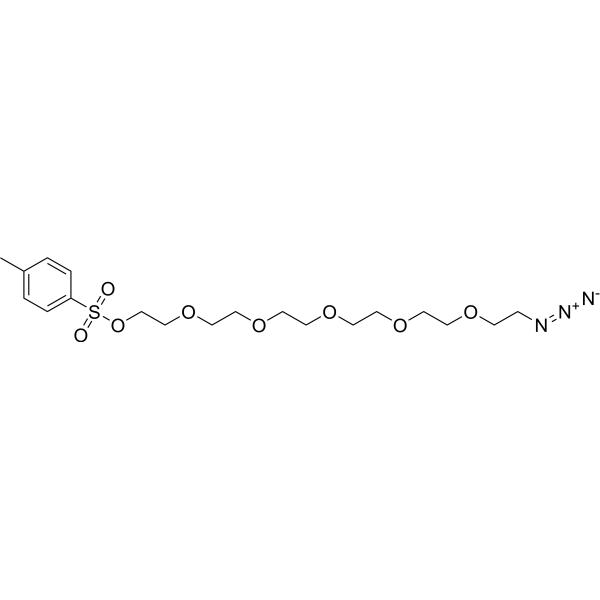
Azide-PEG6-Tos
 0 Images
Azide-PEG6-Tos is a PEG-based PROTAC linker that can be used in the synthesis of PROTACs. Azide-PEG6-Tos is a click chemistry reagent, it contains an Azide group and can undergo copper-catalyzed azide-alkyne cycloaddition reaction (CuAAc) with molecules containing Alkyne groups. It can also undergo strain-promoted alkyne-azide cycloaddition (SPAAC) reactions with molecules containing DBCO or BCN groups.



