



Cancer Targeted Therapy
Cancer targeted therapy is the foundation of precision medicine; it uses drugs or other substances to target specific genes and proteins that control cancer cells’ growth, division and spreading. Compared to traditional chemotherapy drugs, targeted-drugs can specifically act on cancer cells with high efficacy without damaging normal cells. Drugs used in cancer targeted therapy mainly includes small molecules and macromolecules (e.g., monoclonal antibodies), which can target cancer cells and constituents in the tumor microenvironment to activate the immune system. Anti-angiogenesis drugs, such as those targeting vascular endothelial growth factor (VEGF), epidermal growth factor receptor (EGFR), transforming growth factor (TGF)-α, TGF-β, Tumor necrosis factor (TNF)-α, and platelet-derived endothelial growth factor (PDGFR) inhibit the proliferation and metastasis of cancer cells. In recent years, the proportion of antibody drugs in cancer treatment has gradually become prominent. Antibody-drug conjugates (ADCs) are a new type of targeted drugs that are composed of monoclonal antibody, cytotoxic drug and linker. ADCs can deliver drugs to tumor cells and minimize the toxicity to normal tissues. Proteolysis-targeting chimera (PROTAC) is a useful technology for targeted protein degradation. PROTAC exploits the ubiquitin-proteasome system and forms a ternary complex with a hijacked E3 ubiquitin ligase and target protein, leading to polyubiquitination and degradation of the target protein.
Targeted therapy is a useful strategy in treatment of cancer either alone or in combination with standard chemotherapy. At present, targeted therapy has proved significant clinical success in the treatment of many types of cancer, including breast cancer, colorectal cancer, leukemia, ovarian cancer and lung cancer.
-
Methyl 6-aminohexanoate hydrochloride
 0 ImagesCat. No.: HY-W008066CAS No.: 1926-80-3
-
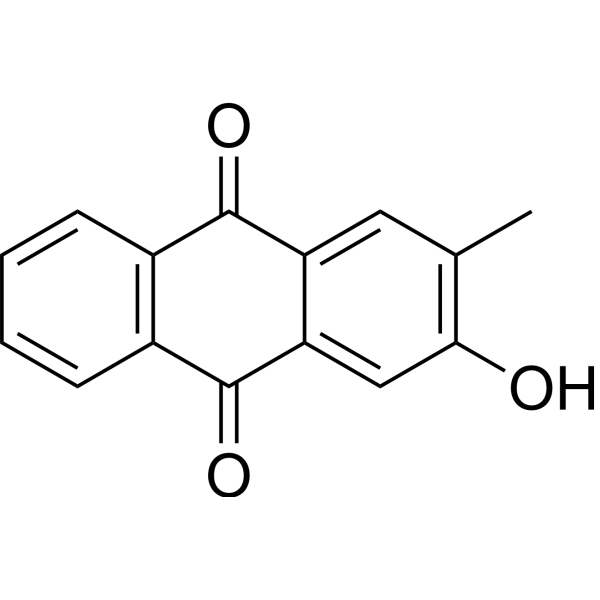
2-Hydroxy-3-methylanthraquinone
 0 Images
2-Hydroxy-3-methylanthraquinone (compound 1) is a natural compound isolated from a water extract of Hedyotis diffusa WILLD. 2-Hydroxy-3-methylanthraquinone shows inhibitory activity against protein tyrosine kinases v-src and pp60src, and induces growth arrest and apoptosis in the HepG2 cancer cells.
-
Ivicentamab
 0 ImagesSynonyms: GEN-3009
Ivicentamab (GEN-3009) is a bispecific antibody targeting CD37 with dual epitopes. Ivicentamab carries an E430G mutation in the Fc region, which efficiently promotes IgG hexamer formation on the surface of target cells. Ivicentamab provides the parental variable regions for an H429F-engineered anti-CD37 bispecific antibody, enabling it to exert complement-dependent cytotoxicity in Daudi lymphoma cells. Ivicentamab is mainly used in lymphoma-related research.
-
Pomalidomide (Standard)
 0 ImagesSynonyms: CC-4047 (Standard)
Pomalidomide (Standard) is the analytical standard of Pomalidomide. This product is intended for research and analytical applications. Pomalidomide, the third-generation immunomodulatory agent, acts as molecular glue. Pomalidomide interacts with the E3 ligase cereblon and induces degradation of essential Ikaros transcription factors.
-
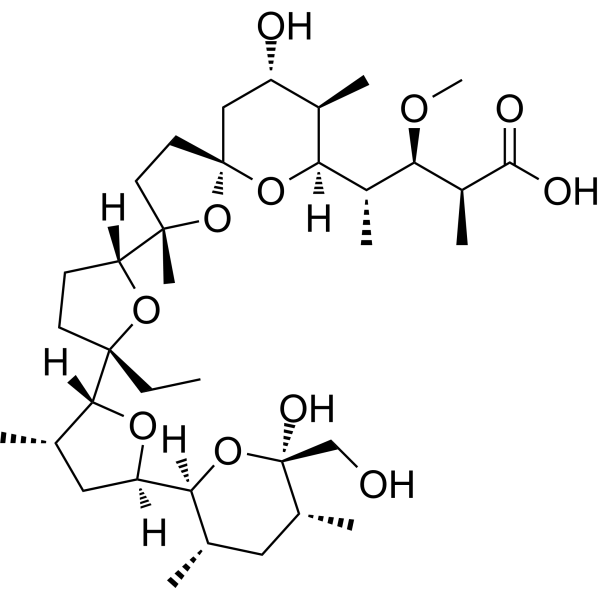
Monensin
 0 ImagesSynonyms: Monensin A
Monensin (Monensin A), an orally active antibiotic, is an ionophore that mediates Na+/H+ exchange. Monensin is a potent Wnt signaling inhibitor. Monensin causes a marked enlargement of the multivesicular bodies (MVBs) and regulates exosome secretion. Monensin can be used for bacterial, fungal, and parasitic infections research, and shows anticancer effects.
-
7-Hydroxystaurosporine
 0 ImagesCat. No.: HY-13661CAS No.: 112953-11-4Synonyms: UCN-01; KRX-0601
7-Hydroxystaurosporine (UCN-01), a derivative of Staurosporine (HY-15141), is a selective protein kinase C (PKC) inhibitor with antitumor activity. 7-hydroxystaurosporine induces apoptosis and inhibits cell proliferation in colon carcinoma and leukemia cells, suppresses invasion and migration in glioblastoma cells. 7-Hydroxystaurosporine exhibits efficacy in breast cancer xenograft mouse models. 7-Hydroxystaurosporine can be used for colon carcinoma, breast cancer, glioblastoma and leukemia research.
-
(R)-AMG-193
 0 Images
(R)-AMG-193 is an isomer of AMG 193 (HY-153390). AMG 193 is an orally active MTA-cooperative PRMT5 inhibitor with antitumor activity. AMG 193, when complexed with MTA, preferentially inhibits the growth of MTAP-deficient tumor cells by inhibiting PRMT5 (IC50=0.107 μM), thereby protecting normal cells with wild-type MTAP.
-
tert-Butyl N-(3-hydroxypropyl)-N-methylcarbamate
 0 ImagesCat. No.: HY-W020221CAS No.: 98642-44-5
-
Captopril (Standard)
 0 ImagesSynonyms: SQ 14225 (Standard)
Captopril (Standard) is the analytical standard of Captopril. This product is intended for research and analytical applications. Captopril (SQ 14225), antihypertensive agent, is a thiol-containing competitive, orally active angiotensin-converting enzyme (ACE) inhibitor (IC50=0.025 μM) and has been widely used for research of hypertension and congestive heart failure. Captopril is also a New Delhi metallo-β-lactamase-1 (NDM-1) inhibitor with an IC50 of 7.9 μM.
-
Tetraacetylphytosphingosine
 0 Images
Tetraacetylphytosphingosine is a sphingolipid metabolite produced by phytosphingosine acetylation. Tetraacetylphytosphingosine exerts its inhibitory action on angiogenesis through the inhibition of MAPK activation and intracellular calcium increase. Tetraacetylphytosphingosine induces apoptosis in HaCaT cells.

-
Apixaban (Standard)
 0 ImagesSynonyms: BMS-562247-01 (Standard)
Apixaban (Standard) is the analytical standard of Apixaban. This product is intended for research and analytical applications. Apixaban (BMS-562247-01) is a highly selective, reversible and orally active inhibitor of Factor Xa with Ki of 0.08 nM and 0.17 nM in human and rabbit, respectively. Apixaban is in development for the prevention and treatment of various thromboembolic diseases.
-
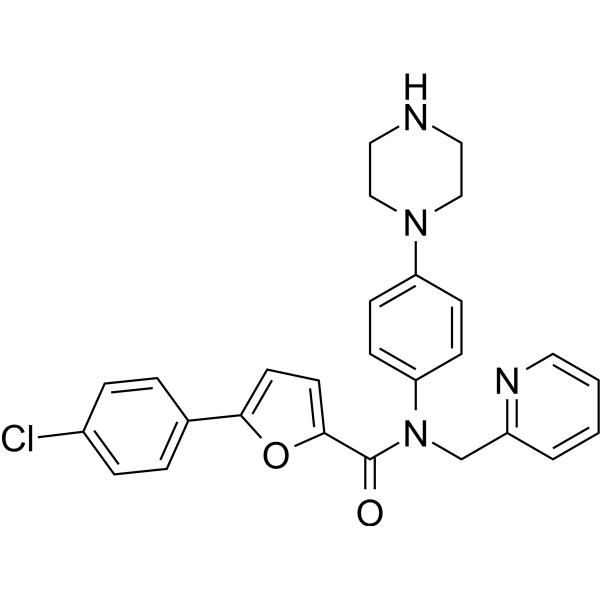
MK2-IN-1
 0 Images
MK2-IN-1 (compound 1) is a potent and selecitve MAPKAPK2 (MK2) inhibitor with an IC50 of 0.11 uM for MK2 and an EC50 of 0.35 uM for pHSP27. MK2-IN-1 impaires the phosphorylation level of serine residues in the Tfcp2l1 protein.
-
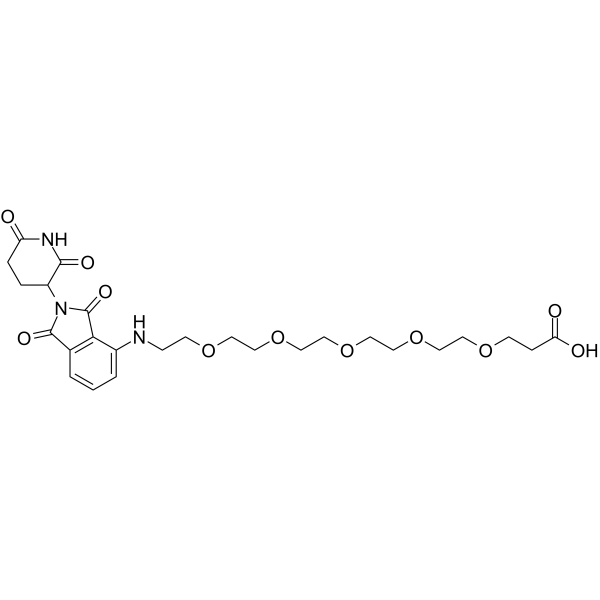
Pomalidomide 4'-PEG5-acid
 0 ImagesSynonyms: Pomalidomide-PEG5-CO2H
Pomalidomide 4'-PEG5-acid (Pomalidomide-PEG5-CO2H) is a synthesized E3 ligase ligand-linker conjugate that incorporates the Pomalidomide based cereblon ligand and 5-unit PEG linker used in PROTAC technology.

-
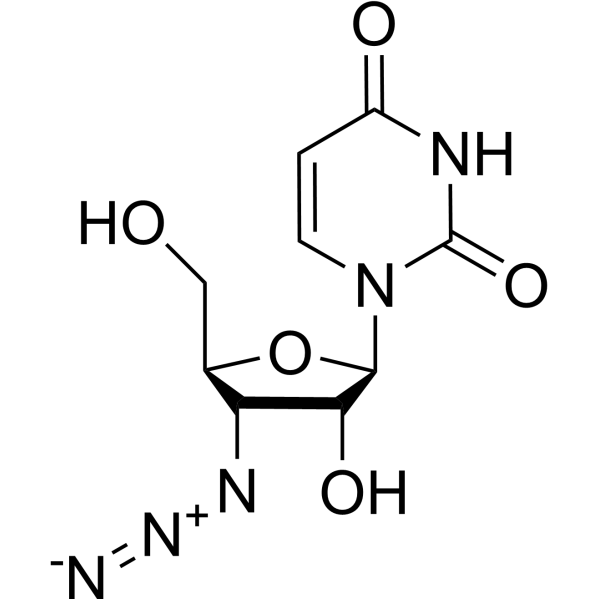
3’-Azido-3’-deoxyuridine
 0 Images
3’-Azido-3’-deoxyuridine is a purine nucleoside analogue. Purine nucleoside analogs have broad antitumor activity targeting indolent lymphoid malignancies. Anticancer mechanisms in this process rely on inhibition of DNA synthesis, induction of apoptosis, etc. 3’-Azido-3’-deoxyuridine is a click chemistry reagent, it contains an Azide group and can undergo copper-catalyzed azide-alkyne cycloaddition reaction (CuAAc) with molecules containing Alkyne groups. It can also undergo strain-promoted alkyne-azide cycloaddition (SPAAC) reactions with molecules containing DBCO or BCN groups.
-
2-Propargyl-(trans)-4-cyclohexanediamine hydrochloride
 0 ImagesCat. No.: HY-W060233CAS No.: 1313279-48-9
-
Tridecane-1,13-diol
 0 ImagesCat. No.: HY-W105732CAS No.: 13362-52-2Synonyms: 1,13-Tridecanediol
-
α-Santalol
 0 Images
α-Santalol (cis-α-Santalol), a naturally occurring sesquiterpene, is an orally active anticancer agent and apoptosis inducer. α-Santalol activates caspase-3 to drive apoptotic processes. >α-Santalol induces apoptosis, decreases cell viability, and causes PARP cleavage in human prostate cancer cells. α-santalol inhibits Akt/Survivin pathway to induce cell death. α-Santalol can be used for the research of prostate cancer and diabetes mellitus.
-
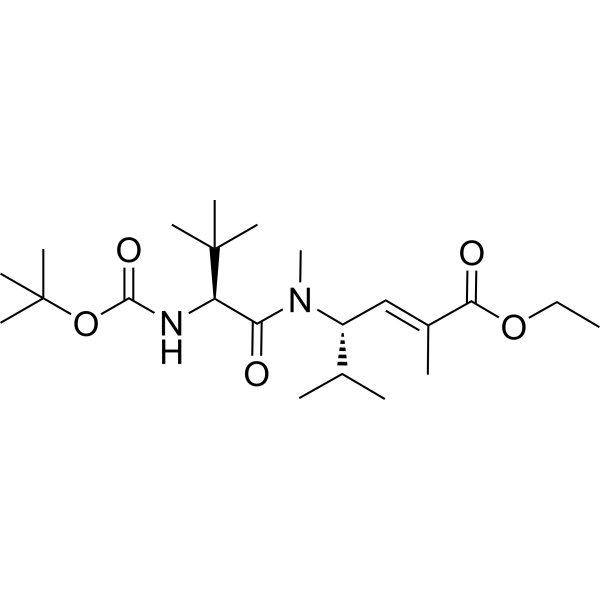
Taltobulin intermediate-4
 0 Images
Taltobulin intermediate-4 is an intermediate in the synthesis of Taltobulin (HY-15584). Taltobulin is a common toxin component in ADC preparation (ADC Cytotoxin), and it is also a powerful tubulin (Microtubule/Tubulin) inhibitor. Taltobulin disrupts tubulin polymerization, induces mitotic arrest, and induces apoptosis.



