



Cancer Targeted Therapy
Cancer targeted therapy is the foundation of precision medicine; it uses drugs or other substances to target specific genes and proteins that control cancer cells’ growth, division and spreading. Compared to traditional chemotherapy drugs, targeted-drugs can specifically act on cancer cells with high efficacy without damaging normal cells. Drugs used in cancer targeted therapy mainly includes small molecules and macromolecules (e.g., monoclonal antibodies), which can target cancer cells and constituents in the tumor microenvironment to activate the immune system. Anti-angiogenesis drugs, such as those targeting vascular endothelial growth factor (VEGF), epidermal growth factor receptor (EGFR), transforming growth factor (TGF)-α, TGF-β, Tumor necrosis factor (TNF)-α, and platelet-derived endothelial growth factor (PDGFR) inhibit the proliferation and metastasis of cancer cells. In recent years, the proportion of antibody drugs in cancer treatment has gradually become prominent. Antibody-drug conjugates (ADCs) are a new type of targeted drugs that are composed of monoclonal antibody, cytotoxic drug and linker. ADCs can deliver drugs to tumor cells and minimize the toxicity to normal tissues. Proteolysis-targeting chimera (PROTAC) is a useful technology for targeted protein degradation. PROTAC exploits the ubiquitin-proteasome system and forms a ternary complex with a hijacked E3 ubiquitin ligase and target protein, leading to polyubiquitination and degradation of the target protein.
Targeted therapy is a useful strategy in treatment of cancer either alone or in combination with standard chemotherapy. At present, targeted therapy has proved significant clinical success in the treatment of many types of cancer, including breast cancer, colorectal cancer, leukemia, ovarian cancer and lung cancer.
-
tert-Butyl (cis-3-(hydroxymethyl)cyclobutyl)carbamate
 0 ImagesCat. No.: HY-W052626CAS No.: 142733-64-0
-
trans-Trimethoxyresveratrol
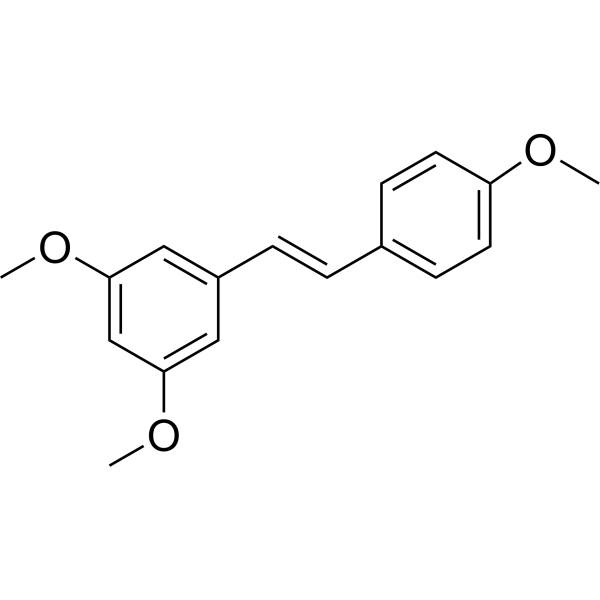 0 ImagesSynonyms: trans-trismethoxy Resveratrol; (E)-Resveratrol trimethyl ether; trans-3,5,4'-Trimethoxystilbene
Trans-Trimethoxyresveratrol (trans-trismethoxy Resveratrol; (E)-Resveratrol trimethyl ether; trans-3,5,4'-Trimethoxystilbene) is an orally active natural derivative of Resveratrol (HY-16561). Trans-Trimethoxyresveratrol has an enhanced anticancer profile compared to Resveratrol, exhibiting higher potency than resveratrol, with improved cancer cell proliferation inhibition, induction of cell cycle arrest, decreased metastasis, and increased apoptosis. Trans-Trimethoxyresveratrol causes microtubule disassembling and tubulin depolymerization and exerts anti-angiogenic effects through VEGFR2. Trans-Trimethoxyresveratrol can be used for the studies of anti-angiogenic and anti-cancer (such as non-small cell lung cancer and osteosarcoma).
-
Anti-Mouse GITR Antibody (DTA-1)
 0 ImagesCat. No.: HY-P990124Purity: 98.47%
Anti-Mouse GITR Antibody (DTA-1) is a rat derived IgG2b monoclonal agonist antibody targeting mouse GITR. Anti-Mouse GITR Antibody (DTA-1) can activate T cells and B cells to enhance immune response. Anti-Mouse GITR Antibody (DTA-1) selectively enhances Th2 cell effector function through GITR signaling. Anti-Mouse GITR Antibody (DTA-1) may exacerbate allergic reactions. Anti-Mouse GITR Antibody (DTA-1) can be used for researches on cancer and allergic conditions such as colon cancer and allergic asthma. The recommed isotype control of Anti-Mouse GITR Antibody (DTA-1) is Rat IgG2b kappa, Isotype Control (HY-P990682).
-
Pyridoxine hydrochloride (Standard)
 0 Images
Pyridoxine (hydrochloride) (Standard) is the analytical standard of Pyridoxine (hydrochloride). This product is intended for research and analytical applications. Pyridoxine hydrochloride (Pyridoxol; Vitamin B6) is a pyridine derivative. Pyridoxine (Pyridoxol; Vitamin B6) exerts antioxidant effects in cell model of Alzheimer's disease via the Nrf-2/HO-1 pathway.
-
Anti-Mouse NKG2A/C/E Antibody (20D5)
 0 ImagesCat. No.: HY-P990180
Anti-Mouse NKG2A/C/E Antibody (20D5) is an anti-mouse NKG2A/C/E IgG2a monoclonal antibody. Anti-Mouse NKG2A/C/E Antibody (20D5) can activate natural killer (NK) and CD8+ T cells. Anti-Mouse NKG2A/C/E Antibody (20D5) can exacerbate liver pathological damage by enhancing the activation of iNKT cells. Anti-Mouse NKG2A/C/E Antibody (20D5) can be used for researches on cancer and immunology such as lymphoma.
-
Sotorasib (Standard)
 0 ImagesSynonyms: AMG-510 (Standard)
Sotorasib (Standard) is the analytical standard of Sotorasib. This product is intended for research and analytical applications. Sotorasib (AMG-510) is a first-in-class, orally bioavailable, and selective KRAS G12C covalent inhibitor. Sotorasib irreversibly inhibits KRAS G12C by locking it in an inactive GDP-bound state. Sotorasib leads to the regression of KRAS G12C‑mutated locally advanced or metastatic non‑small cell lung cancer (NSCLC).
-
MK-8033
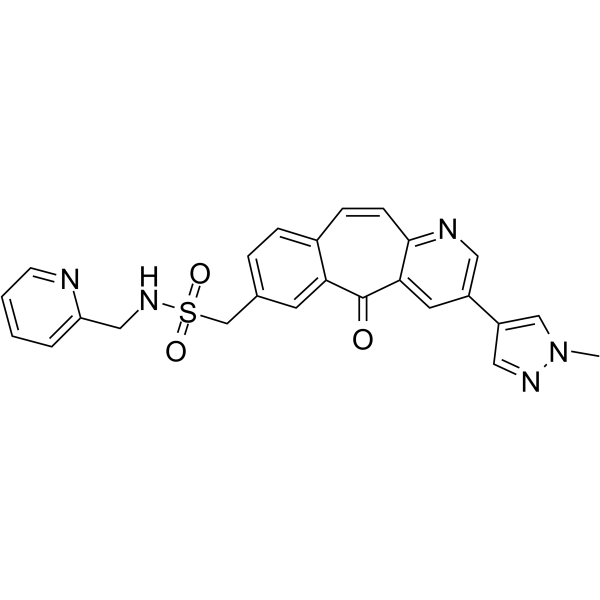 0 Images
MK-8033 is an orally active ATP competitive c-Met/Ron dual inhibitor (IC50s: 1 nM (c-Met),7 nM (Ron)), with preferential binding to the activated kinase conformation. MK-8033 can be used in the research of cancers, such as breast and bladder cancers, non-small cell lung cancers (NSCLCs).

-
Captopril (Standard)
 0 ImagesSynonyms: SQ 14225 (Standard)
Captopril (Standard) is the analytical standard of Captopril. This product is intended for research and analytical applications. Captopril (SQ 14225), antihypertensive agent, is a thiol-containing competitive, orally active angiotensin-converting enzyme (ACE) inhibitor (IC50=0.025 μM) and has been widely used for research of hypertension and congestive heart failure. Captopril is also a New Delhi metallo-β-lactamase-1 (NDM-1) inhibitor with an IC50 of 7.9 μM.
-
EOS006215
 0 ImagesCat. No.: HY-P991621Purity: 98.47%Synonyms: EOS-215
EOS006215 (EOS-215) is a humanized monoclonal antibody targeting TREM-2. EOS006215 competes with TREM2 ligands, prevents TREM2 multimerization, and blocks downstream signaling. EOS006215 inhibits efferocytosis, reprograms transcriptomic profiles of monocyte-derived macrophages, alters metabolism and immune response genes, and increases pro-inflammatory marker secretion. EOS006215 reduces metastasis burden, delays tumor growth, and reprograms the tumor microenvironment to overcome anti-PD-1 resistance. EOS006215 can be used for the research of triple negative breast cancer and colorectal cancer.
-
Biotin-C2-maleimide
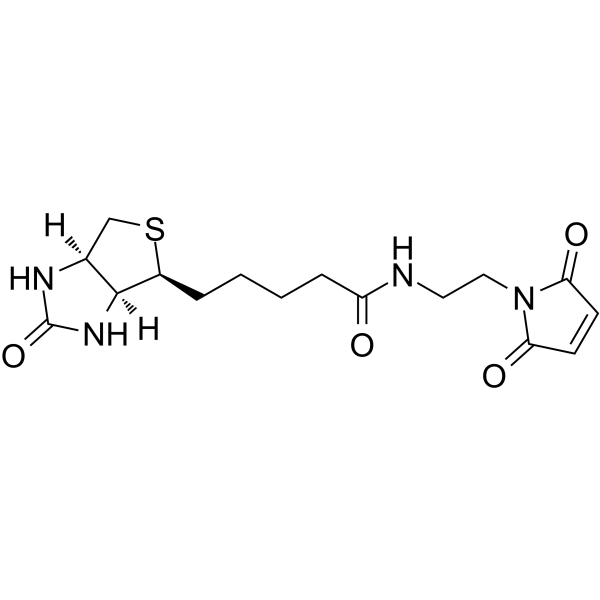 0 Images
Biotin-C2-maleimide is an antibody conjugate reagent, can bind to many biomolecules without significantly changing the biological activity of the target molecule.
-
MK2-IN-1
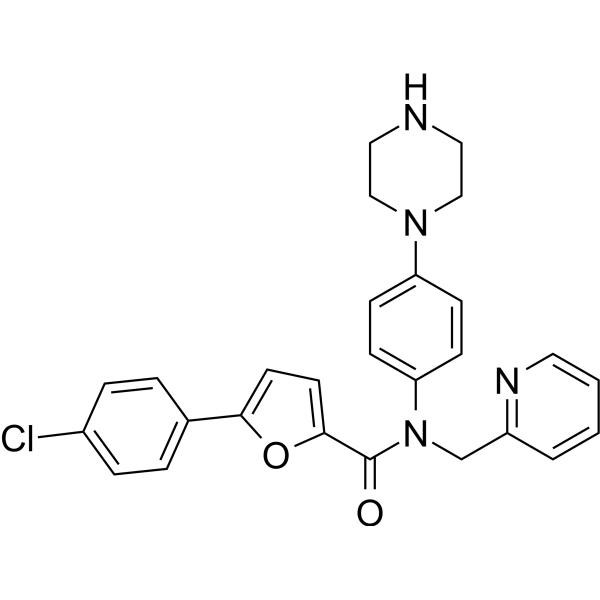 0 Images
MK2-IN-1 (compound 1) is a potent and selecitve MAPKAPK2 (MK2) inhibitor with an IC50 of 0.11 uM for MK2 and an EC50 of 0.35 uM for pHSP27. MK2-IN-1 impaires the phosphorylation level of serine residues in the Tfcp2l1 protein.
-
2-(4-Bromobutyl)-1,3-dioxolane
 0 ImagesCat. No.: HY-33316CAS No.: 87227-41-6
-
α-Santalol
 0 Images
α-Santalol (cis-α-Santalol), a naturally occurring sesquiterpene, is an orally active anticancer agent and apoptosis inducer. α-Santalol activates caspase-3 to drive apoptotic processes. >α-Santalol induces apoptosis, decreases cell viability, and causes PARP cleavage in human prostate cancer cells. α-santalol inhibits Akt/Survivin pathway to induce cell death. α-Santalol can be used for the research of prostate cancer and diabetes mellitus.
-
tert-Butyl 7-(hydroxymethyl)-2-azaspiro[3.5]nonane-2-carboxylate
![tert-Butyl 7-(hydroxymethyl)-2-azaspiro[3.5]nonane-2-carboxylate](https://file.medchemexpress.com/product_pic/hy-w056295.gif "Click to View tert-Butyl 7-(hydroxymethyl)-2-azaspiro[3.5]nonane-2-carboxylate Product Detail") 0 ImagesCat. No.: HY-W056295CAS No.: 1434141-69-1
0 ImagesCat. No.: HY-W056295CAS No.: 1434141-69-1
-
Tetraacetylphytosphingosine
 0 Images
Tetraacetylphytosphingosine is a sphingolipid metabolite produced by phytosphingosine acetylation. Tetraacetylphytosphingosine exerts its inhibitory action on angiogenesis through the inhibition of MAPK activation and intracellular calcium increase. Tetraacetylphytosphingosine induces apoptosis in HaCaT cells.
-
Rilogrotug
 0 ImagesSynonyms: AV-380
-
tert-Butyl (7-bromoheptyl)carbamate
 0 ImagesCat. No.: HY-W036393CAS No.: 142356-34-1

-
Anti-Ganglioside GD2 Antibody (14G2a)
 0 ImagesCat. No.: HY-P990845
Anti-Ganglioside GD2 Antibody (14G2a) is a kind of mouse IgG2a κ chimeric antibody inhibitor, targeting to human Ganglioside GD2. Anti-Ganglioside GD2 Antibody (14G2a) can induce neuroblastoma cells autophagy and lysis. Anti-Ganglioside GD2 Antibody (14G2a) can be used for the research of cancer, such as neuroblastoma.



