



Cancer Targeted Therapy
Cancer targeted therapy is the foundation of precision medicine; it uses drugs or other substances to target specific genes and proteins that control cancer cells’ growth, division and spreading. Compared to traditional chemotherapy drugs, targeted-drugs can specifically act on cancer cells with high efficacy without damaging normal cells. Drugs used in cancer targeted therapy mainly includes small molecules and macromolecules (e.g., monoclonal antibodies), which can target cancer cells and constituents in the tumor microenvironment to activate the immune system. Anti-angiogenesis drugs, such as those targeting vascular endothelial growth factor (VEGF), epidermal growth factor receptor (EGFR), transforming growth factor (TGF)-α, TGF-β, Tumor necrosis factor (TNF)-α, and platelet-derived endothelial growth factor (PDGFR) inhibit the proliferation and metastasis of cancer cells. In recent years, the proportion of antibody drugs in cancer treatment has gradually become prominent. Antibody-drug conjugates (ADCs) are a new type of targeted drugs that are composed of monoclonal antibody, cytotoxic drug and linker. ADCs can deliver drugs to tumor cells and minimize the toxicity to normal tissues. Proteolysis-targeting chimera (PROTAC) is a useful technology for targeted protein degradation. PROTAC exploits the ubiquitin-proteasome system and forms a ternary complex with a hijacked E3 ubiquitin ligase and target protein, leading to polyubiquitination and degradation of the target protein.
Targeted therapy is a useful strategy in treatment of cancer either alone or in combination with standard chemotherapy. At present, targeted therapy has proved significant clinical success in the treatment of many types of cancer, including breast cancer, colorectal cancer, leukemia, ovarian cancer and lung cancer.
-
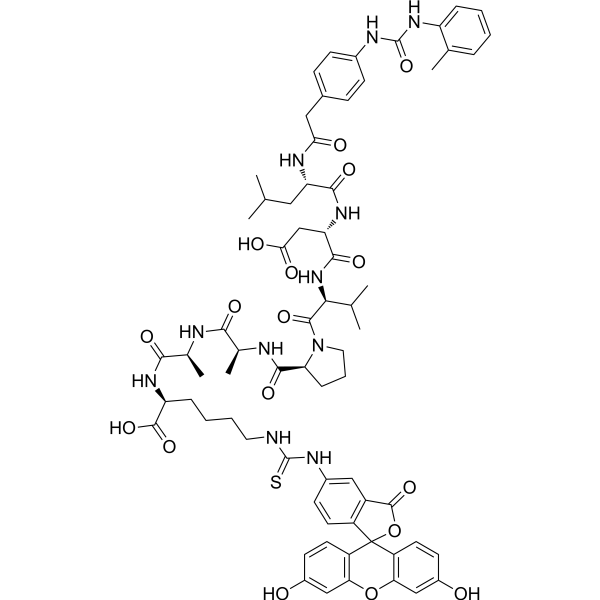
Apixaban (Standard)
 0 ImagesSynonyms: BMS-562247-01 (Standard)
Apixaban (Standard) is the analytical standard of Apixaban. This product is intended for research and analytical applications. Apixaban (BMS-562247-01) is a highly selective, reversible and orally active inhibitor of Factor Xa with Ki of 0.08 nM and 0.17 nM in human and rabbit, respectively. Apixaban is in development for the prevention and treatment of various thromboembolic diseases.


-
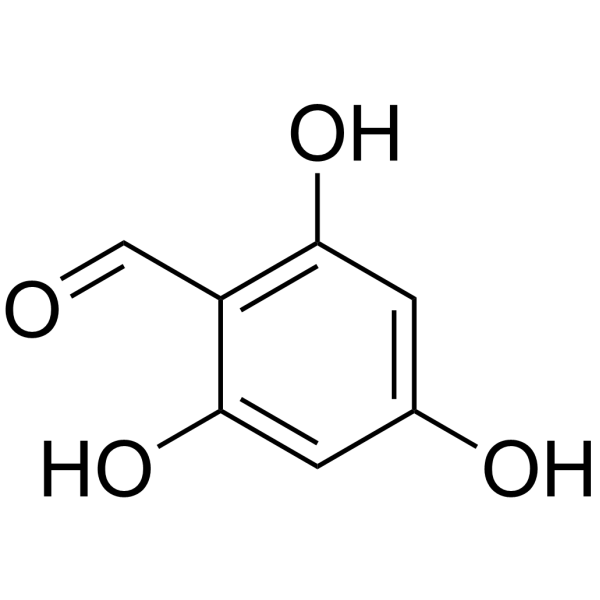
2,4,6-Trihydroxybenzaldehyde
 0 Images
2,4,6-Trihydroxybenzaldehyde is an orally active NF- B inhibitor. 2,4,6-Trihydroxybenzaldehyde shows anti-tumor activity, anti-cancer cell proliferative activity and anti-obesity activity.
-
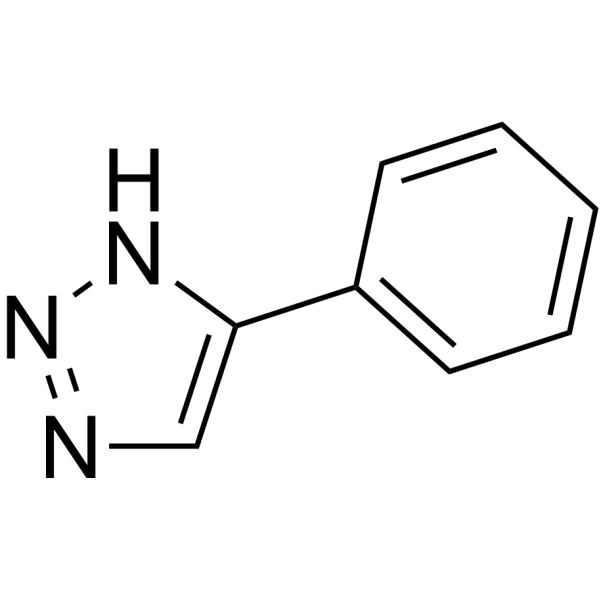
4-Phenyl-1H-1,2,3-triazole
 0 Images
4-Phenyl-1H-1,2,3-triazole is a selective IDO1 inhibitor with an IC50 of 83 μM against human IDO1. 4-Phenyl-1H-1,2,3-triazole binds to the heme iron of IDO1 and occupies its active site, thereby inhibiting tryptophan catabolism. 4-Phenyl-1H-1,2,3-triazole can serve as a precursor for the synthesis of HIV-1 capsid protein inhibitors. 4-Phenyl-1H-1,2,3-triazole is applicable to research related to cancer and organic synthesis.
-
tert-Butyl N-(3-hydroxypropyl)-N-methylcarbamate
 0 ImagesCat. No.: HY-W020221CAS No.: 98642-44-5
-
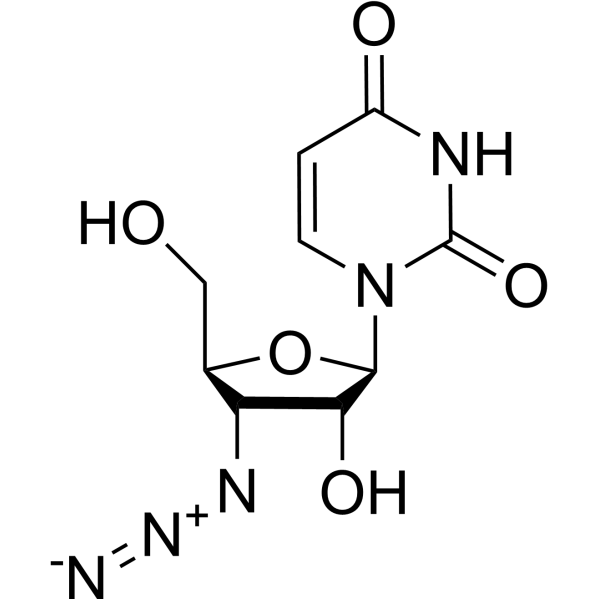
3’-Azido-3’-deoxyuridine
 0 Images
3’-Azido-3’-deoxyuridine is a purine nucleoside analogue. Purine nucleoside analogs have broad antitumor activity targeting indolent lymphoid malignancies. Anticancer mechanisms in this process rely on inhibition of DNA synthesis, induction of apoptosis, etc. 3’-Azido-3’-deoxyuridine is a click chemistry reagent, it contains an Azide group and can undergo copper-catalyzed azide-alkyne cycloaddition reaction (CuAAc) with molecules containing Alkyne groups. It can also undergo strain-promoted alkyne-azide cycloaddition (SPAAC) reactions with molecules containing DBCO or BCN groups.
-
Meridianin C
 0 Images
Meridianin C is a marine natural product with anticancer activity. Meridianin C has significant inhibitory effects on four different human tongue cancer cells (YD-8, YD-10B, YD-38 and HSC-3). Meridianin C most strongly reduced the growth of YD-10B cells, the most aggressive and tumorigenic of the cell lines tested. Meridianin C also induced significant accumulation of large vesicles in YD-10B cells, validating its function through macrophagocytosis. Meridianin C reduces cellular levels of Dickkopf-related protein-3 (DKK-3), a known negative regulator of macrophagy. Meridianin C affects macrophagocytosis by downregulating DKK-3, thereby affecting cell proliferation.
-
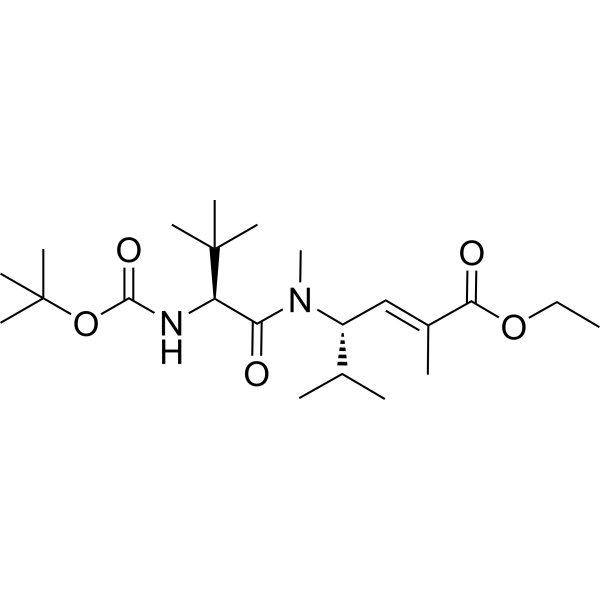
Taltobulin intermediate-4
 0 Images
Taltobulin intermediate-4 is an intermediate in the synthesis of Taltobulin (HY-15584). Taltobulin is a common toxin component in ADC preparation (ADC Cytotoxin), and it is also a powerful tubulin (Microtubule/Tubulin) inhibitor. Taltobulin disrupts tubulin polymerization, induces mitotic arrest, and induces apoptosis.
-
miR-21-IN-2
 0 Images
miR-21-IN-2 is a high-affinity miR-21 inhibitor. miR-21-IN-2 binds to the apical loop region of the pre-miR-21 hairpin, inhibits Dicer-mediated processing, and thereby blocks the biosynthesis of mature miR-21. miR-21-IN-2 can be used for the research of microRNA-related diseases.
-
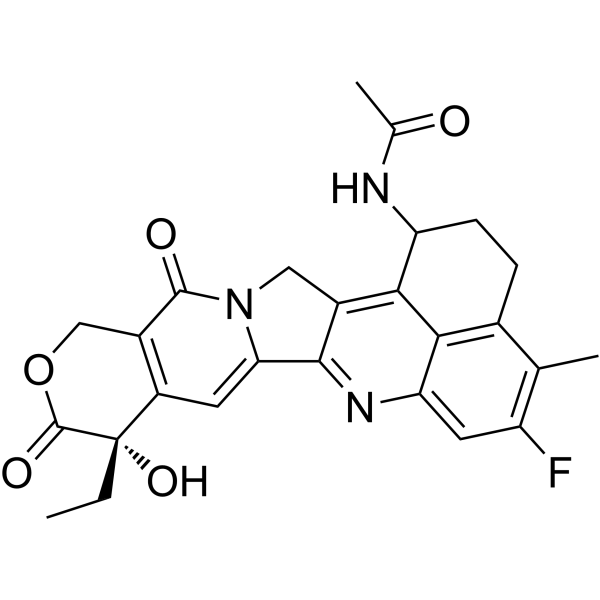
Exatecan intermediate 9
 0 ImagesCat. No.: HY-43565CAS No.: 2290562-59-1
Exatecan intermediate 9 is an intermediate for the synthesis of Exatecan (HY-13631). Exatecan (DX-8951) is a common toxin component in ADC preparation (ADC Cytotoxin) and an inhibitor of DNA topoisomerase I (IC50=2.2 μM).
-
Benzyl N-(2-aminoethyl)carbamate hydrochloride
 0 ImagesCat. No.: HY-W008518CAS No.: 18807-71-1

-
N-Methylated pomalidomide
 0 ImagesSynonyms: Pomalidomide-methyl
N-methylated pomalidomide (Pomalidomide-methyl), a derivative of Pomalidomide (HY-10984), is a cereblon (CRBN) ligand. N-methylated pomalidomide is unable to recruit CRBN that can be used as a negative control for Pomalidomide. N-methylated pomalidomide can be used to synthesize PROTAC.
-
5-(Benzyloxy)pentan-1-ol
 0 ImagesCat. No.: HY-W009930CAS No.: 4541-15-5
-
7-Hydroxystaurosporine
 0 ImagesCat. No.: HY-13661CAS No.: 112953-11-4Synonyms: UCN-01; KRX-0601
7-Hydroxystaurosporine (UCN-01), a derivative of Staurosporine (HY-15141), is a selective protein kinase C (PKC) inhibitor with antitumor activity. 7-hydroxystaurosporine induces apoptosis and inhibits cell proliferation in colon carcinoma and leukemia cells, suppresses invasion and migration in glioblastoma cells. 7-Hydroxystaurosporine exhibits efficacy in breast cancer xenograft mouse models. 7-Hydroxystaurosporine can be used for colon carcinoma, breast cancer, glioblastoma and leukemia research.
-
APX2009
 0 Images
APX2009 is a specific APE1/REF-1 redox inhibitor with anticancer activities which decreases the proliferative, migratory, and invasive properties of breast cancer cell and induces apoptosis in breast cancer cell.
-
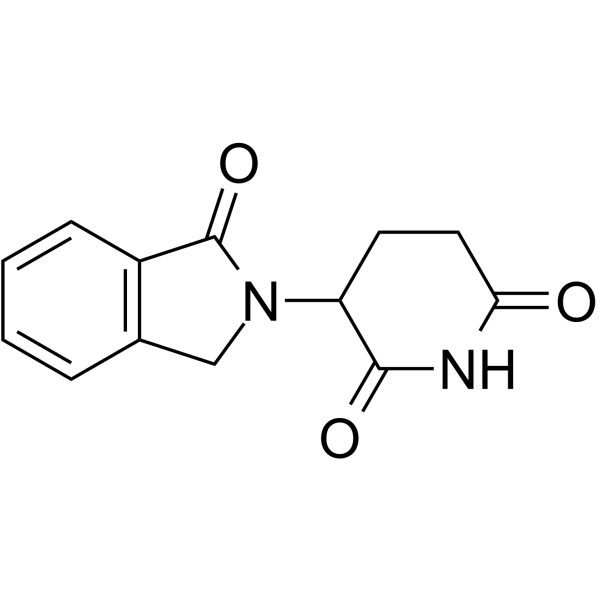
2-(2,6-Dioxopiperidin-3-yl)phthalimidine
 0 ImagesSynonyms: EM-12
2-(2,6-Dioxopiperidin-3-yl)phthalimidine (EM-12), a teratogenic Thalidomide analogue, is more active than Thalidomide and is much more stable for hydrolysis. 2-(2,6-Dioxopiperidin-3-yl)phthalimidine enhances 1,2-dimethylhydrazine-induction of rat colon adenocarcinomas.
-
N-Boc-undecane-1,11-diamine
 0 Images
tert-Butyl (11-aminoundecyl)carbamate is an alkane chain with terminal amine and Boc-protected amino groups. tert-Butyl (11-aminoundecyl)carbamate can be used as a PROTAC linker in the synthesis of PROTACs and other conjugation applications. Amine group is reactive with carboxylic acids, activated NHS esters, carbonyls (ketone, aldehyde) etc. The Boc group can be deprotected under mild acidic conditions to form the free amine.



