Others
-
Others Related Products (76609)
Related Products (76609)

-
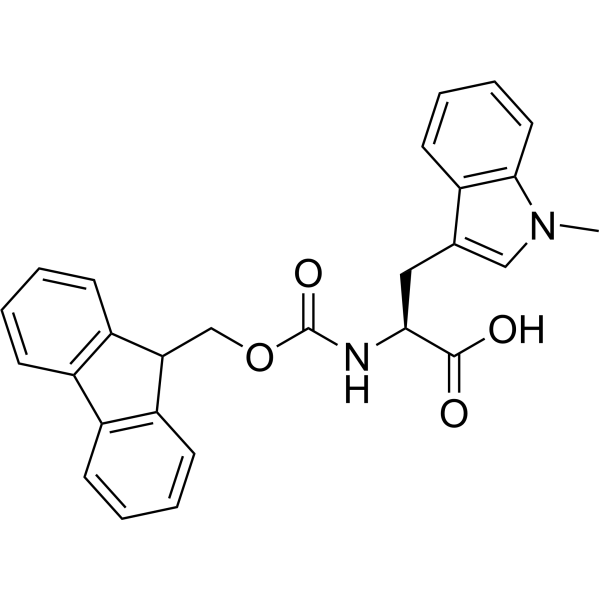
Fmoc-Trp(Me)-OH
 0 Images
Fmoc-Trp(Me)-OH is an amino acid derivative. Fmoc-Trp(Me)-OH is formed by introducing a methyl group onto the nitrogen atom (N-1 position) of the indole ring of tryptophan (Trp) and protecting the amino group with Fmoc (9-fluorenylmethyloxycarbonyl). Fmoc-Trp(Me)-OH can be used in the synthesis of proteins or peptides.

-
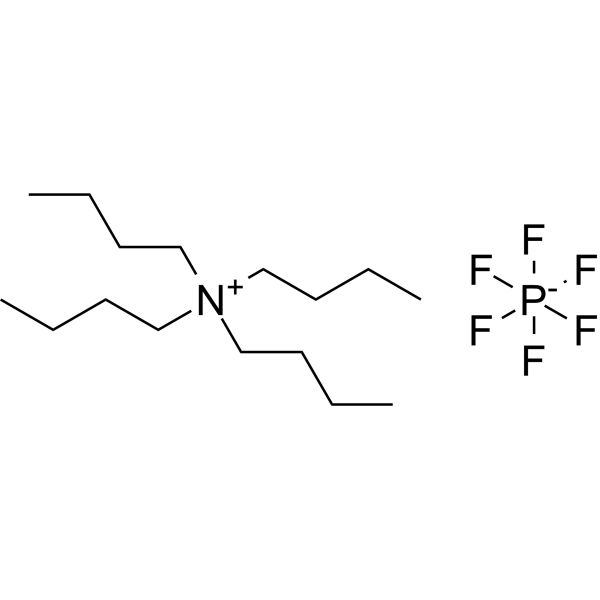
Tetrabutylammonium hexafluorophosphate
 0 Images
Tetrabutylammonium hexafluorophosphate is an organic-inorganic compound commonly used as an ionic solvent and catalyst. It can be used to catalyze or promote reactions in certain chemical reactions, and is widely used in batteries, solar cells and pigments. In addition, this compound is also widely used in organic synthesis and chemical analysis.

-
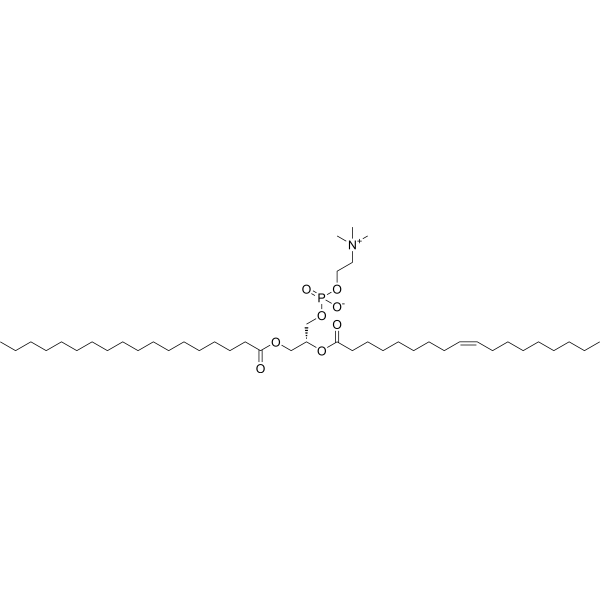
Submandibular mucin
 0 ImagesCat. No.: HY-P3008CAS No.: 84195-52-8
Submandibular mucin is a high molecular weight glycoprotein that is used as a substrate for the viral enzyme neuraminidase.
-
MicroRNA Antagomir Negative Control
 0 ImagesCat. No.: HY-RI04602APurity: 99.43%
MicroRNA Antagomir Negative Control is a chemically-modified oligonucleotide (2 phosphorothioates at the 5' end, 4 phosphorothioates at the 3' end, 1 cholesterol group at the 3' end, and full-length nucleotide 2'-methoxy modification), and can be used as a negative control. The sequence of MicroRNA Antagomir Negative Control is derived from cel-mir-239b. It has minimal sequence identity with miRNAs in human, mouse, and rat.
-
2,3,4,5-Tetrahydro-1H-1,5-methano-3-benzazepine
 0 Images
2,3,4,5-Tetrahydro-1H-1,5-methano-3-benzazepine is a drug intermediate for synthesis of various active compounds.
-
1,3-Bis(methoxycarbonyl)cyclopentane
 0 Images
1,3-Bis(methoxycarbonyl)cyclopentane (Norcamphoric acid, dimethyl ester) is a drug intermediate for synthesis of various active compounds.

-
(1R,2R)-N1,N2-Dibenzylcyclohexane-1,2-diamine
 0 ImagesCat. No.: HY-W037146CAS No.: 143443-23-6Synonyms: (1R,2R)-N,N'-Bis(phenylmethyl)-1,2-cyclohexanediamine
(1R,2R)-N1,N2-Dibenzylcyclohexane-1,2-diamine ((1R,2R)-N,N'-Bis(phenylmethyl)-1,2-cyclohexanediamine) is a drug intermediate for synthesis of various active compounds.
-
o-Tolidine Sulfone(contains 2,6-Dimethyl isomer)
 0 ImagesSynonyms: 3,7-Diamino-2,8-dimethyldibenzothiophene sulfone(contains 2,6-Dimethyl isomer)
o-Tolidine Sulfone(contains 2,6-Dimethyl isomer) (3,7-Diamino-2,8-dimethyldibenzothiophene sulfone(contains 2,6-Dimethyl isomer)) is a drug intermediate for synthesis of various active compounds.
-
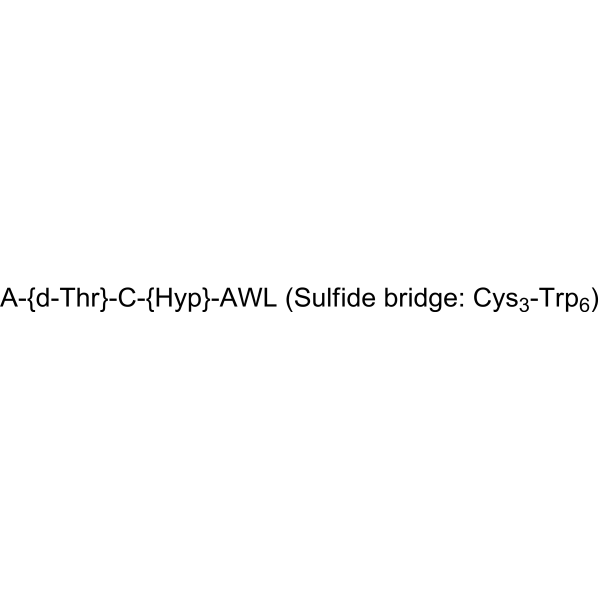
Phalloidin
 0 Images
Phalloidin is a mushroom-derived toxin which can be used to label F-actin of the cytoskeleton with fluorochrome .

-
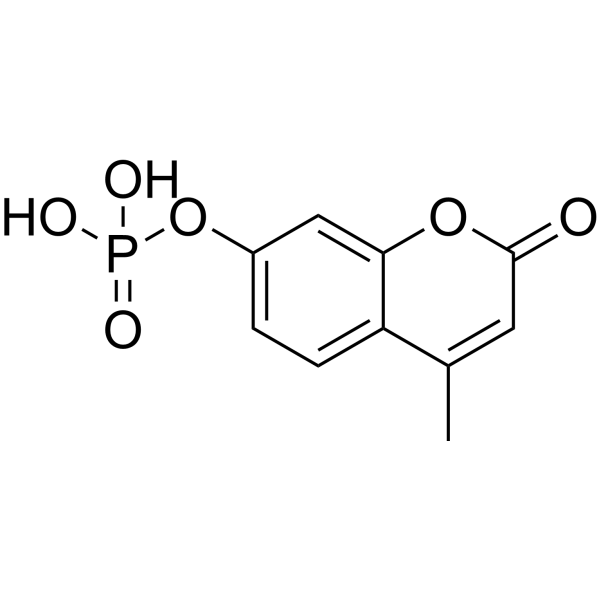
4-Methylumbelliferyl phosphate
 0 Images
4-Methylumbelliferyl phosphate (4-MUP), an anionic organophosphate, is a acid and alkaline phosphatase fluorogenic substrate. 4-Methylumbelliferyl phosphate is also a nerve agent simulant.
-
Penetratin
 0 Images
Penetratin is a cell-penetrating peptides derived from a nonviral protein. Penetratin can powerfully enhance drug absorption. Penetratin can be used for drug delivery research in the treatment of various diseases.
-
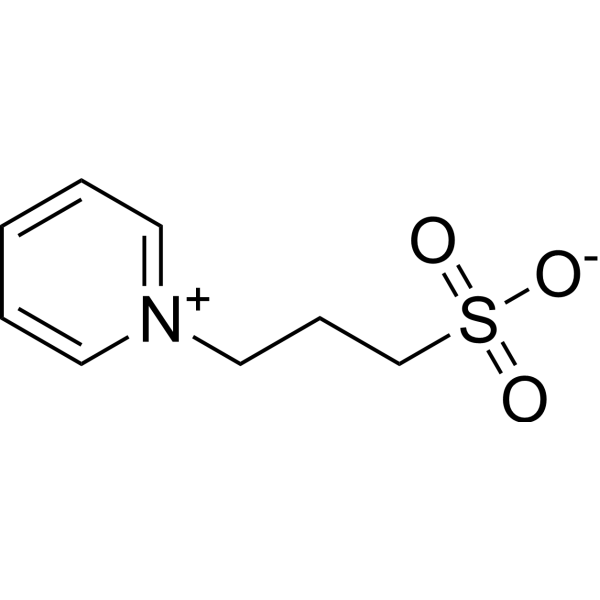
NDSB-201
 0 ImagesSynonyms: 3-(1-Pyridinio)-1-propanesulfonate
NDSB-201 consists of a pyridine group attached to a propane chain, which in turn is attached to a sulfonate group. This compound is commonly used as a buffer in biochemical and biological research, especially in electrophoretic applications. It maintains a stable pH in aqueous solutions and has low UV absorption, making it suitable for use in the UV spectrum. Furthermore, due to its ability to form stable complexes with DNA and other biomolecules, 3-(pyridin-1-ium-1-yl)propane-1-sulfonate has been investigated for its potential in drug delivery and genetic research.
-
3-Aminophenylboronic acid
 0 ImagesSynonyms: m-Aminophenylboronic acid
3-Aminophenylboronic acid (m-Aminophenylboronic acid) is a phenylboronic acid derivative. 3-Aminophenylboronic acid reacts covalently with cis-diol groups of glycoproteins, enabling selective capture and detection of glycoproteins through fluorescence quenching of APBA-functionalized copper nanoclusters.
-
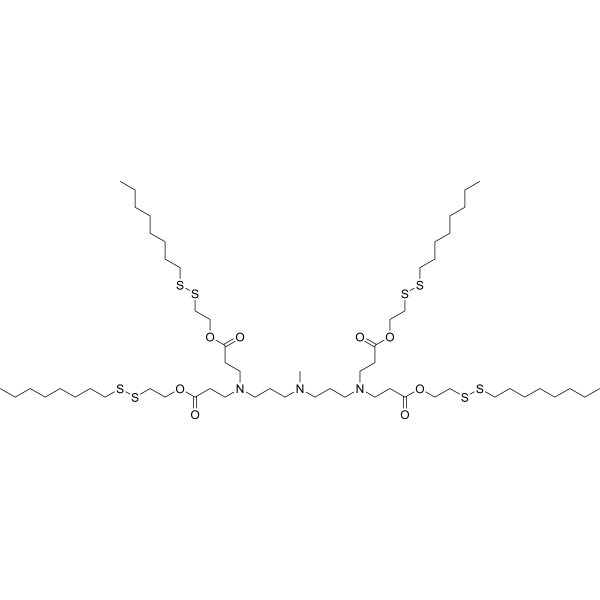
306-O12B
 0 Images
306-O12B is an ionizable cationic lipid used to prepare lipid nanoparticles (LNPs) for the delivery of mRNA.
-
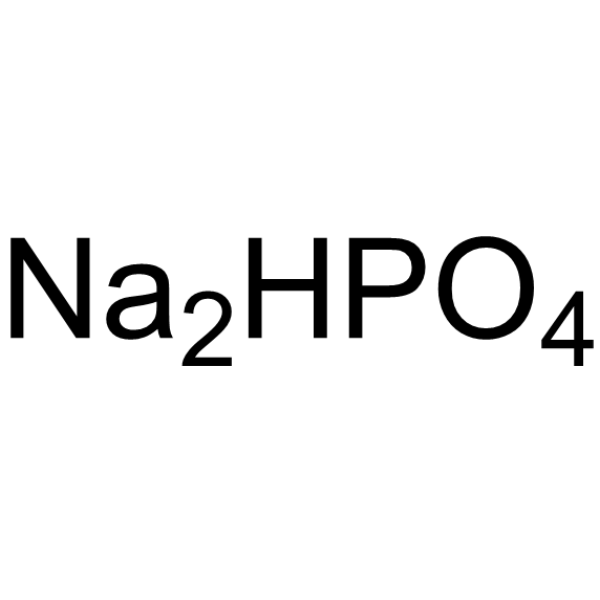
Sodium phosphate dibasic, for cell culture
 0 ImagesSynonyms: Disodium hydrogen phosphate, for cell culture
Sodium phosphate dibasic (Disodium hydrogen phosphate), for cell culture is a buffer and chelating agent. Sodium phosphate dibasic is used to adjust the pH of liquids. Sodium phosphate dibasic can be used in cell culture.