Others
-
Others Related Products (76645)
Related Products (76645)

-
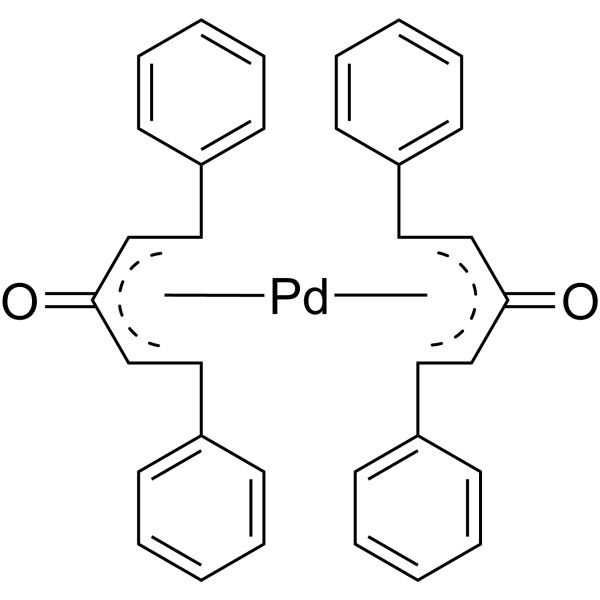
Bis(dibenzylideneacetone)palladium
 0 Images
Bis(dibenzylideneacetone)palladium is a biochemical reagent that can be used as a biological material or organic compound for life science related research.
-
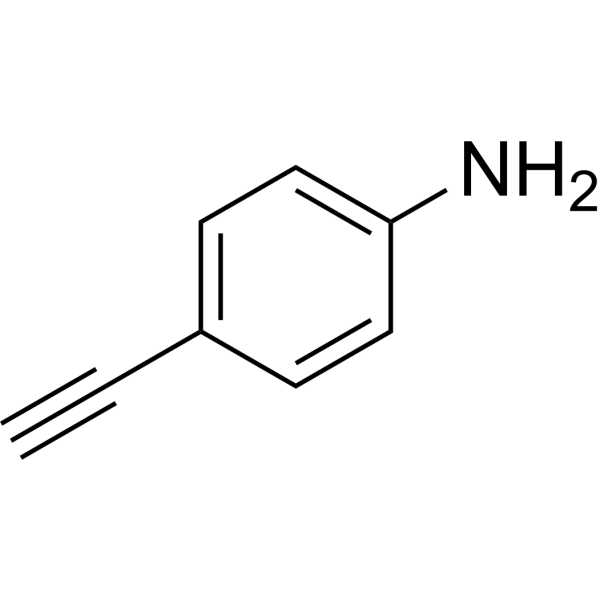
4-Ethynylaniline
 0 Images
4-Ethynylaniline is a biochemical reagent that can be used as a biological material or organic compound for life science related research. 4-Ethynylaniline is a click chemistry reagent, it contains an Alkyne group and can undergo copper-catalyzed azide-alkyne cycloaddition (CuAAc) with molecules containing Azide groups.

-
THAM hydrochloride (≥99%, reagent grade)
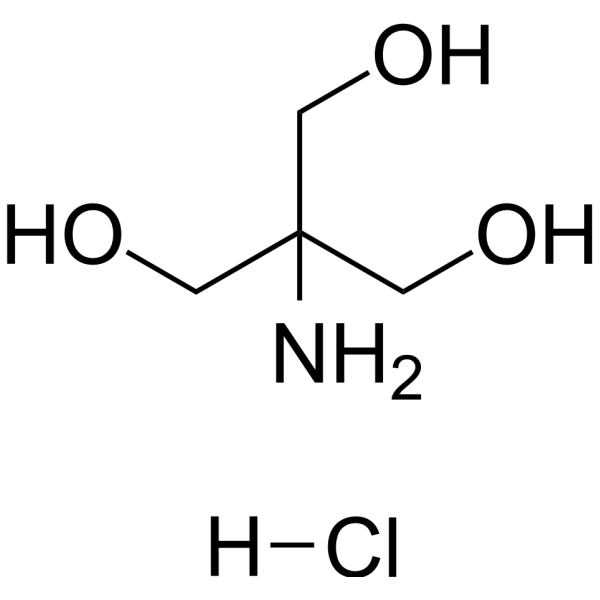 0 ImagesSynonyms: Tris HCl (≥99%, reagent grade); Tris hydrochloride (≥99%, reagent grade)
THAM hydrochloride (≥99%, reagent grade), also known as Tris-HCl, is a buffer commonly used in various biochemical and molecular biology applications to maintain a stable pH environment. Tris-HCl has unique chemical properties that allow it to resist changes in pH when acidic or basic substances are added, which makes it useful for stabilizing biological samples or reagents. It is commonly used in electrophoresis and protein purification procedures.
-
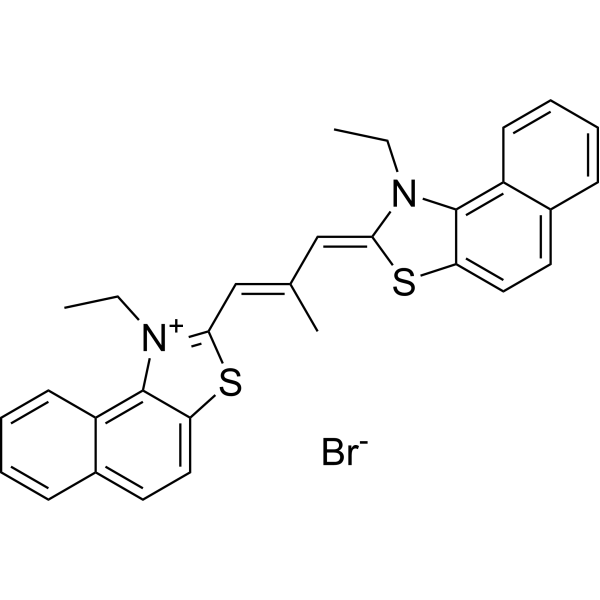
Stains-All
 0 Images
Stains-All, a cationic carbocyanine dye, is a convenient probe to study the structural features of the individual calcium-binding sites of calmodulin (CaM) and related calcium-binding proteins (CaBP).
-
HRP-Streptavidin
 0 ImagesCat. No.: HY-D2468
Sulfonylurea Receptor HRP-Streptavidin is a biotin-binding signal amplifier designed to bind tightly with biotinylated anti-TSH monoclonal antibodies, thereby constituting a key component of the signal amplification system in immunoassays. HRP-Streptavidin is formed by the covalent coupling of Horseradish Peroxidase (HRP) with Streptavidin; it combines the highly efficient catalytic activity of the enzyme with the high affinity of Streptavidin for biotin, making it a potent and sensitive tool for signal amplification. HRP-Streptavidin is suitable for use in Western Blotting, ELISA, and other detection techniques.
-
Microbial neutral proteinase
 0 Images
Microbial neutral proteinase is a zinc-containing metalloproteinase mainly produced by Bacillus and fungi. Its catalytic activity is highly dependent on divalent cations, and it remains active within the pH range of 5-8. Microbial neutral proteinase can specifically cleave peptide bonds within polypeptide chains, thereby degrading macromolecular proteins into small peptides or amino acids. It can be applied in various industrial fields including food processing, brewing, detergents, and light industry.
-
Simethicone
 0 Images
Simethicone is an orally active defoamer. Simethicone reduces the surface tension of air bubbles in the gastrointestinal tract, causing them to be expelled by vomiting, exhalation or absorption into the bloodstream. Simethicone has potential applications in flatulence and colic.
-
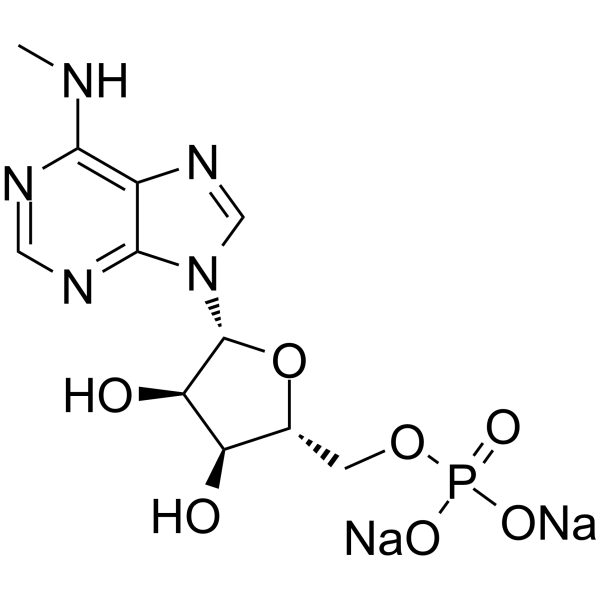
N6-Methyladenosine 5'-monophosphate disodium salt
 0 Images
N6-Methyladenosine 5'-monophosphate disodium salt is an N6-methyladenosine derivative and also the phosphorylated form of N6-methyladenosine. N6-Methyladenosine 5'-monophosphate disodium salt serves as an elution reagent for m6A-modified RNA in MeRIP assays.
-
Diiodo(p-cymene)ruthenium(II) dimer
 0 Images
Diiodo(p-cymene)ruthenium(II) dimer is a drug intermediate for synthesis of various active compounds.
-
Trimethylsilyl trifluoromethylsulfonate
 0 Images
Trimethylsilyl trifluoromethylsulfonate is a metal-free catalyst. Trimethylsilyl trifluoromethylsulfonate can be used for the synthesis of biologically active fluorinated heterocyclic compounds.
-
4,4-Dimethyl-6-ethynylthiochroman
 0 ImagesSynonyms: Tazarotene Intermediates
4,4-Dimethyl-6-ethynylthiochroman (Tazarotene Intermediates) is a drug intermediate for synthesis of various active compounds.
-
2-Cyanophenothiazine
 0 ImagesSynonyms: Phenothiazine-2-carbonitrile
2-Cyanophenothiazine (Phenothiazine-2-carbonitrile) is a drug intermediate for synthesis of various active compounds.

-
Malondialdehyde tetrabutylammonium
 0 Images
Malondialdehyde tetrabutylammonium is a quaternary ammonium salt formed by the decomposition of polyunsaturated fatty acids in plant cell membranes. Malondialdehyde tetrabutylammonium can be used for the quantification of malondialdehyde, a biomarker of lipid peroxidation.
-
5-Hexynoic acid
 0 ImagesCat. No.: HY-Y0925CAS No.: 53293-00-8Synonyms: Hex-5-ynoic acid
5-Hexynoic acid (Hex-5-ynoic acid) is an alkynoic acid. 5-Hexynoic acid serves as a drug intermediate for the synthesis of 3-alkoxy-2-cyclohexenone.
-
Allylpalladium(II) chloride dimer
 0 Images
Allylpalladium(II) chloride dimer is a palladium catalytic precursor that serves as a catalyst for the Heck reaction. Allylpalladium(II) chloride dimer is also a transition metal allyl complex.
-
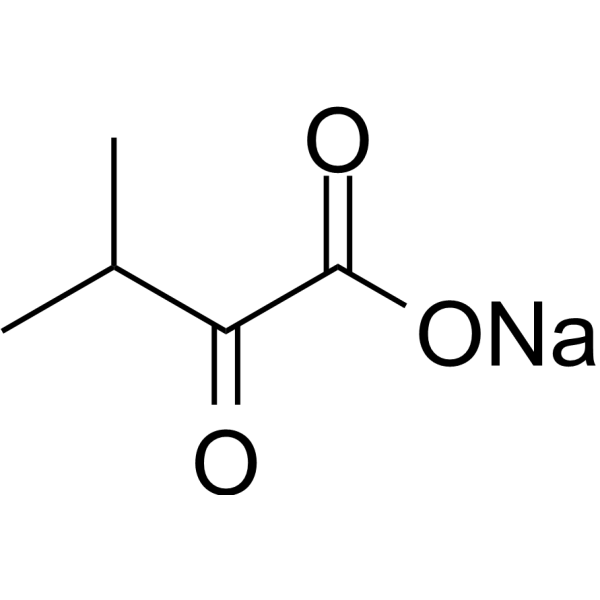
Sodium 3-methyl-2-oxobutanoate
 0 Images
Sodium 3-methyl-2-oxobutanoate is a precursor of pantothenic acid in Escherichia coli.
-
Fmoc-Dap(Boc)-OH
 0 Images
Fmoc-Dap (Boc)-OH is an amino acid derivative bearing the Fmoc protecting group. Fmoc-Dap (Boc)-OH supports Fmoc-based solid-phase peptide synthesis for the preparation of bicyclic tachykinin NK2 receptor antagonists.
-
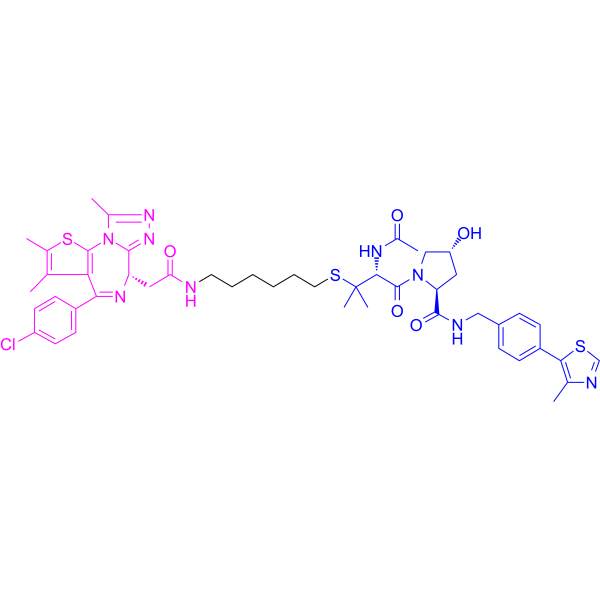
BRD4 degrader AT1
 0 Images
BRD4 degrader AT1 is a selective PROTAC BRD4 degrader. BRD4 degrader AT1 induces depletion of Brd4 protein in cells. BRD4 degrader AT1 exhibits highly selective depletion of Brd4 over Brd2 and Brd3 in cells.