Others
-
Others Related Products (76550)
Related Products (76550)

-
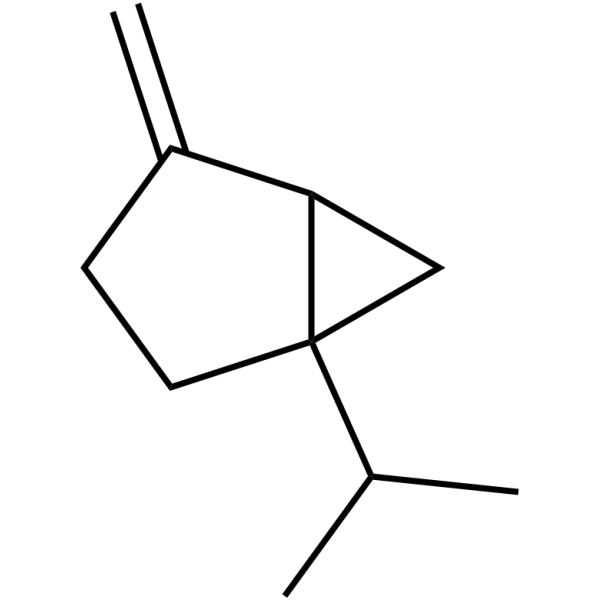
Sabinene
 0 Images
Sabinene is an naturally occurring bicyclic monoterpene which can be used as flavorings, perfume additives, fine chemicals, and advanced biofuels. Sabinene is also an orally active compound to attenuates skeletal muscle atrophy and regulates ROS-mediated MAPK/MuRF-1 pathways.
-
FPH1
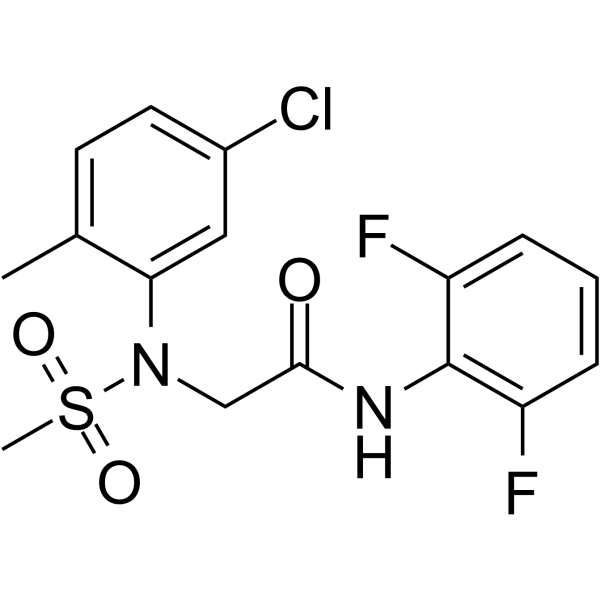 0 ImagesSynonyms: BRD6125
FPH1(BRD-6125) increases the number and activity of primary human hepatocytes in vitro and promotes the differentiation of iPS cells towards a hepatic lineage.
-
Dansyl glutathione
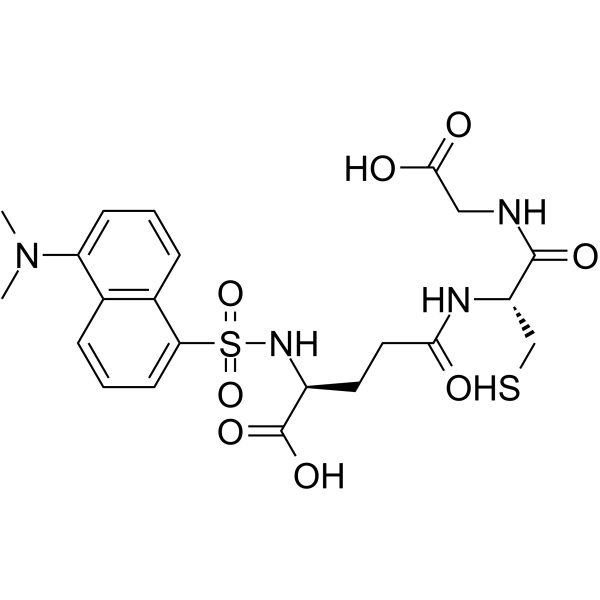 0 ImagesSynonyms: DNS-glutathione
Dansyl glutathione is a trapping agent for the quantitative estimation and identification of reactive metabolites.
-
(S,R,S)-AHPC-PEG4-N3
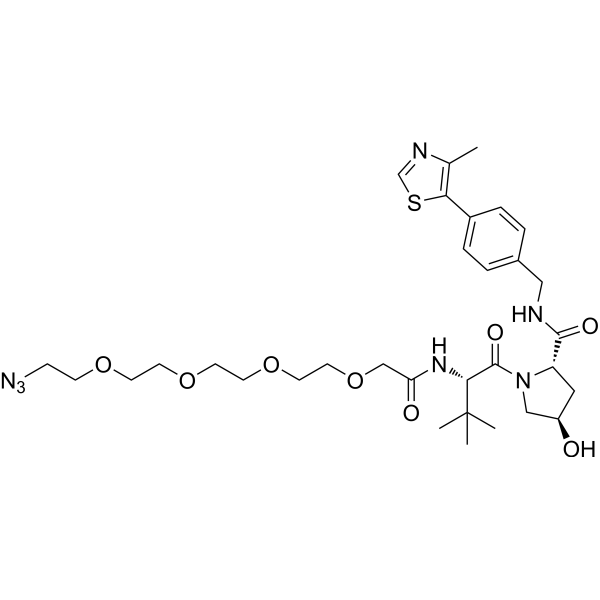 0 ImagesSynonyms: VH032-PEG4-N3; VHL Ligand-Linker Conjugates 5; E3 ligase Ligand-Linker Conjugates 4
(S,R,S)-AHPC-PEG4-N3 is a synthesized E3 ligase ligand-linker conjugate that incorporates the (S,R,S)-AHPC based VHL ligand and 4-unit PEG linker used in PROTAC technology. (S,R,S)-AHPC-PEG4-N3 is a click chemistry reagent, it contains an Azide group and can undergo copper-catalyzed azide-alkyne cycloaddition reaction (CuAAc) with molecules containing Alkyne groups. It can also undergo strain-promoted alkyne-azide cycloaddition (SPAAC) reactions with molecules containing DBCO or BCN groups.
-
Dextran (MW 40000)
 0 ImagesCat. No.: HY-112624CCAS No.: 9004-54-0
Dextran (MW 40000) is a complex carbohydrate polymer consisting of glucose molecules linked by glycosidic bonds. Dextran has excellent solubility in water, making it useful as a viscosity modifier or stabilizer in foods, paints and adhesives. In the biomedical field, dextran is often used as a plasma expander because of its ability to increase blood volume when administered intravenously. It can also be modified to create dextran-based drug delivery systems, such as targeted nanoparticles.
-
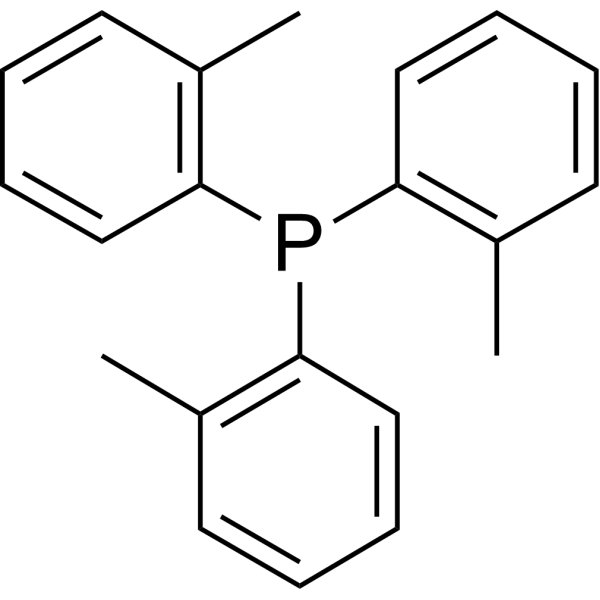
Tri(2-methylphenyl)phosphine
 0 Images
Tri (2-methylphenyl) phosphine is a sterically hindered tertiary phosphine ligand. Tri (2-methylphenyl) phosphine forms a 1:1 crystalline adduct with copper (I) halides CuX (X = Cl, Br, I), yielding a centrosymmetric dinuclear copper (I) complex bridged by dihalides. Tri (2-methylphenyl) phosphine is applicable to coordination chemistry, synthesis of copper (I) halide complexes, and structural and spectral studies of phosphine-metal halide complexes.
-
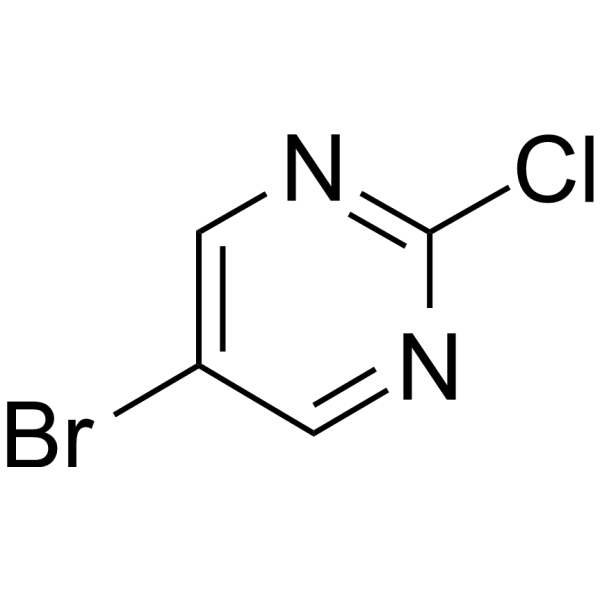
5-Bromo-2-chloropyrimidine
 0 ImagesSynonyms: 5-Bromo-2-chloropyrimidine
5-Bromo-2-chloropyrimidine is a biochemical reagent that can be used as a biological material or organic compound for life science related research.
-
Tryptamine-d4 hydrochloride
 0 Images
Tryptamine-d4 (hydrochloride) is the deuterium labeled Tryptamine hydrochloride. Tryptamine hydrochloride, a monoamine alkaloid, similar to other trace amines, is believed to play a role as a neuromodulator or neurotransmitter.
-
Cy3-Cisplatin
 0 ImagesCat. No.: HY-D2452
Cy3-Cisplatin is a Cyanine 3 fluorescent dye CY3 (HY-D0822) labled Cisplatin (HY-17394). Cy3-Cisplatin can be used for drug delivery, fluorescent labeling, cell imaging and tracking.
-
YC-001
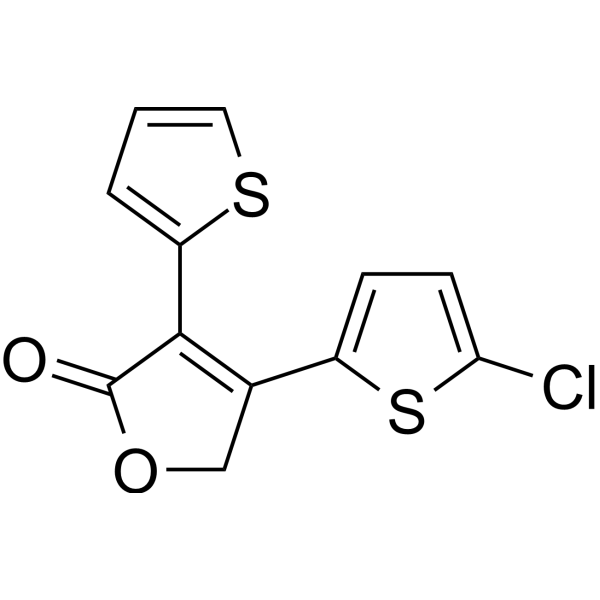 0 Images
YC-001 is an inverse agonist and antagonist of rod opsin. YC-001 reversibly binds rod opsin and stabilizes the rod opsin structure. YC-001 protects mice from bright light-induced retinal degeneration. YC-001 has the potential for the research of retinal degeneration.
-
Poly-L-lysine hydrobromide (MW 4000-15000)
 0 ImagesCat. No.: HY-126437HCAS No.: 25988-63-0
Poly-L-lysine hydrobromide (MW 4000-15000) is a positively charged amino acid polymer that acts as a non-specific attachment factor for cells. Poly-L-lysine hydrobromide (MW 4000-15000) enhances the electrostatic interaction between the negative ions of the cell membrane and the surface of the culture medium, thereby promoting the adhesion of cells to solid substrates. Poly-L-lysine hydrobromide (MW 4000-15000) can be used for gene delivery.
-
HKOCl-3
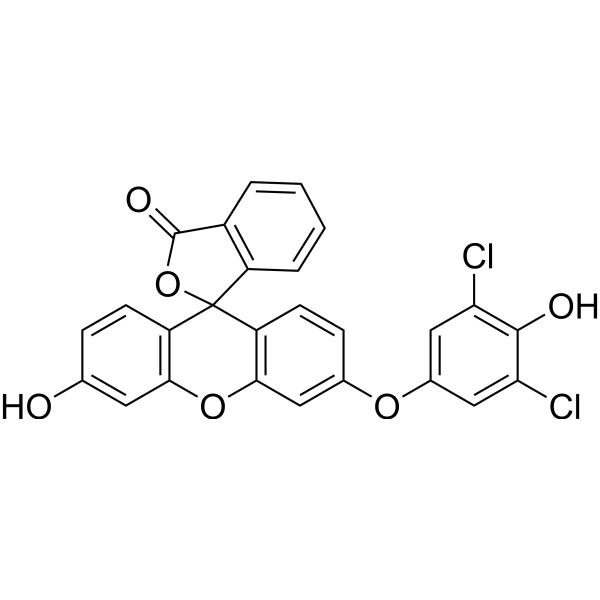 0 Images
HKOCl-3 is a highly sensitive and selective fluorescent probe for detecting hypochlorous acid.Ex: 490 nm; Em 527 nm.
-
Decanoyl-L-carnitine-d3 chloride
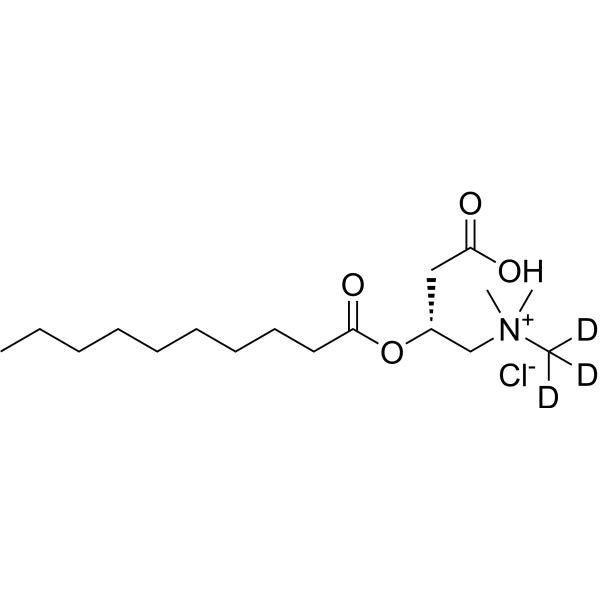 0 Images
Decanoyl-L-carnitine-d3 (chloride) is the deuterium labeled Decanoyl-L-carnitine chloride.
-
1-Palmitoyl-2-oleoyl-sn-glycerol
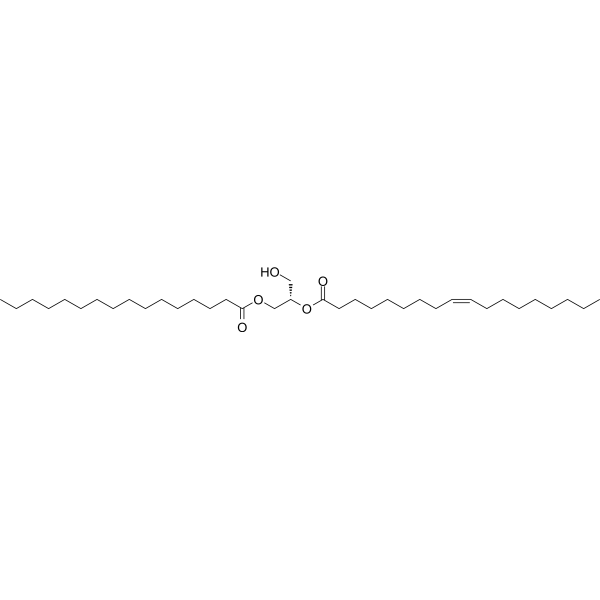 0 Images
1-Palmitoyl-2-oleoyl-sn-glycerol is a diacylglycerol hormogonium inducer that can be isolated from the coralloid roots of Cycas revoluta. 1-Palmitoyl-2-oleoyl-sn-glycerol promotes the differentiation of filamentous Nostoc cell aggregates into motile hormogonia, and further induces the formation of dense bundle-like structures. 1-Palmitoyl-2-oleoyl-sn-glycerol is not only commonly used as a diacylglycerol standard, but also can effectively identify and separate glycerophosphate-containing phospholipid enantiomers after acetylation. 1-Palmitoyl-2-oleoyl-sn-glycerol is also used to study cyanobacterial developmental mechanisms and lipid analysis.
-
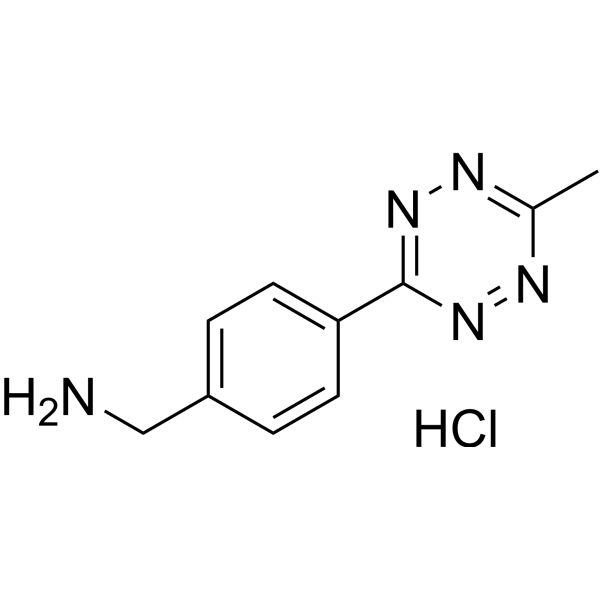
Methyltetrazine-amine hydrochloride
 0 Images
Methyltetrazine-Amine hydrochloride is a tetrazine compound. Methyltetrazine-Amine hydrochloride can be used for the site-specific dual functionalization of the resulting bioconjugates. Methyltetrazine-Amine hydrochloride can be added during protein precipitation in experiments using trans-cyclooctene.
-
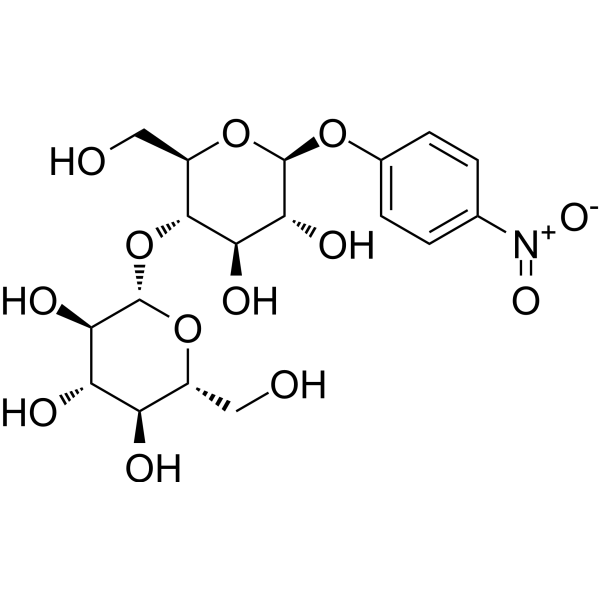
4-Nitrophenyl β-D-Cellobioside
 0 Images
4-Nitrophenyl β-D-Cellobioside (p-Nitrophenyl β-D-cellobioside) is a cellotriose analog. 4-Nitrophenyl β-D-Cellobioside is hydrolyzed by β-glucosidases such as TxGH116 and ThCel7B. 4-Nitrophenyl β-D-Cellobioside can also be hydrolyzed by exoglucanases and endoglucanases to produce p-nitrophenol (PNP). 4-Nitrophenyl β-D-Cellobioside can be used to detect cellulase activity.
-
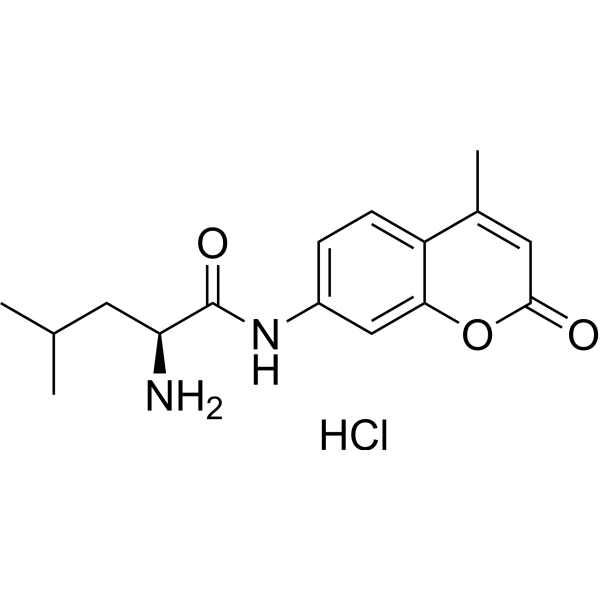
L-Leucine-7-amido-4-methylcoumarin hydrochloride
 0 ImagesSynonyms: Leu-AMC hydrochloride
L-Leucine-7-amido-4-methylcoumarin (Leu-AMC) hydrochloride is a bright blue fluorogenic peptidyl substrate for LAP3 (leucine aminopeptidase). L-Leucine-7-amido-4-methylcoumarin hydrochloride can be used for leucine aminopeptidase inhibition assays in vitro.
-
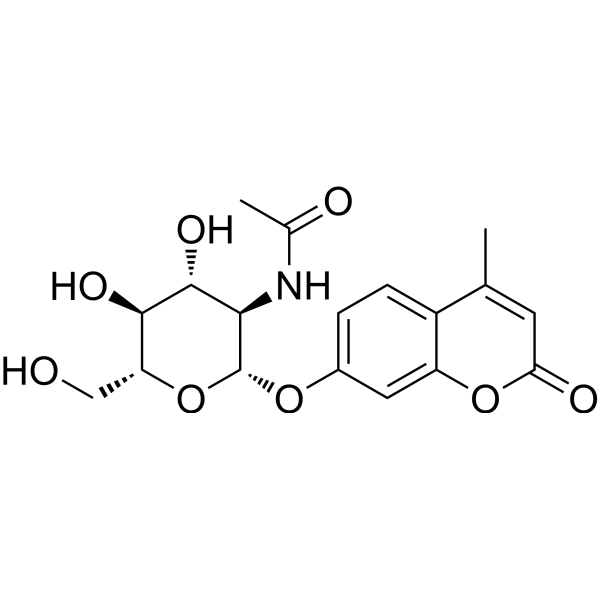
4-Methylumbelliferyl-2-acetamido-2-deoxy-β-D-Glucopyranoside
 0 Images
4-Methylumbelliferyl-2-acetamido-2-deoxy-β-D-Glucopyranoside is a fluorogenic substrate for N-acetyl-β-D-glucosaminidase.